
Bartending License Franklin Square: Requirements by Location (2026 Guide)
🎯 Bartending license Franklin Square explained: NY has no state license, but age rules, ATAP training and other states' requirements still matter.
Bartending License Franklin Square: What the Rules Actually Say
If you are searching for a bartending license Franklin Square employers will accept, here is the short answer: New York State does not issue an individual bartending license, and neither does Nassau County or the Town of Hempstead. Franklin Square is an unincorporated hamlet on Long Island, so state alcohol law governs everything. The New York State Liquor Authority licenses the bar, restaurant, or venue, not the person pouring drinks. That distinction shapes every hiring decision you will face.
That does not mean you can walk behind a bar with no preparation. Managers across Nassau County routinely ask for proof of alcohol server training, and insurance carriers reward venues whose staff hold it. The most recognized option in the state is the Alcohol Training Awareness Program, known as ATAP, which the SLA approves and oversees. Completing it is voluntary, but it signals that you understand the law and can protect an employer from costly violations before your first shift.
Location matters even more once you leave New York. Many people reading about bartending license requirements by location are planning a move, a seasonal job, or a travel-friendly career, and the rules change sharply at state lines. California, Illinois, Oregon, Washington, and Utah all impose mandatory training or permits, while New York, Florida, and Pennsylvania lean on voluntary programs. This guide covers Franklin Square first, then compares how other regions handle the same question.
You will also learn the practical details that applicants rarely find in one place: the minimum age to pour drinks in New York, what the SLA expects from servers, which documents employers request, and how to build a resume that stands out in Nassau County's competitive hospitality market. Each section ends with concrete next steps, so you can move from research to a job offer without wasting money on programs you do not need.
A quick word on terminology helps. People say 'bartending license' to describe at least four different things: a state-issued permit, a county card, a private school certificate, and a responsible-vendor training card. Only the first two carry legal force, and in New York neither exists for bartenders. The last two are credentials you earn voluntarily. Keeping those categories separate prevents you from paying for a 'license' that no agency will ever ask to see.
The Franklin Square area includes neighborhood taverns, diners with liquor licenses, catering halls, and sports bars along Hempstead Turnpike and Franklin Avenue, plus plenty of nearby venues in Elmont, Valley Stream, and Garden City. Hiring there tends to favor reliability, local references, and clean ID-checking habits over formal paperwork. Understanding that culture lets you target the right employers and prepare answers that match what Long Island managers genuinely ask during interviews.
By the end of this article you will know exactly what is legally required, what is merely helpful, and what is a waste of money. Use the practice quizzes linked throughout to test your knowledge of liquor law and bar math, because those two topics decide whether you pass a training course and impress an employer. Let's start with the numbers that frame the whole topic before moving into the step-by-step plan.
Free Bartender Certification Study Tools
Interactive Bartender Certification resources on PracticeTestGeeks, free to start:
- Bartender Certification Bartender Responsible Alcohol Service and Laws 1 — 7 questions with answer explanations
- Bartender Certification flashcards — review key terms and concepts card by card
- Bartender Certification study guide — topic-by-topic overview of what the exam covers
- Bartender Certification cheat sheet — one-page printable summary for last-minute review
Bartending Licensing by the Numbers
Steps to Start Bartending in Franklin Square
Check that you meet the New York minimum age to serve alcohol, usually 18, and ask each employer about its own policy. Many venues and insurers prefer staff who are 21, so confirm before you spend money on training or print resumes.
Choose an SLA-approved Alcohol Training Awareness Program provider and finish the course. It covers ID checks, spotting intoxication, and legal liability. It is voluntary in New York, but it shows employers you understand the law and care about compliance.
Learn standard pours, classic cocktail specs, and speed through a bartending class, an online school, or a barback position. Practice free pouring with water, memorize the top ten cocktails, and shadow a working bartender during a busy shift.
Create a one-page resume highlighting customer service, cash handling, and food-service experience. Gather a photo ID, work authorization documents, and training certificates. Local references carry real weight with Franklin Square managers who hire through personal recommendations.
Visit venues during quiet afternoon hours, introduce yourself, and be ready to make classic drinks on the spot. Explain how you check ID and handle intoxicated guests. Calm, rule-based answers separate strong candidates from those who improvise.
New York Bartending Rules Every Franklin Square Bartender Must Know
The legal framework for bartending in Franklin Square comes from New York's Alcoholic Beverage Control Law, enforced by the State Liquor Authority. The law regulates who may hold a license to sell alcohol, how licensees operate, and what employees may and may not do. Because the hamlet is unincorporated and falls under the Town of Hempstead, no additional municipal bartender license exists. Your obligations are the same whether you work in Franklin Square, Garden City, or Buffalo.
Age is the first rule. The legal drinking age is 21, but New York generally allows people who are 18 or older to serve and bartend in licensed on-premises establishments. Anyone younger than 18 cannot pour or mix alcohol for customers. Individual employers may set a higher minimum, and some insurers push them to hire only staff who are 21. Always confirm the employer's policy before applying, since a bar's own rule overrides the legal floor.
Checking identification is the second rule, and it is where most violations happen. Selling to anyone under 21 is prohibited and can be charged as a misdemeanor against the individual server, plus penalties against the establishment's license. Acceptable proof typically includes a valid driver's license or non-driver ID, a US passport, or a military ID. Many Long Island venues use ID scanners, which can support a legal defense when the scan result and your good-faith check agree.
The third rule concerns intoxicated patrons. New York prohibits serving anyone who is visibly intoxicated, and the Dram Shop Act allows injured third parties to sue a venue that illegally served a drunk driver. Signs include slurred speech, stumbling, aggressive behavior, and spilling drinks. Professional bartenders cut guests off politely, offer water and food, arrange rides, and document the incident. Doing this protects the public, your employer's license, and your own personal legal exposure.
Hours of sale also matter. On-premises sales are generally prohibited between 4 a.m. and 8 a.m., so last call on Long Island usually happens well before 4 a.m. Some local venues close earlier because of their own license conditions or occupancy limits. Know your venue's posted closing time and the legal cutoff, and start the closing routine of announcing last call, collecting glassware, and securing the register so the bar finishes properly before the deadline.
Then there is ATAP, the Alcohol Training Awareness Program. The SLA approves ATAP providers, and the course covers ID checks, spotting intoxication, civil liability, and the criminal consequences of illegal sales. It is voluntary, yet the SLA has long recognized training as a positive factor when reviewing violations, and many insurers discount premiums for trained staff. Courses are usually offered online and take a few hours. Always confirm the provider appears on the SLA's approved list before paying.
Finally, understand how employers treat these rules in practice. Most Franklin Square managers will ask whether you can verify ID, what you would do with an intoxicated regular, and how you handle a fake ID. Practicing answers to those scenarios matters more than any wall certificate. The Bar Law and Liquor Regulations practice tests linked below are a fast way to rehearse the exact legal concepts that interviewers, and trainers, test most often.
Bartending License Requirements by Location: Three Types of States
A few states treat server credentials like a true permit issued by a government agency. Oregon's OLCC service permit and Washington's MAST permit are the clearest examples, and both remain valid for five years once issued. Applicants complete an approved course, pass an exam, and pay a modest fee. Working without the permit can lead to fines for the employee and the venue, so employers verify cards before scheduling your first shift.
These states also tend to enforce the rules through routine inspections and undercover compliance checks. That makes the credential more than paperwork, because inspectors can ask any server to show proof on demand. If you plan to relocate to the Pacific Northwest, expect to finish the process within a few weeks of hire. Always apply through the official agency website, since look-alike sites sometimes charge inflated fees for the same permit.
Is Bartending Training Worth It When No License Is Required?
- +Shows employers you understand New York alcohol law before your first shift
- +Can lower liquor liability insurance costs for your employer, making you more hireable
- +Teaches you to spot intoxication and refuse service without escalating conflicts
- +Online ATAP-style courses are inexpensive and can be finished in a few hours
- +Training transfers conceptually if you later move to a state with mandatory rules
- +Builds confidence for working interviews and situational questions about ID checks
- −Not legally required in New York, so some employers will not care about it
- −Certificates are state-specific and may not satisfy requirements elsewhere
- −Unapproved providers sell worthless credentials that look official
- −Expensive in-person bartending schools rarely improve hiring odds on their own
- −Certificates expire and need renewal, adding recurring time and cost
- −Training alone does not replace real pouring speed learned behind a busy bar
Bartending License Franklin Square Checklist
- ✓Confirm that no state or county bartender license exists in New York.
- ✓Verify the employer's minimum age policy before applying.
- ✓Choose an SLA-approved ATAP provider and finish the course.
- ✓Save a digital and printed copy of your training certificate.
- ✓Memorize the ten most ordered classic cocktails and standard pour sizes.
- ✓Practice a consistent ID-checking routine on a sample card.
- ✓Take timed practice quizzes on bar law and liquor regulations.
- ✓Prepare a one-page resume with references from local employers.
- ✓Bring a photo ID and work authorization documents to interviews.
- ✓Visit at least five Franklin Square area venues during quiet hours.
Your Personal Liability Is Real
Even without a bartender license, New York law can hold an individual server responsible for selling to minors or visibly intoxicated guests. Treat every ID check as if a regulator is watching, because one lapse can cost you a job and a record.
How Other States Handle Bartending Licenses and Server Permits
Once you step outside New York, the picture changes quickly. The United States has no federal bartending license, so each state decides whether servers need a permit, a mandatory training card, or nothing at all. A handful of states require every alcohol server to complete approved training, more require it only for certain counties or license types, and the rest, including New York, leave training voluntary. Planning a move means checking the destination early.
California is the most recent large state to add a mandate. Since July 2022, the Responsible Beverage Service Training Program requires servers and managers to complete state-approved training, generally within 60 days of being hired, and the certificate is valid for three years. Employers cannot let untrained staff serve beyond that window. Providers must be approved by the Department of Alcoholic Beverage Control, so cheap unapproved courses will not satisfy the law.
Illinois requires BASSET training for on-premises servers, typically within 30 days of hire, with certification lasting three years. Oregon requires a service permit from the OLCC, valid for five years, while Washington requires a MAST permit for servers and bartenders, also valid for five years. Utah requires approved alcohol server education within a short period after hire. Each program differs in cost, test format, and renewal, so use only the official state agency as your source.
Texas and Florida sit in the middle. Texas offers voluntary TABC seller-server certification, but employers who want legal protection for employee violations usually require it, which makes it effectively standard. Florida has no statewide mandate, though many employers and responsible-vendor programs encourage training. Arizona requires basic Title 4 training for bartenders and managers, and parts of Nevada, including Clark County, have required an alcohol awareness card for servers. Rules like these are why local verification is critical.
Counties and cities can add layers. A state may be voluntary while one metro area demands a card, or a college town may impose special permits for late-night venues. Always ask three questions: Does the state require it, does my county or city add anything, and does my employer require more than the law. Answering all three prevents the common mistake of paying for a credential that is valid in the wrong jurisdiction.
Portability is another trap. Most server certificates do not transfer between states, because each program teaches that state's specific laws, penalties, and ID types. A TABC card from Texas will not satisfy California or Illinois. If you plan to move, budget time and a small fee to retrain, and keep records of past certificates, since some employers view them as evidence of experience even when they are not legally valid.
A useful strategy for travel-minded bartenders is to begin with a solid foundation in responsible service, then add the state-specific card when you land a job. Many employers reimburse the fee, and the course itself takes only a few hours. The general knowledge about intoxication signs, ID verification, and liability carries over, which is why practicing core liquor law concepts remains valuable no matter where you pour.
Websites that sell an official New York bartending license are misleading, because no such state credential exists. Before paying for any course, confirm it is SLA-approved, and verify requirements with the regulator if you work in another state.
Training Options, Costs, and Getting Hired Around Franklin Square
Because no license exists for Franklin Square bartenders, your best investment is a combination of server training, practical skills, and a polished application. Think of it as three layers. The first layer is legal knowledge, usually ATAP or an equivalent course. The second layer is craft skill, learned in a bartending class or by working as a barback. The third is presentation, meaning a resume and references that prove you are dependable behind a busy bar.
Costs are modest compared with most trades. Online server-awareness courses commonly cost between about $10 and $50, while in-person bartending classes often run from a few hundred dollars to over $700 depending on length and location. Neither is mandatory in New York, so avoid expensive programs that promise a license. A cheaper path is starting as a barback or server, learning on the job, and adding ATAP once an employer asks.
Online schools appeal to people with unpredictable schedules. They teach recipes, bar setup, pouring technique, and responsible service through video lessons and quizzes, usually in a weekend or two. The tradeoff is the lack of hands-on pouring practice with a live instructor. Pair an online course with a home practice kit, speed drills, and a few shifts shadowing a working bartender so the knowledge turns into muscle memory by your first real Friday night.
Hiring in the Franklin Square area is relationship-driven. Many positions are filled by referral, so visit during quiet afternoon hours, introduce yourself to the manager, and leave a one-page resume. Highlight cash handling, customer service, speed, and any food-service experience. Be prepared for a working interview, where you may be asked to make a few classics such as an Old Fashioned, Manhattan, margarita, and gin and tonic while explaining your process.
Pay on Long Island is typically a low base wage under New York's tipped-minimum structure, with tips providing the bulk of earnings. Busy venues near Hempstead Turnpike, game-day sports bars, and catering halls can produce strong weekend income, while quiet neighborhood taverns pay steadier but smaller totals. Ask during the interview about tip pooling, shift distribution, and whether the house shares tips with barbacks, since policies differ significantly by venue.
Documentation is simple. Bring a government photo ID, your Social Security card or other work authorization documents for the I-9 form, and any training certificates. Some employers also run background checks, particularly for catering and hotel jobs. A past alcohol-related offense, such as a DWI, may not be disqualifying everywhere, but it can affect insurance eligibility, so be honest and ready to explain what you learned and how you have changed.
Finally, think about career growth. Entry-level bartenders can advance to head bartender, bar manager, beverage director, or distributor sales. Each step rewards deeper knowledge of inventory, pour costs, and liquor regulation. That is why the Bar Inventory and Cost Control quizzes on this site are worth your time: managers promote bartenders who understand margins as well as they understand mixology, and those skills are portable to any state or venue.
Final Prep Tips: Study Smart and Start Pouring with Confidence
Start your preparation by writing down the five legal rules you must never break: no sales to minors, no service to visibly intoxicated guests, always check ID, respect legal hours, and never let personal drinking interfere with the job. If you can explain each one, with an example and a consequence, you already understand more than many applicants. Review them daily for a week and they will become automatic habits.
Next, practice ID checking with a method. Hold the card, compare the photo to the face, check the birthdate against today's date, look for the expiration date, and feel for tampering. Ask a follow-up question such as a zip code or zodiac sign if something feels off. Consistent routine matters because tired bartenders on a crowded Saturday are the ones who make mistakes, and routine protects you when attention drops.
Build your drink knowledge in layers. Memorize the ten most ordered cocktails first, including the margarita, old fashioned, martini, cosmopolitan, mojito, daiquiri, Moscow mule, whiskey sour, Manhattan, and gin and tonic. Learn standard pour sizes, usually 1 to 1.5 ounces, and practice free pouring with water until your counts are accurate. Accuracy protects the bar's margins and impresses managers watching your working interview.
Learn the math that supports profit. Pour cost percentage equals the cost of liquor used divided by sales, and most bars aim between 18 and 24 percent. If a bottle costs $24 for 25 ounces and you pour 1.5 ounces, each drink costs about $1.44. Selling it for $9 gives a cost near 16 percent. Practicing a few of these calculations helps you answer interview questions and pass inventory quizzes.
Take timed practice tests under realistic conditions. Set a timer, remove notes, and answer every question before checking results. Review each wrong answer by writing the correct rule in your own words. Retake the same quiz two days later to confirm that the correction stuck. Spaced repetition beats a single long cram session, and it works well for the law and regulation questions that most training courses emphasize.
Prepare for situational interview questions with a simple structure: describe the situation, state the legal rule, explain your action, and mention follow-up. For example, if a regular is slurring words and demands another beer, you would politely decline, offer water and food, call a ride if needed, inform your manager, and note it in the incident log. Interviewers want calm, specific, rule-based answers, not improvisation.
Finish by creating a short action plan for the next thirty days: choose an ATAP provider, complete the course, take practice quizzes, update your resume, visit five local venues, and schedule two working interviews. Verify any outside-state rules before relocating. Small, consistent steps turn uncertainty about a bartending license in Franklin Square into a confident job search, and a first shift behind the bar is closer than you think.
Bartender Bartender Questions and Answers

Bartending Age Requirements: What You Need to Know Before You Start
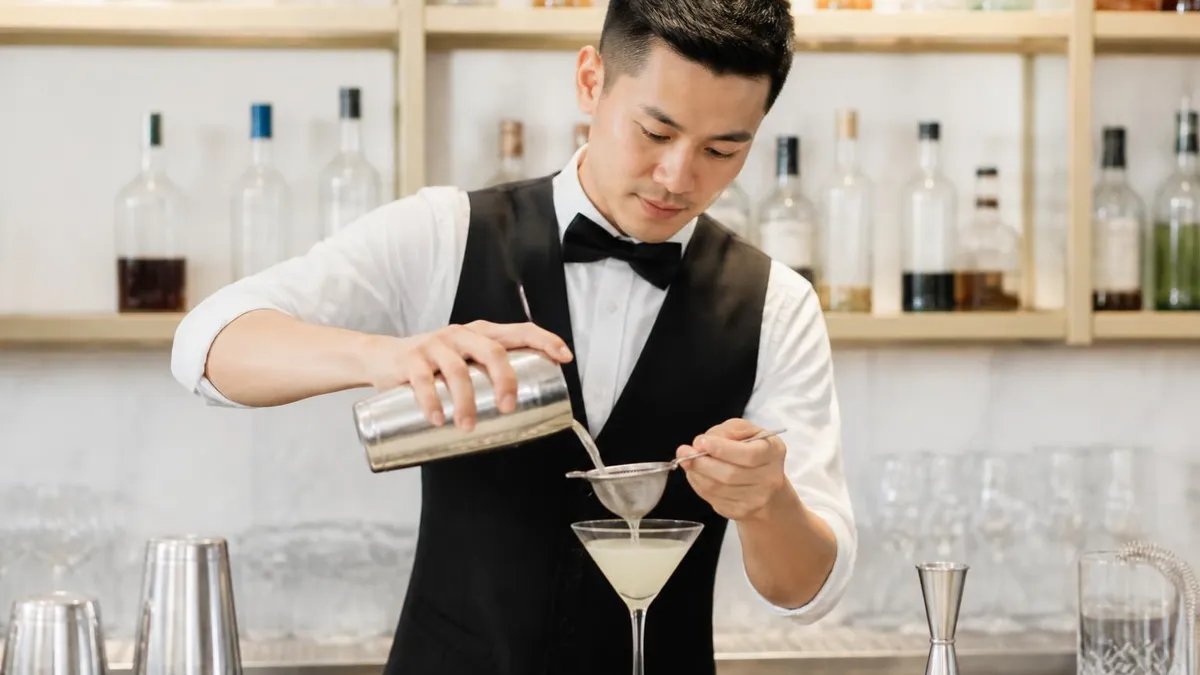
Can Bartenders Drink on the Job? The Complete Guide to Drinking Rules, Career Paths, and Industry Norms
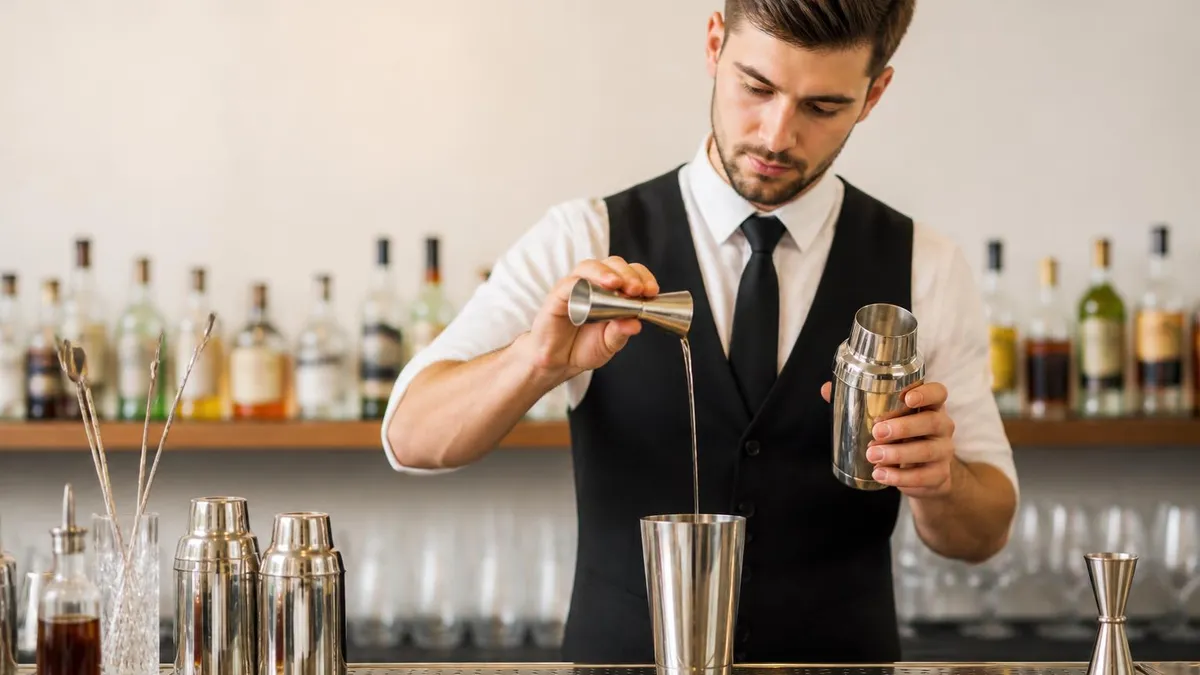
Bartending Classes: Types, Cost, Length, and What You Learn

Online Bartending School: Complete Training Guide and Certification Requirements
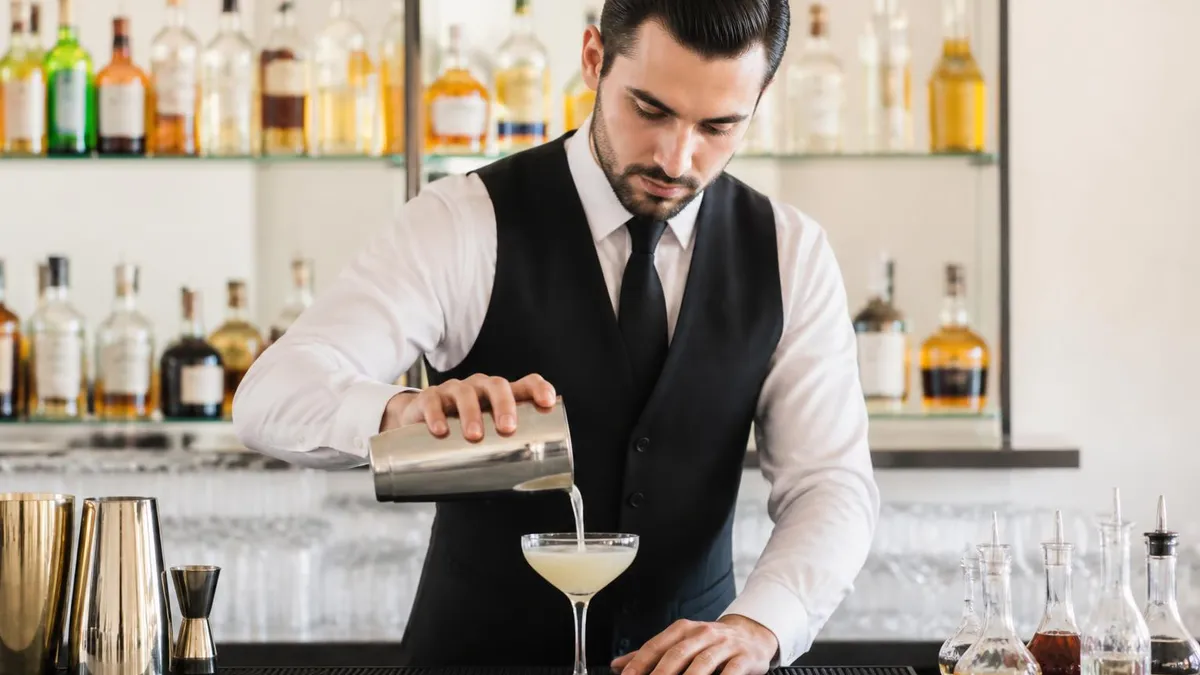
Bartender Certification: Cost, Time and How to Get Yours in 2026
How this page was made: written with AI tools. We have not yet matched this exam's facts to an official source, so confirm fees, dates and rules with the exam body. Not reviewed by a subject-matter expert. Editorial policy