
Bartender Rental: The Complete 2026 Guide to Hiring a Professional Bartender for Your Event
Bartender rental guide for 2026: average costs, what's included, how to vet pros, licensing, tipping, and booking timelines for weddings and private ✍🏼
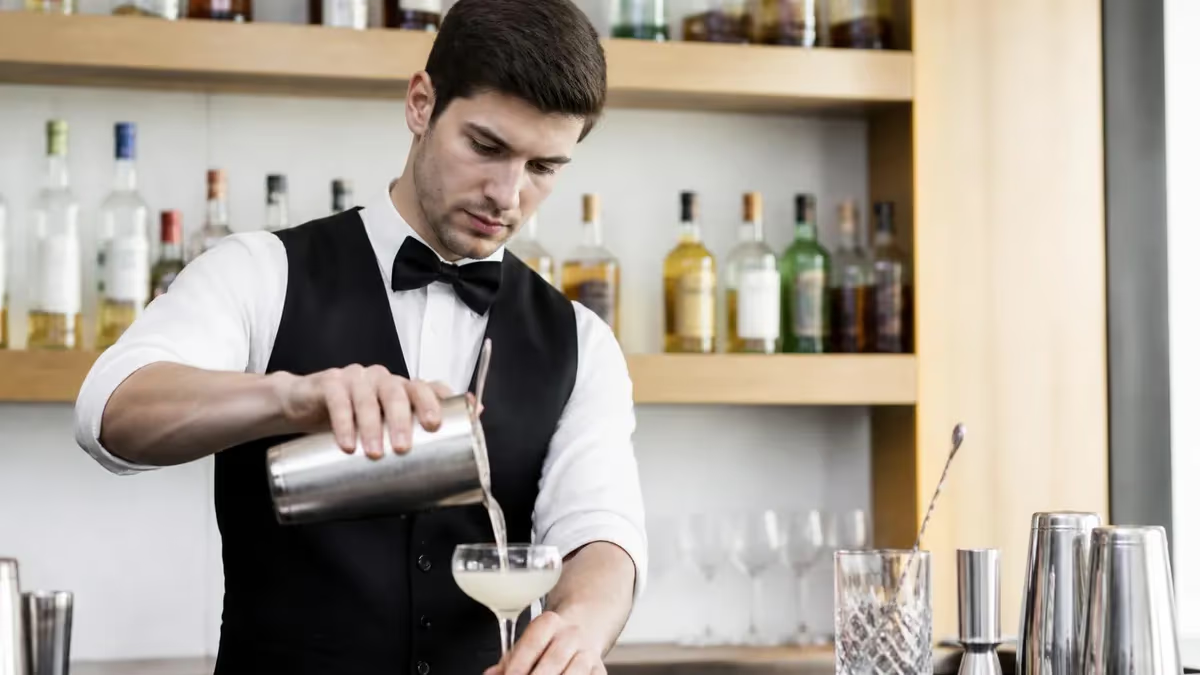
A bartender rental is one of the smartest upgrades you can make to a private event, and in 2026 the booking process has become more transparent, more competitive, and more service-driven than ever before. Practice with the free Bartender Certification practice test on PracticeTestGeeks (7 questions with answer explanations).
Whether you are planning a backyard wedding for sixty guests, a corporate holiday mixer, or a milestone birthday in a rented loft, hiring a professional bartender turns a chaotic self-serve bar into a polished experience. Expect to pay between $40 and $90 per hour for a single bartender, with most full events landing in the $300 to $800 range depending on hours, guest count, travel, and service tier.
The bartender rental market exploded after 2020 when home entertaining replaced restaurant dining for millions of Americans, and the trend has stuck. According to industry data tracked by the U.S. Bureau of Labor Statistics, the number of bartenders working private events grew nearly 18% between 2021 and 2025. That growth means you have more options than ever, but it also means quality varies wildly. A great bartender can serve 75 guests in an evening without breaking a sweat; a mediocre one will leave a line ten people deep by 8 p.m.
This guide walks you through everything you need to know before signing a contract. We cover pricing benchmarks across the country, what services are typically included in a standard package, how to vet candidates for licensing and insurance, the difference between a freelance bartender and a full-service mobile bar company, and the red flags that signal you should keep shopping. We also explain how state liquor laws affect your rental, because in many jurisdictions the host bears more legal liability than the bartender does.
You will learn the difference between a dry-hire bartender (you supply the alcohol, ice, mixers, and glassware) and a full-service rental (the bartender brings everything, sometimes including the bar itself). We break down tip etiquette, contract clauses to watch for, and the questions you absolutely must ask before paying a deposit. By the end you will know what a fair quote looks like in your zip code, how far in advance to book during wedding season, and how to write a clear service brief so your bartender arrives ready to work.
One important note before we go further: bartender rental is not the same as bartender catering. A rental typically covers the labor and expertise of one or more bartenders, while catering can include the bar setup, all consumables, and sometimes the alcohol itself under a state-specific permit. The line between these two services has blurred since 2023, and most modern bartender rental companies now offer hybrid packages. We will untangle those packages so you can compare quotes apples to apples.
Finally, we will discuss the credentialing side of the industry. A bartender working in your home should hold current responsible beverage service training in states that require it, and many should carry their own liability insurance even when working an event you are insuring separately. These are not optional checkboxes; they are protection for you, your guests, and your hosts. Let us dig in.
By the time you finish this article, you will have a clear pricing model, a checklist of must-ask questions, and a working understanding of how the bartender rental industry operates in 2026. That knowledge will save you money, prevent awkward surprises on event day, and help you book the right professional for your specific style of gathering.
Free Bartender Certification Study Tools
Interactive Bartender Certification resources on PracticeTestGeeks, free to start:
- Bartender Certification flashcards — review key terms and concepts card by card
- Bartender Certification study guide — topic-by-topic overview of what the exam covers
- Bartender Certification cheat sheet — one-page printable summary for last-minute review
Bartender Rental by the Numbers

Bartender Rental Pricing Tiers in 2026
Freelance bartenders newer to events, often students or part-timers. Great for casual gatherings under 40 guests with a beer-and-wine bar. Expect them to bring tools but not consumables.
Experienced bartenders with 3+ years of private event work, current RBS certification, and personal liability coverage. Most weddings and corporate events fall here. Includes pre-event consultation.
Craft cocktail specialists, flair bartenders, or mobile bar owners. Brings custom menus, batched cocktails, and often the portable bar. Best for upscale weddings, brand activations, and luxury home parties.
Flat-rate event packages including 2 bartenders, mobile bar, glassware, mixers, garnishes, and ice for up to 100 guests. You provide the alcohol. Most popular option for weddings in 2026.
Add 15-30% for events more than 25 miles from the bartender's base, holiday weekends, or peak wedding dates (May-October Saturdays). Some markets add a $50-$150 flat travel fee.
Once you understand baseline pricing, the next question is what your money actually buys. A bartender rental in 2026 is rarely just a person showing up to pour drinks. Most professional bartenders arrive 45 to 60 minutes before guests, set up the bar station, organize bottles by speed-rail logic, chill glassware if requested, prep garnishes, batch any signature cocktails, and walk through service flow with the host. They also handle the close-down: bagging trash, wiping the bar, organizing leftover alcohol, and returning rented glassware to crates.
The standard rental package almost always includes the bartender's own tool kit: shakers, jiggers, strainers, mixing glasses, bar spoons, muddlers, channel knives, peelers, citrus presses, and a speed pourer set for every bottle. Many also bring a portable rubber bar mat, a small cooler for backup ice, and a hand-truck for moving cases of beer. What is usually not included are the consumables: alcohol, mixers, ice, garnishes, glassware, napkins, and straws. Clarify this in writing before you sign anything.
The biggest pricing variable in 2026 is the consumables question. A dry-hire bartender at $60 per hour for four hours costs $240 in labor, but you might spend another $400 on alcohol, $80 on mixers and juices, $120 on ice (yes, really, for a 100-person event), and $90 on disposable glassware if you go that route. A full-service package quoted at $1,200 starts to look reasonable when you do that math, because the company has wholesale pricing on everything and rolls it into one number.
Travel charges deserve their own conversation. Bartenders in major metros like New York, Los Angeles, and Chicago typically include up to 15 miles in their quote, then bill mileage or a flat travel fee beyond that. In rural markets, expect a minimum travel fee even for short distances because the bartender pool is smaller. If your event runs past 10 p.m., ask about overtime rates, which usually kick in at 1.5x the base hourly rate. Some bartenders also charge for the time spent picking up supplies if you ask them to source mixers or garnishes.
Tipping is another area where expectations have shifted. Pre-2020, a 15-20% gratuity was standard and often added to the final invoice. In 2026, most professional bartenders prefer a guaranteed gratuity built into the contract (often 18%) rather than a tip jar on the bar, because tip jars at private events are awkward for guests who already feel they are being hosted. If you prefer the tip jar model, tell your bartender in advance so they can set expectations. Either way, plan to spend an extra 15-20% on top of the hourly or package rate.
One often-overlooked cost is the consultation fee. Premium bartenders frequently charge $50-$150 for a one-hour pre-event consultation where you build the menu, calculate alcohol needs, and discuss timing. This fee is usually credited back against the final bill if you book them. Cheaper bartenders skip the consultation entirely, which can lead to mismatched expectations on event day. If you are hosting a large or complex event, pay for the consultation. It is the single best predictor of a smooth night.
Finally, ask about staffing ratios. The industry standard is one bartender per 50 guests for a full bar with cocktails, or one per 75 guests for beer-and-wine only. Stretching that ratio to save money almost always backfires: long lines mean unhappy guests, faster alcohol consumption (people order doubles to avoid coming back), and a bartender too overwhelmed to do quality work. If your event has more than 75 guests and you want cocktails, book two bartenders. It is not a luxury; it is the threshold for a functional bar.
Bartender Practice Test Questions
Prepare for the Bartender Certification exam with our free practice test modules. Each quiz covers key topics to help you pass on your first try.
Bartender Certification Bar Inventory and ...
Bartender Exam Questions covering Certification Bar Inventory and Cost Control. Master Bartender Test concepts for certification prep.
Bartender Certification Bar Law and Liquor...
Free Bartender Practice Test featuring Certification Bar Law and Liquor Regulations. Improve your Bartender Exam score with mock test prep.
Bartender Certification Bar Sanitation and...
Bartender Mock Exam on Certification Bar Sanitation and Safety. Bartender Study Guide questions to pass on your first try.
Bartender Certification Bar Setup and Orga...
Bartender Test Prep for Certification Bar Setup and Organization. Practice Bartender Quiz questions and boost your score.
Bartender Certification Bar Tools and Glas...
Bartender Questions and Answers on Certification Bar Tools and Glassware. Free Bartender practice for exam readiness.
Bartender Certification Basic
Bartender Mock Test covering Certification Basic. Online Bartender Test practice with instant feedback.
Bartender Certification Cocktail Recipes a...
Free Bartender Quiz on Certification Cocktail Recipes and Techniques. Bartender Exam prep questions with detailed explanations.
Bartender Certification Customer Service a...
Bartender Practice Questions for Certification Customer Service and Sales. Build confidence for your Bartender certification exam.
Bartender Certification Customer Service S...
Bartender Test Online for Certification Customer Service Skills. Free practice with instant results and feedback.
Bartender Certification Mixology Fundamentals
Bartender Study Material on Certification Mixology Fundamentals. Prepare effectively with real exam-style questions.
Bartender Certification Responsible Alcoho...
Free Bartender Test covering Certification Responsible Alcohol Service. Practice and track your Bartender exam readiness.
Bartender Certification Spirits, Beer, and...
Bartender Exam Questions covering Certification Spirits, Beer, and Wine. Master Bartender Test concepts for certification prep.
Bartender Certification Spirits, Liqueurs,...
Free Bartender Practice Test featuring Certification Spirits, Liqueurs, and Cocktails. Improve your Bartender Exam score with mock test prep.
Bartender Responsible Alcohol Service
Bartender Mock Exam on Responsible Alcohol Service. Bartender Study Guide questions to pass on your first try.
Bartender Spirits, Liqueurs, and Cocktails
Bartender Test Prep for Spirits, Liqueurs, and Cocktails. Practice Bartender Quiz questions and boost your score.
Bartender Bar Sanitation and Safety
Bartender Questions and Answers on Bar Sanitation and Safety. Free Bartender practice for exam readiness.
Bartender Bar Setup and Organization
Bartender Mock Test covering Bar Setup and Organization. Online Bartender Test practice with instant feedback.
Bartender Bar Tools and Glassware
Free Bartender Quiz on Bar Tools and Glassware. Bartender Exam prep questions with detailed explanations.
Bartender Basic
Bartender Practice Questions for Basic. Build confidence for your Bartender certification exam.
Bartender Cocktail Recipes and Techniques
Bartender Test Online for Cocktail Recipes and Techniques. Free practice with instant results and feedback.
Bartender Customer Service and Sales
Bartender Study Material on Customer Service and Sales. Prepare effectively with real exam-style questions.
Bartender Customer Service Skills
Free Bartender Test covering Customer Service Skills. Practice and track your Bartender exam readiness.
Bartender Rental Service Tiers Compared
A dry-hire bartender rental means you supply everything except the bartender's labor and tools. You handle the alcohol, mixers, ice, glassware, napkins, garnishes, and bar setup. The bartender shows up, organizes your supplies into a working station, and serves your guests. This is the cheapest option and works well when the host has time to shop and prep, or when you already have most supplies on hand from previous events.
Dry hire pricing typically runs $40-$70 per hour with a 3-4 hour minimum. The risk with dry hire is supply mistakes: running out of ice, forgetting limes, buying the wrong tonic. Most experienced dry-hire bartenders will send a shopping list 48 hours before the event, calibrated to your guest count and drink preferences. Follow that list exactly. Substitutions and shortages are where dry-hire events fall apart, and the bartender cannot fix a problem you created at the grocery store.
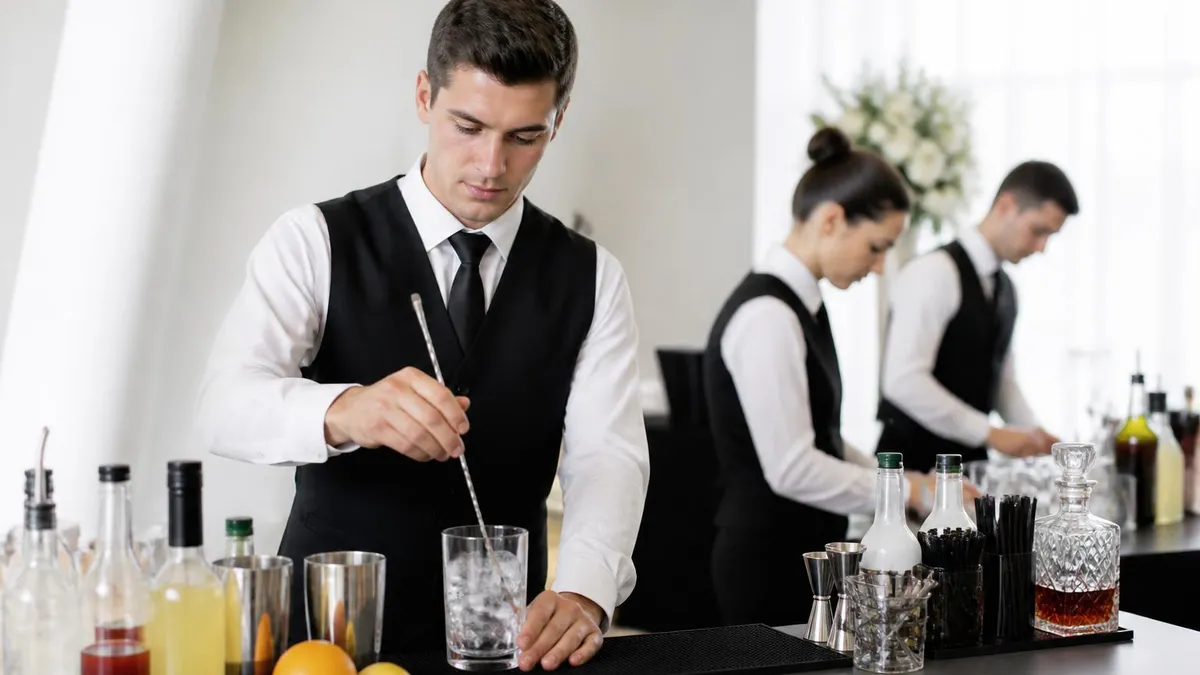
Bartender Rental vs DIY Bar: Which Is Right for Your Event?
- +Professional pace handles 50+ guests without lines forming
- +Reduces host stress so you can actually enjoy your own event
- +Bartender brings tools, expertise, and standardized pour control
- +Many carry their own liability insurance, reducing host exposure
- +Faster service means lower total alcohol consumption per guest
- +Cleanup is included; bar area is left spotless at end of night
- +Pre-event consultation calibrates alcohol order to actual guest count
- −Adds $300-$2,500 to event budget depending on tier
- −Requires booking 2-6 months in advance during peak season
- −Cancellation policies often forfeit 25-50% of deposit
- −Travel fees apply for rural or distant venues
- −Tip expectations add another 15-20% on top of base rate
- −Tipping etiquette can feel awkward at private hosted events
Bartender Rental Pre-Booking Vetting Checklist
- ✓Confirm bartender holds current Responsible Beverage Service certification for your state
- ✓Request a copy of their general liability insurance certificate naming you as additional insured
- ✓Ask for three references from events within the last 12 months and actually call them
- ✓Verify years of private event experience, not just bar or restaurant tenure
- ✓Get a written quote breaking out labor, travel, gratuity, and any consumables separately
- ✓Read the cancellation, weather, and overtime clauses before signing the contract
- ✓Confirm bartender-to-guest ratio matches industry standards for your guest count
- ✓Ask whether they bring their own tools or expect you to provide bar equipment
- ✓Discuss what happens if a guest becomes intoxicated and needs to be cut off
- ✓Confirm arrival, setup, service, and breakdown times in writing with buffer windows
Book at least 30 days out — preferably 90 for weddings
The single most common bartender rental mistake is waiting too long. By 30 days out, the best bartenders in your market are booked for any Saturday in May through October. For weddings, the 90-day mark is when you can still negotiate; inside 60 days, you take what is available. If you must book last-minute, expect to pay a 20-40% rush premium and lose access to premium tier providers entirely.
Insurance and licensing are where bartender rental gets serious, and where many first-time hosts make expensive mistakes. The rules vary dramatically by state, but the general principle is this: if you are hosting an event where alcohol is served, you can be held legally liable for what your guests do after they leave. This is called social host liability or third-party liability, and it exists in some form in 42 states. Hiring a certified bartender is the single best legal protection you can buy, but only if the certification is real and current.
The most common credential to ask for is Responsible Beverage Service training, often abbreviated as RBS, TIPS, ServSafe Alcohol, or a state-specific equivalent. These programs teach bartenders to recognize signs of intoxication, check IDs correctly, refuse service when appropriate, and document incidents. In California, RBS certification has been mandatory for all bartenders since July 2022. Texas requires TABC certification. Washington requires MAST. Always ask which specific certification your bartender holds, when it was issued, and when it expires. A valid card has a unique ID number you can verify online.
General liability insurance is the second pillar. A professional event bartender should carry at minimum $1 million per occurrence in general liability coverage, and many premium bartenders carry $2 million. This protects against slip-and-fall claims, broken glass injuries, property damage to your venue, and similar incidents. Ask for a current Certificate of Insurance (COI) and request that you and your venue be added as additional insured. Reputable bartenders provide this within 24 hours; if they hesitate or ask why, hire someone else.
Liquor liability insurance is separate from general liability and specifically covers alcohol-related claims, like a guest who drives drunk after your event and causes injury. Many freelance bartenders do not carry this coverage because it is expensive, but full-service bartender rental companies usually do. If your bartender does not carry liquor liability, consider purchasing event-day host liquor liability through your homeowner's policy or a one-day event insurance provider. Coverage typically costs $75-$200 for an event of 50-150 guests.
Permits are a state-by-state minefield. In some states, you do not need any permit to host a private event where alcohol is served as long as no one is being charged for drinks. In others, even private events require a one-day caterer's permit if alcohol is being served by a paid bartender. New Jersey, for instance, has notably strict rules. Wisconsin's operator's license system is also unusual. Check your local Alcohol Beverage Control board's website 60 days before your event, and ask your bartender to confirm what permits they hold or expect you to obtain.
The contract is your final layer of protection. A good bartender rental contract specifies start and end times, overtime rates, the consequences of late guest arrivals, what happens if the bartender cannot perform (illness, transportation), refund policies, photo and video usage rights, and a clear statement of who is responsible for refusing service to intoxicated guests. That last clause matters: you want the bartender to have full authority and a documented duty to cut people off, because that authority shifts some liability away from you as the host.
Finally, document everything on event day. Take photos of the bar setup, the bartender's certification card, and any alcohol provided. Keep a copy of the COI in your event file. If a guest becomes problematic, have the bartender note the time of last service in writing. These records sound paranoid until you need them, at which point they are priceless. A lawsuit related to a private event can take three to five years to resolve, and memories fade. Documentation does not.
If a bartender will only accept cash, refuses to provide a written contract, or cannot produce a certificate of insurance, walk away. These are signs of an unlicensed operator with no business protection. The savings of $50-$100 are not worth a five-figure lawsuit if something goes wrong at your event. Professional bartenders in 2026 accept Venmo, Zelle, ACH, or credit cards, and they always provide receipts.
Booking timeline matters more in 2026 than it ever has, because demand for skilled event bartenders has outpaced the supply of certified, insured professionals in most major markets. For a Saturday wedding between May and October, start your search nine months out. For a holiday party in December, start in August. For a casual summer barbecue, four to six weeks is usually enough lead time if you are flexible on which specific bartender you book. Last-minute bookings inside two weeks are possible but expensive and limited.
The booking process itself has become more sophisticated. Most professional bartenders now use online booking platforms that handle quotes, contracts, deposits, and event-day check-ins automatically. Expect to pay a 25-50% deposit at booking, with the balance due 7-14 days before the event. Refundable deposits are rare; most companies offer credit toward a future booking if you cancel outside 30 days, and nothing if you cancel inside 14 days. Weather cancellation policies vary, so read those clauses carefully if your event is outdoors.
When you reach out for quotes, give the bartender enough information to give you an accurate number on the first try. That means: event date and start/end times, exact address, guest count, type of bar (beer-wine only, beer-wine-signature cocktail, full bar), whether you need them to bring glassware, and any special requests like batched cocktails or a champagne toast. A bartender who has to email you four times to clarify basic details will be slow to respond on event day too. Treat the inquiry process as a test of their professionalism.
If you are hiring multiple bartenders for a larger event, designate one as the lead. The lead handles communication with you, supervises bar setup, and manages the team during service. Lead bartenders typically charge 10-20% more than their team members, and the premium is worth it. Without a clear lead, you become the de facto manager during your own party, which defeats the purpose of hiring help in the first place. Confirm the lead arrangement in writing before signing the contract. For additional context on finding qualified local talent, see our companion guide on bartender near me.
Communication norms have shifted in 2026 toward fewer phone calls and more text-based confirmations. Most bartenders prefer SMS or email for event logistics, with a single phone call about a week before to walk through the timeline. Do not be offended if your bartender does not pick up the phone immediately; the working bartender population is largely on the road or behind a bar most evenings. A 24-hour email response window is the new normal for non-urgent questions.
Day-of communication should be planned in advance. Confirm the bartender's arrival time, the venue contact who will let them in, where they should park, and where they should set up. Send these details in a single email or text 48 hours before the event so the bartender can screenshot and refer back. Avoid information dumps on event day itself; you will be too busy and the bartender will be focused on setup. The best events have all the logistics nailed down before anyone arrives.
Finally, plan for the post-event wrap-up. Tipping should happen at the end of service, in cash if possible, handed directly to the bartender or the lead. If gratuity was already included in the contract, an additional cash tip of $20-$50 per bartender is a generous gesture for exceptional service but not expected. Send a follow-up thank-you email within a week and offer to leave a review on their preferred platform. Great bartenders remember generous clients, and you will get priority booking next time.
With the strategic decisions made, let us turn to the practical tips that separate a smooth event from a stressful one. The first and most important: do not run out of ice. The most experienced bartenders calculate 1.5 to 2 pounds of ice per guest for a four-hour event, and that is before accounting for ice used in coolers to chill beer and wine. Most hosts buy half that amount and regret it by 8 p.m. Buy too much; leftover ice melts harmlessly down a drain and costs almost nothing.
The second tip is to set up the bar in the right place. The bar should be visible from the main social area but not in a high-traffic walkway. Avoid corners that create one-way traffic flow; guests should be able to approach the bar, order, and step away without blocking the next person. Ideally place the bar 10-15 feet from the food, far enough that lines do not collide but close enough that guests circulate. Lighting matters too; bartenders cannot accurately pour or read IDs in dim light.
The third tip is to stock backup supplies that bartenders frequently forget to mention. Have two clean bar towels per bartender, a small first-aid kit (cuts happen), a fire extinguisher within reach, a backup phone charger, and a printed copy of the cocktail menu in large font. If your event is outdoors, add a small umbrella or canopy over the bar to protect bottles from sun and rain. Hot bottles produce flat carbonated drinks and warm spirits do not pour cleanly.
The fourth tip is the signature cocktail decision. Limit signatures to one or two drinks maximum, and make sure at least one is a non-alcoholic option that looks just as elevated as the alcoholic version. Signature cocktails should use ingredients that can be batched in advance and finished individually; trying to muddle fresh herbs for 80 individual mojitos will collapse any bar. Talk through the signature with your bartender well in advance so they can pre-batch and chill it before guests arrive.
The fifth tip concerns guest communication. Print a small sign listing the bar offerings: "Beer, Wine, Sparkling, Signature Cocktail, Non-Alcoholic Options." This dramatically reduces the time bartenders spend explaining what is available, which is the single biggest cause of bar lines at private events. If you are not offering hard liquor, say so on the sign so guests do not ask. Clear menus mean faster service and fewer awkward refusals.
The sixth tip is to feed your bartenders. This sounds basic but is constantly overlooked. A four-hour shift on their feet, in a high-pressure environment, deserves a real meal. Either include a vendor meal in your catering order or set aside sandwiches and water. Schedule a 10-minute break in the middle of service if you have only one bartender, or stagger breaks if you have two. A fed, hydrated bartender works faster and makes better drinks. It is the cheapest performance upgrade you can give them.
The seventh and final tip is to trust your bartender's judgment on cutting off intoxicated guests. This is the moment when many hosts panic and try to override the bartender to keep a guest happy, and it is almost always a mistake. The bartender's certification trains them on the legal and visible signs of over-service, and they are protecting both your guests and your legal exposure. Back them up publicly, offer water and food to the affected guest, and move the social moment along. You hired a professional; let them be one.
Sample Bartender Certification Practice Questions
Try these questions from our free Bartender Certification practice tests. The correct answer and an explanation follow each question.
When refusing service to an intoxicated patron, which of the following statements is the most professional and effective?
- A. "You're clearly drunk and I can't serve you anymore."
- B. "My manager told me I have to cut you off."
- C. "I'm sorry, but for safety reasons, I'm not able to serve you any more alcohol tonight. Can I get you some water or call a taxi for you?"
- D. "If you cause any trouble, I'm calling the police immediately."
Answer: C. "I'm sorry, but for safety reasons, I'm not able to serve you any more alcohol tonight. Can I get you some water or call a taxi for you?"
When refusing service, it is crucial to be polite, firm, and non-judgmental. Avoid accusatory language like 'you're drunk.' Stating the refusal clearly and offering alternatives like water or a safe ride home de-escalates the situation and shows concern for the patron's well-being, which is a key part of responsible service.
What is the importance of knowing the bar's menu thoroughly as a bartender?
- A. It is only important for the manager to know the full menu
- B. It allows the bartender to make confident recommendations, answer questions accurately, and provide excellent customer service
- C. Menu knowledge is only needed during training
- D. Customers prefer to make all decisions independently
Answer: B. It allows the bartender to make confident recommendations, answer questions accurately, and provide excellent customer service
Thorough menu knowledge allows bartenders to make confident, accurate recommendations, answer questions promptly, and provide a higher level of professional service.
When should a bartender proactively check in with seated bar guests during service?
- A. Only when a guest signals by waving
- B. When a guest's glass is about half to two-thirds empty, to offer a refill or ask if they need anything else
- C. Only at the very beginning and end of the visit
- D. Every 15 minutes on a fixed schedule regardless of drink levels
Answer: B. When a guest's glass is about half to two-thirds empty, to offer a refill or ask if they need anything else
Proactively checking in when a guest's glass is half to two-thirds empty allows a natural conversation about refills and needs without the guest having to flag down the bartender.
Which behavior is the most appropriate way for a bartender to refuse service to a visibly intoxicated customer?
- A. Speak calmly and privately, explain you cannot serve more alcohol, and offer water or food
- B. Loudly announce to the bar that the customer is cut off
- C. Argue with the customer until they leave
- D. Ask another bartender to serve them instead
Answer: A. Speak calmly and privately, explain you cannot serve more alcohol, and offer water or food
The best practice is to refuse service in a calm, respectful, and private manner. This reduces the risk of confrontation, preserves the patron's dignity, and maintains a safe environment for all guests.
Bartender Bartender Questions and Answers
Bartender Near Me: How to Find, Vet, and Hire a Local Bartender in 2026
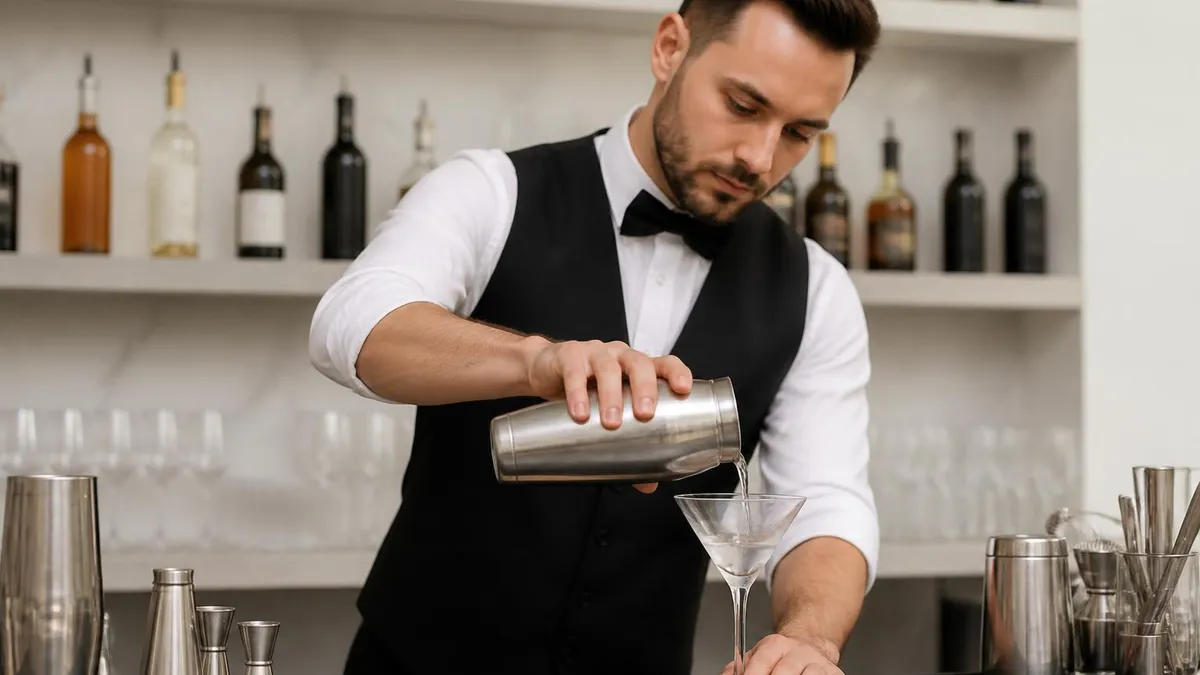
Bartender for Hire: How to Book, Pricing Guide, and What to Expect in 2026
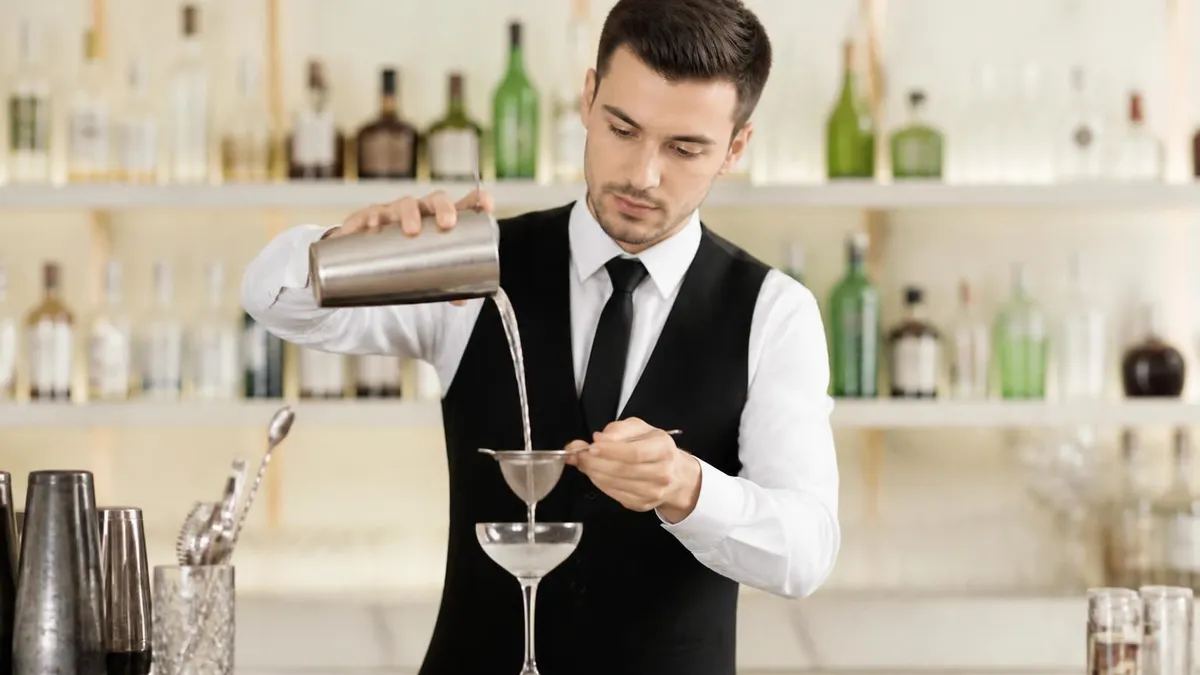
Shot Bartending Techniques: The Complete Guide to Speed, Style, and Service Behind the Bar
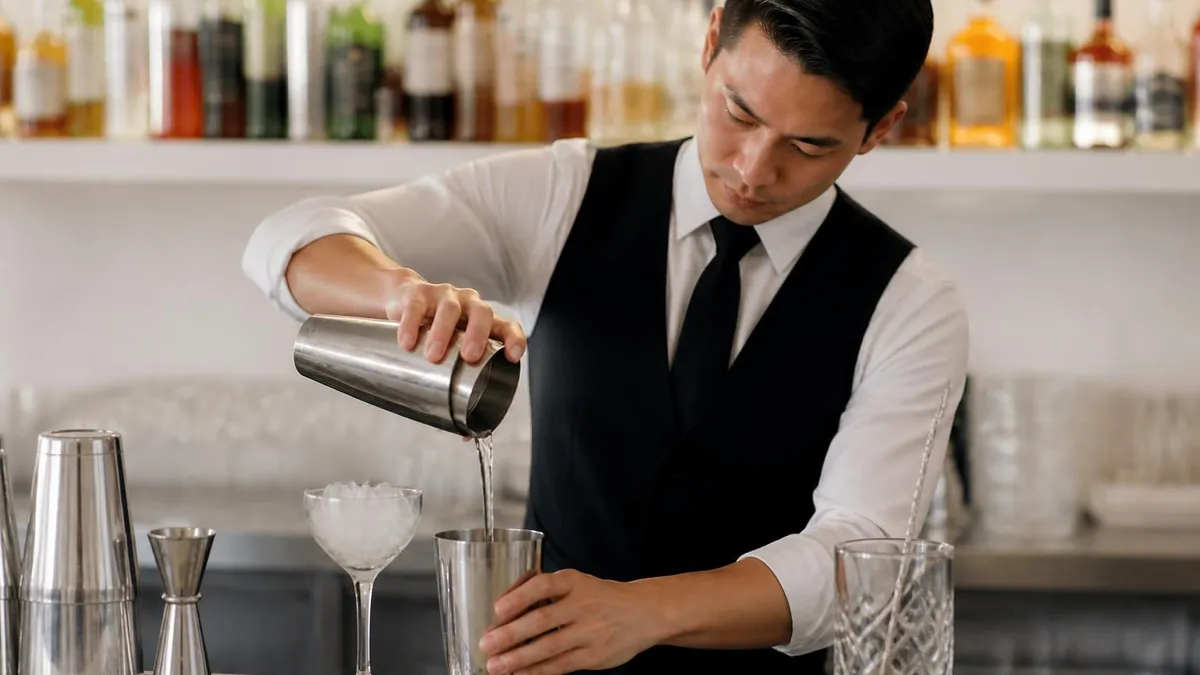
Bartending License Florida: Complete Certification & Permit Guide for 2026
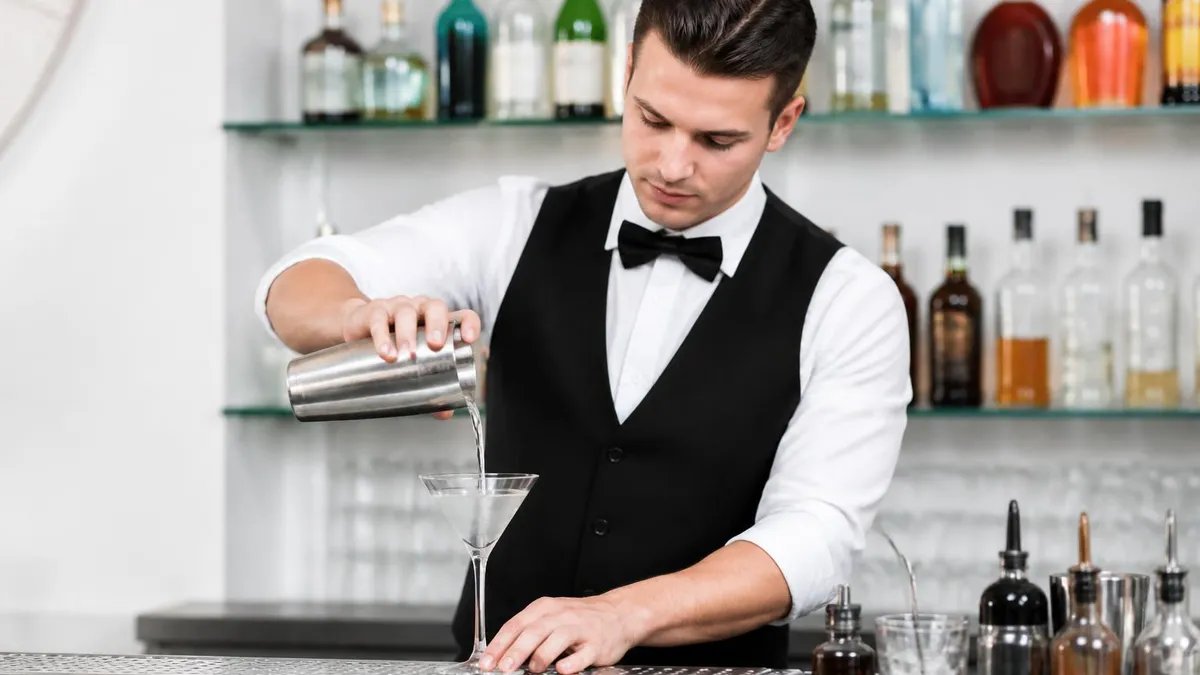
Wisconsin Bartending License: Operator's License Guide 2026
How this page was made: written with AI tools and published by Nathan Beja, founder of Practice Test Geeks, who is responsible for its content. We have not yet matched this exam's facts to an official source, so confirm fees, dates and rules with the exam body. Not reviewed by a subject-matter expert. Editorial policy