
Bartender License Illinois: Complete Training Guide and Requirements for 2026
Everything you need to get your bartender license in Illinois — training, BASSET certification, costs, and tips. 🎯 Start your bartending career today.

Getting your bartender license illinois requires is one of the smartest career moves you can make in the hospitality industry, and understanding Illinois-specific requirements from the start will save you weeks of confusion. Illinois does not issue a single statewide "bartender license" the way some states do — instead, the primary legal requirement is completing a BASSET certification (Beverage Alcohol Sellers and Servers Education and Training), which is mandated by the Illinois Liquor Control Commission. Many municipalities layer additional requirements on top, so your path depends on exactly where in the state you plan to work.
Chicago, for example, enforces stricter rules than most downstate communities. The city requires bartenders to hold a valid Illinois Food Handler Certificate in addition to BASSET, and some establishments also require proof of completion from an accredited bartending school before they will consider a candidate for employment. Knowing which requirements apply to your target city or county before you invest in training prevents wasted time and money on certifications that won't satisfy a specific employer or liquor authority.
BASSET certification is the cornerstone of responsible alcohol service in Illinois. The program teaches bartenders how to recognize signs of intoxication, how to refuse service legally and safely, how to check identification documents, and how to understand Illinois dram shop liability laws. These aren't just bureaucratic checkboxes — dram shop liability means that you, as the server, and your employer can face significant civil lawsuits if an intoxicated patron causes injury after leaving your establishment. Understanding this legal exposure motivates most serious bartenders to treat their certification as a genuine professional credential, not just a formality.
The timeline from zero experience to your first shift behind the bar is shorter in Illinois than in many other states. BASSET certification courses typically run between three and eight hours depending on the provider and format — in-person classes tend to run longer but include live scenario practice, while approved online courses can be completed in a single afternoon.
Once certified, your BASSET card is valid for three years, after which you must complete a renewal course to maintain compliance. Most employers will ask for your BASSET card on the first day of employment, so having it ready before you start job hunting is strongly recommended.
Beyond certification, prospective Illinois bartenders should think carefully about hands-on training. State law does not require you to attend a bartending school, but the practical reality of the job market makes some form of structured training highly valuable. Employers in competitive markets like Chicago, Naperville, and Rockford receive dozens of applications for every open bartender position, and candidates who can demonstrate knowledge of classic cocktail recipes, speed pouring, POS systems, and customer service fundamentals stand out immediately. Many bartending school graduates also benefit from the job placement assistance these programs offer.
Age is the one non-negotiable requirement across all of Illinois: you must be at least 21 years old to work as a bartender. Some establishments will hire 18-to-20-year-olds as barbacks or servers, which is an excellent way to gain floor experience and learn bar operations while you wait to reach the legal bartending age. Using that time to complete your BASSET certification and a bartending course puts you in a strong position to step behind the bar the moment you turn 21.
This comprehensive guide walks you through every step of the process — from understanding BASSET certification requirements and costs to finding the right training program, navigating city-specific rules, and preparing for the knowledge-based portions of your certification exam. Whether you are a complete newcomer or an experienced server looking to move behind the bar, the information here will help you pursue your Illinois bartending career with confidence and clarity.
Illinois Bartending by the Numbers
Key Facts at a Glance
| Item | Value | Details |
|---|---|---|
| BASSET Course Duration | 3–8 hrs | Online or in-person options available |
| BASSET Certification Validity | 3 Years | Renewal required before expiration |
| Minimum Age to Bartend | 21+ | Illinois state law, no exceptions |

How to Get Your Bartender License in Illinois: Step by Step
Confirm You Meet the Age Requirement
Complete BASSET Certification
Obtain a Food Handler Certificate (If Required)
Complete Bartending School or Hands-On Training
Apply for Local Permits If Applicable
Begin Working and Keep Records Current
Bartending schools in Illinois range from weekend crash courses to multi-week professional programs, and choosing the right one for your goals requires looking beyond the marketing materials. The best programs are accredited by recognized industry bodies, offer hands-on bar lab time with real equipment, and have established relationships with local employers who actively recruit their graduates. When evaluating a school, ask specifically how many hours of hands-on practice are included, what their job placement rate is, and whether their BASSET component is ILCC-approved so you don't have to take a separate certification course afterward.
Chicago is home to several highly regarded bartending schools, including the Chicago School of Bartending and American Bartending School locations that have trained thousands of working bartenders across the metro area. These programs typically run two to four weeks of intensive training and include modules on classic cocktails, craft spirits, wine and beer service, bar math, inventory management, and Illinois liquor law. The cost usually falls between $400 and $800 for the full program, which is a modest investment when you consider that an experienced Chicago bartender can earn $50,000 to $70,000 per year including tips.
Online bartending courses have grown significantly in popularity since 2020, and several Illinois-accredited providers now offer fully remote training. These programs work well for people with scheduling constraints or those who live in parts of Illinois without nearby in-person schools. However, online courses have one notable limitation: they cannot replace hands-on practice with bottles, shakers, jiggers, and bar equipment. If you choose an online curriculum, supplement it with personal practice at home using affordable bartending kits and practice recipes until your pouring accuracy and speed reach professional levels.
Community colleges across Illinois also offer hospitality and bartending programs, often at lower cost than private bartending schools. Colleges like Wilbur Wright, Harry S. Truman, and Oakton Community College have offered culinary and hospitality programs that include bar service components. These programs may take longer than a private school — sometimes a full semester — but they tend to offer more comprehensive coverage of restaurant operations, food and beverage management, and industry business practices, which can be valuable for bartenders who eventually want to move into management roles.
Apprenticeship pathways are underutilized but legitimate in Illinois. Starting as a barback — the support role behind the bar — and learning on the job from experienced bartenders is how many of the industry's best professionals developed their skills. A dedicated barback who pays attention, practices during slow hours, and takes every opportunity to learn can transition to a bartending position within six to twelve months at many establishments. This pathway requires patience but produces bartenders with deep, practical knowledge of real bar operations rather than idealized school scenarios.
Regardless of which training pathway you choose, focusing on the knowledge components of the job is just as important as the physical skills. Understanding Illinois liquor regulations, knowing how to calculate pour costs, being able to identify fake identification documents, and mastering the art of reading customer behavior are all skills that separate competent bartenders from exceptional ones. The practice tests and certification prep materials on this site are specifically designed to reinforce this knowledge base so that when you sit for your BASSET exam or a skills assessment at a job interview, you perform with confidence.
Specialty certifications can also distinguish your application in competitive hiring environments. Programs like the Court of Master Sommeliers, the WSET (Wine and Spirits Education Trust), or the Bar Smarts program offered by Pernod Ricard signal serious professional commitment to employers at upscale hotels, fine dining establishments, and craft cocktail bars. These are not requirements for most Illinois bartending positions, but they are powerful differentiators if you aspire to work at top-tier venues in Chicago's vibrant hospitality scene, where competition for the best positions is intense.
Illinois Liquor Laws, BASSET Rules, and City Regulations Explained
The Illinois Liquor Control Commission (ILCC) administers the BASSET program, which is the state's primary mechanism for ensuring responsible alcohol service. All servers and sellers of alcohol are strongly encouraged — and in many contexts legally required by their employers or local ordinances — to complete an ILCC-approved BASSET course. The certification covers key topics including recognizing visible intoxication, checking ID documents for validity and age, understanding dram shop liability, and de-escalating difficult customer situations without creating legal exposure for the establishment.
BASSET courses are offered by dozens of approved providers across Illinois, including in-person classroom sessions, online courses, and hybrid formats. The ILCC maintains an updated list of approved providers on its official website, and it is critical to use only listed providers — certificates from unapproved programs are not recognized and will not satisfy employer or municipal requirements. Once you pass the assessment at the end of your course, you receive an official BASSET certificate and wallet card. The certification is valid for three years from the date of completion, and renewal courses are available from the same network of approved providers.

Is Pursuing a Bartender License in Illinois Worth It?
- +High earning potential with tips — Chicago bartenders regularly earn $50,000–$70,000 annually
- +BASSET certification process is fast, affordable, and widely available online
- +Strong job market with thousands of bars, restaurants, hotels, and event venues hiring statewide
- +Career flexibility — skills transfer to catering, event bartending, and bar management roles
- +Bartending school job placement programs can accelerate your first hire significantly
- +BASSET knowledge protects you personally from dram shop liability lawsuits
- −Must be 21 or older — younger candidates must wait before stepping behind the bar
- −Chicago requires additional Food Handler certification on top of BASSET
- −Bartending school costs of $400–$800 can be a barrier for low-income candidates
- −BASSET certification expires every three years, requiring ongoing renewal commitment
- −City-specific local permits add complexity and cost in some Illinois municipalities
- −Competitive job market in Chicago means even certified candidates may need persistence to land first role
Illinois Bartender License Checklist: Everything You Need Before Your First Shift
- ✓Confirm you are 21 years of age or older before applying for any bartending position in Illinois.
- ✓Enroll in an ILCC-approved BASSET certification course through the official provider list on the ILCC website.
- ✓Complete the BASSET course and pass the final assessment to receive your official wallet card and certificate.
- ✓Obtain an Illinois Food Handler Certificate if you plan to work in Chicago or any municipality that requires it.
- ✓Research whether your target city or county requires an individual server or bartender permit beyond BASSET.
- ✓Complete a bartending school program or structured apprenticeship to develop hands-on skills that employers expect.
- ✓Assemble a professional portfolio including your BASSET card, food handler certificate, and any bartending school diploma.
- ✓Practice bar knowledge using certification prep tools — including liquor law, inventory math, and ID verification scenarios.
- ✓Apply to bartending positions and disclose all certifications prominently on your resume and in interviews.
- ✓Track your BASSET expiration date and schedule renewal training at least 60 days before the three-year mark.
Illinois Dram Shop Act — What Every Bartender Must Understand
Under the Illinois Dram Shop Act (235 ILCS 5/6-21), any person who sells or gives alcohol to a visibly intoxicated individual can be held personally liable for damages caused by that person afterward. This means that as a bartender, you — not just your employer — can be named in a lawsuit if a patron you served causes an accident. BASSET certification provides documented evidence of professional training, which is a meaningful legal protection in any dram shop case. Never serve without it.
The cost of obtaining your Illinois bartender credentials is modest relative to the income potential of the career, but budgeting accurately from the start prevents surprises. BASSET certification through an online provider typically costs between $15 and $35, making it the most affordable component of the entire process. In-person BASSET courses through hospitality associations or community organizations sometimes cost slightly more — typically $40 to $75 — but include live scenario practice and the opportunity to ask questions of an experienced instructor, which many candidates find valuable for deeper understanding of the material.
If your target city requires a Food Handler Certificate, budget an additional $15 to $25 for that course and assessment. The Illinois Food Handler Certificate is widely accepted statewide and must be renewed every three years, aligning conveniently with your BASSET renewal cycle if you obtain both certifications at the same time. Some providers offer bundled pricing for BASSET plus Food Handler training, which can save $10 to $20 compared to purchasing them separately — worth asking about when you contact approved providers.
Bartending school is the largest single expense in the path to becoming a licensed Illinois bartender. Programs range from around $350 for a basic weekend course at a private school to $800 or more for a comprehensive multi-week program at an established institution. When comparing programs, look at what is included in the tuition: some schools include BASSET certification in the program fee, others charge it separately. Job placement services, practice materials, and equipment access during training are other value-adds worth evaluating when comparing similarly priced programs.
Local permits, where required, add a modest annual fee of $25 to $100 depending on the municipality. These are renewable costs you will carry throughout your career in that jurisdiction, so factor them into your annual professional development budget. Some employers reimburse permit fees as part of their benefits package, particularly at larger hotel and restaurant groups — it is entirely appropriate to ask about this during salary negotiation once you have a job offer in hand.
The timeline to becoming a working bartender in Illinois is one of the shortest of any licensed profession in the state. You can complete BASSET certification in a single day, obtain a Food Handler Certificate in two hours, and finish an intensive bartending school program in as little as one week. Realistically, a motivated candidate who starts from zero can have all documentation in hand and be actively applying for jobs within two to three weeks. That is an extraordinarily fast path to a career that can pay $30,000 to $70,000 per year depending on location and venue type.
BASSET renewal is required every three years, and it is important to track this deadline proactively rather than waiting for a reminder. Your employer's liquor license compliance depends in part on their staff's current certifications, and many establishments conduct annual credential audits to catch expired cards before they create regulatory problems. Set a calendar reminder 90 days before your BASSET expiration date to give yourself ample time to find an approved renewal course and complete it before the deadline — late renewals can create gaps in your eligibility to work that may affect your employment status.
For bartenders who transition between Illinois cities, understanding that your BASSET certification is statewide while local permits are jurisdiction-specific is critical. If you move from Rockford to Chicago, your BASSET card is still valid, but you will need to obtain Chicago's Food Handler Certificate and comply with any Chicago-specific employer requirements. Building this awareness into your career planning prevents the frustrating experience of arriving at a new city ready to work and discovering a compliance gap that delays your first paycheck by several weeks.

Working as a bartender in Illinois without a current, ILCC-approved BASSET certification exposes both you and your employer to significant legal risk. If a dram shop incident occurs while you are uncertified, the absence of training documentation severely undermines any legal defense available to you or your employer. Many Illinois establishments now verify BASSET status before the first shift — having your card ready demonstrates professionalism and protects everyone involved.
Illinois offers one of the strongest bartending job markets in the United States, anchored by Chicago's massive and diverse hospitality industry. The city hosts thousands of licensed establishments across every category imaginable — craft cocktail bars in the West Loop, hotel bars in the Loop, sports bars near Wrigley Field and Guaranteed Rate Park, rooftop bars in River North, dive bars in Wicker Park, and fine dining establishments in the Gold Coast and Lincoln Park neighborhoods.
Each of these venue types offers a distinct bartending experience and a different compensation structure, so thinking carefully about which environment suits your personality and goals is worth doing early in your career planning.
Hotel bar bartenders in Chicago often earn some of the highest base wages in the industry because hotels typically pay hourly rates above the minimum wage rather than relying solely on tips. However, the cocktail complexity and service standards at five-star hotel bars are correspondingly high — you will be expected to execute classic cocktails flawlessly, maintain encyclopedic knowledge of spirits, and deliver impeccable service to guests who may be the most discerning customers you will ever serve. The learning curve is steep, but the professional development is exceptional for bartenders who aspire to reach the top of the field.
Sports bars and neighborhood taverns offer higher tip volume during peak times and a more relaxed service style that many bartenders genuinely prefer. The pace at a busy game-day sports bar can be intense, but the drink complexity is lower and the social energy is high. Bartenders in these environments often develop outstanding speed and efficiency — skills that transfer well across any bar environment. Starting your career at a neighborhood bar where management is willing to train you is a legitimate and effective pathway that has launched thousands of successful Illinois bartending careers.
The event and catering bartending market is another significant segment of the Illinois hospitality economy, particularly in the Chicago metro area where corporate events, weddings, and large-scale private parties are a major industry. Event bartenders often work through staffing agencies or as independent contractors, which offers scheduling flexibility but requires you to build a reputation and client network over time.
The hourly rates for event bartending can be excellent — often $20 to $35 per hour plus tips — and the variety of venues and events keeps the work interesting. BASSET certification and professional presentation are especially important in this segment because you are often working in clients' private spaces without the safety net of a permanent management team overseeing the event.
Career advancement in Illinois bartending follows several well-established pathways. Many experienced bartenders move into bar management, beverage director, or general manager roles at establishments where they have demonstrated not just technical skill but also inventory management competence, staff leadership ability, and business acumen. The bar inventory and cost control knowledge tested in BASSET and professional certification programs is directly relevant to these advancement opportunities — employers promoting from within consistently look for bartenders who understand the financial side of bar operations, not just the craft side.
Salary growth in Illinois bartending tracks closely with venue type, location, and experience level. Entry-level bartenders at neighborhood bars in smaller Illinois cities might earn $28,000 to $35,000 annually including tips. Mid-career bartenders at established Chicago restaurants and hotels commonly earn $45,000 to $60,000. Top bartenders at high-volume Chicago nightclubs or luxury hotel bars can earn $70,000 to $90,000 or more in exceptional years. These figures make bartending one of the more financially rewarding trades available without a four-year degree, particularly for candidates who combine strong technical skills with genuine hospitality instincts.
Investing in continuing education throughout your bartending career is the most reliable way to accelerate salary growth. Spirits education programs like WSET Level 2 in Spirits or the BarSmarts Advanced program signal to upscale employers that you take the craft seriously. Learning about craft beer through the Cicerone Certification Program opens doors at brewpubs and beer-focused establishments.
Cocktail competition participation — Chicago hosts several annual competitions including the Diageo World Class qualifier — builds your professional reputation and expands your industry network. These investments, combined with your foundational BASSET certification, create a professional profile that can command premium compensation throughout your Illinois bartending career.
Preparing for the knowledge-based components of your Illinois bartender certification requires a structured approach that goes beyond simply reading the BASSET manual once. The most effective preparation combines study of written material with active recall practice — answering questions from memory rather than just reviewing information passively. Research consistently shows that active recall dramatically outperforms passive review for long-term retention, which matters in bartending because you need to apply BASSET knowledge in real time during high-pressure service situations where there is no opportunity to look up the rules.
Focus your study sessions on the four core competency areas that BASSET and professional bartender certification exams consistently emphasize. First, master Illinois dram shop liability law: understand the legal standard for visible intoxication, know the potential damages that can flow from a dram shop violation, and be able to articulate the steps you should take when you suspect a patron has reached their limit. This legal knowledge is not just exam material — it is the foundation of responsible professional practice that protects you, your employer, and the public every shift you work.
Second, study identification verification thoroughly. BASSET courses cover how to check IDs, but many candidates underestimate the complexity of this skill in practice. Illinois accepts driver's licenses, state ID cards, passports, and military IDs as valid proof of age.
You need to know what each document looks like when genuine, what common indicators of a fake ID include (unusual font, inconsistent spacing, stiff laminate, incorrect holograms), and what your legal obligation is when you are presented with a document you believe is fraudulent. Practice verbal scripts for requesting ID politely but firmly — awkward or confrontational ID checks drive away legitimate customers and create unnecessary tension.
Third, develop strong competency in recognizing signs of intoxication and understanding the appropriate intervention techniques. Slurred speech, loss of balance, impaired coordination, and changes in behavior are the classic signs, but experienced bartenders learn to identify subtler indicators earlier in the service sequence — overly animated behavior, increased volume, decreased reaction time, or a shift in social dynamics at the table. The earlier you identify a patron who may be approaching their limit, the more gracefully you can slow their service without creating a confrontation or losing their business entirely.
Fourth, study bar inventory and cost control concepts deeply, not just enough to pass the certification exam. These concepts directly affect your value to employers: a bartender who understands pour costs, knows how to conduct accurate physical inventory, can identify variance that suggests waste or theft, and can calculate drink prices based on target margins is genuinely more valuable than one who simply knows how to mix drinks. The practice tests on this site cover inventory and cost control in detail, and working through multiple practice rounds will cement these concepts in ways that passive study cannot match.
Practice tests are most effective when you use them diagnostically rather than just as score-generators. When you answer a question incorrectly, stop and understand exactly why the correct answer is right — not just what the right answer is, but the underlying principle it represents.
Then test yourself on that concept again in a different context to confirm you have genuinely internalized it rather than just memorized the answer to that specific question. This diagnostic approach, applied consistently across multiple practice sessions, produces the kind of deep understanding that translates to confident performance both on the certification exam and in real bartending situations behind the bar.
In the final days before your BASSET assessment, shift from learning new material to consolidating what you already know. Review your weakest areas as identified by your practice test performance, refresh your memory on Illinois-specific rules and dates, and get a full night's sleep before the assessment. The BASSET exam itself is not designed to trick candidates who have prepared honestly — it tests genuine understanding of responsible alcohol service principles that any serious bartending professional should know deeply. Approach it with confidence, knowing that thorough preparation is the most reliable predictor of success on any knowledge-based certification assessment.
Sample Bartender Certification Practice Questions
Try these questions from our free Bartender Certification practice tests. The correct answer and an explanation follow each question.
If a liquor license is suspended, what is the establishment prohibited from doing?
- A. Serving food
- B. Hosting live music
- C. Selling or serving alcoholic beverages
- D. Operating past 10 PM
Answer: C. Selling or serving alcoholic beverages
A suspended liquor license means the establishment loses its legal right to sell or serve alcoholic beverages during the suspension period.
Which glassware is typically used for serving a martini?
- A. Highball glass
- B. Old-fashioned glass
- C. Martini glass
- D. Collins glass
Answer: C. Martini glass
The martini glass, with its distinctive V-shaped bowl and long stem, is specifically designed for serving martinis and other 'up' cocktails (served without ice). The stem helps prevent the drinker's hand from warming the chilled drink, while the wide rim allows for elegant garnishes and enhances the aroma of the cocktail.
A customer requests a 'digestif' after their meal. Which of the following would be the most appropriate offering?
- A. Aperol Spritz
- B. Dry Martini
- C. Fernet-Branca
- D. Gin and Tonic
Answer: C. Fernet-Branca
A digestif is an alcoholic beverage served after a meal to aid digestion. Fernet-Branca is a well-known Italian amaro, a type of bitter herbal liqueur commonly consumed as a digestif. Aperol Spritz, Dry Martinis, and Gin and Tonics are typically consumed as apéritifs, which are served before a meal to stimulate the appetite.
How should a bartender handle a situation where a guest is being rude or aggressive?
- A. Match the guest's tone and volume
- B. Calmly set a professional boundary, de-escalate, involve a manager if necessary, and refuse service if the behavior continues
- C. Apologize repeatedly and give the guest whatever they demand
- D. Ignore the behavior to avoid conflict
Answer: B. Calmly set a professional boundary, de-escalate, involve a manager if necessary, and refuse service if the behavior continues
Rude or aggressive behavior requires calm, professional de-escalation, clear boundaries, and manager involvement if the behavior escalates — the safety of staff and other guests comes first.
Bartender Bartender Questions and Answers

Bartending Classes Near Me: How to Find, Compare, and Choose the Right Local Training Program in 2026

How to Become a Bartender by State: Complete Requirements Guide for All 50 States

Did Ed Gein Really Kill the Bartender? The True Crime Myth vs. Bartending Reality

Mobile Bartending Names: 200+ Ideas to Brand Your Cocktail Business in 2026

Bartender Salary Maryland: Complete Pay Guide by City, Venue, and Experience for 2026
About the Author
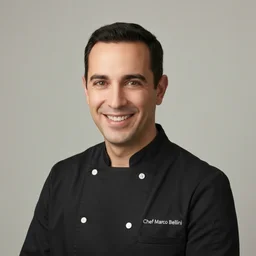
Executive Chef & Culinary Arts Certification Educator
Culinary Institute of AmericaChef Marco Bellini is a Certified Executive Chef and graduate of the Culinary Institute of America with over 20 years of professional kitchen experience in Michelin-recognized restaurants. He teaches culinary arts certification, food safety, and hospitality exam preparation, having guided thousands of culinary students through their ServSafe, ProStart, and professional chef certifications.
Join the Discussion
Connect with other students preparing for this exam. Share tips, ask questions, and get advice from people who have been there.
View discussion (7 replies)