
Bartender Drink Recipes: The Complete Guide to Mastering Classic and Modern Cocktails Behind the Bar
Master bartender drink recipes with our complete guide. ✏️ Learn 50+ classic cocktails, modern mixology, build specs, garnish techniques, and pro pour tips.
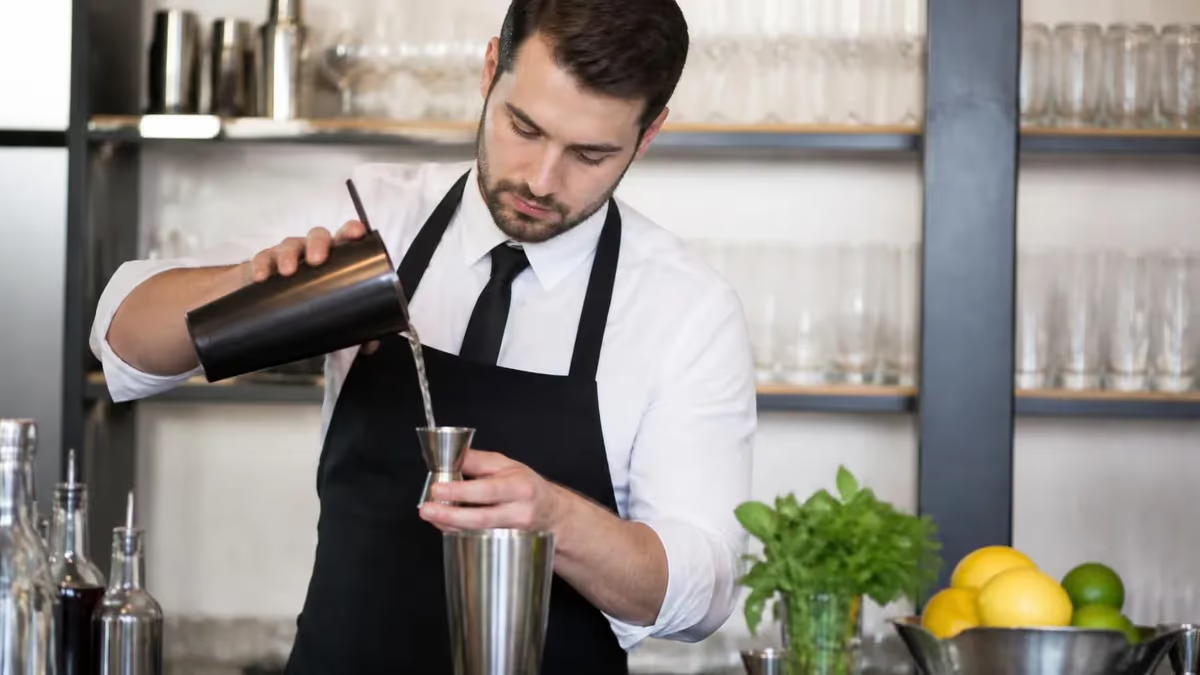
Mastering bartender drink recipes is the single most important skill that separates a working bartender from a great one. Whether you are studying for certification, prepping for a busy Friday night service, or staffing a high-volume cocktail bar, knowing your specs cold means faster tickets, lower pour cost, and happier guests. This guide walks you through the foundational recipes every American bartender should memorize, plus the modern variations that show up on craft menus from Brooklyn to Austin to Portland in 2026.
The cocktail industry has exploded over the past decade, with the U.S. craft cocktail market projected to exceed $48 billion this year. Guests now expect bartenders to handle classic Manhattans and Negronis with the same ease as a smoked old fashioned, a clarified milk punch, or a low-ABV spritz. The bar has been raised, literally. A bartender who can rattle off 50 standard build sheets from memory is hired faster, tipped more generously, and trusted with bigger sections than one who fumbles for a recipe app every time someone orders a Vieux Carré.
This article organizes drink recipes the way professional bar programs organize them: by base spirit, by build method, and by structural family. You will learn the difference between a sour, a highball, a stirred spirit-forward cocktail, and a swizzle. You will see exact ounce specs, glassware pairings, ice strategy, and the small adjustments that turn a mediocre drink into a memorable one. Each recipe is written for a single serving using a standard jigger so you can multiply for batching or service.
Beyond pure recipes, we cover the workflow behind delivering those drinks at speed. A working bartender does not just know recipes, they know the order of operations: rail glass placement, ice, modifiers, base spirit, shake or stir, strain, garnish, and present. That choreography is what allows a single person to produce 60 to 90 cocktails an hour during peak service without sacrificing quality. We will break that workflow down so the recipes actually translate to revenue.
We also cover the rapidly growing zero-proof and low-ABV category, which now makes up nearly 18 percent of beverage orders in major U.S. metros. Knowing how to build a craft non-alcoholic cocktail is no longer optional. Guests who used to order a soda water are now spending 14 dollars on a complex Seedlip and verjus number, and the bartenders who can deliver that experience confidently are the ones getting promoted to head bartender and bar manager roles.
Finally, this guide ties recipes back to the business of bartending. Every drink you build has a cost, a margin, a pour time, and a guest perception. Understanding those four levers is what transforms a recipe book into a profitable bar program. If you want to extend your skills beyond mixing into the operational side, our guide to bartending techniques pairs perfectly with the recipe knowledge here. Together they form the foundation of a complete bartender education for 2026.
Whether you are self-taught, formally trained, or somewhere in between, the goal of this article is the same: give you a working library of bartender drink recipes you can actually use behind a real bar tonight. No fluffy history detours, no obscure ingredients you cannot source, no recipes that require a centrifuge. Just clean, reliable specs and the context to deploy them well.
Bartender Drink Recipes by the Numbers
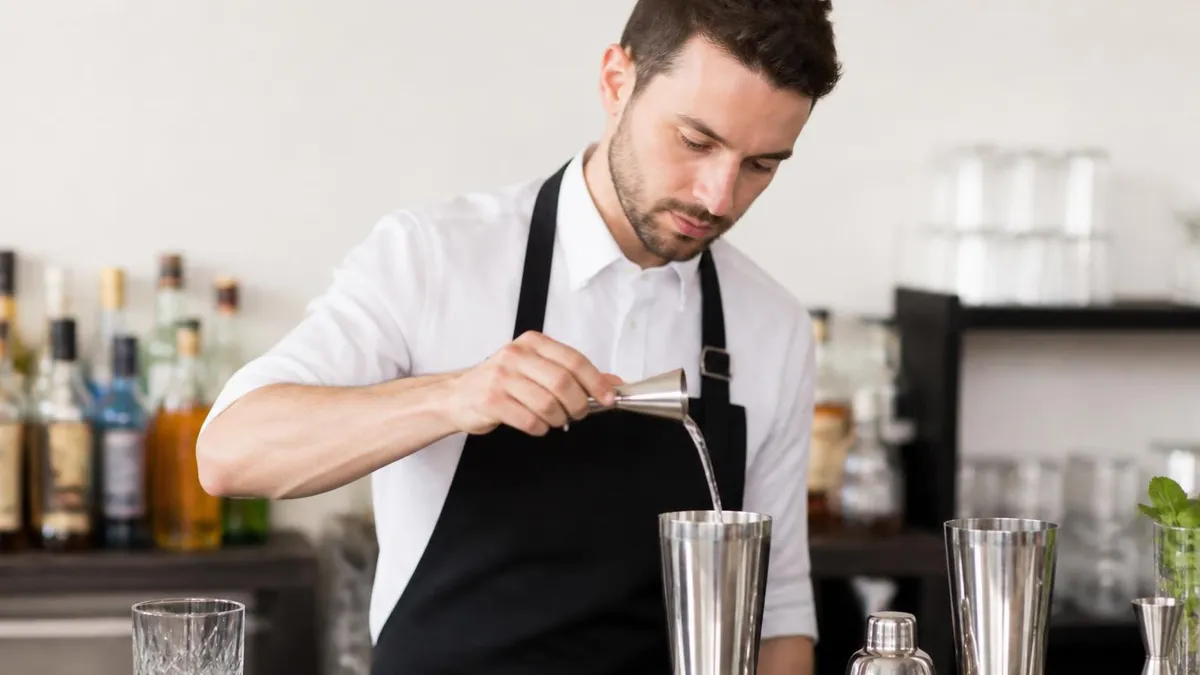
The Six Cocktail Families Every Bartender Must Know
Built primarily of base spirit with small modifiers. Manhattan, Negroni, Martini, Old Fashioned. Always stirred over ice, never shaken, strained into a chilled coupe or rocks glass.
Spirit, citrus, and a sweetener in roughly a 2:1:0.75 ratio. Whiskey Sour, Margarita, Daiquiri, Sidecar. Always shaken hard with ice to chill, dilute, and aerate.
Spirit and a non-alcoholic carbonated mixer over ice in a tall glass. Gin and Tonic, Whiskey Highball, Vodka Soda, Paloma. Built in the glass, never shaken.
Multi-rum blends with citrus, falernum, orgeat, and tropical juices. Mai Tai, Zombie, Painkiller, Jungle Bird. Whip-shaken or flash-blended with crushed ice.
Larger format service drinks served over crushed ice or as bowls. Pimm's Cup, Sangria, Milk Punch. Often batched in advance for events and parties.
Contemporary house creations using infusions, fat-washed spirits, clarification, or unusual modifiers. Often the signature menu drinks at craft cocktail bars.
The thirteen recipes in this section are the absolute non-negotiables for any working American bartender in 2026. If a guest orders any of these and you have to look up the recipe, you are not yet ready for a full-service bar. Memorize them, practice them, and time yourself building each one in under 45 seconds. The list below covers the spec, glassware, ice, and garnish for each.
1. Old Fashioned: 2 oz bourbon or rye, 0.25 oz simple syrup (or one sugar cube), 2 dashes Angostura bitters. Stir over a large rock in a double old fashioned glass. Express an orange peel and drop it in. 2. Manhattan: 2 oz rye, 1 oz sweet vermouth, 2 dashes Angostura. Stir, strain into a chilled coupe, garnish with a brandied cherry. 3. Martini: 2.5 oz gin (or vodka), 0.5 oz dry vermouth, stir, strain, garnish with a lemon twist or olives.
4. Negroni: 1 oz gin, 1 oz Campari, 1 oz sweet vermouth, built over ice in a rocks glass, orange peel garnish. 5. Margarita: 2 oz blanco tequila, 1 oz lime juice, 0.75 oz Cointreau, shake hard, strain into a salted-rim rocks glass over fresh ice. 6. Daiquiri: 2 oz white rum, 1 oz fresh lime, 0.75 oz simple syrup, shake, double-strain into a chilled coupe, no garnish required.
7. Whiskey Sour: 2 oz bourbon, 0.75 oz lemon juice, 0.75 oz simple syrup, optional egg white. Dry shake if using egg, then shake with ice and strain into a rocks glass over a large cube. Garnish with a cherry. 8. Mojito: 2 oz white rum, 0.75 oz lime, 0.5 oz simple, 8 mint leaves muddled gently, topped with soda over crushed ice in a Collins glass.
9. Moscow Mule: 2 oz vodka, 0.5 oz lime, 4 oz ginger beer in a copper mug over crushed ice, lime wheel and mint sprig. 10. Cosmopolitan: 1.5 oz citrus vodka, 1 oz cranberry, 0.5 oz Cointreau, 0.5 oz lime, shake, strain into a chilled coupe, flame an orange peel over the surface for the proper aromatic finish.
11. Espresso Martini: 1.5 oz vodka, 1 oz fresh espresso, 0.5 oz coffee liqueur, 0.25 oz simple syrup. Shake very hard for ten seconds to generate the signature foam, double-strain into a coupe, garnish with three coffee beans. This drink alone now accounts for nearly 8 percent of all cocktail orders in major U.S. markets, so dial it in well.
12. Aperol Spritz: 3 oz prosecco, 2 oz Aperol, 1 oz soda, large wine glass packed with ice, orange slice. 13. Gin and Tonic: 2 oz gin, 4 oz quality tonic, large rocks glass or balloon, plenty of ice, lime wedge or cucumber depending on the gin style. If you want to expand your service skills alongside your recipe knowledge, our guide to becoming a bartender for hire walks through how to package these skills as a private event service.
Bartender Practice Test Questions
Prepare for the Bartender Certification exam with our free practice test modules. Each quiz covers key topics to help you pass on your first try.
Bartender Certification Bar Inventory and ...
Bartender Exam Questions covering Certification Bar Inventory and Cost Control. Master Bartender Test concepts for certification prep.
Bartender Certification Bar Law and Liquor...
Free Bartender Practice Test featuring Certification Bar Law and Liquor Regulations. Improve your Bartender Exam score with mock test prep.
Bartender Certification Bar Sanitation and...
Bartender Mock Exam on Certification Bar Sanitation and Safety. Bartender Study Guide questions to pass on your first try.
Bartender Certification Bar Setup and Orga...
Bartender Test Prep for Certification Bar Setup and Organization. Practice Bartender Quiz questions and boost your score.
Bartender Certification Bar Tools and Glas...
Bartender Questions and Answers on Certification Bar Tools and Glassware. Free Bartender practice for exam readiness.
Bartender Certification Basic
Bartender Mock Test covering Certification Basic. Online Bartender Test practice with instant feedback.
Bartender Certification Cocktail Recipes a...
Free Bartender Quiz on Certification Cocktail Recipes and Techniques. Bartender Exam prep questions with detailed explanations.
Bartender Certification Customer Service a...
Bartender Practice Questions for Certification Customer Service and Sales. Build confidence for your Bartender certification exam.
Bartender Certification Customer Service S...
Bartender Test Online for Certification Customer Service Skills. Free practice with instant results and feedback.
Bartender Certification Mixology Fundamentals
Bartender Study Material on Certification Mixology Fundamentals. Prepare effectively with real exam-style questions.
Bartender Certification Responsible Alcoho...
Free Bartender Test covering Certification Responsible Alcohol Service. Practice and track your Bartender exam readiness.
Bartender Certification Spirits, Beer, and...
Bartender Exam Questions covering Certification Spirits, Beer, and Wine. Master Bartender Test concepts for certification prep.
Bartender Certification Spirits, Liqueurs,...
Free Bartender Practice Test featuring Certification Spirits, Liqueurs, and Cocktails. Improve your Bartender Exam score with mock test prep.
Bartender Responsible Alcohol Service
Bartender Mock Exam on Responsible Alcohol Service. Bartender Study Guide questions to pass on your first try.
Bartender Spirits, Liqueurs, and Cocktails
Bartender Test Prep for Spirits, Liqueurs, and Cocktails. Practice Bartender Quiz questions and boost your score.
Bartender Bar Sanitation and Safety
Bartender Questions and Answers on Bar Sanitation and Safety. Free Bartender practice for exam readiness.
Bartender Bar Setup and Organization
Bartender Mock Test covering Bar Setup and Organization. Online Bartender Test practice with instant feedback.
Bartender Bar Tools and Glassware
Free Bartender Quiz on Bar Tools and Glassware. Bartender Exam prep questions with detailed explanations.
Bartender Basic
Bartender Practice Questions for Basic. Build confidence for your Bartender certification exam.
Bartender Cocktail Recipes and Techniques
Bartender Test Online for Cocktail Recipes and Techniques. Free practice with instant results and feedback.
Bartender Customer Service and Sales
Bartender Study Material on Customer Service and Sales. Prepare effectively with real exam-style questions.
Bartender Customer Service Skills
Free Bartender Test covering Customer Service Skills. Practice and track your Bartender exam readiness.
Bartender Drink Recipes by Base Spirit
Whiskey is the workhorse spirit of American bartending. Bourbon, rye, Scotch, and Irish whiskey each behave differently in recipes. Bourbon brings vanilla and corn sweetness, ideal for Old Fashioneds, Whiskey Sours, and Mint Juleps. Rye contributes spice and dryness, the traditional choice for Manhattans, Sazeracs, and Vieux Carrés. Scotch shines in smoky variations like the Penicillin and Blood and Sand, while Irish whiskey anchors Irish Coffees and modern sours.
When substituting between styles, adjust sweetener by about 0.25 oz: rye needs slightly more sugar than bourbon, Scotch needs more in stirred drinks but less in sours. Always note the proof, because a 100-proof bottled-in-bond bourbon will overpower a recipe spec'd for an 80-proof base. Most craft programs default to 90 to 100 proof for cocktail use and reserve the higher-end bottles for neat pours.
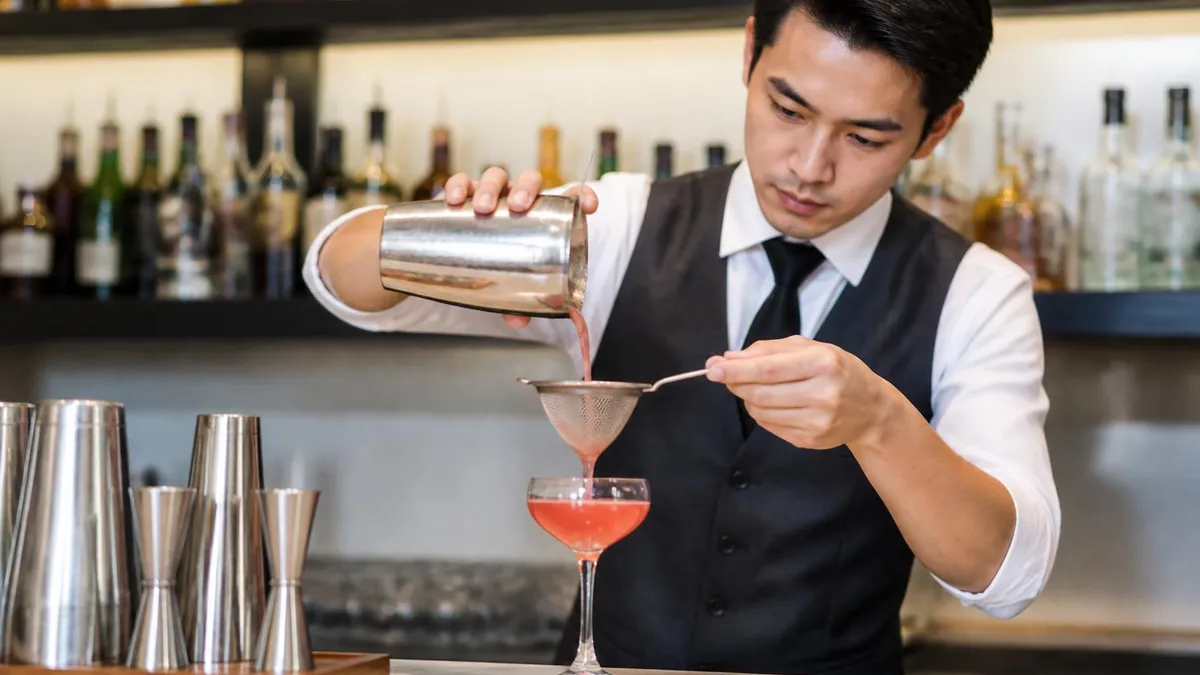
Memorizing Recipes vs. Using a Recipe App Behind the Bar
- +Faster ticket times during rush, no phone fumbling
- +Looks more professional to guests and managers
- +Frees both hands for shaking, straining, and garnishing
- +Builds muscle memory that improves consistency
- +Required for most certification exams and career advancement
- +Allows you to riff and adapt recipes for guest preferences
- +Signals competence that drives higher tips
- −Initial memorization takes weeks of dedicated study
- −Easy to confuse similar specs under pressure
- −Modern menus change quarterly and require constant updates
- −Obscure or seasonal recipes may still need a reference
- −Forgetting one ratio can ruin an expensive pour
- −Doesn't account for house variations between bars
Bartender Drink Recipes Memorization Checklist
- ✓Memorize the 13 essential classic cocktail specs cold
- ✓Practice each recipe at least 20 times to build muscle memory
- ✓Time yourself, aiming for under 45 seconds per drink
- ✓Learn the six cocktail families and how recipes fit each
- ✓Know the standard ratio for sours (2:1:0.75) by heart
- ✓Identify glassware, ice, and garnish for every recipe
- ✓Memorize at least three zero-proof or low-ABV builds
- ✓Practice shake-and-strain workflow with both hands
- ✓Learn the difference between stirring and shaking applications
- ✓Build a personal flashcard deck of 50 recipes and review weekly
The 2:1:0.75 Sour Ratio Unlocks Dozens of Recipes
Once you memorize the universal sour ratio of 2 oz spirit, 1 oz citrus, 0.75 oz sweetener, you can build a Margarita, Daiquiri, Whiskey Sour, Sidecar, Bee's Knees, Gimlet, Pisco Sour, and dozens of other drinks by just swapping the spirit, the citrus, and the sweetener. This single ratio is the most valuable thing a new bartender can learn and is the structural backbone of roughly half the cocktails on any modern menu.
Modern American cocktail culture has moved well beyond the classics, and any bartender working in a craft program in 2026 needs fluency in contemporary builds, techniques, and ingredient categories. Smoked cocktails, fat-washed spirits, clarified milk punches, and house-made cordials are now standard on menus in Chicago, Nashville, San Diego, and Denver. The bartenders who can execute these reliably command significantly higher wages and have first pick of premium shifts.
The smoked old fashioned has become the most-ordered modern variation in the country. The build is the same as a traditional old fashioned but the glass is inverted over a smoking gun loaded with applewood or cherry chips for 8 to 12 seconds before the drink is poured in. The smoke clings to the glass and re-aromatizes the cocktail as the guest sips. Charge an upcharge of 4 to 6 dollars and you have a 90 percent margin item that sells itself.
Fat-washing is another technique that has crossed from craft cocktail bars into mainstream programs. Bacon-washed bourbon, brown-butter rum, and coconut-oil tequila are all built by melting fat into the spirit, freezing the mixture, and skimming the solidified fat off the top. The spirit retains a rich savory note that transforms cocktails like the Benton's Old Fashioned or a brown-butter rum old fashioned into signature menu items with no additional pour cost beyond the fat itself.
Clarified milk punch, an 18th-century technique recently revived, allows you to batch a fully clarified, shelf-stable cocktail with the silky texture of a milk-washed drink and the clarity of a stirred spirit-forward cocktail. The technique uses citrus and warm milk to curdle, then a coffee filter to separate the clear liquid from the solids. Once batched, milk punch holds for weeks refrigerated and pours in under five seconds per cocktail, making it the highest-margin, lowest-labor item in any modern bar program.
Low-ABV cocktails are the fastest-growing category in U.S. bars, up 34 percent year over year. Sherry, vermouth, amaro, and aperitif wines have moved from supporting roles to base spirits. The Bicicletta, Hugo Spritz, Sherry Cobbler, and house aperitif highballs are now category leaders. Guests want the cocktail experience without the next-morning hangover, and bars love them because the modifier categories carry strong margins and encourage guests to order a second round.
Zero-proof cocktails have moved from afterthought to full menu sections. Seedlip, Lyre's, Ritual, and house-made shrubs and verjus syrups allow bartenders to build complex, layered non-alcoholic drinks that taste like cocktails rather than diluted juices. A well-executed zero-proof menu now contributes 12 to 18 percent of total cocktail revenue in modern programs and is critical for inclusivity, designated drivers, pregnant guests, and the growing sober-curious demographic.
Finally, expect to see continued growth in pre-batched draft cocktails on tap. Espresso Martinis, Margaritas, and Negronis are all increasingly served from kegs in high-volume bars, allowing for sub-ten-second service and ultra-consistent quality. The recipe behind the keg is identical to the hand-built version, but the operational gains are massive. If you work in a venue that pushes 500 cocktails per night, draft systems are the future of speed-of-service.
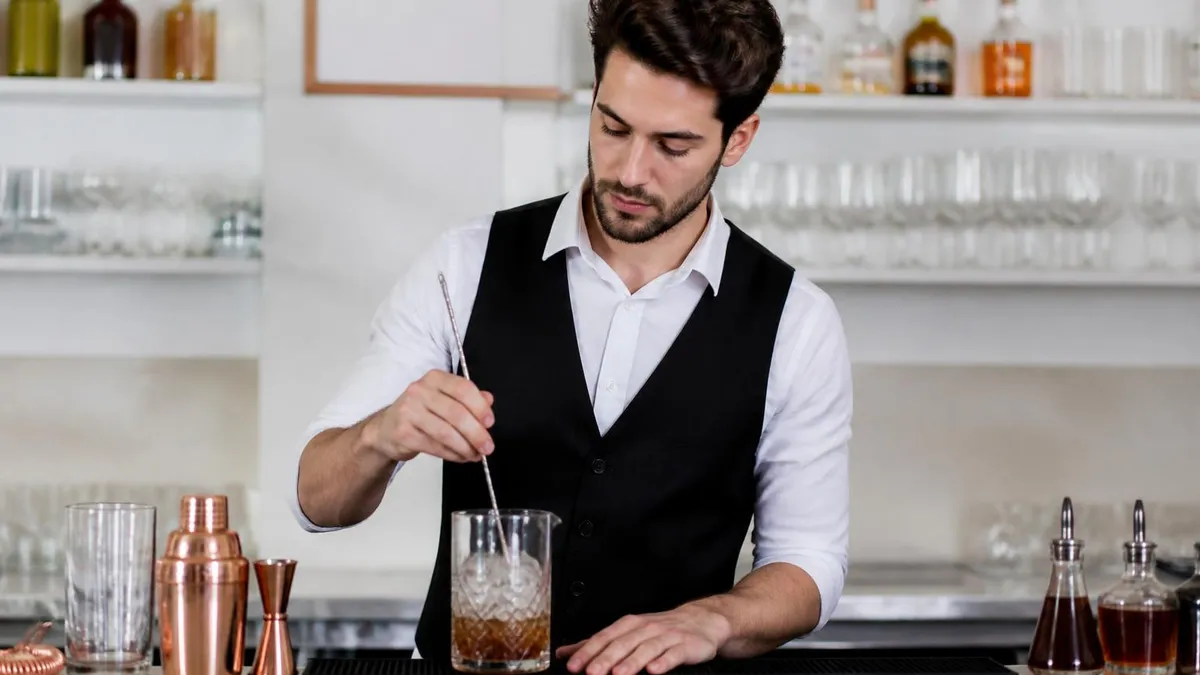
The single fastest way to identify a poorly run bar is to look for bottled lime juice and free-pouring. Both destroy recipe consistency, drive up pour cost, and ruin guest experience. Every recipe in this guide assumes fresh-squeezed citrus within two hours of service and measured pours with a calibrated jigger. If your bar does not provide these, you cannot execute these recipes reliably, no matter how well you have memorized them.
Memorizing bartender drink recipes is a learnable skill, not a talent. The fastest path from zero to a working library of 50 recipes is structured repetition combined with physical practice. Reading a recipe and physically building a recipe activate different parts of memory. The most successful bartenders combine both, ideally daily, until the specs become automatic muscle memory rather than conscious recall.
The flashcard method remains the gold standard. Write the cocktail name on one side and the full spec on the other, including glassware, ice, and garnish. Run through your deck twice a day for two weeks before each shift. Apps like Anki and Quizlet work too, but the act of physically writing flashcards strengthens encoding. Most bartenders who have memorized 100-plus recipes built their first 50 with paper cards.
The family system organizes recipes by structural similarity, which dramatically accelerates memorization. Once you know that the Margarita, Daiquiri, Whiskey Sour, Sidecar, and Gimlet are all the same 2:1:0.75 ratio with different base spirits and citrus, you have effectively learned five recipes by memorizing one structure. Apply the same logic to spirit-forward stirred drinks, highballs, and tiki blends, and your effective recipe count multiplies fast.
Physical repetition is non-negotiable. Set up a practice bar at home with water in your bottles labeled as the actual spirits. Build each recipe in real time, with real jiggers and real glassware. Time yourself. Aim for under 45 seconds per cocktail by week three of practice. Building drinks with your hands is what converts conceptual knowledge into muscle memory that survives the chaos of a Friday night rush.
Spaced repetition is the third pillar. Recipes you learned a week ago need refreshing or they fade. Set a weekly schedule to revisit every recipe in your library, even ones you are confident on. The brain reinforces neural pathways when information is recalled just before it would have been forgotten. Apps that handle scheduling automatically can save you significant mental overhead.
Working a shift at a high-volume bar is the ultimate test and reinforcer. Nothing solidifies recipes faster than building 200 of them in a single eight-hour shift under pressure. New bartenders should aggressively pursue any opportunity to work the well or service bar during peak hours, even unpaid or as a barback. The volume of real-world recipe execution in one busy shift exceeds what most home practice can replicate in a month.
If you are pursuing certification, our state-specific guides like the g license guide cover the legal and regulatory requirements that pair with this recipe knowledge to make you a complete, hireable bartender. Recipe mastery without compliance knowledge limits your career ceiling.
Beyond raw memorization, the most successful bartenders develop a personal recipe philosophy that guides how they build drinks when guests order off-menu or ask for a riff. This is what separates a bartender from a recipe robot. When a guest sits down and says, "surprise me with something gin and bitter," you need to be able to architect a drink on the spot using your knowledge of cocktail families, balance, and ingredient pairing.
Start with balance. Every cocktail balances four forces: alcohol strength, sweetness, acidity, and dilution. A drink that ignores any of these falls flat. The classic sour ratio works because it balances all four. The Manhattan works because the 2:1 spirit-to-vermouth ratio with bitters creates structure. When you adapt or invent recipes, audit them through this four-factor lens before serving. If something feels off, one of these dimensions is misaligned.
Garnish is not decoration, it is an aromatic ingredient. A lemon twist over a Martini contributes essential oils that change the first sip dramatically. A flamed orange peel over a Cosmo adds caramelized aromatics. Mint sprigs over juleps and mojitos guide the nose to the herbal notes. Never garnish lazily. The garnish is the first thing the guest sees and the first thing they smell, and a well-executed garnish can improve a competently built drink into a memorable one.
Ice strategy is equally critical. Crushed ice for swizzles and juleps maximizes dilution and chill. A single large rock in an old fashioned minimizes dilution while keeping the drink cold. A coupe served with no ice requires the cocktail to be properly chilled and diluted in the shaker or mixing glass before straining. Mismatched ice is one of the most common errors new bartenders make and instantly identifies a drink as poorly executed regardless of the underlying recipe.
Glassware completes the presentation. A Negroni in a coupe reads as elegant and sippable. A Negroni in a rocks glass with a large cube reads as casual and refreshing. Both are correct, but they signal completely different drinking experiences to the guest. Learn the standard glassware for every recipe in your library, and learn the acceptable variations. House style varies, but ignorance of the conventions is not acceptable in a professional setting.
Finally, taste your own drinks. The best bartenders sip every batch of fresh citrus, every new bottle, and every house syrup. Recipes are starting points, not absolutes. Limes vary in acidity. Whiskeys vary in proof. A recipe that worked perfectly last week may need a quarter-ounce adjustment today because the new case of limes is more acidic. Calibrating constantly is what consistent service requires, and it is a habit that develops over years of practice.
Recipe mastery is a lifelong pursuit. The 50-plus recipes in this guide are your foundation. Build from there with seasonal menus, regional specialties, and your own original creations. The bartenders who treat recipes as a living craft rather than a fixed list are the ones who climb to head bartender, beverage director, and brand ambassador roles. Start with the classics, time yourself, taste constantly, and never stop learning.
Bartender Bartender Questions and Answers
Bartender Near Me: How to Find, Vet, and Hire a Local Bartender in 2026
Wisconsin Bartending License: Operator's License Guide 2026
Shot Bartending Techniques: The Complete Guide to Speed, Style, and Service Behind the Bar
Bartender for Hire: How to Book, Pricing Guide, and What to Expect in 2026
Bartending License Florida: Complete Certification & Permit Guide for 2026
About the Author
Executive Chef & Culinary Arts Certification Educator
Culinary Institute of AmericaChef Marco Bellini is a Certified Executive Chef and graduate of the Culinary Institute of America with over 20 years of professional kitchen experience in Michelin-recognized restaurants. He teaches culinary arts certification, food safety, and hospitality exam preparation, having guided thousands of culinary students through their ServSafe, ProStart, and professional chef certifications.
Join the Discussion
Connect with other students preparing for this exam. Share tips, ask questions, and get advice from people who have been there.
View discussion (7 replies)