
Bartender Accessories: The Complete Guide to Tools, Equipment, and Certification Prep
Master bartender accessories from shakers to jiggers. 💡 Learn which tools matter for certification, daily service, and building a professional bar kit.
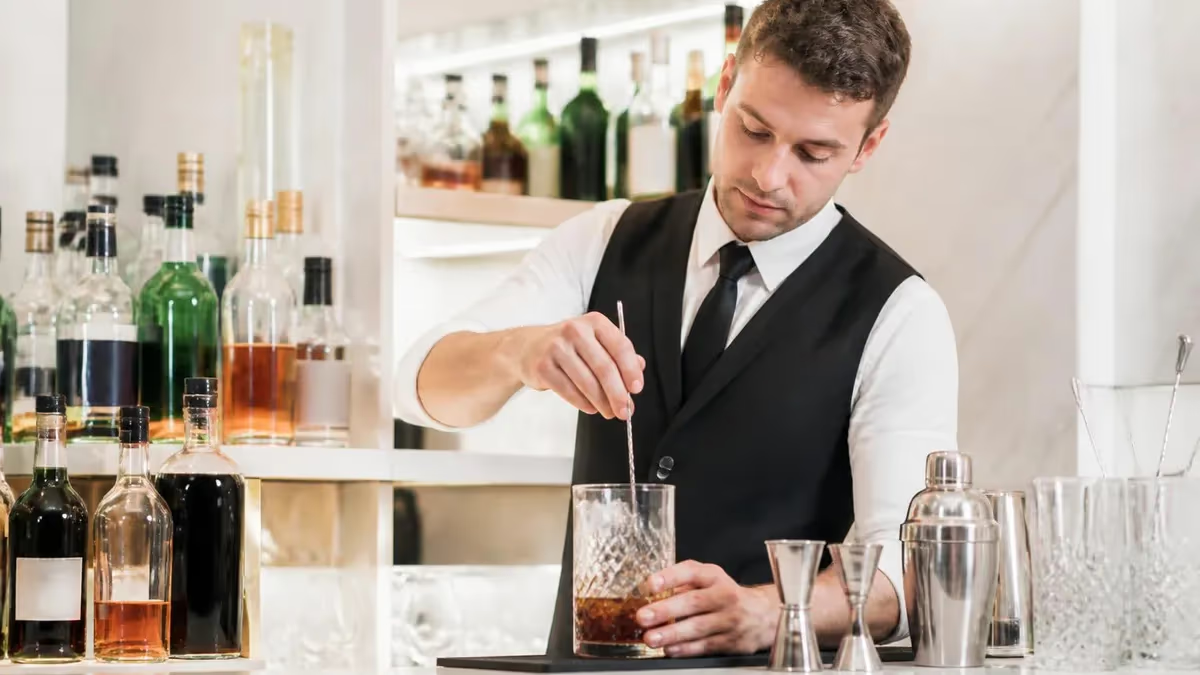
Every skilled bartender knows that the right bartender accessories can mean the difference between a smooth, profitable shift and a chaotic night of spills, slow pours, and unhappy guests. From the moment you pick up your first cocktail shaker to the day you pass your certification exam, the tools you use shape your technique, your speed, and ultimately your career. Understanding each piece of equipment — what it does, why it matters, and how to use it correctly — is foundational knowledge that serious bartenders build before they ever step behind a professional bar.
The world of bartending tools covers a surprisingly wide range of equipment. You have mixing tools like shakers, mixing glasses, and bar spoons; measuring devices like jiggers and pourers; straining equipment like Hawthorne and fine mesh strainers; cutting tools like channel knives and paring knives; and specialty items like muddlers, ice picks, and citrus juicers. Each category serves a specific function in the drink-making process, and bartenders who understand these functions can execute recipes consistently, adapt to different bar setups, and impress guests with professional efficiency.
For those preparing for a bartending certification, knowledge of accessories goes far beyond memorizing tool names. Certification exams test your understanding of sanitation standards, proper measurements, inventory tracking, and legal compliance — all of which connect directly to how you handle and maintain your equipment. A jigger that measures precisely, a shaker that seals properly, and a cutting board kept separate from allergen-prone ingredients are all details that certified bartenders take seriously because state health codes and bar management demand it.
Professional bartenders also recognize that accessories are a reflection of their personal brand. When you arrive at a job interview or audition shift with a well-organized personal bar kit, you signal to every hiring manager in the room that you are prepared, serious, and invested in your craft. Many experienced bartenders carry their own favorite tools even when working at fully stocked establishments, because familiarity with specific equipment reduces errors and builds the kind of muscle memory that makes high-volume service feel effortless rather than stressful.
The financial side of bartender accessories matters too. A quality cocktail shaker set, a reliable jigger, and a sturdy bar spoon together cost between $40 and $150 depending on brand and material, which is a relatively modest investment for someone entering a field where annual earnings regularly exceed $50,000 including tips. Knowing which tools are worth the investment and which budget options hold up under daily use is practical knowledge that saves money and prevents mid-shift equipment failures at the worst possible moments.
This guide covers everything you need to know about bartender accessories — from the core mixing tools you will use every single day to the specialty items that separate competent bartenders from exceptional ones. We will walk through each category of equipment, explain the professional standards behind proper use and maintenance, connect these tools to what certification exams actually test, and help you build a kit that serves you whether you are practicing at home, studying for your exam, or working your first professional shift behind the bar.
Bartender Accessories by the Numbers
Core Categories of Bartender Accessories
Cocktail shakers, mixing glasses, and bar spoons form the backbone of any bar setup. These tools handle the physical process of combining, chilling, and aerating ingredients to build drinks with proper texture and temperature.
Jiggers, speed pourers, and graduated measuring cups ensure consistent pours that maintain recipe integrity, control costs, and keep you compliant with liquor regulations. Accurate measurement is both a quality and a legal matter.
Hawthorne strainers, Julep strainers, and fine mesh strainers separate ice, pulp, and herbs from finished cocktails. Choosing the right strainer for each drink style is a technique that certification exams directly assess.
Channel knives, paring knives, peelers, and muddlers handle the prep work that elevates cocktail presentation. Proper knife safety and sanitation with these tools is a key topic in food handler certifications.
Speed rails, bottle openers, ice scoops, cocktail picks, and bar mats keep your workspace clean and efficient. Professional service speed depends as much on an organized setup as on individual bartending skill.
Measuring devices are the most underrated category of bartender accessories, yet they directly impact three areas that certified bartenders are evaluated on: drink quality, cost control, and legal compliance. A standard two-sided jigger typically measures 1.5 ounces on one side and 0.75 ounces on the other, though many professional jiggers include additional graduated lines at 0.25-ounce increments. This precision matters because a bar pouring as little as 0.25 ounces over on every drink across a busy Saturday night can waste hundreds of dollars in product by closing time.
Speed pourers are the tool most visible to customers and the one most often misused by inexperienced bartenders who free-pour without calibrating their count. A calibrated free pour — where you count "one, two, three" to deliver approximately 1.5 ounces — requires consistent practice and periodic testing with a jigger to verify accuracy. Many bar managers require all staff to jigger every pour regardless of experience level, a policy that reduces over-pouring, maintains recipe consistency, and simplifies inventory reconciliation at the end of each week.
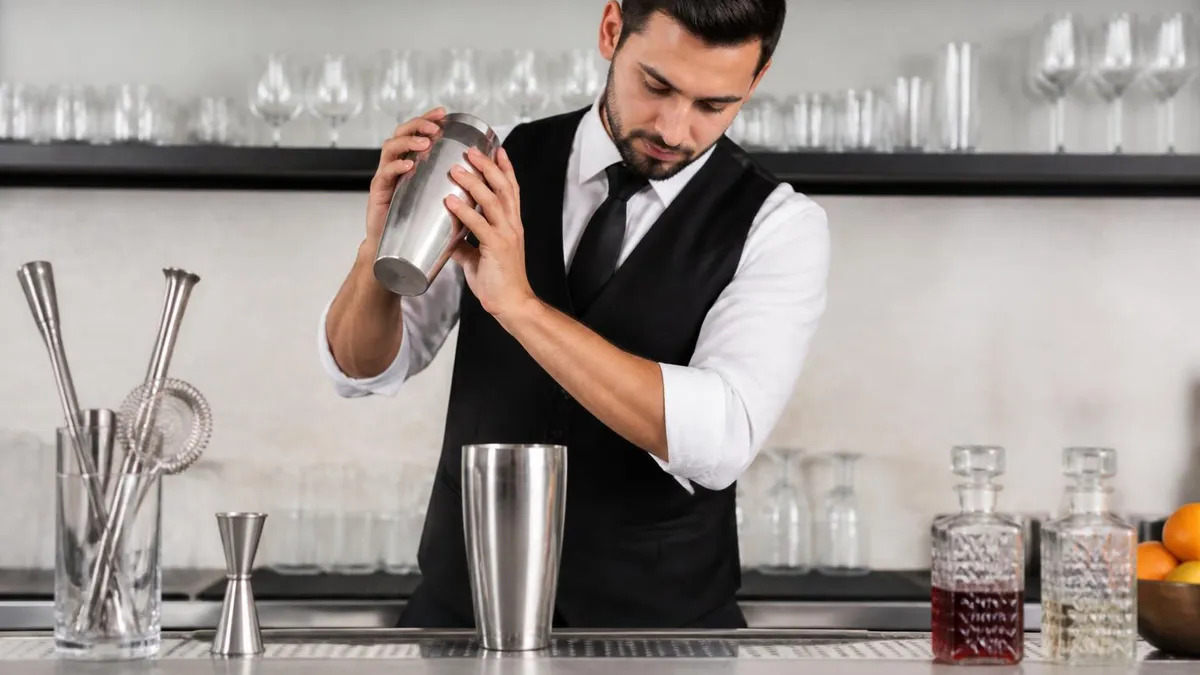
The Boston shaker versus the cobbler shaker debate is one of the first equipment decisions new bartenders face. A Boston shaker consists of two pieces — usually a metal tin and a slightly smaller metal tin or mixing glass — that seal together with a light tap and separate with a heel strike.
Professionals overwhelmingly prefer the Boston shaker for its durability, its ability to work at high volumes without leaking, and the ease with which it can be cleaned quickly during a busy shift. The cobbler shaker, which includes a built-in strainer and cap, is more intuitive for beginners but slower and more prone to leaking as the rubber seal wears down.
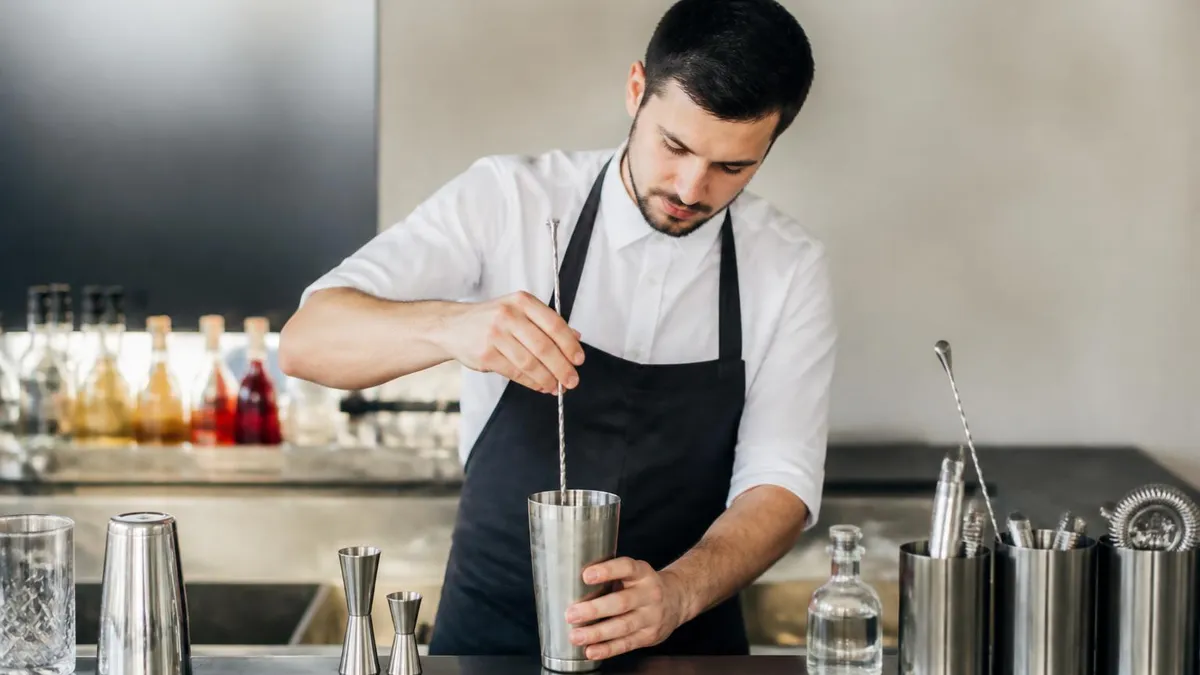
Bar spoons serve a specific and important purpose that is distinct from any regular kitchen spoon. A proper bar spoon has a twisted handle that, when rolled between the thumb and index finger, creates a smooth circular stirring motion that chills and dilutes a stirred cocktail without introducing air bubbles.
This technique is essential for spirit-forward drinks like Manhattans, Negronis, and Old Fashioneds where clarity and texture are defining quality markers. The length of the spoon — typically 11 to 12 inches — allows it to reach the bottom of a tall mixing glass without the bartender's hand entering the glass.
Muddlers deserve special attention because improper muddling technique is one of the most common mistakes behind the bar and one that affects both drink quality and guest experience. A muddler is used to gently crush herbs, fruits, and sugar cubes to release their oils and flavors without completely pulverizing them. Aggressive muddling of mint leaves, for example, releases chlorophyll and bitter compounds that ruin a Mojito, while insufficient muddling fails to extract the aromatic oils that make the drink distinctive. High-quality muddlers are made from stainless steel or unvarnished hardwood, never varnished wood, which can impart off-flavors into the drink.
Citrus tools — including juicers, reamers, squeezers, and zesters — represent a significant portion of daily prep work at cocktail-focused establishments. Fresh citrus juice is a critical ingredient in dozens of classic and modern cocktails, and the difference between freshly squeezed juice and pre-packaged alternatives is immediately noticeable in the finished drink. A good hand-press citrus juicer can process lemons and limes efficiently during prep, while a channel knife or peeler handles the garnish cuts that transform a technically correct cocktail into a visually impressive one that commands premium pricing.
Temperature tools, though less commonly discussed, are part of the professional bartender's arsenal as well. Instant-read thermometers help verify that refrigerated ingredients like dairy and juices are being stored at safe temperatures, which connects directly to food safety compliance tested in certification exams. Infrared thermometers can check the temperature of glassware to ensure proper chilling, while thermocouple probes verify that hot drinks like toddies and mulled wines are served at safe, enjoyable temperatures. These tools signal a level of professionalism that separates bartenders who understand the full scope of their responsibilities from those who think only about mixing technique.
Bartender Practice Test Questions
Prepare for the Bartender Certification exam with our free practice test modules. Each quiz covers key topics to help you pass on your first try.
Bartender Certification Bar Inventory and ...
Bartender Exam Questions covering Certification Bar Inventory and Cost Control. Master Bartender Test concepts for certification prep.
Bartender Certification Bar Law and Liquor...
Free Bartender Practice Test featuring Certification Bar Law and Liquor Regulations. Improve your Bartender Exam score with mock test prep.
Bartender Certification Bar Sanitation and...
Bartender Mock Exam on Certification Bar Sanitation and Safety. Bartender Study Guide questions to pass on your first try.
Bartender Certification Bar Setup and Orga...
Bartender Test Prep for Certification Bar Setup and Organization. Practice Bartender Quiz questions and boost your score.
Bartender Certification Bar Tools and Glas...
Bartender Questions and Answers on Certification Bar Tools and Glassware. Free Bartender practice for exam readiness.
Bartender Certification Basic
Bartender Mock Test covering Certification Basic. Online Bartender Test practice with instant feedback.
Bartender Certification Cocktail Recipes a...
Free Bartender Quiz on Certification Cocktail Recipes and Techniques. Bartender Exam prep questions with detailed explanations.
Bartender Certification Customer Service a...
Bartender Practice Questions for Certification Customer Service and Sales. Build confidence for your Bartender certification exam.
Bartender Certification Customer Service S...
Bartender Test Online for Certification Customer Service Skills. Free practice with instant results and feedback.
Bartender Certification Mixology Fundamentals
Bartender Study Material on Certification Mixology Fundamentals. Prepare effectively with real exam-style questions.
Bartender Certification Responsible Alcoho...
Free Bartender Test covering Certification Responsible Alcohol Service. Practice and track your Bartender exam readiness.
Bartender Certification Spirits, Beer, and...
Bartender Exam Questions covering Certification Spirits, Beer, and Wine. Master Bartender Test concepts for certification prep.
Bartender Certification Spirits, Liqueurs,...
Free Bartender Practice Test featuring Certification Spirits, Liqueurs, and Cocktails. Improve your Bartender Exam score with mock test prep.
Bartender Responsible Alcohol Service
Bartender Mock Exam on Responsible Alcohol Service. Bartender Study Guide questions to pass on your first try.
Bartender Spirits, Liqueurs, and Cocktails
Bartender Test Prep for Spirits, Liqueurs, and Cocktails. Practice Bartender Quiz questions and boost your score.
Bartender Bar Sanitation and Safety
Bartender Questions and Answers on Bar Sanitation and Safety. Free Bartender practice for exam readiness.
Bartender Bar Setup and Organization
Bartender Mock Test covering Bar Setup and Organization. Online Bartender Test practice with instant feedback.
Bartender Bar Tools and Glassware
Free Bartender Quiz on Bar Tools and Glassware. Bartender Exam prep questions with detailed explanations.
Bartender Basic
Bartender Practice Questions for Basic. Build confidence for your Bartender certification exam.
Bartender Cocktail Recipes and Techniques
Bartender Test Online for Cocktail Recipes and Techniques. Free practice with instant results and feedback.
Bartender Customer Service and Sales
Bartender Study Material on Customer Service and Sales. Prepare effectively with real exam-style questions.
Bartender Customer Service Skills
Free Bartender Test covering Customer Service Skills. Practice and track your Bartender exam readiness.
Bartender Accessories by Experience Level
New bartenders should start with a Boston shaker set, a two-sided jigger, a Hawthorne strainer, a bar spoon, and a bottle opener. This five-piece foundation covers the mechanics of nearly every cocktail you will be asked to make during training. Budget between $40 and $70 for quality versions of these tools from reputable brands like Cocktail Kingdom, OXO, or Barfly, and avoid the cheapest stainless steel sets that dent and scratch quickly under daily use.
Building early habits around proper measurement is the single most important discipline a beginner can develop. Use your jigger on every pour for the first several months, even when it feels slow. This trains your eye for volume and builds the consistency that experienced bartenders rely on when they eventually transition to free-pouring during high-volume service. Many certification programs explicitly test pour accuracy, so developing this discipline early pays dividends both in exam performance and in your first professional position.
Boston Shaker vs. Cobbler Shaker: Which Should You Choose?
- +Boston shaker creates a stronger vacuum seal that resists leaking under vigorous shaking
- +Two-tin Boston setup is faster to clean and inspect for residue during busy service
- +Boston shaker is the industry standard, so mastering it prepares you for any professional environment
- +Metal-on-metal Boston tins maintain temperature better than cobbler shakers with plastic caps
- +Easier to scale up: a second tin on hand doubles your capacity during rush periods
- +Cobbler shaker is ideal for beginners and home bartenders due to its built-in strainer and cap
- −Boston shaker requires learning the seal technique, which takes practice to do quickly under pressure
- −Cobbler shaker's built-in strainer becomes less effective as rubber seals wear after repeated use
- −Metal Boston tins can be loud, which is occasionally a concern in intimate, quiet service environments
- −Cobbler shakers are slower to open during a rush because the cap requires more deliberate effort
- −Boston shaker requires a separate strainer, adding one more tool to carry and clean
- −Cobbler shakers can be more expensive at the quality tier because the cap mechanism adds complexity
Pros and Cons at a Glance
| Pros | Cons |
|---|---|
| Boston shaker creates a stronger vacuum seal that resists leaking under vigorous shaking | Boston shaker requires learning the seal technique, which takes practice to do quickly under pressure |
| Two-tin Boston setup is faster to clean and inspect for residue during busy service | Cobbler shaker's built-in strainer becomes less effective as rubber seals wear after repeated use |
| Boston shaker is the industry standard, so mastering it prepares you for any professional environment | Metal Boston tins can be loud, which is occasionally a concern in intimate, quiet service environments |
| Metal-on-metal Boston tins maintain temperature better than cobbler shakers with plastic caps | Cobbler shakers are slower to open during a rush because the cap requires more deliberate effort |
| Easier to scale up: a second tin on hand doubles your capacity during rush periods | Boston shaker requires a separate strainer, adding one more tool to carry and clean |
| Cobbler shaker is ideal for beginners and home bartenders due to its built-in strainer and cap | Cobbler shakers can be more expensive at the quality tier because the cap mechanism adds complexity |
Essential Bartender Accessories Checklist for Certification Prep
- ✓Acquire a two-sided stainless steel jigger and practice measuring to the 0.25-oz graduation mark.
- ✓Purchase a Boston shaker set and practice the seal-and-break technique until it feels automatic.
- ✓Add a Hawthorne strainer and practice proper straining position on both tins.
- ✓Include a fine mesh strainer for double-straining citrus-forward and herb-infused cocktails.
- ✓Select a high-quality bar spoon and practice the rolled-handle stirring motion for 60 seconds.
- ✓Obtain an unvarnished muddler and practice light pressure techniques on fresh mint and citrus.
- ✓Keep a calibrated instant-read thermometer for food safety compliance checks during prep.
- ✓Organize tools in a roll case or bar apron with designated pockets for each item.
- ✓Review your equipment against health code sanitation requirements for your state.
- ✓Time yourself completing standard drink orders using your full kit to build service speed.
Your Jigger Is Your Most Important Tool
Industry data consistently shows that over-pouring by even 0.25 ounces per drink can cost a high-volume bar $300 to $500 per week in product waste. A quality Japanese-style jigger with clear graduation lines costs between $12 and $25 and pays for itself in the first shift. Certification exams test cost control knowledge directly — and the jigger is the physical embodiment of that discipline behind the bar.
Bartending certification exams test far more than drink recipes and tool names — they assess whether candidates understand the professional responsibilities that come with serving alcohol and managing a bar environment.
The connection between accessories and certification knowledge is direct and testable: improper measuring tools lead to over-pouring, which raises liability under dram shop laws; unsanitary cutting boards spread foodborne illness and violate health codes; missing or non-functional equipment creates service gaps that affect both revenue and guest safety. Understanding why each tool matters, not just what it does, is what separates candidates who pass on the first attempt from those who struggle.
Bar inventory and cost control is one of the most heavily tested domains in certification programs, and it connects intimately to how bartenders use and track their accessories. Every bottle opened, every ounce poured, and every piece of equipment used contributes to a bar's operational costs and theoretical versus actual variance calculations. Bartenders who understand how to read a par sheet, conduct a physical inventory count, and calculate pour costs are valuable to every employer — and that knowledge starts with understanding how accurate measurement tools reduce variance at the source.
Liquor regulations represent another critical certification domain where accessories play a supporting role. In many states, health codes specify requirements for equipment sanitation, including minimum sanitizer concentrations for glass washing stations, required separations between food prep and alcohol service areas, and mandated first-aid equipment behind the bar. Knowing these requirements helps bartenders set up their workstations in compliance with state law and prepares them for the kind of regulatory questions that appear in certification exams focused on responsible service and dram shop liability.
Glassware is technically a category of bartender accessories, and it is one that certification programs address from multiple angles. Different glass shapes serve specific functions: the tulip shape of a wine glass concentrates aromas; the wide bowl of a rocks glass accommodates large ice cubes for slow dilution; the narrow chimney of a Collins glass maintains carbonation in effervescent drinks. Understanding why each glass exists and how it affects the guest's sensory experience demonstrates the depth of professional knowledge that certifying bodies look for in candidates who want to advance beyond entry-level positions.
Ice tools are among the most underappreciated accessories in professional bartending. An ice pick allows bartenders to hand-chip large format ice cubes from a block for premium spirits service, a technique that is visually impressive and practically useful for controlling dilution rates. Ice scoops with proper handles prevent bare-hand contact with ice, which health codes prohibit because hands transfer bacteria directly to a product being consumed. Ice mallets, Lewis bags, and crushed ice machines each produce different textures suited to specific cocktail styles, and knowing when to use each demonstrates the technical sophistication that premium cocktail programs demand.
The relationship between accessories and guest experience is a topic that comes up frequently in hospitality management courses and bartending certification programs alike. Every tool you use is visible to the guest — the gleam of a quality jigger, the confident seal-and-shake of a well-fitted Boston shaker, the precise cut of a channel knife garnish.
These visual cues tell guests that you are a professional who cares about the craft, which increases perceived value, justifies premium pricing, and builds the kind of loyal regulars who return specifically to watch you work and to taste the drinks you make with care and precision.
Accessibility and ergonomics are practical considerations that long-tenured bartenders take seriously when selecting accessories. A bar spoon that is too heavy creates fatigue during a six-hour shift; a bottle opener with inadequate grip causes repetitive strain over hundreds of uses; a shaker tin with a poor heat transfer design leaves your hands numb during a cold winter rush. Investing a bit more in ergonomically designed tools reduces physical fatigue, prevents repetitive strain injuries, and keeps you performing at a high level throughout a full shift and across a long career behind the bar.
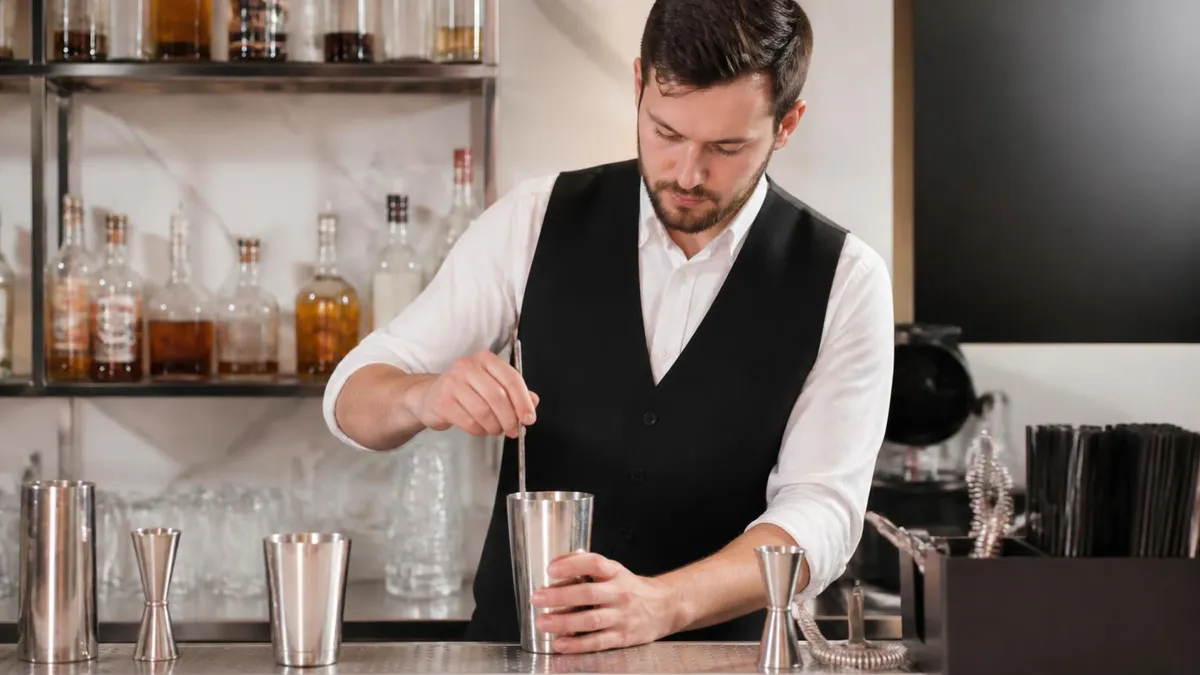
Most state health codes require bar tools to be washed, rinsed, and sanitized between uses when they contact different products or different customers' drinks. Varnished wooden tools like muddlers or cutting boards that cannot withstand sanitizer solutions may fail health inspections. Always verify that your accessories are made from food-safe, sanitizer-compatible materials before purchasing for professional use — non-compliant equipment can result in violations, fines, and failed health inspections that close the bar temporarily.
Building your professional bartender kit is a process that should be approached systematically and with a clear understanding of where you are in your career. If you are a student currently enrolled in a bartending program or preparing for certification, starting with a focused set of core tools is smarter than trying to assemble a comprehensive kit all at once.
The most important principle is to buy quality where quality matters most — jiggers, shakers, and strainers are tools you will use thousands of times and that directly affect drink quality — and to save money on items where budget options perform nearly as well.
When sourcing accessories, professional bartending supply companies like Cocktail Kingdom, Barfly, and the BarProducts.com catalog offer a much wider and better-curated selection than general kitchen retailers. These suppliers carry professional-grade items that are designed for daily commercial use, including tools with heavier gauge stainless steel, tighter tolerances, and finishes that hold up to commercial dishwashers and high-volume sanitizer exposure. Visiting a bartending supply store in person, if one is available in your area, lets you handle tools before purchasing to check weight, balance, and grip comfort.
Organizing your kit for portability is a skill in itself. Bar tool roll cases — fabric rolls with individual pockets for each tool — are the standard among professional bartenders who work multiple venues, compete in cocktail competitions, or want their personal tools available wherever they work. A well-organized roll case communicates professionalism immediately when you arrive for an audition shift or a freelance event, and it ensures that your tools are always clean, protected from damage, and ready to use without the scramble of searching through a disorganized bag.
Maintaining your accessories is as important as selecting them in the first place. Stainless steel tools should be cleaned immediately after use to prevent acidic citrus juice from etching the surface, hand-dried after washing to prevent water spots on tools used for premium service, and periodically polished with a food-safe stainless steel polish to maintain a professional appearance. Wooden tools like muddlers require occasional conditioning with food-safe mineral oil to prevent cracking, and knife tools should be sharpened regularly to maintain safe, precise cutting performance.
Home practice setups benefit from having a dedicated bar cart or shelf where all accessories are organized, visible, and ready to use. When you can see all your tools at once, you naturally practice setting up mise en place — the French culinary concept of having everything in its place before service begins — which is a habit that translates directly into faster, more organized performance behind a professional bar. Practicing at home with the same tools you plan to use professionally also builds the muscle memory and spatial awareness that makes professional service feel natural rather than effortful.
Budget planning for a complete professional kit should include not just the initial purchase but also replacement costs and expansion over time. Shaker tins develop dents; strainer springs lose tension; jiggers scratch and become difficult to read. Planning to refresh your kit annually, replacing the most worn items, keeps your tools in the condition that professional service demands. The total annual cost of maintaining a quality kit — perhaps $30 to $60 per year in replacements and additions — is a legitimate professional expense that many bartenders track alongside their continuing education costs and certification renewal fees.
Finally, consider that your accessories are a conversation starter and a teaching tool whenever you work with less experienced staff. Bartenders who can explain why they choose specific tools, how each item affects the finished drink, and what the professional standards behind each piece of equipment are become natural mentors and leaders behind the bar.
This combination of technical depth and communication skill is exactly what bar managers look for when they are identifying candidates for lead bartender, bar manager, and beverage director roles — making your investment in quality accessories and the knowledge behind them a direct investment in your long-term career trajectory.
Practical preparation for your bartending certification exam involves more than reading about tools and techniques — it requires hands-on repetition with your actual equipment combined with focused study of the knowledge domains that exams cover. The most effective study approach combines daily physical practice behind a home bar setup with targeted quiz work on the specific topics your certification program tests: inventory management, cost control, liquor regulations, responsible service, and sanitation compliance. Each of these domains has a physical correlate in the accessories you use every day.
Inventory practice at home can be as simple as measuring every pour during your practice sessions and recording the actual ounces used against your theoretical recipe requirements. This exercise — which takes less than ten minutes after a full practice session — builds the habit of thinking about pour costs simultaneously with drink quality, which is exactly the mindset that bar managers and certification exams expect. Over time, you develop an intuitive sense for variance, waste, and efficiency that makes you a more financially valuable employee from your very first week on the job.
Regulation knowledge is best studied through scenario-based practice questions rather than rote memorization of statutes. Real certification exams present situations — a guest who appears intoxicated, a customer who cannot produce valid identification, a situation where an underage person attempts to purchase alcohol with a convincing fake ID — and ask you to identify the correct legal and ethical response. Understanding how your accessories connect to these scenarios — the wristband scanner that verifies age, the measured pour that documents responsible service, the incident log that protects the bar from liability — makes abstract regulatory knowledge concrete and memorable.
Time management during exam preparation is an area where many candidates struggle. Certification exams typically include between 50 and 100 questions covering multiple knowledge domains, and candidates who have not practiced pacing themselves through mixed-topic question sets often find themselves spending too long on familiar material and running short on time for challenging sections. Using timed practice quizzes across all topic areas — including the bar inventory and cost control and bar law sections available on this site — builds the pacing instincts that prevent time-related exam failures.
Peer study groups are an underutilized resource for bartending certification candidates. Practicing behind a bar with other students who are also preparing for their certification creates opportunities to give and receive feedback on technique, to practice explaining the reasoning behind tool choices and service decisions, and to simulate the kind of fast-paced collaborative service environment that professional bar programs prepare you for. Many bartending school students who form study groups during their programs report higher first-attempt pass rates than those who study exclusively alone.
Mock service sessions — where you attempt to execute a full menu of cocktails with proper technique, accurate measurement, correct glassware, and appropriate garnishes in sequence under timed conditions — are one of the most effective forms of integrated practice for both skills and exam knowledge.
Set up your home bar with all your accessories organized as they would be in a professional service environment, then work through a ticket as if you were in a real bar. Time yourself, track your pours, and evaluate where your technique or knowledge breaks down. Each identified gap is a targeted study opportunity that moves you toward exam readiness.
After you pass your certification, the accessories in your kit become tools of continuous professional development rather than just exam preparation. Experienced bartenders use their tools to experiment with new techniques, to develop signature cocktails that showcase their creativity and palate, and to stay current with the evolving landscape of cocktail culture. The investment you make in quality accessories and deep knowledge of how to use them is not a one-time exam preparation expense — it is a foundation for a skilled, rewarding, and well-compensated career in one of the most people-centered professions in the hospitality industry.
Sample Bartender Certification Practice Questions
Try these questions from our free Bartender Certification practice tests. The correct answer and an explanation follow each question.
Why is it important to have a standardized place for bar tools like shakers, strainers, and jiggers?
- A. To showcase the bar's professionalism
- B. To ensure they are always clean and dry
- C. To maintain a consistent look behind the bar
- D. To allow bartenders to access them quickly and efficiently during service
Answer: D. To allow bartenders to access them quickly and efficiently during service
Having a standardized place for bar tools ensures that every bartender knows exactly where to find what they need without hesitation. This systematic organization significantly reduces search time and improves workflow, enabling faster drink preparation and more efficient service. Quick access to tools is especially critical during peak hours to maintain service speed and quality.
Which of the following is an effective strategy to slow down a customer's alcohol consumption without refusing service outright?
- A. Offer them a round of shots on the house.
- B. Avoid their section of the bar until they get your attention.
- C. Suggest a food item or offer a glass of water with their next drink.
- D. Make their next drink with double the amount of alcohol to satisfy them.
Answer: C. Suggest a food item or offer a glass of water with their next drink.
A key technique in responsible service is to manage the pace of a guest's drinking. Offering water or suggesting food can slow down alcohol absorption and consumption rate without creating a confrontation. This proactive approach can prevent a patron from reaching the point of intoxication where service must be refused.
What is the proper food safety practice when handling garnishes that will go into a guest's drink?
- A. Rinse garnishes in liquor before use
- B. Use tongs or a cocktail pick rather than bare hands
- C. Prepare all garnishes 24 hours in advance
- D. Store cut fruit uncovered at room temperature
Answer: B. Use tongs or a cocktail pick rather than bare hands
Bartenders should use tongs, picks, or other utensils rather than bare hands when handling garnishes to maintain hygiene and prevent contamination.
What is the difference between a 'liqueur' and a 'spirit'?
- A. Liqueurs are always made from fruit; spirits are always made from grain
- B. Liqueurs are sweetened spirits (minimum 2.5% sugar by weight) with added flavorings; spirits are unsweetened distilled beverages
- C. Spirits have a higher alcohol content than liqueurs
- D. Liqueurs are aged; spirits are not
Answer: B. Liqueurs are sweetened spirits (minimum 2.5% sugar by weight) with added flavorings; spirits are unsweetened distilled beverages
A liqueur is a sweetened spirit with added flavors, while a spirit (or base spirit) is an unsweetened distilled alcoholic beverage.
Bartender Bartender Questions and Answers
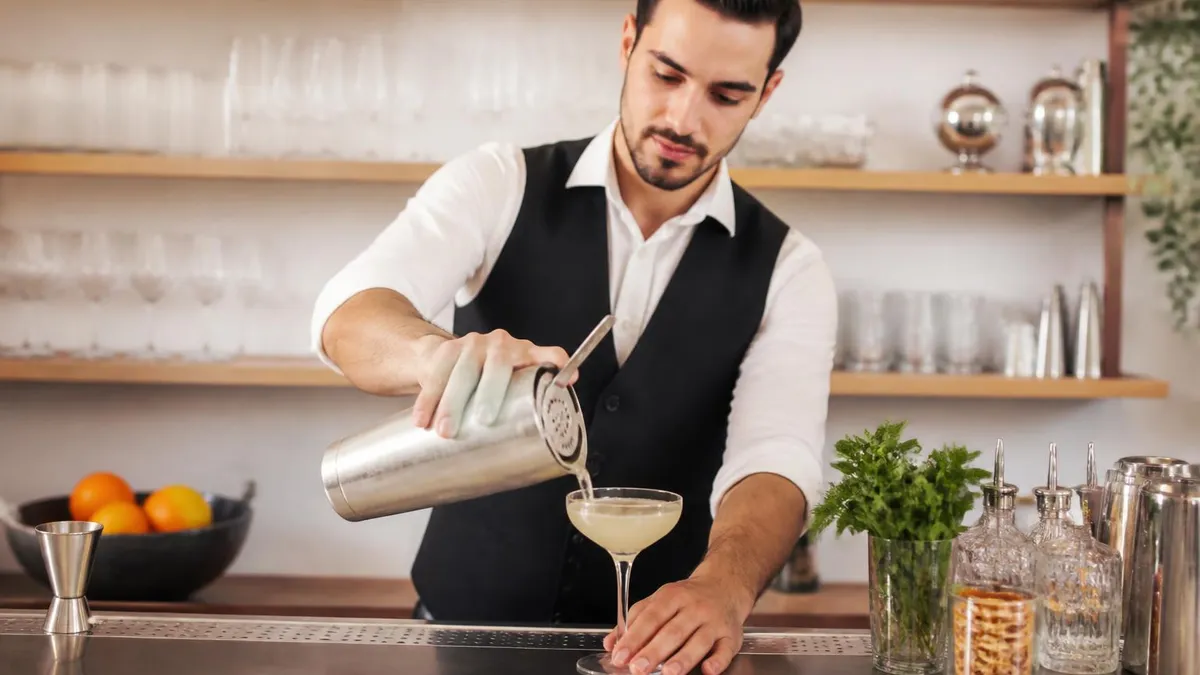
Bartending School Near Me: How to Find the Best Local Program in 2026
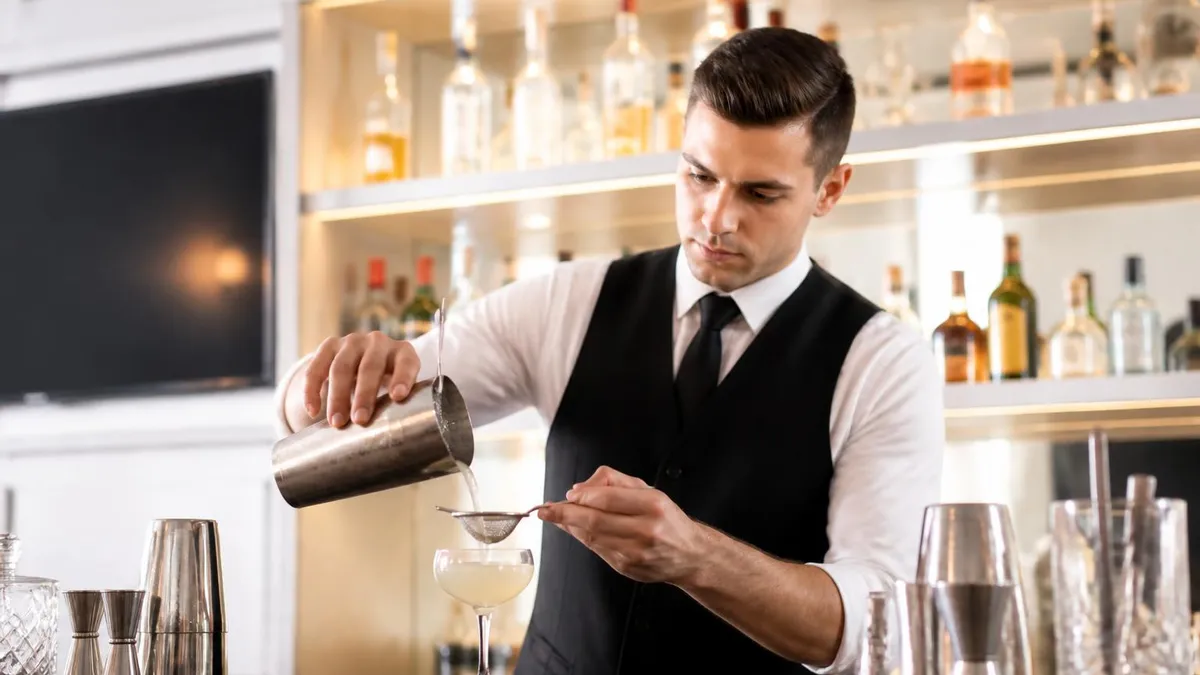
Bartender Interview Questions: 50+ Real Questions With Sample Answers for 2026
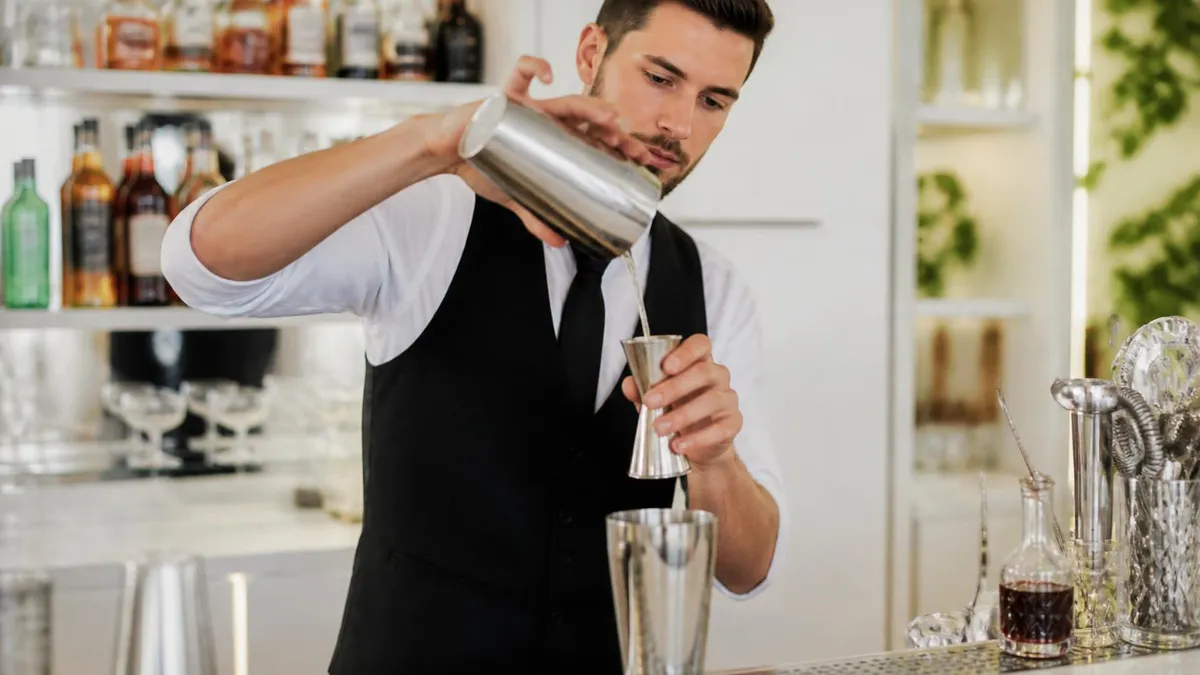
Bartending Kit: The Complete Tool Guide for Certification Prep
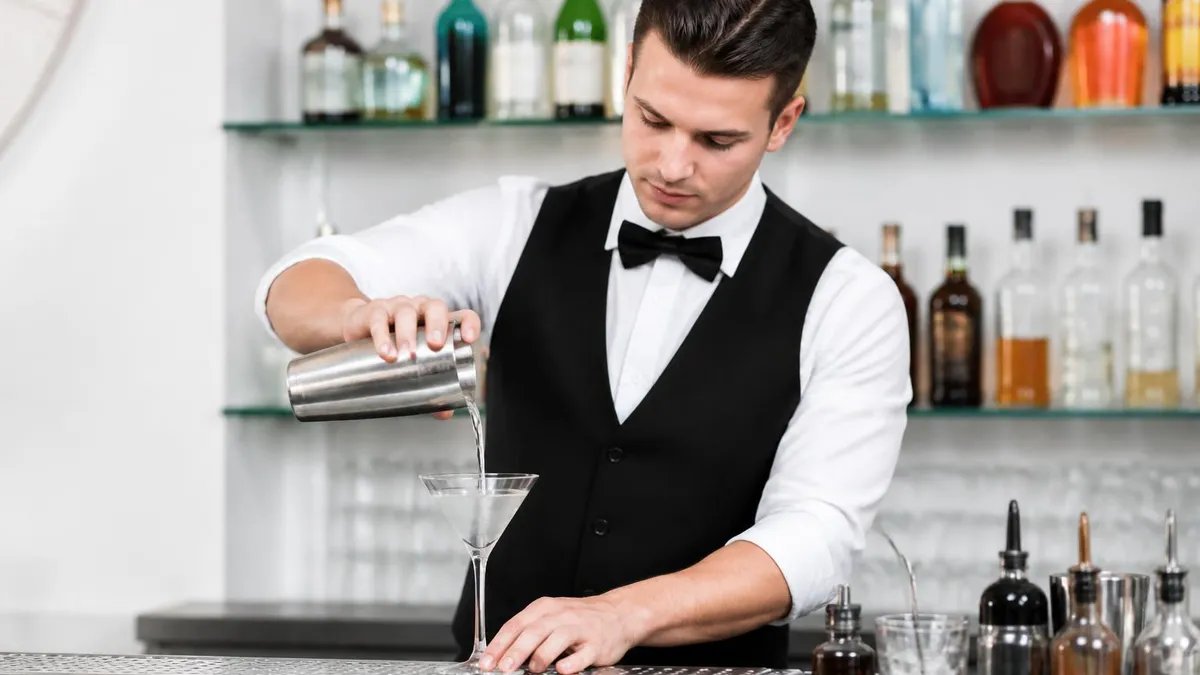
Wisconsin Bartending License: Operator's License Guide 2026
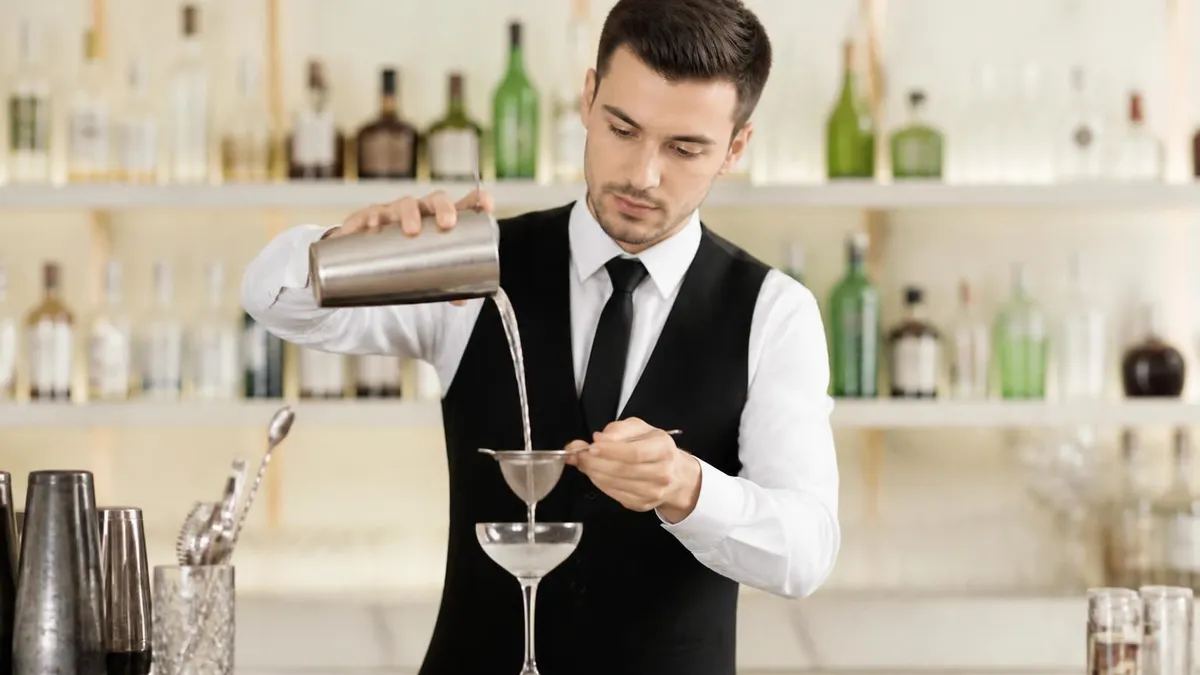
Shot Bartending Techniques: The Complete Guide to Speed, Style, and Service Behind the Bar
About the Author
Executive Chef & Culinary Arts Certification Educator
Culinary Institute of AmericaChef Marco Bellini is a Certified Executive Chef and graduate of the Culinary Institute of America with over 20 years of professional kitchen experience in Michelin-recognized restaurants. He teaches culinary arts certification, food safety, and hospitality exam preparation, having guided thousands of culinary students through their ServSafe, ProStart, and professional chef certifications.
Join the Discussion
Connect with other students preparing for this exam. Share tips, ask questions, and get advice from people who have been there.
View discussion (7 replies)