
Bar Exam Celebrity Failures: How Many Times Did Hillary Clinton Fail the Bar Exam?
How many times did Hillary Clinton fail the bar exam? 🎓 Discover famous failures, what went wrong, and how they bounced back to legendary careers.

The bar exam is one of the most grueling professional licensing tests in the United States, and even future presidents, first ladies, and Hollywood icons have stumbled on its questions. The question "how many times did Hillary Clinton fail the bar exam" is among the most searched legal trivia queries online, and the answer is both surprising and deeply human.
Hillary Clinton, a Yale Law School graduate and future U.S. Secretary of State, failed the Washington D.C. bar exam on her first attempt in 1973. She went on to pass the Arkansas bar exam that same year and built one of the most distinguished legal and political careers in American history.
Celebrity bar exam failures remind us that intelligence, talent, and elite education are not automatic guarantees of success on this notoriously difficult test. The bar exam evaluates not just raw knowledge but the ability to apply legal reasoning under severe time pressure across a sweeping range of subjects. Even graduates of Harvard, Yale, and Columbia Law have found themselves staring at a failing score notification, wondering what went wrong and how to move forward.
Understanding what is the bar exam helps explain why so many accomplished people struggle with it. The exam typically spans two days and tests subjects ranging from constitutional law and contracts to torts, criminal procedure, evidence, and real property. The Uniform Bar Examination, now adopted by the majority of states, adds a performance test and written essays to the mix, demanding not just memorization but analytical writing skill under strict time constraints.
Beyond Hillary Clinton, a remarkable roster of public figures has failed the bar exam at least once. Franklin D. Roosevelt, the 32nd President of the United States, failed the bar exam before completing his legal career. Michelle Obama, who attended Harvard Law School, passed on her first try, but her story is often contrasted with Clinton's to illustrate how two incredibly accomplished women navigated the same system with different early outcomes. Each story carries lessons about resilience, preparation, and the nature of high-stakes testing.
The cultural fascination with celebrity bar exam failures is not merely about schadenfreude. These stories serve a deeper purpose: they normalize failure and demonstrate that a single test result does not define a career. For the hundreds of thousands of law school graduates who sit for bar exams each year, knowing that a future Secretary of State or a famous television personality once received a failing score can be a powerful motivator to keep studying and retake the exam with renewed determination.
Kim Kardashian's bar exam journey has captured enormous public attention in recent years, introducing a new generation to the reality of just how difficult this test truly is. Kardashian, who chose to pursue law through California's law reader program rather than attending law school, publicly discussed her struggles with the baby bar — the First-Year Law Students' Examination required for non-traditional law students in California. Her transparency about failing multiple times sparked widespread conversation about bar exam difficulty, preparation strategies, and the accessibility of the legal profession.
This article explores the full landscape of bar exam celebrity failures, examining who failed, how many times, what likely contributed to their struggles, and how they ultimately succeeded or redirected their paths. Whether you are preparing to sit for the bar yourself, curious about legal history, or simply fascinated by how public figures handle adversity, these stories offer compelling evidence that perseverance matters far more than a first-attempt passing score.
Bar Exam Celebrity Failures by the Numbers

Famous People Who Failed the Bar Exam
Yale Law graduate and future U.S. Secretary of State, Hillary Clinton failed the Washington D.C. bar exam in 1973. She passed the Arkansas bar the same year and went on to become First Lady, U.S. Senator, and two-time presidential candidate.
The 32nd President of the United States failed his bar exam but was still admitted to practice under the rules of the time. He left law school before graduating and passed enough of the exam to begin work at a top New York law firm.
Reality TV star turned legal advocate, Kim Kardashian failed California's First-Year Law Students' Examination (baby bar) multiple times before passing on her fourth attempt in 2021. She is pursuing law through California's apprenticeship program.
Son of President Kennedy, JFK Jr. failed the New York bar exam twice before passing on his third attempt in 1990. He had graduated from New York University School of Law and later founded the political magazine George.
Often included in celebrity bar discussions for contrast, Michelle Obama passed the Illinois bar on her first attempt after graduating from Harvard Law School — a reminder that elite education combined with rigorous preparation can yield first-attempt success.
Hillary Clinton's bar exam failure is arguably the most famous in American legal history, not because the failure was dramatic but because of the extraordinary career that followed it. In the summer of 1973, fresh from earning her law degree at Yale, Clinton sat for the bar exam in Washington D.C. She had planned to pursue a legal career in the nation's capital, working in the thick of national politics.
When the results arrived, she learned she had not passed. The score was close enough to sting but not close enough to succeed, and the experience forced her to recalibrate quickly.
Rather than waiting months to retake the D.C. bar, Clinton pivoted decisively. She registered to take the Arkansas bar exam instead, joining her boyfriend and future husband Bill Clinton in Fayetteville, where he had accepted a teaching position at the University of Arkansas School of Law.
She passed the Arkansas exam and joined the law school faculty herself, beginning a legal and academic career that would eventually lead to partnership at the prestigious Rose Law Firm in Little Rock. Looking back, her failure to pass the D.C. bar was actually a fork in the road that led her toward the life she ultimately built.
Clinton herself addressed this period in her 2003 memoir, writing candidly about the failure and the shame she initially felt. She noted that she did not tell her parents for years, concerned about their reaction. At a time when women in law were already fighting for credibility in a male-dominated profession, an exam failure felt like ammunition for those who doubted her capabilities. Her willingness to eventually discuss the failure publicly helped humanize a figure who was often perceived as impossibly polished and driven.
The Arkansas path proved to be a launching pad rather than a consolation prize. Clinton joined the Children's Defense Fund in Washington briefly, then returned to Arkansas, where she built deep roots in the state's legal and political community. Her work at the Rose Law Firm made her one of the first female partners in Arkansas history. The bar exam failure, with the benefit of hindsight, looks less like a stumble and more like a redirection that shaped everything that followed — including two successful Senate campaigns in New York and a historic run for the presidency.
Legal scholars who study bar exam pass rates note that the 1973 D.C. exam was particularly difficult. Pass rates across the country were lower in that era, partly because bar preparation resources were far less sophisticated than they are today. There were no dedicated commercial bar review courses of the scale and depth that products like Barbri and Themis now offer. Examinees largely relied on outlines, notes from professors, and self-directed study. The playing field was more uneven, and the lack of standardized preparation tools meant that even exceptional students could fall victim to gaps in their review materials.
Understanding how hard the bar exam genuinely is helps explain why Clinton's failure was far from an isolated event. How hard is the bar exam is a question that every law student confronts, and the honest answer is that it is extraordinarily difficult. The Multistate Bar Examination alone covers seven subjects with 200 questions in a single day.
Add to that multistate performance tests and written essays, and the cumulative demand is immense. For someone juggling personal decisions about where to live and whom to build a life with, as Clinton was in 1973, test performance can suffer even when underlying knowledge is strong.
Clinton's story remains one of the most cited examples of bar exam resilience because her post-failure career trajectory was so dramatically successful. She is living proof that a single failing score is not a verdict on intelligence, legal aptitude, or professional potential. For the thousands of candidates who receive failing results each exam cycle, her story is both a comfort and an inspiration — a reminder that the defining question is not whether you fell but how swiftly and deliberately you got back up.
Kim Kardashian and the California Bar Exam Journey
The California First-Year Law Students' Examination, widely known as the baby bar, is required for anyone studying law through California's law reader or distance-learning programs rather than attending an ABA-accredited law school. It tests the same foundational subjects as the full bar exam — torts, contracts, and criminal law — across 100 multiple-choice questions and four essay prompts in a single grueling day. Passing is mandatory before a law reader candidate can continue accumulating the hours needed to qualify for the full California bar exam.
Kim Kardashian first sat for the baby bar in 2021 after years of studying under attorney Jessica Jackson through a formal apprenticeship arrangement. She publicly disclosed failing the exam on her first attempt, explaining that she had scored a 474 when the passing score was 560. She described the experience as humbling but motivating. After three additional attempts, she passed in December 2021, scoring above the threshold and clearing the path toward eventual qualification for the full california bar exam — a goal she has stated publicly she continues to pursue.

Is Repeating the Bar Exam Worth It? Pros and Cons
- +Passing eventually grants full licensure and career access identical to first-attempt passers
- +Many states allow unlimited retakes, removing a ceiling on how many times you can try
- +Repeaters often pass at higher rates on subsequent attempts after targeted remediation
- +A failed attempt clarifies exactly which subjects and skills need the most work
- +Famous repeaters like JFK Jr. and Hillary Clinton prove retaking does not define your career
- +Commercial bar prep courses offer money-back guarantees for repeaters who complete the full program
- −Each retake costs hundreds to thousands of dollars in application and course fees
- −The waiting period between attempts — typically three to six months — delays career entry
- −Emotional toll of repeated failure can be severe, affecting mental health and relationships
- −Some employers, particularly large firms, informally track bar passage attempts
- −Student loan interest continues to accumulate during months of additional preparation
- −Prolonged bar prep limbo can create uncertainty for family members and dependents who are waiting on your career launch
Lessons from Celebrity Bar Failures: Key Takeaways
- ✓Accept that failure on the first attempt does not determine long-term career success.
- ✓Analyze your failing score report to identify the specific subjects where you lost the most points.
- ✓Enroll in a structured commercial bar prep course rather than relying solely on self-directed study.
- ✓Build a realistic daily study schedule and protect those hours from personal and professional interruptions.
- ✓Practice timed multiple-choice questions daily to train your pacing for the Multistate Bar Examination.
- ✓Write at least one full essay answer every day during the final four weeks of preparation.
- ✓Seek a tutor or study group if you have repeatedly failed the same subject across multiple attempts.
- ✓Take care of your mental health — burnout and anxiety are significant contributors to exam failure.
- ✓Research your state's specific rules about retake waiting periods and score carryover policies.
- ✓Tell trusted people in your life that you are retaking — social support measurably improves outcomes under stress.
Nearly Half of All First-Time Bar Exam Takers Do Not Pass
The national first-time bar passage rate hovers around 55 percent, meaning that roughly one in two law school graduates fails on their first attempt. In California, the pass rate frequently drops below 40 percent. This is not a test of who studied hardest in law school — it is a specialized licensing exam that rewards targeted preparation, timed practice, and strategic essay writing skills that law school alone does not fully develop.
The question of why even extraordinarily intelligent people fail the bar exam has been studied extensively by legal educators and testing researchers. The answers are more nuanced than most candidates expect. The bar exam does not test general legal intelligence or the depth of a candidate's analytical mind. It tests a very specific set of skills — rapid issue recognition, concise rule statement, and organized analysis — under severe time pressure across a broad sweep of subjects. These skills are learnable, but they require deliberate practice, not just passive absorption of legal doctrine.
One major factor that trips up high achievers is overconfidence. Law school rewards students who can engage deeply with a narrow subject, writing sophisticated 30-page papers that explore every nuance of a single doctrine. The bar exam rewards the exact opposite: a candidate who can write a clean, well-organized 300-word essay answer on a topic in 30 minutes with the analytical structure firmly in place. Elite law school graduates often struggle to make this cognitive shift, persisting with the discursive, heavily qualified writing style that earned them high marks in law school but produces scattered, hard-to-score answers on bar essays.
Time management is another underappreciated failure mode. The Multistate Bar Examination gives candidates 1.8 minutes per question on average. For most people, that is not enough time to carefully reason through every question from first principles. Successful candidates learn to recognize patterns, apply tested rules quickly, and guess strategically on questions where two answers seem equally plausible. Candidates who approach the MBE the way they approached law school exams — deliberating carefully over every nuance — typically run out of time before completing the full question set.
Subject breadth creates additional pitfalls. The bar exam covers up to 15 distinct areas of law depending on the jurisdiction, from real property and evidence to conflict of laws and secured transactions. Most law students graduate with deep exposure to perhaps half of these subjects, and their preparation for the others is superficial. Bar prep courses exist precisely to fill these gaps, but candidates who do not fully engage with bar review materials — attending every lecture, completing every practice set — often arrive at the exam with critical blind spots in subjects they assumed they could wing.
Stress physiology plays a role that is frequently underestimated in clinical discussions of bar exam failure. The exam spans two full days of high-stakes performance. Candidates who struggle with test anxiety may perform significantly below their demonstrated knowledge level simply because their nervous systems are flooding them with cortisol during the exam.
Sleep deprivation during the study period compounds this problem, impairing the memory consolidation that turns studied material into reliable, retrievable knowledge. The most substantively prepared candidate who arrives at the exam exhausted and anxious will consistently underperform relative to a slightly less prepared candidate who has managed sleep and stress effectively.
The rise of bar exam reddit communities has made it possible for candidates to share granular information about their failure experiences in real time. Threads analyzing score reports, comparing study schedules, and dissecting essay grading rubrics have created a crowdsourced body of knowledge about bar exam failure that did not exist a decade ago. This democratization of information has tangible benefits: candidates who engage with these communities report feeling less isolated in their failure, and they gain specific tactical insights from hundreds of first-hand accounts of what went wrong and what subsequently worked.
Ultimately, the bar exam is a skill test as much as a knowledge test. Famous failures from Hillary Clinton to JFK Jr. to Kim Kardashian all eventually cracked the code by committing to more structured, targeted preparation — not by becoming smarter or more intellectually capable. The exam can be mastered by virtually anyone who approaches it with the right strategy, sufficient time, and the mental resilience to keep going after a setback. The stories of celebrities who failed are not cautionary tales so much as they are proof-of-concept stories about the power of persistence.

Every jurisdiction that releases score reports provides breakdowns by subject and section. Candidates who fail and immediately register to retake without carefully analyzing where they lost points are likely to repeat the same mistakes. Spend at least two weeks after receiving your results diagnosing your weaknesses before beginning a new study plan — targeted remediation is dramatically more efficient than simply repeating the same preparation strategy that already failed.
Returning to the bar exam after a failure requires a fundamentally different approach than the first attempt. Most repeaters make the mistake of doing more of the same thing — reading the same outlines, watching the same lectures, and hoping that greater familiarity with the material will produce a better outcome. The research on bar repeaters consistently shows this strategy underperforms. What works is doing something substantively different: different practice methods, different essay strategies, more targeted subject focus, and often a different commercial course or tutor.
The first step for any repeater is a brutally honest assessment of what actually went wrong. Was it the MBE, where performance below a scaled score of approximately 130 typically signals serious trouble? Was it the essays, where failure to use organized IRAC structure may have cost significant points? Was it the performance test, where time management collapsed under the pressure of reading a dense packet of source materials and producing a polished work product? Each failure mode has a specific remedial approach, and conflating them leads to unfocused preparation that improves nothing enough to matter.
Timing your retake strategically matters more than most candidates realize. The bar exam is offered twice per year in most jurisdictions — typically in February and July. A candidate who fails the July exam and immediately signs up for the February exam has only six months to remediate, which is often enough time if the gaps are targeted and narrow.
A candidate who fails the February exam and delays retaking until the following February, however, risks losing command of material they studied months earlier. In general, the sooner you can responsibly retake the exam, the better, assuming you have genuinely diagnosed and addressed the problems that caused the initial failure.
The new york bar exam and the California bar exam are consistently ranked among the most difficult in the country, and they account for a disproportionate share of celebrity bar exam failure stories. Both states have historically maintained high minimum passing scores and low overall pass rates. The UBE jurisdiction states, by contrast, tend to see higher pass rates, and candidates who fail in a high-difficulty jurisdiction sometimes choose to seek licensure first in a UBE state before pursuing reciprocal admission or eventual passage in their home jurisdiction.
Mental preparation for the retake is as important as academic preparation. Candidates who have failed once carry an additional psychological burden into the next sitting — the awareness that the exam has beaten them before and can do so again. This anxiety can be paralyzing if left unaddressed. Many successful repeaters report working with therapists, coaches, or counselors during their retake preparation specifically to develop mental strategies for managing exam-day anxiety and maintaining confidence under pressure. Treating the psychological dimension of bar prep as seriously as the academic dimension is not soft advice — it is evidence-based strategy.
Financial and logistical planning for a retake is another area where candidates often struggle in silence. Application fees, bar prep course costs, and the opportunity cost of months without attorney-level income add up quickly. Some jurisdictions offer fee waivers for candidates demonstrating financial hardship, and most commercial bar prep companies offer discounted repeater packages. Building a realistic budget for the retake period — and having honest conversations with family members about the financial picture — reduces the additional stress that money anxiety piles on top of academic pressure.
The most important thing any retaker can do is refuse to let a single failure become a self-fulfilling prophecy. The bar exam pass rate for second-time and third-time takers remains substantial, and many candidates who ultimately pass report that the additional preparation cycle actually made them stronger lawyers because it forced them to truly master subjects they had only surface-understood before.
Did kim kardashian pass the bar exam eventually? Yes — and so do the vast majority of candidates who persist with intelligent, targeted preparation. The question is never really whether you can pass; it is whether you will commit to doing what it actually takes.
Practical preparation for the bar exam begins with understanding the specific format of the exam in your jurisdiction and building a study plan that allocates time proportionally to each component's weight in the final score. The Multistate Bar Examination accounts for 50 percent of the total UBE score, which means that MBE performance is the single most important factor in most candidates' outcomes. Dedicate substantial daily practice to MBE questions from the earliest weeks of your bar prep, not just during the final sprint before the exam date.
Essay preparation requires a different discipline than MBE practice. Where MBE success comes from pattern recognition and rapid rule application, essay success depends on organized structure and clear legal analysis. Practice writing complete essay answers under timed conditions at least three to four times per week during the core preparation period. Resist the temptation to simply read model answers without writing your own first — passive review of model answers builds much less competency than active essay production followed by comparison against the model.
The Multistate Performance Test, or MPT, is the component that most candidates neglect during preparation and the one that surprises them most severely on exam day. The MPT provides you with a realistic legal file — client memos, case law, statutes, and instructions — and asks you to produce a professional work product such as a client letter, a legal memo, or a brief. Practicing full MPTs under timed conditions before the exam is the only reliable way to develop the reading efficiency and organizational discipline this component demands.
Subject prioritization matters when time is limited. The seven MBE subjects — Civil Procedure, Constitutional Law, Contracts, Criminal Law and Procedure, Evidence, Real Property, and Torts — should form the core of your preparation because they appear on both the multiple-choice and essay components in most jurisdictions. Layer in jurisdiction-specific tested subjects, such as Wills and Trusts, Business Organizations, and Family Law, in the final weeks as your MBE foundation solidifies. Spreading your effort equally across all subjects from day one is inefficient and leaves critical MBE subjects under-practiced.
Practice tests under simulated exam conditions — same time limits, no interruptions, no outside resources — are the best predictor of actual exam performance. Candidates who complete several full simulated exam days before sitting for the real thing consistently report feeling more prepared and less overwhelmed than those who only practice in shorter, more relaxed sessions. The physical and cognitive stamina required to perform at a high level across two full eight-hour days of testing is something that must be trained, not assumed.
Reviewing community discussions on bar exam reddit and similar forums can provide valuable peer intelligence about specific exam administrations, grader preferences in essay scoring, and jurisdiction-specific quirks that commercial courses may not cover in depth. However, use these resources critically — anecdotal reports about what appeared on a specific exam or how graders responded to particular arguments are inherently limited and should supplement, not replace, systematic preparation using officially released materials and licensed commercial programs.
Finally, give yourself permission to succeed. Many candidates who have failed once or twice carry a subconscious identity as someone who cannot pass the bar exam. Consciously replacing that narrative — reminding yourself daily that Hillary Clinton, JFK Jr., and countless other accomplished people eventually passed after initial failure — is not motivational fluff. It is cognitive reframing that meaningfully affects performance under pressure. The bar exam is passable. With the right preparation strategy, sufficient time, and the mental resolve to keep going, your passing score is achievable.
Bar Questions and Answers



About the Author
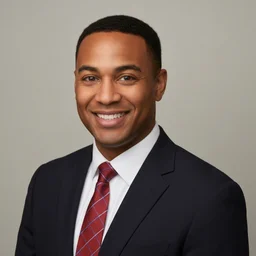
Attorney & Bar Exam Preparation Specialist
Yale Law SchoolJames R. Hargrove is a practicing attorney and legal educator with a Juris Doctor from Yale Law School and an LLM in Constitutional Law. With over a decade of experience coaching bar exam candidates across multiple jurisdictions, he specializes in MBE strategy, state-specific essay preparation, and multistate performance test techniques.