
ATLS Subject Knowledge: What Advanced Trauma Life Support Covers 2026 September
Pass the ATLS Subject Knowledge: What Advanced exam with confidence. Practice questions with detailed explanations and instant feedback on every answer. 🆕

Advanced Trauma Life Support (ATLS) is a standardised training programme for physicians and surgeons that provides a structured, systematic approach to the initial assessment and management of the trauma patient. Developed by the American College of Surgeons (ACS) Committee on Trauma and first introduced in 1978, ATLS has become the global standard for trauma education — used in over 80 countries and required or strongly recommended for surgeons, emergency physicians, and other physician-level providers working in trauma settings.
The ATLS course is not a nursing or allied health training programme; it is a physician-level course designed specifically for doctors who may encounter a critically injured patient and need a systematic, evidence-based framework for initial management.
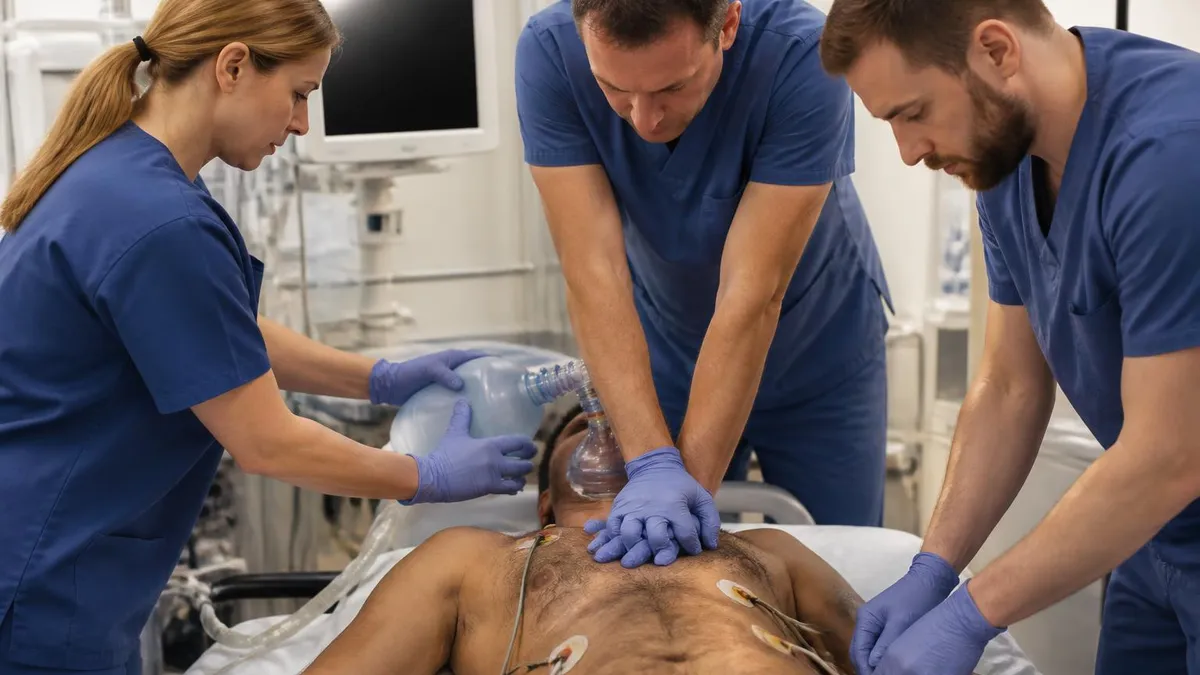
The foundational concept of ATLS is the primary survey — a systematic, prioritised assessment of life-threatening injuries conducted in a specific sequence: Airway maintenance with cervical spine protection, Breathing and ventilation, Circulation with haemorrhage control, Disability (neurological status), and Exposure/Environmental control.
This ABCDE sequence, which forms the backbone of the ATLS approach, ensures that the most immediately life-threatening conditions — airway obstruction, tension pneumothorax, massive haemorrhage — are identified and treated before the clinician moves on to injuries that, while significant, are less immediately lethal. The genius of the ABCDE framework is its insistence on treating life-threatening conditions as they are found, rather than completing a full assessment before beginning treatment.
The secondary survey is the comprehensive head-to-toe assessment that follows the primary survey and resuscitation. The secondary survey is conducted only after the patient has been stabilised and all immediately life-threatening conditions addressed — a principle that is fundamental to the ATLS philosophy.
The secondary survey proceeds systematically through all body regions — head, face, neck, chest, abdomen, perineum, musculoskeletal, and neurological — to identify all injuries that may not have been apparent during the rapid primary survey. ATLS-trained physicians learn to conduct a thorough, efficient secondary survey and to use adjunct diagnostic tools (imaging, laboratory values, specific examination findings) to complete the injury inventory before definitive care or transfer decisions are made.
Haemorrhage control is one of the highest-yield content areas within ATLS, reflecting the reality that uncontrolled haemorrhage is the leading cause of preventable death in trauma. ATLS covers the physiological classification of haemorrhagic shock (Classes I through IV), the principles of damage control resuscitation, massive transfusion protocols, and the role of surgical haemorrhage control versus interventional radiology versus non-operative management across different injury patterns.
The course addresses haemorrhage from multiple anatomical sites — scalp, thoracic, abdominal, pelvic, and extremity — and the specific management priorities for each. ATLS teaches that haemorrhage control takes priority in the secondary survey once airway and breathing have been secured during the primary survey.
ATLS's most important discipline: at each letter of the primary survey, treat the life-threatening finding before advancing. Tension pneumothorax at B? Decompress it now — don't proceed to C first. This treatment-first approach is what the ABCDE framework is really about, and it's the logic behind most scenario-based exam questions.
Airway management is another core ATLS subject area, reflecting the critical importance of securing the airway in the trauma patient who may have a compromised airway from direct injury, altered level of consciousness, or ongoing haemorrhage. ATLS covers the indications for definitive airway management (orotracheal intubation), rapid sequence intubation protocols, the surgical airway (cricothyrotomy) as a rescue technique when orotracheal intubation is impossible, and airway assessment in the cervical spine-injured patient.
The cervical spine precaution — maintaining alignment during airway management in patients with potential cervical injury — is a critical ATLS teaching that prevents the secondary injury that can result from inappropriate movement of an injured cervical spine during airway manoeuvres.
Neurological assessment in the ATLS context focuses primarily on rapid detection of significant traumatic brain injury (TBI) and spinal cord injury using standardised tools. The Glasgow Coma Scale (GCS) — scored on eye opening, verbal response, and motor response — is the primary tool for rapid neurological assessment in the ATLS primary survey.
A GCS of 14 or 15 represents minor TBI; 9–13 represents moderate TBI; and 8 or below represents severe TBI requiring urgent intervention (typically definitive airway management and neurosurgical consultation). ATLS covers the clinical features of herniation syndromes, the management of raised intracranial pressure in the resuscitation phase, and the decision criteria for urgent CT imaging and neurosurgical intervention.
Abdominal and pelvic trauma constitute another major ATLS content area, given the high mortality associated with solid organ injury and hollow viscus perforation in the trauma patient. ATLS covers the clinical assessment of the abdomen in the trauma patient — the indications for focused abdominal sonography in trauma (FAST examination), the limitations of physical examination in the obtunded patient, and the criteria for emergent surgical exploration versus CT-based injury characterisation and non-operative management.
The FAST examination — a bedside ultrasound assessment for free fluid in the pericardial sac and four abdominal quadrants — is a core ATLS skill taught in the practical skills component of the course and is rapidly becoming standard practice in trauma resuscitation rooms internationally.
Burn and thermal injury are covered in ATLS as a distinct trauma mechanism with specific initial management priorities. ATLS burn management covers the estimation of total body surface area (TBSA) involved using the Rule of Nines, the classification of burn depth (superficial partial thickness, deep partial thickness, full thickness), fluid resuscitation calculation using the Parkland formula, airway assessment in the inhalation injury patient, and the indications for urgent transfer to a dedicated burns centre.
The burn patient's airway is a particular concern — inhalation injury can produce progressive upper airway oedema that rapidly forecloses the opportunity for orotracheal intubation, making early definitive airway management a priority in patients with facial burns, singed nasal hairs, hoarseness, or carbonaceous sputum.
Transfer and transport of the trauma patient are covered in ATLS as a distinct component of trauma management that carries its own set of risks and decision-making priorities. The ATLS framework emphasises that definitive care for the trauma patient requires appropriate matching of injury pattern to facility capability — a patient with an aortic injury or a depressed skull fracture may require transfer to a higher level of care if the receiving facility lacks the required surgical subspecialty coverage.
The 'Golden Hour' concept — the principle that definitive haemorrhage control should be achieved within the first hour of injury for the most severely injured patients — shapes the ATLS approach to transport decisions, with the priority of not delaying haemorrhage control for additional imaging or procedures that can be performed at the receiving centre.
Inter-hospital transfer agreements, handover documentation standards, and the communications required between sending and receiving facilities are covered as practical competencies in the ATLS curriculum. This emphasis on logistics and communication is what distinguishes ATLS from purely procedural trauma training — effective trauma management requires both technical skill and operational coordination.

| Section | Questions | Time | Notes |
|---|---|---|---|
| Primary Survey (ABCDE) | Core framework | Day 1 | Airway, Breathing, Circulation, Disability, Exposure — systematic prioritised trauma assessment |
| Haemorrhage Control | High-yield | Day 1–2 | Shock classification (Classes I–IV), damage control resuscitation, MTP, haemorrhage by site |
| Airway Management | Critical skill | Skills station | RSI indications, surgical airway (cricothyrotomy), C-spine precautions during intubation |
| Thoracic Trauma | Major module | Day 1–2 | Tension pneumothorax, haemothorax, cardiac tamponade, aortic injury — ATLS management priorities |
| Head and Spine Trauma | Neurology focus | Day 2 | GCS scoring, TBI classification, herniation syndromes, spinal cord injury assessment and stabilisation |
| Secondary Survey + Special Populations | Complete assessment | Day 2 | Head-to-toe examination; paediatric, geriatric, obstetric, and bariatric trauma considerations |
Thoracic trauma represents one of the highest-stakes content areas in ATLS because many thoracic injuries are immediately life-threatening and can be treated rapidly if correctly identified. ATLS covers the six immediately life-threatening thoracic injuries — airway obstruction, tension pneumothorax, open pneumothorax, massive haemothorax, flail chest with pulmonary contusion, and cardiac tamponade — as well as the less immediately threatening but still serious injuries that may be identified during the secondary survey.
The management of tension pneumothorax — immediate needle decompression or finger thoracostomy, followed by chest tube thoracostomy — is a critical skill that ATLS-trained physicians must be able to perform rapidly and correctly without waiting for radiographic confirmation.
Musculoskeletal trauma is covered in ATLS in the context of haemorrhage potential, neurovascular compromise, and the priorities of fracture management in the multiply injured patient.
ATLS emphasises that extremity fractures should not distract from life-threatening injuries to the chest, abdomen, or pelvis during the primary survey — a principle sometimes summarised as 'treat life-threatening injuries first, then limb-threatening injuries.' The ATLS approach to pelvic ring injuries — which can produce massive retroperitoneal haemorrhage — covers pelvic stabilisation, angiographic embolisation, and the role of the trauma surgeon in rapidly controlling pelvic haemorrhage. Compartment syndrome recognition and fasciotomy as a limb-saving intervention are also covered within the musculoskeletal trauma module.
Special populations receive dedicated attention in the ATLS curriculum because the physiological responses to trauma differ significantly across age groups, in pregnancy, and in patients with pre-existing conditions.
Paediatric trauma management covers the anatomical and physiological differences that affect how children present with and respond to injury — including differences in airway anatomy, fluid resuscitation volumes, normal vital sign ranges by age, and the patterns of injury common in paediatric patients (including non-accidental trauma recognition). Geriatric trauma management addresses the reduced physiological reserve, the blunting of the tachycardia response, and the effects of anticoagulant and beta-blocker medications that frequently alter the clinical presentation and resuscitation requirements in older trauma patients.
Obstetric trauma covers the anatomical and physiological changes of pregnancy, the primary consideration of maternal stability before foetal assessment, and the specific management of placental abruption and uterine rupture in the trauma setting.
The ATLS course format combines didactic lecture sessions with practical skills stations and a written multiple-choice examination. The skills stations — which include airway management techniques (intubation models, surgical airway models), chest tube insertion, diagnostic peritoneal lavage, and trauma assessment scenarios — require direct demonstration of competency under observation. The written examination tests knowledge of ATLS principles, algorithms, and management priorities across all curriculum areas. Candidates must pass both the practical skills assessment and the written examination to receive ATLS certification from the American College of Surgeons.
The ATLS recertification course — required every four years to maintain certification — covers updates to the ATLS curriculum, changes in resuscitation guidelines, and practical skills refresher at the skills stations. The ATLS curriculum is periodically updated to reflect advances in trauma care — the current 10th edition incorporated updates on haemostatic resuscitation, damage control surgery, and the management of blast injury.
Physicians who have not practised all ATLS skills regularly in their clinical work benefit most from the recertification course's skills refresher component, which ensures that procedural skills remain current and that technique has not degraded in the interval since the previous certification.

In ATLS, a Glasgow Coma Scale score of 8 or below indicates severe TBI and is a standard indication for definitive airway management (orotracheal intubation). Know the GCS scoring components cold — eye opening (1–4), verbal (1–5), motor (1–6), max 15 — and the three TBI severity thresholds: ≤8 severe, 9–13 moderate, 14–15 minor.
International recognition of ATLS certification varies by country and by training context. In the United States, ATLS is strongly recommended or required for surgical residency programmes accredited by the ACGME, and is expected of surgeons credentialing at trauma centres. In the United Kingdom, ATLS is delivered through the Royal College of Surgeons and is widely required or expected for surgeons working in major trauma centres and emergency departments.
In many other countries, national chapters of the International Association for Trauma Surgery and Intensive Care (IATSIC) affiliate with the ACS to deliver ATLS through national providers. For physicians training or practising internationally, ATLS certification is one of the most widely recognised indicators of systematic trauma training.
The ATLS written examination is a multiple-choice assessment that tests knowledge of ATLS principles, algorithms, and management priorities. Questions range from factual recall (the GCS score threshold for severe TBI, the haemorrhagic shock class associated with a specific blood loss) to application-based scenarios (given a trauma patient's vital signs and physical examination findings, what is the most appropriate next step in management). The scenario-based questions are designed to assess whether candidates can apply ATLS principles to realistic clinical situations — not just recall definitions.
Candidates who understand the ATLS framework deeply enough to reason through scenarios they have not seen before, rather than pattern-matching to memorised scenarios, perform better on the written examination.
Preparation for the ATLS course and examination is most effective when it is grounded in the ATLS Student Manual — the official study guide for the course, which covers all curriculum content in a format aligned with the course structure and the examination. Reviewing the ATLS manual before attending the course allows candidates to arrive with a foundation in the key concepts and algorithms, making the didactic sessions more productive and the practical skills stations more focused on technique than on simultaneous content acquisition.
Many ATLS candidates review the primary survey algorithm, the shock classification table, and the major injury-specific management algorithms before the course begins, leaving the didactic days for questions, clarification, and integration rather than first-encounter learning.
The ATLS course's team-based simulation component — in which candidates practice primary survey and resuscitation in simulated trauma scenarios — is one of the most valuable elements for developing the kind of rapid, prioritised decision-making that the ABCDE framework requires under real clinical pressure.
Simulation exercises expose candidates to the experience of encountering multiple simultaneous findings, managing team communication during resuscitation, and making treatment decisions before all diagnostic information is available — conditions that characterise actual trauma resuscitation but cannot be replicated through written study alone. Candidates who approach the simulation sessions as active participants, vocalising their thought process and engaging with feedback from instructors, extract significantly more learning value from this component than those who observe passively.
The evolution of ATLS since its first introduction in 1978 reflects the changes in trauma care over nearly five decades. Early editions focused heavily on physiological assessment and on the practical skills of trauma resuscitation available in that era. Subsequent editions incorporated evidence from military trauma experience — particularly from conflicts in Iraq and Afghanistan — that reshaped civilian trauma management through concepts like damage control resuscitation, permissive hypotension, and tranexamic acid administration.
The current 10th edition incorporates these advances while maintaining the foundational ABCDE framework that has defined ATLS across all editions. Physicians who completed earlier ATLS editions should be aware that some management recommendations have changed significantly and that recertification via the current edition course is not merely administrative — it provides substantive clinical content updates.
ATLS's central discipline: do NOT proceed to the next step of the primary survey until the current life-threatening finding is treated. If the patient has tension pneumothorax during 'B', treat it before moving to 'C'. The ABCDE sequence is not just an assessment order — it is a treatment priority sequence. Candidates who understand this principle answer scenario-based exam questions correctly even when the clinical details are unfamiliar.
- ✓Memorise the ABCDE primary survey sequence and what specific life-threatening conditions each step identifies and treats
- ✓Know the six immediately life-threatening thoracic injuries and the ATLS management priority for each
- ✓Know haemorrhagic shock Classes I–IV: estimated blood loss, clinical signs, and resuscitation approach for each class
- ✓Know when to perform needle decompression vs. finger thoracostomy vs. chest tube for pneumothorax
- ✓Understand the GCS scoring system: eye (1–4), verbal (1–5), motor (1–6) — know the scale components cold
- ✓Know the indications for definitive airway management and the conditions that require rapid sequence intubation
- ✓Understand the ATLS approach to pelvic ring injuries and massive retroperitoneal haemorrhage
- ✓Know the physiological differences in paediatric and geriatric trauma presentation that alter management
- ✓Understand damage control resuscitation: balanced blood products, permissive hypotension, early surgical haemostasis
- ✓Practice ATLS scenario-based questions — the written exam tests application of ATLS principles to clinical scenarios
ATLS Pros and Cons
- +ATLS has a publicly available content blueprint — you know exactly what to prepare for
- +Multiple preparation pathways accommodate different schedules and budgets
- +Clear score reporting shows specific strengths and weaknesses
- +Study communities share current insights from recent test-takers
- +Retake policies allow recovery from a difficult first attempt
- −Tested content scope requires substantial preparation time
- −No single resource covers everything optimally
- −Exam-day performance can differ from practice test performance
- −Registration, prep, and retake costs accumulate significantly
- −Content changes between versions can make older materials less reliable
Pros and Cons at a Glance
| Pros | Cons |
|---|---|
| ATLS has a publicly available content blueprint — you know exactly what to prepare for | Tested content scope requires substantial preparation time |
| Multiple preparation pathways accommodate different schedules and budgets | No single resource covers everything optimally |
| Clear score reporting shows specific strengths and weaknesses | Exam-day performance can differ from practice test performance |
| Study communities share current insights from recent test-takers | Registration, prep, and retake costs accumulate significantly |
| Retake policies allow recovery from a difficult first attempt | Content changes between versions can make older materials less reliable |
ATLS Questions and Answers
About the Author

Educational Psychologist & Academic Test Preparation Expert
Columbia University Teachers CollegeDr. Lisa Patel holds a Doctorate in Education from Columbia University Teachers College and has spent 17 years researching standardized test design and academic assessment. She has developed preparation programs for SAT, ACT, GRE, LSAT, UCAT, and numerous professional licensing exams, helping students of all backgrounds achieve their target scores.