
ATLS Course Online: What You Can and Can't Do Remotely 2026
Boost your advanced trauma life support course exam score with practice questions and detailed answer explanations. Track your progress with instant
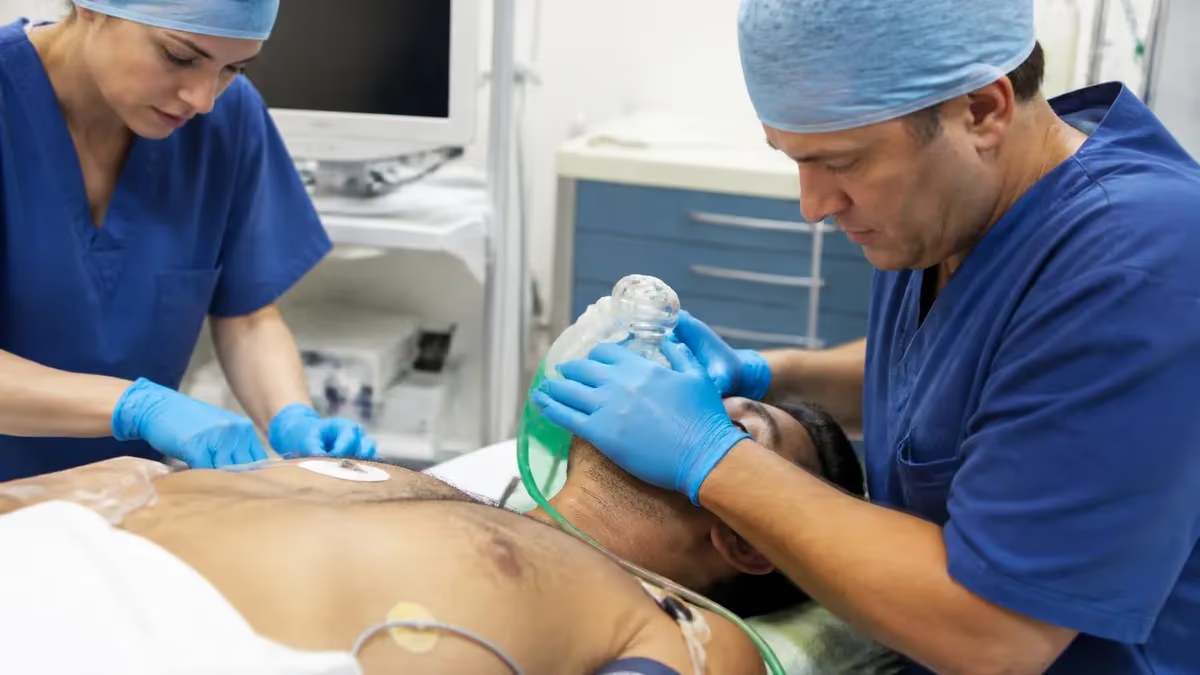
If you've searched for ATLS courses online, you've probably hit the same wall that every resident and trauma surgeon has faced: there's no fully remote option. The course is built around hands-on skills assessment. Airway management, chest decompression, hemorrhage control — these aren't skills that can be evaluated over a video call. The American College of Surgeons (ACS) designed ATLS specifically to test what you do under pressure, not what you can recall on a written exam. Practice with the free ATLS - Advanced Trauma Life Support practice test on PracticeTestGeeks (12 questions with answer explanations).
That said, a meaningful portion of ATLS preparation and coursework does happen online. The pre-course self-study module is mandatory, delivered digitally, and must be completed before you walk through the doors on day one. Beyond that, a growing ecosystem of online prep resources — question banks, video lectures, simulation platforms — supports the cognitive side of ATLS preparation. Understanding exactly what you can do remotely helps you plan your schedule, manage your costs, and walk into your course day with less stress.
ATLS is now in its 11th edition (ATLS 11, updated by the ACS in 2025) and has been taught to more than 1 million clinicians in more than 80 countries through ACS-approved course sites. The Traditional course spans two days: the first covers didactic content and pre-hospital scenarios, the second involves skills stations and a written and skills test. You'll work in small groups with practicing surgeons and trauma specialists as faculty. The course is designed to be practical, intensive, and clinically grounded — which is exactly why the skills component can't be replicated at home.
This article covers every aspect of the online dimension of : the pre-course module structure, what it tests, supplementary online prep options, how to find a verified course site near you, and what to expect when the in-person component begins. Whether you're a surgical resident preparing for your first ATLS, a trauma nurse seeking certification, or a physician due for recertification, knowing what's available online saves you time.
The mandatory pre-course module is one of the smarter design decisions in ATLS — it moves cognitive load out of the classroom and onto the candidate's own time. This means the actual course days can focus on applying knowledge rather than teaching it from scratch. Faculty can run scenarios at pace, challenge candidates with real-time decisions, and spend their time where it matters: correcting technique and building clinical judgment.
The two-day structure is deliberate. ACS found that trying to compress ATLS into a single day produces worse outcomes — candidates are cognitively overloaded, skills suffer, and retention drops. Splitting across two days allows candidates to consolidate knowledge overnight before tackling the skills evaluation.
Free ATLS - Advanced Trauma Life Support Study Tools
Interactive ATLS - Advanced Trauma Life Support resources on PracticeTestGeeks, free to start:
- ATLS Practice Test 10th Edition 1 — 12 questions with instant scoring and answer explanations
- ATLS - Advanced Trauma Life Support flashcards — review key terms and concepts card by card
- ATLS - Advanced Trauma Life Support study guide — topic-by-topic overview of what the exam covers
- ATLS - Advanced Trauma Life Support cheat sheet — one-page printable summary for last-minute review
- ATLS course completion requires a passing grade on a multiple-choice examination. (American College of Surgeons (ACS), Committee on Trauma)
- ATLS CME requires successful course completion with a minimum post-test score of 75%. (msfacs.zendesk.com)
- ATLS verification remains current for four years from the completion date. (msfacs.zendesk.com)
- ATLS providers have six months after verification expires to take a Refresher course, but are not considered verified during that grace period. (American College of Surgeons (ACS), Committee on Trauma)
- The ATLS Hybrid course combines online core content with hands-on, in-person skills sessions. (American College of Surgeons (ACS), Committee on Trauma)
- The ATLS Traditional course delivers its medical core content through interactive, in-person instruction. (American College of Surgeons (ACS), Committee on Trauma)
- The published ATLS 11 target audience includes practicing physicians, residents, advanced practice clinicians and medical students in their final year. (American College of Surgeons (ACS), Committee on Trauma)
Facts verified Nov 9, 2026 against American College of Surgeons (ACS), Committee on Trauma. Dates that have passed are removed automatically.
ATLS Exam at a Glance
| Item | Detail | Official source |
|---|---|---|
| Number of questions | Multiple-choice examination; question count unverified | American College of Surgeons (ACS), Committee on Trauma |
| Passing score | 75% minimum post-test score for CME | msfacs.zendesk.com |
| Validity | 4 years | msfacs.zendesk.com |
| Renewal | Refresher course; 6-month grace period after expiration | American College of Surgeons (ACS), Committee on Trauma |
| Delivery (Hybrid) | Online core content plus in-person skills | American College of Surgeons (ACS), Committee on Trauma |
| Delivery (Traditional) | In-person instruction | American College of Surgeons (ACS), Committee on Trauma |
| Eligibility | Physicians, residents, advanced practice clinicians and final-year medical students | American College of Surgeons (ACS), Committee on Trauma |
Facts verified Nov 9, 2026 against American College of Surgeons (ACS), Committee on Trauma. Dates that have passed are removed automatically.

The ATLS pre-course self-study module is the only official component that can be completed entirely online. It's not optional — ACS requires you to complete it before your course date, and sites typically ask for confirmation that you've done so. The module covers the theoretical foundation of ATLS: the ABCDE primary survey, physiological responses to trauma, shock classification, and the decision framework for prioritizing interventions in a multi-system trauma patient. You'll read through clinical chapters, watch procedural videos, and complete knowledge-check questions throughout.
The module is accessed through the online learning platform after you register for a course. You log in with your course credentials and work through the material at your own pace. Most candidates spend eight to twelve hours on it over several days; some compress it into a weekend before the course.
There's no external exam at the end of the pre-course module — your assessment happens during the live course itself. The purpose of the online work is to ensure everyone arrives with a shared baseline of knowledge so that course time can focus on application rather than didactics.
Content quality in the pre-course module is genuinely high. The procedural videos demonstrate techniques like needle decompression, pericardiocentesis, and surgical airway with enough clinical detail to be useful rather than merely introductory. The written content is dense but well-organized around the ten ATLS chapters: initial assessment and management, airway and ventilatory management, shock, thoracic trauma, abdominal and pelvic trauma, head trauma, spine and spinal cord trauma, musculoskeletal trauma, thermal and electrical injuries, and transfer to definitive care.
One common question is whether you can access the pre-course materials without registering for a full course. The short answer is no — access requires an active course registration through an ACS-verified site. You can't purchase the pre-course module independently, and you can't use materials from a previous registration cycle for a new course.
ACS updates content between editions, so module access is tied to your specific course enrollment. If you want to begin studying before you register, the ATLS Student Manual (available for purchase) covers the same content in textbook form and is an excellent starting point. That's the book that becomes your primary study reference once you register and gain module access.
Candidates who've completed other resuscitation courses — ACLS, PALS, TNCC — sometimes underestimate how different the ATLS in-person assessment feels. Where ACLS is primarily algorithm-driven with relatively scripted scenarios, ATLS assessors introduce decision points that require candidates to deviate from the standard flow and justify it. The faculty at skills stations aren't trying to catch you out; they're stress-testing your clinical reasoning under time pressure. Arriving with solid pre-course preparation means you can focus on communicating your decisions clearly rather than trying to remember the protocol from scratch while being observed.
What the online pre-course covers:
- All 10 ATLS clinical chapters in self-study format
- Procedural demonstration videos for major interventions
- Knowledge-check questions after each section
- Reference to the ATLS course manual (11th edition; a PDF is included with enrollment)
- Case vignettes illustrating clinical decision-making
Access is granted after you register through an ACS-verified site. Completion is mandatory before in-person attendance. Most candidates spend 8–12 hours on this component.
The in-person component of ATLS is where most candidates feel the pressure — and where preparation really pays off. Day one typically begins with a written pre-test, followed by lecture review of the core ATLS modules, and small-group case discussions. Faculty don't just present; they ask questions, probe decision-making, and expect active participation. If you arrive having thoroughly worked through the pre-course material, you'll find day one manageable. If you skimmed the online module, day one will feel overwhelming.
Day two shifts to skills stations. You rotate through procedure stations with small groups, typically three or four candidates per station. Faculty observe your technique, ask follow-up questions about your rationale, and score your performance against standardized criteria. The skills that most commonly trip candidates up aren't the dramatic ones — they're the systematic elements. Running a complete primary survey in the correct ABCDE sequence, not skipping reassessment after interventions, verbally communicating findings to your team. ATLS isn't testing technical perfection; it's testing systematic thinking under simulated pressure.
The written examination at the end of day two consists of 50 multiple-choice questions. The pass mark is 75 percent. Questions draw from all ten ATLS chapters, with particular emphasis on initial assessment, shock management, and thoracic trauma. The question style is clinical — you're presented with a scenario and asked to identify the correct priority or intervention. This is where from question banks pay dividends. Working through several hundred practice questions before your course normalizes the question format and reinforces the clinical decision-making framework that ATLS is designed to build.
If you fail either the written exam or the skills assessment, you'll receive specific feedback on where you lost marks. Most course sites offer a same-day or next-day re-attempt for borderline candidates. Understanding the pass criteria in advance — and what faculty are specifically looking for at each station — reduces anxiety and improves performance. Your pre-course preparation is the single most controllable factor in your outcome, which makes the online pre-course module worth taking seriously rather than rushing through in the 48 hours before your course date.
If your course site is far from where you live or work, the online pre-course module means you can complete eight to twelve hours of structured preparation without any travel. For candidates in rural areas or regions with limited course availability, this matters. You might fly in the evening before the course and still have your pre-course work fully done. The flexibility of the online module is one of its practical advantages, especially when your clinical schedule makes finding large blocks of study time difficult.

Finding an site requires checking the program locator directly — it lists verified sites by state and country, with upcoming course dates, registration contacts, and available course types (initial certification, refresher, instructor). Not every hospital that teaches ATLS lists open courses publicly; many sites primarily serve their own residents and staff, with limited seats available to outside candidates. Academic medical centers and Level I trauma centers typically run the most courses and often accept external registrants.
Costs vary by site and region. In the United States, you should budget $600–$800 for the full two-day initial course, which typically includes the pre-course module access, course materials, and certification fees. Some institutions subsidize costs for their own trainees, so if you're a resident at an ATLS-verified teaching hospital, check whether your program covers or discounts the fee. Outside the US, ACS national programs manage ATLS in each country, and costs in local currency vary widely — in some countries, government or health system sponsorship makes the course significantly cheaper.
Course availability is the bigger constraint for most candidates. Popular urban sites with large residency programs often fill months in advance. If you're targeting a specific date — say, before your trauma surgery rotation begins or before fellowship application season — register early. The ACS locator shows availability by date, but it doesn't always reflect real-time seat availability, so follow up directly with the site contact after identifying a course. Some sites run waitlists; getting on one is worth doing if your preferred date fills up.
Military and federal health system physicians have access to additional ATLS course pathways through defense medical training programs. If you're active duty or work within a federal health system, check with your medical education officer before registering through the civilian ACS pathway — you may have access to dedicated courses with covered costs. Similarly, some large health systems run internal ATLS programs for their employed staff. Check with your GME office or continuing medical education department before assuming you need to self-register through the public course locator.
If you're a nurse practitioner, physician assistant, or dentist, verify your eligibility before registering. ATLS eligibility varies by country and program — in some regions, advanced practice providers are eligible; in others, the course is restricted to medical graduates. The ACS website and individual course sites list eligibility requirements. Registering and then being turned away at the door is a costly mistake worth avoiding with a quick eligibility check beforehand. Some sites will allow you to confirm eligibility with a brief inquiry email before you pay the registration fee.
- ✓Confirm you meet prerequisites (MD, DO, or equivalent; active patient care role)
- ✓Locate ACS-verified sites in your region via the ACS ATLS program locator
- ✓Register early — popular sites fill 2–3 months in advance
- ✓Complete the mandatory online pre-course self-study module (8–12 hours)
- ✓Download the ATLS 11 course manual PDF included with your enrollment
- ✓Complete at least 200 ATLS practice questions before course day
- ✓Review procedural technique videos for airway, chest decompression, and IV access
- ✓Confirm your institution's reimbursement policy before paying out of pocket
- ✓Arrange two consecutive days off from clinical duties (no call)
- ✓Bring photo ID and your confirmation email to the course site

Online prep resources have improved substantially over the past several years. Beyond the official pre-course module, question banks specifically designed for ATLS exam preparation let you test your knowledge against clinical scenarios that mirror the written exam format. These are particularly valuable if you want to measure your readiness before course day, since the pre-course module itself doesn't generate a score you can benchmark against the 75% pass threshold. Working through 200–300 practice questions over two to three weeks before your course is a reasonable target that most candidates report improves their written exam confidence significantly.
YouTube has become a surprisingly useful resource for ATLS skills preparation. Numerous academic trauma centers and simulation programs have published high-quality procedural videos demonstrating ATLS skills — needle thoracostomy, surgical airway, chest tube insertion — in a format that lets you pause, rewind, and study each step. Watching these videos with the ATLS manual open to the relevant chapter builds mental representation of the sequence before you attempt it on a task trainer. While you can't replicate the pressure of the live assessment environment, this visual preparation measurably reduces the cognitive load during the in-person skills stations.
The available through official and supplementary sources include the ATLS Student Manual, algorithm cards summarizing the primary and secondary survey sequences, and chapter-specific review tools. The manual is the authoritative reference — if you're uncertain about a clinical detail, it's the document the written exam draws from. Used copies of the 9th or 10th edition are now outdated because ATLS 11 launched in 2025; enrolled learners receive a PDF of the current manual, so study from that.
Podcasts covering trauma management are another useful passive-prep option. Several emergency medicine and trauma surgery programs produce podcast series covering ATLS-aligned content — shock physiology, TBI management, damage control surgery principles. Listening during commutes or exercise in the weeks before your course keeps the material front of mind without requiring dedicated desk time. This won't replace active reading and practice questions, but for candidates with busy clinical schedules, passive exposure to the content framework helps retention during the final crunch before course day.
Building study time into your schedule before the course pays disproportionate dividends compared to any other preparation approach. The written exam covers all ten chapters — four to six questions per chapter is the rough distribution. Topics that produce the most written exam failures are shock classification (particularly distinguishing Class II from Class III hemorrhagic shock), TBI management principles (specifically ICP management and cerebral perfusion pressure), and spinal cord injury patterns. If you're short on time, prioritize these three areas above others. The section of this site covers each chapter with targeted question sets.
Many readers pair this guide with the atls test questions and answers 10th edition to check their readiness before exam day.
- +Pre-course module is fully flexible — complete it at your own pace from any device
- +No travel required for the study portion — useful if your course site is far away
- +Supplementary online question banks and videos are available 24/7
- +Online pre-course access typically included in your registration fee
- +Pre-course content closely mirrors written exam questions
- −The full certification cannot be earned online — in-person attendance is mandatory
- −Online pre-course access requires active course registration — no standalone purchase
- −Pre-course module doesn't provide a benchmark score to gauge your readiness
- −No live interaction with faculty until you arrive at the course
- −Online prep resources are supplementary, not a substitute for the official materials
Pros and Cons at a Glance
| Pros | Cons |
|---|---|
| Pre-course module is fully flexible — complete it at your own pace from any device | The full certification cannot be earned online — in-person attendance is mandatory |
| No travel required for the study portion — useful if your course site is far away | Online pre-course access requires active course registration — no standalone purchase |
| Online pre-course access typically included in your registration fee | Pre-course module doesn't provide a benchmark score to gauge your readiness |
| Pre-course content closely mirrors written exam questions | No live interaction with faculty until you arrive at the course |
Sample ATLS - Advanced Trauma Life Support Practice Questions
Try these questions from our free ATLS - Advanced Trauma Life Support practice tests. The correct answer and an explanation follow each question.
When assessing a trauma patient for a potentially difficult airway, the ATLS course recommends using the LEMON mnemonic. What does the 'E' in LEMON stand for?
- A. Emergency Profile
- B. Evaluate the 3-3-2 Rule
- C. External Injury
- D. End-tidal CO2
Answer: B. Evaluate the 3-3-2 Rule
The LEMON mnemonic is a tool for assessing a difficult airway. The 'L' stands for Look externally, 'E' for Evaluate the 3-3-2 rule (incisor distance, hyoid-mental distance, and thyroid-to-mouth distance), 'M' for Mallampati score, 'O' for Obstruction/Obesity, and 'N' for Neck mobility.
During a chemical mass casualty event, what is the first priority before treating contaminated patients in the emergency department?
- A. Decontamination of patients before they enter the facility
- B. Administering antidotes immediately upon arrival
- C. Intubating all symptomatic patients
- D. Drawing blood for toxicology before any intervention
Answer: A. Decontamination of patients before they enter the facility
Secondary contamination of healthcare workers is a critical risk; decontamination must occur outside the facility before patients enter to protect staff and prevent facility shutdown.
Before helicopter transfer, which intervention must be completed?
- A. CT scan of all regions
- B. Decompression of any pneumothorax with chest tube
- C. Definitive fixation of all fractures
- D. Complete crossmatch
Answer: B. Decompression of any pneumothorax with chest tube
Any pneumothorax must be decompressed before air transport because gas expands at altitude (Boyle's Law).
A 22-year-old patient has a suspected cervical spine injury after a diving accident. He is hypotensive (BP 80/40 mmHg) with a heart rate of 50 bpm. His skin is warm and dry. What type of shock is most likely present?
- A. Cardiogenic Shock
- B. Hypovolemic Shock
- C. Septic Shock
- D. Neurogenic Shock
Answer: D. Neurogenic Shock
The combination of hypotension and bradycardia (paradoxical in shock), along with warm, dry skin, is the classic presentation of neurogenic shock. This results from a loss of sympathetic tone due to a high spinal cord injury, leading to vasodilation and pooling of blood.
Take the full ATLS - Advanced Trauma Life Support practice test
🏥 Can you take the ATLS course completely online?
No. ATLS 11 combines online modules with mandatory in-person training, and the skills stations and testing happen on site at an ACS-approved course. Only the online modules can be done remotely.
START ATLS PRACTICE TEST📘 What is the current ATLS edition?
The current edition is ATLS 11, which the American College of Surgeons updated in 2025. It adds concepts such as team dynamics and communicating serious news to the families of trauma patients.
START ATLS PRACTICE TEST💻 How many online modules does ATLS 11 have?
ATLS 11 includes 26 online modules, open to all ATLS 11 learners before the in-person training. Which ones are required depends on whether you are in the Traditional, Hybrid, or Refresher course; optional modules earn 1 CME credit each.
START ATLS PRACTICE TEST📅 What ATLS course formats are offered?
ACS lists a Traditional course (2 or 2.5 days), a Hybrid course (1.5 days of in-person time plus online modules), and a Refresher course (half-day or 1 day). An Instructor course is also available for those identified with instructor potential.
START ATLS PRACTICE TEST⏳ How long is ATLS certification valid?
ATLS verification is current for four years from completing a Traditional, Hybrid, or Refresher course. There is a 6-month grace period to take a Refresher course, but you are not considered ATLS verified during that time.
START ATLS PRACTICE TEST🎯 What score do you need on the ATLS post-test?
ACS grants CME for a CME-accredited ATLS course only after successful completion with a minimum post-test score of 75%. Plan your preparation around clearing that 75% mark comfortably.
START ATLS PRACTICE TEST📖 How do I get the ATLS course manual?
All enrolled ATLS learners get access to a PDF of the course manual, and you can ask your course coordinator for a hard copy. If you are not enrolled in a course, the manual is sold on the ACS E-Store.
START ATLS PRACTICE TEST📍 How do I find an ATLS course near me?
Use the "Find Your Course" listing on the ACS Advanced Trauma Life Support page. You can filter by program, course type (Traditional, Hybrid, Refresher, Instructor), month, and location, or show military sites only.
START ATLS PRACTICE TEST📱 Is there an official ATLS app?
Yes. The ACS MyATLS app for iOS and Android includes chapter summaries, videos, calculators, interactive algorithms, skill stations, checklists, quizzes, and flashcards from the ATLS program.
START ATLS PRACTICE TEST🌍 Who runs ATLS and how widely is it taught?
ATLS is a CME program developed by the ACS Committee on Trauma and first introduced in 1978. ACS reports it has been taught to more than 1 million clinicians in more than 80 countries.
START ATLS PRACTICE TESTATLS Questions and Answers
Official Resources
- American College of Surgeons: Advanced Trauma Life Support: the official ATLS program page, where you can preview an ATLS 11 module and find upcoming courses.
- ACS ATLS FAQs: the official answers on CME credits, the four-year verification period, the course manual, and instructor pathways.
- MyATLS App (ACS): the official ATLS mobile app for iOS and Android, with algorithms, skill stations, quizzes, and flashcards.
How this page was made: written with AI tools and published by Nathan Beja, founder of Practice Test Geeks, who is responsible for its content. Exam facts are checked against the official sources listed below. Not reviewed by a subject-matter expert. Editorial policy
Sources & references
Exam facts on this page (fees, format, dates, passing scores) are checked against these official sources; the date is our last check. Editorial policy
- msfacs.zendesk.com — Passing score, score validity · verified Nov 2026
- facs.org — Renewal, test delivery · verified Oct 2026
- learning.facs.org — Eligibility, exam format · verified Oct 2026