
ATLS Refresher Course & Continuing Education Guide 2026 September
✏️ Pass your advanced trauma exam on the first attempt. Practice questions with detailed answer explanations and instant scoring for the 2026 September exam.
ATLS Refresher Course: What It Is and Who Needs It
Advanced Trauma Life Support (ATLS) certification is valid for four years. After that, you've got two paths: take the full ATLS course again, or complete an ATLS Refresher Course. The refresher is designed for physicians who are already ATLS-certified and want to renew without sitting through the complete initial curriculum.
Not everyone qualifies for the refresher option. You need a current, valid ATLS certification — if your certification has lapsed, you'll need to take the full course again from the start. Many trauma and surgical programs require ATLS recertification as a condition of continued credentialing, which makes staying on top of renewal timelines a practical necessity, not just a recommendation.
The ATLS Refresher Course is shorter than the initial course — typically one day versus two — but it's not a rubber stamp. There's still a written exam and skills evaluation. You'll need to demonstrate that your knowledge and practical trauma assessment skills are current. The course is offered at ACS (American College of Surgeons)-verified sites worldwide, following the same global curriculum as the initial ATLS program.
What the ATLS Refresher Covers
The refresher isn't a review of everything in the full ATLS curriculum — it focuses on updates since the previous edition, key areas where providers commonly have knowledge gaps, and the core skills assessment. The 10th edition of ATLS introduced several changes worth knowing if you certified on an earlier edition:
- Damage control resuscitation updates — greater emphasis on permissive hypotension in penetrating trauma and updated massive transfusion protocol guidance
- TBI management revisions — updated ICP management thresholds and revised guidance on hyperventilation
- Shock classification — refined shock class criteria with more emphasis on physiologic response rather than fixed volume thresholds
- Ultrasound integration — FAST exam is more deeply embedded in the primary and secondary survey discussions
- Cervical spine clearance — updated evidence-based approaches that have moved away from blanket collar application
If you originally certified on the 9th edition and you're now renewing under the 10th, these updates will be front-and-center in your refresher experience. Review the edition-specific changes before your course date.
Key Takeaway: ATLS certification demonstrates expertise in this field. Most candidates spend 4-8 weeks preparing with practice tests before taking the exam.
Finding an ATLS Refresher Course Near You
ATLS courses — including the refresher — are run exclusively through ACS-verified training sites. These are typically academic medical centers, large trauma centers, and hospital simulation programs. You can find your nearest course through the ACS ATLS course finder on the American College of Surgeons website.
Courses fill up quickly, especially in major metro areas. If you're renewing for credentialing purposes, don't wait until the last month of your certification. The refresher process itself takes one full day, but scheduling lag — especially at popular sites — can push timelines out by weeks or months. Book 3–4 months ahead if you can.
International sites follow the same ACS curriculum and produce equivalent certification. If you're outside the US or training abroad, your regional ATLS course site uses the same materials and exam standards. Your certification is globally recognized regardless of where you complete the course.
The ATLS Recertification Exam
The refresher written exam covers the same content domains as the full ATLS exam — primary survey, secondary survey, specific injury types, and management principles — but it's typically shorter. The format is multiple-choice, and you'll need to achieve a passing score to receive renewal certification.
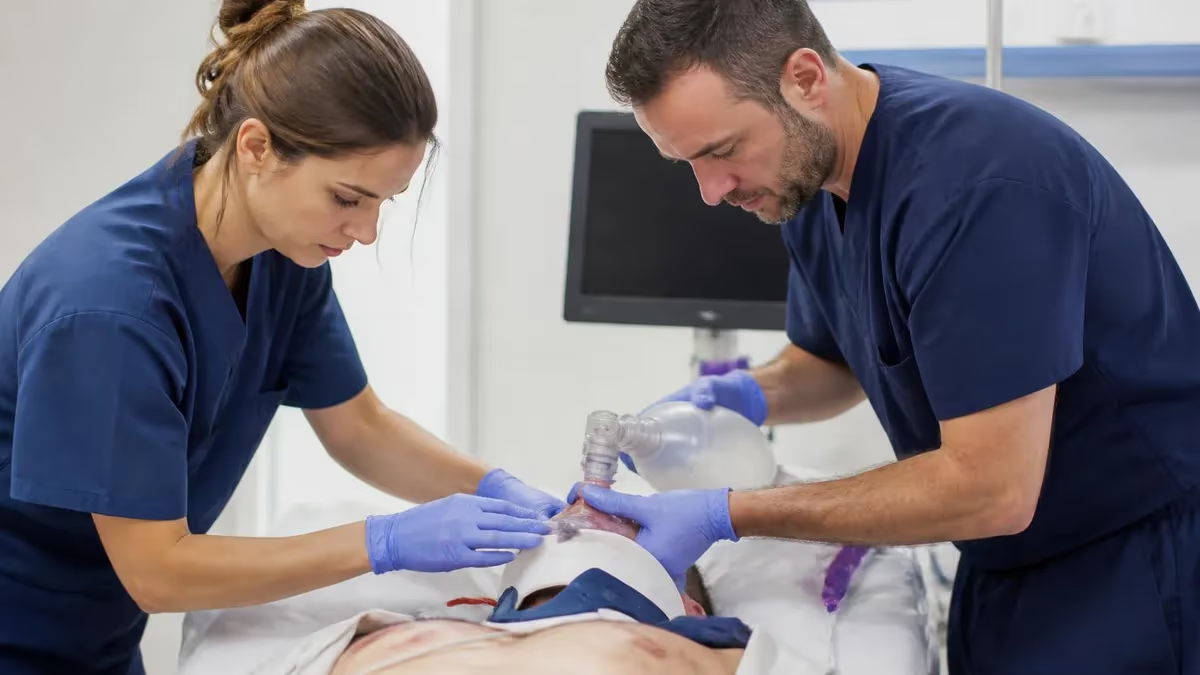
Skills stations in the refresher focus on practical application: airway management, chest trauma assessment, hemorrhage control, and team communication in a trauma bay scenario. These aren't passive demonstrations — you'll be expected to lead through the primary survey protocol correctly and make real-time management decisions.
Some physicians find the skills component more challenging than the written exam, especially those who've been in specialties with limited trauma exposure in the intervening years. If you haven't been doing trauma work regularly, spend real time reviewing the primary survey sequence before your course date.
ATLS and CME Credit
ATLS courses — initial and refresher — typically provide Continuing Medical Education (CME) credits. The exact number varies by course and institution, but most provide 16 AMA PRA Category 1 Credits for the initial course and proportionally fewer for the refresher. Check with your specific course site for the exact credit allocation, as this varies.
For physicians maintaining board certification in surgery, emergency medicine, or related specialties, ATLS CME credits often count toward specialty board maintenance of certification (MOC) requirements. Keep your course completion certificate — you'll need it when logging credits with your specialty board.
How to Prepare for the ATLS Refresher
Most physicians who struggle with ATLS recertification don't fail because they've forgotten everything — they fail because they've gotten sloppy on the structured primary survey approach. The ABCDE sequence seems simple until you're in a skills station and an instructor is watching you skip the circulation step or miss a tension pneumothorax sign.
Effective prep for the ATLS refresher includes:
- Re-reading the ATLS Student Manual (current edition). Focus on the primary and secondary survey chapters and the specific injury chapters you're least confident about.
- Reviewing the advanced trauma material systematically rather than just scanning what you remember.
- Practicing the primary survey out loud — verbalize ABCDE, identify what you'd be looking for and treating at each step. Muscle memory for the sequence matters in a skills station.
- Running through shock management scenarios, particularly the different shock classes and their physiologic indicators.
- Reviewing the specific 10th edition updates if you previously certified on an earlier edition.
One or two full review sessions a week for three to four weeks before your course date is usually enough for a physician with ongoing trauma exposure. If you've been out of trauma work for a year or more, plan for more intensive review — maybe an hour a day for four to six weeks.

ATLS: Pros and Cons
- +advanced trauma life support atls — structured ATLS training builds a solid foundation of skills
- +Multiple training formats available: online, in-person, and hybrid
- +Hands-on practice prepares you for real-world job scenarios
- +Training programs often include job placement assistance
- +Continuing education keeps your skills current with industry changes
- −Training programs can be time-intensive (weeks to months)
- −Quality varies significantly between training providers
- −Costs for comprehensive programs can be substantial
- −Hands-on components may require travel or in-person attendance
- −Self-paced learning requires strong discipline and motivation
Pros and Cons at a Glance
| Pros | Cons |
|---|---|
| advanced trauma life support atls — structured ATLS training builds a solid foundation of skills | Training programs can be time-intensive (weeks to months) |
| Multiple training formats available: online, in-person, and hybrid | Quality varies significantly between training providers |
| Hands-on practice prepares you for real-world job scenarios | Costs for comprehensive programs can be substantial |
| Training programs often include job placement assistance | Hands-on components may require travel or in-person attendance |
| Continuing education keeps your skills current with industry changes | Self-paced learning requires strong discipline and motivation |



Staying Current Beyond the Refresher
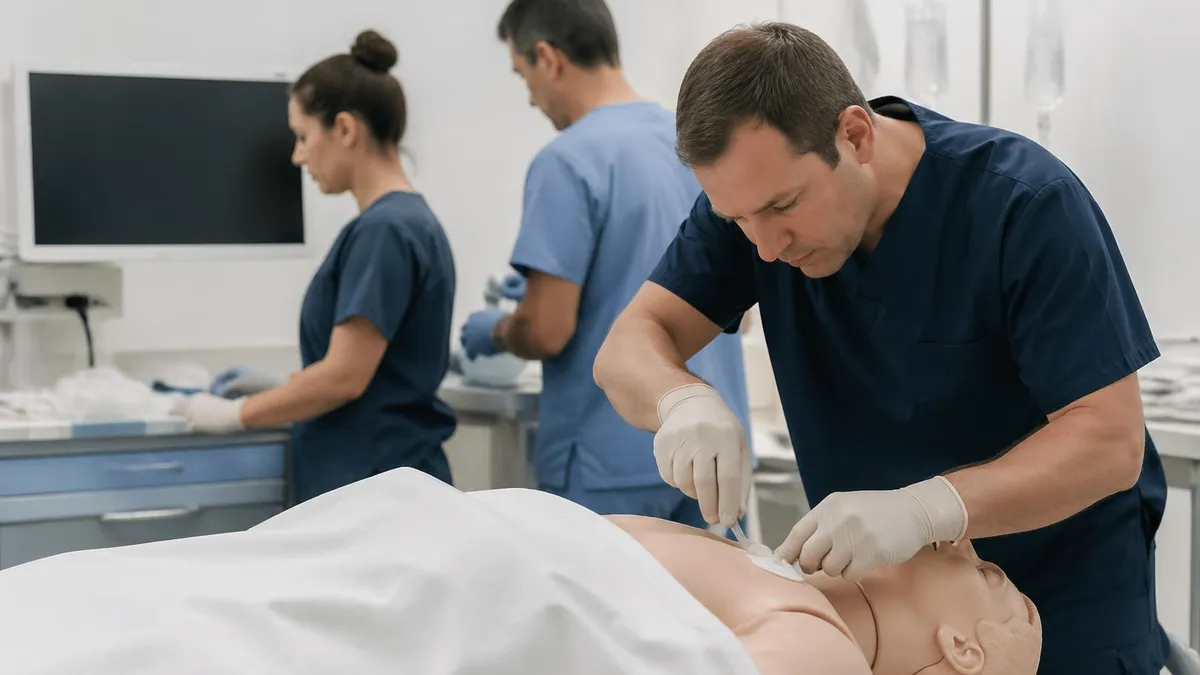
ATLS certification and the refresher course are foundational, but they're not the only way to maintain your trauma knowledge between renewal cycles. Many trauma centers offer in-house simulation sessions, morbidity and mortality conferences, and trauma skills days that keep you sharp on the practical side.
For written knowledge, regularly reviewing trauma literature — the Journal of Trauma and Acute Care Surgery is the primary venue — keeps you current on evolving evidence that may not be reflected in the current ATLS edition. ATLS guidelines tend to lag the cutting edge by a few years; staying engaged with the primary literature fills that gap.
If you're in a specialty that doesn't involve regular trauma exposure, consider supplementing with periodic ATLS atls practice test review to keep the material accessible. The four-year interval between certifications is long enough that it's easy to find yourself rusty on the specifics right when you need them — whether in a skills station or in an actual emergency bay.
The goal of ATLS — for both the initial course and the refresher — is a standardized, systematic approach to trauma assessment that can be executed under pressure, by any trained provider, anywhere in the world. Continuous review is what keeps that standard reliable when it actually matters.
About the Author

Educational Psychologist & Academic Test Preparation Expert
Columbia University Teachers CollegeDr. Lisa Patel holds a Doctorate in Education from Columbia University Teachers College and has spent 17 years researching standardized test design and academic assessment. She has developed preparation programs for SAT, ACT, GRE, LSAT, UCAT, and numerous professional licensing exams, helping students of all backgrounds achieve their target scores.