

APCAT Practice Test
Updated October 2026Facts verified Oct 24, 2026 against Edmonton Police Service (EPS) and Grande Prairie Police Service (GPPS), which administer the APCAT on behalf of Alberta
Success on the Alberta Police Cognitive Ability Test requires more than just intelligence; it demands strategy. Use our APCAT practice test free modules daily to build the mental endurance needed for the 3-hour exam. Practice with the free APCAT - Alberta Police Cognitive Ability practice test on PracticeTestGeeks (450+ questions with answer explanations).
APCAT Practice Test Questions
Prepare for the APCAT - Alberta Police Cognitive Ability Test exam with our free practice test modules. Each quiz covers key topics to help you pass on your first try.
APCAT - Alberta Police Cognitive Ability E...
APCAT Exam Questions covering - Alberta Police Cognitive Ability English Grammar and Structure. Master APCAT Test concepts for certification prep.
APCAT - Alberta Police Cognitive Ability I...
Free APCAT Practice Test featuring - Alberta Police Cognitive Ability Information Recall from Text. Improve your APCAT Exam score with mock test prep.
APCAT - Alberta Police Cognitive Ability L...
APCAT Mock Exam on - Alberta Police Cognitive Ability Logical Reasoning in Policing. APCAT Study Guide questions to pass on your first try.
APCAT - Alberta Police Cognitive Ability O...
APCAT Test Prep for - Alberta Police Cognitive Ability Observation and Detail Recognition. Practice APCAT Quiz questions and boost your score.
APCAT - Alberta Police Cognitive Ability P...
APCAT Questions and Answers on - Alberta Police Cognitive Ability Police Vocabulary and Spelling. Free APCAT practice for exam readiness.
APCAT - Alberta Police Cognitive Ability P...
APCAT Mock Test covering - Alberta Police Cognitive Ability Prioritizing Critical Actions. Online APCAT Test practice with instant feedback.
APCAT - Alberta Police Cognitive Ability P...
Free APCAT Quiz on - Alberta Police Cognitive Ability Problem Analysis and Resolution. APCAT Exam prep questions with detailed explanations.
APCAT - Alberta Police Cognitive Ability R...
APCAT Practice Questions for - Alberta Police Cognitive Ability Reading Comprehension Skills. Build confidence for your APCAT certification exam.
APCAT - Alberta Police Cognitive Ability S...
APCAT Test Online for - Alberta Police Cognitive Ability Situational Judgement Scenarios. Free practice with instant results and feedback.
APCAT - Alberta Police Cognitive Ability W...
Free APCAT Practice Test featuring - Alberta Police Cognitive Ability Written Communication Accuracy. Improve your APCAT Exam score with mock test prep.
APCAT - Alberta Police Cognitive Ability N...
APCAT Mock Test covering APCAT - Alberta Police Cognitive Ability Numerical Reasoning and Math Skills Questions and Answers. Online APCAT Test practice with instant feedback.
APCAT - Alberta Police Cognitive Ability P...
APCAT Practice Questions for APCAT - Alberta Police Cognitive Ability Pattern Recognition and Spatial Reasoning Questions and Answers. Build confidence for your APCAT certification exam.
APCAT Verbal Analogies and Word Relationships
Free APCAT Test covering Verbal Analogies and Word Relationships. Practice and track your APCAT exam readiness.
- The APCAT consists of 120 multiple-choice questions.[1]
- Candidates must score 70% or higher to pass the APCAT, according to the Edmonton Police Service.[1]
- There is no limit on APCAT attempts, but candidates must wait one month after a first attempt, three months after a second, and six months after each later attempt before rewriting.[2]
- An APCAT result is valid for five years.[2]
- Anyone interested in a policing career in Alberta must write the Alberta Police Cognitive Ability Test (APCAT) before applying, and Edmonton applicants must pre-register for a sitting.[2]
Numbers in brackets link to the official sources listed under Sources & last verified. Dates that have passed are removed automatically.
APCAT Exam at a Glance
| Item | Detail | Source · Verified |
|---|---|---|
| Number of questions | 120 multiple-choice questions[1] | Edmonton Police Service (EPS) and Grande Prairie Police Service (GPPS), which administer the APCAT on behalf of Alberta · Oct 25, 2026 |
| Passing score | 70% or higher[1] | Edmonton Police Service (EPS) and Grande Prairie Police Service (GPPS), which administer the APCAT on behalf of Alberta · Oct 25, 2026 |
| Retake policy | Unlimited attempts; wait 1 month after 1st fail, 3 months after 2nd, 6 months after each later one[2] | gppolice.com · Oct 25, 2026 |
| Validity | 5 years[2] | gppolice.com · Oct 25, 2026 |
| Eligibility | Must pass APCAT before applying to a police service[2] | gppolice.com · Oct 25, 2026 |
What changed for APCAT in 2026
- Oct 25, 2026: Eligibility changed to Must pass APCAT before applying to a police service (previously Required before applying; must pre-register first).[2]
- Oct 25, 2026: Passing score changed to 70% or higher (previously 70% (84 of 120)).[1]
- Oct 25, 2026: Retake policy changed to Unlimited attempts; wait 1 month after 1st fail, 3 months after 2nd, 6 months after each later one (previously Unlimited attempts; wait 1 month after the 1st fail, 3 months after the 2nd, 6 months after the 3rd and later fails).[2]
- Oct 25, 2026: Validity changed to 5 years (previously 5 years, transferable to all Alberta municipal police agencies).[2]
Free APCAT - Alberta Police Cognitive Ability Test Study Tools
Interactive APCAT - Alberta Police Cognitive Ability Test resources on PracticeTestGeeks, free to start:
- Free APCAT Cognitive Ability Questions and Answers — 11 questions with instant scoring and answer explanations
- APCAT - Alberta Police Cognitive Ability Test flashcards — review key terms and concepts card by card
- APCAT - Alberta Police Cognitive Ability Test study guide — topic-by-topic overview of what the exam covers
- APCAT - Alberta Police Cognitive Ability Test cheat sheet — one-page printable summary for last-minute review
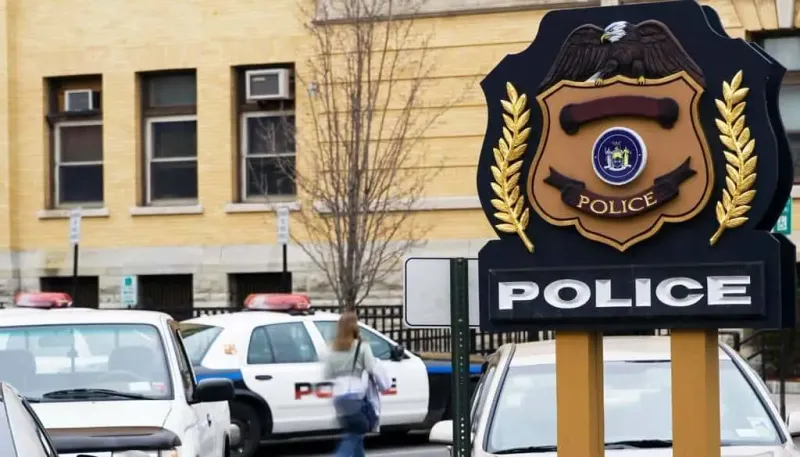
According to Edmonton Police Service (EPS) and Grande Prairie Police Service (GPPS), which administer the APCAT on behalf of Alberta, “Attendees must achieve a score of 70% or higher to pass.”[1]
Worked examples: how to reason through APCAT questions
These are practice questions written for this site, not questions from the real exam. Each explanation shows why the right answer is right and why the others are wrong.
Example 1
Question: You receive simultaneous calls: (A) a noise complaint about loud music; (B) a report of a person collapsed and unresponsive on the sidewalk; (C) a minor fender-bender with no injuries; (D) a report of vandalism to a park bench. Which call should be handled first?
- A
- B
- C
- D
Answer: B. B
Explanation:
B is correct. A person who has collapsed and is unresponsive may be in immediate danger of dying, and protecting life comes before every other duty.
- A, the noise complaint, is a nuisance. It can wait without anyone getting hurt.
- C, the fender-bender, has no injuries, so it is a traffic and property matter.
- D, the vandalized bench, is property damage that has already happened. Nobody is at ongoing risk.
Rule to remember: when calls come in at the same time, rank them by risk to life first, then by the risk of harm getting worse, then property and nuisance matters. Words such as unresponsive, injured, weapon or fire usually mark the call that comes first.
Example 2
Question: DETECTIVE is to INVESTIGATION as SURGEON is to:
- Diagnosis
- Hospital
- Operation
- Medicine
Answer: C. Operation
Explanation:
C is correct. The pair links a worker to the main task they carry out. A detective conducts an investigation, and a surgeon performs an operation.
- A, diagnosis, means identifying an illness. That is an assessment step, not the act that defines surgery.
- B, hospital, is where a surgeon works. That is a place, not a task.
- D, medicine, is the broad field a surgeon belongs to, not the specific thing a surgeon does.
Rule to remember: turn the first pair into a short sentence, such as "a detective conducts an investigation." Then put each option into the same sentence. The right answer fits as cleanly as the original pair, and the others need a different verb or a stretch.
Example 3
Question: Evidence storage holds 500 items. If 35% are from this year and 25% are from last year, how many items are from two or more years ago?
- 150
- 175
- 200
- 225
Answer: C. 200
Explanation:
C is correct. Add the shares for the recent years: 35% plus 25%. Everything else in storage is from two or more years ago, and that remaining share of 500 comes to 200 items.
- B, 175, is 35% of 500. That is the number of items from this year, not the older ones the question asks about.
- A, 150, and D, 225, come from using the wrong share of the total or from an arithmetic slip.
Rule to remember: when a question asks for "the rest," add the percentages you are given, subtract that total from the whole, then apply what is left to the full amount. To check, add the counts for each group to your answer. They should come back to 500.
How to use these practice tests
Start by finding where you stand. Take the free APCAT practice test in a quiet place with a timer running, and note which kinds of question cost you the most marks. Then work through the topic sets below, beginning with your weakest group.
- Language: grammar and structure, vocabulary and spelling, written communication, verbal analogies.
- Reading and memory: reading comprehension, information recall, observation and detail.
- Reasoning and math: logical reasoning, problem analysis, pattern and spatial reasoning, numerical reasoning.
- Judgement: prioritizing actions, situational judgement.
After each set, read every explanation, including the ones for questions you got right, and keep a short list of rules you missed. Leave a gap before you retake a set, so you are recalling the method and not just the answer. Near test day, use the general cognitive ability set as a mixed review, and aim to score well above the 70% pass mark. Finally, check the official EPS and GPPS pages for the time limit, booking steps and what to bring.
APCAT Practice Exam Flashcards
Quick review for key cognitive concepts
🧠What is the primary focus of the APCAT exam?
The APCAT exam primarily focuses on measuring cognitive abilities such as judgment, learning potential, observation skills, and written communication.
START APCAT PRACTICE TEST⏱️How long is the APCAT test duration?
The Alberta Police Cognitive Ability Test typically allows candidates approximately 3 hours to complete roughly 120 multiple-choice questions.
TAKE APCAT TEST QUIZ📊What is a passing score on the APCAT?
While cut-off scores can vary by agency, a score of 70% or higher is generally considered a passing standard for the APCAT examination.
REVIEW APCAT QUESTIONS📝Does the APCAT require memorization?
No, the APCAT test is designed to measure innate cognitive potential and reasoning skills rather than memorized legal or procedural knowledge.
TRY APCAT MOCK EXAM🔄Can you retake the APCAT if you fail?
Yes, most agencies allow candidates to retake the APCAT test after a mandatory waiting period, often ranging from 1 to 3 months.
ACCESS APCAT STUDY GUIDE👮Is the APCAT valid for all Alberta police?
Yes, the APCAT is recognized by major municipal police services across Alberta, including Calgary, Edmonton, Lethbridge, and Medicine Hat.
PRACTICE APCAT TEST NOWAPCAT Study Guide and Preparation
Our comprehensive APCAT study guide breaks down every section of the exam. Understanding the structure of the APCAT test is crucial for effective preparation and time management during the actual assessment.
Focus on the Observation Skills section by practicing with random images. Look at a photo for 60 seconds, cover it, and write down every detail you can remember. This simple drill mimics a key part of the APCAT exam.
Unlike many other careers, police recruits in Alberta are typically paid a full salary (starting around $70,000) while attending the police academy training program.

Police Career Opportunities
Passing the APCAT exam opens the door to diverse specialized roles within the police service.
Patrol OfficerThe backbone of the police service.
Patrol officers respond to 911 calls, enforce traffic laws, and engage with the community to maintain public safety.
Detective
Investigators who solve complex crimes. Detectives gather evidence, interview witnesses, and build cases for prosecution in serious incidents.
K9 Unit
Specialized officers who work with trained police dogs to track suspects, detect drugs or explosives, and search for missing persons.
Tactical Team
Highly trained officers (TAC/SWAT) who respond to high-risk situations like hostage rescues, armed standoffs, and warrant executions.
Community Policing
Officers focused on building relationships within specific neighborhoods to prevent crime and address local safety concerns proactively.
APCAT Test Day Checklist
- ✓Valid Photo ID (Driver's License)
- ✓Exam Confirmation Letter
- ✓Pencils and Erasers
- ✓Water Bottle (Clear)
- ✓Comfortable Clothing
- ✓Watch (No Smartwatches)
- ✓Arrive 30 Minutes Early
- ✓Positive Attitude
Ready to Pass the APCAT?
Join thousands of successful police recruits who used our comprehensive practice questions to ace the Alberta Police Cognitive Ability Test.
A passing score on the APCAT exam is often transferable between different Alberta police agencies, saving you from having to take the test multiple times if you apply to several services.
APCAT: Pros and Cons
- +APCAT exam preparation strengthens your knowledge across all domains
- +Passing the exam proves competency to employers and clients
- +Study materials and practice tests are widely available
- +Exam-based credentials are portable across states and employers
- +Clear exam objectives help focus your study plan effectively
- −Exam anxiety can affect performance — practice tests help reduce it
- −Registration fees are non-refundable if you miss your test date
- −Limited retake opportunities may apply with waiting periods
- −Exam content updates periodically — use current study materials
- −Testing center availability may require advance scheduling
Pros and Cons at a Glance
| Pros | Cons |
|---|---|
| APCAT exam preparation strengthens your knowledge across all domains | Exam anxiety can affect performance — practice tests help reduce it |
| Passing the exam proves competency to employers and clients | Registration fees are non-refundable if you miss your test date |
| Study materials and practice tests are widely available | Limited retake opportunities may apply with waiting periods |
| Exam-based credentials are portable across states and employers | Exam content updates periodically — use current study materials |
| Clear exam objectives help focus your study plan effectively | Testing center availability may require advance scheduling |
Sample APCAT - Alberta Police Cognitive Ability Test Practice Questions
Try these questions from our free APCAT - Alberta Police Cognitive Ability Test practice tests. The correct answer and an explanation follow each question.
Out of 80 applicants for a police position, 1/4 passed the written test and 1/2 of those passed the physical test. How many applicants passed both tests?
- A. 10
- B. 15
- C. 20
- D. 40
Answer: A. 10
80 × 1/4 = 20 passed the written test; 20 × 1/2 = 10 passed both tests.
Using the same Alberta Police Act passage: Where can a member of the public file a complaint?
- A. Only with the police service directly
- B. Only with the Law Enforcement Review Board
- C. With either the police service or the Law Enforcement Review Board
- D. With the Provincial Court of Alberta only
Answer: C. With either the police service or the Law Enforcement Review Board
The passage states complaints may be filed 'with the police service or with the Law Enforcement Review Board'.
Read the following premises: 1. All issued police equipment must be inventoried at the end of each shift. 2. A conducted energy weapon (CEW) is a piece of issued police equipment. 3. Officer Jones did not inventory his CEW at the end of his shift. Which of the following statements logically follows from the premises?
- A. Officer Jones is not a police officer.
- B. CEWs do not need to be inventoried.
- C. Officer Jones lost his CEW during his shift.
- D. Officer Jones has violated a procedural rule.
Answer: D. Officer Jones has violated a procedural rule.
This is an example of deductive reasoning. Premise 1 establishes a clear rule. Premise 2 confirms that the CEW falls under this rule. Premise 3 states Officer Jones broke the rule. Therefore, the only certain conclusion is that a violation occurred. The other options are assumptions not supported by the given information.
Which of the following describes proactive law enforcement?
- A. Conducting regular patrols in high-crime areas
- B. Responding to a burglary in progress
- C. Issuing speeding tickets after observing violations
- D. Investigating a reported assault
Answer: A. Conducting regular patrols in high-crime areas
Proactive law enforcement focuses on preventing crime before it occurs through preventative measures. Conducting regular patrols in high-crime areas is a classic proactive strategy, as it increases police presence and visibility to deter potential criminal activity. Responding to incidents or issuing tickets after violations are examples of reactive policing, addressing crimes after they have happened.
Take the full APCAT - Alberta Police Cognitive Ability Test practice test
Official Resources
- Alberta Association of Chiefs of Police (AACP) — the provincial body behind the Alberta Police Cognitive Ability Test (APCAT) used by Alberta police services.
- Calgary Police Service — official recruiting information for applicants who must complete the APCAT as part of hiring.
- Edmonton Police Service — another major Alberta service whose recruitment process includes the APCAT cognitive ability assessment.
APCAT Questions and Answers
Sources & last verified
- Edmonton Police Service (EPS) and Grande Prairie Police Service (GPPS), which administer the APCAT on behalf of Alberta — number of questions, passing score (official source). “120 multiple-choice questions.” Verified Oct 25, 2026 · source checked Oct 16, 2026.
- gppolice.com — retake policy, validity, eligibility (official source). “three (3) months after their second test attempt, and six (6) months after each subsequent test attempt.” Verified Oct 25, 2026 · source checked Oct 19, 2026.
How we verify: editorial & fact-checking policy. Report an error: contact us.
How this page was made: written with AI tools and published by Nathan Beja, founder of Practice Test Geeks, who is responsible for its content. Exam facts are checked against the official sources listed below. Not reviewed by a subject-matter expert. Editorial policy
Sources & references
Exam facts on this page (fees, format, dates, passing scores) are checked against these official sources; the date is our last check. Editorial policy
- gppolice.com — Eligibility, retake policy, score validity · verified Oct 2026
- joineps.ca — Exam format, passing score · verified Oct 2026