
Human Anatomy and Physiology Flash Cards: The Complete Training Guide for Students
Master human anatomy and physiology flash cards with proven study strategies, top card sets, and practice quizzes. 🎯 Build retention fast.

Human anatomy and physiology flash cards have become one of the most trusted tools for students navigating the notoriously demanding world of life sciences. Whether you are enrolled in a college-level A&P course, preparing for nursing boards, or studying for a certification exam, flash cards give you a targeted, portable, and highly efficient way to lock in vocabulary, structures, functions, and clinical correlations. Research in cognitive science consistently shows that active recall — the mental act of retrieving a fact from memory — outperforms passive re-reading by a wide margin, and flash cards are built around exactly that principle.
The sheer volume of content in anatomy and physiology courses can feel paralyzing. A typical two-semester sequence introduces more than 2,000 named structures, dozens of physiological processes, and hundreds of clinical terms. Students who rely solely on textbooks and lecture slides often find themselves overwhelmed during exam season. Human anatomy and physiology flash cards solve this problem by breaking enormous content into digestible units that you can review anywhere — on the bus, during a lunch break, or in the five minutes before a lab practical.
There are two main paths students take: purchasing pre-made card sets or building their own from scratch. Pre-made decks from publishers like Elsevier, Barron's, and digital platforms like Anki or Quizlet offer convenience and expert curation. Handwriting your own cards, by contrast, forces you to process information more deeply at the moment of creation, which itself improves encoding. Many successful students do both: they start with a commercial deck for orientation, then supplement with hand-crafted cards targeting their personal weak spots.
Flash card effectiveness is dramatically amplified when paired with a spaced-repetition schedule. Rather than cramming the night before an exam, spaced repetition algorithms present cards at expanding intervals — reviewing a card after one day, then three days, then a week, then two weeks — ensuring knowledge moves from short-term to long-term memory. Free apps like Anki implement this system automatically, which is why Anki has developed a near-cult following among pre-med and nursing students worldwide. Even physical card sets benefit from a homemade spaced-repetition box divided into five compartments representing daily, every-other-day, weekly, bi-weekly, and monthly review piles.
Organizing your flash cards by body system is the most intuitive approach and mirrors how most A&P textbooks are structured. Typical categories include the skeletal system, muscular system, nervous system, endocrine system, cardiovascular system, respiratory system, digestive system, urinary system, and reproductive system. Within each system, students typically create at least three card types: identification cards (name this bone or muscle), function cards (what does the sinoatrial node do?), and clinical correlation cards (what happens when the vagus nerve is damaged?). This three-layer approach ensures you understand structures in context, not just in isolation.
Color-coding is another powerful technique that transforms a plain stack of white cards into a visual memory system. Assign a specific color to each body system — blue for cardiovascular, green for respiratory, yellow for digestive — and consistently use that color for borders, highlights, or index tabs. When you visualize the answer during an exam, your brain retrieves the color cue as a retrieval anchor, often pulling the correct fact right along with it. Many students report that color-coding alone reduces their review time by 20 to 30 percent by enabling faster card sorting and system-based review sessions.
Combining flash cards with other active learning strategies produces the strongest results. Practice quizzes, anatomy diagrams, and short teaching sessions — explaining a concept to a study partner as if you were the instructor — all reinforce the same material from different angles. The interleaving effect, where you mix cards from multiple systems in a single session rather than drilling one system at a time, further enhances long-term retention by preventing the brain from pattern-matching answers based on card position. Used strategically, flash cards are not just a study tool — they are a complete exam-preparation system.
Anatomy and Physiology Flash Cards by the Numbers

Best Flash Card Types and Formats for A&P Students
Publisher-designed card sets from Elsevier, Barron's, or Kaplan cover all major structures and functions with labeled diagrams. Ideal for students who want a curated, exam-aligned starting point without spending hours creating cards.
Free shared Anki decks (like the popular Netter's deck) include thousands of anatomy cards with images. The built-in spaced-repetition algorithm automatically schedules reviews, making it the most time-efficient digital option available.
Creating cards by hand forces deeper processing of each term. Students who write out definitions, functions, and clinical notes during lecture recall information significantly better than those who type or use pre-made sets exclusively.
Quizlet offers free anatomy sets with matching games, learn mode, and audio pronunciation. Its collaborative sharing feature lets classmates pool resources, creating comprehensive shared decks far faster than any individual student could alone.
Cards featuring a diagram with numbered blanks force students to identify structures visually — the exact format used in lab practicals. These are especially valuable for muscles, bones, and nerve pathways where spatial relationships matter.
Building an effective anatomy and physiology flash card deck is a skill in itself, and students who approach it strategically outperform those who simply copy textbook definitions onto index cards. The first rule is to write cards in your own words. When you paraphrase a definition rather than transcribe it verbatim, you are already performing the cognitive work of understanding, not just copying. A card that reads "the mitral valve prevents backflow from the left ventricle to the left atrium during systole" is far more memorable than one that quotes the textbook sentence verbatim, because you constructed it from understanding.
The second rule is the one-concept-per-card principle. Beginners frequently pack too much information onto a single card — for example, listing all four heart valves with their locations and functions on one card. This creates a cue-overload problem: during recall, you cannot isolate individual facts, so the whole card blurs into a clump of details. Instead, give each valve its own card. Your deck will be larger, but each card will be consistently answerable in under ten seconds, which is exactly what makes flash card review sessions fast and rewarding rather than frustrating and slow.
Front-and-back design deserves careful thought. The front of the card should present a single, clear prompt — a term, a diagram label, a physiological question, or a clinical scenario. The back should contain the minimal amount of information needed to confirm or correct your recall. Avoid crowding the back with explanations, diagrams, and sub-points all at once. If a concept truly requires a diagram and three bullet points to explain, consider whether it should be two separate cards: one for the diagram identification and one for the functional explanation.
Categorizing your cards from day one saves significant time later. Create a simple header system — write the body system in the upper-left corner of every physical card (e.g., "CARDIO," "NEURO," "MUSC"). In Anki, use tags for the same purpose. This header system lets you pull system-specific subsets for targeted review before unit exams without having to sort through your entire deck. Students who skip this step frequently report wasting 10 to 15 minutes per study session just organizing cards before they can begin reviewing.
Prioritize high-yield content ruthlessly. Not all anatomy terms appear on exams with equal frequency. Bones of the skull, major muscle origins and insertions, the twelve cranial nerves and their functions, layers of the epidermis, segments of the nephron, and the steps of the cardiac conduction pathway consistently appear on A&P exams at every level. Identify these high-yield areas by reviewing past exams, talking to your professor, and consulting NCLEX-style question banks. Spend at least 60 percent of your flash card creation time on confirmed high-yield content.
Review sessions are most productive when kept short, frequent, and active. Research consistently supports 20 to 30 minute sessions conducted once or twice daily rather than marathon three-hour cramming blocks. During each session, physically sort cards into two piles: known and unknown. At the end, set aside the known pile and review the unknown pile one more time before stopping. This immediate-repeat technique, sometimes called the two-pass method, takes only a few extra minutes but dramatically increases the proportion of uncertain material that converts to confident recall by your next session.
Integrating flash cards with practice quizzes creates a powerful feedback loop. After a flash card session, take a short practice quiz covering the same material. Questions phrased differently from your card prompts reveal whether you truly understand a concept or whether you have simply memorized a specific wording. This cross-format testing also mimics the unpredictable phrasing of real exam questions, building the cognitive flexibility that separates high performers from average scorers. Aim to follow every major flash card review block with at least ten to twenty practice questions on the same topic.
Spaced Repetition and Flash Card Study Strategies
Spaced repetition is the scientifically validated practice of reviewing information at increasing intervals over time. Rather than re-reading the same material every day, you review a card one day after first seeing it, then three days later, then a week later, then two weeks later. Each successful recall pushes the next review further into the future, while a missed recall resets the interval. Anki implements this algorithm automatically, adjusting each card's schedule based on your rated confidence after every review session.
For physical card sets, you can replicate spaced repetition using the Leitner Box system. Divide a shoebox into five compartments labeled Daily, Every 2 Days, Weekly, Bi-weekly, and Monthly. Cards you answer correctly move to the next compartment; cards you miss return to compartment one. Within a semester-long A&P course, this system ensures that terms learned in week two remain fresh by week fourteen without requiring daily review of the entire deck, which would quickly become unmanageable as your card count grows past 400 or 500 cards.

Flash Cards vs. Other A&P Study Methods: Honest Comparison
- +Portable and usable during short, fragmented time windows throughout the day
- +Built on active recall, the most evidence-backed retrieval practice method
- +Easily customizable to target personal weak spots and high-yield exam content
- +Spaced-repetition integration prevents cramming and builds durable long-term memory
- +Color-coding and visual cues use multiple memory encoding channels simultaneously
- +Compatible with group study, partner quizzing, and teach-back review formats
- −Creation time is substantial — a full-semester deck of 500 cards requires 15 to 20 hours to build
- −Isolated recall does not always teach the systems-level thinking required for complex exam questions
- −Pre-made decks may not align with your specific professor's exam emphasis or terminology
- −Risk of surface-level memorization without true conceptual understanding if cards are too basic
- −Physical cards are bulky; large decks become difficult to transport and organize effectively
- −Digital apps require device access and can introduce screen-time fatigue during long study sessions
Pros and Cons at a Glance
| Pros | Cons |
|---|---|
| Portable and usable during short, fragmented time windows throughout the day | Isolated recall does not always teach the systems-level thinking required for complex exam questions |
| Built on active recall, the most evidence-backed retrieval practice method | Pre-made decks may not align with your specific professor's exam emphasis or terminology |
| Easily customizable to target personal weak spots and high-yield exam content | Risk of surface-level memorization without true conceptual understanding if cards are too basic |
| Spaced-repetition integration prevents cramming and builds durable long-term memory | Physical cards are bulky; large decks become difficult to transport and organize effectively |
| Color-coding and visual cues use multiple memory encoding channels simultaneously | Digital apps require device access and can introduce screen-time fatigue during long study sessions |
Daily Flash Card Study Checklist for A&P Students
- ✓Set a consistent daily review time — morning or evening — and protect it like a class commitment.
- ✓Begin each session by reviewing all cards marked incorrect or uncertain from the previous session.
- ✓Cover the back of every card completely before attempting to recall the answer out loud.
- ✓Sort cards into two clear piles — confident and uncertain — after each review pass.
- ✓Repeat the uncertain pile a second time at the end of every session using the two-pass method.
- ✓Add at least five new cards per study session to gradually expand your deck without overloading.
- ✓Color-code or tag any new cards by body system before adding them to the main deck.
- ✓Follow each 20-minute card session with 10 practice quiz questions on the same body system.
- ✓Once per week, do a full interleaved shuffle session mixing cards from all systems reviewed so far.
- ✓Track your confident/uncertain ratio each week to measure improvement and adjust focus areas.
The 80/20 Rule for Anatomy Flash Cards
In most A&P courses, roughly 20 percent of the content — cranial nerves, cardiac conduction, nephron segments, muscle origins, and bone markings — accounts for approximately 80 percent of exam points. Identify these high-yield topics in your first week, create dedicated flash card sets for them immediately, and review those sets daily before touching lower-yield material. Students who master the high-yield core first consistently outperform those who try to cover everything evenly.
Mastering each body system with flash cards requires a system-specific approach because different systems demand different types of knowledge. The skeletal system, for example, is predominantly an identification and labeling challenge. Your cards should feature diagrams of bones with blank label lines on the front and completed labels on the back.
Priority structures include all 206 bones, major bony landmarks (processes, tubercles, foramina, condyles), and clinically significant features like the foramen magnum and the acetabulum. Students who memorize bone names without also learning the landmarks frequently struggle on lab practicals, where professors point to a specific bump or groove rather than the bone as a whole.
The muscular system requires a different card structure emphasizing origins, insertions, and actions. A well-designed muscle card places the muscle name on the front and lists three items on the back: the origin (where the muscle begins, typically on the more stationary bone), the insertion (where it ends, on the more movable bone), and the primary action (flexion, extension, abduction, etc.). Some students add a fourth item — the innervating nerve — particularly if they are preparing for kinesiology exams or physical therapy prerequisites.
Grouping muscles by movement type (all elbow flexors on one set, all shoulder abductors on another) can be more productive than grouping by anatomical region for functional understanding.
Nervous system flash cards present the greatest complexity because the nervous system integrates structure, pathway, function, and clinical correlation all at once. For the twelve cranial nerves, a dedicated card set covering name, number (in Roman numerals), type (sensory, motor, or both), and primary function is non-negotiable. Many students use mnemonic phrases to learn the order of cranial nerves, then use flash cards to fill in the functional details for each one. Spinal cord pathway cards — distinguishing the dorsal column-medial lemniscal pathway from the anterolateral spinothalamic tract — are another high-yield area where clear, minimal card design pays dividends.
The cardiovascular system demands cards covering cardiac anatomy, the conduction system, the cardiac cycle, blood pressure regulation, and vessel anatomy. The conduction system is particularly flash-card-friendly: SA node, AV node, bundle of His, right and left bundle branches, and Purkinje fibers form a clear sequential pathway that can be drilled with pathway-order cards.
Students frequently confuse systole and diastole, and the pressure-volume relationships during each phase deserve their own card set. Pairing these cards with ECG interpretation basics — recognizing the P wave, QRS complex, and T wave — gives students a significant advantage in cardiovascular unit exams and clinical correlation questions.
The renal system is another area where flash cards shine. The nephron has eight distinct segments — from Bowman's capsule through the collecting duct — and each segment performs specific reabsorption and secretion functions that are heavily tested. Cards organized by nephron segment (front: segment name, back: what is reabsorbed and secreted there) allow students to master this system systematically.
Connecting each segment to the hormones that regulate it — ADH increasing water reabsorption in the collecting duct, aldosterone promoting sodium reabsorption in the distal convoluted tubule — creates clinically relevant cards that prepare students for both basic science and nursing pharmacology questions.
Endocrine system flash cards are among the most content-dense because each gland produces multiple hormones, each hormone has a target organ, and each interaction has clinical implications. Create a card for every major hormone covering: which gland secretes it, what stimulus triggers secretion, what the target organ is, and what the physiological effect is. Grouping cards by gland first — all pituitary hormones together, all adrenal hormones together — then reorganizing them by feedback loop type in a second review pass helps students see both the catalog view and the systems view of endocrine physiology.
The respiratory system rewards students who understand flow and pressure relationships. Cards covering lung volumes and capacities (tidal volume, inspiratory reserve, functional residual capacity, vital capacity, total lung capacity) are consistently tested and are straightforward to flash-card. More advanced cards covering the oxygen-hemoglobin dissociation curve shifts — why acidosis, hyperthermia, and improved 2,3-BPG cause a rightward shift — prepare students for complex physiology questions. Pairing these cards with short practice calculations of alveolar gas exchange reinforces quantitative reasoning that multiple-choice questions frequently test in numerical format.
If you want more targeted practice, the anatomy physiology pre test page covers the same material with additional questions and explanations.

The most common flash card error is passive review — flipping through cards without actively attempting recall before looking at the answer. This creates an illusion of mastery: the information feels familiar because you just saw it, but familiarity is not the same as retrievable memory. Force yourself to generate the answer before flipping every single card, even when the deck is new and you expect to get most wrong. That initial struggle is where real encoding happens, and skipping it converts flash card study into an expensive form of re-reading.
Flash cards are most powerful in the final four to six weeks before a major anatomy and physiology exam, but their preparation should begin in week one of the semester. Students who wait until the week before an exam to create cards discover two problems simultaneously: they have too many cards to make and too little time to review them with any meaningful spacing.
Building your deck incrementally — adding five to ten cards after every lecture — means your deck is complete and partially reviewed before the exam crunch begins, giving you the full final two weeks for pure review rather than creation.
Triage your deck ruthlessly as the exam approaches. By the third week before your exam, you should have identified your top twenty to thirty most problematic cards — the ones you consistently miss or hesitate on. Improve these to a priority pile reviewed daily, separately from your main deck rotation. Spending fifteen minutes each morning on your worst-performing cards before touching the rest of the deck ensures that your hardest material receives the most repetitions at the most spaced intervals, maximizing the probability of consolidation before test day.
Practice under realistic exam conditions at least once in the week before your exam. Shuffle your most important card subsets and time yourself answering them as if in an exam setting — no hints, no second glances, no partial credit. If your professor uses fill-in-the-blank or short-answer formats, practice writing answers rather than just saying them. If lab practicals require identifying structures on a model or cadaver image, seek out image-based practice resources that mirror that visual challenge, because recognizing a structure on a plastic model looks different from identifying the same structure on a card diagram.
Sleep and consolidation are non-negotiable components of flash card success. Memory consolidation — the neurological process by which short-term memories are transferred to long-term storage — occurs predominantly during sleep, particularly during slow-wave and REM cycles. Students who sacrifice sleep to do one more card review session before an exam are literally trading the consolidation of previously learned material for a small amount of new exposure. A consistent seven to eight hours of sleep each night during the week before an exam produces better exam performance than equivalent study hours spent at the expense of sleep time.
The night before the exam, limit flash card review to your priority pile of problematic cards only. Attempting to review your entire 500-card deck the night before triggers cognitive overload and anxiety, both of which impair exam performance. Instead, do one focused 20-minute session on your hardest cards, then stop and engage in an unrelated relaxing activity. This approach respects your brain's consolidation needs and keeps anxiety manageable, both of which are more valuable on exam morning than one additional review pass through familiar material.
Post-exam review is a habit that separates semester-long A&P success from exam-by-exam survival. After each unit exam, identify the questions you missed and trace them back to specific gaps in your flash card coverage. Were there terms you had not created cards for? Were there concepts your cards covered too superficially? Were there clinical correlation questions that required integrating multiple systems? Use this diagnostic to improve your card-making strategy for the next unit. Students who iterate their approach after each exam consistently improve their scores across a semester, often dramatically by the final exam.
Finally, consider the role of flash cards in preparing for standardized exams that follow your A&P sequence. NCLEX, MCAT, DAT, and PA school admissions exams all test anatomy and physiology content, though framed in clinical and integrated contexts rather than isolated memorization. Students who built a strong flash card foundation in their A&P courses often find standardized exam review significantly easier because their anatomical vocabulary is already automated, freeing cognitive bandwidth for the higher-order clinical reasoning these exams emphasize. The investment in flash card mastery during your foundational courses compounds over your entire healthcare education.
Selecting the right flash card resources is as important as the study technique itself. Among physical card sets, Elsevier's Anatomy and Physiology Flash Cards — designed to accompany the Patton and Thibodeau textbook — are widely considered the gold standard for college-level A&P courses. They include over 250 full-color cards covering all major body systems, with labeled diagrams on one side and detailed explanations on the other. Barron's Anatomy and Physiology Flash Cards offer a similar scope with slightly more clinical emphasis, making them particularly useful for pre-nursing students who need to connect basic anatomy to patient care scenarios.
For digital resources, the free Anki application with community-shared decks offers unmatched depth. The most popular A&P Anki decks contain between 1,000 and 3,000 cards covering everything from gross anatomy to histology to organ system physiology.
Before downloading a shared deck, check its rating and comment section carefully — well-rated decks from verified sources will note which textbook or course they align with, helping you confirm compatibility with your course material. Creating a hybrid approach — downloading a high-rated shared deck as your foundation while adding personal cards for lecture-specific content — captures the efficiency of community curation while keeping your deck personalized.
Quizlet remains the most widely used digital flash card platform among undergraduate students, primarily because its sharing ecosystem is enormous. Searching Quizlet for terms like "A&P Chapter 9 muscles" or "cardiovascular system anatomy" returns hundreds of pre-made sets, many created by students in the same courses you are taking. Quizlet's Learn mode adapts to your performance, presenting harder cards more frequently — a simplified version of spaced repetition. Its Test mode generates multiple-choice, matching, and fill-in-the-blank questions automatically from your card set, providing built-in quiz practice without requiring you to find separate question banks.
For students who prefer a fully integrated study system, several textbook publishers now offer companion apps that bundle flash cards, practice quizzes, and interactive diagrams. Pearson's Mastering A&P and McGraw-Hill's Connect A&P both include adaptive flash card modules that adjust to your performance and align precisely with the assigned textbook chapters. These publisher platforms are often included with a new textbook purchase or available at a reduced subscription price, making them cost-effective when weighed against purchasing a separate card set and a separate quiz platform independently.
Budget-conscious students can create an excellent flash card system at minimal cost using index cards, colored markers, and free apps. A 500-pack of 3x5 index cards costs under five dollars and produces a highly portable, screen-free study tool. Use fine-tip permanent markers in four or five colors for body system coding, a single-hole punch and binder ring to keep system-specific subsets together, and rubber bands to separate your daily, weekly, and monthly review piles.
This low-tech approach eliminates digital distractions, is usable everywhere without battery concerns, and requires no software skills — making it particularly effective for students who find themselves checking social media during digital study sessions.
Whatever resources you choose, consistency trumps perfection. A modest deck of 300 well-designed cards reviewed daily with genuine active recall will outperform a beautiful 1,000-card digital deck opened twice a week and passively scrolled through. The most important question is not which card format is theoretically superior but rather which format you will actually use consistently throughout the entire semester. Identify your natural study environment, your learning preferences, and your daily schedule constraints, then choose the flash card format that fits that reality rather than the format that sounds most impressive in theory.
Students preparing for their anatomy and physiology sequence will find that flash cards, when used as part of a deliberate study system rather than a last-minute review tool, transform one of the most demanding courses in healthcare education into a manageable, even rewarding, challenge. The vocabulary becomes automatic, the systems begin to interconnect, and the clinical correlations start to make intuitive sense. That intellectual confidence — built one card at a time over a full semester — is what carries students not just through their A&P exam but through every subsequent course in their healthcare education journey.
Sample Anatomy and Physiology Practice Questions
Try these questions from our free Anatomy and Physiology practice tests. The correct answer and an explanation follow each question.
How many bones are in the adult human skeleton?
- A. 206
- B. 208
- C. 212
- D. 198
Answer: A. 206
The adult human skeleton consists of 206 bones, reduced from about 270 at birth due to fusion.
Which bone is the longest and strongest in the human body?
- A. Femur
- B. Tibia
- C. Humerus
- D. Fibula
Answer: A. Femur
The femur, or thigh bone, is the longest and strongest bone in the human body, bearing significant weight during movement.
How many chambers does the human heart have?
- A. Two
- B. Three
- C. Four
- D. Five
Answer: C. Four
The human heart has four chambers: the right atrium, right ventricle, left atrium, and left ventricle.
Which of the following is the correct order of structural organization in the human body, from simplest to most complex?
- A. Organ system → Organ → Tissue → Cell → Molecule
- B. Cell → Molecule → Tissue → Organ → Organism
- C. Molecule → Cell → Tissue → Organ → Organ system → Organism
- D. Molecule → Tissue → Organ → Cell → Organ system
Answer: C. Molecule → Cell → Tissue → Organ → Organ system → Organism
The correct hierarchy starts at the chemical level (molecules), builds to the cellular level, then to tissues, organs, organ systems, and finally, the organism as a whole.
Anatomy Physiology Questions and Answers

How Hard Is Anatomy and Physiology? The Complete Honest Guide for Students

Eye Anatomy and Physiology: The Complete Guide to Understanding How Your Eyes Work
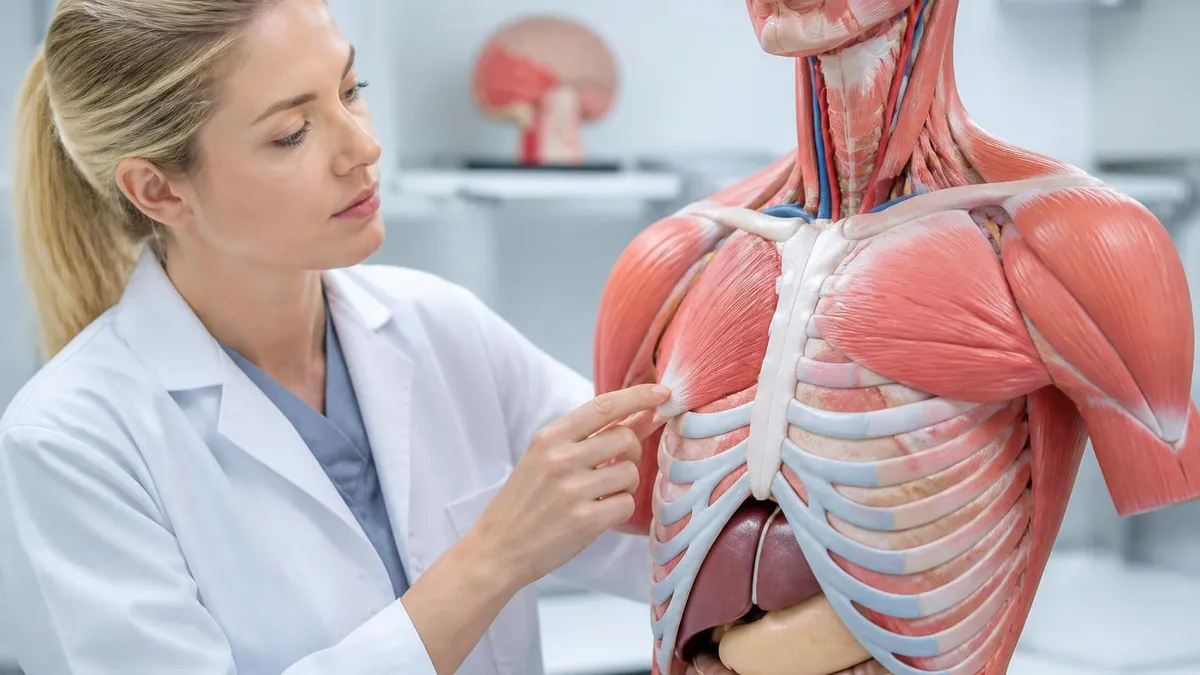
Anatomy and Physiology PDF: Complete Free Download Guide for 2026 Students
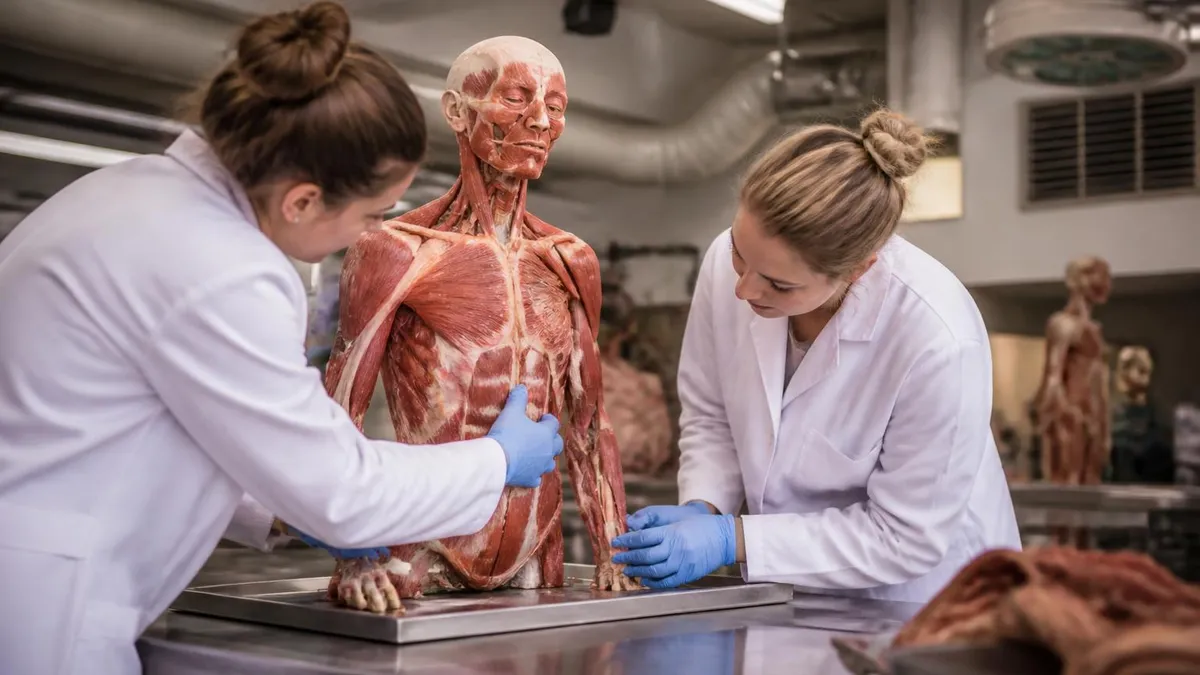
Human Anatomy and Physiology Book: The Complete Guide to Choosing, Using, and Mastering the Best Textbooks for 2026

Best Way to Learn Anatomy and Physiology: A Complete Student Guide
About the Author

Educational Psychologist & Academic Test Preparation Expert
Columbia University Teachers CollegeDr. Lisa Patel holds a Doctorate in Education from Columbia University Teachers College and has spent 17 years researching standardized test design and academic assessment. She has developed preparation programs for SAT, ACT, GRE, LSAT, UCAT, and numerous professional licensing exams, helping students of all backgrounds achieve their target scores.