
Agile Coaching: Career Path, Certifications, and Salary Guide 2026 October
Agile coaching career path, ICAgile and Scrum Alliance certifications, salary ranges, competencies, and how Scrum Masters grow into enterprise coaches. 🧠

Agile coaching is the practice of helping individuals, teams, and entire organizations adopt, refine, and live by agile values. It sits at the messy intersection of human behavior, software delivery, leadership, and culture. A coach doesn't write user stories for the team. A coach doesn't run the sprint review either. What a coach actually does is harder to pin down, and that's part of why the role pays well and stays in demand.
You may have heard the title used loosely. Scrum Master. Agile Coach. Enterprise Coach. Transformation lead. They blur together in job ads, but they aren't the same. A Scrum Master works inside one team. An agile coach typically works across several teams or a program. An enterprise coach influences executives and reshapes how a whole company thinks about delivery. The further up that ladder, the less hands-on the work becomes — and the more political, frankly. You'll spend more time in boardrooms than backlog grooming sessions.
Lyssa Adkins, in her foundational book Coaching Agile Teams, framed the role through what's now widely called the agile coach competency model. ICAgile picked it up and built their agile certifications ladder around it. The model identifies five core stances a coach moves between: teaching, mentoring, facilitating, professional coaching, and what Adkins calls "agile-lean practitioner" — the deep technical and process knowledge underneath everything else. The skill isn't in knowing all five. It's knowing which one a moment calls for.

Agile coaching is not a beginner role. Most established coaches spent two to three years as a Scrum Master before stepping up, and enterprise coaches typically have five-plus years of multi-team experience. Certifications matter, but the path runs through real teams first — there's no shortcut around that.
Teaching is the simplest stance. Someone on the team doesn't know what a sprint goal is, you explain it. You run a workshop on story splitting. You bring in slides on Kanban WIP limits. You're transferring knowledge that someone needs and doesn't have yet. Most new coaches over-rely on this because it feels productive and the team gives quick feedback. The trap is teaching things people could figure out themselves, which builds dependency on you rather than capability inside the team.
Mentoring goes further. Here you're sharing experience from your own career — "when I worked at a bank doing the same kind of regulatory release, here's what blew up and here's what we tried." It's grounded in your story, which makes it credible but also limited to what you've personally lived through. Mentoring works best when the person being mentored has a specific problem they recognize, not when you're broadcasting war stories nobody asked for.
Facilitation is the stance most people associate with the role visually. The coach standing at a whiteboard, sticky notes everywhere, asking the room "what did we miss?" Good facilitation pulls thinking out of the group without inserting your own. Liberating Structures, design thinking workshops, Lean Coffee — these are facilitation toolkits worth learning. The 1-2-4-All structure alone has saved more meetings than any agenda template ever has.
Professional coaching, in the strict sense aligned with the International Coach Federation (ICF), means asking powerful questions and holding the agenda for the other person. You don't give answers. You don't even suggest paths. You help them clarify their own thinking until they see a way forward they own. It's the hardest stance to learn because every instinct screams "just tell them." ICF credentials — ACC, PCC, MCC — certify this skill separately from any agile body, and senior coaches often hold both an agile cert and an ICF one.
Agile Coaching Salary and Demand
The salary numbers above are US-centric and shift with the economy. Coaching contractor day rates ran $1,500 to $2,500 in the boom years around 2021, then softened considerably. Permanent roles held up better. If you're outside the US, expect roughly 60 to 75 percent of those bands in the UK and Western Europe, lower in much of Asia outside Singapore and Australia. The differential narrows at the enterprise level because that work is global and clients pay global rates.
The path most people walk: developer or tester first, then Scrum Master after one or two years, then agile coach after another two or three. Some come in from project management with a PMP background and an Agile PM certification, which works fine for the program-level role though they sometimes struggle with the coaching stances if their instinct is to plan and direct. A small number come in from organizational development or HR — they tend to be strong on the human side and weaker on the technical, the opposite of the ex-developer path.
What makes someone actually good? Honestly, it's pattern recognition more than any framework. You walk into a stand-up and within three minutes you can tell whether the team trusts each other. You can hear from one retrospective whether the manager outside the room is the actual problem. You notice that the architect always speaks first and nobody else challenges him. None of that is in a textbook. You build it by working with a lot of teams and paying attention.
Teach when knowledge is missing. Mentor when experience helps. Help when a group needs to think together. Coach when a person needs to find their own answer. And underneath all four, keep your agile methodology chops sharp — you can't coach what you don't understand at the practitioner level.
Certifications dominate hiring conversations even when experienced coaches roll their eyes at them. Like it or not, recruiters filter on them. The two main bodies are ICAgile and Scrum Alliance, with Scrum.org and PMI playing supporting roles. ICAgile's path is the more recognized one for pure coaching. Their ICP-ACC (Agile Coaching) credential runs around $1,500 for a two or three day course and is the entry point. It covers the competency model, professional coaching basics, and team coaching fundamentals.
From ICP-ACC, the natural next step is ICP-ATF (Agile Team Facilitation) which goes deep on facilitation techniques and group dynamics. ICP-CAT (Coaching Agile Transitions) sits at the program level — around $3,000, more rigorous, and includes a substantial pre-work component. ICP-ENT (Enterprise Coaching for Agile Transformations) is the capstone at roughly $3,500, focused on organizational change, executive coaching, and systems thinking at scale.
Scrum Alliance offers a parallel path. Their Certified Team Coach (CTC) credential, around $4,000 including assessment, is a peer-reviewed credential — you submit work samples, get interviewed, and get accepted or rejected. It's significantly more selective than the ICAgile route, which is mostly attendance-based. Above CTC sits the Certified Enterprise Coach (CEC) at a similar rigor level. Coaches who hold a CTC or CEC tend to carry weight in the community.
Scrum.org's PSM (Professional Scrum Master) and PSPO (Product Owner) credentials are exam-based and cheaper, roughly $200 per attempt. They're more associated with the Scrum Master role than with coaching, though many coaches collect them to show framework breadth. PMI-ACP (Agile Certified Practitioner) is a generalist agile credential popular with people coming from a traditional project management background — useful for resume scanning, less so for the work itself.

The Coaching Career Ladder
Most coaches start as practitioners building software. Two to four years on real delivery teams gives you the technical credibility coaches need when working with engineers later. Skip this step at your peril — coaches who never shipped code struggle to challenge engineering decisions.
Team-level servant leader role. Your first real exposure to the coaching stances, usually with one team for one to three years. This is where you learn what a healthy team feels like, what dysfunction looks like, and how slow change actually is in practice.
Two to six teams, often inside one program or value stream. You're coaching Scrum Masters as much as teams now, plus working with the product side. ICP-ACC or CTC is the typical credential here. Expect to move up after two to four years if you're growing.
Whole organization scope, often reporting to a CTO, COO, or transformation office. Executive coaching becomes a large part of the job. ICP-ENT or CEC, plus often an ICF credential, are common at this level. Five-plus years prior experience is the floor.
Consultancy partner, independent consultant, or principal coach inside a large firm. Day rates and seniority are at their peak here, but so is the expectation that you can land work, write proposals, and carry credibility into hostile rooms.
Beyond the formal ladder, coaches specialize in different terrain. Some focus on scaling frameworks — SAFe, LeSS, Disciplined Agile, Scrum at Scale. SAFe gets criticized in coaching circles for being prescriptive, but it pays well and many enterprises run on it, so SAFe Program Consultant (SPC) credentials remain commercially valuable. LeSS coaches tend to come from a stronger technical background and focus on descaling rather than scaling. Disciplined Agile, now owned by PMI, blends process tailoring with framework choice.
Other coaches specialize by industry. Financial services and healthcare are the deepest pools because regulatory environments make change slower and outside help more necessary. Telco and energy have steady demand. Tech companies hire fewer coaches than you'd think because their teams are often already agile-fluent — coaches who get hired into FAANG-style firms typically focus on senior engineering culture and product strategy rather than basic Scrum mechanics.
Frameworks are tools, not faiths. A good coach knows several and applies what fits. Kanban for support teams whose work can't be sprint-boxed. Scrum for teams building product features with regular feedback loops. SAFe when you're forced into it by a procurement committee and have to make it work. Behind any framework, the actual work is the same: help people deliver value, learn faster, and treat each other better while doing it.
Skills the Role Actually Requires
You need to know Scrum cold, Kanban well, and at least one scaling framework competently. Coaches who only know Scrum get caught when a team's work doesn't fit sprints. Knowing the underlying principles (flow, batch size, feedback loops, theory of constraints) matters more than knowing the framework names. Read Reinertsen's Principles of Product Development Flow if you haven't.
If you want to test the path before committing to the certification spend, start where you are. Volunteer to help retrospectives even if you're not the Scrum Master. Read Coaching Agile Teams by Lyssa Adkins — it's still the standard text fifteen years on. Pair it with Agile Conversations by Squirrel and Fredrick for the harder one-on-one work, and Scrum Mastery by Geoff Watts for the team-level practical side. None of those costs more than a paperback price, and you'll learn whether the work suits you before paying $3,000 for a course.
Communities matter. The Agile Alliance, Scrum Alliance, and local meetup chapters all host events. Agile India, Agile2024 and 2025 conferences in the US, AgilePT in Portugal, the regional ICAgile gatherings — these are where coaches network, hire each other, and refer work. Discord and Slack communities exist around specific frameworks (the Liberating Structures community is particularly active). LinkedIn, despite its noise, remains the practical hiring channel for permanent roles.
A practical tip about networking, since people ask. Don't show up to events trying to sell yourself. Show up to learn. The coaches who get the best referrals are the ones known for asking sharp questions in sessions, not the ones who hand out business cards. Build a reputation as someone curious and thoughtful, and work finds you. The opposite, unfortunately, is also true — a few bad facilitation sessions in front of the wrong audience and your name circulates in less helpful ways. Communities are small. People remember.
Mentorship inside the role is undersold. Find a senior coach willing to spend an hour a month reviewing your engagements. Pay for it if you have to. Most coaching credentials require some form of supervision or mentor hours, which sounds like a box-check but is genuinely valuable. The mentor sees patterns in your work that you can't see yourself, which is the whole point of coaching — you'd think coaches would believe in it more often than they do.

Where the work actually lives: large enterprises, consultancies, and a small boutique tier. Banks, insurers, healthcare systems, telecoms, and major retailers run multi-year transformations and hire coaches in volume. The big consultancies — Accenture, Deloitte, EY, Capgemini, IBM Consulting, Slalom, ThoughtWorks — keep large bench populations of coaches and bill them out. ThoughtWorks in particular has a reputation for technical depth that's earned, though they're smaller than the others.
Boutique firms occupy a different niche. Industrial Logic (Joshua Kerievsky's firm) focuses on modern agile. Agile42 has strong global presence with a coaching-first identity. The old SolutionsIQ, now part of Accenture, helped train a generation of US coaches. Wayfinders, ScrumInc, Construx, Apiumhub — there are dozens of boutiques, each with their own slant. If you want depth of coaching practice and don't mind giving up some career stability, boutiques are often better learning environments than big-five consultancies where you're optimized for billable hours.
Internal coaching roles inside product companies are a third option. Spotify famously published their model (and then largely abandoned it, which the original authors are quick to point out). Many product companies hire one or two coaches per business unit rather than running consultancy engagements. These roles offer stability, less travel, and deeper relationships with the teams you support — at the cost of variety and, often, slower career progression.
Starter Reading and Resources
- ✓Coaching Agile Teams by Lyssa Adkins — still the foundational text for the role and the basis of the competency model
- ✓Agile Conversations by Squirrel and Fredrick — the harder one-on-one work most coaches under-train for
- ✓Scrum Mastery by Geoff Watts — practical team-level techniques without the framework dogma
- ✓The Five Dysfunctions of a Team by Patrick Lencioni — usable model for spotting trust problems early
- ✓Switch by Chip and Dan Heath — change at human scale, accessible without being shallow
- ✓Principles of Product Development Flow by Don Reinertsen — the technical depth behind why agile actually works
- ✓Liberating Structures (the free website) — thirty-plus facilitation structures worth more than most paid courses
- ✓ICAgile, Scrum Alliance, and Scrum.org official training catalogs for credentialed paths
One more thing worth saying. The coaching market goes through cycles. When tech is hot and transformations are well-funded, day rates spike and inexperienced coaches find work easily. When budgets tighten, the experienced coaches stay employed and the rest get squeezed. We're in a tightened phase as of recent years, with many people who got into coaching during the 2018-2021 boom finding it harder to stay billable.
The advice from coaches who've ridden several cycles: build genuine depth, keep one foot in technical practice if you came from engineering, and don't define yourself by a single framework. The coaches who keep working through downturns are the ones who can show clear outcomes, not just certifications.
Also: be honest about what coaching can and can't do. A coach cannot fix a broken org chart. A coach cannot make a product strategy good. A coach cannot replace the executive sponsor who needs to lead the change but doesn't want to. Coaches who promise transformation without those upstream conditions in place end up burned out and resentful. The good coaches I know are quick to say no to engagements that won't work — and that's not arrogance, it's protecting their own track record and the client's money.
Is Agile Coaching the Right Move
- + —
- + —
- + —
- + —
- + —
- − —
- − —
- − —
- − —
- − —
If you're sitting with this decision now, a practical sequence: spend three to six months reading and observing the coaches around you. Volunteer for facilitation work in your current role. Take a low-cost course (PSM I from Scrum.org is two hundred dollars and covers the basics well) before committing to the bigger investment.
If you still want to push forward, ICP-ACC is the most common entry credential and gives you a community to join. After that, the path opens up — and the choices you make about specialization, employer type, and certification path start to matter more than the entry point itself.
This is real work. Not the glamorous version of "unlocking organizational potential" you see in conference talks, but the daily work of helping a stressed product manager think through a hard tradeoff, or running a retrospective where the team is finally honest about why their last release went poorly. Done well, it changes how organizations make decisions for years afterward.
Done poorly, it generates resentment and wasted budget. The difference between those two outcomes is mostly about the coach's craft, their honesty, and the conditions around them. You can develop the craft. You should test the conditions before each engagement. The rest, you'll learn the hard way like everyone else.
Final practical note. Keep records of your engagements — what you tried, what worked, what didn't, what you'd do differently. Coaches who can describe concrete outcomes in interviews stand out immediately from those who speak only in abstractions about culture and transformation. Numbers help. Stories help more when they include specifics. The portfolio you build over years is what separates working coaches from credentialed ones, and it's never too early to start documenting your own.
Sample Agile Practice Questions
Try these questions from our free Agile practice tests. The correct answer and an explanation follow each question.
How should an Agile team treat a requirement change that arrives late in development?
- A. Welcome it as a way to give the customer a competitive advantage
- B. Reject it to protect the schedule
- C. Defer it to a future unrelated project
- D. Accept it only with a penalty fee
Answer: A. Welcome it as a way to give the customer a competitive advantage
Agile welcomes changing requirements even late, harnessing change for the customer's advantage.
In Agile, what is a product demo primarily designed to accomplish?
- A. Showcase team performance to executives
- B. Validate that completed features meet stakeholder needs and gather feedback
- C. Demonstrate compliance with project requirements documents
- D. Train end users on new system features
Answer: B. Validate that completed features meet stakeholder needs and gather feedback
Product demos give stakeholders hands-on visibility into working software so they can validate direction and provide actionable feedback.
What is the best way to explain an Agile leader's key role?
- A. Manage stakeholders
- B. Manage work allocation to team members
- C. Manage teams without managing their tasks
- D. Manage WBS, schedule and cost of project
Answer: C. Manage teams without managing their tasks
An Agile leader's primary role is to serve the team, fostering an environment where they can be self-organizing and effective. This involves removing impediments, coaching, and providing support, rather than dictating individual tasks or micro-managing their daily activities. By focusing on the team's overall well-being and capability, the leader empowers them to manage their own work and achieve goals.
What is the recommended size of the Scrum Team according to the Scrum Guide?
- A. Typically 10 or fewer people
- B. Exactly 7 people
- C. Between 15 and 20 people
- D. No upper limit
Answer: A. Typically 10 or fewer people
The Scrum Guide states the Scrum Team is typically 10 or fewer people.
Agile Questions and Answers
About the Author
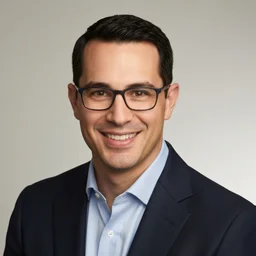
Project Management Professional & Agile Certification Expert
University of Chicago Booth School of BusinessKevin Marshall is a Project Management Professional (PMP), PMI Agile Certified Practitioner (PMI-ACP), PRINCE2 Practitioner, and Certified Scrum Master with an MBA from the University of Chicago Booth School of Business. With 16 years of program management experience across technology, finance, and healthcare sectors, he coaches professionals through PMP, PRINCE2, SAFe, CSPO, and agile certification exams.
Join the Discussion
Connect with other students preparing for this exam. Share tips, ask questions, and get advice from people who have been there.
View discussion (4 replies)