
Agile Certifications: The Complete 2026 October Guide to Choosing, Earning, and Leveraging the Right Credential
Compare top agile certifications by cost, difficulty, and salary impact. Learn which credential fits your career path and how to pass on your first 🎓

Agile certifications have become one of the most reliable ways to signal that a professional understands modern product delivery, iterative planning, and team-level collaboration. Whether you are a project manager pivoting from waterfall, a developer stepping into a Scrum Master role, or an executive sponsoring a transformation, the right credential validates your knowledge and opens doors to roles paying $95,000 to $160,000 in the United States. This guide walks through the major certification bodies, exam formats, costs, study timelines, and the practical differences between credentials that look similar on paper but mean very different things to hiring managers.
Before diving into specific certifications, it helps to anchor on what agility actually means in a professional context. The agility definition in software and product work refers to a team's ability to respond to change quickly, deliver small increments of value, and learn from feedback loops. Certifications attempt to standardize this mindset by testing your understanding of frameworks like Scrum, Kanban, SAFe, and Lean, alongside the soft skills required to coach teams through ambiguity. Knowing this distinction matters because some exams test rote framework recall while others probe situational judgment.
The agile certification market is fragmented. Scrum.org and Scrum Alliance dominate the Scrum Master and Product Owner space, while PMI offers the PMI-ACP for generalists, the Scaled Agile Framework (SAFe) certifications target enterprise practitioners, and ICAgile covers coaching tracks. Each body has its own pedagogy, renewal requirements, and reputation among employers. A Certified Scrum Master (CSM) from Scrum Alliance is widely recognized but considered entry-level, while a Professional Scrum Master III (PSM III) from Scrum.org is rare and signals deep expertise.
Costs vary widely. A CSM runs roughly $400 to $1,200 because it bundles a mandatory two-day course, while a PSM I exam-only costs $200 with no required training. PMI-ACP costs $435 for members and $495 for non-members but requires 21 contact hours of training plus documented experience. SAFe certifications typically run $750 to $1,000 per course, and renewal fees add up over time. Budgeting for the full path, including exam retakes and continuing education, is essential before you pick a starting point.
Pass rates and difficulty also differ dramatically. The CSM has a near-95% pass rate because attendance at training is often enough. PSM I sits around 80% for prepared candidates, PSM II drops to roughly 50%, and PSM III is famously brutal with a pass rate hovering near 15%. PMI-ACP first-attempt pass rates land around 65%, while the SAFe SA exam clears 80% of attendees. These numbers should shape your study calendar, not scare you off. Underestimating PSM II or PMI-ACP is the most common cause of failure.
This guide will help you map certifications to career stages, compare the credibility of each option in US hiring markets, walk through study plans by certification, and explain how to renew without losing momentum. We will also cover the hidden costs, the difference between exam-only and training-plus-exam tracks, and how to extract real value from your credential once you have it. By the end you should be able to pick a certification, build a 12-week study plan, and predict your likely salary lift with confidence.
One final framing point: a certification is a starting line, not a finish line. Hiring managers increasingly look past the acronym after your name and into your story. They want to know which teams you coached, what metrics improved, and how you handled resistance to change. Treat the exam as forced reading that prepares you to have those conversations credibly. The professionals who get the biggest career lift from certifications are the ones who pair the credential with a portfolio of real outcomes.
Agile Certifications by the Numbers

The Major Certification Bodies
Founded in 2001 by early Scrum signatories. Offers CSM, A-CSM, CSP-SM, CSPO, and CTC paths. Requires accredited trainer-led courses for most credentials, which makes it pricier but more accessible to beginners.
Founded by Ken Schwaber after he left Scrum Alliance. Offers PSM I/II/III, PSPO I/II/III, PSD, and PAL. Exams are open to anyone without mandatory training, which appeals to self-learners and experienced practitioners.
The Project Management Institute offers PMI-ACP, Disciplined Agile certifications, and PMI-PBA. Best for hybrid practitioners and PMP holders who want to formalize agile knowledge alongside traditional project management credentials.
Owner of the SAFe framework. Offers SA, SP, SSM, POPM, RTE, and SPC certifications. Dominant in Fortune 500 enterprise transformations, especially in finance, defense, and large tech organizations.
Focuses on learning outcomes rather than exams. Offers tracks for coaching (ICP-ACC), agile fundamentals (ICP), business agility, and DevOps. Strong reputation in the coaching community but less recognized by recruiters than CSM or PSM.
Choosing the right agile certification starts with an honest assessment of where you are and where you want to go. If you have never worked on a Scrum team, jumping straight into PSM II or PMI-ACP will waste money and time. If you have five years of Scrum Master experience, the CSM will feel insultingly basic and add little to your resume.
The best framework is to match certification level to your current responsibility and the next role you are targeting within 18 months. Recruiters look for credentials that signal readiness for the next step, not the one you already mastered.
For practitioners moving from a developer or analyst role into team facilitation, the entry-level options are CSM (Scrum Alliance) or PSM I (Scrum.org). The CSM requires a two-day course taught by a Certified Scrum Trainer, which is excellent for hands-on learners who want structured instruction and networking. The PSM I is exam-only, costs less, and tends to be respected more by technical organizations. Both prove you understand the Scrum Guide, but PSM I is widely considered more rigorous because the exam questions probe edge cases and the agil means behind specific events and artifacts.
For product-focused roles, the parallel choices are CSPO (Scrum Alliance) and PSPO I (Scrum.org). The CSPO is course-based and excellent for first-time product owners who want to learn alongside peers. The PSPO I is exam-only and tests deeper product strategy concepts including value measurement, evidence-based management, and stakeholder alignment. Both are recognized, but product managers from technology companies often prefer the PSPO series because it ties more closely to outcome thinking rather than ceremony mechanics.
For coaches and transformation leads, the picture shifts. ICAgile's ICP-ACC and ICP-ATF certifications are highly respected within the coaching community but require significant practitioner experience to earn meaningfully. Scrum Alliance's Certified Team Coach (CTC) and Certified Enterprise Coach (CEC) are even more prestigious but require portfolio submissions and peer review, often taking 12 to 24 months to earn. These are not entry-level credentials and should only be pursued after you have several years of coaching outcomes to document.
For enterprise transformation work, SAFe certifications dominate. Leading SAFe (SA) is the gateway credential, followed by SAFe Practitioner (SP) for team members and SAFe Scrum Master (SSM) or POPM for role-specific work. Higher tiers include RTE (Release Train Engineer) and SPC (SAFe Program Consultant). If your employer or target employer is implementing SAFe, these certifications are nearly mandatory. If they are using Spotify model, LeSS, or homegrown scaling, SAFe will be less relevant and may even be viewed skeptically.
PMI-ACP deserves a special note. It is the most credential-agnostic agile certification because it tests knowledge across Scrum, Kanban, Lean, XP, and feature-driven development. This breadth makes it valuable for consultants, hybrid project managers, and anyone working in environments that blend frameworks. It also requires documented agile experience (2,000 hours within the last five years), which makes it harder to fake your way through. The drawback is that PMI-ACP is less recognized internationally than Scrum credentials.
Finally, consider career stage stacking. Many professionals start with CSM or PSM I, add a product or Kanban credential after 18 months, then layer on scaled or coaching certifications as they grow. Avoid collecting credentials randomly. A coherent stack that tells a career story (Scrum Master → Product Owner → Coach → SAFe RTE) is far more compelling to hiring managers than a scattershot list. Plan your three-year credential path the same way you would plan your career trajectory.

Agile Project Management Practice Test Questions
Prepare for the Agile Project Management exam with our free practice test modules. Each quiz covers key topics to help you pass on your first try.
Agile Project Management Agile Agile Estim...
Agile Project Management Exam Questions covering Agile Agile Estimation Techniques. Master Agile Project Management Test concepts for certification prep.
Agile Project Management Agile Agile Metri...
Free Agile Project Management Practice Test featuring Agile Agile Metrics and Reporting. Improve your Agile Project Management Exam score with mock test prep.
Agile Project Management Agile Agile Princ...
Agile Project Management Mock Exam on Agile Agile Principles and Mindset. Agile Project Management Study Guide questions to pass on your first try.
Agile Project Management Agile Continuous ...
Agile Project Management Test Prep for Agile Continuous Improvement Process. Practice Agile Project Management Quiz questions and boost your score.
Agile Project Management Agile Kanban Meth...
Agile Project Management Questions and Answers on Agile Kanban Method and Practices. Free Agile Project Management practice for exam readiness.
Agile Project Management Agile Kanban Prin...
Agile Project Management Mock Test covering Agile Kanban Principles and Practices. Online Agile Project Management Test practice with instant feedback.
Agile Project Management Agile Manifesto a...
Free Agile Project Management Quiz on Agile Manifesto and Principles. Agile Project Management Exam prep questions with detailed explanations.
Agile Project Management Agile Metrics and...
Agile Project Management Practice Questions for Agile Metrics and Reporting. Build confidence for your Agile Project Management certification exam.
Agile Project Management Agile Release Pla...
Agile Project Management Test Online for Agile Release Planning and Roadmaps. Free practice with instant results and feedback.
Agile Project Management Agile Team Dynami...
Agile Project Management Study Material on Agile Team Dynamics and Collaboration. Prepare effectively with real exam-style questions.
Agile Project Management Agile (Project Ma...
Free Agile Project Management Test covering Agile (Project Management) Practice Test. Practice and track your Agile Project Management exam readiness.
Agile Project Management Agile Scrum Event...
Agile Project Management Exam Questions covering Agile Scrum Events and Artifacts. Master Agile Project Management Test concepts for certification prep.
Exam Formats and What to Expect on Test Day
PSM I is an 80-question, 60-minute online exam taken remotely without proctoring. You need 85% to pass. Questions are a mix of multiple choice, multiple answer, and true/false. The interface is plain, you have one minute to answer roughly each question, and you cannot mark items to revisit easily, so pace yourself. Open-book is technically allowed but useless under time pressure.
PSM II uses 30 scenario-based questions in 90 minutes, also requiring 85% to pass. The questions describe real team situations and ask which response best embodies Scrum values. Many candidates fail PSM II despite passing PSM I because the scenarios punish framework memorization without judgment. Practice with realistic case studies, not flashcards. Expect questions where multiple answers look plausible.
Agile Certifications: Pros and Cons of Pursuing One
- +Validates baseline knowledge to recruiters and hiring managers screening hundreds of resumes
- +Forces structured learning of the Scrum Guide, SAFe Big Picture, or PMI agile practice guide
- +Often leads to a measurable salary increase ranging from 8% to 22% within 12 months
- +Provides networking opportunities through trainer communities, alumni groups, and local meetups
- +Required for many enterprise roles, especially in regulated industries like finance and healthcare
- +Renewal requirements force continuing education, keeping your knowledge current
- +Credentials are portable across employers and recognized internationally in major markets
- −Costs add up quickly when you stack multiple credentials and pay annual renewal fees
- −Some certifications (especially CSM) are seen as easy and may not impress senior hiring managers
- −Test-prep focus can distract from real practitioner skills like coaching and facilitation
- −Framework dogma sometimes creeps in, making certified practitioners rigid about ceremonies
- −Renewal credits require ongoing time investment that not everyone can sustain
- −Quality of training varies dramatically by instructor, even within the same accrediting body
- −Certification inflation means yesterday's prestigious credential may be table stakes today
Pros and Cons at a Glance
| Pros | Cons |
|---|---|
| Validates baseline knowledge to recruiters and hiring managers screening hundreds of resumes | Costs add up quickly when you stack multiple credentials and pay annual renewal fees |
| Forces structured learning of the Scrum Guide, SAFe Big Picture, or PMI agile practice guide | Some certifications (especially CSM) are seen as easy and may not impress senior hiring managers |
| Provides networking opportunities through trainer communities, alumni groups, and local meetups | Test-prep focus can distract from real practitioner skills like coaching and facilitation |
| Required for many enterprise roles, especially in regulated industries like finance and healthcare | Framework dogma sometimes creeps in, making certified practitioners rigid about ceremonies |
| Renewal requirements force continuing education, keeping your knowledge current | Renewal credits require ongoing time investment that not everyone can sustain |
| Credentials are portable across employers and recognized internationally in major markets | Quality of training varies dramatically by instructor, even within the same accrediting body |

Pre-Exam Readiness Checklist for Any Agile Certification
- ✓Read the official source document end to end (Scrum Guide, SAFe Big Picture, or PMI Agile Practice Guide)
- ✓Complete at least 200 practice questions from reputable third-party providers
- ✓Score 90% or higher on two consecutive full-length mock exams before scheduling
- ✓Review every wrong answer in your mocks and write down the underlying concept missed
- ✓Confirm your testing environment meets technical requirements (browser, webcam, ID)
- ✓Verify your eligibility documentation if your credential requires experience hours
- ✓Block 30 minutes of buffer before and after the exam to avoid rushed setup
- ✓Have a quiet, well-lit room with no second monitors or notes visible to the proctor
- ✓Memorize the exact time-box for each Scrum event and the SAFe PI cadence numbers
- ✓Practice scenario-based questions slowly, eliminating two options before guessing
Mock exam scores beat study hours every time
Candidates who complete three full-length timed mock exams and review every wrong answer pass at roughly twice the rate of candidates who only read study guides. The act of answering under time pressure and then dissecting your mistakes builds the situational judgment that scenario questions demand. Two weeks of focused mock practice typically outperforms eight weeks of passive reading.
The financial picture of agile certifications has two sides: what you pay upfront and what you earn back. Upfront costs range from $200 for a PSM I exam-only voucher to $1,200 or more for a full CSM course plus exam, and $4,000 or more for SAFe Program Consultant (SPC) training. Add travel, materials, and lost work time for in-person courses, and the true cost of a single certification can easily double the headline price. Most professionals budget $1,500 to $3,000 for their first credential including study materials, practice exams, and the actual test fee.
The salary impact is significant but varies by role and region. Glassdoor, Indeed, and PayScale data from 2024 to 2025 consistently shows Scrum Masters earning $95,000 to $135,000 nationally, with senior or staff-level Scrum Masters in major metros reaching $150,000 to $180,000. Product Owners track similarly. SAFe Release Train Engineers and Agile Coaches frequently clear $160,000 to $200,000. The certifications themselves do not cause these salaries, but they correlate strongly because employers use them as filters during hiring.
Return on investment depends heavily on whether your current employer reimburses certification costs. Many large employers cover the full price of CSM, PSM, or PMI-ACP for employees in eligible roles. If yours does, the financial calculation is trivially positive. If not, calculate the percentage salary bump you expect and divide the certification cost by your expected monthly raise. Most professionals recoup CSM or PSM I costs within three to six months of landing a new role, and PMI-ACP or SAFe certifications within nine to twelve months.
Renewal costs deserve more attention than they get. Scrum Alliance charges $100 every two years for CSM renewal and requires 20 SEUs (Scrum Education Units) of continuing education. Scrum.org credentials never expire, which is a major financial advantage over the long term. PMI-ACP requires 30 PDUs every three years and a $60 renewal fee for members. SAFe certifications cost $295 annually to renew. Stacking five credentials with annual renewals can easily run $1,000 a year in maintenance fees alone.
Beyond direct salary, certifications open doors to roles that simply do not interview uncertified candidates. Federal government contracts, Big Four consulting, and large financial institutions often list specific credentials as minimum requirements. If you target these employers, the certification is not optional. The hidden ROI is access to the candidate pool itself. A CSM or PSM I costs $400 to $1,000 but unlocks roles that would otherwise screen you out before the recruiter even reads your resume.
There is also a soft ROI worth considering. Certification courses provide structured exposure to ideas you might never encounter in your day job. A Scrum Master who has only worked at one company may have huge blind spots about how other organizations handle dependencies, scaling, or remote facilitation. A two-day CSM course or a self-paced PMI-ACP study program forces you to think about alternative approaches. The intellectual broadening often pays dividends in problem-solving long after you forget the specific exam questions.
Finally, consider the opportunity cost of NOT certifying. As of 2026, roughly 70% of agile job postings on LinkedIn mention at least one certification by name. Candidates without any credential face longer job searches, fewer recruiter outreach messages, and lower starting offers when they do land roles. Even if you personally find certifications philosophically distasteful, the labor market signals are clear. Treating them as a tax on access to better opportunities is more pragmatic than treating them as a personal endorsement of any single framework.
Sites selling actual exam questions violate certification body terms and can get your credential revoked retroactively. Stick to legitimate practice question banks from Mikael Lundgren, Scrum.org Open Assessments, or PMI's official prep tools. The short-term gain from memorized dumps is not worth losing your certification or future eligibility.
Earning your first agile certification is a milestone, not the destination. The day after you pass, you should already be thinking about how to apply the knowledge, how to renew the credential efficiently, and what the next step on your credential ladder looks like. Most professionals who get the biggest career lift from certifications treat them as triggers for behavior change rather than line items on a resume. Read one new agile book per quarter, attend two community events per year, and document one team outcome you contributed to every six months.
Renewal management deserves a calendar entry. Scrum Alliance requires 20 SEUs every two years for CSM, with categories spanning learning events, volunteer service, coaching practice, and self-study. Track your SEUs in a simple spreadsheet from day one rather than scrambling 90 days before renewal. PMI-ACP renewal works similarly with PDUs, and the PMI dashboard makes logging easy if you do it consistently. The meaning for agility in your career is partly about not letting credentials lapse from administrative neglect.
Networking from your certification cohort is undervalued. The instructor and classmates from your CSM or PMI-ACP course often become long-term professional contacts. Many trainers maintain alumni Slack channels, monthly office hours, and job-referral networks. Joining these communities turns a one-time training expense into a multi-year professional resource. If your trainer does not offer this, find local Agile meetups, Scrum Alliance Regional Gatherings, or PMI chapter events to plug into a peer network beyond your immediate employer.
Applying the certification at work matters more than the certificate itself. After passing CSM or PSM I, volunteer to help a retrospective using a new format. After passing CSPO or PSPO I, lead a story-mapping session for a product initiative. After PMI-ACP, introduce a Kanban board or WIP limit experiment to your team. These visible, attributable contributions are what hiring managers want to hear about in interviews. The credential opens the door, but the stories of applied practice close the offer.
Building a credential stack should follow a strategic pattern rather than collection mania. A coherent three-year path might look like: Year 1 CSM, Year 2 CSPO and Kanban Management Professional, Year 3 ICP-ACC or SAFe SSM. This stack tells a story of growth from facilitating Scrum teams, to owning product outcomes, to coaching at scale. Avoid acquiring five certifications at the same level (multiple Scrum Master credentials, for example) because it signals indecision rather than depth. Pick a path and progress through tiers.
Eventually you will face the question of advanced credentials like PSM III, CSP-SM, CTC, or SPC. These are professional milestones that require portfolio work, peer review, or rigorous scenario exams. They are not appropriate after one year of practice. Plan to pursue them after five to seven years of varied experience across multiple teams or organizations. The professionals who hold these credentials tend to charge premium consulting rates, lead large transformations, or teach the credentials themselves to the next generation of practitioners.
One last point: be ready to defend your credential intelligently in interviews. Hiring managers increasingly ask candidates to critique the framework they are certified in. A great answer to "What are the weaknesses of Scrum?" demonstrates that you hold the certification thoughtfully rather than dogmatically. Read voices outside your certifying body, including critics of Scrum like Allen Holub, complexity thinkers like Dave Snowden, and product-discovery advocates like Marty Cagan and Teresa Torres. A certification holder who can engage critically with the framework is far more impressive than one who recites it.
Practical preparation for any agile certification follows a repeatable pattern that works across CSM, PSM, PSPO, PMI-ACP, and SAFe. Begin with the official source document. For Scrum certifications, that means reading the 14-page Scrum Guide three times until you can recite the events, artifacts, accountabilities, and commitments from memory. For PMI-ACP, work through the Agile Practice Guide cover to cover. For SAFe, the Big Picture poster is your map. Until these primary sources feel familiar, supplementary study materials will not stick.
Next, build a study schedule that matches your exam date. A 12-week plan works well for working professionals. Weeks 1-3 focus on primary source reading. Weeks 4-6 add secondary materials like Lyssa Adkins, Mike Cohn, or Henrik Kniberg books. Weeks 7-9 introduce timed practice questions, starting with one set per week and increasing to one full mock per week. Weeks 10-12 are full mocks plus targeted weakness review. Schedule the exam at the start of week 12 so you have a deadline driving the plan.
Use spaced repetition for memorization-heavy content. Anki, Quizlet, or RemNote work well for Scrum Guide events, time-boxes, SAFe role definitions, and PMI-ACP domain weights. Spaced repetition is dramatically more effective than re-reading because it forces active recall and surfaces what you do not actually know. Twenty minutes a day of flashcard review for eight weeks will outperform a single weekend cram session by a wide margin. Build the deck yourself rather than downloading one because the act of building reinforces learning.
For scenario-based exams like PSM II, PSPO II, and PMI-ACP, practice with case studies and full-length mock exams. After each mock, do not just check your score. Sit with every wrong answer and ask: what was the underlying concept I missed, what would a Scrum Master coach this team to do, and what value or principle does this question test? This reflection is where real learning happens. Many candidates who hit 80% on mocks fail the real exam because they never analyzed their misses thoroughly. The agility training osrs mindset of grinding through questions only works if you reflect.
On exam day, manage your time and energy carefully. Eat a real meal, hydrate, and start the exam at your peak time of day if you can choose. Read each question twice, especially scenario questions, because misreading one word can change the right answer. Use the strikethrough or elimination tools to remove obviously wrong options before choosing. If you are stuck on a question for more than 90 seconds, mark it and move on. Coming back with fresh eyes after answering 30 more questions often clarifies the right choice.
After the exam, regardless of whether you pass, write a short retrospective for yourself within 48 hours. What study tactics worked, what wasted time, what surprised you about the exam, what would you do differently next time. This personal retrospective is valuable for your next certification and for advising colleagues. If you passed, share what worked publicly on LinkedIn or in your community. If you failed, regroup quickly. Most certifications allow retakes within 14 days, and the second attempt pass rate is far higher when candidates analyze what went wrong.
Finally, integrate the certification into your professional brand without overselling it. Add it to LinkedIn, your email signature, and resume header. But also weave it into how you talk about your work. Instead of saying "I am a CSM" in an interview, say "I have been practicing Scrum for three years and recently formalized that with the CSM credential while leading the platform team's transition from quarterly releases to two-week sprints." The credential supports the story, but the story is the substance. That balance is what turns a certification into a career inflection point rather than just an acronym.
Sample Agile Practice Questions
Try these questions from our free Agile practice tests. The correct answer and an explanation follow each question.
A team finishes a feature exactly as specified, but the market has shifted and customers no longer need it. Which Agile principle was neglected?
- A. Welcome changing requirements, even late in development
- B. Maximize work not done
- C. Build projects around motivated individuals
- D. Deliver working software frequently
Answer: A. Welcome changing requirements, even late in development
Agile welcomes changing requirements to keep delivering relevant value.
According to the Manifesto, the items on the right have value, but the authors value the items on which side more?
- A. The right
- B. The left
- C. Both equally
- D. Neither
Answer: B. The left
The Manifesto states it values the items on the left more, while the items on the right still have value.
According to the Agile Manifesto, which is valued more?
- A. Comprehensive documentation over working software
- B. Working software over comprehensive documentation
- C. Contract negotiation over collaboration
- D. Following a plan over responding to change
Answer: B. Working software over comprehensive documentation
The Manifesto values working software over comprehensive documentation.
In Agile, what is a product demo primarily designed to accomplish?
- A. Showcase team performance to executives
- B. Validate that completed features meet stakeholder needs and gather feedback
- C. Demonstrate compliance with project requirements documents
- D. Train end users on new system features
Answer: B. Validate that completed features meet stakeholder needs and gather feedback
Product demos give stakeholders hands-on visibility into working software so they can validate direction and provide actionable feedback.
Agile Questions and Answers

Agile Team Structure: How to Build, Organize, and Scale High-Performing Agile Teams

Agile User Stories: The Complete Guide to Writing, Estimating, and Delivering Value

Agile Development Process: Complete Guide for Practice Test Geeks

Agile Certification: Best Options, Costs, and How to Choose

Agile Software Development Life Cycle: Complete Guide to Phases, Practices, and Real-World Implementation
About the Author
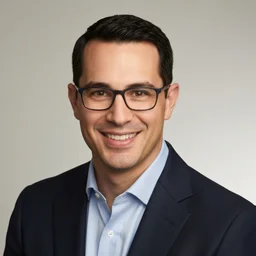
Project Management Professional & Agile Certification Expert
University of Chicago Booth School of BusinessKevin Marshall is a Project Management Professional (PMP), PMI Agile Certified Practitioner (PMI-ACP), PRINCE2 Practitioner, and Certified Scrum Master with an MBA from the University of Chicago Booth School of Business. With 16 years of program management experience across technology, finance, and healthcare sectors, he coaches professionals through PMP, PRINCE2, SAFe, CSPO, and agile certification exams.
Join the Discussion
Connect with other students preparing for this exam. Share tips, ask questions, and get advice from people who have been there.
View discussion (4 replies)