
Wound Care Certification: WCC, CWS, CWCN Programs Compared 2026 September
Wound care certification compared: WCC, CWS, CWCN, CWOCN paths, eligibility requirements, exam content, costs, and which certification fits your role. ✅
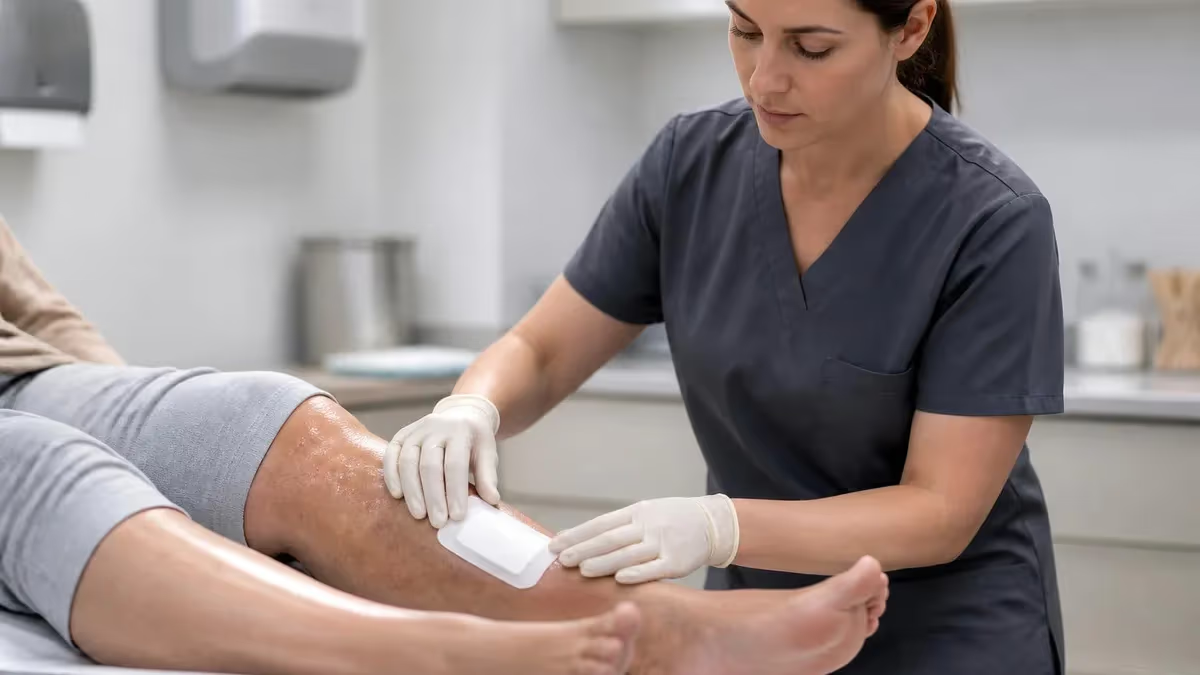
Wound care certification credentials demonstrate specialized expertise in managing acute and chronic wounds — pressure injuries, diabetic ulcers, venous leg ulcers, surgical wounds, and various other conditions. Multiple certification options exist for different healthcare professionals, with eligibility requirements, exam content, costs, and recognition varying among them. Whether you're a nurse, physical therapist, physician, or other healthcare provider considering wound care certification, understanding the available credentials and which best fits your specific role helps make a sound investment decision.
The major wound care certifications in the United States include WCC (Wound Care Certified) from the National Alliance of Wound Care and Ostomy, CWS (Certified Wound Specialist) from the American Board of Wound Management, CWCN (Certified Wound Care Nurse) from the Wound, Ostomy and Continence Nursing Certification Board, CWOCN (Certified Wound, Ostomy and Continence Nurse) from the same board, and CWON (Certified Wound and Ostomy Nurse). Each certification serves different practitioners with different educational and experience prerequisites. Selecting the right certification matters because cost and time investment varies substantially.
Wound care has grown into a recognized specialty over recent decades, driven by aging populations, increasing diabetes rates, and recognition that specialized wound care produces better outcomes and reduced costs compared to general care. Certified wound care professionals typically command salary premiums ($5,000-$15,000+ annually depending on role and setting), have expanded clinical responsibilities, and work in specialty wound centers, home health, long-term care, and various clinical settings. The credential matters in many employment contexts and is sometimes required for specific positions in wound care specialty practices.
This guide covers wound care certification comprehensively: the major certification options compared, eligibility requirements for each, exam content and preparation approaches, costs and ongoing maintenance requirements, and how to determine which certification fits your specific role and goals. Whether you're a new graduate considering early specialty certification or an experienced practitioner pursuing advancement, this content provides practical guidance.

WCC: Wound Care Certified — broad eligibility (RN, LPN, PT, OT, etc.)
CWS: Certified Wound Specialist — multidisciplinary eligibility through ABWM
CWCN: Certified Wound Care Nurse — RN-only through WOCNCB
CWOCN: Certified Wound, Ostomy and Continence Nurse — RN with additional scope
Cost range: $300-$700+ for exam fees plus preparation costs
The WCC (Wound Care Certified) credential from the National Alliance of Wound Care and Ostomy (NAWCO) is the most accessible wound care certification because it accepts the broadest range of healthcare professionals. Eligible candidates include RNs, LPNs/LVNs, PTs, OTs, dietitians, physician assistants, nurse practitioners, physicians, and others working in wound care contexts. The required education before exam is minimal — passing the certification exam is the primary requirement. WCC holders work across all healthcare settings where wounds are managed. The credential renews every 5 years through continuing education or retesting.
The CWS (Certified Wound Specialist) credential from the American Board of Wound Management (ABWM) targets multidisciplinary practitioners with experience in wound care. Eligibility requires either completion of approved wound care education program plus clinical experience, or significant unstructured clinical experience meeting specific criteria. The CWS exam is comprehensive and rigorous. CWS holders typically work in specialty wound centers, hospital wound services, and other settings where advanced wound expertise is valued. Recertification is every 10 years through CE or retesting. The wound care general resources cover broader wound care context.
The CWCN (Certified Wound Care Nurse) and CWOCN (Certified Wound, Ostomy and Continence Nurse) credentials from the Wound, Ostomy and Continence Nursing Certification Board (WOCNCB) are RN-specific certifications. CWCN focuses specifically on wound care; CWOCN encompasses wound, ostomy, and continence nursing scope. These certifications typically require completion of an accredited WOC nursing education program (3-5 months long, intensive) plus clinical experience. WOCN-certified nurses work primarily in specialty wound clinics, home health, long-term care, and acute care wound services. Recertification every 5 years.
The CWON (Certified Wound and Ostomy Nurse) is a related WOCNCB credential covering wound and ostomy specifically (without continence component). The CCCN (Certified Continence Care Nurse) covers continence specifically. The various WOCNCB credentials allow nurses to specialize in specific aspects of WOC nursing or pursue the broader CWOCN credential covering all three. The choice depends on practice setting and role. Most acute care WOC nurses pursue CWOCN; some specialty contexts justify narrower credentials. The wound care products resources cover product knowledge.
For physician wound care certification specifically, several options exist. The CWSP (Certified Wound Specialist Physician) from ABWM targets physicians. Various wound care fellowships and additional training programs provide physician-specific wound care expertise. Hospital wound centers and outpatient wound services often have specific physician credentialing requirements beyond basic medical licensure. Physicians considering wound care often pursue specialty fellowship training plus certification rather than just certification alone.
Major Wound Care Certifications
Broadest eligibility — RN, LPN, PT, OT, nutrition, PA, NP, MD, others. Issued by NAWCO. Pass certification exam. Most accessible wound care credential. Renews every 5 years through CE or retesting. Cost approximately $300-$400 for exam plus preparation costs.
Multidisciplinary credential from ABWM. Requires structured education or substantial unstructured experience. Comprehensive rigorous exam. Higher prestige than WCC in many specialty settings. Renews every 10 years. Cost approximately $400-$500 for exam. Strong for specialty wound center positions.
RN-specific from WOCNCB. Requires WOC nursing education program (3-5 months) plus clinical experience. Wound-only scope (vs CWOCN broader scope). Renews every 5 years. Cost approximately $400-$500 for exam plus substantial preparation cost. Standard credential for specialty wound RN.
RN-specific from WOCNCB covering all three WOC areas. Most comprehensive WOC nursing credential. Same education program requirement as CWCN but exam covers ostomy and continence in addition to wound care. Best for nurses in comprehensive WOC roles. Same recertification requirements as CWCN.

For eligibility specifically, requirements vary substantially among certifications. WCC has the most accessible requirements — current healthcare licensure plus successful exam completion. Some candidates choose to take preparation courses but they're not required. CWS requires either completion of approved wound care education program plus 60 hours documented clinical experience, OR 1,000+ hours of unstructured clinical wound care experience meeting specific criteria. CWCN/CWOCN require completion of accredited WOC nursing education program (offered through several universities and dedicated training centers) plus specified clinical experience. Each credential's eligibility differs in education and experience requirements.
For exam content specifically, all wound care certifications cover similar core content with varying depth. Wound healing physiology and assessment. Pressure injury prevention and management. Diabetic foot ulcer care. Venous and arterial ulcer management. Surgical wound care and complications. Wound bed preparation and dressing selection. Negative pressure wound therapy. Compression therapy. Special populations (pediatrics, geriatrics, immunocompromised). Documentation and reimbursement considerations. Prevention strategies. The exact emphasis and depth varies by certification — CWOCN includes substantial ostomy and continence content; CWS goes deeper on advanced topics; WCC covers core content broadly.
For preparation specifically, several approaches work. Self-study using wound care textbooks (the major texts include "Acute and Chronic Wounds" by Bryant and Nix, "WOC Nursing Core Curriculum" by WOCN Society, others). Online review courses from major wound care education providers. Live preparation courses (varies in availability). Study groups with colleagues pursuing same certification. Practice questions from various sources. Most candidates use combinations of these — typically textbook study plus practice questions plus some structured review course. Total preparation time varies from 2-3 months for experienced practitioners to 6+ months for newer practitioners. The certification guide resources cover certification preparation broadly.
For maintaining certification specifically, all wound care certifications require ongoing continuing education for renewal. WCC requires 60 contact hours every 5 years. CWS requires 30 hours annually. CWCN/CWOCN require approximately 50-60 contact hours every 5 years specific to WOC content. The specific CE requirements vary by certifying body. Continuing education must usually be from approved providers with documentation. Tracking CE through cycle is important — letting CE lapse means losing certification. Most certifying bodies offer CE tracking tools through member portals.
For costs specifically, total investment in wound care certification varies. Exam fees: $300-$500 typically. Education programs (when required like for CWCN/CWOCN): $3,000-$8,000+ for accredited WOC nursing programs. Review courses: $300-$1,500 depending on format and depth. Books and materials: $200-$500 for major texts. Total certification investment ranges from $500-$1,500 for accessible certifications like WCC, to $5,000-$10,000+ for comprehensive certifications like CWOCN requiring full education programs. Employer support often offsets some costs.
Wound Care Certification by Role
Best certification options for RNs:
- Most accessible: WCC for RN — pass exam, no formal program required
- Most prestigious: CWOCN — comprehensive WOC nursing scope
- Wound-only specialty: CWCN — RN credential focused specifically on wounds
- Best for specialty centers: CWS or CWOCN typically preferred
- Preparation time: 3-6 months for WCC; 6-12 months for CWOCN program

For salary impact specifically, wound care certification typically increases earning potential. RN salary premiums for wound certification range from $3,000-$10,000+ annually depending on setting and certification type. PT/OT salary premiums vary from $2,000-$8,000+ annually. Specialty wound centers often pay top of market for certified clinicians. Home health agencies value wound certification highly because of the wound care needs in home health populations. Long-term care facilities increasingly value wound certification due to pressure injury reduction quality measures. The certification typically pays back the investment within 1-2 years through salary differential.
For career advancement specifically, wound certification opens specialty positions. Wound care nurse coordinator roles in hospitals. Wound care specialist positions in outpatient wound centers. Home health wound care specialist roles. Long-term care wound care nurse positions. Industry roles (with dressing manufacturers, advanced therapy companies). Educational positions (teaching wound care, developing wound care programs). Each of these specialty positions typically requires or strongly prefers wound certification. Without certification, advancement into wound specialty roles is more difficult and slower.
For continuing education within wound care specifically, several pathways support ongoing learning. Annual conferences (WOCN Society Annual Conference, Symposium on Advanced Wound Care, others) provide updates on practice and research. Online education through certification bodies and professional associations. Hospital-based education programs. Industry-sponsored education (sometimes excellent, sometimes biased toward sponsor products — discriminate among offerings). Books, journals, podcasts on wound care topics. Building broader wound care knowledge beyond initial certification supports career growth.
For the broader wound care field specifically, several trends matter. Aging population continues driving wound care needs. Diabetes prevalence drives diabetic foot ulcer care. Pressure injury prevention is high quality measure focus in healthcare regulation. Telemedicine and remote wound assessment continue expanding. Various advanced therapies (NPWT, biologics, electrical stimulation) continue evolving. The field remains growing with substantial career opportunities for certified clinicians. Now is reasonable time to pursue wound certification for clinicians considering it. The career overview resources cover related healthcare career considerations.
For specific clinical settings specifically, certification value varies. Acute care hospitals — wound care RN positions typically require or strongly prefer CWOCN or CWCN. Specialty wound centers — CWS or CWOCN typically preferred; physicians may have additional credentialing. Home health — WCC or WOC certifications strongly preferred; payment varies by certification level. Long-term care — WCC or higher certifications increasingly preferred; some facilities require certification for wound care nurse positions. Outpatient clinics — varies by setting and case mix.
Before pursuing wound care certification, verify which credential your target employer or specialty area actually values. Some specialty wound centers strongly prefer specific credentials (often CWOCN); other employers accept WCC equivalently. The right certification depends on what employers in your specific market and specialty area actually value, not abstract credential prestige. Check job postings in your target areas to see which certifications are requested. Speak with wound certified colleagues about their experiences. Don't pursue more expensive certification when less expensive option provides similar career value. Conversely, don't pursue accessible certification when target positions require more comprehensive credentials.
For exam preparation specifically, several resources help. Major wound care textbooks (Bryant and Nix's "Acute and Chronic Wounds," Doughty and McNichol's "Wound, Ostomy and Continence Nurses Society Core Curriculum") provide comprehensive content review. Practice question banks (NAWCO, ABWM, WOCNCB sometimes provide practice questions; third-party sources offer additional practice). Review courses from major providers (vary in price and depth). Study groups with peers pursuing same certification. Self-paced study using texts and practice questions. Most candidates combine approaches; successful candidates typically prepare 3-6 months for major certifications.
For test-taking strategies specifically, several approaches help during the exam. Read each question completely before considering answers — wound care questions sometimes test subtle distinctions. Eliminate clearly wrong answers first to narrow choices. Watch for absolute words ("always," "never") that often indicate wrong answers. Apply standard wound care principles when uncertain about specific details. Skip difficult questions and return — easier questions may provide context. Manage time carefully — wound care exams typically have time limits requiring steady pace.
For the experience of pursuing certification specifically, several factors matter. Time investment is substantial — 3-6 months of focused study for accessible credentials, 6-12+ months for comprehensive credentials requiring formal programs. Family and work life adjusts to accommodate study time. Support from employer (paid time off for study, exam fees coverage) substantially helps. Support from family and colleagues helps maintain motivation. The investment is significant but typically worthwhile for committed wound care practitioners.
For after passing the exam specifically, several next steps follow. Update resume and CV to reflect certification. Notify employer who often provides salary adjustment. Update licensing/certification tracking with credential. Begin tracking continuing education for recertification cycle. Consider whether additional credentials would extend career options. Build connections within wound care community through professional associations. Maintain expertise through ongoing continuing education and clinical practice. Certification represents starting point of expert practice rather than ending point. The CNA vs PCA resources cover related healthcare role distinctions.
Looking forward, wound care certification continues evolving. Specific exam content updates as evidence and practice change. New therapies and approaches require integration into certification content. Telehealth wound care expanding. Various technological developments (smart dressings, AI-assisted wound assessment) emerging. Certified clinicians benefit from staying current with field developments rather than treating certification as one-time event. The wound care field remains active and growing, supporting continued investment in expertise.
For nurses considering whether to start as RN before specialty certification specifically, several considerations matter. Some nurses pursue wound certification immediately after gaining 1-2 years general nursing experience. Others gain broader nursing experience before specializing. Either approach works; the specialization choice depends on individual interests and career goals. Wound nursing specifically suits nurses interested in chronic care, patient education, and seeing healing progression over time rather than acute crisis intervention.
For wound certification scope of practice specifically, certified clinicians typically have expanded scope compared to generalist colleagues. Wound assessment and documentation responsibilities increase. Treatment plan development for complex wounds. Selection of advanced therapies (NPWT, biologics). Consultation with primary providers on wound management. Education of patients, families, and other healthcare staff. Quality improvement initiatives related to wound prevention and care. The expanded scope is valuable both clinically (better outcomes) and professionally (greater autonomy and recognition).
For pediatric wound care specifically, additional considerations apply. Children's wounds differ from adult wounds in healing characteristics, common etiologies, and family dynamics. Pediatric specialty certifications and advanced training supplement basic wound certification for clinicians focused on pediatric populations. Burn centers, NICUs, and pediatric specialty hospitals often have pediatric wound care specialty needs. The clinical content for pediatric wounds differs enough that pediatric-focused additional training matters for clinicians in those settings.
For wound care professional associations specifically, several support certified clinicians. Wound, Ostomy and Continence Nurses Society (WOCN Society) supports nurses. Association for the Advancement of Wound Care (AAWC) is multidisciplinary. National Pressure Injury Advisory Panel (NPIAP) focuses on pressure injuries. Membership in relevant associations provides access to education, networking, and professional development resources beyond what employers typically offer.
Wound Care Certification Quick Facts
Pursuing Wound Care Certification
- +Salary premium typically $3,000-$10,000+ annually depending on role/setting
- +Specialty positions in wound centers, home health, and other settings
- +Recognition of expertise from peers and employers
- +Knowledge growth supports better patient outcomes
- +Several certification options accommodate different roles and credentials
- −Total investment ranging from $500-$10,000+ depending on certification path
- −Time investment of 3-12+ months for preparation depending on credential
- −Recertification requires ongoing continuing education investment
- −Multiple competing certifications can be confusing to choose between
- −Not all employers value certification equally — research local market
Pros and Cons at a Glance
| Pros | Cons |
|---|---|
| Specialty positions in wound centers, home health, and other settings | Recertification requires ongoing continuing education investment |
| Recognition of expertise from peers and employers | Multiple competing certifications can be confusing to choose between |
| Knowledge growth supports better patient outcomes | Not all employers value certification equally — research local market |
Wound Questions and Answers
About the Author

Registered Nurse & Healthcare Educator
Johns Hopkins University School of NursingDr. Sarah Mitchell is a board-certified registered nurse with over 15 years of clinical and academic experience. She completed her PhD in Nursing Science at Johns Hopkins University and has taught NCLEX preparation and clinical skills courses for nursing students across the United States. Her research focuses on evidence-based exam preparation strategies for healthcare certification candidates.