
CNA Certification 2026 July: How to Become a Certified Nursing Assistant
Pass the CNA Certification 2026 July: How to Become a exam with confidence. Practice questions with detailed explanations and instant feedback on every answer. 🆕

What Is a Certified Nursing Assistant (CNA)?
A Certified Nursing Assistant (CNA) — also called a nurse aide, nursing assistant, or patient care assistant depending on the employer and state — is a healthcare worker who provides direct patient care under the supervision of licensed nursing staff (registered nurses and licensed practical nurses). CNAs are the front-line caregivers in hospitals, skilled nursing facilities, assisted living communities, home health agencies, and other healthcare settings, providing hands-on care that supports both the clinical team and the daily wellbeing of patients and residents.
Core CNA responsibilities include: assisting patients and residents with activities of daily living (ADLs) — bathing, dressing, grooming, oral hygiene, toileting, positioning, and mobility; measuring and recording vital signs (temperature, blood pressure, pulse, respiration rate); assisting with eating and hydration; turning and repositioning patients to prevent pressure injuries; monitoring and reporting changes in patient condition to the supervising nurse; maintaining a clean and safe patient environment; and communicating respectfully with patients, families, and the healthcare team. In long-term care settings, CNAs often develop ongoing relationships with the same residents and provide significant continuity of care.
CNA certification is regulated at the state level — each state maintains a Nurse Aide Registry (NAR) that lists certified nursing assistants who are eligible to work in that state's healthcare facilities. Federal law (under OBRA — the Omnibus Budget Reconciliation Act of 1987) requires that all nurse aides working in Medicare and Medicaid-certified facilities be state-certified and listed on the state's Nurse Aide Registry. This federal requirement makes CNA certification the essential credential for working as a nursing assistant in any certified facility.

CNA Certification Requirements
CNA certification requirements vary by state, but the federal framework under OBRA establishes minimum standards that all states must meet. Understanding the requirements helps candidates plan their path to certification efficiently.
Federal Minimum Training Requirements
Federal regulations require a minimum of 75 hours of state-approved CNA training, with at least 16 hours of supervised clinical practicum (hands-on patient care). Many states require significantly more — some states require 120 to 150 hours of total training. The required training must be completed through a state-approved CNA training program. Not all nursing assistant training programs are state-approved — verify that any program you are considering is approved by your state's department of health, department of education, or equivalent regulatory authority before enrolling.
Background Check Requirements
Nearly all states require a criminal background check for CNA certification and for employment in healthcare facilities caring for vulnerable populations. Background checks are typically conducted through state law enforcement or a federal system and screen for convictions related to abuse, neglect, exploitation of vulnerable adults or children, and other disqualifying offenses. Some states have specific disqualifying offenses listed in state law; others allow case-by-case review. If you have any criminal history, research your state's specific disqualifying offense list before investing in CNA training — some states have processes to request waiver reviews for older or minor offenses.
Health Requirements
Many CNA training programs and healthcare employers require proof of current immunization (particularly TB testing or TB risk assessment, influenza vaccination, MMR, varicella, and hepatitis B documentation) before entering clinical training or working with patients. Some programs require a physical examination. Verify the specific health requirements of the training program you are applying to before enrollment.
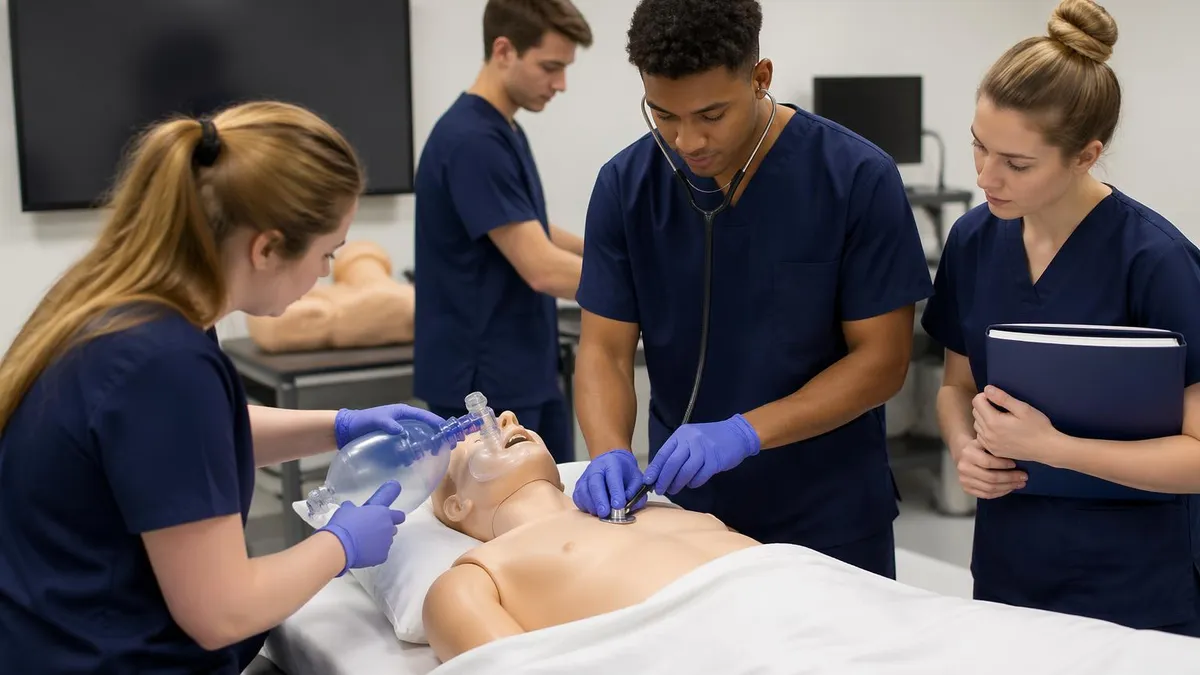
CNA Training Programs
CNA training programs are offered through multiple types of institutions, and the right choice depends on cost, schedule flexibility, program quality, and geographic availability. All programs must be state-approved to qualify for the state certification exam.
Community Colleges and Vocational Schools
Community colleges and vocational/technical schools are among the most common CNA training providers. Programs typically run 4 to 12 weeks and include both classroom instruction and clinical practicum at a local healthcare facility (often a skilled nursing facility). Community college CNA programs are typically affordable — often ranging from a few hundred to a few thousand dollars — and credits may be transferable toward a nursing degree for students who plan to advance. Waiting lists can be long at popular programs — apply early, particularly if starting in the fall or January semester.
Hospital and Healthcare Employer-Sponsored Programs
Many hospitals, skilled nursing facilities, and home health agencies offer CNA training directly to new employees or community members as a pipeline for their workforce. Employer-sponsored training is often provided at low or no cost in exchange for a commitment to work at the sponsoring facility for a period after certification (typically 6 to 12 months). This model is particularly common at nursing homes and assisted living facilities. If you already know where you want to work as a CNA, contact that employer directly about whether they offer sponsored training — it is often the most affordable path to certification.
Online CNA Training Programs
The didactic (classroom) component of CNA training can be completed online through some programs, but the clinical practicum component requires in-person, hands-on patient care. Fully online-only CNA programs that do not include a supervised clinical component are not state-approved in most states and do not qualify candidates for the state CNA exam. Hybrid programs that combine online classroom learning with in-person clinical practicum are legitimate and state-approved at some institutions. Verify state approval status before enrolling in any online or hybrid program.
The CNA Certification Exam
After completing a state-approved CNA training program, candidates must pass the state CNA certification exam to be listed on the Nurse Aide Registry. The exam consists of two components: a written (or oral) test and a clinical skills evaluation. Both components must be passed to achieve certification.
Written/Oral Knowledge Test
The written test is a multiple-choice examination covering CNA knowledge and competencies. The number of questions varies by state — typically 60 to 70 questions — and the topics covered correspond to the content of CNA training programs: basic nursing skills, patient rights, infection control, safety and emergency procedures, activities of daily living, communication, legal and ethical responsibilities, and patient care principles. An oral version of the knowledge test is available for candidates who have difficulty reading English — this accommodation must be requested in advance. Most states use a third-party testing vendor (Pearson VUE is the most common; Prometric and National Nurse Aide Assessment Program/NNAAP are also used) to administer the exam.
Clinical Skills Evaluation
The clinical skills evaluation is a practical examination where candidates demonstrate hands-on nursing assistant skills in front of a trained evaluator. Candidates are typically required to demonstrate 3 to 5 randomly selected skills from a list of possible clinical skills. Skills that may be tested include: handwashing, vital signs measurement (blood pressure, pulse, temperature, respiratory rate), catheter care, range of motion exercises, bed bath, oral hygiene, positioning and transferring patients, and others. Each skill must be performed in a standardized, safe, and competent manner according to the evaluation criteria. The clinical skills test is conducted at an approved testing site — often a nursing facility.
Exam Fees and Scheduling
Exam fees vary by state but typically range from $75 to $150 for the full exam (written and skills). Some states subsidize exam fees or include them in training program costs. Scheduling the exam is done through the testing vendor used by your state — register through the vendor's website or by phone. Most states allow candidates to take the exam up to three times within a 24-month period after completing training before requiring retaking the training program. Verify your state's retake policy.

CNA Certification Renewal and Maintenance
CNA certification does not expire in the traditional sense, but maintaining active registry status requires meeting specific work requirements. CNAs who do not meet the work requirements are removed from the state Nurse Aide Registry and must retest to regain certification.
Work Requirement to Maintain Active Status
Federal regulations require that CNAs perform nursing assistant duties for pay at least once during each 24-month period to remain on the state Nurse Aide Registry. A CNA who has not worked as a nursing assistant for 24 consecutive months is removed from the registry and must retake and pass the state CNA exam to regain certification. This work requirement is sometimes described as 'CNA renewal' — but unlike nursing licenses with formal renewal deadlines and continuing education requirements, CNA registry maintenance is contingent on active employment rather than completing specific renewal coursework.
Employer Verification and Registry Queries
Healthcare employers are required to verify that new CNA employees are listed on the state Nurse Aide Registry before employment begins. The registry is a public database in most states — employers, state surveyors, and prospective employees can query it online. When you move from one state to another, you must apply for certification in the new state's registry — some states have reciprocity agreements that simplify this process, while others require a full exam. Check your new state's requirements before starting work if you are relocating.
Continuing Education and Career Advancement
While the federal baseline does not require continuing education for CNA registry maintenance (beyond the work requirement), many employers require annual skills competency evaluations and in-service training. CNAs who want to advance their careers can pursue PCT (Patient Care Technician) training, phlebotomy and EKG certifications, or nursing education to become an LPN or RN. CNA experience is highly valued by nursing school admissions committees and by nurse managers hiring graduate nurses — the clinical foundation CNAs build translates directly to success in nursing school and in nursing practice.
CNA Checklist
- ✓Verify the CNA training program is state-approved before enrolling — check the state health department website
- ✓Complete required immunizations and background check before training begins
- ✓Complete all training hours including the required clinical practicum component
- ✓Study the knowledge test content: patient rights, infection control, safety, ADLs, communication
- ✓Practice clinical skills until they can be performed correctly from memory
- ✓Schedule the written test and clinical skills evaluation through your state's testing vendor
- ✓Bring valid photo ID to both exam components
- ✓After passing, verify your name appears on the state Nurse Aide Registry
- ✓If moving to another state, apply for registry listing in your new state before starting work
- ✓Maintain active status: perform nursing assistant work for pay at least once every 24 months
CNA Practice Test Questions
Prepare for the CNA - Certified National Accountant exam with our free practice test modules. Each quiz covers key topics to help you pass on your first try.
CNA Auditing Principles
CNA Exam Questions covering Auditing Principles. Master CNA Test concepts for certification prep.
CNA Business Law and Ethics
Free CNA Practice Test featuring CNA Business Law and Ethics. Improve your CNA Exam score with mock test prep.
CNA Managerial Accounting
CNA Mock Exam on CNA Managerial Accounting. CNA Study Guide questions to pass on your first try.
CNA Cost Accounting
CNA Test Prep for Cost Accounting. Practice CNA Quiz questions and boost your score.
CNA Financial Accounting
CNA Questions and Answers on Financial Accounting. Free CNA practice for exam readiness.
CNA Tax Fundamentals
CNA Mock Test covering Tax Fundamentals. Online CNA Test practice with instant feedback.
CNA National Accountant Career Opportuniti...
Free CNA Quiz on National Accountant Career Opportunities and Benefits. CNA Exam prep questions with detailed explanations.
CNA National Accountant Eligibility and Qu...
CNA Practice Questions for National Accountant Eligibility and Qualifications. Build confidence for your CNA certification exam.
CNA Pros and Cons
- +CNA certification is recognized across employers as evidence of verified competency, often required for specific roles
- +Certification provides a structured framework for professional knowledge that benefits daily work, not just the credential itself
- +Many certified professionals report salary increases of 10–20% compared to non-certified peers in the same role
- +Certification maintenance requirements create ongoing professional development that keeps knowledge current
- +The certification credential differentiates candidates in competitive hiring processes and promotion decisions
- −CNA certification fees can be substantial — exam costs, study materials, and renewal fees add up over a career
- −Certification requirements change over time; candidates who delay testing may face updated content requirements
- −Not all employers or markets equally value or require certification — the salary return varies significantly by geography and industry
- −Exam preparation requires significant time investment alongside existing work and personal responsibilities
- −Certification does not guarantee competency in practice — it validates knowledge at a point in time, not ongoing performance
CNA Questions and Answers



About the Author

Registered Nurse & Healthcare Educator
Johns Hopkins University School of NursingDr. Sarah Mitchell is a board-certified registered nurse with over 15 years of clinical and academic experience. She completed her PhD in Nursing Science at Johns Hopkins University and has taught NCLEX preparation and clinical skills courses for nursing students across the United States. Her research focuses on evidence-based exam preparation strategies for healthcare certification candidates.