
WHMIS Label Requirements: Complete WHMIS 2015 Label Example Study Guide
Master WHMIS label requirements with real label examples, AIX Safety V3 quiz answers, and certification prep. ✅ Pass your WHMIS 2015 exam today.

If you are searching for a clear whmis label example to prepare for your certification, you have come to the right place. WHMIS — the Workplace Hazardous Materials Information System — is Canada's national hazard communication standard, and understanding how its labels work is the single most tested concept on every AIX Safety V3 practice exam. A properly constructed WHMIS 2015 label tells workers exactly what chemical they are handling, what dangers it presents, and what steps to take if something goes wrong.
The 2015 update aligned WHMIS with the Globally Harmonized System of Classification and Labelling of Chemicals (GHS), replacing the old WHMIS 1988 framework. This alignment means Canadian workplaces now use the same pictograms, signal words, and hazard statements recognized in over 70 countries. For workers completing AIX Safety courses, this shift is important because many whmis 2015 aix safety v3 quiz answers revolve around the differences between the old and new systems and the specific elements required on a compliant label.
To understand what does whmis stand for and why its labeling rules matter, consider what happens without them. In an unlabeled warehouse where acetone, sulfuric acid, and methanol sit in identical containers, workers have no way to distinguish a flammable solvent from a corrosive acid. Labels eliminate that guesswork. Under WHMIS 2015, every supplier label must carry six core elements — product identifier, pictograms, signal word, hazard statements, precautionary statements, and supplier information — and missing even one element can result in regulatory penalties.
Many workers encounter WHMIS training through online platforms like AIX Safety, which delivers the WHMIS 2015 V3 course and accompanying quiz. Scores of learners search online every month for aix safety whmis 2015 answers because the quiz questions can be surprisingly specific: they test not just what a label must include, but the exact wording of signal words, the proper sequence of precautionary statements, and the distinction between supplier labels and workplace labels. This guide walks through every element so you can answer those questions with confidence.
Understanding whmis symbols is equally critical. The nine GHS-aligned pictograms — from the flame for flammables to the skull and crossbones for acute toxics — appear on labels and in safety data sheets (SDS), and exam questions frequently ask you to match a pictogram to its hazard class. Each symbol is enclosed in a red diamond border, a deliberate visual departure from the old WHMIS 1988 symbols that used black-bordered shapes.
This study guide is organized to mirror the way WHMIS certification exams are structured. You will find breakdowns of label elements, pictogram meanings, the distinction between supplier and workplace labels, and practical tips for reading an SDS. Whether you are taking an AIX Safety course, a Workplace Safety and Prevention Services module, or any other accredited WHMIS program, the concepts covered here apply directly to your exam and to your daily work with hazardous products.
By the end of this guide you will be able to identify every required element on a compliant WHMIS 2015 label, interpret any of the nine pictograms on sight, explain the difference between supplier and workplace labels, and answer the most commonly tested AIX Safety quiz questions without hesitation. Let us start with the fundamentals that underpin every label requirement in the current standard.
WHMIS 2015 by the Numbers

The Six Required Elements of Every WHMIS 2015 Supplier Label
The chemical name, code, or batch number that allows workers and emergency responders to match the container to its safety data sheet. This must be identical to the product identifier used on Section 1 of the SDS for the same product.
One or more of the nine GHS-aligned hazard pictograms enclosed in a red diamond border. Each pictogram communicates a specific hazard class at a glance, even for workers who speak different languages or have limited reading ability.
Either DANGER or WARNING printed in bold. DANGER indicates a more severe hazard; WARNING indicates a less severe one. Only one signal word appears on a label even when multiple hazards are present — always the more serious of the two.
Standardized phrases that describe the nature and degree of the hazard — for example, 'Highly flammable liquid and vapour' or 'Causes serious eye damage.' Each statement has a unique alphanumeric code (H-codes) used globally under GHS.
P-code phrases that tell workers how to safely handle, store, and dispose of the product, and what to do in case of exposure. Labels may consolidate precautionary statements when a product has multiple hazards to avoid overwhelming the reader.
WHMIS symbols — now officially called pictograms under the GHS-aligned system — are one of the most heavily tested areas on any certification exam, including the AIX Safety WHMIS 2015 V3 module. There are nine standardized pictograms in total, each enclosed in a red diamond border with a black symbol on a white background. Understanding what each pictogram communicates is not optional for exam success; questions regularly ask you to identify the hazard class associated with a given image or to name the pictogram that applies to a specific chemical scenario.
The flame pictogram applies to flammable gases, flammable aerosols, flammable liquids, flammable solids, self-reactive substances, and pyrophorics. If you see a product labeled with a flame, it can ignite under normal working conditions and must be kept away from heat sources and open flames. Gasoline, acetone, and propane are everyday examples. The flame over a circle, by contrast, indicates oxidizers — substances that do not burn themselves but supply oxygen to accelerate combustion in other materials, making fires more intense and harder to control.
The skull and crossbones pictogram signals acute toxicity — products that can cause death or severe injury from a single or short-term exposure through inhalation, skin contact, or ingestion. The exclamation mark pictogram covers a wide range of less severe but still serious hazards: skin irritants, eye irritants, sensitizers, and certain narcotic effects. Exam questions frequently test the distinction between these two; remember that skull and crossbones = acute (immediate, severe), while exclamation mark = subacute or less severe.
To whmis what does it stand for — Workplace Hazardous Materials Information System — reveals the program's core mission: putting hazard information directly in workers' hands at the point of use. The health hazard pictogram (a person with a starburst on the chest) represents long-term or serious health effects such as carcinogenicity, respiratory sensitization, reproductive toxicity, and target organ damage from repeated exposure. This pictogram appears on products like asbestos-containing materials and benzene-based solvents.
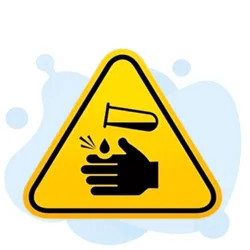
The corrosion pictogram depicts a surface and a hand being eaten away by a liquid, representing corrosive substances that destroy skin, eyes, and metal surfaces. Sulfuric acid and sodium hydroxide (lye) both carry this pictogram. The gas cylinder pictogram applies to gases under pressure — compressed, liquefied, dissolved, or refrigerated liquefied gases. The hazard here is not just chemical but physical: cylinders can explode if heated, and liquefied gases can cause cryogenic burns on contact.
The environment pictogram (a dead tree and fish) is used in Canada for products that are hazardous to the aquatic environment, even though this is not a mandatory GHS element in all jurisdictions. The biohazard pictogram and the simple radioactivity symbol may appear on WHMIS labels in specific regulated sectors. Memorizing all nine pictograms and their associated hazard classes is essential, because AIX Safety V3 quiz questions present pictogram images and ask you to name the hazard or identify which products would carry that symbol.
Practical tip for exam preparation: create a two-column table with the pictogram name in one column and a real-world example chemical in the other. For instance, flame = acetone, skull and crossbones = methanol (wood alcohol), exclamation mark = bleach at low concentrations, health hazard = silica dust. Connecting abstract symbols to familiar substances anchors the information and makes retrieval during a timed quiz much faster. Many test-takers who struggle with pictogram questions are trying to memorize definitions in isolation rather than linking them to concrete examples.
WHMIS Meaning: Supplier Labels vs. Workplace Labels vs. Safety Data Sheets
A supplier label is created by the manufacturer or importer and must appear on every controlled product before it enters a Canadian workplace. It must contain all six required elements: product identifier, pictograms, signal word, hazard statements, precautionary statements, and supplier contact information. The label must be written in both English and French, and all text must be legible under normal working conditions. Supplier labels are the primary communication tool between chemical producers and the workers who handle their products.
Supplier labels must remain on the container for the product's entire working life. If a supplier label becomes damaged, illegible, or detached, the employer is legally required to replace it before the product is used again. A common exam question asks what to do if a label falls off a container — the answer is always to replace it immediately using the original SDS as a reference source. Never use a product from an unlabeled container, even if you think you know what it is.

WHMIS 2015 vs. WHMIS 1988: Key Differences for Exam Takers
- +GHS alignment means Canadian labels and SDS are recognized internationally in 70+ countries
- +Standardized 16-section SDS format makes finding emergency information faster and more predictable
- +Nine pictograms use universally recognized imagery, improving comprehension across language barriers
- +Signal words (DANGER/WARNING) provide an immediate severity cue missing from the old system
- +Standardized H-codes and P-codes allow global consistency in hazard and precautionary statements
- +Mandatory bilingual (English and French) labeling requirements strengthen protections for all Canadian workers
- −Transition from WHMIS 1988 created a period of dual-labeling confusion in many workplaces
- −Nine new pictograms require retraining for workers familiar only with the old hatched-border symbols
- −The exclamation mark pictogram covers a wide range of hazards, making it less specific than ideal
- −Consolidation of precautionary statements on complex products can reduce clarity for multi-hazard chemicals
- −Workplace-produced labels still require less information than supplier labels, creating potential knowledge gaps
- −Workers must learn both systems since older WHMIS 1988 products may still appear in some inventories
WHMIS Label Compliance Checklist: 10 Things to Verify Before Using Any Product
- ✓Confirm the product identifier on the label matches the product identifier on its SDS exactly.
- ✓Check that at least one GHS pictogram is present and enclosed in a red diamond border.
- ✓Verify the signal word is either DANGER or WARNING — never both on the same label.
- ✓Read every hazard statement to understand the specific nature and severity of the hazard.
- ✓Review precautionary statements for required PPE, storage conditions, and emergency response steps.
- ✓Ensure supplier contact information (name, address, and emergency phone number) is clearly printed.
- ✓Confirm the label is legible — not faded, torn, obscured by product residue, or covered by tape.
- ✓For transferred products in secondary containers, verify a workplace label with the three required elements is attached.
- ✓Locate the SDS for the product and confirm it follows the 16-section GHS format.
- ✓If any required label element is missing or damaged, do not use the product until the label is replaced.
The Single Most Common Reason Workers Fail the AIX Safety V3 Quiz
Most quiz failures stem from confusing supplier label requirements (6 elements) with workplace label requirements (3 elements). Memorize this: supplier labels always need all six elements including pictograms, signal word, and hazard statements; workplace labels need only the product identifier, safe handling instructions, and a reference to the SDS. This distinction appears on nearly every WHMIS certification exam in some form.
Preparing specifically for the AIX Safety WHMIS 2015 V3 quiz requires a targeted approach because the platform's questions are designed to test applied knowledge rather than simple recall. Workers searching for aix safety whmis 2015 answers often discover that rote memorization is less effective than understanding the reasoning behind each regulation. When you understand why a supplier label must include all six elements — because each element serves a distinct protective purpose — you can correctly answer any question about that element, even if it is worded in an unfamiliar way.
The AIX Safety platform structures its WHMIS 2015 V3 course in modules that mirror the regulatory framework: hazard classification, labeling, safety data sheets, and worker education and training. Quiz questions at the end of each module test the content just covered, and the final assessment draws questions from all modules. Students who try to skip straight to the final quiz without completing the modules consistently underperform, because the platform randomizes questions from a large pool and you cannot predict which specific scenarios will appear.
One of the most effective study strategies is to work through practice questions under timed conditions before your actual quiz. The whmis certificate you receive upon passing the AIX Safety course is recognized by most Canadian employers, and many provinces require workers to complete WHMIS training before working with or near hazardous products. The certificate typically has an expiry period — often one to three years depending on the employer's policy — so understanding the material deeply is more valuable than memorizing answers to a specific question set.
Common AIX Safety quiz question types include scenario-based questions ("A worker finds a container with no label. What should they do?"), identification questions ("Which pictogram indicates a flammable liquid?"), and process questions ("What are the three required elements of a workplace label?"). For scenario questions, always apply the most conservative safety principle: if in doubt, do not use the product, consult the SDS, and notify a supervisor. This principle aligns with both WHMIS regulations and the general duty clause in occupational health and safety legislation.
Understanding the whmis meaning behind each label element helps with the reasoning-based questions that trip up many test-takers. For example, the reason WHMIS 2015 requires both hazard statements AND precautionary statements — rather than just one or the other — is that hazard statements describe the danger while precautionary statements describe the response. A hazard statement might say "causes serious eye damage"; the corresponding precautionary statement says "wear eye protection" and "if in eyes: rinse cautiously with water for several minutes." Together they give workers both the warning and the action plan.
For the education and training section of the quiz, remember that WHMIS training has two components under Canadian legislation: generic WHMIS education (the hazard classes, label elements, and SDS structure that apply to all controlled products) and workplace-specific training (the particular hazardous products used at that specific worksite, their locations, and site-specific emergency procedures). AIX Safety covers the generic education component; your employer is responsible for the workplace-specific training. Quiz questions sometimes test whether you understand this division of responsibility.
Practice tests remain the single most reliable preparation tool for any certification exam, including WHMIS. Research consistently shows that retrieval practice — answering questions from memory rather than re-reading notes — produces stronger long-term retention than passive review. Aim to complete at least three full practice quiz sessions before your AIX Safety assessment, reviewing each incorrect answer immediately after the session to understand the correct reasoning. This approach typically takes four to six hours of total study time and is sufficient for most learners to achieve a passing score on their first attempt.

Most Canadian employers require WHMIS recertification every one to three years, and some provinces have mandatory refresher requirements tied to changes in workplace hazards or regulatory updates. If your WHMIS certificate has expired or if new hazardous products have been introduced to your worksite since your last training, you must complete updated WHMIS training before handling those products. Working with hazardous materials without current WHMIS certification is a violation of occupational health and safety law and exposes both you and your employer to significant liability.
Safety Data Sheets are the backbone of WHMIS's information system, and no label study guide is complete without a thorough walk-through of how to read and use them. The 16-section SDS format introduced under WHMIS 2015 is a direct adoption of the GHS standard, which means an SDS produced in Canada follows the same structure as one produced in the European Union, Japan, or Australia. This standardization is enormously valuable when importing or exporting products, and it is one of the reasons WHMIS 2015 represented such a significant improvement over the old WHMIS 1988 Material Safety Data Sheet (MSDS) format.
Section 1 of the SDS identifies the product — its chemical name, recommended uses, and the supplier's contact information including a 24-hour emergency phone number. This section must be consistent with the label: the product identifier in Section 1 must match the product identifier on the container label exactly. Section 2 covers hazard identification and is essentially a prose version of the label — it lists all hazard classifications, the GHS label elements (pictograms, signal word, hazard statements, precautionary statements), and any hazards not classified under GHS that the supplier wants to communicate.
Sections 3 through 8 provide increasingly detailed technical information. Section 3 lists the chemical composition and any impurities or stabilizing additives above the disclosure threshold. Section 4 describes first-aid measures for each exposure route — inhalation, skin contact, eye contact, and ingestion — and specifies symptoms and whether immediate medical attention is required. This is the section paramedics and emergency room staff will consult if a worker is incapacitated. Section 5 covers firefighting measures including suitable extinguishing agents, hazardous combustion products, and special protective equipment for firefighters.
To define whmis in practical terms, it is the system that ensures every worker knows what Section 8 of the SDS says for every product they handle: what engineering controls reduce exposure (ventilation, enclosure), what personal protective equipment is required (type of gloves, respirator classification, eye protection), and what the occupational exposure limits are for the substance. This section is consulted every time a new hazardous product is introduced to a worksite during the risk assessment process and when selecting appropriate PPE.
Sections 9 through 11 cover the product's physical and chemical properties (appearance, odor, boiling point, flash point, vapor pressure, solubility — all critical for assessing fire and exposure risk), stability and reactivity (what conditions or materials will cause a dangerous reaction), and toxicological information (routes of exposure, acute and chronic health effects, carcinogenicity, mutagenicity data). These three sections contain the scientific data that regulators, industrial hygienists, and safety officers rely on when setting exposure limits and designing engineering controls.
Sections 12 through 15 address environmental impacts, disposal considerations, transportation requirements, and regulatory information respectively. Section 16 provides any other relevant information including the SDS preparation date and the date of the last revision. Workers are not expected to memorize these sections, but they should know which section to consult for which type of question — a skill that the AIX Safety quiz explicitly tests. For example, if a quiz question asks where to find information about whether a product causes cancer, the correct answer is Section 11 (Toxicological Information).
A practical note about SDS access: under Canadian occupational health and safety legislation, employers must make the current SDS for every controlled product in the workplace readily accessible to workers at all times during their work shift.
This means the SDS must be available in the language the worker understands, and it must be the most current version provided by the supplier. "Readily accessible" means a worker can consult it without leaving their immediate work area or waiting for supervisory approval — a paper binder in a locked office does not meet this requirement. Many workplaces now use electronic SDS management systems with barcoded containers that link directly to the current SDS on a tablet or terminal.
Now that you understand the regulatory framework, let us focus on the practical study strategies most likely to produce a passing score on your WHMIS certification exam. The first and most important strategy is to study the actual label elements and SDS sections in order, not as isolated facts but as a connected system.
A WHMIS 2015 label is essentially a compressed summary of the SDS: the product identifier in both must match, the pictograms on the label correspond to the hazard classifications in Section 2 of the SDS, and the precautionary statements on the label are drawn from the more detailed guidance in Sections 4, 5, 6, 7, and 8 of the SDS. Understanding this connection makes both documents easier to remember.
Flashcards remain one of the most effective low-tech study tools for WHMIS certification. Create one card per pictogram with the image on the front and the hazard class name, one real-world example chemical, and the corresponding signal word on the back.
Create a second set of cards for the 16 SDS sections, with the section number on the front and the section title plus the one or two most important pieces of information in that section on the back. Run through both decks daily for the week before your exam. This spaced repetition approach takes less than 20 minutes per day but produces dramatically better retention than a single long study session the night before.
For the AIX Safety V3 course specifically, pay close attention to the quiz questions embedded in each module — not just the answers but the reasoning the platform provides when you answer incorrectly. The platform's explanations often use the exact language that appears in later questions, so reading them carefully is like getting a preview of the final assessment. Many learners report that they initially answered 60–70% of module questions correctly but pushed their score above 80% (the typical passing threshold) simply by carefully reviewing every incorrect answer before moving to the next module.
Group study can be surprisingly effective for WHMIS preparation if structured correctly. Rather than reading notes aloud to each other, use a quiz-and-explain format: one person asks a question ("What are the three elements of a workplace label?"), another answers, and the group discusses any disagreements before checking the correct answer.
Teaching a concept to someone else is one of the most powerful ways to identify gaps in your own understanding. If you cannot explain the difference between a hazard statement and a precautionary statement clearly enough for a classmate to understand it, you do not yet know it well enough to answer a tricky exam question about it.
Time management during the actual AIX Safety quiz is rarely a problem — the module quizzes are not strictly timed in the traditional sense — but the final assessment may have a completion window. Read each question fully before selecting an answer, and watch for qualifiers like "always," "never," "only," and "must" that indicate an absolute rule. WHMIS regulations do contain many absolute requirements (a supplier label MUST include all six elements; a workplace label MUST reference the SDS), and questions using these qualifiers are often testing whether you know what is mandatory versus what is merely recommended best practice.
After passing your WHMIS certification, build the habit of actually consulting labels and SDS documents on the job rather than relying on familiarity with products you use regularly. Formulations change without obvious packaging changes, and a product you have used safely for years may have an updated hazard classification or new precautionary requirements following a regulatory review. The WHMIS system is only as protective as the attention workers give it, and certification is the beginning of a habit of hazard awareness, not the end of it.
Finally, remember that WHMIS knowledge protects not just you but every colleague who works near you. A worker who understands how to read a label, locate an SDS, and respond appropriately to a chemical spill or exposure is a safety asset to the entire workplace. The few hours you invest in thorough WHMIS study pay dividends across your entire career — every time you correctly identify a hazard, select the right PPE, or respond calmly and effectively to a chemical emergency because you knew exactly where to find the information you needed.
WHMIS Questions and Answers

WHMIS Quiz Answers: Complete WHMIS 2015 AIX Safety V3 Practice Guide

WHMIS Label Requirements: Complete Guide to WHMIS 2015 Workplace Labels and Safety Data Sheets
WHMIS Practice Test PDF (Free Printable 2026)

WHMIS Symbols and Meanings: Complete Guide to WHMIS 2015 Pictograms
WHMIS Symbols: Complete Training Guide for WHMIS 2015
About the Author

Educational Psychologist & Academic Test Preparation Expert
Columbia University Teachers CollegeDr. Lisa Patel holds a Doctorate in Education from Columbia University Teachers College and has spent 17 years researching standardized test design and academic assessment. She has developed preparation programs for SAT, ACT, GRE, LSAT, UCAT, and numerous professional licensing exams, helping students of all backgrounds achieve their target scores.