
Flash Cards for Us Citizenship Test: How to Study the Civics Questions 2026
Flash cards for us citizenship test: 128 questions on the 2026 civics test, 20 asked, 12 correct to pass. Learn to build and drill decks. 🎯
The best flash cards for us citizenship test study use the official USCIS civics list: 128 questions if you filed Form N-400 on or after October 20, 2025, or 100 questions if you filed earlier. Make one card per question, review daily, and aim to answer 12 of 20 correctly at your interview.
Flash Cards for Us Citizenship Test: Key Facts (Updated October 2026)
| Fact | Details | Source |
|---|---|---|
| Civics test for N-400 filed on or after Oct 20, 2025 | 128-question bank; the officer asks up to 20 questions orally | USCIS 2025 Civics Test |
| Passing score, 2025 test | 12 correct answers; the officer can stop at 12 correct, and 9 incorrect answers means failing | USCIS 2025 Civics Test |
| Civics test for N-400 filed before Oct 20, 2025 | 100-question bank; the officer asks 10; 6 correct answers pass | USCIS 100 Civics Questions (2008) |
| Applicants 65+ with 20+ years as permanent residents | 10 questions asked from a 20-question starred subset; 6 correct pass; own language allowed | USCIS 128 Questions and Answers |
| English test | Read 1 of 3 sentences and write 1 of 3 correctly; speaking is assessed during the interview; unchanged in 2025 | USCIS Study for the Test |
| N-400 filing fee | $760 paper, $710 online, $380 reduced fee; no separate test fee | USCIS Form N-400 |
| Test changes | USCIS posts updates to the test and study materials on one page | USCIS Check for Test Updates |
Flashcards fit the naturalization civics test unusually well because the exam is built from a published, closed list. Nothing on the oral test falls outside the official bank, so a well-made deck can cover every possible question. Active recall, where you read a prompt and produce the answer from memory, beats rereading a study guide. Short daily sessions of fifteen to twenty minutes routinely outperform a single long weekend cram session.
Across the us naturalization process, the civics test is one part of the interview, alongside the English reading, writing, and speaking checks. Your flash cards should therefore serve two goals at once: remembering facts and saying them aloud clearly. Practice speaking each answer in a full, simple sentence, because the officer listens to your pronunciation and your understanding. Cards that you only read silently leave the speaking half of the preparation untouched.
Which list you study depends on one date. If USCIS received your Form N-400 before October 20, 2025, you take the 2008 test with 100 questions, and the officer asks 10 of them. If it arrived on or after that date, you take the 2025 test with 128 questions, and the officer asks up to 20. Check your receipt notice date before printing or buying any deck, because mixing the two lists wastes weeks.
Many applicants search for the questions on us citizenship test and then discover that dozens of free decks online are outdated. A deck that mentions only 100 questions is the 2008 version, which is correct only for earlier filers. Treat unofficial apps and printable sets as helpers, and compare every card against the official USCIS PDF. When an answer on a card differs from USCIS, the USCIS wording wins, so correct your card immediately.
This guide walks through the full process. You will see how to choose a deck, how to build your own cards by topic, how to schedule reviews, and how to test yourself with timed practice. It also covers the trickier subjects that appear on cards, including dual citizenship, birthright citizenship, and denaturalization, because applicants often ask about them even when the civics test itself does not require deep legal detail.
Quality matters more than quantity. A good card holds one question on the front and a short, official answer on the back, with a small tag showing the topic, such as principles of democracy or rights and responsibilities. Where the list accepts several answers, write two or three of them and learn only as many as the question asks for. For example, if a question asks for one right in the First Amendment, memorize two or three options.
A final note on expectations. Flashcards teach the content, but the interview also checks eligibility, your N-400 answers, and your English. Keep your paperwork current, tell USCIS promptly if you move, and bring your appointment notice and identification. Think of the deck as the engine of your civics preparation, not the entire plan. With steady daily review, most motivated applicants can learn the full list in four to eight weeks.
How Many Flash Cards Do You Need? US Citizenship Test by the Numbers
How Do You Make Flash Cards for the US Citizenship Test?
Confirm Your Test Version
Write One Question per Card
Tag Cards by Topic
Sort Into Three Piles
Run Timed Mock Rounds
What Are the Best US Citizenship Test Civics Flash Cards?
The best civics flash cards are the ones copied from the official USCIS question list, because every question the officer asks comes from that list. Free printable sets, mobile apps, and cards you write yourself can all work, provided the content matches the version of the test that applies to your filing date. Quality is about accuracy and recency, not design or price.
Printable sets are popular because they cost nothing and you can carry them anywhere. Search for a us citizenship test flashcards printable file, print it double-sided, and cut the cards apart. Before you trust it, check three things: the number of questions, any mention of the 2025 edition, and whether answers match the USCIS PDF word for word. A printable that stops at question 100 is the older list.
Apps add spaced repetition, which shows difficult cards more often and easy cards less often. That saves time when the bank has 128 items. The drawback is that some apps still carry the older 100-question list or include answers that went out of date, such as the names of current officeholders. Always confirm officeholder answers, because they depend on who currently holds the office and on your state or territory.
Handwritten cards take longer but encourage memory because writing forces attention. Use index cards, one question per card, and write the answer in your own plain wording only when it still matches the official meaning. Color-code by topic: green for government, blue for history, orange for geography and symbols. During review, shuffle the colors together, because mixing topics mirrors the unpredictable order the officer uses.
Some questions on your cards connect to real obligations. Permanent residents must report a new address to USCIS within 10 days using Form AR-11, and if your application is pending, the us citizenship and immigration services change of address step also keeps your interview notice from going to the wrong place. A missed notice can mean a missed interview. Add a reminder card with your receipt number and address-update steps.
Expect cards about the Constitution and citizenship itself. The Fourteenth Amendment is the basis of birthright citizenship in the United States, which grants citizenship to people born on US soil and subject to its jurisdiction. Recent policy disputes have put the topic in the news, but the civics test asks about amendments and rights in general terms. For related changes affecting applicants, see our guide covering birthright citizenship us and requirement updates.
Before committing to any deck, run a quick audit. Pick ten random cards, look up each one in the official PDF, and count mismatches. Zero or one mismatch suggests a trustworthy source; three or more means you should choose another. Repeat the audit when USCIS posts updates, using the official test updates page. A fifteen-minute check can prevent you from memorizing wrong answers, which are much harder to unlearn later.
Does the US Allow Dual Citizenship, and Will Flash Cards Cover It?
The United States does allow dual citizenship, although it does not formally encourage it. No federal law requires you to give up another nationality when you naturalize, and many US citizens hold more than one passport. The oath includes a promise to renounce allegiance to foreign rulers, but that is understood as a loyalty pledge, not an automatic loss of your other citizenship. Your home country's laws decide whether you keep it.
For us dual citizenship cards, create one card that states the rule plainly and one that lists practical effects: you must use a US passport to enter and leave the United States, you owe US taxes on worldwide income, and you may face obligations in the other country. The civics test does not ask about dual status, but the interview may. Check the other country's rules before the oath ceremony.
Are Flash Cards Better Than Other Ways to Study for the Citizenship Test?
- +The official question list is closed, so a deck can cover every possible civics question
- +Active recall builds stronger memory than rereading a study guide
- +Cards are portable and fit into short breaks, commutes, and lunch hours
- +You can sort cards by difficulty and spend time where you are weakest
- +Spoken practice with cards trains the speaking skill the officer observes
- +Homemade or printed decks cost little or nothing
- −A deck copied from an outdated list can teach the wrong version of the test
- −Cards alone do not practice English reading and writing sentences
- −Answers that depend on your state or officeholders need manual updating
- −Making a full 128-card deck by hand takes several hours
- −Passive flipping without testing yourself first gives a false sense of progress
- −Cards do not replace reviewing your N-400 answers before the interview
How Do You Study Us Citizenship Test Questions Flashcards Every Day?
- ✓Confirm whether your N-400 was filed before or after October 20, 2025.
- ✓Download the matching official USCIS question list and keep it beside your deck.
- ✓Review ten new cards each study session until the full deck is covered.
- ✓Cover the answer and say it aloud before flipping each card.
- ✓Move missed cards into a daily pile and known cards into a weekly pile.
- ✓Fill in state-specific answers such as your governor, senators, and capital.
- ✓Run a 20-card mock round twice a week and score yourself.
- ✓Record yourself reciting answers and listen for unclear words.
- ✓Practice reading and writing one sentence from civics vocabulary each day.
- ✓Check the USCIS test updates page the week before your interview.
Test yourself before you flip
Reading both sides of a card feels productive but teaches little. Say the answer aloud first, even if you guess, then flip. Studies of retrieval practice consistently show that this effort strengthens memory far more than passive review, and it matches how the officer will ask the question.
What Are the Citizenship Test Questions on the 2025 and 2008 Lists?
The civics test is an oral exam, and the number of questions depends on your filing date. Under the 2025 test, the officer may ask up to 20 questions from a bank of 128, and you pass by answering 12 correctly. Under the 2008 test, the officer asks 10 questions from a bank of 100, and you pass with 6 correct. These counts decide how deeply you must memorize.
The 2025 rules add a detail that matters for flash card strategy. The officer can stop the test once you reach 12 correct answers, and the test ends in failure if you give 9 incorrect answers. That means a strong start saves time, and a shaky start can end the section early. Practice your first fifteen cards until they feel automatic, because early confidence also calms nerves for the rest of the interview.
Applicants aged 65 or older who have been permanent residents for at least 20 years get a lighter version. The officer asks 10 questions drawn from a subset of 20 marked with asterisks in the official list, and 6 correct answers pass. You may also answer in your own language. Create a separate deck of just those 20 cards if you qualify, and spend your extra time on speaking practice instead.
The English portion is separate from the civics deck, but your cards can help with it. You must read one of three sentences correctly and write one of three correctly, and the speaking check happens naturally during the interview. Vocabulary from the civics list, words like Constitution, Congress, and president, often appears in the sentences. Our us citizenship writing test guide shows the writing format, so you can practice those words on the backs of your cards.
Not every answer is fixed. Several questions have answers that depend on where you live or who holds an office, such as your state governor, your senators, or your state capital. Leave a blank line on those cards and fill in the current name the day before your interview. Officeholders change after elections, and an outdated name is a common, avoidable mistake. Look up the names the week of your appointment.
Other questions accept more than one correct answer, and the instruction on the card matters. If the question asks for one example, you need only one correct response. If it asks for two, give two. Write the number requested in bold on the front of the card, for example Name two rights, so your recall practice always matches the quantity the officer will expect from you in the room.
If you fall short on the civics portion, you do not lose your application. USCIS generally schedules a second interview 60 to 90 days after the first, and you are retested only on the portion you failed. Use that gap to sort your deck into known and unknown piles and give the weak pile three times as many reviews. Many applicants who miss the first time pass easily with focused repetition.
Applicants whose Form N-400 was filed on or after October 20, 2025 take the 128-question test; earlier filers take the 100-question test. Studying the wrong list is the most common flash card mistake. Confirm your version in your notice and on the USCIS test updates page.
How Do You Practice Citizenship Test Questions Out Loud?
Practice out loud, standing up if you can, because the real test is spoken. Read the front of a card, pause for three seconds, and say the full answer before turning the card over. Speaking engages different memory pathways than silent reading and trains your voice to stay steady. A good routine is ten minutes of silent review followed by ten minutes of spoken answers, with a partner or a mirror.
Record yourself on a phone and listen back. You will notice mumbled endings, filler words, and answers that run too long. Aim for short answers that match the official wording, such as The Constitution rather than a long explanation. Officers want a clear, correct answer, not a speech. If a word is hard to pronounce, like Fourteenth or Mississippi, repeat it ten times slowly, then at normal speed, until it feels natural.
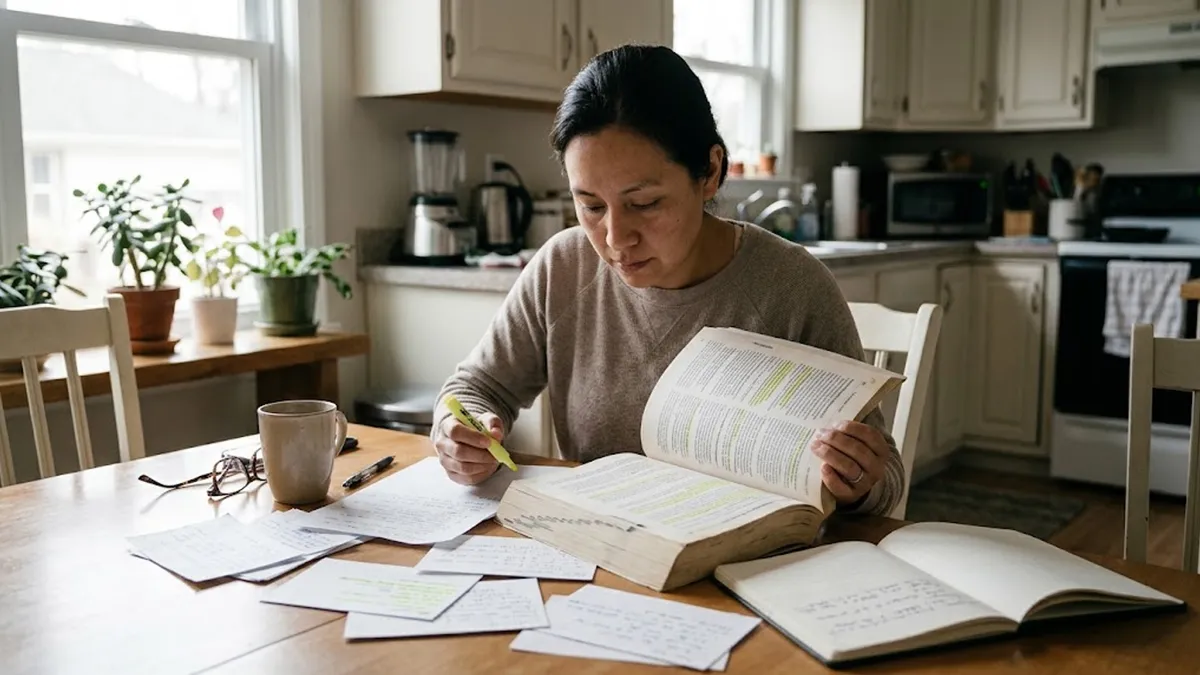
Honest answers protect you for life, which is why the rules on us citizenship denaturalization deserve one review card. The linked audio guide also gives you a listening option for commutes and chores. Listening to questions read in a clear voice mimics the officer's delivery and trains your ear. Then try answering before the answer is read. Mix listening days with card days so neither habit becomes stale.
Build a mock interview with a friend or family member. Hand them the stack and ask them to shuffle it, pull twenty cards, and read each question once. Count correct answers aloud. Aim for twelve or more correct, and notice whether you freeze on certain topics. After the session, put the missed cards in a separate pile and review them within an hour, while the memory of the mistake is still fresh.
Add the other parts of the interview to your mock session. The officer will review your N-400, ask you to confirm your answers, and test your English. Practice saying your address, employment history, and travel dates clearly. Bring documents that the notice requests, and be prepared to explain any trips abroad. Because you are under oath, accuracy matters more than speed, so rehearse what you will say if you do not understand a question.
Manage anxiety with preparation, not luck. Nerves often make the first question feel harder than it is. If you blank, take a breath and ask the officer politely to repeat or rephrase it; this is allowed and does not count against you. A simple phrase such as Could you repeat that, please? is worth rehearsing. Sleep well the night before, and arrive early, since a calm start improves recall more than last-minute cramming.
Track progress with numbers. Keep a log with the date, number of cards reviewed, and number answered correctly on the first try. When your first-try accuracy stays above 90 percent for three consecutive sessions, you are ready for full mock tests. If it plateaus below 80 percent, shrink your daily new-card limit and focus on difficult cards. Data replaces guesswork, and watching the number rise is motivating during slow weeks.
How Do You Use a Citizenship Test Questions PDF With Flash Cards?
Start with the official PDF, because it is the single source of truth. Download the 2025 list of 128 questions or the 2008 list of 100, depending on your filing date, and print it. Highlight questions you already know, underline the ones you miss, and turn only the missed ones into cards at first. This keeps your deck small and efficient instead of burying you in cards you will never need to review.
Set a realistic calendar. For the 128-question list, learning about six new cards per day takes roughly three weeks, leaving time for review before an interview. Add the last week as pure revision. If your interview date is short notice, group questions by topic and master one topic per day. Consistency beats intensity: thirty minutes daily beats a four-hour Sunday session, because memory strengthens with spaced repetition across multiple days.
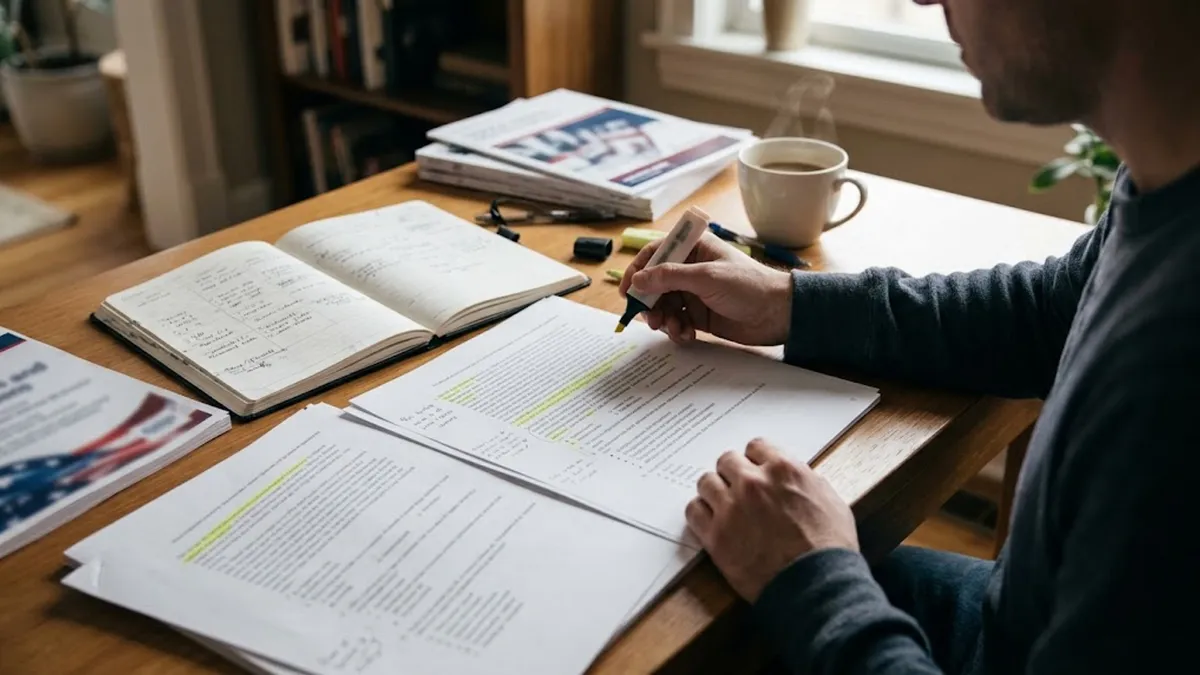
Know the format before test day. Many people ask whether the exam is multiple choice; it is not. For a full explanation of the format and scoring, read our guide on citizenship test questions. Understanding that the officer reads each question aloud, and that you answer in your own words, changes how you practice: your cards should prompt a spoken recall response rather than selecting from options.
Use mnemonics for lists. Turn the thirteen original colonies, the amendments, or the branches of government into short phrases or songs. Memory tricks work best when you create them yourself, so avoid memorizing someone else's rhyme without understanding it. Attach a small drawing on the card for visual learners, such as a flag with thirteen stripes. Wherever possible, connect facts to a story so the answer feels meaningful instead of arbitrary.
Link cards to current-events literacy. Questions about the president, Congress, and the Supreme Court make more sense when you follow real news. Even on disputed topics such as us supreme court birthright citizenship debates, the useful civics skill is knowing which institution decides what. The linked guide also shows how to practice the writing test using civics vocabulary from your cards.
On interview day, bring your appointment notice, green card, passport, and any other documents the notice requests. Review your deck one final time the evening before, but stop early enough to sleep. In the morning, run through only your ten weakest cards. Keep your answers brief and polite. If you are told you passed the civics and English portions, the officer will explain the next step, which is usually the oath ceremony.
After approval, use your cards one last time: the oath ceremony includes a pledge, and a new citizen benefits from knowing the rights that come with citizenship, such as voting. Consider keeping your deck for family members who are also preparing. Many communities share study decks through libraries and immigrant services. Preparing with the right tools, a steady schedule, and honest answers is the surest route from first card to the oath ceremony.
US Questions and Answers
US Citizenship Test 2026

Trump Administration Increases Requirements for US Citizenship Test: What Every Applicant Needs to Know

US Citizenship Writing Test: Complete Guide to the Naturalization Writing Component
Is the Us Citizenship Test Multiple Choice? Format, Questions and Passing Score
USCT Practice Test Video Answers
Us Citizenship Test Audiobook: Where to Find Free Audio and How to Study With It

US Constitution Exam Practice Test: Study Guide and Quiz
How this page was made: written with AI tools. Exam facts are checked against the official sources listed below. Not reviewed by a subject-matter expert. Editorial policy
Sources & references
Exam facts on this page (fees, format, dates, passing scores) are checked against these official sources; the date is our last check. Editorial policy
- uscis.gov — Test delivery, fees, exam format · verified Sep 2026