
Us Citizenship Test Audiobook: Where to Find Free Audio and How to Study With It
✅ Yes, a US citizenship test audiobook exists: use free official USCIS question lists and audio. Learn safe downloads and a 6-week study plan.
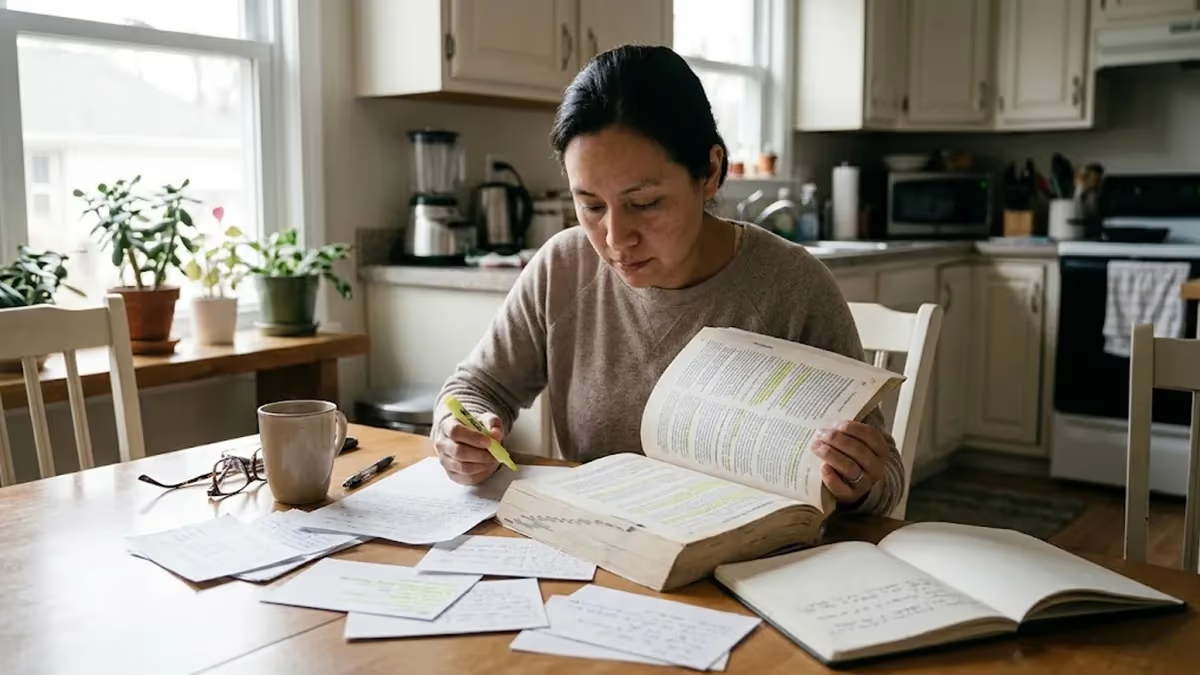
A US citizenship test audiobook is a recording of the civics questions and answers you study before your naturalization interview. USCIS publishes the official question lists as free PDFs and has offered free audio of them, and you can also record your own MP3 from the official list. No audiobook replaces the official questions.
Us Citizenship Test Audiobook: Key Facts (Updated October 2026)
| Fact | Details | Source |
|---|---|---|
| Which test version applies | N-400 filed on or after October 20, 2025: 2025 civics test. Filed earlier: 2008 civics test. | USCIS |
| 2025 civics test | 128-question bank, up to 20 asked orally. Pass with 12 correct. The officer stops at 12 correct or 9 incorrect. | USCIS |
| 2008 civics test | 100-question bank, 10 asked orally. Pass with 6 correct. | USCIS |
| Special 65/20 rule | 10 questions from a 20-question asterisked subset, 6 correct to pass, own language allowed. Applies to both versions. | USCIS |
| English tests | Read 1 of 3 sentences correctly, write 1 of 3 sentences correctly. Speaking is assessed during the interview. | USCIS |
| Fee | Form N-400: $760 paper, $710 online, $380 reduced. No separate test fee. Fee waiver request on Form I-912. | USCIS |
| Test changes | Check the official updates page before your interview date. | USCIS |
Most people searching for a US citizenship test audiobook want to learn the civics answers while commuting, cooking, or working, because listening fits busy schedules better than reading. Audio study works well for the oral civics portion of the interview. This guide explains what exists, which version of the test you face, and how to build a safe listening routine. For the full overview, see our complete us citizenship test hub.
The civics test is spoken. An officer reads each question aloud and you answer out loud, so the questions on us citizenship test reward ear training, which makes audio study more than a gimmick. Hearing a question such as what is the supreme law of the land, over and over, builds recognition of the officer's phrasing. Audio also helps applicants who read slowly in English, who work long shifts, or who learn best through repetition.
Before you download anything, confirm which test applies to you. USCIS uses the filing date of your Form N-400: applications filed on or after October 20, 2025 use the 2025 civics test, while earlier filings use the 2008 version. The 2025 bank has 128 questions and the officer asks up to 20, while the 2008 bank has 100 questions and the officer asks 10. Audio recorded for the wrong list can teach you answers that never come up in your interview.
Official materials come from USCIS, and they are free. The agency posts the question-and-answer lists, flash cards, and study pages on uscis.gov, and it has published audio versions of the civics questions on its study pages. Third-party audiobooks and apps vary widely in accuracy. Some still teach retired answers, and some charge for recordings of public government text. Treat any paid audiobook as optional, and compare it against the current official list before trusting a single answer.
Cost is a common worry. Audio study itself should cost nothing, because USCIS charges no separate fee for the test; it is included in the Form N-400 filing fee. As of the latest verified figures, that fee is $760 on paper, $710 online, and $380 for the reduced fee, with fee waivers requested on Form I-912. Reduced-fee and waiver requests are paper-only. Spending money on a recording is unnecessary when you can record the official questions yourself in minutes.
Below you will find where to look for audio downloads, how to match audio to your test version, a pros-and-cons comparison of listening against reading, a ten-step checklist, safety advice for downloads, language options such as Spanish and Vietnamese, and a final preparation plan. Throughout, we link to free practice quizzes so you can check what you hear. This site is independent and not affiliated with USCIS, and rules can change, so verify details on the official updates page before your interview.
How Many Citizenship Test Questions Will I Hear?
Where Can I Find a US Citizenship Test Audio Download?
Start at uscis.gov. The study-for-the-test page lists the official question lists, flash cards, and any audio files currently offered. Everything there is free, and the files match the test version in force, which makes it the safest first stop for any citizenship audio.
Open the official 128-question or 100-question PDF and use the read-aloud tool on your phone, browser, or PDF viewer. The voice reads every question and answer exactly as written, and a fresh download always reflects the newest edition of the list.
Use a free voice-recorder app to read each question, pause five seconds, then read the answer. Your own voice improves memory, you control which version you cover, and the finished file plays on any phone, tablet, laptop, or car stereo.
Public libraries, adult-education programs, community colleges, and immigrant-services nonprofits often lend citizenship audio CDs. Ask which test version the disc follows, because older discs may cover the 2008 list and not the newer 2025 question bank.
Is There a Free US Citizenship Test Audio CD?
Yes, a free audio CD is possible, but it usually comes from a local source rather than a national mailing. Public libraries, adult-education programs, community colleges, and immigrant-services nonprofits often lend or give out citizenship study discs alongside workbooks. USCIS itself focuses on digital resources through its Citizenship Resource Center. If you want a disc for a car stereo, the easiest route is to download an audio file and burn a CD yourself, which takes about ten minutes.
Check the date and edition before you trust any disc. A CD produced before October 2025 almost certainly follows the 100-question 2008 list, and several questions and answers differ from the newer 128-question list. If your Form N-400 was filed on or after October 20, 2025, an older disc could teach you answers the officer will never expect. Ask the librarian or teacher which list the recording follows, and read the cover or booklet carefully.
Audio CDs and MP3 files each have strengths. A disc plays on older car stereos and requires no phone data, which helps if your connection is limited. An MP3 file can be copied to a phone, tablet, or flash drive, skipped through by question number, and slowed down or repeated with a free player app. Many applicants use both: a disc in the car and an MP3 on the phone, so every commute becomes a short study session.
While you wait for an interview, keep your contact details current. Federal law requires most noncitizens to report a move within 10 days, and the process for us citizenship and immigration services change of address is handled with Form AR-11, either online or by mail, plus an update to your pending case. This matters for audio learners too: a missed interview notice sent to an old address can reset your study timeline and waste weeks of careful listening.
Free does not mean unreliable. Library and nonprofit programs frequently build their recordings directly from the official USCIS list and update them when the list changes. Still, ask whether the recording reads the answers exactly as the official document words them. The officer accepts any correct answer from the list, so one phrasing is enough, yet hearing both a question and its accepted answers helps you recognize variations, such as when a question asks for one of several valid responses.
News about birthright citizenship us policy and other changes can make test preparation feel uncertain. Remember that your interview is graded only on the official civics list and English tests in force on your interview date. Our guide to recent requirement changes explains what has actually changed for applicants, and what remains rumor, so you can focus your listening time on questions that will genuinely be asked by the officer.
To summarize this section: free audio CDs exist mainly through local programs, digital files are the dependable option, and every recording must match your test version. Start by listing the questions you miss, then replay those first. A short daily habit beats a weekend marathon. Fifteen minutes of focused listening for six weeks gives you roughly ten hours of exposure, which is enough for most applicants to recognize the whole question bank without feeling overloaded.
How Do I Use US Citizenship Exam Questions Audio for My Test Version?
If you filed Form N-400 on or after October 20, 2025, you take the 2025 civics test. The bank contains 128 questions, and the officer asks up to 20 of them orally. You pass by answering 12 correctly, and the officer can stop early once you reach 12 correct answers or miss 9. Audio for this version should cover all 128 questions, so check the track count or running time first.
Plan your listening in blocks. Split the 128 questions into eight blocks of 16, loop each block for two or three days, then mix them together. Because the officer may stop after 12 correct answers, nothing in the bank can be skipped. Record yourself saying every answer after the recording pauses, and replay your own voice to catch weak pronunciation that could confuse the officer on interview day.
Is Audio Study Better Than Reading Citizenship Test Questions in a PDF?
- +Matches the oral format of the real interview
- +Turns commutes and chores into study time
- +Helps slow English readers learn the questions
- +Repetition builds fast recognition of officer phrasing
- +Free when made from the official USCIS list
- +Works on any phone, tablet, or car stereo
- −Does not teach English reading or writing alone
- −Outdated recordings can teach retired answers
- −Passive listening fades quickly without speaking
- −Hard to see spelling of words for the writing test
- −Some downloads come from unsafe or paid sites
- −Hard to skim or search for a single question
How Do I Study Citizenship Test Questions With Audio?
- ✓Confirm your test version using your Form N-400 filing date.
- ✓Download the official question list from the USCIS website.
- ✓Record or find audio that covers every question in your list.
- ✓Listen once through the whole bank without answering.
- ✓Pause after each question and answer aloud before the reveal.
- ✓Write down every question you miss and replay it next day.
- ✓Practice the English reading and writing sentences on paper.
- ✓Ask a friend to read questions in a different voice.
- ✓Run a full mock interview during your final week.
- ✓Check the USCIS test-updates page before your appointment.
Your N-400 filing date decides the version
Filed on or after October 20, 2025? You take the 2025 civics test with a 128-question bank and need 12 correct answers. Filed earlier? You take the 2008 test with 100 questions and need 6 correct. Match your audio to that list.
How Do I Download US Citizenship Test Audio Safely?
Download only from sources you can verify. The safest source is uscis.gov, where study materials, question lists, and test-update notices live. Look for the .gov ending in the address bar before clicking any download button. If a site you found through search offers a citizenship test audio download but asks for your email, phone number, or a card number first, close the tab. Official study materials are free, and no legitimate source needs payment details to play a recording.
Scams around immigration are common, and citizenship applicants are frequent targets. Be wary of websites that imitate government pages, charge for forms that are free, or promise a guaranteed pass. A real audio file is a simple MP3 or similar audio format, not an installer. Never open an .exe file, an app file from outside an official app store, or a zip file that asks you to enable macros. When in doubt, stream the audio in your browser instead of downloading it.
Text-to-speech is a reliable fallback. Open the official PDF of the question list, which is free on the USCIS website, and use the read-aloud feature built into your phone, browser, or PDF viewer. The voice will not sound like an officer, but it will read every question and answer exactly as written, and it updates automatically whenever you download the newest edition. Slow the speed to about 80 percent at first, then raise it as your listening improves.
You can also make your own recording, which is often the most effective option. Using a free voice-recorder app, read each question aloud, leave a five-second pause, then read the answer. Your own voice, in your own accent, carries a memory advantage, and you control exactly which version you cover. Save the file with a clear name such as 2025 questions 1 to 20, and store a backup in cloud storage so a phone upgrade does not erase weeks of work.
Audio trains your listening and speaking, but the interview also tests reading and writing. You must read one of three sentences aloud and write one of three sentences the officer dictates. Our guide to the us citizenship writing test lists the vocabulary words USCIS uses and shows how to practice dictation. A useful trick is to play your civics audio, pause on a key word such as Congress or Washington, and spell it on paper.
Handle the technical side before you travel or commute. Download tracks while on Wi-Fi so your data plan is not used, and test them in airplane mode. Keep files under a single playlist named for your test version. If you use a car stereo, copy the files to a USB drive formatted for it. Charge devices and carry earbuds, because the best listening time is often waiting rooms, buses, and breaks, where a short track fits.
Finally, protect your privacy. Your A-number, receipt number, and date of birth belong on official USCIS forms and nowhere else, so never type them into a study site or share them in a chat group. A good audio source needs none of that data. If a site requires an account, use a separate email address, decline marketing permissions, and delete the account after you pass. Safe study habits keep you focused on the real goal: becoming a citizen.
USCIS applies the 2025 civics test to N-400 filings on or after October 20, 2025, and the 2008 test to earlier filings. Procedures can change, so review the official test-updates page on uscis.gov before your interview.
Is There a US Citizenship Test Spanish Audio or Vietnamese Audio?
Yes, some bilingual audio exists, but check its source. USCIS has offered study resources in multiple languages, and nonprofits and teachers produce Spanish, Vietnamese, Chinese, and other recordings that translate each question. Availability changes, so open the official study page rather than trusting a download link in a video description. Translated audio is best used to understand meaning. The interview itself is conducted in English for most applicants, so you must still recognize the English wording and respond in English.
A smart method for Spanish or Vietnamese speakers is the sandwich technique. Listen to the English question, listen to the translation to confirm the meaning, and then listen to the English answer again. Finish by saying the English answer aloud. This keeps comprehension strong without leaning on translation. Applicants who skip the final English repetition often understand the concept in their first language but freeze when the officer speaks plain English at normal speed.
The exceptions are narrow. The special 65/20 rule lets eligible applicants answer civics questions in their own language with an interpreter, and a medical disability exception on Form N-648 can waive or modify requirements for those who qualify. Neither exception is automatic, and you should not assume one applies. If you think you qualify, read the instructions on the official N-400 page and consider speaking with an accredited representative before your interview date.
Applicants often ask whether the test is multiple choice. It is not: the officer asks open questions aloud and you answer in your own words. Our explainer on citizenship test questions covers the format, the question types, and the passing score in detail. This is another reason audio helps, since you practice producing answers from memory instead of recognizing options printed on a page in front of you.
Many applicants also wonder about US dual citizenship. US law does not require you to give up another nationality when you naturalize, and the US does allow dual citizenship in practice, though the oath includes a pledge to renounce allegiance to foreign states. Your other country's law is what matters most: some countries automatically end citizenship when you naturalize elsewhere. Research your home country's rules before the ceremony, because audio study cannot answer that question for you.
Because naturalization is permanent in nearly every case, honest answers matter. us citizenship denaturalization is rare, but the government can start proceedings when citizenship was obtained through fraud, concealment, or willful misrepresentation. That is why you should answer every Form N-400 question truthfully, and why it helps to review our video answers resource. Accurate, honest preparation protects the citizenship you are working so hard to earn.
Use bilingual audio as a bridge, not a crutch. By the second week, move to English-only tracks. By week four, test yourself with the official questions read in random order. If a topic stays hard, such as the branches of government or the amendments, pair audio with visuals like charts and flash cards. Listening builds familiarity, and speaking builds confidence. Combined, they prepare you for the officer's real voice, accent, and pace on interview day.
What Is the Best Way to Prepare With a US Citizenship Test Audiobook?
The best plan is six weeks of short daily sessions. Spend week one confirming your version and listening through the full bank once. In weeks two through four, work in blocks and speak every answer. In week five, shuffle questions and time yourself. In week six, simulate the interview with a friend reading random questions. This schedule totals about 15 hours, enough for most motivated applicants, and leaves a buffer if your interview is scheduled sooner than expected.
Make sessions active. Passive listening feels productive but fades quickly. After each question, pause and answer aloud before the recording gives the answer. Mark questions you miss on a paper list and replay only those the next day. Spaced repetition, where tough items return after one day, three days, and a week, improves recall far better than replaying everything. Keep each session under twenty minutes to stay alert, and finish with the three questions you find hardest.
Learn the meaning behind answers, not just the sounds. Questions about the Constitution, rights, and the three branches become easier when you understand why each exists. Headlines about us supreme court birthright citizenship debates show how the Fourteenth Amendment and federal courts shape daily life. You will not be asked about breaking news, but you may be asked what the highest court does, so understanding its role helps you answer confidently.
Practice with real test conditions in mind. The officer speaks at conversational speed, may repeat a question once, and may rephrase it. Rehearse by asking family members to read questions in their own voices, since a different accent can sound unfamiliar after weeks with one recording. Practice answering when you are slightly nervous, such as right after climbing stairs. Small stressors teach your memory to work when your heart is pounding on interview day.
Do not neglect the other parts of the interview. Besides civics, the officer reviews your Form N-400 answers, tests your English reading and writing, and listens to how you speak. Reading and writing each require one correct sentence out of three attempts. Speaking is assessed during the interview itself, so every answer you give is part of the evaluation. Audio practice that includes full sentences helps with all of these, not only the civics section.
On interview day, arrive early with your appointment notice, your permanent resident card, and any documents the notice requests. Listen to the whole question before answering, and if you do not understand, politely ask the officer to repeat it. Give a short, correct answer, then stop. Remember that you only need 12 correct answers on the 2025 test or 6 on the 2008 test, so one stumble does not end your chances.
If you do not pass the civics or English portion, you are normally given a second chance. USCIS generally reschedules a re-examination within 60 to 90 days, testing you again only on the portion you failed. Use the gap to replay missed questions. Verify the latest retake rules on the official USCIS test-updates page, because procedures can change. Treat the audiobook as a lasting tool: once you pass, share it with a friend who is next in line.
US Questions and Answers
US Citizenship Test 2026

Trump Administration Increases Requirements for US Citizenship Test: What Every Applicant Needs to Know

US Citizenship Writing Test: Complete Guide to the Naturalization Writing Component
Is the Us Citizenship Test Multiple Choice? Format, Questions and Passing Score
How to Pass the US Exam in 2026 — Complete Study Guide
USCT Practice Test Video Answers
Sources & references
Prepared by the Practice Test Geeks editorial team using AI-assisted drafting; exam facts are checked against the official sources below. Editorial policy
- uscis.gov — Test delivery, fees, exam format · verified Sep 2026