
World Series Umpires Tonight: Who They Are, How They're Selected, and What It Takes to Reach the Fall Classic
World Series umpires tonight — learn who crews the Fall Classic, how MLB selects them, and what it takes to reach baseball's biggest stage. 🏆

When you tune in to watch the Fall Classic, the question of who are the world series umpires tonight is more than casual curiosity — it reflects decades of professional development, rigorous evaluation, and MLB's most competitive selection process for any on-field official. The crew you see positioned around the diamond represents the absolute pinnacle of professional umpiring, men who have spent an average of 15 to 20 years working their way through the minor leagues before ever setting foot on a postseason field.
Major League Baseball assigns a six-person umpire crew to every World Series game, expanding from the standard four-man regular-season configuration. This expansion adds two additional umpires who take positions down each foul line, at the left-field and right-field corners, to assist with boundary calls that carry enormous weight when a championship is on the line. Every ball that hooks near the foul pole, every disputed home run, becomes the jurisdiction of these additional officials whose presence is exclusive to the postseason.
The selection of World Series umpires is handled entirely by MLB's Umpire Operations department, which maintains detailed performance scorecards on all active major-league umpires throughout the 162-game regular season. These evaluations are conducted by traveling supervisors who attend games specifically to grade umpires on accuracy, mechanics, positioning, crew communication, and game management. No umpire reaches the World Series by accident or by seniority alone — performance data drives the process.
Understanding who calls the games matters to fans, coaches, and players alike because different umpires have measurably different strike zones, different tendencies on check swings, and different styles when managing the pace of play or defusing on-field confrontations. Advanced analytics platforms now publish zone profiles for every MLB umpire, and savvy coaching staffs review those profiles before each series to understand which borderline pitches are most likely to be called strikes for their staff.
For aspiring umpires, the World Series crew list is a roadmap and an inspiration. Every name on that roster started somewhere far humbler — a high school summer league, a local recreational park, or a Single-A affiliate in a small town — and built their career brick by brick. Studying the backgrounds of World Series umpires offers a realistic picture of the timeline, the sacrifices, and the skill development required to ascend to the highest level of the profession.
This article breaks down everything you need to know about World Series umpire selection, crew composition, historical context, and the career path that leads there. Whether you are a fan wanting to understand the officials on your screen tonight, a coach building a pre-series scouting report, or an aspiring umpire charting your own future, this comprehensive guide delivers the full picture of what it means to work the Fall Classic.
The stakes of the World Series demand the very best officiating the sport can offer, and MLB's selection system is designed precisely to ensure that the crew working each game has demonstrated, through hundreds of evaluated performances, that they are capable of handling the pressure, the scrutiny, and the complexity that arrive with every October pitch.
World Series Umpiring by the Numbers
How MLB Selects the World Series Umpire Crew
MLB supervisors attend regular-season games specifically to evaluate and grade umpires across accuracy, mechanics, positioning, and professionalism. These grades accumulate across all 162 games and form the primary dataset used when postseason assignments are made.
Umpires must first earn Wild Card and Division Series assignments before becoming eligible for the League Championship Series and ultimately the World Series. Each tier requires a demonstrated step up in performance, and no official skips tiers based on seniority alone.
The crew chief selected for the World Series typically has prior Fall Classic experience and exceptional leadership metrics. The chief sets positioning, communicates with managers, and manages all instant-replay reviews — their selection carries outsized importance for crew cohesion.
Since 2015, MLB has factored umpires' replay review accuracy into postseason selection. Officials who demonstrate the clearest judgment on whether to trigger a replay challenge — and who interpret replay results most accurately — gain preference for high-stakes assignments.
The collective bargaining agreement between MLB and the World Umpires Association includes specific provisions governing postseason compensation and assignment procedures. Performance-based selection is contractually mandated, preventing pure seniority from determining who works the World Series.
The six-person World Series crew is not simply a regular four-man unit with two extras tacked on — it is a carefully assembled team where each position carries distinct responsibilities and is filled by an umpire whose particular strengths match the demands of that spot. The home plate umpire carries the heaviest burden of all: every pitch, every checked swing, every play at the plate, and every managerial argument funnels through this single official over the course of a nine-inning championship game that may last three to four hours under intense national television scrutiny.
The first base umpire handles the majority of bang-bang plays at the bag, balk calls originating from the right side of the rubber, and fair-foul determinations down the right-field line when no additional umpire is positioned there during regular-season play. In the World Series configuration, a dedicated right-field line umpire takes over boundary responsibilities, freeing the first base umpire to focus entirely on base decisions and right-side fair-foul calls on ground balls. This division of labor reduces the number of judgment calls any single umpire must make simultaneously.
The second base umpire covers steal plays, tag plays in the middle of the diamond, and assists with pulled-foot calls at first base when the angle is better from their position. During the World Series, the second base umpire also plays a critical communication role, relaying information between the crew chief and the other members of the crew, particularly on plays that develop across multiple bases simultaneously — a double-play with a runner on third, for instance, can involve decisions at first, second, and home in a span of two seconds.
The third base umpire handles tag plays at the hot corner, fair-foul calls down the left-field line under standard configurations, and trap-versus-catch decisions on balls hit into the left-field corner. The World Series left-field line umpire absorbs the boundary responsibilities, giving the third base umpire cleaner coverage of the base itself. Historical data shows that third base produces a disproportionate share of replay-reviewed calls, making this position one of the most scrutinized in postseason officiating.
The two foul-line umpires — unique to the postseason — stand near the outfield corners and are responsible for one of the most consequential calls in baseball: fair or foul on potential home runs. With modern ballpark designs featuring angled walls, irregular foul poles, and fan-interference possibilities, these umpires must track the ball's trajectory from 250-plus feet away and render instant judgment on plays that can swing a championship. Their positioning during routine outfield plays is also carefully choreographed to provide the best possible angle on trapped-ball calls.
Crew communication is rehearsed extensively in the days leading up to the World Series. MLB brings the assigned crew together for meetings that cover positioning protocols, relay responsibilities, replay review procedures, and specific ground rules for the host ballpark. Every stadium has its own quirks — a catwalk in some parks, an irregular outfield wall in others, specific rules about fan interference in certain sections — and the crew must know these rules precisely before the first pitch.
The crew chief bears ultimate authority over all decisions but relies on the knowledge that every member of the crew has worked together at some point during the regular season or postseason. MLB attempts to assign umpires who have prior working relationships, because trust and communication between officials is essential when a split-second play requires two umpires to coordinate their ruling in real time, with 50,000 fans in the stadium and millions more watching on television.
Evaluating World Series Umpire Performance
MLB's Statcast and Hawk-Eye systems track every pitch with sub-centimeter precision, allowing evaluators to compare each home plate umpire's called strikes and balls against the rulebook strike zone. Top-tier umpires selected for the World Series typically post accuracy rates above 94 percent on borderline pitches, a threshold that separates elite officials from the broader field of 76 active MLB umpires competing for postseason assignments throughout the regular season.
Strike zone consistency — calling the same pitch the same way in the first inning as in the ninth — is weighted heavily in postseason evaluation. An umpire who expands the zone under pressure, or who applies different standards to left-handed and right-handed batters, will see those discrepancies appear clearly in the pitch-tracking data and will face disadvantage in postseason selection rankings regardless of their overall accuracy number.

Working the World Series: Rewards and Challenges for Umpires
- +Highest compensation of any regular umpiring assignment in professional baseball
- +National and international television visibility that validates a career-long investment
- +Opportunity to officiate the most historically significant games in the sport
- +Enhanced postseason bonus pay negotiated through the World Umpires Association
- +Professional prestige that opens doors to umpire supervisor and instructor roles
- +Permanent place in the official MLB historical record as a World Series official
- −Every call is replayed and analyzed by millions of viewers in real time
- −Statcast data makes any missed call publicly quantifiable within seconds after the game
- −Immense physical and mental fatigue from extended postseason scheduling
- −Potential for a single high-profile mistake to overshadow an entire career of strong work
- −Limited crew control over schedule, travel, and stadium logistics during the series
- −Intense scrutiny from social media, talk radio, and broadcast analysis that follows officials home
Pros and Cons at a Glance
| Pros | Cons |
|---|---|
| Highest compensation of any regular umpiring assignment in professional baseball | Every call is replayed and analyzed by millions of viewers in real time |
| National and international television visibility that validates a career-long investment | Statcast data makes any missed call publicly quantifiable within seconds after the game |
| Opportunity to officiate the most historically significant games in the sport | Immense physical and mental fatigue from extended postseason scheduling |
| Enhanced postseason bonus pay negotiated through the World Umpires Association | Potential for a single high-profile mistake to overshadow an entire career of strong work |
| Professional prestige that opens doors to umpire supervisor and instructor roles | Limited crew control over schedule, travel, and stadium logistics during the series |
| Permanent place in the official MLB historical record as a World Series official | Intense scrutiny from social media, talk radio, and broadcast analysis that follows officials home |
World Series Umpire Preparation Checklist
- ✓Review the specific ground rules for the host stadium before the first game of the series
- ✓Study the batting tendencies and pitch-framing habits of both teams' catchers
- ✓Rehearse crew communication signals and relay responsibilities with all five fellow officials
- ✓Confirm replay review protocols and Replay Operations Center contact procedures
- ✓Attend the pre-series rules meeting conducted by MLB's Umpire Operations department
- ✓Conduct a physical walkthrough of the field to identify wall irregularities and camera blind spots
- ✓Review any relevant rule interpretations or point-of-emphasis memos issued since the All-Star break
- ✓Coordinate with the home plate umpire on check-swing appeal procedures and timing signals
- ✓Verify uniform compliance and equipment specifications meet MLB postseason standards
- ✓Study each manager's tendencies for replay challenges, arguments, and pace-of-play behavior
Seniority Alone Will Not Get You to the World Series
MLB's postseason selection system is explicitly performance-based, not seniority-based. An umpire with 25 years of service but declining accuracy scores can be passed over in favor of a ten-year veteran who grades exceptionally well on Statcast pitch-tracking data. Building a World Series resume means maintaining elite accuracy rates every season, not simply waiting your turn in line.
The history of World Series umpiring is filled with moments that defined careers, sparked rule changes, and entered the permanent lore of baseball. Some of the most consequential calls in Fall Classic history have come from officials whose names are now as closely associated with those plays as the players who made them. Understanding this history is essential context for anyone studying the profession, because it illustrates both the weight of the assignment and the ways in which umpiring has evolved in response to technological and institutional pressure.
One of the most celebrated World Series umpiring performances in modern history came from a crew that worked an error-free seven-game series in a year when instant replay was unavailable, yet received almost no criticism from either team's coaching staff — a testament to the consistency and communication the crew demonstrated throughout the series. Industry observers cited that crew's pre-game preparation meetings and systematic positioning reviews as the foundation for their collective success across seven high-pressure games.
The introduction of instant replay review in 2008, expanded significantly in 2014, fundamentally changed how World Series umpiring is evaluated. Prior to replay, a missed call in the World Series could become a permanent controversy with no resolution. Now, most reviewable plays are corrected within 90 to 120 seconds, and the umpire who made the original call is not penalized in subsequent evaluations if they initiated or cooperated fully with the replay process in good faith. This systemic shift has reduced the reputational risk of individual mistakes while raising the bar on overall crew accuracy expectations.
Historically, the World Series was umpired by a pool system that rotated through all qualified officials on a near-automatic basis. Prior to the current performance-based model, seniority played a much larger role in determining who worked the Fall Classic. The shift to merit-based selection beginning in earnest in the 1990s and formalized through collective bargaining in the 2000s created a more competitive environment that ultimately raised the quality of officiating across all levels of the postseason.
Notable milestone performances in World Series umpiring history include the first crew to work a seven-game series without a single replay overturn, crews that managed historically long games without a single ejection despite intense competitive pressure, and officials who worked multiple World Series across different decades — a feat that requires sustained excellence over an extended career in an environment where the evaluation standards grow more rigorous every year as tracking technology improves.
The expansion of the World Series umpiring crew from four to six officials in 2009 was itself a historical milestone, acknowledging that the complexity and importance of Fall Classic games warranted additional coverage. This change was welcomed by the umpires association and accepted by MLB management as a recognition that boundary calls in particular demanded dedicated coverage that could not be adequately provided by a four-man crew managing an 80,000-square-foot playing surface under postseason pressure.
International expansion of baseball awareness has made the names and performances of World Series umpires more widely known than at any prior point in the sport's history. Broadcasts in dozens of languages, real-time Statcast accuracy overlays visible to television audiences worldwide, and comprehensive social media analysis mean that a single World Series call is evaluated by more observers — armed with more sophisticated tools — than any call in the sport's prior 150-year history. Today's World Series umpires operate in the most transparent, data-rich officiating environment the game has ever seen.

MLB typically announces the World Series umpire crew several days before the series begins, giving fans, analysts, and coaching staffs time to review each official's statistical profile and tendencies. Following the official announcement, platforms like Baseball Savant publish each umpire's zone profile, overturn rate, and ejection history — all publicly accessible information that shapes pre-series preparation for both competing teams.
The career path to working the World Series as an umpire is one of the longest, most demanding professional journeys in American sports. Unlike players who may reach the major leagues in three to five years after being drafted, umpires typically spend eight to twelve years in the minor league system before receiving their first MLB call-up, and then spend additional years building their major-league resume before becoming eligible for postseason consideration. The total investment from first professional assignment to World Series debut commonly spans 15 to 25 years.
The formal starting point for most professional umpires is completion of an accredited umpire school. MLB sanctions two primary schools — the Minor League Baseball Umpire Training Academy and the Harry Wendelstedt Umpire School — where candidates spend five to six weeks learning the fundamentals of positioning, mechanics, rulebook application, and game management. Graduation from one of these programs does not guarantee a professional assignment, but the top graduates receive invitations to evaluation camps where MLB selectors identify candidates for minor league placement.
Minor league assignments begin at the Rookie or Low-A level, where umpires call games for extremely low compensation — often below $2,000 per month during the season, with no income in the offseason. Many aspiring professionals work second jobs, live with host families, and travel in shared vehicles across circuits covering multiple states. This financial reality filters out candidates who are not genuinely committed to the profession, and the attrition rate is extremely high: only a small fraction of those who begin at Rookie ball ever reach the major leagues.
Advancement through the minor league system is annual and based entirely on supervisor evaluations. Umpires who grade well at Low-A are promoted to High-A, then Double-A, then Triple-A — each level bringing higher-quality players, more complex game situations, faster play, and more intensive supervision. Time spent at Triple-A varies widely: some umpires spend two or three years there before receiving their MLB call-up, while others spend five or more years waiting for an open roster spot among the 76 active major-league positions.
Once a umpire reaches the major leagues, postseason eligibility begins accruing only after they have demonstrated consistent performance over multiple seasons. New MLB umpires are not eligible for postseason assignments in their first year, and Wild Card games are typically the entry point for officials who have earned postseason consideration for the first time. Moving from Wild Card assignments to Division Series, then League Championship Series, and finally the World Series takes additional years of sustained elite performance.
Mentorship plays a significant role throughout this journey. Experienced MLB umpires, crew chiefs, and retired officials who transition into supervisor roles provide guidance to younger officials on managing the psychological pressure of high-stakes games, developing consistent pre-game routines, and building the professional relationships with players and coaches that make game management easier. The umpiring community is smaller and more interconnected than most people realize, and reputation within that community travels quickly both up and down the ranks.
For umpires who aspire to the World Series, the practical recommendation is to treat every game — including a Tuesday night August game between two last-place teams — as a World Series audition. Supervisors observe regularly scheduled games throughout the season, and a poor performance on what seems like an inconsequential night can set back a postseason candidacy by a year or more. The umpires who reach the Fall Classic are those who maintain their professional standards without exception, game after game, year after year, regardless of the circumstances or the audience in the stands.
Practical preparation for anyone pursuing a career that leads toward the World Series level must begin with a deep investment in rulebook mastery. The Official Baseball Rules published by MLB is the foundational document, and aspiring umpires should be able to recite and apply every rule that governs situations they will encounter behind the plate, on the bases, and in the outfield. Special emphasis should be placed on interference and obstruction rules, balk definitions, the infield fly rule, and the myriad special-circumstance rules that govern balls that become lodged in equipment, leave the field of play, or involve fan interference.
Beyond rulebook knowledge, developing a consistent pre-pitch routine is one of the most valuable habits a young umpire can build. Elite professionals follow the same physical and mental checklist before every pitch: confirm the count, note the number of outs, identify where baserunners are and which bases they can advance to, recall any live-ball situations in progress, and position the body to track the pitch optimally. This routine becomes automatic over thousands of repetitions and provides a reliable mental reset that prevents officials from losing track of game state during fast-developing multi-runner situations.
Physical conditioning is a non-negotiable component of professional umpire development. A home plate umpire in a World Series game may be in a crouch stance for 300 or more pitches over four hours, moving laterally to track pitches in the dirt, sprinting to get the best angle on plays at the plate, and standing for extended periods during pitching changes and replay reviews.
Cardiovascular fitness, core strength, and leg endurance directly affect an umpire's ability to maintain proper positioning in the ninth inning of a tight game when fatigue is highest and the most important call of the night may be imminent.
Communication skills are as important as any physical or technical ability. Umpires who can deliver calls with clarity and appropriate authority, explain their rulings concisely when questioned by managers, and de-escalate heated arguments through measured language and calm body language are consistently rated higher by supervisors than technically accurate officials who handle confrontation poorly. Practicing communication through role-playing exercises, video review of past arguments, and observation of experienced officials managing difficult situations is an investment that pays dividends throughout a career.
Video study is now an essential tool at every level of the profession. Young umpires should regularly review footage of their own games — seeking feedback on positioning angles, signal mechanics, timing of calls, and body language — as well as studying game film of experienced MLB officials to absorb the mechanics and habits of the best in the business. Many umpire development programs now provide video review as a standard component of evaluation and coaching, and officials who engage most actively with this feedback tend to develop the fastest.
Networking within the umpiring community accelerates career development in ways that isolated self-study cannot replicate. Attending umpire clinics, joining local and regional umpire associations, seeking mentorship from officials who have worked at higher levels, and participating in educational forums all build relationships that generate evaluation opportunities, create access to advanced training, and provide the kind of experiential knowledge that cannot be found in any rulebook or training manual.
Finally, managing the psychological dimension of umpiring is a skill that separates career professionals from those who stall at intermediate levels. Every umpire misses calls. Every official has games where nothing seems to go right, where a manager argues every close play, where fatigue compounds into frustration. The umpires who reach the World Series are not those who never struggle — they are those who developed the mental resilience to reset after a difficult play, finish the game with the same professional standard they started with, and return the next day with their confidence intact and their preparation complete.
Umpire Questions and Answers
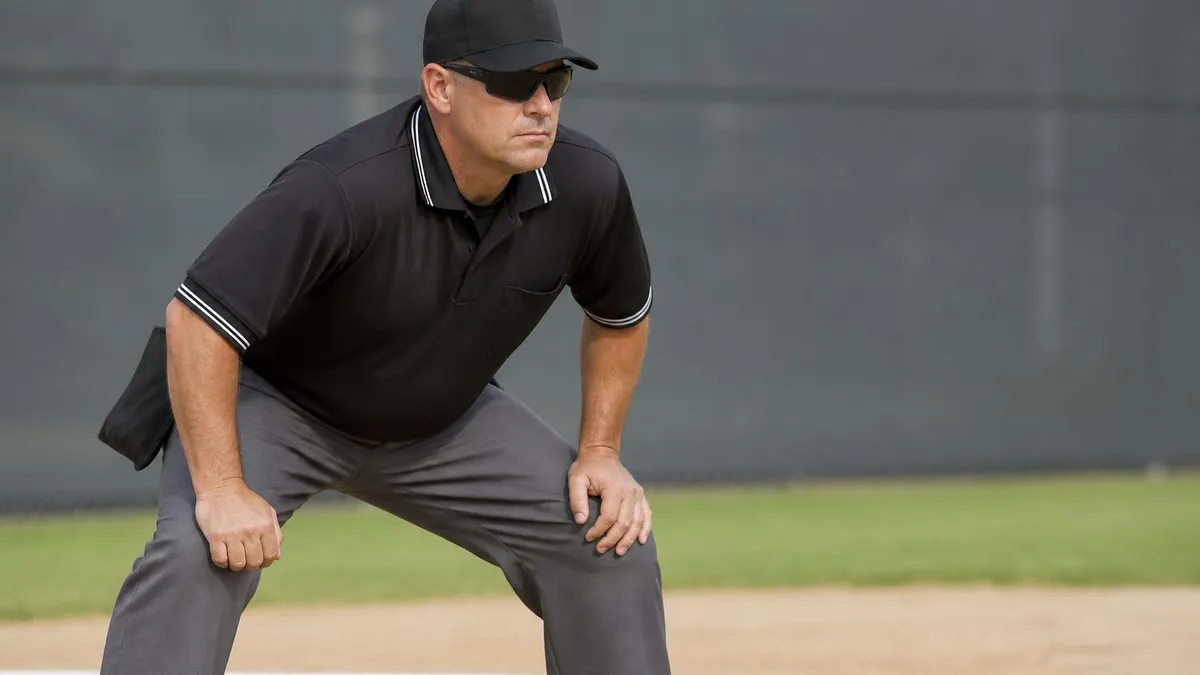
Umpire Signals: The Complete Visual Guide to Every Call Behind the Plate and on the Bases

Umpire Positioning: The Complete Guide to Field Coverage, Mechanics, and Crew Coordination
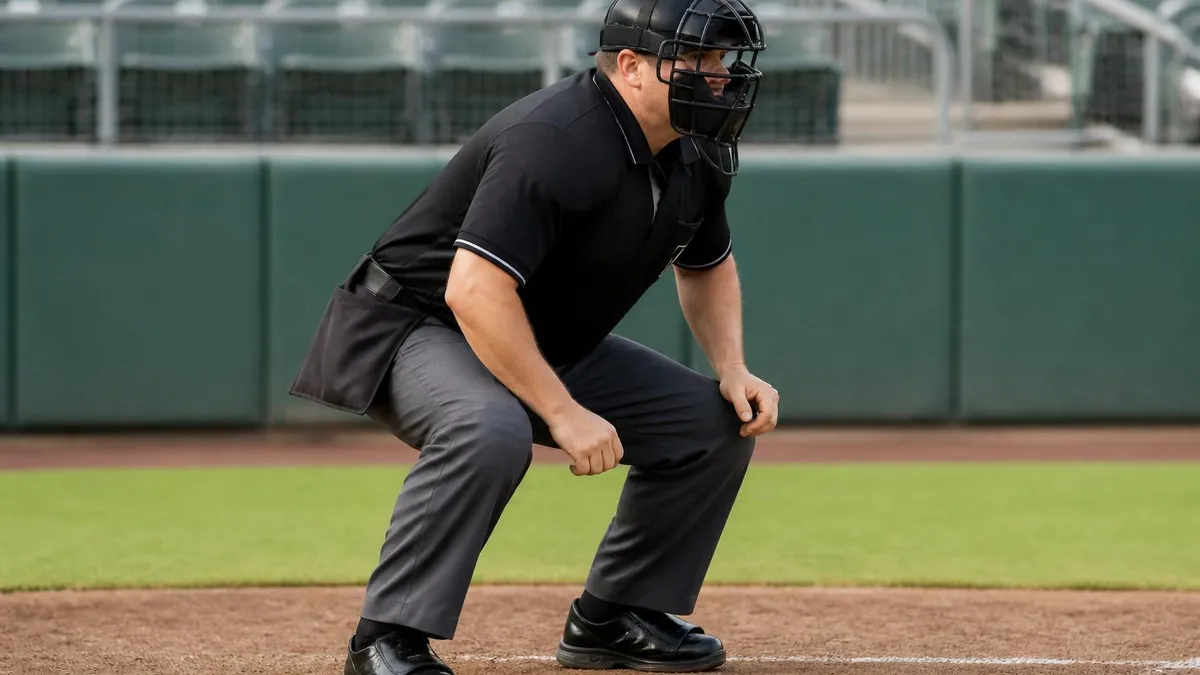
Umpire News: Profession, Career, and Industry Updates

Umpire Jobs: A Complete Career Overview, Duties, and Path to the Field

Umpire in Arkansas: How to Get Certified, Find Games, and Build Your Career
About the Author

Educational Psychologist & Academic Test Preparation Expert
Columbia University Teachers CollegeDr. Lisa Patel holds a Doctorate in Education from Columbia University Teachers College and has spent 17 years researching standardized test design and academic assessment. She has developed preparation programs for SAT, ACT, GRE, LSAT, UCAT, and numerous professional licensing exams, helping students of all backgrounds achieve their target scores.