
How to Get a Forklift Licence in Australia: Complete TLILIC0003 Study Guide
Learn how to get a forklift licence in Australia with our complete TLILIC0003 study guide. Steps, costs, tips & practice tests. ✅

If you want to get a forklift licence in Australia, you'll need to complete the nationally recognised unit of competency known as TLILIC0003 — Licence to Operate a Forklift Truck. This certification is the legal gateway to operating a forklift on any Australian worksite, and it is administered under the model Work Health and Safety (WHS) framework that applies across most states and territories. Whether you're entering the workforce for the first time or adding a new ticket to your existing skill set, understanding the full licensing pathway will save you time, money, and frustration from day one.
The TLILIC0003 licence is issued by your state or territory's workplace safety regulator — for example, SafeWork NSW in New South Wales, WorkSafe Victoria in Victoria, and Workplace Health and Safety Queensland in Queensland. Although the underlying unit of competency is national, the exact process for lodging your high risk work licence (HRWL) application, paying fees, and receiving your physical licence card can vary slightly between jurisdictions. Before enrolling in training, it pays to check the specific requirements of the regulator in your state so there are no surprises at the end of your course.
Training for TLILIC0003 is delivered by Registered Training Organisations (RTOs) that are authorised to issue the Statement of Attainment you need to support your licence application. Courses typically run between two and five days, depending on your prior experience and the RTO's delivery model. During that time you'll cover theoretical knowledge — including load dynamics, pre-operational checks, and workplace safety legislation — as well as practical, hands-on operation of a counterbalance forklift in a real yard or warehouse environment. Both components must be passed before you receive your Statement of Attainment.
One of the most common questions candidates ask is how difficult the assessment really is. The short answer is: manageable, if you prepare properly. The written knowledge assessment tests your understanding of Australian Standards, load capacity plates, stability triangle principles, and hazard identification. The practical assessment requires you to perform a full pre-operational inspection, safely pick, travel, and place a load, and demonstrate safe shutdown procedures — all while being observed by a qualified assessor. Nerves are normal, but consistent practice dramatically improves your outcome on assessment day.
Cost is another major consideration. Across Australia, TLILIC0003 training packages range from roughly $400 to $900 depending on the RTO, location, group size, and whether the course includes your regulator licence application fee. Some employers subsidise or fully fund forklift training for new hires, particularly in warehousing, logistics, and manufacturing sectors where the demand for licenced operators is high and ongoing. If you're self-funding, look into state government traineeship subsidies and Smart and Skilled (NSW) or User Choice (QLD) funding that may reduce your out-of-pocket cost significantly.
Once you hold a forklift licence, you open the door to consistent employment across a huge range of industries. Warehousing and distribution, construction material supply, cold storage, retail fulfilment centres, and port operations all rely heavily on licenced forklift operators.
The national skills shortage in logistics has pushed demand — and wages — upward in recent years, making this licence one of the most valuable trade certifications available to workers without a university degree. To understand the range of equipment you may be asked to operate, explore our guide to get a forklift licence and the different machine types covered under TLILIC0003.
This comprehensive study guide covers every stage of the licensing process: eligibility requirements, what to expect during training, how the assessment works, the practical skills you need to master, costs broken down by state, and the most effective study strategies to maximise your chances of passing first time. Use the table of contents below to jump to the section most relevant to where you are in your licensing journey, and take advantage of the free TLILIC0003 practice questions embedded throughout the article to test your knowledge as you go.
TLILIC0003 Forklift Licence by the Numbers

TLILIC0003 Study Schedule: Week-by-Week Preparation Plan
- ▸Confirm eligibility: minimum age 18, check state regulator requirements
- ▸Research and select an accredited RTO in your area
- ▸Complete enrolment paperwork and pay course fees
- ▸Read the TLILIC0003 unit of competency overview on training.gov.au
- ▸Study the basic principles of the stability triangle and load dynamics
- ▸Review AS 2359 (Industrial Trucks) standards relevant to forklift operation
- ▸Study the Work Health and Safety Act and Regulations in your jurisdiction
- ▸Learn how to read a load capacity plate and manufacturer's data plate
- ▸Practice hazard identification scenarios using worksite diagrams
- ▸Complete at least two sets of practice knowledge assessment questions
- ▸Memorise the complete pre-operational inspection sequence (DOIT checklist)
- ▸Practice identifying common faults: tyre wear, fluid leaks, tyne damage
- ▸Study safe load pick-up, travel, and placement procedures
- ▸Learn pedestrian safety protocols and traffic management requirements
- ▸Attend any site visits or simulator sessions offered by your RTO
- ▸Complete all remaining TLILIC0003 practice test sets
- ▸Review any knowledge areas where practice scores were below 80%
- ▸Rehearse the full practical assessment sequence with a practice checklist
- ▸Prepare identification documents for your HRWL application
- ▸Rest well the night before your assessment day
Before you can enrol in TLILIC0003 training, you need to satisfy a small number of eligibility requirements. In virtually every Australian state and territory, the minimum age for a high risk work licence (HRWL) — which is the category of licence that covers forklift operation — is 18 years old.
There is no formal prerequisite qualification required before you begin forklift training, but you will need to demonstrate a sufficient level of literacy and numeracy to understand safety signs, read load capacity plates, and complete the written assessment. If English is not your first language, some RTOs offer additional learning support.
Physical fitness is another practical consideration. Operating a forklift truck requires adequate eyesight, hearing, and physical coordination. You don't need to be an elite athlete, but you should be able to climb in and out of the operator's cab safely, apply the controls with reasonable dexterity, and maintain situational awareness throughout a shift.
Some employers and RTOs may ask you to declare any medical conditions that could affect your safe operation of plant equipment, in line with the general duty of care provisions under WHS legislation. Your treating GP can provide a fitness-to-work statement if there is any doubt about your capacity.
The training itself is divided into two clearly defined components. The first is the knowledge component, which is typically delivered in a classroom or via blended online and face-to-face sessions at the RTO's premises. In this phase, you'll learn about the legal framework governing forklift operation, the mechanical principles that govern load stability and tipping risk, safe operating procedures for various workplace environments, and the correct techniques for pre-start inspections. Your trainer will walk you through case studies of real Australian forklift incidents to illustrate why each safety procedure exists and what happens when they are ignored.
The second component is practical training and assessment, conducted in a real forklift operating environment — usually the RTO's training yard or a partner warehouse. You will practice under the guidance of a qualified assessor before being formally observed during the practical assessment.
Key tasks include: conducting a complete pre-operational inspection and correctly recording any defects, safely picking up a load from a defined location, travelling with the load in the correct position, placing the load accurately at a designated height, and safely shutting down the forklift at the end of the task. The assessor will be watching your situational awareness, communication with pedestrians, and adherence to safety procedures throughout.
Once you have successfully completed both the knowledge and practical assessments, your RTO will issue you with a Statement of Attainment for TLILIC0003. This document is the evidence you need to submit to your state or territory regulator when applying for your HRWL. The application process typically involves completing an official form, paying a government fee (usually between $50 and $120 depending on your jurisdiction), and providing your Statement of Attainment along with proof of identity. Processing times vary: in some states your licence card arrives within two weeks, while other jurisdictions can take four to six weeks.
It's worth noting that while your Statement of Attainment from the RTO proves your competency, it is not the same as your licence. You cannot legally operate a forklift on a worksite using only your Statement of Attainment — you must have your HRWL card issued by the regulator before you commence unsupervised operation.
However, many employers will allow a new hire to work under direct supervision while the licence application is being processed, provided the appropriate paperwork has been submitted and a copy is available on site. Always confirm this arrangement with your employer and the relevant regulator before starting work.
If you are unsure which type of forklift you'll be operating in your new role, it pays to do some research before your training day. The TLILIC0003 unit of competency is specifically designed for counterbalance forklifts — the standard sit-down machine you see in most warehouses — but there are many other machine classes used across Australian industry. Reach trucks, order pickers, side loaders, and rough terrain forklifts each have their own licensing requirements. Understanding these distinctions early ensures you enrol in the right course and aren't caught off guard when you start your first job.
Key Knowledge Areas for the TLILIC0003 Forklift Licence
Understanding load stability is the single most critical knowledge area for the TLILIC0003 assessment. Every forklift has a stability triangle — an imaginary triangle formed by the two front wheels and the single rear pivot point — and any load or movement that shifts the centre of gravity outside this triangle risks a tip-over. You must be able to calculate safe working loads from a capacity plate, account for load centre distance, and understand how mast tilt, travel speed, and unlevel ground all affect stability.
In the written assessment, you'll encounter scenario questions that require you to identify whether a proposed lift is safe given a specific load weight, load centre, and mast height. Common mistakes include ignoring the attachment de-rating factor (which reduces safe working load when non-standard attachments are fitted) and failing to account for the dynamic forces generated during acceleration or braking. Studying real load capacity plate examples and practising the calculation method will give you a significant advantage over candidates who rely only on the classroom presentation.

Is Getting a Forklift Licence Worth It in Australia?
- +Opens doors to consistent employment across warehousing, logistics, construction, and manufacturing industries
- +Nationally recognised qualification — your licence is valid in most states and territories
- +Relatively low cost and short training time compared to many other trade qualifications
- +Strong and growing demand for licenced operators driven by e-commerce and logistics growth
- +Pathway to higher-paying specialist roles such as reach truck, side loader, or telehandler operation
- +Licence is valid for five years, providing long-term value for a one-time investment
- −Physical demands of the role — repetitive movements and vibration can cause musculoskeletal strain over time
- −Shift work and weekend rosters are common in warehousing and distribution environments
- −Licence must be renewed every five years, requiring ongoing assessment and fee payment
- −Not all states have identical licensing processes — interstate operators may face re-application requirements
- −Experienced operators can find wage growth plateaus without additional licences or supervisory progression
- −Training availability in remote and regional Australia can be limited, increasing travel and accommodation costs
TLILIC0003 Licence Application Checklist
- ✓Confirm you meet the minimum age requirement of 18 years in your state or territory.
- ✓Research and select an accredited RTO that delivers TLILIC0003 in your area.
- ✓Check whether your state government offers subsidised training funding you may be eligible for.
- ✓Enrol in the course and pay the training fee — ask for a receipt for tax or employer reimbursement purposes.
- ✓Complete all pre-reading and online modules assigned by the RTO before your face-to-face training days.
- ✓Bring appropriate personal protective equipment (steel-capped boots, high-vis vest, safety glasses) on training days.
- ✓Sit and pass both the written knowledge assessment and the practical skills assessment.
- ✓Collect your Statement of Attainment from the RTO — confirm it clearly shows TLILIC0003.
- ✓Download and complete the high risk work licence application form from your state regulator's website.
- ✓Submit your application with certified proof of identity, your Statement of Attainment, and the correct licence fee.

Your Statement of Attainment Is Not Your Licence
Many candidates make the mistake of assuming they can legally operate a forklift on a worksite as soon as they finish their RTO training. In Australia, you must submit a formal application to your state or territory workplace safety regulator and receive your physical High Risk Work Licence (HRWL) card before commencing unsupervised operation. Keep a certified copy of your Statement of Attainment in a safe place — you will need it if your licence card is ever lost or damaged.
The cost of getting your forklift licence in Australia varies considerably depending on where you live, which RTO you choose, and whether you are self-funding or accessing government subsidies. In broad terms, private RTO training fees for TLILIC0003 range from approximately $400 in competitive metropolitan markets to $900 or more in regional areas where fewer providers operate and travel costs are factored into the price.
These fees typically include all training materials, access to the training yard and forklifts, and the internal assessment cost — but you should always ask whether the government HRWL application fee is included or billed separately.
In New South Wales, SafeWork NSW charges a high risk work licence application fee that is updated periodically — at the time of writing, the fee for a new forklift truck licence is in the range of $85 to $110. Victoria's WorkSafe charges a similar fee for the equivalent plant operator licence. Queensland's WHSQ also applies an application fee, and processing is typically completed within four weeks of a complete application being received. Always check the current fee schedule on your regulator's website, as these figures can change with annual government budget adjustments.
Government funding can significantly reduce your out-of-pocket training costs. In New South Wales, eligible students may access Smart and Skilled funding, which caps the student fee contribution at a heavily subsidised rate — sometimes as low as $0 for concession card holders. Queensland's User Choice program similarly supports eligible apprentices and trainees. Victoria has its own Skills First funding stream. Eligibility conditions vary, but they generally apply to people who are Australian citizens or permanent residents, are aged 15 and over, and are not currently enrolled in secondary school. Your RTO's enrolment team can advise on your specific eligibility.
Some employers in logistics, warehousing, and construction sectors will pay for their employees' forklift training directly, either as part of a traineeship arrangement or as a standalone professional development investment. If you are already employed in an industry where forklift operation is common, it is well worth raising the topic with your HR department or direct manager before self-funding your training.
Employers are often receptive to funding licences that directly improve workplace productivity and reduce the cost of hiring externally licensed staff. In some cases, a cost-sharing arrangement where the employer pays upfront and recovers the cost through a claw-back agreement if you leave within a set period is also an option.
Beyond the direct cost of training, consider the indirect costs of getting your licence. If your chosen RTO is not in your local area, you may need to budget for travel and accommodation over the two to five training days. If you are currently employed, you may need to take unpaid leave or use annual leave during the training period, which adds to the real cost of obtaining the qualification.
These practical factors are often overlooked when candidates compare RTO prices online — the cheapest course in absolute dollar terms may not be the most cost-effective option once travel and lost income are factored in.
For candidates who want to minimise total cost, the most effective strategy is to combine subsidised funding (if eligible) with a metropolitan RTO that offers compact course formats — ideally two to three days rather than five — and to prepare thoroughly in advance so there is no need for re-assessment.
Each re-assessment attempt typically incurs an additional fee ranging from $50 to $150, and the time lost waiting for a new assessment date can delay your entry to the workforce by weeks. Investing a few hours in TLILIC0003 practice tests before your training day is, without question, the highest-return preparation activity available to you.
It's also worth budgeting for the equipment you'll need on training day. Most RTOs require candidates to bring their own personal protective equipment — at minimum, steel-capped safety boots and a high-visibility vest. If you don't already own these items, expect to spend $60 to $150 equipping yourself. Safety glasses and gloves may also be required depending on the training environment. Check with your RTO in advance so you are not turned away on day one for failing to meet site PPE requirements, as some providers charge a cancellation or re-booking fee in these situations.
Under Australian WHS legislation, operating a forklift without a valid High Risk Work Licence is a serious criminal offence that can result in substantial fines for both the operator and the person conducting the business or undertaking (PCBU). Penalties can reach tens of thousands of dollars per breach. Even if you have completed TLILIC0003 training and your application is being processed, you must not operate unsupervised until your physical licence card is in hand.
Once you hold your TLILIC0003 High Risk Work Licence, you have access to one of the most in-demand skill sets in the Australian labour market. The logistics and supply chain sector has experienced extraordinary growth over the past decade, driven by the rise of e-commerce, the expansion of large-format distribution centres, and the ongoing construction boom in major cities. All of these industries depend heavily on licenced forklift operators to move goods efficiently and safely, and the national skills shortage means that employers are actively competing for qualified workers in this space.
Entry-level forklift operator roles in metropolitan warehouses typically start at around $28 to $32 per hour on an award wage, with penalty rates for afternoon, night, and weekend shifts pushing effective hourly earnings considerably higher.
Experienced operators who hold multiple high risk work licences — for example, combining a forklift licence with a reach truck endorsement or an elevated work platform licence — can command rates of $35 to $45 per hour in competitive markets. Labour hire agencies that supply operators to large distribution centres often advertise above-award rates to attract reliable, licenced candidates, particularly in the pre-Christmas peak period when demand spikes sharply.
The forklift licence also serves as a foundation for career progression within the logistics and warehousing industry. Many team leader and warehouse supervisor roles require candidates to hold a forklift licence as a baseline qualification, even if the supervisory role itself does not involve daily forklift operation. Licence holders who develop additional skills in inventory management, WMS (warehouse management systems) software, or people leadership are well-positioned to move into coordinator and operations management roles within five to ten years of entering the industry.
For workers who prefer variety over a fixed workplace, the forklift licence opens the door to labour hire and casual engagement across multiple industries and sites. Construction material suppliers, hardware store distribution centres, furniture importers, agricultural supply companies, and cold storage facilities all regularly engage casual forklift operators to cover peak periods, staff absences, and project-based work. A reliable, safety-conscious operator who builds a good reputation with a labour hire agency can maintain consistent full-time hours across multiple client sites without being tied to a single employer.
It's important to understand that your TLILIC0003 licence will need to be renewed at the end of its validity period — in most Australian states this is five years from the date of issue. Renewal typically requires you to demonstrate ongoing competency, either through evidence of recent operation or completion of a refresher assessment with a registered assessor.
Some jurisdictions also require you to pay a renewal application fee to the regulator. Planning ahead for renewal avoids the situation where your licence lapses and you need to undergo a full reassessment as though you are a first-time candidate, which is both time-consuming and expensive.
Keeping your practical skills sharp throughout the licence period is the best way to ensure renewal is straightforward. Operators who work regularly with the equipment maintain their competency naturally, but those who have gaps in their operating history — for example, workers who held a licence for construction project work and then moved into an office role — may benefit from a forklift refresher course before their renewal date. These short courses, typically one to two days, bring your skills and legislative knowledge up to date and give you documented evidence of recent operation to support your renewal application.
For a comprehensive view of all the equipment types that fall under the Australian forklift licensing framework and to understand which machine class best suits your target industry, our related guides provide detailed breakdowns organised by application and workplace environment. The more you know about the equipment landscape before starting work, the faster you'll build the practical expertise that separates competent operators from truly high-performing ones in the eyes of employers and supervisors across Australia.
Effective preparation for the TLILIC0003 knowledge assessment starts well before your training course begins. The candidates who perform best on assessment day are those who arrive already familiar with the core concepts — load stability, pre-operational checks, and WHS legislation — so they can focus on deepening their understanding during the course rather than encountering the material for the first time. Even spending two to three hours reading the TLILIC0003 unit of competency overview and working through practice questions in the week before your course begins will give you a meaningful advantage over less-prepared classmates.
On the knowledge assessment itself, pay close attention to the exact wording of questions. Many candidates lose marks not because they don't know the topic, but because they misread the question and select an answer that is technically correct in a different context.
For example, a question might ask about the safe working load for a specific load centre distance, and the correct answer depends on reading a capacity plate accurately — not just knowing the general principle of load centre. Practising with realistic, scenario-based questions that mirror the format of the actual assessment is the most targeted way to build this exam technique.
For the practical assessment, the most common reasons candidates fail on their first attempt are: failing to conduct a complete pre-operational inspection (skipping steps or not checking all fluid levels), travelling with the load at an unsafe height, and failing to communicate with pedestrians or other traffic in the assessment area. These errors are entirely avoidable with deliberate practice. Before your assessment day, walk through the full pre-operational inspection sequence from memory at least three times, and ask your trainer to observe a complete dummy run so you can receive feedback before the formal assessment begins.
Anxiety management is also a legitimate part of your preparation strategy. A forklift practical assessment is not a high-pressure environment by design, but many candidates find that performing under observation causes them to rush, forget steps, or make errors they would never make in a practice setting.
Simple strategies help: take a deep breath before you begin, narrate your actions aloud as you go through the inspection (this helps the assessor follow your process and also keeps your own attention on each step), and if you realise you have made an error, stop and correct it calmly rather than hoping the assessor didn't notice. Assessors are there to evaluate your competency, not to find reasons to fail you.
Time management during the knowledge component of your course is also worth thinking about. Some RTOs deliver the written assessment at the end of the final training day, which means you may be tired after hours of practical operation in the yard. Bringing snacks, staying hydrated, and getting a good night's sleep the evening before your final training day all contribute to peak cognitive performance at the moment it matters most.
If the RTO allows reference materials during the written assessment, prepare a simple one-page summary of key figures — load centre distances, capacity plate reading steps, hierarchy of controls — to use as a quick reference rather than having to rely entirely on memory under pressure.
After your assessment, the transition into your first forklift operator job will be smoother if you approach the early weeks with a growth mindset. Even with a brand new licence in hand, every worksite has its own traffic management plan, site-specific induction requirements, and operational quirks that you will need to learn from the experienced operators and supervisors around you.
Ask questions, observe how the best operators on site manage complex lifts and tight spaces, and never let time pressure push you into a lift you're not confident about. The safety culture you establish in your first few months as a licenced operator will define your professional reputation for years to come.
Finally, keep a personal log of the hours you operate and the types of equipment and loads you work with in your first year. This record will be invaluable when your renewal date approaches and you need to demonstrate ongoing competency to your regulator.
It's also useful evidence when applying for roles that specify a minimum number of hours of operating experience — something increasingly common in job advertisements for roles at large logistics companies and ports, where the forklift equipment is high-value and the margin for error is low. Building strong documentation habits from day one marks you out as a professional operator who takes their licence seriously.
TLILIC0003 Questions and Answers
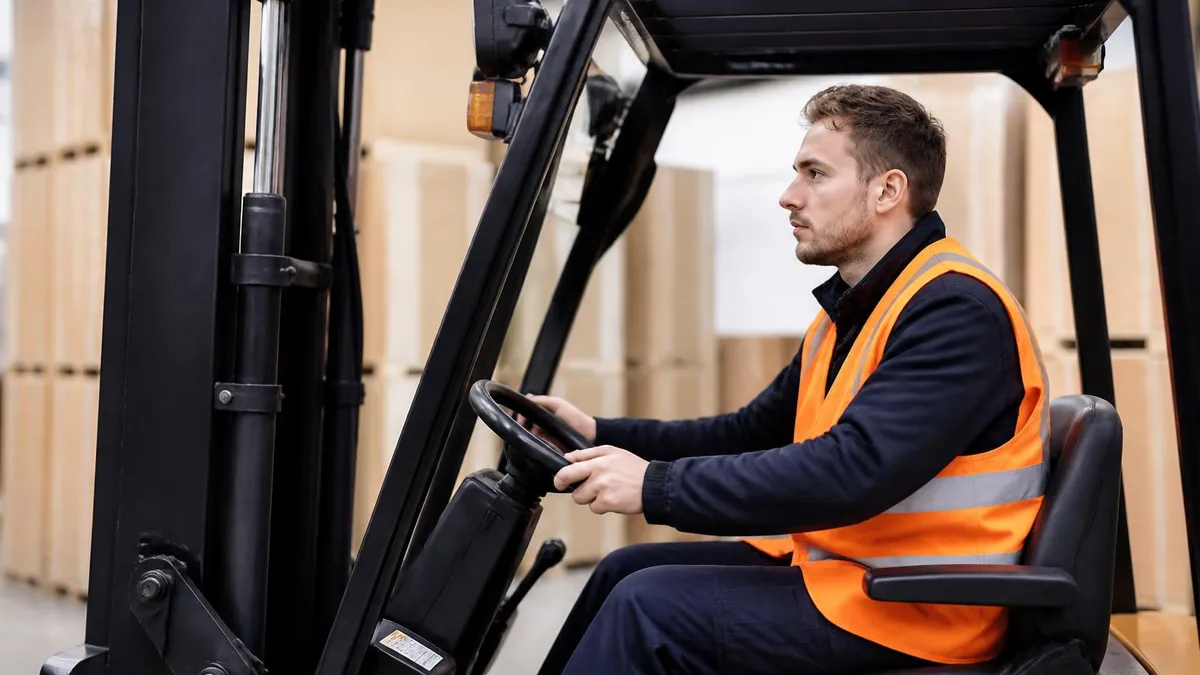
Forklift Models — Complete Guide (2026)

Forklift Tyne: Everything Australian TLILIC0003 Operators Need to Know

Forklift Refresher Course: Complete TLILIC0003 Training Guide for Australian Operators
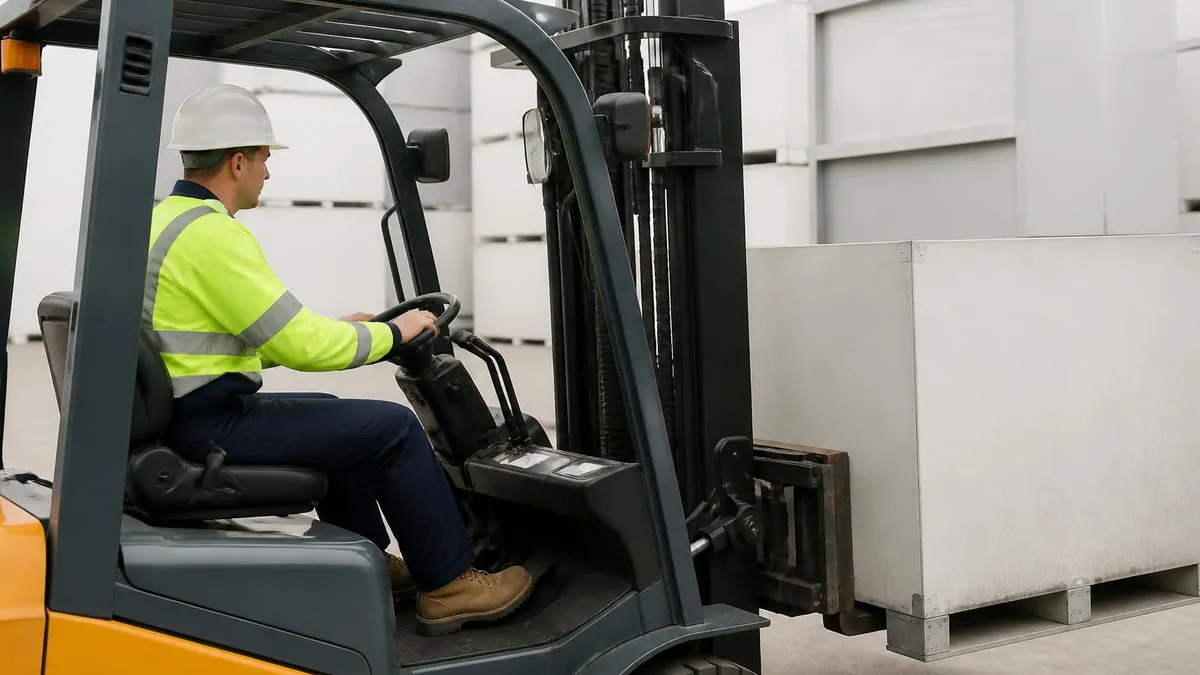
Different Forklift Types: A Complete Guide for Australian TLILIC0003 Operators
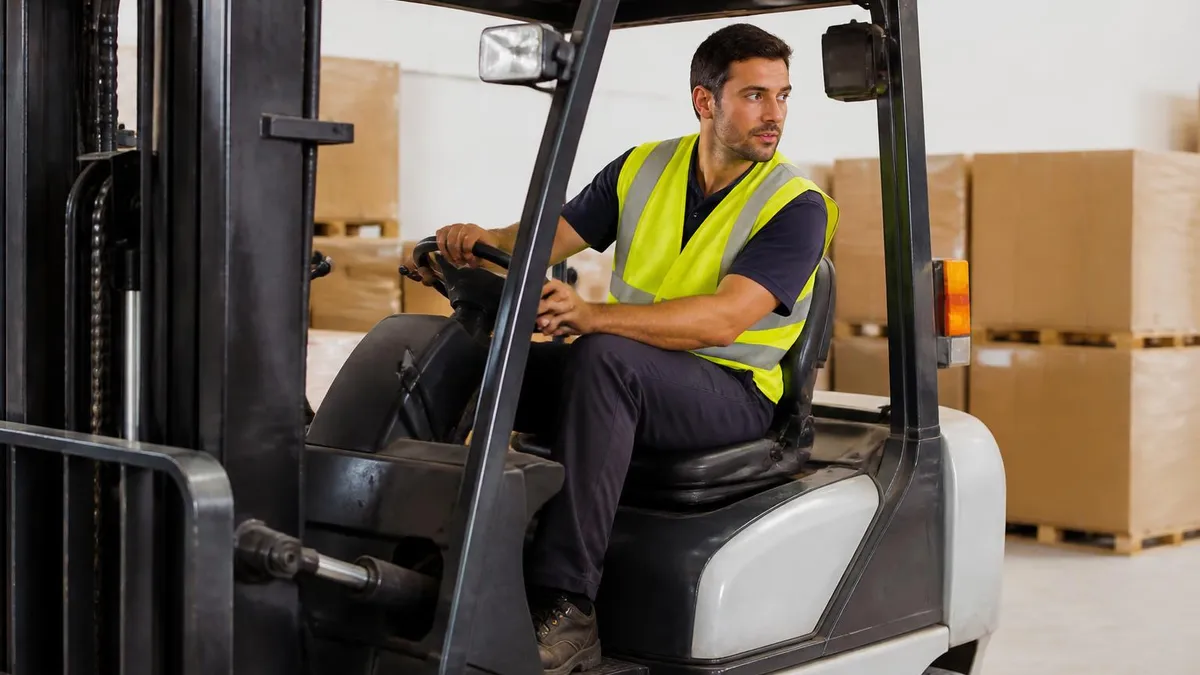
Forklift Jobs Near Me: Complete Guide to Finding Local Forklift Operator Work in Australia
About the Author

Certified Crane Operator & Skilled Trades Exam Specialist
Ferris State UniversityRobert Martinez is a Journeyman Ironworker, NCCCO-certified crane operator, and forklift trainer with a Bachelor of Science in Construction Technology from Ferris State University. He has 21 years of ironworking, rigging, and heavy equipment operation experience across high-rise and industrial construction sites. Robert prepares candidates for crane operator, rigger, forklift, and skilled trades certification examinations.