
LO Forklift Meaning & Complete Forklift Terminology Guide for TLILIC0003
Learn lo forklift meaning, key forklift terms & TLILIC0003 vocabulary. Complete AU operator guide. 🎯 Ace your licence exam with confidence.

Understanding the lo forklift meaning is one of the first steps any aspiring forklift operator in Australia needs to take. "LO" stands for Licence to Operate, and it refers specifically to the class of high-risk work licence that authorises a person to operate a forklift truck. In the Australian licensing framework, TLILIC0003 — Licence to Operate a Forklift Truck — is the nationally recognised unit of competency that underpins this licence. Without a clear grasp of what LO means, candidates often confuse it with other high-risk work categories and can end up studying the wrong material entirely.
The LO classification sits within a broader hierarchy of high-risk work licences administered under Work Health and Safety (WHS) regulations across every Australian state and territory. When employers advertise roles requiring an "LO licence," they specifically mean the forklift licence granted under TLILIC0003 competency assessment. This is distinct from the LF licence (order picking forklift), the LO (counterbalance forklift), or other plant equipment categories. Getting the abbreviation right saves time, money, and prevents candidates from attending the wrong course or sitting the wrong assessment.
Beyond the lo forklift meaning, a thorough command of forklift terminology sets professional operators apart from beginners. Terms like mast, tilt, rated capacity, load centre, and stability triangle are not just vocabulary exercises — they appear directly in the TLILIC0003 theory assessment and practical competency check. Assessors expect candidates to communicate clearly using industry-standard language, and worksite supervisors rely on shared terminology to issue safe operating instructions. The entire safety culture of a forklift operation depends on every worker using the same words to mean the same things.
This guide covers the full spectrum of forklift terminology that Australian TLILIC0003 candidates need to master before their assessment. We move from licence classifications and machine components through to load management terms, safety protocols, and the specialised vocabulary used in attachments and modifications. Each section is designed to build your knowledge progressively, reinforcing earlier concepts as new ones are introduced, so that by the end you have a coherent mental map of how every term connects to real-world forklift operation.
It is worth noting that Australian forklift terminology closely mirrors international standards set by organisations such as the International Organization for Standardization (ISO) and the Industrial Truck Association (ITA), but there are local variations and regulatory terms specific to the WHS framework that apply uniquely in Australia. Understanding both the universal and Australia-specific vocabulary ensures you can operate confidently across different worksites, whether you are working in a Sydney warehouse, a Perth mine site, or a Melbourne distribution centre.
Forklift operators who invest time in learning correct terminology consistently perform better in both theory assessments and practical evaluations. Research from registered training organisations (RTOs) across Australia shows that candidates who can define key terms accurately score on average 15–20% higher on their TLILIC0003 written assessments than those who only focus on hands-on practice. This guide gives you that edge by presenting every critical term in context, with practical examples drawn from real Australian worksites.
Whether you are a first-time candidate preparing for your initial TLILIC0003 assessment, a worker renewing a lapsed licence, or a supervisor refreshing your team's knowledge, this article provides the most complete forklift terminology reference available for the Australian context. Read each section carefully, use the checklists and quizzes embedded throughout to test your recall, and return to this guide as a reference tool throughout your training journey.
TLILIC0003 Forklift Terminology by the Numbers

Australian Forklift Licence Classifications
The LO licence is issued under TLILIC0003 and is the most common forklift licence in Australia. It authorises operators to drive counterbalance forklifts — the standard warehouse and industrial forklift — up to the rated capacity shown on the data plate.
The LF licence covers order picking forklifts where the operator platform elevates with the forks. These machines are used in high-bay racking environments. LF is a separate licence class to LO and requires its own TLILIC0003 equivalent unit of competency.
Operators who use non-standard attachments such as rotators, sideshifters, or clamps must have specific training and, in many cases, an endorsement recorded on their LO licence. Assessors test attachment vocabulary and safety procedures as part of this endorsement.
All forklift licences in Australia sit within the High-Risk Work Licence framework regulated by Safe Work Australia and administered by each state regulator. The HRWL system standardises terminology, competency requirements, and licence renewal periods nationally.
The physical components of a forklift each carry precise technical names that operators must know for both safety compliance and everyday communication. The mast is the vertical assembly at the front of the machine through which the forks raise and lower. Most counterbalance forklifts use either a two-stage (duplex) or three-stage (triplex) mast, which determines the maximum lift height the machine can achieve. A duplex mast on a typical warehouse forklift might provide a maximum lift height of 4,500 mm, while a triplex mast on a high-reach machine may extend to 7,000 mm or more.
The carriage is the plate assembly that rides up and down the mast and to which the forks — correctly called tynes in Australian terminology — are attached. The carriage moves via lift chains and hydraulic cylinders, and its condition is critical to safe operation. Worn or cracked carriage components can cause sudden load drops, which is one of the most dangerous forklift incidents on record in Australian workplaces. Operators must inspect the carriage before each shift as part of their pre-operational check.
The overhead guard is the steel frame structure above the operator's position that provides protection from falling objects. Under WHS regulations, operating a forklift without a properly rated and undamaged overhead guard is a serious safety breach. The overhead guard is not a cab or a rollover protection structure in the same sense as on earthmoving equipment — it is specifically designed to deflect small falling loads, not to provide rollover protection, which is instead addressed through safe operating procedures and tipping prevention.
The counterbalance weight is the heavy cast-iron or steel mass built into the rear of the machine to offset the load being carried on the forks. Without this weight, a loaded forklift would tip forward over the front axle. The counterbalance is why forklifts are so heavy relative to their rated capacity — a 2.5-tonne capacity forklift may weigh 4,000–5,000 kg unladen. Understanding counterbalance weight helps operators appreciate why rated capacity decreases as the load centre distance increases, a concept that is central to TLILIC0003 competency.
The data plate (also called the nameplate or capacity plate) is affixed to the forklift by the manufacturer and must never be removed, altered, or obscured. It shows the machine's rated capacity at a specified load centre distance, the maximum lift height, the unladen weight, and other critical specifications. Australian WHS regulations require operators to check the data plate before lifting any load and to ensure the intended lift does not exceed the rated capacity shown. Many assessment questions in TLILIC0003 theory tests directly reference data plate reading skills.
The tilt cylinders control the forward and backward tilt of the mast, typically allowing 3–5 degrees of forward tilt and 8–12 degrees of backward tilt. Backward tilt is used to stabilise loads during travel, while forward tilt is used when placing or picking up pallets. Incorrect use of tilt — such as travelling with the mast tilted fully forward — dramatically increases the risk of load slip and forward tip, and is a common cause of serious forklift incidents in Australian workplaces. Assessors pay close attention to tilt technique during practical competency assessments.
The drive axle at the front of the machine carries the greatest load stress because both the machine's counterbalance weight and the lifted load act through it. The steer axle at the rear allows tight turning circles but provides less stability, which is why forklifts steer from the rear — a handling characteristic that surprises many new operators who are used to front-wheel steering in road vehicles. Understanding this difference is essential when manoeuvring in confined spaces and is a topic specifically addressed within the broader category of forklift terminology covered by TLILIC0003 training.
Load, Capacity & Stability Terminology
The rated capacity is the maximum weight a forklift is designed to lift safely, expressed in kilograms (kg) or tonnes, at a specified load centre distance and lift height. For most standard counterbalance forklifts, the rated capacity is measured with the load centre at 500 mm from the heel of the forks. If the load centre shifts further forward — because the load is unusually deep or overhangs the forks — the effective capacity is reduced and must be calculated using the manufacturer's load chart before the lift proceeds.
The load centre is the horizontal distance from the face of the forks (the heel) to the centre of gravity of the load. A standard pallet with evenly distributed goods typically has a load centre of approximately 600 mm on a 1,200 mm deep pallet, which is why most forklifts are rated at 500–600 mm load centre. When operators handle loads with unusual dimensions, dense materials concentrated at one end, or awkward shapes, calculating the true load centre is a critical safety step and a core TLILIC0003 competency.

Knowing Forklift Terminology: Advantages vs. Gaps
- +Pass the TLILIC0003 theory assessment with a higher score by recognising exact terms used in exam questions
- +Communicate clearly with supervisors and co-workers, reducing misunderstandings that could cause incidents
- +Read and interpret data plates, load charts, and manufacturer manuals accurately and independently
- +Identify equipment faults using correct terminology when completing pre-operational inspection reports
- +Understand and comply with WHS regulations that use specific defined terms throughout their text
- +Progress more quickly to attachment and modifications endorsements when the foundational vocabulary is solid
- −Memorising 80+ technical terms takes dedicated study time that some candidates underestimate before enrolment
- −Some terms vary slightly between manufacturers (e.g., 'tyne' vs 'fork'), which can cause confusion in multi-brand workplaces
- −Terminology learned in training may differ from informal site slang used by experienced operators on the job
- −Australian-specific WHS terminology updates when regulations change, requiring operators to keep knowledge current
- −Attachment and modification terms are a separate vocabulary subset that requires additional study beyond basic licence terms
- −Over-reliance on memorised definitions without hands-on context can create a gap between knowledge and practical application
TLILIC0003 Terminology Mastery Checklist
- ✓Define 'LO licence' and explain how it differs from LF and other high-risk work licence categories
- ✓Identify all major forklift components by their correct technical name during a pre-operational inspection
- ✓Read and interpret the data plate, including rated capacity, load centre, and maximum lift height
- ✓Explain the stability triangle and describe how mast height, tilt, and speed affect the centre of gravity
- ✓Calculate or estimate effective lifting capacity when the load centre exceeds the rated specification
- ✓Describe the function and safe use of at least three common forklift attachments using correct terminology
- ✓Explain what de-rating means and identify two situations that require a forklift to be de-rated
- ✓Use correct WHS terminology when completing a pre-operational checklist or incident report form
- ✓Describe the difference between longitudinal and lateral stability and give one example of each tipping risk
- ✓Explain the purpose of the counterbalance weight and its relationship to rated capacity and load centre
The Data Plate Is Your Legal Authority
Every forklift operation in Australia must stay within the limits shown on the manufacturer's data plate. Lifting a load that exceeds the rated capacity — even by a small margin — is not only a WHS breach but can result in immediate licence suspension and serious injury. Always check the data plate before every lift, and if the plate is missing or illegible, the machine must be taken out of service immediately.
The vocabulary of forklift attachments and modifications forms a specialised subset of forklift terminology that is increasingly important as Australian workplaces use more diverse material handling solutions. A sideshifter is one of the most common attachments, allowing the carriage and forks to move horizontally left or right without moving the entire machine. This is invaluable in tight racking aisles where precise load placement is required. Sideshifters do reduce rated capacity slightly due to their added weight and the altered load centre geometry, so operators must consult the attachment data plate before use.
A fork positioner allows the operator to adjust the width between the two tynes hydraulically from the cab, eliminating the need to manually reposition forks for different pallet sizes. In high-throughput warehouses where pallet dimensions vary, fork positioners dramatically improve efficiency and reduce the manual handling injuries associated with physically moving heavy steel forks. Like sideshifters, fork positioners add weight to the front of the machine and require capacity de-rating calculations to be performed before heavy lifts.
A rotator is an attachment that allows the carriage — and therefore the load — to rotate through 360 degrees. Rotators are used in paper, recycling, and waste management industries where drums, bales, or containers need to be tipped or inverted. They add significant weight to the carriage assembly and substantially reduce the forklift's effective capacity. An LO-licenced operator using a rotator must have documented training on the specific attachment, and many employers require an endorsement to be recorded before allowing unsupervised use.
A clamp attachment replaces the standard carriage and tynes with a pair of hydraulically operated arms that grip loads without the need for pallets. Paper roll clamps, carton clamps, and barrel clamps are common examples. Clamp attachments fundamentally change the load dynamics of the machine — the gripping force must be sufficient to hold the load without damaging it, which requires careful pressure adjustment. In TLILIC0003 assessments, candidates may be asked about the safe working principles of clamp attachments even if the practical assessment uses standard forks.
A jib attachment (also called a telescopic boom or crane jib) converts the forklift into a basic crane-like device capable of lifting loads over obstacles or into areas the forks cannot reach. Jibs are particularly common on construction sites and in equipment maintenance workshops. When a jib is fitted, the effective load capacity can be reduced by 60–80% depending on the jib's extension, making it critical that operators consult both the forklift data plate and the jib's own rating plate before any lift. Misuse of jibs is a significant contributor to forklift-related incidents in construction settings.
The term non-standard attachment appears frequently in WHS documentation and means any attachment not supplied as original equipment by the forklift manufacturer. Installing a non-standard attachment requires a formal modification assessment, updated documentation, and in many cases a new capacity plate to be fitted to the machine. Safe Work Australia guidance and individual state WHS regulations set out the requirements for attachment modifications in detail. TLILIC0003 candidates are expected to understand the documentation and assessment obligations that apply when non-standard attachments are fitted to a machine they are operating.
Understanding the complete attachment vocabulary is not just an academic exercise — it directly affects workplace safety and legal compliance. Operators who can identify the correct name of an attachment, understand its effect on machine capacity, and know what documentation they should verify before use are demonstrably safer and more competent. This level of knowledge is exactly what assessors are testing during TLILIC0003 evaluations, and it is the foundation upon which more advanced material handling skills are built throughout an operator's career.

Operating a forklift with a non-standard attachment without an updated capacity plate and modification assessment is a WHS breach in every Australian state and territory. Before using any attachment that did not come standard with the machine, check that a written modification assessment exists, a new data plate is fitted, and you have received documented training on that specific attachment. Fines for non-compliance can exceed $50,000 for individuals and $500,000 for businesses.
WHS and workplace-specific terminology forms the third major vocabulary domain that TLILIC0003 candidates must master. A pre-operational inspection (sometimes called a daily check or pre-start check) is the systematic examination of a forklift before each operating shift. Under WHS regulations, this inspection must be completed by the operator and any faults or defects must be reported immediately to a supervisor. Operating a forklift with a known defect is a serious WHS breach. The pre-operational inspection checklist covers fluid levels, tyre condition, mast and chain condition, overhead guard integrity, horn, lights, and braking system.
A safe working load (SWL) is the maximum load that a piece of equipment — including a forklift — may safely handle under specified conditions. It is directly derived from the data plate rating and any applicable de-rating for attachments or operating conditions. The terms SWL, rated capacity, and working load limit (WLL) are sometimes used interchangeably in the industry, but in formal WHS documentation each has a precise legal definition. TLILIC0003 candidates should understand that the data plate rated capacity is essentially the SWL for the machine under standard conditions.
A load restraint refers to any method used to secure a load to the pallet or to the forklift before travel. Properly stacked and wrapped pallets, stretch wrap, banding, and load nets are all forms of load restraint. Australian road transport and workplace safety regulations impose specific load restraint requirements that forklift operators must understand, particularly when moving loads between buildings or loading onto trucks. The National Load Restraint Guide provides detailed guidance that applies to forklift operations at loading docks across Australia.
The exclusion zone is the area around a forklift operation from which pedestrians and other workers must be excluded during the lift or travel. Establishing and maintaining exclusion zones is a core safety obligation under WHS regulations and is specifically tested in TLILIC0003 practical assessments. The size of the exclusion zone depends on the nature of the lift, the height involved, and the load type. For high-level stacking operations, an exclusion zone may extend several metres in all directions from the load drop point.
A travel position is the configuration of the forklift — forks lowered to approximately 150–300 mm above ground, mast tilted back — in which the machine should be driven between tasks. Travelling with elevated forks is one of the most common unsafe forklift behaviours observed in Australian workplaces and is a significant factor in collisions with overhead structures, racking, and pedestrians. Every TLILIC0003 practical assessment tests whether the candidate consistently returns to the travel position before moving between locations, and failure to do so is typically an automatic fail.
The rated capacity label or capacity plate is a term specifically used in Australian and New Zealand standards to describe the data plate on a forklift. When this plate is damaged, missing, or shows signs of alteration, the machine must be immediately removed from service and referred to a qualified forklift technician for inspection and re-plating. Operators are not authorised to estimate or assume capacity figures — the plate is the legal document that establishes what the machine may safely do.
Mastering WHS and workplace terminology is also important for career progression. Operators who communicate in precise, professional language are more likely to be trusted with supervisory responsibilities, assessed as competent to operate a broader range of equipment, and considered for trainer-assessor roles within their organisation. The terminology covered in this section represents the professional language of the Australian forklift industry, and fluency in it is a genuine career asset that compounds in value over a working lifetime.
Practical tips for learning forklift terminology begin with active recall rather than passive reading. Instead of simply highlighting terms in a textbook or scrolling through a glossary, write each term on one side of a flashcard and its definition plus a real-world example on the other. Research on memory retention consistently shows that active retrieval practice — testing yourself repeatedly — builds much stronger long-term recall than re-reading the same material. A deck of 80 forklift terminology flashcards reviewed daily for two weeks will produce measurably better assessment results than 20 hours of passive study over the same period.
Group related terms together when studying rather than learning them in alphabetical order. For example, study all mast-related terms (mast, carriage, tilt cylinder, lift chain, free lift, triplex, duplex) as a cluster, then move to load-related terms (rated capacity, load centre, load chart, de-rating, SWL), then to stability terms (stability triangle, longitudinal stability, lateral stability, centre of gravity, counterbalance weight). Clustering terms by their conceptual relationship mirrors the way the knowledge is actually used on a worksite and makes it easier to retrieve the right term when you encounter a scenario-based question in the theory assessment.
Use the machines you encounter during your practical training as vocabulary anchors. When your trainer points to a component, say its name aloud and use it in a sentence. When you complete a pre-operational inspection, name each component as you check it. This multi-modal approach — combining physical interaction with verbal labelling — reinforces memory traces more effectively than either activity alone. Many successful TLILIC0003 candidates report that the practical component of their training was the single most powerful vocabulary-building experience, because it embedded abstract terms in concrete physical reality.
Take advantage of the practice quizzes available on PracticeTestGeeks.com, which are specifically designed to test TLILIC0003 terminology in the same format as the actual theory assessment. The questions are written to reflect the precise language used by assessors and the WHS framework, so practising with them builds familiarity with both the terms and the context in which they appear in exam questions. Aim to complete at least three full practice sessions before your scheduled assessment, reviewing any terms you missed immediately after each session.
When you encounter an unfamiliar term on a worksite or in training materials, make a habit of looking it up immediately rather than guessing or moving on. The forklift industry's terminology is largely consistent and precise — there are few synonyms and little ambiguity in the formal vocabulary — so an unknown term is almost always a gap in knowledge rather than a regional variation. Over time, this habit of immediate clarification builds a complete and accurate vocabulary with minimal gaps.
Ask your trainer or assessor to use correct technical terminology consistently throughout your training, and model that behaviour yourself. Some informal training environments rely heavily on slang or shorthand (e.g., "the back end" instead of "counterbalance weight," or "stick it back" instead of "apply backward mast tilt"), which can create problems during formal assessments when precise language is required. If your training environment uses informal terms, make the effort to mentally translate them to the correct technical vocabulary, and ask your trainer to confirm the formal term for each informal one you encounter.
Finally, revisit terminology after you have completed your TLILIC0003 assessment and begun working. Real-world experience gives new meaning to terms that were previously abstract, and it often reveals subtle distinctions that theory alone cannot convey.
For example, the difference between "rated capacity" and "effective capacity" becomes viscerally clear the first time you attempt to lift a load that is technically within the machine's data plate rating but feels unstable because the load centre is unusually far forward. That experiential anchor will reinforce the theoretical definition more powerfully than any amount of flashcard revision, and it is the foundation of genuinely expert forklift operation.
TLILIC0003 Questions and Answers
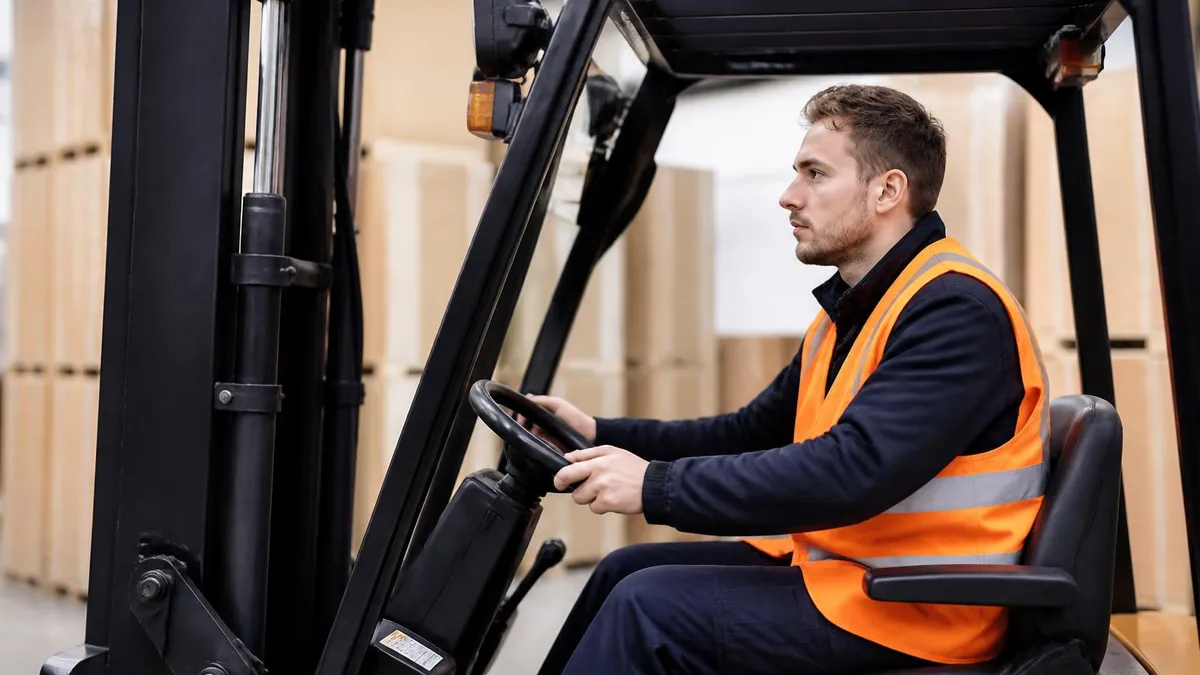
Forklift Models — Complete Guide (2026)

Forklift Tyne: Everything Australian TLILIC0003 Operators Need to Know

Forklift Refresher Course: Complete TLILIC0003 Training Guide for Australian Operators
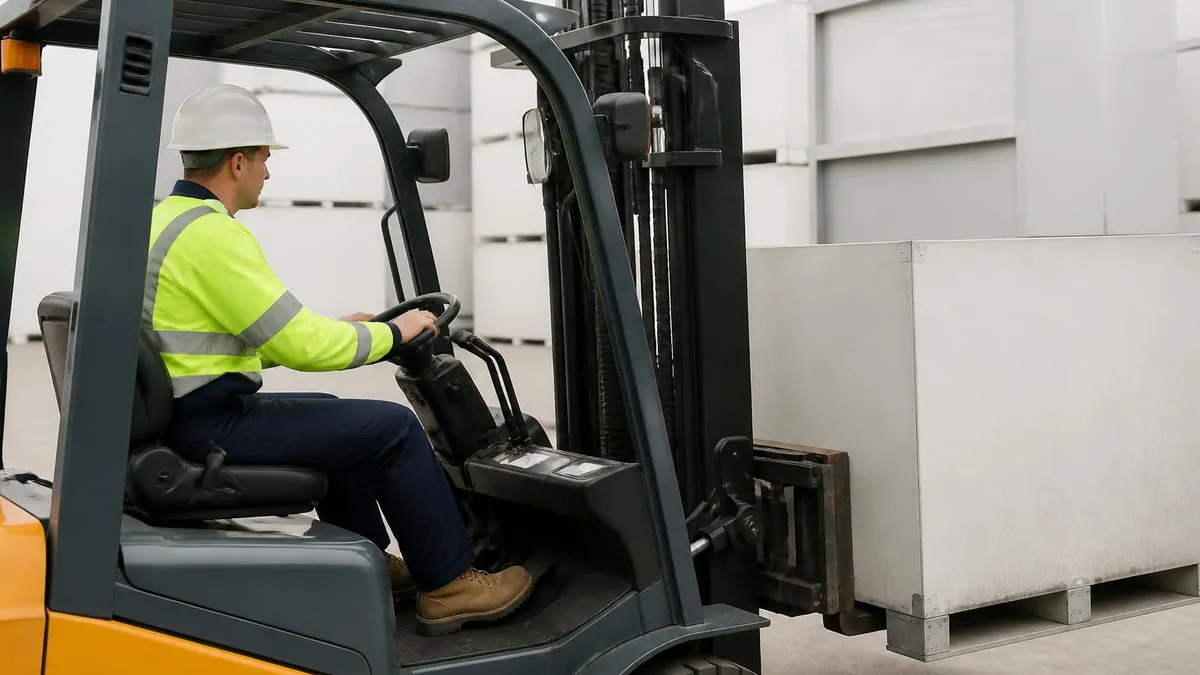
Different Forklift Types: A Complete Guide for Australian TLILIC0003 Operators

Forklift Test Questions and Answers PDF: Complete TLILIC0003 Practice Guide for Australian Operators
About the Author

Certified Crane Operator & Skilled Trades Exam Specialist
Ferris State UniversityRobert Martinez is a Journeyman Ironworker, NCCCO-certified crane operator, and forklift trainer with a Bachelor of Science in Construction Technology from Ferris State University. He has 21 years of ironworking, rigging, and heavy equipment operation experience across high-rise and industrial construction sites. Robert prepares candidates for crane operator, rigger, forklift, and skilled trades certification examinations.