
Forklift Recruitment Agencies in Australia: How to Find Work After TLILIC0003
Find the best forklift recruitment agencies in Australia after TLILIC0003. Tips, top agencies, pay rates & job search strategies. ✅ Updated 2026 September.

Forklift recruitment agencies are one of the fastest routes into paid forklift work once you hold your TLILIC0003 High Risk Work Licence in Australia. Rather than spending weeks cold-calling warehouses or scrolling through hundreds of unfiltered job boards, a specialist agency connects you directly with employers who already trust their vetting process. These agencies maintain active relationships with logistics companies, manufacturing plants, cold-storage facilities, and retail distribution centres across every Australian state — meaning your freshly earned licence can translate into shifts within days rather than months.
Understanding how the recruitment landscape works gives newly licensed operators a significant competitive edge. Australia's warehousing and logistics sector has experienced sustained growth over the past five years, driven by the expansion of e-commerce, increased import volumes through major ports, and ongoing infrastructure investment. This growth has created consistent demand for licensed forklift operators, but it has also increased competition at the entry level. Knowing which agencies specialise in forklift placements, how to present your TLILIC0003 credentials effectively, and what pay rates to expect will help you secure better roles faster and avoid common pitfalls that trip up new operators.
Specialist labour-hire agencies differ meaningfully from general employment websites. When you register with a dedicated logistics or industrial recruiter, a consultant who understands the difference between a counterbalance forklift and a reach truck will assess your skills. They know which worksites require experience with specific attachments, which employers value particular safety certifications, and which roles offer pathways to permanent positions. This industry-specific knowledge saves you time and ensures you are put forward for roles that match your actual capability and licence class, reducing the risk of being placed somewhere your skills don't align with site requirements.
The type of forklift work available through agencies varies enormously. You might find casual day shifts unloading containers at a busy seaport, permanent night positions in a temperature-controlled food distribution warehouse, or project-based contracts supporting seasonal retail surges in the lead-up to Christmas. Agencies manage this variety by maintaining large candidate pools and matching operators to opportunities based on availability, experience, geographical location, and any additional endorsements — such as working at heights or dangerous goods handling — that an operator may hold alongside their core TLILIC0003 qualification.
Pay rates through labour-hire arrangements tend to sit at or slightly above award minimums under the relevant Modern Award, most commonly the Storage Services and Wholesale Award 2020 or the Manufacturing and Associated Industries and Occupations Award. As of 2026, casual forklift operators working through agencies typically earn between $30 and $38 per hour depending on the shift type, location, and client site. Permanent placements negotiated through agencies often include penalty rates, superannuation contributions, and in some cases, site-specific allowances for working in refrigerated environments or handling hazardous materials.
Before engaging with forklift recruitment agencies, it pays to prepare a clear and accurate skills profile. Your TLILIC0003 licence number, the date of issue, and the issuing Registered Training Organisation should all be documented and ready to share. If your training included hands-on time with specific forklift models or attachments, note these explicitly — experienced consultants will ask, and having specifics ready demonstrates professionalism. A brief employment history that highlights any previous warehouse, logistics, or related manual-handling roles will round out your profile and make you easier to place in higher-tier positions from day one.
This guide covers everything you need to know about working with forklift recruitment agencies in Australia after obtaining your TLILIC0003 licence. We examine the leading agency types, realistic pay expectations, the registration process, pros and cons of labour-hire versus direct employment, and practical strategies for turning agency work into a long-term forklift career. Whether you are a fresh graduate from your forklift training course or an experienced operator looking to explore new opportunities across different industries or regions, this resource will help you navigate the market with confidence.
Forklift Recruitment in Australia by the Numbers

Types of Forklift Recruitment Agencies in Australia
Large agencies like Programmed, Adecco Industrial, and Randstad operate nationally with dedicated logistics and warehousing desks. They place hundreds of forklift operators simultaneously and maintain volume contracts with major retailers, 3PLs, and manufacturers.
Boutique agencies focused exclusively on supply chain and warehouse roles. They offer deeper industry knowledge, closer client relationships, and faster placement times for operators with specific experience such as reach trucks or order-picking equipment.
Agencies covering specific cities or regional areas — particularly valuable for operators in Brisbane, Perth, Adelaide, or regional centres near major ports or agricultural processing facilities where national agencies have limited local knowledge.
Companies like WorkPac and Agri Labour specialise in fly-in fly-out and remote site placements. Forklift operators on mining sites command premium rates but must meet stricter fitness, drug testing, and site-induction requirements than standard warehouse roles.
Registering with a forklift recruitment agency is a straightforward process, but preparing properly beforehand makes a material difference to how quickly you are placed and the quality of roles you are offered. The registration process typically begins with an online application or an in-person interview at the agency's branch office. Larger national agencies often conduct initial screening via phone or video call before inviting you to a branch for document verification and an in-person assessment of your operational background.
The documents you will need to bring to your registration appointment are consistent across most agencies. Your TLILIC0003 High Risk Work Licence is the primary credential — bring both the physical card and a clear photocopy. You will also need proof of identity such as a current driver's licence or passport, your Tax File Number for payroll purposes, and your superannuation fund details.
If you hold any additional certifications — first aid, forklift attachments competency, working at heights, or white/blue/green construction cards — bring documentation for these as well, as they can significantly expand the range of roles you qualify for.
Many agencies also conduct practical assessments or request references from previous employers or your Registered Training Organisation. Some larger industrial labour-hire firms operate assessment centres where you complete a short pre-employment medical, drug and alcohol screening, and a manual handling evaluation. These are standard across the logistics and warehousing sector and are not a reflection of your suitability — they are a compliance requirement that protects both you and the employer. Arriving prepared and well-rested, and disclosing any relevant medical conditions honestly, ensures the process moves quickly without complications.
When you speak with the recruitment consultant, be specific about your availability and the types of work you prefer. Agencies service a wide range of shift patterns including standard day shifts, afternoon shifts, night shifts, rotating rosters, and casual-on-call arrangements. If you have family commitments that make overnight shifts difficult, say so upfront. If you are willing to travel or work across multiple client sites, that flexibility is genuinely valuable to agencies and should be communicated clearly. Consultants who understand your preferences can match you to roles where you will stay longer and perform better, which benefits everyone involved.
Understanding the agency's fee structure is important before you sign any paperwork. Candidates never pay placement fees to legitimate agencies — the employing business pays a margin on top of your hourly rate. Your employment agreement will specify whether you are employed directly by the agency (labour hire) or engaged as a contractor.
Labour hire is far more common in the forklift sector and means the agency is your legal employer of record, paying your wages, superannuation, and entitlements while you work on a client's site. Contractor arrangements are less common and carry different tax implications, so seek advice from an accountant if this arrangement is offered.
Follow-up is an often-overlooked part of agency registration. After submitting your documentation and completing any assessments, check in with your consultant every few days if you have not heard about placements. The forklift labour market is dynamic — a shift opportunity can emerge and be filled within hours, so staying visible in the consultant's mind keeps you at the top of the shortlist.
A brief, professional email or phone call once or twice a week is perfectly appropriate and is generally appreciated rather than seen as intrusive. Demonstrating reliability and communication skills during the registration phase signals to consultants that you will behave the same way on site.
Once you are registered and actively placed, building a strong reputation across multiple client sites through an agency opens doors to permanent positions, pay rises, and referrals to other operators looking for work. Many of Australia's most experienced forklift operators began their careers through labour-hire arrangements and credit agency placements with giving them diverse experience across different industries, forklift models, and warehouse management systems that they could not have gained by staying in a single permanent role from the outset.
Pay Rates, Conditions and Industry Sectors
Casual forklift operators placed through labour-hire agencies in Australia typically earn between $30 and $38 per hour as of 2026, depending on location, shift type, and industry. Afternoon and night shifts attract penalty rates of 15–30% above the standard hourly rate under the Storage Services and Wholesale Award 2020. Operators working in cold-storage environments, refrigerated distribution centres, or with specialised attachments such as rotators or side-shifters can negotiate higher rates reflecting the additional skill and discomfort involved.
Permanent placements negotiated through agencies — often called temp-to-perm conversions — typically result in slightly lower hourly rates than casual engagements, but the trade-off includes paid annual leave (4 weeks per year), personal leave, and more predictable income. Some client sites also offer site allowances ranging from $2 to $5 per hour for conditions such as working in freezer environments below -18°C, handling dangerous goods classified under the ADG Code, or operating on double-shift rosters where fatigue management protocols apply.

Labour-Hire Agency Work vs Direct Employment: Pros and Cons
- +Fast access to work — typically placed within 3–7 days of registration with a valid TLILIC0003 licence
- +Exposure to diverse industries, forklift models, and warehouse management systems builds broad experience quickly
- +Agencies handle payroll, superannuation, and workers' compensation paperwork on your behalf
- +Flexibility to accept or decline shifts based on personal availability and family commitments
- +Casual loading (typically 25%) compensates for lack of leave entitlements and increases base income
- +Temp-to-perm pathways mean agency work frequently leads to stable, permanent employment within 6–12 months
- −Casual income is less predictable than permanent employment, particularly during seasonal slowdowns
- −No paid annual leave, personal leave, or public holiday entitlements in casual labour-hire arrangements
- −Agency margin means the client pays more than your take-home rate, which can create pressure on operator numbers when costs are scrutinised
- −Frequent site changes require repeated inductions and familiarisation periods that can be time-consuming and tiring
- −Less job security than direct employment — client sites can end bookings with short notice periods
- −Limited access to employer-funded training, professional development, or internal promotion pathways typical of permanent roles
Job Search Checklist for TLILIC0003 Licence Holders
- ✓Locate your TLILIC0003 licence card and confirm the expiry date is current before contacting any agency.
- ✓Prepare a one-page skills summary listing all forklift models operated, attachment types used, and industries worked in.
- ✓Gather documents: TFN, superannuation fund details, proof of identity, and any additional safety certifications.
- ✓Research at least three agencies that specialise in logistics, warehousing, or industrial labour hire in your region.
- ✓Register with at least two agencies simultaneously to maximise your access to available shifts and client sites.
- ✓Complete pre-employment medicals, drug screening, and manual handling assessments promptly to avoid delays in placement.
- ✓Communicate your availability, preferred shift patterns, and any constraints (travel limits, shift preferences) clearly to your consultant.
- ✓Follow up with your recruitment consultant every three to five business days if no placement has been offered within the first week.
- ✓Accept initial shifts even at sites or with equipment that are not your preference — first impressions build your agency reputation.
- ✓Ask your consultant about temp-to-perm pathways and whether any client sites have indicated openings for permanent operators.
Your Licence Is the Ticket — Your Attitude Is the Upgrade
Recruitment consultants consistently report that the operators who progress fastest from casual agency work to permanent roles are not necessarily the most experienced — they are the most reliable. Showing up on time, communicating proactively when issues arise, and treating each site induction seriously signals to both agencies and client employers that you are worth investing in. In a market where labour-hire agencies manage dozens of forklift operators simultaneously, reliability is the single most differentiating factor for new entrants.
Maximising the value of your agency placements requires a proactive mindset that goes well beyond simply turning up for booked shifts. The operators who advance most quickly through the labour-hire system treat each new client site as an opportunity to expand their professional network, deepen their technical skills, and demonstrate the kind of safe, efficient performance that leads to preferred-operator status. Preferred operators are the first call agencies make when new shifts open and are typically offered the most desirable rosters and the highest-paying client sites.
Building a strong reputation starts with your first shift at each new site. Arrive ten to fifteen minutes early, complete any required site inductions carefully and attentively, ask questions where processes are unclear, and introduce yourself to the site supervisor professionally. Many warehouses operate complex warehouse management systems — software platforms like SAP, Oracle WMS, Manhattan Associates, or proprietary systems developed in-house — and demonstrating a willingness to learn these quickly signals adaptability. Operators who can navigate multiple WMS platforms are significantly more placeable and command higher rates than those familiar with only one system.
Safety behaviour is not only a legal and ethical obligation — it is also your most visible professional credential on any worksite. Australia's model Work Health and Safety laws impose strict duties on forklift operators to conduct pre-operational checks, report hazards, follow site traffic management plans, and comply with load capacity requirements at all times.
Agencies and client employers watch safety performance closely, particularly for newer operators. A single preventable incident — even a minor near-miss that results in a report — can end a placement and damage your standing with an agency. Conversely, consistently exemplary safety conduct is noted and rewarded with trusted, high-responsibility roles.
Diversifying the types of forklift equipment you operate through agency placements is one of the most effective ways to increase your long-term earning potential. Starting with counterbalance forklifts is typical, but operators who progress to electric reach trucks, turret trucks, very narrow aisle (VNA) equipment, and specialised attachments become increasingly rare and valuable. Some agencies specifically seek operators with multi-equipment experience for premium client sites. Request placements that expose you to different equipment types whenever possible, and consider investing in supplementary training for equipment classes your TLILIC0003 licence covers but that you have not yet operated commercially.
Networking through your agency consultant is an underutilised strategy. Your recruitment consultant speaks with hiring managers at dozens of companies regularly and has visibility into which employers are expanding, which sites are converting casual labour to permanent headcount, and which client relationships offer pathways to supervisory or team leader roles. Sharing your career goals openly with your consultant — rather than simply asking for the next available shift — allows them to advocate for you strategically when permanent opportunities arise at client sites where you have performed well.
Upskilling while working through agencies can be done affordably and efficiently. A first aid certificate, a forklift attachments competency assessment, or a white card for construction site access can typically be completed in one to two days and immediately expands the range of roles you qualify for.
Some agencies reimburse or subsidise short-course training costs for operators they regularly place, particularly if the training enables the operator to work at a premium client site. Ask your consultant about any training support programs — the investment in a $250 first aid course could unlock a $3–$5 per hour pay increase on specialist sites.
Document your agency work history carefully throughout your career. Record each client site, the forklift equipment operated, the volume of goods handled, the WMS platforms used, and any site-specific safety procedures or endorsements earned. This documentation becomes an asset when transitioning to permanent employment, applying for supervisory roles, or approaching new agencies with evidence of your breadth of experience. A well-maintained work record also simplifies the licence renewal process — TLILIC0003 high risk work licences in most states do not have a mandatory retraining requirement, but demonstrating consistent industry experience reinforces your competency at every career stage.

TLILIC0003 High Risk Work Licences issued in most Australian states do not expire, but some older licences issued before national harmonisation in 2011 may carry expiry dates or state-specific conditions. Before registering with any agency, verify your licence status directly with the issuing state regulator — SafeWork NSW, WorkSafe Victoria, WorkSafe Queensland, or your relevant state authority. An undetected licence issue discovered after you have started a shift can result in immediate site removal and potential compliance consequences for both you and the agency.
Moving from casual agency work to a permanent forklift operator role is the career trajectory most operators aspire to, and recruitment agencies are often the pathway that makes it possible. Understanding how and when to make this transition — and how to position yourself effectively for it — is a skill in itself. Permanent roles offer income stability, leave entitlements, access to employer-funded training, and the professional satisfaction of belonging to a single workplace community, all of which are meaningful improvements over the transactional nature of casual labour hire.
The temp-to-perm conversion is the most common route. In this arrangement, a client employer engages you casually through an agency for an agreed trial period — typically between 12 weeks and 6 months — and then offers you direct employment if both parties are satisfied.
From the employer's perspective, this arrangement reduces hiring risk because they can evaluate your performance and cultural fit before making a long-term commitment. From your perspective, it means you must treat every casual shift as an extended job interview, which is a healthy mindset to adopt regardless of whether a permanent position has been explicitly discussed.
Timing matters when pursuing permanent positions through agencies. The best opportunities to raise the subject of permanent employment arise when a client site has clearly been using you consistently for more than three months, when you have heard through your consultant that the site is planning to increase headcount, or when a supervisor at the client site has informally indicated that the company values your contribution.
Approaching your consultant at one of these natural inflection points — rather than raising it too early or, conversely, waiting passively for the offer to materialise — demonstrates commercial awareness and career-mindedness that most consultants respond to positively.
Negotiating the transition carefully protects your financial position. When converting from casual to permanent employment, your hourly rate will typically decrease because you are no longer receiving the 25% casual loading. However, the inclusion of 4 weeks annual leave, 10 days personal leave, potential long service leave accrual, and access to parental leave entitlements represents substantial additional value. Calculate the total remuneration package — base rate multiplied by hours plus leave value plus super contributions — rather than comparing casual and permanent hourly rates in isolation before deciding whether an offer represents a fair deal.
Some operators choose to remain in agency work indefinitely, and this is a legitimate and financially rewarding career path if managed well. Experienced operators who have built relationships with multiple agencies and established preferred-operator status across several high-value client sites can earn well above permanent employment rates while maintaining the flexibility to take extended breaks between contracts. This approach works best for operators who have accumulated five or more years of diverse industry experience, hold multiple safety certifications, and are comfortable managing the administrative aspects of self-directed contracting including tax planning and voluntary superannuation contributions.
Regardless of whether you ultimately pursue permanent employment or a long-term agency career, investing in ongoing professional development is non-negotiable. The logistics and warehousing sector is undergoing rapid technological change — automated guided vehicles (AGVs), collaborative robotics, and advanced WMS integrations are reshaping warehouse operations across Australia. Forklift operators who understand how to work alongside automated systems, who can operate advanced order-picking equipment, and who hold additional competencies in warehouse supervision or logistics coordination will remain highly employable as the industry evolves.
Finally, maintaining your professional standing with agencies means treating the relationship with ongoing respect even during periods when you are not actively seeking placements. If you take a permanent position and it later becomes necessary to return to agency work, the quality of the relationship you maintained during your absence will determine how quickly you are re-engaged. The Australian warehousing and logistics community is smaller and more interconnected than it appears from the outside — professional reputations travel, and the networks you build through agency work often provide career opportunities and referrals for many years after individual placements have concluded.
Practical preparation before approaching forklift recruitment agencies significantly increases both the speed of your first placement and the quality of roles you are considered for. The most effective preparation combines document readiness, industry knowledge, and a clear understanding of your own career goals. Operators who walk into an agency registration knowing exactly what they want and what they can offer are placed faster and into better roles than those who present themselves as available for anything without specifics.
Research the specific industries and companies operating in your region before your agency registration. Identify the major logistics hubs, distribution centres, and manufacturing facilities within a reasonable commute of your home, and understand what each sector requires. A distribution centre for a major supermarket chain, for example, will prioritise experience with high-volume pallet movement and familiarity with voice-directed picking systems.
A building materials supplier will value experience with long-load handling, clamp attachments, and outdoor yard operations. Framing your skills in terms relevant to the client sites an agency services demonstrates genuine industry awareness and makes you significantly easier for a consultant to place.
Preparing for any practical assessments an agency might conduct requires honest self-assessment of your current skill level. If your TLILIC0003 training was completed recently and you have limited post-course operating time, acknowledge this transparently with your consultant rather than overstating your experience. Consultants who understand your current level can place you on sites where a brief additional induction or supervised familiarisation period is available, setting you up for success rather than putting you in a position where skill gaps create safety risks or performance issues. Honesty builds trust with consultants and protects your professional reputation.
Practice your pre-operational inspection procedure until it is automatic. Every forklift operator in Australia is required to complete a documented pre-shift inspection before operating any forklift, and client site supervisors watch how new operators conduct these inspections closely. A thorough, methodical pre-op check — covering tyres, forks, hydraulic hoses, lights, horn, mirrors, seatbelt, and overhead guard — conducted without hesitation signals competence and safety commitment. If it has been more than a few weeks since your training, refresh your memory on the specific pre-op requirements for counterbalance forklifts before your first agency shift.
Understanding the legal obligations that accompany your TLILIC0003 licence prepares you for the compliance culture of modern Australian worksites. Under the Work Health and Safety Act 2011 and its state equivalents, forklift operators have a duty of care to themselves and others in the vicinity of their operations.
This includes observing posted speed limits, giving way to pedestrians, never exceeding the rated capacity of the forklift or any fitted attachment, and refusing to operate equipment you believe is defective — even under supervisor pressure. Agencies expect the operators they place to understand and uphold these obligations without needing to be reminded, because non-compliance creates liability for the agency as the employer of record.
Building a professional online presence supporting your job search can complement your agency registration. A LinkedIn profile that includes your TLILIC0003 licence, forklift equipment experience, and industry history allows agency consultants to verify your credentials and increases the likelihood that your profile appears when consultants search for candidates with specific skills. Some agencies now conduct preliminary screening via LinkedIn before the formal registration interview, so a complete and professional profile can accelerate your entry into the placement queue ahead of less prepared candidates.
Finally, approach the agency relationship as a long-term professional partnership rather than a transactional arrangement you will exit as soon as a permanent role materialises. The consultants who invest most in finding you good placements are those who perceive you as a reliable, professional, and communicative candidate who reflects well on their agency when placed on client sites. Building this perception consistently from your first contact through every subsequent interaction is the single most effective strategy for making your forklift career through recruitment agencies both successful and rewarding in the long term.
TLILIC0003 Questions and Answers
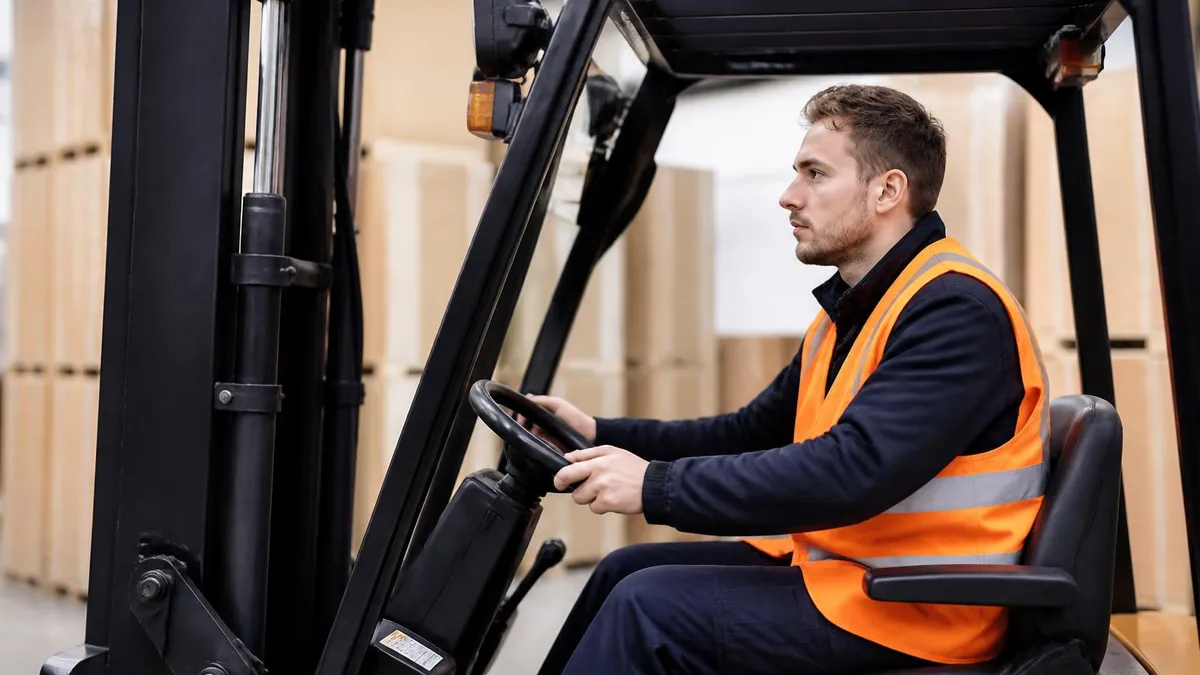
Forklift Models — Complete Guide (2026)

Forklift Tyne: Everything Australian TLILIC0003 Operators Need to Know

Forklift Refresher Course: Complete TLILIC0003 Training Guide for Australian Operators
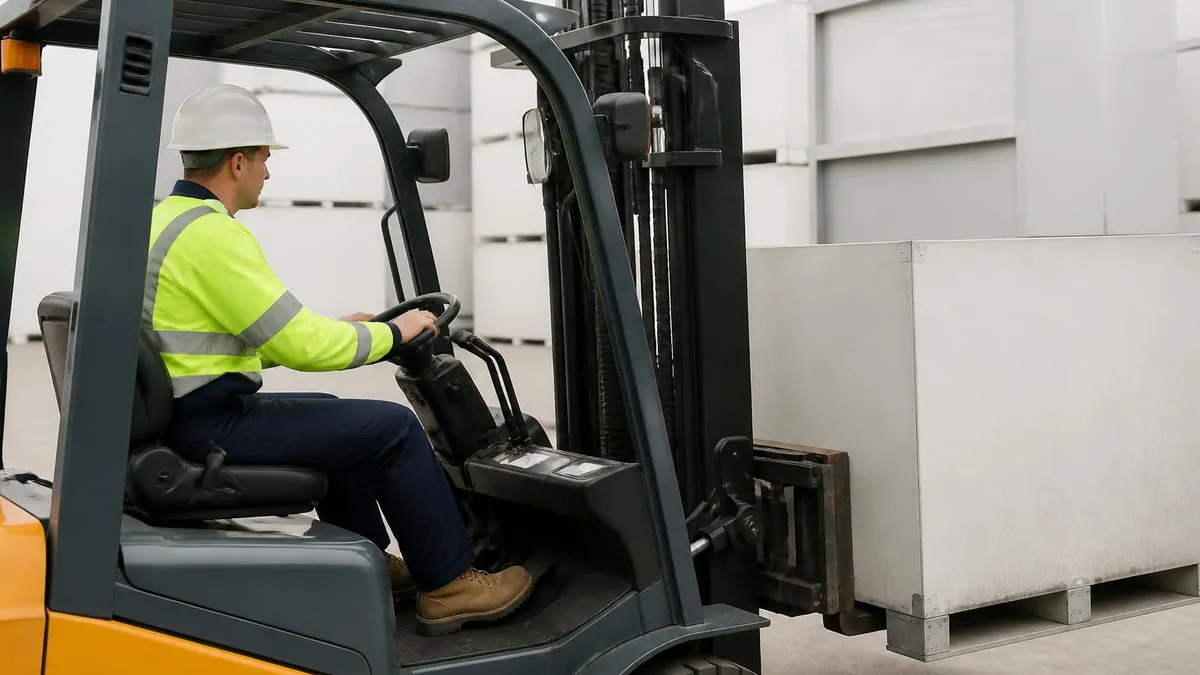
Different Forklift Types: A Complete Guide for Australian TLILIC0003 Operators
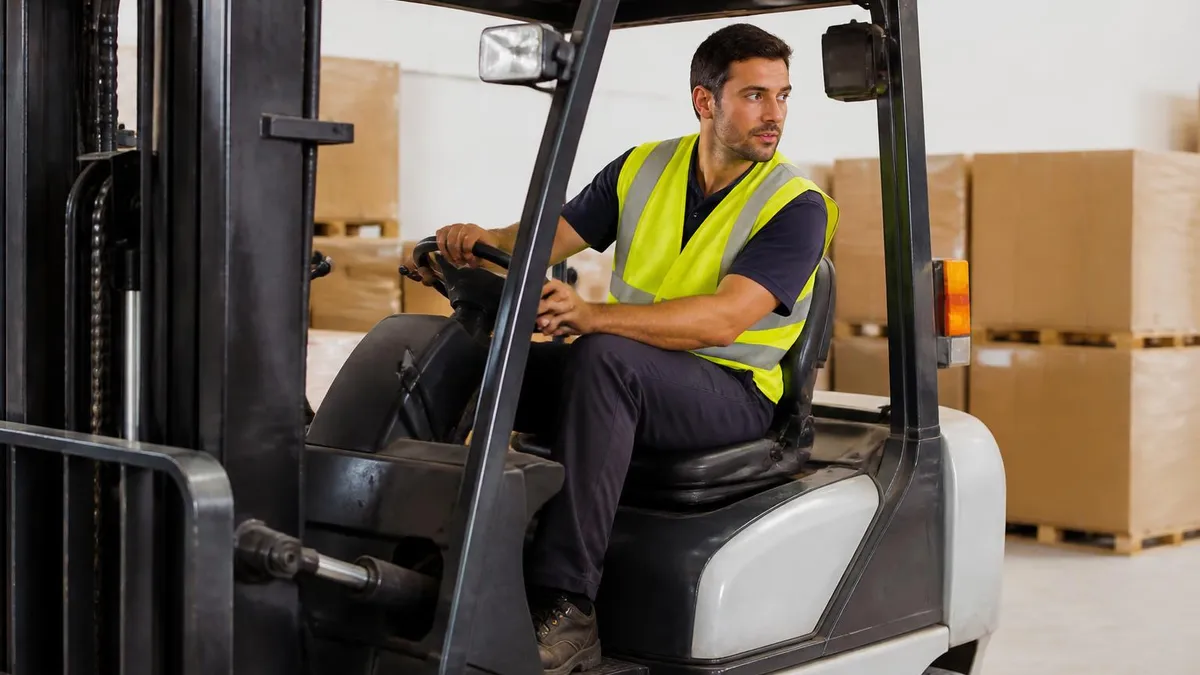
Forklift Jobs Near Me: Complete Guide to Finding Local Forklift Operator Work in Australia
About the Author

Certified Crane Operator & Skilled Trades Exam Specialist
Ferris State UniversityRobert Martinez is a Journeyman Ironworker, NCCCO-certified crane operator, and forklift trainer with a Bachelor of Science in Construction Technology from Ferris State University. He has 21 years of ironworking, rigging, and heavy equipment operation experience across high-rise and industrial construction sites. Robert prepares candidates for crane operator, rigger, forklift, and skilled trades certification examinations.