
Forklift Operator Responsibilities: Complete TLILIC0003 Duties Guide for Australian Workers
Master forklift operator responsibilities under TLILIC0003. Duties, safety rules, pre-op checks & career tips for Australian operators. ✅

Understanding forklift operator responsibilities is essential for anyone pursuing or already holding a TLILIC0003 licence in Australia. These responsibilities extend far beyond simply driving a forklift from point A to point B — they encompass a comprehensive framework of safety obligations, pre-operational checks, load management protocols, and workplace communication duties that protect both the operator and everyone else on site. Whether you are new to the industry or refreshing your knowledge ahead of a re-assessment, this guide covers every core duty you need to know.
The TLILIC0003 unit of competency, formally titled "Licence to Operate a Forklift Truck," is the nationally recognised standard for forklift operators across Australia. It is administered under the Training and Education (TAE) framework and regulated by state and territory work health and safety (WHS) authorities. Operators who complete this unit demonstrate they can safely and competently operate a counterbalance forklift in a variety of workplace environments, from warehouses and distribution centres to manufacturing plants and construction sites.
One of the most frequently underestimated aspects of the role is its legal dimension. Under the Work Health and Safety Act 2011 (and equivalent state legislation), a forklift operator carries a personal duty of care to operate equipment safely, follow site-specific procedures, and report any hazards or equipment defects immediately. Ignorance of a workplace rule is not considered a valid defence during a SafeWork or WorkSafe investigation, making thorough knowledge of your obligations critically important before you ever turn a key.
Daily forklift operator responsibilities can be broadly divided into three phases: pre-operational (before the shift begins), operational (during active use), and post-operational (at the end of the shift or task). Each phase has specific tasks that must be completed in sequence. Skipping any step — even something as routine as checking tyre pressure or testing the horn — creates liability for the operator and the employer alike, and can have serious consequences if an incident occurs and records show the check was not performed.
The physical demands of the role are also significant. Operators must be alert to changing conditions throughout their entire shift — pedestrian traffic, floor surface changes, overhead clearances, and dynamic load weights all require constant situational awareness. Fatigue management is therefore listed as a formal operator responsibility in most site safety management systems. If you feel unwell or fatigued, you have both a right and an obligation under WHS law to report this to your supervisor before operating a forklift.
Knowing the specific forklift operator responsibilities associated with different machine types is also valuable, because duties can vary depending on whether you are operating a reach truck, a pallet jack, or a counterbalance model. The TLILIC0003 unit focuses on counterbalance forklifts, but operators who later expand into other classes will find that the foundational responsibility framework transfers across all categories.
This article provides a structured overview of every major duty category, supported by practical examples and regulatory context. By the end, you will have a clear picture of what Australian employers and WHS regulators expect of a licenced forklift operator — knowledge that is directly tested in the TLILIC0003 theory assessment and applied during the practical competency demonstration.
- The forklift high risk work licence associated with TLILIC0003 is valid for five years. (safeworkaustralia.gov.au)
- TLILIC0003 assessment must occur in workplace operational situations or, where inappropriate, simulated workplace operational situations reflecting workplace conditions. (Australian Government National Training Register (TLILIC0003); state and territory work health and safety regulators iss)
Facts verified Oct 15, 2026 against Australian Government National Training Register (TLILIC0003); state and territory work health and safety regulators iss. Dates that have passed are removed automatically.
TLILIC0003 Exam at a Glance
| Item | Detail | Official source |
|---|---|---|
| Validity | 5 years | safeworkaustralia.gov.au |
| Delivery | Workplace assessment or assessment under simulated workplace conditions | Australian Government National Training Register (TLILIC0003); state and territory work health and safety regulators iss |
| Registration deadline | Licence application within 60 days of statement of attainment | safeworkaustralia.gov.au |
Facts verified Oct 15, 2026 against Australian Government National Training Register (TLILIC0003); state and territory work health and safety regulators iss. Dates that have passed are removed automatically.
Australian Forklift Industry by the Numbers

Core Forklift Operator Duty Categories
Before every shift, operators must complete a documented inspection covering tyres, forks, mast, hydraulics, lights, horn, and fluid levels. Any defect must be reported and the machine taken out of service until repaired.
Operators must verify load weight against the data plate, assess load stability, and choose the correct approach angle. Exceeding rated capacity or carrying unstable loads is a direct WHS breach with serious legal consequences.
Identifying and reporting floor hazards, overhead obstructions, pedestrian zones, and environmental risks is an ongoing responsibility throughout the shift. Operators must never assume a path is clear without visual confirmation.
Maintaining accurate pre-op inspection logs, incident reports, and near-miss registers is a legal requirement. Poor documentation is one of the most common compliance failures identified during SafeWork audits.
At shift end, operators must park on level ground, lower forks, apply the park brake, shut down correctly, and complete the logbook. Fuel or battery charging must follow site-specific protocols.
The pre-operational inspection is arguably the most critical phase of any forklift operator's daily routine. Australian WHS regulations and the TLILIC0003 competency standard both require operators to complete a thorough walkaround inspection before operating the machine for the first time each shift. This is not a formality — it is a legal requirement, and the completed checklist must be signed and dated. If an operator skips this step and an incident occurs, they face personal liability regardless of whether the fault was pre-existing.
A standard pre-operational check covers the structural components of the forklift first. Operators inspect the forks for cracks, bends, or wear at the heel — the point where the fork blade meets the shank. A fork that has worn down by more than 10 percent of its original thickness must be taken out of service immediately.
The mast assembly, including the inner and outer uprights, the chains, and the lift cylinders, is checked for visible cracks, fluid leaks, and correct chain tension. Chain wear is measured using a chain wear gauge, and any chain showing more than 2 percent elongation is considered unserviceable.
Fluid levels are next on the inspection sequence. The engine oil, coolant, hydraulic fluid, and fuel (or battery charge state on electric models) must all be within acceptable operating ranges before the machine is started. Low hydraulic fluid is a particularly common finding on high-use forklifts, and operating with insufficient hydraulic pressure can cause unpredictable mast behaviour — especially dangerous when lowering heavy loads from height. Operators should also check for any pooling of fluids beneath the machine, which indicates a seal failure requiring immediate attention.
The tyres — whether pneumatic, solid rubber, or polyurethane — must be inspected for cuts, chunking, embedded objects, and correct inflation pressure on pneumatic variants. A chunked tyre on a forklift operating in a narrow aisle can cause sudden instability and tip-overs, one of the leading causes of fatal forklift incidents in Australia. Many operators overlook the tyre check because damage is not always obvious at a glance, so the correct procedure involves crouching to inspect the full tyre circumference, not just a standing glance.
Operational controls are tested with the engine running during the functional check phase. The operator tests the service brake, the park brake, the inching pedal (if fitted), and all hydraulic controls for smooth and responsive operation. The horn must sound audibly — many operators dismiss a faulty horn as a minor issue, but on a busy warehouse floor, the horn is a primary pedestrian warning device. Lights and warning beacons are also tested during this phase. On sites that operate across shifts, a forklift without working lights is prohibited from use regardless of the ambient lighting conditions.
Any defect found during the inspection must be recorded in the pre-operational logbook and reported to a supervisor or maintenance coordinator immediately. The machine must be tagged out of service — typically using a physical "Do Not Operate" tag on the steering wheel — and must not be used until cleared by a qualified mechanic. Operators must never attempt field repairs themselves unless specifically trained and authorised to do so. This boundary is clearly stated in the TLILIC0003 performance criteria and is tested in the theory component of the assessment.
The pre-operational record itself becomes a legal document the moment it is signed. In the event of an incident, investigators from SafeWork NSW, WorkSafe Victoria, or the relevant state authority will request these records as part of their evidence gathering. An absence of pre-op records, or records showing the defect was already noted but the machine used anyway, can result in significant penalties for both the operator and the business. Developing a consistent and thorough pre-op habit from day one is one of the most important professional disciplines a TLILIC0003 operator can build.
Operational Safety Duties During the Shift
While travelling with a load, forklift operators must keep forks elevated only 150–300 mm above the floor and tilted back slightly to cradle the load against the mast. This low-travel position keeps the machine's centre of gravity low and maximises stability. Speed must be reduced when approaching corners, ramps, doorways, or areas with pedestrian traffic, regardless of what site rules specify as the general speed limit.
On ramps or inclines, operators must always travel with the load pointing uphill to prevent the load from sliding forward and the machine from tipping. When travelling without a load on an incline, the forks should still point uphill (i.e., the operator reverses down the slope). Never travel across the face of a slope — this dramatically increases the tipping risk and is explicitly prohibited in AS 2359 and every modern site safety plan.

Pros and Cons of a Forklift Operator Career in Australia
- +Strong and consistent national demand across warehousing, logistics, manufacturing, and agriculture sectors
- +Competitive hourly rates with penalty rates for weekend, night, and public holiday shifts
- +TLILIC0003 licence is nationally portable — recognised in every Australian state and territory
- +Clear career progression pathways into supervision, fleet management, and workplace training roles
- +Relatively short training period (3–5 days) to achieve nationally recognised qualification
- +High job security due to ongoing infrastructure and e-commerce growth driving warehouse expansion
- −Physical and cognitive fatigue from repetitive operation across long shifts can affect safety focus
- −Sitting in a cab for extended periods contributes to musculoskeletal issues without proper ergonomic support
- −Operators bear personal legal liability for WHS breaches, even when pressured by employers to cut corners
- −Licence renewal and refresher training costs fall to the operator in many casual employment arrangements
- −Dust, noise, and diesel fumes in some environments require PPE compliance throughout the entire shift
- −High-pressure productivity targets in distribution centres can create tension between speed and safety compliance
Daily Forklift Operator Responsibilities Checklist
- ✓Complete and sign the pre-operational inspection checklist before starting the first shift task.
- ✓Verify your High Risk Work (HRW) licence is current and on your person or accessible on site.
- ✓Check the load data plate and confirm all loads fall within rated capacity at the specified load centre.
- ✓Test brakes, horn, lights, and all hydraulic functions before commencing operational tasks.
- ✓Identify and follow all site-specific pedestrian management rules and exclusion zones.
- ✓Report any new floor hazards, overhead obstructions, or damaged racking to your supervisor immediately.
- ✓Wear all required PPE including safety boots, high-visibility vest, and hard hat where mandated.
- ✓Maintain the correct travel height and tilt angle when moving with a load across the floor.
- ✓Tag out any defective equipment and complete a written defect report before handing it to maintenance.
- ✓Complete end-of-shift post-operational procedures including safe parking, lowering forks, and logbook entry.
The Data Plate Is a Legal Document
The load capacity data plate on a forklift is not a suggestion — it is a legal limit set by the manufacturer and endorsed by Australian WHS regulations. Operating beyond this limit, even once, constitutes a serious WHS breach. If you are ever unsure whether a load exceeds capacity, stop work and seek clarification from your supervisor before proceeding.
Load handling and stability management sit at the heart of forklift operator responsibilities because the majority of serious forklift incidents in Australia involve load-related instability. The physics of forklift operation are counterintuitive to new operators: unlike a car or truck, a forklift is designed to be heavy at the rear (counterbalance weight) and light at the front. This design means the machine is inherently vulnerable to tipping forward when carrying loads that exceed capacity or are positioned incorrectly on the forks.
Every forklift data plate specifies the rated capacity at a defined load centre — typically 500 mm from the face of the forks for standard counterbalance models. As the load centre moves further from the forks (i.e., the load is longer or positioned further back on the forks than the rated distance), the effective capacity decreases.
A forklift rated at 2,500 kg at a 500 mm load centre may only safely handle 1,800 kg if the load centre is at 700 mm. This is not immediately obvious to an untrained operator, which is why the TLILIC0003 theory assessment includes specific questions on load centre calculation.
Asymmetric loads present additional challenges. A load that is heavier on one side than the other will shift the centre of gravity laterally, increasing the risk of sideways tipping — particularly on ramps, uneven floors, or when turning. Operators must assess load symmetry before lifting and, where the asymmetry cannot be corrected, must travel more slowly and avoid any sudden directional changes. The use of load-securing equipment such as strapping, cling wrap, or corner protectors is often a site requirement for asymmetric or unstable loads.
Height is the other critical stability variable. As a load is elevated on the mast, the combined centre of gravity of the machine and load rises. At ground level, a forklift with a 2,000 kg load is relatively stable. At three metres elevation, even minor lateral movement or a patch of uneven flooring can initiate a tip.
The TLILIC0003 standard is explicit on this point: loads must only be elevated to the minimum height required to clear the obstacle or shelving position, and must be lowered again immediately once the task is complete. Travelling with a load elevated — even for short distances — is prohibited.
Environmental factors compound load-handling risks in ways that operators must learn to anticipate. Wet or contaminated floors dramatically reduce tyre traction, particularly on smooth polyurethane-tyred electric forklifts. Operators who approach a known wet zone must reduce speed significantly before entering, not after. Cold storage environments create their own challenges — frost on pallet bases reduces grip, and operators must allow for this when calculating whether a load is safe to lift. Rubber tyres also stiffen in cold conditions, reducing their ability to absorb floor irregularities.
Racking integrity is another load-handling responsibility that is often overlooked. Before placing a load on a shelving bay, the operator should visually check that the rack beams are undamaged and the bay is clear of any previous damage. Overloaded or damaged racking can collapse under a new load being placed, sometimes injuring the operator inside the cab. If an operator notices damaged racking during the course of their shift, they must report it immediately and ensure the affected bay is blocked off from further use until assessed by a competent person.
The TLILIC0003 assessment requires operators to demonstrate proficiency in all of these load-handling scenarios. Assessors watch for smooth, controlled movements, correct approach angles, appropriate speed management, and accurate placement. Sudden jerky hydraulic operation, overly fast travel speeds with elevated loads, and failure to reassess load stability after any surface change are common reasons for a practical assessment failure. Building precise, deliberate habits during training is far easier than correcting ingrained bad habits after receiving a licence.

In all Australian states and territories, operating a forklift without a current High Risk Work (HRW) licence is a criminal offence, not just a workplace rule violation. Penalties include fines exceeding $30,000 for individuals and $150,000 for companies in some jurisdictions. Your TLILIC0003 competency must be converted into an HRW licence through your state or territory regulator before you legally operate on any commercial site.
Building a sustainable forklift operating career in Australia requires more than simply obtaining a TLILIC0003 licence and showing up to work. The operators who advance into senior roles, earn premium wages, and avoid incidents are those who treat their professional development as an ongoing commitment rather than a one-time training event. Understanding your legal obligations, staying current with WHS amendments, and proactively seeking additional competencies all contribute to long-term career success in this field.
Refresher training is one of the most important ongoing responsibilities for practising operators. While the HRW licence itself is valid for five years, most WHS advisors and employer safety management systems recommend a practical refresher assessment every two to three years — particularly for operators who change worksites or equipment types. Refresher training identifies skill drift before it becomes an incident, and demonstrates to employers and regulators that the operator takes their safety obligations seriously. Some enterprise agreements and industry awards now include mandatory refresher clauses as part of the employment conditions.
The relationship between forklift operators and their workplace safety management system (SMS) is a two-way responsibility. Operators are expected to read and understand site-specific safety procedures, participate in toolbox talks, and contribute to hazard identification processes. But they also have the right to refuse unsafe work under WHS law — a right that is frequently misunderstood. If a supervisor instructs an operator to carry a load that exceeds rated capacity, travel at unsafe speed, or bypass a safety device, the operator has the legal right (and indeed the obligation) to refuse, without fear of retaliation.
Operators working in multi-employer environments — such as third-party logistics (3PL) facilities or construction sites where multiple contractors operate simultaneously — face additional complexity in understanding which safety rules apply to them at any given time. Generally, the host employer's site rules take precedence for physical operations, while the labour hire or contracting company's rules apply to employment conditions. Operators in these environments must be briefed on site-specific inductions before commencing work and must never assume that the procedures from their previous worksite carry over automatically.
Career diversification is increasingly important in the Australian logistics and warehousing sector. Operators who hold TLILIC0003 as their base qualification can expand their scope of work by obtaining additional HRW classes for reach stackers, order pickers, or rough terrain forklifts. Each additional class broadens the range of sites and employers available to the operator and commands a higher hourly rate. Some operators also pursue the TAE40122 Certificate IV in Training and Assessment, enabling them to deliver forklift training to others — a significant income diversification opportunity as the industry faces ongoing skills shortages.
Workplace injury prevention is a dimension of operator responsibility that deserves specific attention. The musculoskeletal demands of forklift operation — particularly the repetitive twisting required to look over the shoulder when reversing — are a significant source of cumulative injury among long-serving operators. Operators should use mirrors and cameras wherever available to minimise repetitive neck rotation, perform basic stretching before and after shifts, and report any early signs of discomfort to their employer's health and safety representative. Early intervention prevents minor strains from developing into career-ending injuries.
Staying informed about regulatory changes is also part of the professional operator's responsibility set. Safe Work Australia periodically updates the model WHS Regulations and Codes of Practice, and state regulators issue their own guidance notes on specific topics such as battery charging safety, pedestrian management, and forklift maintenance standards. Operators who subscribe to their state regulator's newsletter or attend industry association events stay ahead of these changes and can flag potential compliance gaps to their employers before they become incidents or infringements.
Preparing effectively for the TLILIC0003 assessment means practising both the theoretical knowledge and the physical skills simultaneously, rather than treating them as separate study tracks. The theory component tests your knowledge of WHS legislation, load capacity calculations, pre-operational inspection requirements, and safe operational procedures. The practical component requires you to demonstrate all of these concepts on an actual forklift under the observation of a registered assessor. Operators who only study theory without hands-on practice — or vice versa — consistently underperform relative to those who integrate both from the beginning of their training.
Practice tests are one of the most effective tools for consolidating theory knowledge. Research on vocational training consistently shows that active recall — retrieving information from memory under test conditions — is significantly more effective for retention than passive review of notes or manuals. Working through forklift-specific practice questions forces you to identify exactly where your knowledge is uncertain, allowing you to focus your study time efficiently. Many candidates waste valuable preparation hours re-reading content they already understand, while neglecting the specific areas where the assessor is most likely to probe.
Load centre calculations are one of the most commonly failed areas in the TLILIC0003 theory assessment. Candidates who understand the concept in general terms often struggle when presented with a specific numerical scenario requiring them to calculate the reduced capacity at a non-standard load centre. The key formula to master is: Rated Capacity × (Standard Load Centre ÷ Actual Load Centre) = Adjusted Capacity. Practising this calculation with a range of different figures — not just the worked examples in the textbook — builds the fluency needed to answer these questions confidently under assessment pressure.
Site-specific inductions are a related area where new operators sometimes feel underprepared. Every new worksite will require the operator to complete a site induction covering local emergency procedures, hazard zones, traffic management plans, and PPE requirements. Experienced operators treat each induction as an opportunity to learn site-specific details that affect their daily operation — not a box-ticking exercise. Asking questions during induction, particularly about areas of the site that are not immediately obvious (cold storage access protocols, dock leveller operation, battery charging bay locations), marks you out as a professional who takes safety seriously.
Time management during the assessment is another practical consideration. The TLILIC0003 practical assessment typically runs for several hours and covers a range of tasks including pre-operational inspection, load placement at height, manoeuvring in confined spaces, and ramp work. Candidates who rush through the pre-op checklist to get to the "interesting" parts of the assessment regularly attract immediate assessor attention — because hurrying a safety check is itself a safety concern. Treat each assessment task at the same deliberate pace you would use on an actual job site.
Communication skills are increasingly recognised as a core forklift operator competency, not just a soft skill. Operators must be able to clearly report hazards and defects in writing, communicate effectively with spotters and supervisors during complex lifts, and participate in shift handover briefings. In workplaces with diverse teams, this may include using agreed visual signals and standardised terminology to avoid miscommunication. TLILIC0003 assessments in some states now include a scenario-based communication component to reflect this industry reality.
Finally, maintaining a professional attitude toward safety — even when no one is watching — is what separates genuinely competent operators from those who are merely compliant when supervised. Australian WHS culture has shifted significantly in recent decades toward a model where every worker, including frontline operators, is considered a safety leader responsible for the people around them. Operators who embody this philosophy build stronger working relationships, attract better employment opportunities, and consistently demonstrate the standard of care that the TLILIC0003 qualification is designed to produce.
TLILIC0003 Questions and Answers
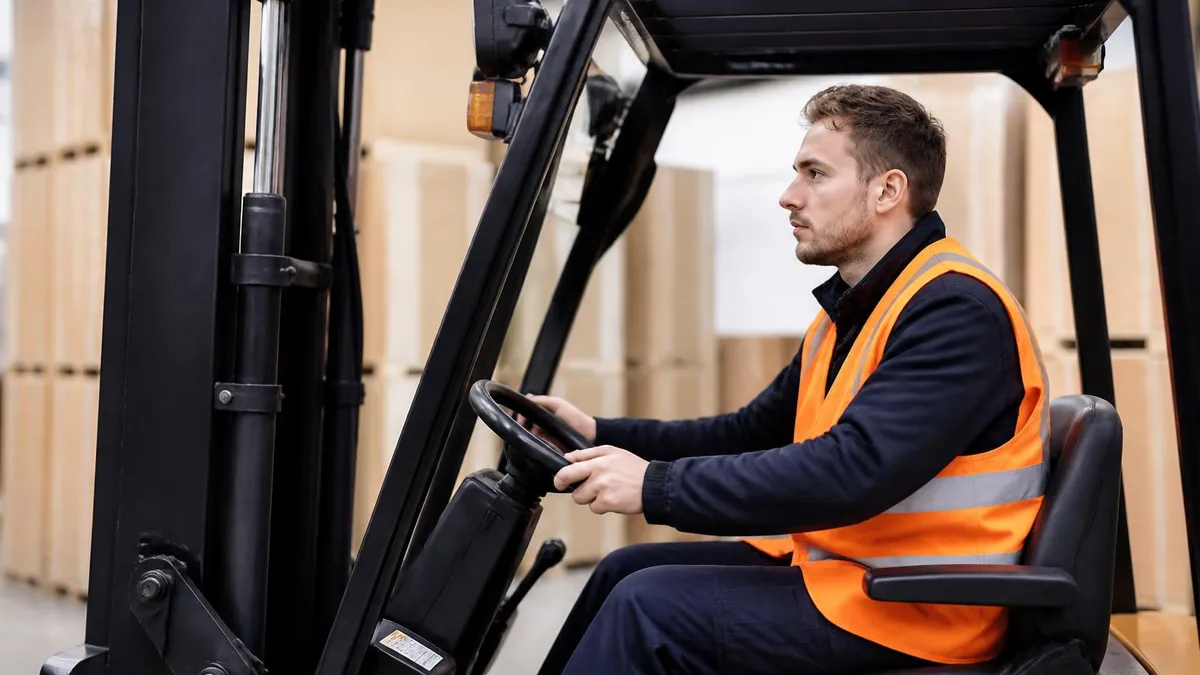
Forklift Models — Complete Guide (2026)

Forklift Tyne: Everything Australian TLILIC0003 Operators Need to Know

Forklift Refresher Course: Complete TLILIC0003 Training Guide for Australian Operators
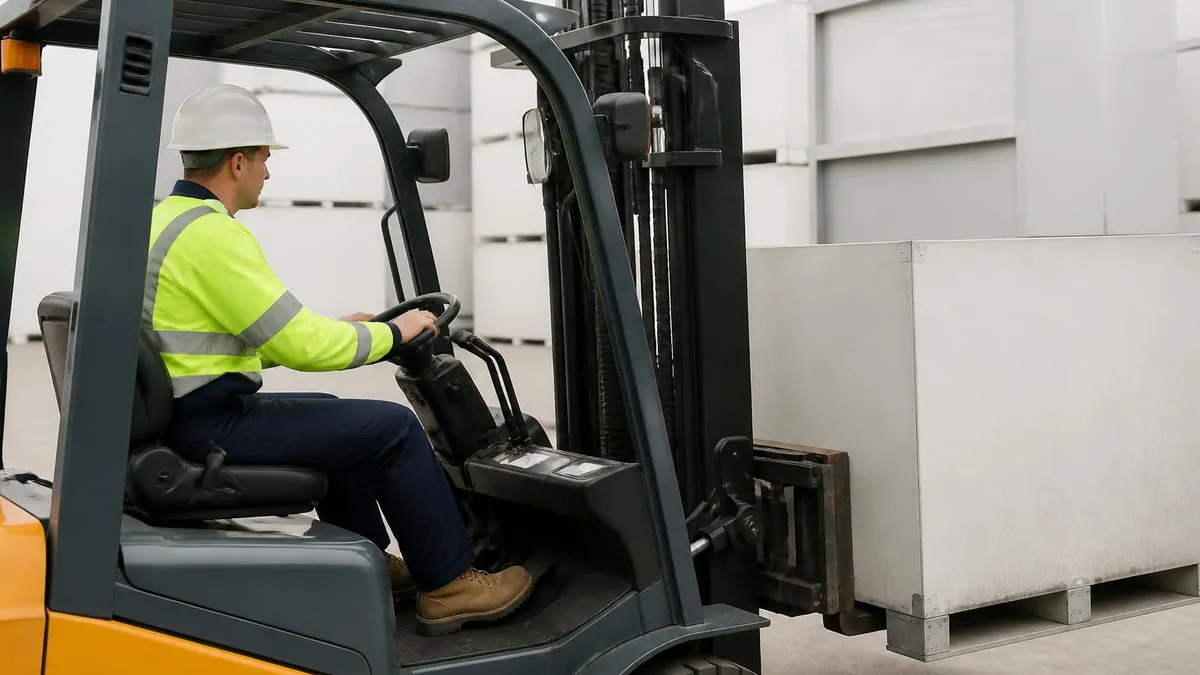
Different Forklift Types: A Complete Guide for Australian TLILIC0003 Operators

Forklift Test Questions and Answers PDF: Complete TLILIC0003 Practice Guide for Australian Operators
About the Author

Certified Crane Operator & Skilled Trades Exam Specialist
Ferris State UniversityRobert Martinez is a Journeyman Ironworker, NCCCO-certified crane operator, and forklift trainer with a Bachelor of Science in Construction Technology from Ferris State University. He has 21 years of ironworking, rigging, and heavy equipment operation experience across high-rise and industrial construction sites. Robert prepares candidates for crane operator, rigger, forklift, and skilled trades certification examinations.