
TLC Phone Number: How to Contact the NYC Taxi & Limousine Commission in 2026 September
Find the official TLC phone number, 311 routing, email, 🔎 and walk-in options to contact the NYC Taxi & Limousine Commission fast for licensing and FHV help.
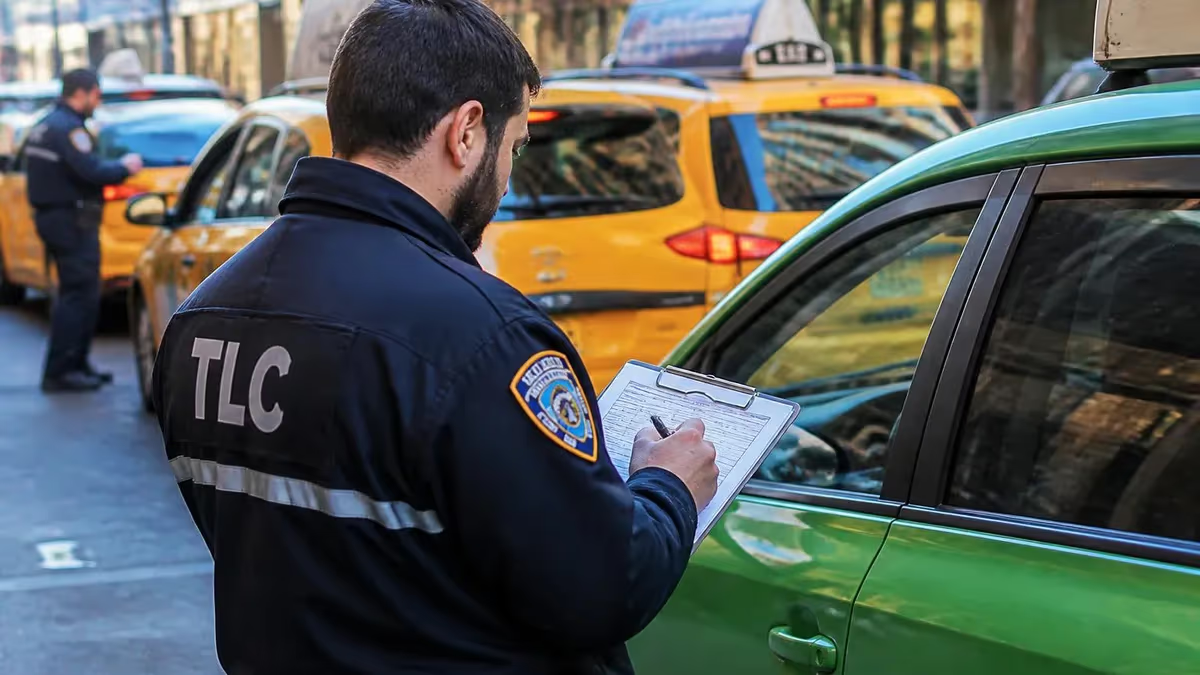
If you drive for Uber, Lyft, a yellow cab, a green boro taxi, or a black car in New York City, sooner or later you will need the right TLC phone number to resolve a licensing question, a vehicle inspection issue, or a summons. The New York City Taxi and Limousine Commission regulates more than 200,000 licensed drivers and tens of thousands of vehicles, so its contact channels are busy, layered, and easy to misuse if you call the wrong line at the wrong time of day.
The single most important thing to understand is that the TLC does not operate one universal hotline that answers every question. Instead, the agency routes the public through New York City's 311 system for general inquiries, reserves direct internal lines for specific units, and pushes most transactional work onto its online portals. Knowing which channel maps to your situation can save you hours of hold music and several wasted trips to Long Island City.
This guide walks through every legitimate way to reach the TLC in 2026, including the 311 phone routing, the licensing division, the FHV inspection facility, email addresses, and the in-person service center. We also explain when a phone call is the wrong move and an online account will solve your problem faster. If you are mid-application and need help, the tlc phone number routing through 311 is the cleanest starting point for status questions.
Calling at the right time matters more than people expect. The 311 system is staffed around the clock, but TLC-specific specialists who can speak to licensing or summons questions are generally available during standard business hours on weekdays. Calling early in the morning, before the lunch rush, tends to produce shorter waits than the late-afternoon crunch when drivers are trying to resolve issues before going on shift for the evening.
It also helps to have your paperwork ready before you dial. Your TLC license number, your FHV vehicle plate or VIN, any summons number, and the email tied to your TLC UP account will let a representative pull your record instantly. Without those identifiers, the agent often cannot verify your identity and the call ends in a referral back to the portal, which defeats the purpose of phoning in the first place.
Throughout this article we treat the phone number as one tool in a larger contact toolkit. For many tasks—renewals, fee payments, address changes, uploading documents—the website is genuinely faster and available 24/7. We will be honest about where calling helps and where it simply adds friction, so you can pick the channel that actually resolves your specific TLC issue with the least frustration.
Finally, beware of third-party sites that advertise a 'TLC customer service number' and then charge a fee to 'expedite' your case or sell you services the city provides for free. The TLC and 311 never charge to take your call. Anyone asking for a credit card simply to connect you to the Taxi and Limousine Commission is running a scam, and you should hang up and use only the official channels described below.
TLC Contact by the Numbers
Official TLC Contact Channels
Dial 311 inside NYC or 212-NEW-YORK (212-639-9675) from anywhere. This is the main TLC phone number route for licensing status, complaints, summons questions, and lost-property reports, with live agents available 24 hours a day.
The self-service account at the official nyc.gov TLC site handles renewals, fee payments, document uploads, and address changes. It is open 24/7 and resolves most transactional needs faster than any phone call ever could.
Specific TLC units accept email for non-urgent matters and document submissions. Responses typically take several business days, so email suits questions that are not time-sensitive but need a written paper trail for your records.
The Long Island City facility in Queens handles walk-in licensing help, inspections, and hearings. Appointments are strongly recommended, and bringing every required document prevents a wasted trip across the borough.
Passengers and drivers can file complaints, compliments, or service-quality reports through the city's online form. It feeds the same system as a 311 call but lets you attach details, dates, and a clear written record.
Deciding whether to call the TLC or use its website is the difference between a five-minute fix and a two-hour ordeal. As a rule, anything transactional—paying a fee, renewing, uploading a document, updating your address—belongs on the portal, where it processes instantly and gives you a confirmation number. Phone calls shine only when your situation requires a human judgment call, an explanation, or the release of information that the self-service system will not surface on its own.
Status checks are the classic gray area. If you submitted an application and the portal shows it as 'pending review,' calling 311 rarely speeds anything up; the agent reads the same status you already see. But if the portal shows a confusing error, a rejected document with no clear reason, or a status that has not moved for weeks beyond the published timeline, a phone call can get a specialist to look at the actual case notes and tell you what is blocking it.
Summons and hearing questions almost always justify a call or an in-person visit. Deadlines are strict, default judgments are expensive, and the consequences of guessing wrong are severe. When money and your license are on the line, the written portal language is often too generic, and you want a representative or a hearing clerk to confirm dates, options, and what evidence you can submit. Never let a summons response deadline pass while waiting on hold—file something first.
Document rejections frustrate drivers more than almost anything else. The portal might reject a defensive driving certificate, a medical clearance, or a proof-of-address file without explaining the exact flaw. A 311 call connected to a TLC licensing specialist can often clarify whether the problem is image quality, an expired date, a name mismatch, or a missing page, which lets you re-upload correctly the first time instead of cycling through repeated rejections for days.
If you are still early in the process and exploring requirements, the broader application walkthrough pairs well with this guide, because many first-time callers actually have requirement questions that the application instructions answer in full. Reading the eligibility, fingerprinting, and drug-test steps before you dial often makes the call unnecessary, saving you a place in the queue for someone with a genuine account problem that truly needs a live agent.
Language access is a real strength of the 311 route. The system offers interpretation in well over 180 languages at no cost, which matters enormously in a driver workforce as diverse as New York's. If English is not your strongest language, calling 311 and requesting an interpreter is frequently more reliable than struggling through dense portal text, and the interpreter stays on the line for the entire conversation with the TLC specialist.
Finally, think about timing and expectations. The portal never closes and never puts you on hold, so for anything it can do, it wins on speed. Reserve your phone energy for the genuinely human problems—appeals, unexplained holds, summons strategy, and identity verification snags—and you will spend far less of your life listening to hold music while still getting every issue resolved correctly and on time.
TLC Divisions, Email, and Walk-In Hours
The Licensing division handles new driver applications, renewals, vehicle licensing, and the issuance of FHV and medallion credentials. Most of its work has moved online through the TLC UP portal, but the division still fields questions routed through 311 for account holds, document rejections, and status clarifications that the self-service system cannot resolve automatically for an individual applicant who needs help.
When you reach a licensing specialist, have your TLC license number or application ID ready, along with the email tied to your account. The specialist can review your case notes, explain a pending status, and tell you precisely what document or step is missing. For brand-new applicants without a license number yet, your application confirmation number serves the same identifying purpose during the call you place.
Calling the TLC vs. Using the Online Portal
- +Live human can interpret confusing or unexplained account holds
- +Interpretation available in 180+ languages at no cost
- +311 line is staffed 24 hours a day, seven days a week
- +Specialists can read internal case notes you cannot see
- +Useful for summons, hearing, and appeal strategy questions
- +Creates a verbal record you can reference with a call ID
- −Hold times spike in late afternoon and near deadlines
- −Agents often just read the same status the portal shows
- −Cannot process payments as fast as the self-service portal
- −Identity verification fails without your license or app number
- −Transactional tasks are slower by phone than online
- −Third-party scam numbers pose as official TLC support
Before You Call the TLC Phone Number
- ✓Have your TLC license number or application ID ready to share.
- ✓Locate the email address tied to your TLC UP account.
- ✓Write down any summons number or hearing date involved.
- ✓Keep your FHV plate or vehicle VIN nearby if relevant.
- ✓Check the online portal first to confirm a call is needed.
- ✓Note the exact error message or rejection text you received.
- ✓Call early in the morning to avoid afternoon hold times.
- ✓Request a language interpreter at the start if you need one.
- ✓Have a pen ready to record the agent's name and call reference.
- ✓Avoid any third-party number that asks for a payment to connect.
- ✓Confirm the deadline you are working against before you dial.
- ✓Prepare a clear one-sentence summary of your specific issue.
Say 'TLC' clearly and ask for a licensing specialist
When you dial 311, state that your call is about the Taxi and Limousine Commission and name your exact topic—licensing, summons, or inspections. This routes you past general operators to the right specialist faster. Having your license number ready lets that specialist pull your record immediately and act on it.
Summons, inspection failures, and disputes are the situations where reaching the TLC by phone or in person genuinely matters, because the stakes are high and the clock is unforgiving. A TLC summons carries a response deadline, and missing it can trigger a default judgment that suspends or revokes your license and stacks on penalties. The moment you receive a summons, note the response date and decide whether you will admit, plead not guilty and request a hearing, or seek a settlement, then act well before the deadline.
Hearings for TLC summonses are handled through the city's administrative tribunal system rather than a courtroom. You can often appear remotely or submit a written defense, and a hearing clerk reachable through the 311 routing can confirm your options, your scheduled date, and what evidence the adjudicator will accept. Photographs, trip records, GPS logs, and witness statements all help, but only if they are organized and submitted within the window the tribunal allows for your specific case.
Inspection disputes follow a different track. If your FHV vehicle fails inspection for an item you believe was scored incorrectly, the inspection report is your starting evidence. You generally have a defined re-inspection window, and calling the vehicle-safety unit can clarify whether the failure was for a safety-critical defect or a paperwork issue. Correct the listed items, keep receipts for any repairs, and bring the original report so technicians can verify the fixes quickly at re-inspection.
Document-related holds on a license application or renewal create their own category of dispute. The portal may freeze your status pending a clearer copy of a certificate, a valid medical clearance, or a resolved name discrepancy. A licensing specialist can read the internal note explaining the hold, which the public-facing status almost never reveals. That single piece of information usually tells you exactly what to re-upload, ending a cycle of guesswork that can otherwise drag on for weeks.
Lost property is a frequently overlooked reason riders and drivers contact the TLC. If a passenger leaves an item in a licensed vehicle, the 311 route can take a lost-property report and connect the rider with the driver or base when the trip can be identified. Having the trip date, approximate time, pickup and drop-off locations, and any receipt or app record dramatically improves the odds that the item is traced and returned to its owner.
Throughout any dispute, documentation is your strongest ally. Keep a folder—physical or digital—with every TLC letter, summons, inspection report, email, and call reference you accumulate. When you phone in, write down the date, the agent's name, and what they told you. If a later representative contradicts that, your contemporaneous notes give you a factual record to point to, which carries real weight in an appeal or a follow-up conversation with a supervisor.
Above all, never ignore TLC correspondence hoping it resolves itself. The agency's enforcement processes are automated enough that silence is treated as non-compliance, and default outcomes are far harsher and more expensive than the original issue. A single well-prepared phone call or hearing appearance, made on time with your documents in hand, almost always produces a better result than letting a deadline lapse and fighting the consequences afterward.
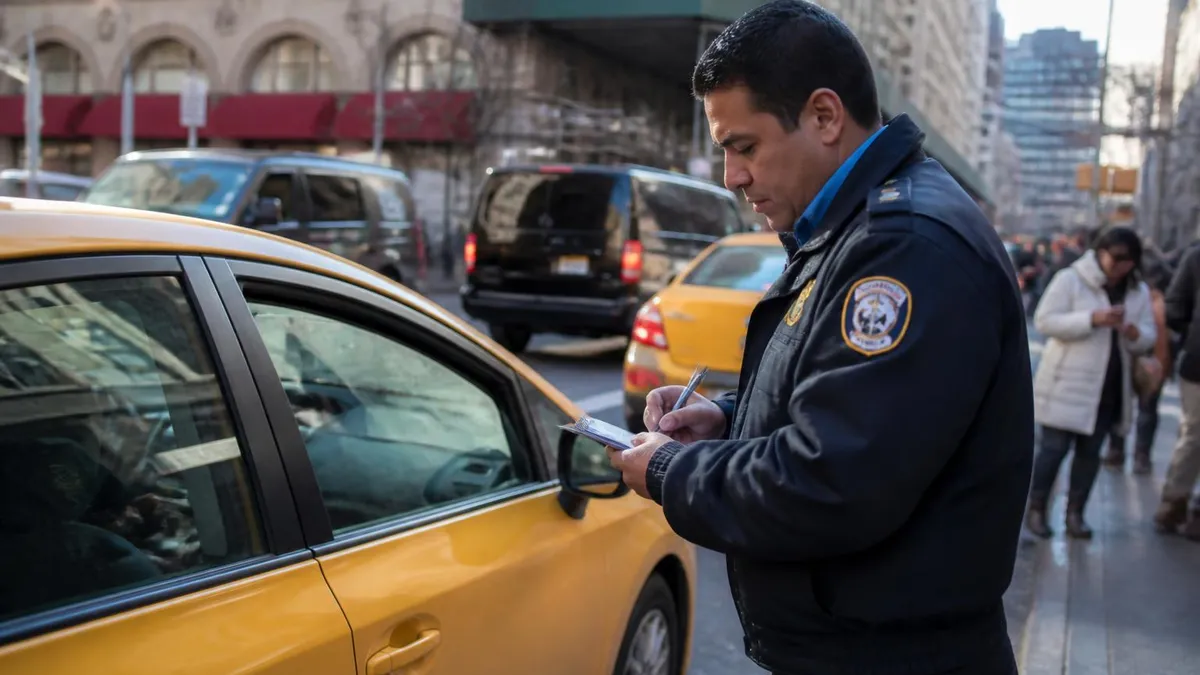
A TLC summons has a strict response deadline, and failing to respond can result in a default judgment, fines, and license suspension. If you cannot reach a representative before the date, file a plea or hearing request through the official channel anyway—do not let the deadline pass while waiting on hold.
Once you understand the channels, the next skill is using them efficiently so a single contact actually closes your issue. The biggest time-saver is matching the channel to the task before you ever reach out. Renewals, fee payments, and document uploads should always start on the portal; only escalate to a phone call when the portal throws an error or shows a hold it will not explain. Treating the phone as a last resort rather than a first instinct will dramatically shorten your total resolution time.
When a call is warranted, front-load your preparation. Before dialing 311, gather your TLC license number, the email on your account, any summons or plate number, and a one-sentence description of the problem. The faster the specialist can verify you and understand the issue, the faster they can act. Calls that start with the caller fumbling for identifiers tend to end in a referral back to the portal, which wastes the wait you just endured in the queue.
Time your calls strategically. The 311 line runs 24/7, but TLC-specific specialists are most available during weekday business hours, and the queue is shortest early in the morning before the day's volume builds. Late afternoon, when drivers scramble to fix issues before evening shifts, is the worst time. If your matter is not urgent, a 9 a.m. call on a Tuesday will almost always beat a 4 p.m. call on a Friday for both speed and specialist availability.
Keep a running log of every interaction. Note the date, the channel, the agent's name if given, any reference or confirmation number, and exactly what you were told. This habit costs seconds and pays off enormously if a later representative gives conflicting information or if you need to escalate. A clear timeline of your good-faith attempts to comply also strengthens your position in any hearing or appeal where diligence matters.
Lean on the portal's strengths between calls. Most status changes, document approvals, and payment confirmations appear in your TLC UP account before any human would proactively notify you. Checking the portal daily during an active application or dispute often answers your question without a call at all, and it lets you react immediately the moment a hold clears or a new document request appears in your account. If you need a refresher on requirements, the tlc phone number guidance lives alongside the full application steps.
Protect yourself from scams at every step. Only use 311, the official nyc.gov TLC pages, and the verified service-center address. Any website or caller demanding a credit-card payment merely to connect you to the TLC, or promising to 'expedite' your license for a fee, is not affiliated with the city. The TLC provides its services directly, and legitimate fees are paid only through official portals, never to a phone agent who called you unsolicited.
Finally, prepare for the underlying exams and requirements so you face fewer issues that require a call in the first place. Drivers who pass their knowledge tests cleanly, keep certifications current, and renew on time rarely need to contact the TLC except for routine matters. Building that competence up front—through study and practice tests—reduces rejected documents, failed inspections, and the licensing snags that drive most people to the phone to begin with.
Bringing it all together, the smartest approach to contacting the TLC is to think in terms of outcomes rather than channels. Ask yourself what result you actually need—a payment processed, a status explained, a summons answered, a document approved—and let that outcome dictate whether you open the portal, dial 311, send an email, or travel to Long Island City. This outcome-first mindset prevents the common mistake of phoning for something the website would have handled in two minutes flat.
For first-time drivers, the single best preparation is understanding the full lifecycle of your license before problems arise. Knowing when your defensive driving certificate expires, when your medical clearance lapses, and when your renewal window opens lets you act proactively through the portal instead of reactively through the phone. Most emergency calls to the TLC trace back to a deadline that crept up unnoticed, and a simple calendar reminder eliminates the majority of them entirely for an organized driver.
When you do call, professionalism and clarity get you further than frustration. Specialists handle hundreds of calls and respond best to callers who state their issue plainly, provide identifiers immediately, and ask focused questions. If the first agent cannot resolve your matter, politely ask whether a supervisor or a specific division can help, and record what you are told. Escalating calmly with a clear record is far more effective than venting at a representative who did not create your problem.
Documentation discipline is the through-line of every successful TLC interaction. Maintain one folder for all TLC matters—letters, summonses, inspection reports, certificates, emails, and call logs—and you will never scramble for a number while a specialist waits on the line. That same folder becomes invaluable if you ever face a hearing, because it lets you assemble a coherent timeline and evidence package quickly, instead of reconstructing events from memory under deadline pressure.
Remember that the portal and the phone are complements, not competitors. Use the portal for everything it can do, treat the phone as your channel for human judgment and unexplained holds, and reserve in-person visits for the rare task that truly requires it. Drivers who internalize this division of labor spend less time on hold, resolve issues faster, and avoid the default judgments and lapsed deadlines that cause the most expensive headaches in the licensing system.
As you build your TLC knowledge, pair this contact guidance with steady exam preparation. The practice tests linked throughout this article cover consumer protection, defensive driving, emergency procedures, environmental awareness, licensing, and navigation—exactly the competencies that keep your record clean and your license trouble-free. The fewer compliance problems you create, the fewer reasons you will ever have to memorize a TLC phone number, which is ultimately the best outcome of all for a busy professional driver.
Keep this guide bookmarked, save the official 311 route in your contacts, and verify any new contact information against the nyc.gov TLC site before trusting it. Phone numbers, hours, and division structures can change, and the official city pages are always the authoritative source. With the right channel, the right preparation, and a habit of acting before deadlines, contacting the TLC becomes a quick, predictable task rather than a recurring source of stress in your driving career.
TLC Questions and Answers

TLC Application Guide: How to Become a Licensed NYC For-Hire Driver

TLC License: NYC Requirements, Process, and How to Apply

TLC Drug Test NYC: LabCorp Appointments & Locations

TLC Renewal NYC: Complete 2026 Guide to Renewing Your Hack License and FHV Vehicle Registration
TLC Practice Test PDF (Free Printable 2026)
About the Author

Educational Psychologist & Academic Test Preparation Expert
Columbia University Teachers CollegeDr. Lisa Patel holds a Doctorate in Education from Columbia University Teachers College and has spent 17 years researching standardized test design and academic assessment. She has developed preparation programs for SAT, ACT, GRE, LSAT, UCAT, and numerous professional licensing exams, helping students of all backgrounds achieve their target scores.