

TBAS Practice Test
Updated November 2026Facts verified Oct 26, 2026 against U.S. Air Force Personnel Center (AFPC), Pilot Candidate Selection Method (PCSM) program
- The TBAS consists of nine sub-tests that measure psychomotor skills and cognitive aptitude.[1]
- The Test of Basic Aviation Skills (TBAS) is combined with AFOQT and flying hours into a Pilot Candidate Selection Method (PCSM) score on a scale of 1-99, with 99 the best possible score.[1]
- Pilot and RPA pilot applicants must attain a minimum PCSM score of 10, according to the Air Force Reserve Command Undergraduate Flying Training Guidebook (current as of February 2023).[2]
- Delivery: Computer test station with keypad, joysticks and foot pedals.[2]
- Eligibility: AFOQT must be completed at least two weeks before the TBAS.[1]
Numbers in brackets link to the official sources listed under Sources & last verified. Dates that have passed are removed automatically.
TBAS Exam at a Glance
| Item | Detail | Source · Verified |
|---|---|---|
| Number of questions | Nine computerized subtests[1] | 162wing.ang.af.mil · Oct 26, 2026 |
| Passing score | PCSM score scale 1-99 (99 = best)[1] | 162wing.ang.af.mil · Oct 26, 2026 |
| Passing score (Minimum PCSM for pilot and RPA pilot applicants) | Minimum PCSM score of 10[2] | airforce.com · Oct 25, 2026 |
| Delivery | Computer test station with keypad, joysticks and foot pedals[2] | airforce.com · Oct 25, 2026 |
| Eligibility | AFOQT must be completed at least two weeks before the TBAS[1] | 162wing.ang.af.mil · Oct 26, 2026 |
What changed for TBAS in 2026
- Oct 25, 2026: Passing score changed to PCSM score scale 1-99 (99 = best) (previously pcsm scale: 1-99).[1]
The test of basic aviation skills (tbas) evaluates cognitive and psychomotor attributes correlated with pilot training success. It includes directional orientation, horizontal tracking, airplane tracking, and multi-tasking measures. Try our AFOQT practice test. Practice with the free TBAS - Test of Basic Aviation Skills practice test on PracticeTestGeeks (7 questions with answer explanations).
Candidates can also sharpen their skills with our AFOQT practice test 2026, which includes hundreds of practice questions in the exact format and difficulty of the real exam.
Military candidates can build their skills and confidence with our AFOQT sample questions 2026, covering all sections tested in the official assessment.
Free TBAS - Test of Basic Aviation Skills Study Tools
Interactive TBAS - Test of Basic Aviation Skills resources on PracticeTestGeeks, free to start:
- TBAS - Test of Basic Aviation Skills flashcards — review key terms and concepts card by card
- TBAS - Test of Basic Aviation Skills study guide — topic-by-topic overview of what the exam covers
- TBAS - Test of Basic Aviation Skills cheat sheet — one-page printable summary for last-minute review
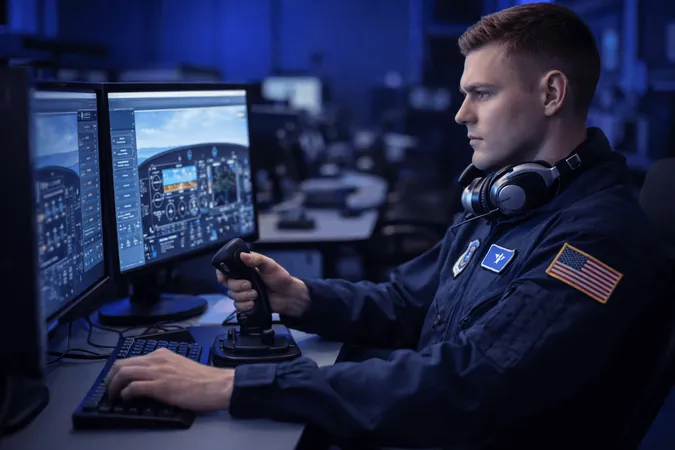
According to U.S. Air Force Personnel Center (AFPC), Pilot Candidate Selection Method (PCSM) program, “The TBAS consists of nine sub-tests that measure psychomotor skills and cognitive aptitude.”[1]
TBAS Practice Test Questions
Prepare for the TBAS - Test of Basic Aviation Skills exam with our free practice test modules. Each quiz covers key topics to help you pass on your first try.
TBAS Airplane Tracking
TBAS Exam Questions covering Airplane Tracking. Master TBAS Test concepts for certification prep.
TBAS Directional Orientation
Free TBAS Practice Test featuring Directional Orientation. Improve your TBAS Exam score with mock test prep.
TBAS Horizontal Tracking
TBAS Mock Exam on Horizontal Tracking. TBAS Study Guide questions to pass on your first try.
TBAS Instrument Comprehension
TBAS Test Prep for Instrument Comprehension. Practice TBAS Quiz questions and boost your score.
TBAS - Test of Basic Aviation Skills Audit...
TBAS Questions and Answers on - Test of Basic Aviation Skills Auditory Processing Speed. Free TBAS practice for exam readiness.
TBAS - Test of Basic Aviation Skills Cogni...
TBAS Mock Test covering - Test of Basic Aviation Skills Cognitive Task Management. Online TBAS Test practice with instant feedback.
TBAS - Test of Basic Aviation Skills Combi...
Free TBAS Quiz on - Test of Basic Aviation Skills Combined Tracking Coordination. TBAS Exam prep questions with detailed explanations.
TBAS - Test of Basic Aviation Skills Direc...
TBAS Practice Questions for - Test of Basic Aviation Skills Directional Orientation. Build confidence for your TBAS certification exam.
TBAS - Test of Basic Aviation Skills Emerg...
TBAS Test Online for - Test of Basic Aviation Skills Emergency Scenario Response. Free practice with instant results and feedback.
TBAS - Test of Basic Aviation Skills Horiz...
TBAS Study Material on - Test of Basic Aviation Skills Horizontal Tracking Control. Prepare effectively with real exam-style questions.
TBAS - Test of Basic Aviation Skills Multi...
Free TBAS Test covering - Test of Basic Aviation Skills Multitasking: Tracking and Listening. Practice and track your TBAS exam readiness.
Worked examples: how to reason through TBAS questions
These are practice questions written for this site, not questions from the real exam. Each explanation shows why the right answer is right and why the others are wrong.
Example 1
Question: During the Airplane Tracking Test, what is the primary objective?
- To maintain a specific altitude
- To keep the aircraft symbol centered on the moving target
- To monitor engine performance
- To perform navigation calculations
Answer: B. To keep the aircraft symbol centered on the moving target
Explanation:
The correct answer is to keep the aircraft symbol centered on the moving target. Airplane Tracking is a control task: the target keeps moving, and your job is to make small, steady corrections so the symbol stays on it.
Maintaining a specific altitude is wrong because the task is about following a target on screen, not holding a flight level. Monitoring engine performance is wrong because no engine gauges are involved. Performing navigation calculations is wrong because the task rewards hand control and attention, not arithmetic or route planning.
Rule to remember: tracking subtests measure how smoothly you keep a cursor or symbol on a moving target. Read the stem for the verb. If it says keep, follow or align, it is a control task, not a calculation or monitoring task.
Example 2
Question: What is the primary control input used to manipulate the tracking box in the Horizontal Tracking Control subtest of the TBAS?
- Joystick
- Mouse
- Rudder Pedals
- Keyboard
Answer: C. Rudder Pedals
Explanation:
The correct answer is rudder pedals. In the Horizontal Tracking Control subtest the tracking box moves left and right, and that movement is driven by your feet on the pedals, which makes it a test of foot and eye coordination.
Joystick is wrong because the joysticks are used for other tracking tasks, so choosing it mixes up which limb does which job. Mouse is wrong because the delivery described by the Air Force relies on a keypad, joysticks and foot pedals, not a mouse. Keyboard is wrong for a similar reason: the keypad is for responses, not for steering the box.
Rule to remember: learn which control belongs to each subtest. Horizontal movement by feet, other tracking by hands, and keep both independent.
Example 3
Question: A TBAS candidate observes that whenever they make a sudden, forceful joystick input to correct the 2D tracking target, they also unintentionally press one of the rudder pedals, briefly disturbing the horizontal tracking bar. This issue is best described as a deficiency in which psychomotor skill?
- Selective Attention
- Motor Overflow Control
- Response Orientation
- Visual Acuity
Answer: B. Motor Overflow Control
Explanation:
The correct answer is Motor Overflow Control. The candidate makes a forceful joystick input and a foot presses a pedal without intent, so effort in one limb spills into another. Being able to stop that spill, and use hands and feet independently, is what the question describes.
Selective Attention is wrong because the problem is not ignoring distractions; it is unwanted movement. Response Orientation is wrong because it concerns choosing the right direction or response, and the candidate is choosing correctly. Visual Acuity is wrong because the issue is physical coordination, not how well the candidate sees the display.
Rule to remember: if a movement in one limb causes an unintended movement in another, think overflow. Practise light, deliberate inputs and relax the muscles you are not using.
How to use these practice tests
Start by reading the official Air Force guidance on the TBAS so you know how the test is delivered and what the score means. Then use our sets to rehearse the ideas behind each subtest.
Begin with the tracking sets: Airplane Tracking and Horizontal Tracking. Focus on which control does what, because mixing up hands and feet is an easy mistake to make. Move on to Directional Orientation and Instrument Comprehension, where you read a picture and decide what the aircraft is doing.
Next, try the combined sets such as Combined Tracking and Coordination and Multitasking, Tracking and Listening. These build the habit of splitting attention without letting one task disturb another.
After each session, write down the questions you missed and the rule behind the right answer. Return to those notes before your next session rather than rereading everything.
Remember that the real test uses a keypad, joysticks and foot pedals. Reading questions cannot replace hands-on practice, so use any official practice material available to you. Schedule the AFOQT at least two weeks before the TBAS.
TBAS Exam Study Guide
Use this tabbed guide to understand the essentials of the tbas exam. From the tbas directional orientation test to scoring metrics, knowing the format is half the battle.
The TBAS test joystick setup may behave like an aircraft yoke (pull back to go up). Practice flight simulators with inverted Y-axis controls to build muscle memory for the airplane tracking section.
TBAS Score Interpretation
Understanding your Pilot Candidate Selection Method (PCSM) Score
| PCSM Score Range | Competitiveness | Selection Chance | Recommendation |
|---|---|---|---|
| 🏆 90 - 99 | Exceptional | Top Tier | Apply confidently |
| ✅ 70 - 89 | Strong | High | Good for rated boards |
| ⚖️ 40 - 69 | Average | Moderate | Improve AFOQT/Flight hours |
| ⚠️ 25 - 39 | Below Average | Low | Retake TBAS suggested |
| ❌ 1 - 24 | Not Competitive | Very Low | Must retake TBAS |
Your PCSM score is a combination of your tbas test performance, AFOQT pilot score, and logged flight hours. Adding flight hours (up to 60) can significantly boost your final score even after taking the exam.
The Air Force covers the cost of the TBAS exam for all approved candidates. Your primary investment is time spent on tbas test prep and travel to the testing location.
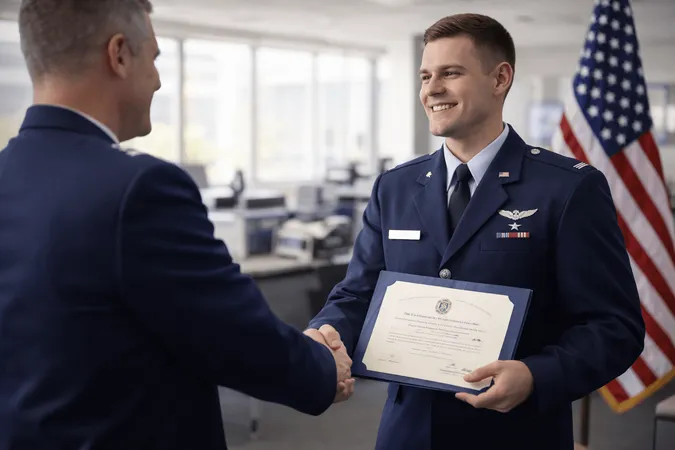
Air Force Pilot Career Paths
High TBAS scores open doors to various rated officer specialties.
Fighter PilotFly high-performance aircraft like the F-22 and F-35.
Requires top-tier PCSM scores and physical fitness.
Transport Pilot
Operate heavy lift aircraft like the C-17 and C-130 for global logistics missions.
RPA Pilot
Operate Remotely Piloted Aircraft like the Reaper. High demand for tech-savvy officers.
Bomber PilotFly strategic bombers like the B-2 and B-52.
Requires precision and endurance.
TBAS Test Day Checklist
- ✓Valid Photo ID (Military/Driver's License)
- ✓Candidate Checklist Form
- ✓Flight Logbook (if applicable)
- ✓Social Security Number
- ✓Current Transcript (optional)
- ✓Corrective Lenses (Glasses/Contacts)
- ✓Review Flashcards
- ✓Arrive 15 Minutes Early
Master the Air Force TBAS
Join thousands of pilot candidates who boosted their PCSM scores. Start your TBAS test prep today with our free practice questions and study guides.

Because the most recent tbas test score counts, only retake the exam if you have significantly improved your tbas test prep and are confident in a higher score.
TBAS: Pros and Cons
- +TBAS exam preparation strengthens your knowledge across all domains
- +Passing the exam proves competency to employers and clients
- +Study materials and practice tests are widely available
- +Exam-based credentials are portable across states and employers
- +Clear exam objectives help focus your study plan effectively
- −Exam anxiety can affect performance — practice tests help reduce it
- −Registration fees are non-refundable if you miss your test date
- −Limited retake opportunities may apply with waiting periods
- −Exam content updates periodically — use current study materials
- −Testing center availability may require advance scheduling
✈️ What does the TBAS practice test actually measure?
The Test of Basic Aviation Skills is a computerized psychomotor, spatial-ability and multi-tasking battery of nine subtests used by the Air Force PCSM Program Office to help select USAF pilot and RPA pilot candidates.
START TBAS PRACTICE TEST⏱️ How long does the real TBAS test take?
Plan on about 1 hour and 15 minutes. Time spent reading the on-screen subtest instructions is not penalized, so a slower reader is not disadvantaged before the timed portions begin.
START TBAS TEST PREP🔁 How many times can you take the TBAS test?
Candidates get 3 total TBAS administrations, with a minimum of 90 days required between attempts, so treat every sitting as one of only three real chances.
START TBAS PRACTICE🧮 What is a PCSM score and how is TBAS used in it?
TBAS results are combined with your AFOQT Pilot composite score (or EPQT for enlisted RPA applicants) and logged flying hours into a Pilot Candidate Selection Method score on a 1-99 scale; the exact weighting formula is not published.
START TBAS EXAM PREP🕹️ What is TBAS multitasking practice training for?
One TBAS subtest requires tracking a moving target while simultaneously responding to auditory cues, simulating how a pilot must fly the aircraft and monitor radio communications at the same time.
START TBAS MULTITASKING PRACTICE🛩️ Is there TBAS UAV practice for RPA pilot candidates?
Yes. Enlisted and officer candidates applying for Remotely Piloted Aircraft (RPA/UAV) pilot slots take the same TBAS battery; scores feed into their PCSM alongside the EPQT composite instead of the AFOQT Pilot score.
START TBAS UAV PRACTICE📋 What is the TBAS test structure?
The TBAS test structure is nine computerized subtests covering directional orientation, horizontal and airplane tracking, multi-tasking, and psychomotor coordination, taken back to back in one supervised session.
START TBAS TESTING🎯 What is TBAS practice direction test about?
The directional orientation subtest checks how quickly and accurately you can judge heading and orientation changes shown on screen, a skill directly tied to instrument scanning in flight.
START TBAS DIRECTIONAL PRACTICE📝 How does the AFOQT and TBAS practice fit together?
The AFOQT Pilot composite and the TBAS are separate tests taken at different steps, but both scores are required before AFPC can calculate a candidate’s PCSM; a strong TBAS score cannot offset a missing AFOQT score.
START AFOQT PRACTICE TEST📍 Where can you take the TBAS exam?
The TBAS is offered at more than 100 testing locations worldwide; contact your Military Personnel Flight (MPF) or recruiter to schedule, and expect your PCSM score online within 1-2 business days after AFPC receives your data.
START TBAS PRACTICE TESTOfficial Resources
- AFPC PCSM Program Office – TBAS Information: the official page describing what the TBAS covers, how long it takes, and test-day requirements straight from the Air Force office that administers it.
- AFPC PCSM Program Office – FAQ: official answers on retest limits, PCSM scoring, flying-hours credit, and how AFOQT/EPQT scores combine with your TBAS result.
- Air Force – Pilot Career Page: the official Air Force overview of the pilot career path, qualifications, and where TBAS and PCSM fit into officer selection.
Sample TBAS - Test of Basic Aviation Skills Practice Questions
Try these questions from our free TBAS - Test of Basic Aviation Skills practice tests. The correct answer and an explanation follow each question.
In a scenario simulating a TBAS auditory test, a candidate hears the following sequence: 'Alpha... 7... Bravo... 5... Kilo...'. The target numbers are 3, 5, and 9. When should the candidate react?
- A. Immediately after hearing 'Alpha'
- B. Immediately after hearing '7'
- C. Immediately after hearing '5'
- D. After the full sequence is complete
Answer: C. Immediately after hearing '5'
The instructions for this TBAS subtest require the candidate to respond as quickly as possible upon hearing a target stimulus. Since '5' is one of the designated target numbers, the correct action is to react immediately after it is announced.
Which of the following critical-phase scenarios most heavily relies on the fine psychomotor coordination and continuous control adjustment skills assessed by the TBAS Two-Dimensional (Airplane) Tracking test?
- A. Communicating a "Mayday" call to air traffic control
- B. Performing a pre-flight weight and balance calculation
- C. Identifying a system malfunction based on a single annunciator light
- D. Executing a missed approach in low visibility
Answer: D. Executing a missed approach in low visibility
A missed approach in low visibility requires the pilot to precisely fly the aircraft by reference to instruments, making continuous, fine adjustments to pitch and roll to follow a specific flight path. This task directly mirrors the challenge of the 2D tracking test, which requires constant, fine joystick inputs to keep a reticle on a moving target. [6, 7]
Your UAV is on a heading of 045° (Northeast). From your perspective in the UAV, the Southern target would be located generally...
- A. Ahead and to the right
- B. Behind and to the left
- C. Behind and to the right
- D. Ahead and to the left
Answer: C. Behind and to the right
Your heading is Northeast (045°). South is at 180°. The relative direction is 180° - 045° = 135° to your right. This places the Southern target behind you and to your right.
The common performance decline observed when a candidate transitions from single-task subtests (e.g., only tracking) to the combined multitasking subtests of the TBAS best illustrates which cognitive principle?
- A. Hick's Law of reaction time.
- B. The Stroop Effect of interference.
- C. The concept of a limited pool of attentional resources.
- D. The principle of motor skill automaticity.
Answer: C. The concept of a limited pool of attentional resources.
The drop in performance when tasks are combined demonstrates that individuals have a limited capacity for attention and cognitive processing. Multitasking requires these finite resources to be divided, which often leads to a decrease in performance on one or all tasks compared to when they are done in isolation.
Take the full TBAS - Test of Basic Aviation Skills practice test
TBAS Questions and Answers
Sources & last verified
- 162wing.ang.af.mil — number of questions, passing score, eligibility (official source). “The TBAS consists of nine sub-tests that measure psychomotor skills and cognitive aptitude.” Verified Oct 26, 2026 · source checked Oct 26, 2026.
- airforce.com — passing score, delivery (official source). “Pilot and RPA pilot applicants must attain the minimum required PCSM score of 10.” Verified Oct 25, 2026.
How we verify: editorial & fact-checking policy. Report an error: contact us.
How this page was made: written with AI tools and published by Nathan Beja, founder of Practice Test Geeks, who is responsible for its content. Exam facts are checked against the official sources listed below. Not reviewed by a subject-matter expert. Editorial policy
Sources & references
Exam facts on this page (fees, format, dates, passing scores) are checked against these official sources; the date is our last check. Editorial policy
- 162wing.ang.af.mil — Eligibility, exam format, passing score · verified Oct 2026
- airforce.com — Test delivery, passing score · verified Oct 2026