

TCCC Practice Test
Updated for October 2026Tactical Combat Casualty Care (TCCC) is the foundation of battlefield life-saving techniques and the standard for first responders operating in combat zones. The TCCC certification has become increasingly vital for military personnel, emergency medical technicians, and law enforcement professionals who might face high-risk environments. The focus keyword "Tactical Combat Casualty Care" represents not just a certification but a comprehensive framework for saving lives when seconds count and resources are limited. The Tactical Combat Casualty Care exam assesses a candidate’s ability to manage trauma under fire, provide efficient field care, and prepare for evacuation in hostile environments.
Students preparing for standardized admissions tests should also practice with our CCC practice test 2026, covering the quantitative, verbal, and analytical sections tested in the real exam.
TCCC Practice Test Questions
Prepare for the TCCC - Tactical Combat Casualty Care exam with our free practice test modules. Each quiz covers key topics to help you pass on your first try.
TCCC Care Under Fire
TCCC Exam Questions covering Care Under Fire. Master TCCC Test concepts for certification prep.
TCCC Documentation & Reporting
Free TCCC Practice Test featuring Documentation & Reporting. Improve your TCCC Exam score with mock test prep.
TCCC Tactical Evacuation Care
TCCC Mock Exam on Tactical Evacuation Care. TCCC Study Guide questions to pass on your first try.
TCCC Tactical Field Care
TCCC Test Prep for Tactical Field Care. Practice TCCC Quiz questions and boost your score.
TCCC Anatomy & Physiology Fundamentals
TCCC Questions and Answers on Anatomy & Physiology Fundamentals. Free TCCC practice for exam readiness.
TCCC Communication & Patient Education
TCCC Mock Test covering Communication & Patient Education. Online TCCC Test practice with instant feedback.
TCCC Hemorrhage Control & Wound Management
Free TCCC Quiz on Hemorrhage Control & Wound Management. TCCC Exam prep questions with detailed explanations.
TCCC Patient Assessment & Clinical Evaluation
TCCC Practice Questions for Patient Assessment & Clinical Evaluation. Build confidence for your TCCC certification exam.
TCCC Patient Safety & Infection Control
TCCC Test Online for Patient Safety & Infection Control. Free practice with instant results and feedback.
TCCC Pharmacology & Medication Management
TCCC Study Material on Pharmacology & Medication Management. Prepare effectively with real exam-style questions.
TCCC Professional Development & Standards
Free TCCC Test covering Professional Development & Standards. Practice and track your TCCC exam readiness.
Key Takeaways
Free TCCC Practice Test Online
-
Tactical Combat Casualty Care certification is designed for professionals in high-risk environments.
-
The exam focuses on life-saving techniques such as bleeding control and airway management.
-
TCCC is structured around three core phases: Care Under Fire, Tactical Field Care, and Tactical Evacuation.
-
Hands-on training is a crucial part of certification preparation.
-
Understanding battlefield triage and evacuation procedures is essential.
-
The exam may include written and practical components.
-
Certification improves readiness and can be a prerequisite for various tactical roles.

TCCC Curriculum Overview
The TCCC curriculum is structured around three core phases that reflect real-time combat situations. These phases include Care Under Fire, Tactical Field Care, and Tactical Evacuation Care. Each phase focuses on specific interventions and skills appropriate to the level of threat and availability of resources.
Care Under Fire emphasizes the importance of returning fire while managing life-threatening bleeding with tourniquets. Tactical Field Care allows for more detailed assessment and treatment, such as establishing airways and treating chest injuries. Tactical Evacuation Care prepares the casualty for safe and effective transport while continuing medical intervention. Mastery of these three phases ensures that the responder can apply the right techniques at the right time.
- ✓Review the official TCCC exam content outline
- ✓Take a diagnostic practice test to identify weak areas
- ✓Create a study schedule (4-8 weeks recommended)
- ✓Focus on your weakest domains first
- ✓Complete at least 3 full-length practice exams
- ✓Review all incorrect answers with detailed explanations
- ✓Take a final practice test 1 week before exam day
Life-Saving Interventions
One of the core elements of Tactical Combat Casualty Care is the application of life-saving interventions in hostile environments. This includes the rapid application of tourniquets, chest seals, needle decompression, and airway management. Each of these procedures is designed to address the most common preventable causes of death in combat, including massive hemorrhage, tension pneumothorax, and airway obstruction.
Candidates must understand not only how to perform these interventions but also when to apply them based on the tactical situation and casualty’s condition. The ability to perform under pressure is critical to the TCCC mission, making scenario-based training and muscle memory vital parts of exam preparation.
Practical Exam Preparation
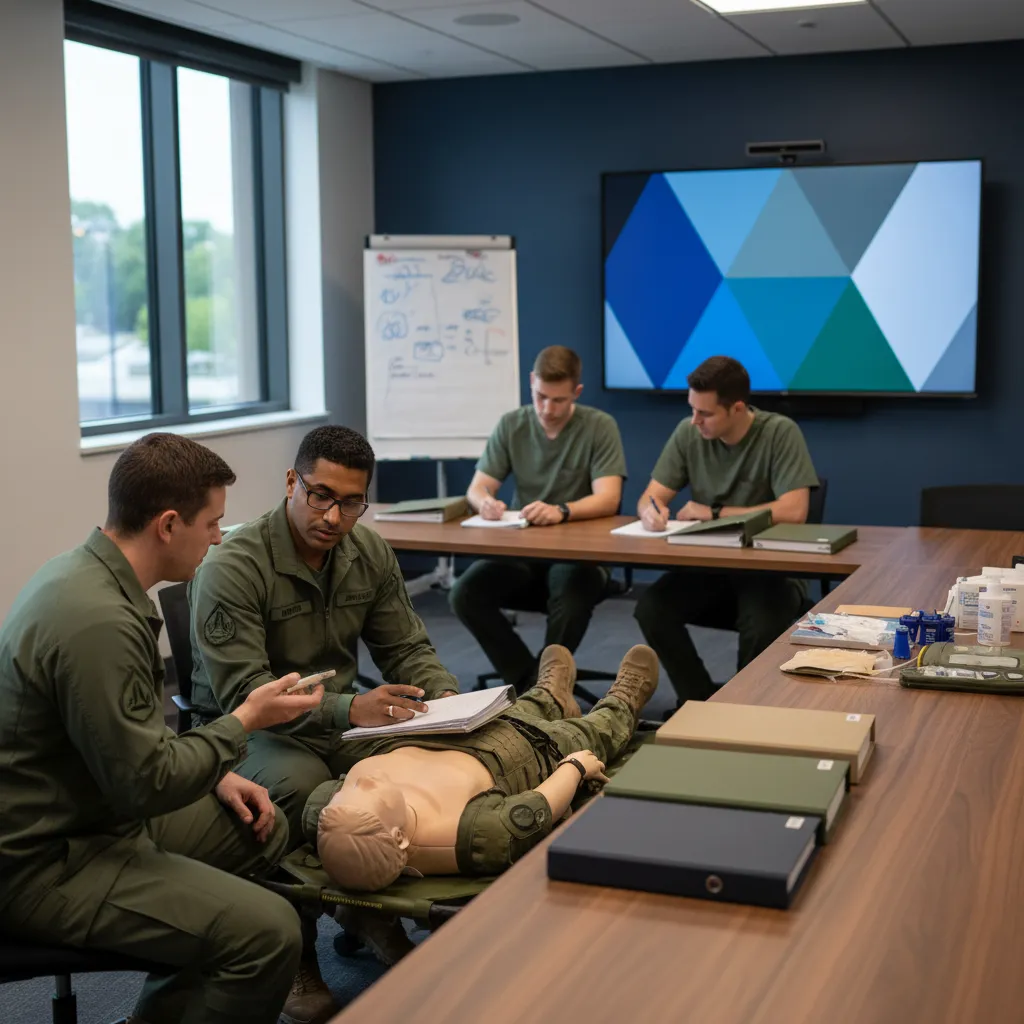
TCCC certification exams often include a practical component where candidates are evaluated on their hands-on skills. This may involve simulated combat scenarios where candidates are expected to respond under pressure while managing casualties.
To prepare, candidates should focus on repetitive drills, practice with actual equipment, and participate in group exercises that mimic real-world conditions. Learning to manage multiple casualties, apply trauma care in low-light conditions, and communicate effectively during high-stress situations are all part of the practical preparation.
Familiarity with personal protective equipment, tactical gear, and casualty movement techniques also enhances readiness for the exam.
Written Exam Insights
In addition to the practical skills test, the Tactical Combat Casualty Care exam often includes a written assessment. This portion evaluates the candidate's understanding of the guidelines, protocols, and theoretical knowledge supporting field care practices.
The written exam typically covers topics such as combat physiology, triage methodology, injury patterns in combat zones, and decision-making under fire. A strong understanding of the Joint Trauma System Clinical Practice Guidelines (CPGs) is crucial.
To prepare for this section, candidates should study current TCCC guidelines, review tactical medical case studies, and practice with sample multiple-choice questions that mirror the structure of the exam.
Importance of Continuing Education
Tactical Combat Casualty Care is not a one-time qualification. As battlefield medicine evolves and new technologies become available, TCCC protocols are continuously updated.
Certified professionals are encouraged to participate in continuing education and refresher courses to maintain their skills and certification validity. This ensures that responders are equipped with the latest knowledge and best practices to handle new challenges in combat medicine.
Staying current with TCCC updates not only enhances operational effectiveness but also prepares candidates for recertification exams and career advancement in tactical medical roles.
Career Opportunities with TCCC Certification
Obtaining a TCCC certification can open doors to various career opportunities within military, law enforcement, emergency medical services, and private security sectors.
Professionals with this certification are often preferred for assignments in combat zones, disaster response teams, and tactical support units. TCCC knowledge also enhances the resume of any first responder, showing a commitment to excellence in trauma care and operational readiness.
For those seeking specialized roles such as SWAT medics, combat lifesavers, or overseas contractors, TCCC certification is frequently a required qualification.

Conclusion
Tactical Combat Casualty Care (TCCC) certification is an essential credential for anyone involved in high-risk operational environments where trauma care can mean the difference between life and death. By mastering the key phases of Care Under Fire, Tactical Field Care, and Tactical Evacuation, candidates are equipped to make rapid, informed decisions under extreme stress.
The TCCC exam combines practical skill assessments with theoretical knowledge, ensuring that certified individuals are well-rounded and mission-ready. Regular practice, scenario-based training, and a deep understanding of combat medical procedures are crucial for success.
Achieving TCCC certification not only prepares individuals for battlefield and tactical emergencies but also enhances their professional credibility and opens up new career pathways in the tactical medicine field. For those committed to excellence in trauma care, Tactical Combat Casualty Care is a benchmark of professional competence and readiness.
- +Industry-recognized credential boosts your resume
- +Higher earning potential (10-20% salary increase on average)
- +Demonstrates commitment to professional development
- +Opens doors to advanced career opportunities
- −Exam preparation requires significant time investment (4-8 weeks)
- −Certification fees can be $100-$400+
- −May require continuing education to maintain
- −Some employers may not require certification
Sample TCCC - Tactical Combat Casualty Care Practice Questions
Try these questions from our free TCCC - Tactical Combat Casualty Care practice tests. The correct answer and an explanation follow each question.
What is the primary objective of Tactical Combat Casualty Care certification?
- A. To validate professional competence in tactical combat casualty care
- B. To fulfill a government mandate
- C. To replace formal education requirements
- D. To provide tax benefits to employers
Answer: A. To validate professional competence in tactical combat casualty care
The Tactical Combat Casualty Care certification validates that professionals have demonstrated competence and knowledge in their field.
What is the focus during Tactical Field Care?
- A. Suppress enemy fire
- B. Begin full trauma assessment
- C. Evacuate the area
- D. Abandon equipment
Answer: B. Begin full trauma assessment
During Tactical Field Care, the focus shifts to beginning a full trauma assessment and providing comprehensive medical treatment. This phase occurs once the casualty is moved to a relatively safer area where the immediate threat of hostile fire has been mitigated. Rescuers can then systematically address all injuries, stabilize the patient, and prepare for evacuation.
What is the main goal of Tactical Evacuation Care?
- A. Initiate combat
- B. Complete mission tasking
- C. Provide advanced medical care during transport
- D. Ignore casualty until safe
Answer: C. Provide advanced medical care during transport
The main goal of Tactical Evacuation Care (TACEVAC) is to provide advanced medical care during transport to a higher level of definitive care. This phase involves continuing and escalating treatments initiated in Tactical Field Care, monitoring the casualty's condition, and performing additional interventions as needed while en route. The aim is to maintain stability and optimize the casualty's chances of survival until they reach a medical facility.
A casualty has severe hemorrhage from a wound in the inguinal (groin) area. Which device is most appropriate per TCCC guidelines?
- A. Standard limb tourniquet applied around the waist
- B. Pressure dressing with wound packing alone
- C. Junctional Emergency Treatment Tool (JETT) or Combat Ready Clamp (CRoC)
- D. Improvised circumferential compression bandage
Answer: C. Junctional Emergency Treatment Tool (JETT) or Combat Ready Clamp (CRoC)
Junctional hemorrhage control devices such as the JETT or CRoC are specifically designed for groin, axillary, and neck wounds where standard limb tourniquets cannot be applied.
Take the full TCCC - Tactical Combat Casualty Care practice test
(TCCC) Tactical Combat Casualty Care Questions and Answers
About the Author

Certified Professional Development Expert & Niche Certification Advisor
University of Pennsylvania Graduate School of EducationDr. Alexandra Kim holds a PhD in Professional Studies from the University of Pennsylvania and is a Certified Professional in Learning and Performance (CPLP) and Certified Professional in Talent Development (CPTD). With 17 years of corporate training and professional certification advisory experience, she helps professionals navigate specialized, emerging, and cross-industry certification programs.
Join the Discussion
Connect with other students preparing for this exam. Share tips, ask questions, and get advice from people who have been there.
View discussion (8 replies)