
Kevin Foley State Trooper: The Viral Texas A&M Sideline Moment and the Real Job Behind the Badge
Kevin Foley state trooper explained: 🔎 the viral Texas A&M sideline moment, what state troopers really do, salary, and how to start a trooper career.

The phrase kevin foley state trooper started circulating online after a now-famous sideline moment at a Texas A&M football game, where a uniformed lawman standing guard became an unexpected internet character. Fans noticed him, clipped him, captioned him, and turned a routine security detail into a viral talking point. But behind the meme sits a serious profession, and the curiosity that brings people here is the same curiosity that makes them ask what a real state trooper texas a assignment actually involves day to day.
This article unpacks both halves of the story. First, the cultural moment: how a state trooper standing on a college sideline became a recognizable face, why crowds latched onto him, and how the name Kevin Foley got attached to the imagery that spread across social platforms. Second, and more usefully, what the job genuinely demands. Most people searching this topic walk away wanting to know how someone becomes the calm, sharp-eyed figure in the campaign hat who never flinches when the stadium erupts around him.
State troopers are sworn law enforcement officers employed at the state level rather than by a city or county. They patrol highways, investigate crashes, enforce traffic and criminal law, provide dignitary protection, and yes, occasionally pull security duty at high-profile events like SEC football games. The Texas Department of Public Safety, which fields the troopers many fans associate with College Station, is one of the largest such agencies in the United States, and its visibility at major events is entirely by design.
That visibility is exactly why a single trooper can go viral. A stadium holds tens of thousands of cameras, and a composed officer in a sharp uniform reads as iconic on camera. The Kevin Foley clips tapped into a long-running fascination with the trooper image, the same fascination that fuels Halloween costumes, video-game characters, and endless online jokes about being pulled over. The person becomes a symbol, and the symbol invites questions about the real career underneath the uniform.
If you arrived expecting only gossip about a viral guy, you will get the full picture here, but you will also get something more durable: an honest, detailed look at the state trooper profession across Texas, Florida, Illinois, the Carolinas, Arizona, and Arkansas. We cover what troopers earn, what the academy is like, the daily realities of patrol, and the steps a serious candidate takes to put on the uniform that made the moment famous in the first place.
By the end, you will understand the meme and the badge behind it. You will know why a Texas A&M sideline produced one of the most shared law-enforcement images of the season, and you will know whether the career that image represents might actually be a fit for you. We keep the tone clear and grounded, mixing the fun internet context with practical, accurate information that holds up well beyond the brief news cycle that created the initial buzz.
Kevin Foley State Trooper Story by the Numbers
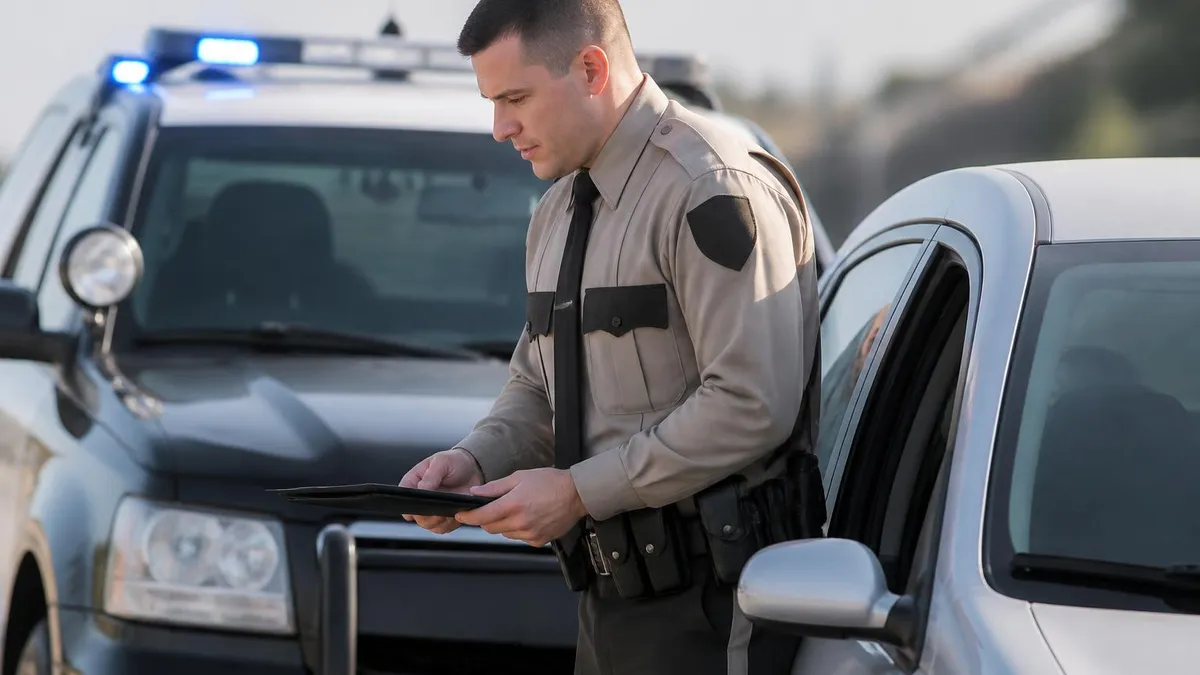
The Viral Texas A&M Sideline Moment Explained
A nationally televised Texas A&M home game at Kyle Field, with troopers on security detail along the sideline, gave millions of viewers a clear, repeated look at a single composed officer in uniform throughout the broadcast.
Fans clipped, screenshotted, and captioned the trooper across social platforms within hours. Memes, reaction videos, and jokes about his stoic presence pushed the kevin foley state trooper name into trending searches almost overnight.
The campaign hat, pressed uniform, and unflappable posture matched a long-standing pop-culture archetype, which is why the clip resonated so widely and why curiosity quickly turned toward the real job behind it.
Behind the meme is a working state trooper doing exactly what the role demands: maintaining order, protecting people, and staying alert in a chaotic crowd environment without ever becoming the spectacle himself.
Strip away the viral packaging and you find a job far more demanding than a sideline cameo suggests. A texas state trooper, like counterparts in every state, is a fully sworn peace officer with statewide jurisdiction. That means the authority to enforce both traffic and criminal law anywhere within the state, not just on the interstate. The highway patrol image is accurate but incomplete; troopers also work crash reconstruction, narcotics interdiction, commercial vehicle inspection, executive protection, and emergency response during hurricanes, floods, and civil disturbances.
On a typical patrol shift, a trooper spends hours covering long stretches of road, running traffic enforcement, responding to collisions, and assisting stranded motorists. The work is unpredictable by nature. A quiet rural highway can turn into a high-stakes pursuit or a fatal crash scene in minutes, and the trooper is frequently the first and only officer on scene for many miles. That isolation is one reason the training emphasizes decision-making, de-escalation, and self-reliance so heavily throughout.
Event security, the duty that made the Kevin Foley moment possible, is a smaller but visible slice of the job. State agencies routinely assign troopers to large public gatherings because of their training, professionalism, and recognizable presence. Standing on a football sideline for hours requires the same situational awareness a trooper uses on the road: scanning the crowd, watching for threats, and staying ready to act while appearing perfectly calm. The composure that looked like a meme was actually the skill on full display.
Investigative work rounds out the role. Many troopers move into specialized units handling drug interdiction, criminal investigation, or vehicle theft. Others become instructors, K-9 handlers, pilots, or members of tactical teams. The career ladder is genuinely deep, and the agency rewards officers who pursue additional certifications and demonstrate sound judgment under pressure. For readers comparing agencies, a quick look at how a state trooper salary structure rewards seniority and specialization is genuinely eye-opening.
Geography shapes the experience too. A florida state trooper deals with hurricane evacuations and dense tourist corridors, while an arizona state trooper patrols vast desert highways with extreme heat and long response distances. An illinois state trooper navigates heavy interstate freight traffic around Chicago, and a carolina state trooper balances mountain roads, coastal storms, and growing metro sprawl. The badge is similar; the daily challenges vary enormously by state and region.
What unites all of them is accountability. Troopers operate with significant authority and significant scrutiny. Body cameras, dashcams, and public attention mean every stop is potentially recorded and reviewed. The profession increasingly emphasizes constitutional policing, clear communication, and documented decision-making. The viral clip is a reminder that troopers are always visible, and the best officers treat every interaction as if a camera is rolling, because more often than not, one truly is.
So while fans enjoyed the spectacle of a stone-faced trooper on national television, the underlying reality is a layered, high-responsibility career. Understanding that gap between meme and mission is the first step for anyone who finds themselves intrigued enough to ask whether they could do the job themselves rather than just laugh at the clip, share it once, and scroll past it forever.
Texas State Trooper Pay and How Other States Compare
A texas state trooper is paid on a structured DPS schedule that rises steadily with years of service. Starting trooper salaries are competitive within the region, and the agency provides annual step increases, fully paid academy training, and a strong benefits package including state retirement. Texas also offers assignment incentives, bilingual pay, and overtime opportunities tied to special events and large-scale operations across the state.
Because Texas DPS is so large, advancement paths are abundant and varied. Troopers can move into the Texas Rangers, criminal investigations, highway patrol leadership, or specialized tactical units. The combination of paid training, no state income tax, and a deep promotional ladder makes the Texas trooper role one of the more financially attractive entry points into state law enforcement anywhere in the country today.
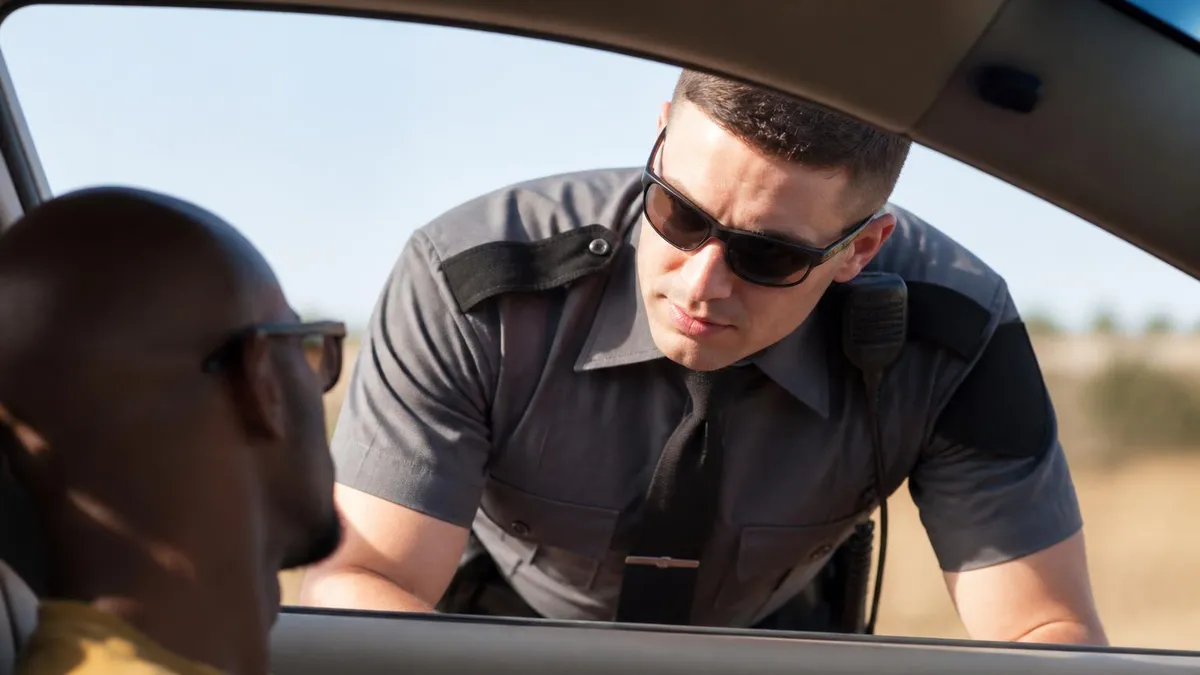
Is Becoming a State Trooper Worth It?
- +Stable government employment with strong pension and retirement benefits
- +Paid academy training so you earn while you learn the job
- +Clear promotional ladder into investigations, K-9, aviation, and command
- +Statewide jurisdiction and varied work that rarely feels repetitive
- +Respected, visible role with real community impact and authority
- +Competitive pay in many states, especially with overtime and incentives
- −Demanding, residential academy that strains family and personal life
- −Shift work including nights, weekends, holidays, and on-call duty
- −Genuine physical danger from traffic stops, crashes, and pursuits
- −Long solo patrols with backup potentially many miles away
- −Constant public scrutiny with every action recorded and reviewed
- −Frequent relocation to assigned posts, sometimes far from home
Pros and Cons at a Glance
| Pros | Cons |
|---|---|
| Stable government employment with strong pension and retirement benefits | Demanding, residential academy that strains family and personal life |
| Paid academy training so you earn while you learn the job | Shift work including nights, weekends, holidays, and on-call duty |
| Statewide jurisdiction and varied work that rarely feels repetitive | Genuine physical danger from traffic stops, crashes, and pursuits |
| Respected, visible role with real community impact and authority | Long solo patrols with backup potentially many miles away |
| Competitive pay in many states, especially with overtime and incentives | Constant public scrutiny with every action recorded and reviewed |
Steps to Become a State Trooper
- ✓Confirm you meet minimum age, usually 21 by appointment date
- ✓Hold a valid driver's license with a clean driving record
- ✓Earn a high school diploma or GED, plus any required college credits
- ✓Pass a thorough background investigation and credit review
- ✓Complete the written entrance exam and cognitive testing
- ✓Pass the physical fitness test with push-ups, sit-ups, and a timed run
- ✓Clear the medical exam, vision, and hearing standards
- ✓Succeed in the oral board interview and assessment center
- ✓Pass the polygraph and psychological evaluation screenings
- ✓Graduate the residential state trooper academy and field training
Your driving record matters as much as your fitness
Many strong candidates are filtered out not by the physical test but by their driving and credit history. Agencies treat repeated violations, at-fault crashes, or unresolved debts as red flags for a job built on roadway authority and public trust. Clean up both well before you apply.
The state trooper academy is where the calm sideline presence everyone saw in the Kevin Foley clips is actually manufactured. Most state academies are residential, lasting anywhere from roughly twenty-six weeks to nearly a year depending on the agency. Recruits live on site or report daily under paramilitary discipline, and the schedule is deliberately grueling. The point is not just to teach law and procedure; it is to forge officers who stay composed when everything around them is loud, fast, and uncertain.
Academics fill a large portion of the day. Recruits study state criminal codes, traffic statutes, constitutional law, search and seizure, use-of-force policy, and report writing. Exams are frequent and the passing bar is high, because a trooper who misunderstands the law can cost the agency a case or a lawsuit. This is precisely the material practice quizzes target, and candidates who arrive already familiar with legal concepts find the classroom load far more manageable than those starting completely cold.
Physical training runs parallel to academics throughout. Daily conditioning, defensive tactics, arrest control, and firearms qualification build the readiness troopers need on the road. Recruits also spend extensive time on the Emergency Vehicle Operations Course, learning pursuit driving, precision maneuvers, and crash avoidance at speed. Many recruits report that the driving and firearms components are simultaneously the most demanding and the most rewarding parts of the entire academy experience overall.
Scenario-based training ties it all together. Instructors stage traffic stops, domestic disturbances, crash scenes, and high-risk encounters so recruits practice judgment under stress before they ever face it for real. These role-plays are intentionally chaotic, and they are graded. A recruit who freezes, over-escalates, or fails to communicate clearly gets immediate feedback. Over weeks of repetition, the composure that looks effortless on a stadium sideline becomes genuine, reliable muscle memory.
After graduation, the learning continues through a field training program. New troopers ride with experienced officers for weeks or months, applying academy lessons to live calls under close supervision. Field training officers evaluate everything from radio discipline to courtroom-ready documentation. Only after clearing this probationary phase does a trooper patrol solo, and even then the agency continues mandatory in-service training every year to keep skills and legal knowledge fully current.
Attrition is real. Academies routinely lose recruits to injury, academic failure, or voluntary withdrawal once the intensity sets in. Agencies would rather a candidate quit in week ten than make a catastrophic mistake in year two, so the pressure is intentional. Candidates who prepare physically, financially, and academically before arriving give themselves the best chance of finishing, and they are the ones standing tall in the uniform when the cameras eventually find them.
Understanding this pipeline reframes the viral moment entirely. The trooper who became a meme did not stumble into that poise; he earned it through months of structured pressure designed to produce exactly that result. For anyone genuinely considering the path, respecting the difficulty of the academy is the first real sign you are taking the job, and not just the joke, seriously enough to succeed.
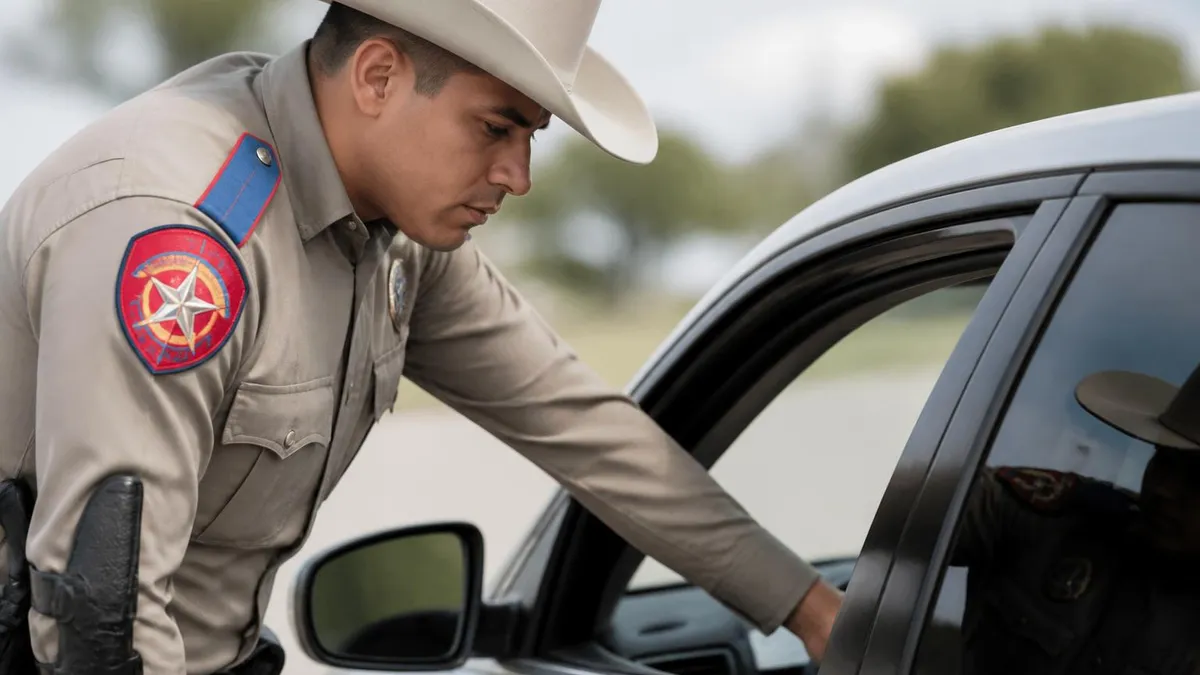
State agencies often recruit in defined cycles tied to academy class start dates rather than hiring year-round. Miss a window and you may wait six months or more for the next opening. Check your target agency's recruiting page regularly and have your documents ready so a missed deadline never ends your candidacy before it begins.
It helps to understand how a single trooper can become a national talking point, because it reveals something true about the profession. State troopers are intentionally visible. Their uniforms, vehicles, and posture are all designed to project authority and reassurance, which is exactly why they are stationed at high-profile events. The same design that deters trouble in a crowd also makes a trooper instantly photogenic, and in the smartphone era, photogenic plus stoic equals viral almost every single time.
The texas a&m state trooper phenomenon also rides on a deep well of pop culture. Troopers appear in films, country songs, video games, and decades of highway-patrol television. Audiences already carry a mental template of the campaign-hat lawman, so when a real one matches that template perfectly on a stadium sideline, recognition is instant. The meme did not invent the archetype; it simply found a flawless real-world example and amplified it to millions over a single weekend.
There is a practical lesson here for aspiring troopers about conduct in public. Because every trooper is potentially on camera at all times, professionalism is not optional polish; it is core job performance. The officers who go viral for the right reasons, like composure or kindness, reflect well on the entire agency, while a single bad moment can spread just as fast. Modern academies now explicitly train recruits to assume they are always being recorded, and to behave accordingly.
For fans who came purely for the meme, it is worth separating the person from the persona. Online culture loves to attach names, backstories, and jokes to anyone who trends, and not all of it is accurate. The responsible takeaway is to enjoy the moment without harassing a working officer or spreading unverified claims. The trooper was simply doing a job, and the viral attention was an accident of camera angles and crowd energy, not a planned performance.
If the clip sparked genuine interest in the career, channel that energy into research. Read your state agency's recruiting requirements, attend a ride-along if offered, and talk to working troopers about the realities of shift work and relocation. Curiosity sparked by a meme is a perfectly valid starting point, but a serious decision requires real information about pay, danger, lifestyle, and the long residential academy that stands squarely between you and that uniform.
Finally, recognize how much the broader trooper system connects beyond any one viral face. Each state organizes its officers into districts, troops, and posts, and understanding that structure helps you target your application intelligently. Reviewing how a carolina state trooper system is organized into regional troops, for example, clarifies where vacancies tend to open and how assignments are distributed across the state's geography over time.
The bottom line is that a fun internet moment opened a door to a substantial profession. The trooper everyone watched represents thousands of officers doing demanding, often dangerous work far from any camera. Whether you stay for the laughs or stay to learn how to join them, you now understand both the spectacle and the substance behind the kevin foley state trooper story that brought you here in the first place.
If the viral moment nudged you toward actually pursuing the badge, the smartest first move is structured preparation rather than scattered cramming. Begin with the written entrance exam, because it is the earliest hard gate and the one candidates most often underestimate. These tests typically measure reading comprehension, basic math, logical reasoning, situational judgment, and memory recall. Working through realistic practice questions weeks in advance lets you find weak spots while there is still time to fix them, and it removes the surprise factor on test day.
Build a study schedule you can actually sustain. Two focused hours a day across six to eight weeks beats a frantic all-nighter before the exam. Rotate between subject areas so no single topic goes stale, and track your scores so you can watch improvement and stay motivated. Treat situational-judgment questions with special care; there is rarely one obvious answer, and agencies are evaluating how you weigh safety, law, and public trust against each other under realistic pressure.
Do not neglect the physical test while you study. Start a conditioning program early that targets the exact events your agency uses, commonly push-ups, sit-ups, and a timed mile-and-a-half run. Fitness gains take weeks to materialize, so beginning two or three months out is far wiser than panicking the week before. Arriving at the academy already in strong shape also protects you from the injuries that wash out so many otherwise-qualified recruits during the demanding early weeks.
Prepare your paperwork and your past with equal seriousness. Gather identification, transcripts, driving records, and references early, and review your own history honestly. Resolve outstanding debts, fix correctable issues on your record, and be ready to explain anything you cannot change. Background investigators value candor; a disclosed mistake is survivable, while a discovered lie almost never is. Practicing honest, concise answers about your history will also serve you well in the oral board interview.
Rehearse the interview and polygraph mindset before you face them. Oral boards reward calm, structured answers that show judgment and self-awareness, so practice speaking about why you want the job and how you handle stress and conflict. For the polygraph and psychological screening, the winning strategy is simple consistency and full honesty across every stage of the process, because investigators cross-check your statements and inconsistency is the fastest route to disqualification.
Use quality practice resources and use them deliberately. Realistic question banks, full-length timed simulations, and downloadable study materials build both knowledge and exam stamina. Reviewing a texas a&m state trooper style practice set can sharpen your timing and confidence before the real thing. Take quizzes under timed conditions, review every miss, and re-test until the material feels automatic rather than merely familiar to you.
Finally, keep your motivation grounded in reality, not the meme. The viral clip may have brought you here, but the career rewards people who genuinely want to serve, protect, and stay disciplined through years of demanding work. If, after honest research, the lifestyle and the mission still appeal to you, then prepare relentlessly, apply on time, and give yourself every advantage. The poise you admired on that sideline is learnable, and disciplined preparation is exactly how it begins.
Sample State Trooper Practice Questions
Try these questions from our free State Trooper practice tests. The correct answer and an explanation follow each question.
A trooper encounters a suspect who provides a false name. Upon learning the real identity, the trooper discovers an outstanding arrest warrant. What happens to any evidence found?
- A. It is automatically suppressed under the exclusionary rule
- B. It may be admissible under the attenuation doctrine (Utah v. Strieff)
- C. It is only admissible if found before the false name was given
- D. It must be reviewed by a judge before any use
Answer: B. It may be admissible under the attenuation doctrine (Utah v. Strieff)
In Utah v. Strieff (2016), the Supreme Court held that evidence found after discovering a valid pre-existing arrest warrant can be admissible under the attenuation doctrine.
A driver stopped for speeding hands you a law enforcement badge and ID, claiming to be an off-duty detective from a different agency. How should you proceed?
- A. Extend professional courtesy and release them without further action
- B. Verify the credentials through dispatch and exercise your own discretion on enforcement
- C. Detain the individual until their agency confirms their identity
- D. Issue the citation regardless since the stop occurred in your jurisdiction
Answer: B. Verify the credentials through dispatch and exercise your own discretion on enforcement
Verifying credentials through dispatch confirms authenticity and allows you to make an informed, lawful discretionary decision.
A trooper receives a BOLO for a vehicle last seen heading eastbound. The map shows the road ends at a T-intersection 2 miles ahead. What should the trooper anticipate?
- A. The vehicle must have turned north or south at the T-intersection
- B. The vehicle continued east through an unmarked road
- C. The vehicle stopped exactly at the intersection
- D. The vehicle turned around and is now westbound
Answer: A. The vehicle must have turned north or south at the T-intersection
A T-intersection with no through road forces drivers to turn either left or right, limiting the suspect's possible routes to north or south.
During a traffic stop, the driver produces a suspended license. The trooper should:
- A. Issue a verbal warning and allow the driver to continue
- B. Allow a licensed passenger to drive the vehicle and cite the driver
- C. Immediately tow the vehicle regardless of circumstances
- D. Only cite the driver if they have prior suspensions on record
Answer: B. Allow a licensed passenger to drive the vehicle and cite the driver
Allowing a licensed and sober occupant to drive the vehicle is a common lawful resolution that minimizes unnecessary costs to the driver while enforcing the law.
State Trooper Questions and Answers
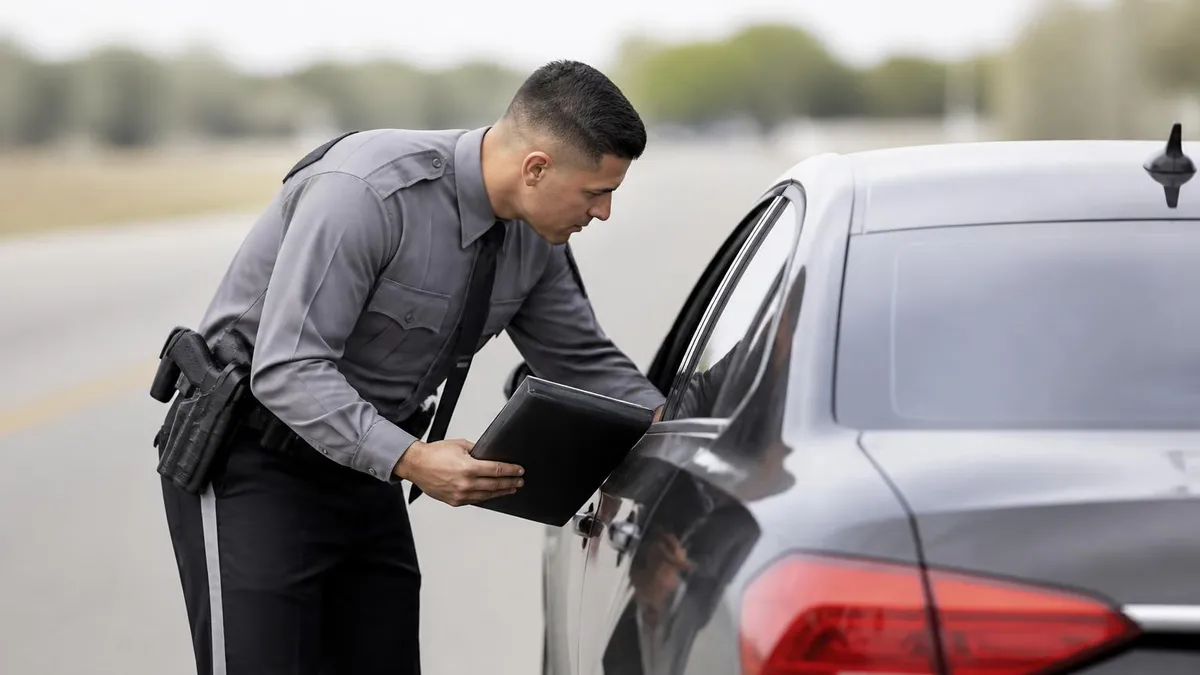
State Trooper Hat: Stetson Style, History, and Why Troopers Wear It
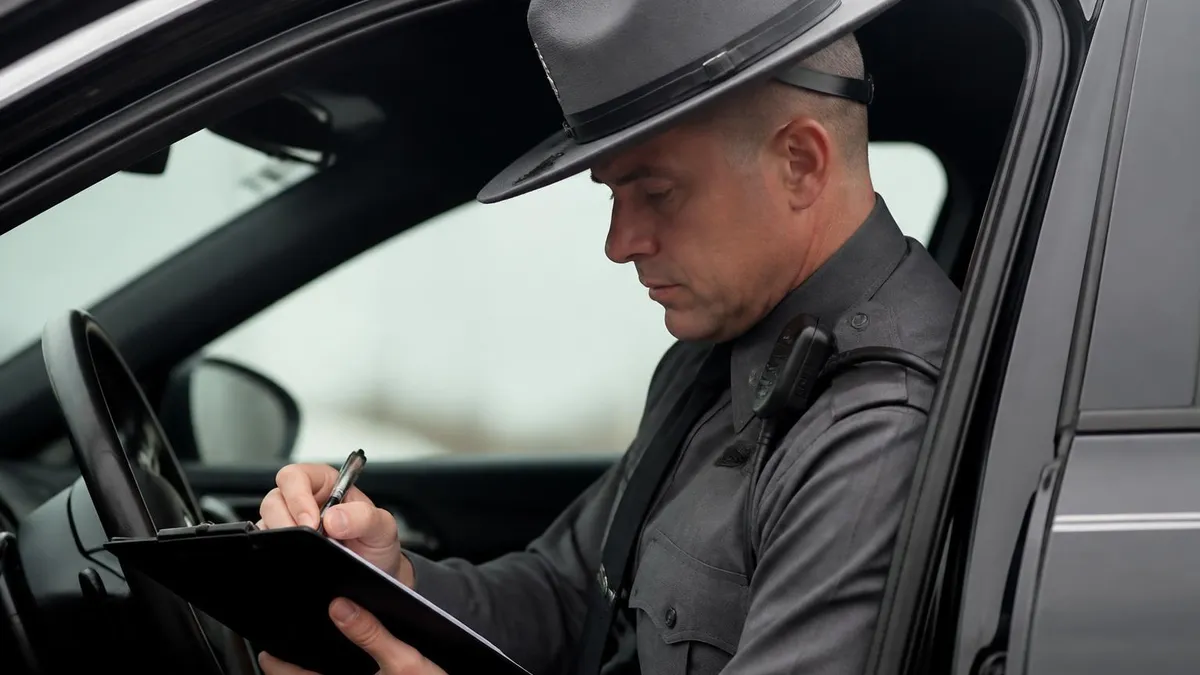
State Trooper Meme: The Viral 'State Trooper at Texas A&M' Explained

Inside the State Police Troop System: Directory and Structure Explained

State Trooper Practice Test PDF 2026
State Trooper Office Locations: Find Your Nearest Highway Patrol Headquarters
About the Author

Educational Psychologist & Academic Test Preparation Expert
Columbia University Teachers CollegeDr. Lisa Patel holds a Doctorate in Education from Columbia University Teachers College and has spent 17 years researching standardized test design and academic assessment. She has developed preparation programs for SAT, ACT, GRE, LSAT, UCAT, and numerous professional licensing exams, helping students of all backgrounds achieve their target scores.
Join the Discussion
Connect with other students preparing for this exam. Share tips, ask questions, and get advice from people who have been there.
View discussion (3 replies)