
Assess Using Stars: How Star Testing Works, What Scores Mean, and How to Prepare
🎯 Assess using STARs: a computer-adaptive test of about 20 minutes with no pass/fail score and instant results. Learn star testing, score reports and prep.
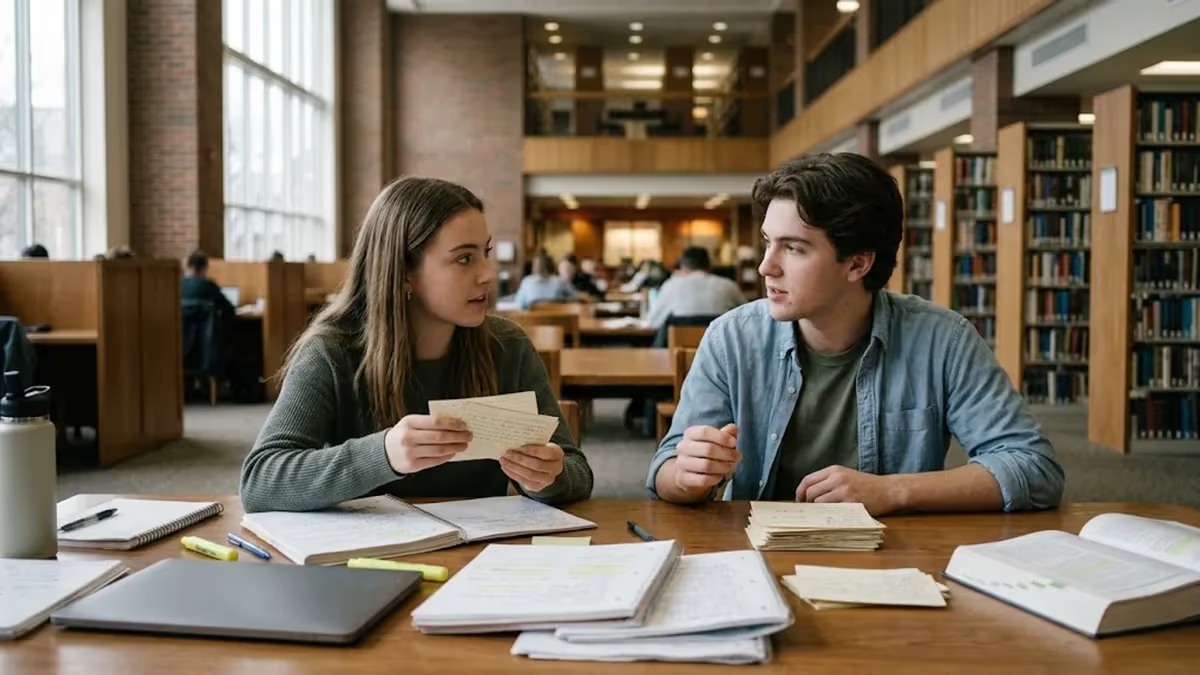
Assess using STARs means giving a student a Renaissance Star Assessment, a computer-adaptive test in reading, math, or early literacy that adjusts each question to the child's answers. Most sessions last about 20 minutes, there is no pass or fail score, and teachers see results instantly, then use them to group students and track growth.
Assess Using Stars: Key Facts (Updated October 2026)
| Fact | Details | Source |
|---|---|---|
| Test type | Computer-adaptive Star Assessments for reading, math, and early literacy | Renaissance |
| Typical length | About 20 minutes per computer-adaptive assessment | Renaissance |
| Star Early Literacy | About 15 minutes | Renaissance |
| Star Math | About 20–30 minutes | Renaissance |
| Star Phonics | Screener 2–3 minutes per learner; diagnostic 2–5 minutes per student | Renaissance |
| Passing score | None. Star Assessments are not pass/fail tests, so there is no universal passing score | Renaissance |
| Score release | Schools receive results instantly after testing | Renaissance |
| Default screening windows | Fall 8/15–9/30, Winter 12/1–1/15, Spring 4/15–5/31 | Renaissance Support |
Searchers use this phrase in several ways, so here is the plain version. This page covers the Renaissance Star Assessments used in US classrooms, not entertainment shows. For a grade-specific view, start with the starlight assessment grade 6 hub, then come back here to learn how a sitting runs, what the scores mean, and how teachers turn a short computer test into daily instructional decisions.
A star tester, in everyday school language, is the student sitting at a laptop or tablet, and star testing is the process of giving those short sessions throughout the year. Each sitting produces a scaled score, a percentile rank, and a grade equivalent. Because the software picks every question based on the previous answer, no two children see the same sequence of items, which keeps the result an honest snapshot of one learner.
Why do schools bother? Speed and precision. A traditional paper test might take an hour and return results weeks later, while a computer-adaptive session takes about 20 minutes and reports instantly. Teachers can screen an entire class in a single block, identify who needs extra support, and set learning goals the same day. Because there is no passing threshold, the numbers describe where a child is on a continuum rather than labeling the child a success or a failure.
Some readers arrive after searching for names like stars of private practice, which is a television cast question rather than a school one. If you meant the classroom assessment, you are in the right place, and the linked guide covers the testing side in more depth. The sections below stay focused on how Renaissance builds, delivers, and reports the assessment so you can make sense of any score report that comes home.
The article is organized to answer practical questions in order. First comes a quick numbers snapshot and the sequence of a typical session. Next, we explain how the reading engine behaves, compare the Reading, Math, and Early Literacy versions, and weigh the strengths and limits of adaptive testing. Later sections decode score reports, show how teachers and parents can use the data, and finish with preparation tips that are honest about what preparation can and cannot change.
One expectation is worth setting early: you cannot cram for a Star test in the traditional sense. Because the assessment measures current skill, the best preparation is steady reading, practice with math facts, a good night's sleep, and familiarity with the testing interface. That is good news for anxious students, since a calm, rested child who reads regularly will almost always outperform a child who spent the week memorizing sample questions. We cover realistic prep steps near the end.
How Long Is a Star Assessment? The Numbers
What Happens in a Star Test Session?
Teacher sets up the session
Student logs in and hears directions
Adaptive questions begin
Test ends automatically
Results appear for the teacher
How Does the Star Reading Assessment Work?
The Star Reading assessment starts each student at an estimated level and then adjusts after every response. A correct answer nudges the next item harder, and a miss makes the following item easier. Within about 20 minutes, the software homes in on the difficulty at which the student succeeds roughly half the time. That precision is why a short test can place a second grader and an eighth grader on the same scale.
Students answer on a laptop, Chromebook, or tablet, with headphones when audio items appear. Questions sample vocabulary, comprehension of short passages, and foundational skills, depending on the grade. There is no way to skip ahead or go back, and a student cannot fail the test. Teachers usually read a short script, confirm the child is logged into the correct Star product, and then step away so the child works independently without hints.
Immediately after the final item, the program calculates a scaled score, a percentile rank, and a grade equivalent. Teachers see the numbers the moment the sitting ends, which means a Monday morning screening can inform Monday afternoon grouping. Reports also flag students who fall below benchmark and point to the instructional focus areas most likely to help. Because results arrive instantly, schools can retest a child who was clearly distracted rather than waiting weeks for a corrected report.
Many families search phrases that sound similar and land on the wrong thing. Someone looking for dancing with the stars results dancing with the stars results wants entertainment news, while our related guide on Renaissance testing explains the school assessment in detail. If you are unsure which page you need, check the title for the words Renaissance, Star Reading, or Star Math, and you will know you are in the right place.
Star Math follows the same adaptive logic but covers numbers, operations, algebra, geometry, and measurement, typically taking 20 to 30 minutes. Star Early Literacy, built for the youngest learners, runs closer to 15 minutes and uses picture and audio prompts so children who cannot yet read can still show what they know. Each product reports on its own scale, so a Math score should never be compared directly with a Reading score.
Screening windows give the calendar a rhythm. Renaissance's default district windows run in the fall from August 15 through September 30, in the winter from December 1 through January 15, and in the spring from April 15 through May 31. Districts may adjust them, so confirm dates with your school. Three sittings a year give teachers a baseline, a midpoint check, and an end-of-year result that together show whether a student is growing faster or slower than peers.
Progress monitoring is the other half of the system. Between screenings, teachers can assign shorter, more frequent checks for students who are receiving intervention, then plot those points against a goal line. A flat trend after several weeks signals that the current support is not working and should change. Families who want booster-style practice can open the Six Star Test Booster page through results show dancing with the stars, which groups practice by skill.
What Is Star Testing for Reading, Math, and Early Literacy?
Star Reading is the version most people mean when they talk about star testing, and a typical sitting lasts about 20 minutes. The engine mixes vocabulary, comprehension, and foundational skills items, then narrows in on the level where the student answers about half correctly. Results appear immediately, giving teachers a scaled score, percentile rank, and grade equivalent they can use for grouping, intervention planning, and reading growth conversations with families.
For students, the experience feels like a quiet computer activity rather than an exam. There is no timer on each question, no penalty for a wrong answer, and no running score on screen. Teachers remind children to read carefully, try their best, and select an answer rather than leaving blanks. Headphones may be needed for audio items, so check equipment before the whole class logs in and the session begins.
Is Star Testing a Good Way to Assess Students?
- +Sessions are short, usually about 20 minutes, so little instructional time is lost.
- +Results are available instantly, which lets teachers act the same day.
- +Adaptive questions give an accurate level for both struggling and advanced students.
- +Three screening windows per year show growth, not just a single snapshot.
- +There is no pass or fail label, which lowers pressure for many children.
- +The same scale spans grades, so scores can be compared across the school year.
- −A single sitting can be distorted by fatigue, hunger, or a noisy room.
- −Grade equivalents are easy for families to misread as placement recommendations.
- −Students without reliable devices or headphones may be at a disadvantage.
- −The test samples skills broadly and cannot replace classroom observation or writing samples.
- −Young children may need adult help to log in, which affects scoring consistency.
- −Scores on different Star products cannot be compared directly with each other.
What Should You Check Before a Star Test?
- ✓Confirm the testing window dates with your school.
- ✓Make sure the student knows their login credentials.
- ✓Test headphones and audio before the session starts.
- ✓Charge the laptop or tablet fully.
- ✓Choose a quiet, low-distraction spot for testing.
- ✓Make sure the student has eaten breakfast.
- ✓Encourage a full night of sleep the day before.
- ✓Remind the student that Star is not pass or fail.
- ✓Tell the student to read each question carefully.
- ✓Plan a retest if the sitting was clearly disrupted.
No pass or fail: scores describe where a child is
Star Assessments are not pass/fail tests, so there is no universal passing score. Each result places the student on a scale and compares them with peers, so a low number is a starting point for support, not a failing grade.
What Do Star Scores Mean on a Report?
A Star report starts with the scaled score, the most precise number on the page. It places the student on one continuous scale that stretches across all grades, so a score that rises from fall to winter represents real growth regardless of grade level. Scaled scores are product specific. A Reading score and a Math score are measured on different scales, so a child may sit high on one and low on the other without contradiction.
The percentile rank compares the student with a national norm group of same-grade peers. A percentile rank of 62 means the student scored higher than 62 percent of students in that group. Teachers often use the 25th percentile as a rough line for extra attention and the 50th as the middle of the pack, but each district sets its own rules, so check the benchmark definitions your school uses.
Grade equivalent is the most misunderstood number. A third grader with a grade equivalent of 5.2 is not ready for fifth-grade work. It means the student scored the way an average fifth grader in the second month of the school year would score on this same test. Scaled scores and percentile ranks give a far more reliable picture, especially when you compare them across several testing windows.
Student growth percentile adds the movement dimension. It compares a child's change between two testing windows with the change of academic peers who began at a similar score. A growth percentile of 70 means the student grew more than 70 percent of similar students. A child below benchmark who shows high growth is closing the gap, which is the most encouraging pattern a parent can see on a report.
Benchmark categories translate numbers into action. Renaissance reports commonly sort students into at or above benchmark, on watch, intervention, and urgent intervention. Those labels guide how teachers allocate small-group time, tutoring, and progress monitoring. They are not diagnoses. A child labeled on watch in the fall may reach benchmark by spring with regular reading, targeted skill practice, and a classroom teacher who adjusts instruction based on the data.
People searching for star reading test examples usually want to see an item. A typical vocabulary question shows a sentence such as, The hikers were exhausted after the long climb, then asks which word means the same as exhausted, with choices like tired, angry, hungry, and curious. Other items ask students to complete a sentence or answer a question about a short passage. Seeing a star reader test example in advance reduces surprise without giving away answers.
For students who want structured practice after reviewing a score, the blue star test booster guide organizes drills by skill and difficulty. Use it to practice the kinds of skills a report flags, such as vocabulary in context or multi-step word problems, rather than to chase a higher number. Real score gains come from skill growth over weeks, and a booster works best as a weekly routine of short, focused sessions.
Renaissance's default windows are Fall 8/15–9/30, Winter 12/1–1/15, and Spring 4/15–5/31, but districts can customize them. Confirm your school's exact dates before planning any test-day routines.
Which Star Score Should Parents Look at First?
The most precise measure of skill on a continuous scale. Compare it across fall, winter, and spring to see real growth, but only within the same Star product, since Reading and Math use different scales.
Shows how the student compares with same-grade peers nationally. A rank of 50 is the middle of the group. Use it for context, and remember that a single number never tells the full story.
Compares a student's change across windows with similar peers. High growth for a student below benchmark is a very positive sign, showing the gap is closing even when the raw score still looks low.
Turns the score into an action label, such as on watch or intervention. Ask the teacher what support follows each label and how soon progress will be checked again.
How Can Teachers and Parents Assess Using Stars Data?
Teachers who assess using stars typically begin with the screening report for the whole class. They sort students by benchmark category, look for patterns such as a cluster of children weak in vocabulary, and plan small groups accordingly. Because results are instant, they can adjust the next day's lesson rather than waiting for a quarterly meeting. The best classrooms treat the report as a map, not a grade, and revisit it after every window.
Progress monitoring turns a snapshot into a story. For a student receiving intervention, the teacher may assign brief Star checks every week or two and plot each score against a goal line. If the points trend upward, the support is working and can continue. If the trend stays flat for four to six data points, the team changes the intervention, adds minutes, or tries a different approach altogether.
Parents can use the same data without being experts. Ask the teacher three questions: where does my child's score sit relative to benchmark, how much growth is expected by the next window, and what can we do at home that matches the skills in the report? Renaissance also publishes family resources on its website that explain Star score reports in plain language, which many families find helpful before conferences.
Families sometimes find the right page through unusual searches, including dancing with the stars results show, which leads to our Star prep overview rather than any television content. That overview explains how practice resources fit around a school screening calendar. Remember that practice is meant to build comfort and skill over time, not to game a single result, and it works best alongside reading together every evening.
For hands-on rehearsal, our star testing practice resource walks through item types and pacing. Pair it with the free adaptive-test questions linked on this page, which cover setup, administration, and student growth reports. A short ten-minute drill several times a week beats a long cram session the night before, and it keeps the experience positive for children who tend to worry about tests.
Equity and fairness deserve attention. Students with disabilities or who are learning English may receive accommodations such as extra supervision, a quiet room, or adjusted settings, and those decisions come from the school team, not the family alone. If a child looks unusually frustrated, ill, or rushed during a sitting, tell the teacher promptly. A retest under better conditions gives a truer picture than a score that reflects a bad day.
Finally, resist the urge to compare siblings or classmates. Two children with identical scores can have very different strengths, and the same child can swing several points between windows simply from normal measurement variation. Look for the direction over time, pair the data with schoolwork and conversations about books, and celebrate growth. That mindset keeps assessment useful, protects motivation, and keeps the focus on learning rather than ranking.
What Should Students Do on the Morning of a Star Test?
- ✓Eat a balanced breakfast with some protein.
- ✓Arrive at school on time and unhurried.
- ✓Bring a charged device if your school allows it.
- ✓Use the restroom before the session begins.
- ✓Take three slow breaths before logging in.
- ✓Read every question fully before choosing.
- ✓Ignore the clock and work at a steady pace.
- ✓Raise a hand for technical problems only.
- ✓Answer every question, even when unsure.
- ✓Relax once the test ends and ask about the results later.
What Is the Best Way to Prepare for a Star Test?
The best preparation for a star tester is ordinary and consistent. Read for at least twenty minutes a day, talk about new words, and practice math facts until they feel automatic. Since the test measures current skill, a steady habit built over months beats a frantic week of review. Parents are often relieved to hear this because it means everyday routines at home already count as preparation.
Familiarity with the format lowers anxiety. Walk a child through a star reader test example, such as choosing the word closest in meaning or completing a sentence, so the screen feels ordinary on test day. Explain that the questions will get harder or easier depending on answers, and that missing some is expected. A child who knows this will not panic when an item feels difficult, which keeps focus on the next question.
Technical readiness matters more than most people expect. Check that headphones work, the device is charged, and the student remembers their username and password. Younger children should practice logging in at home if the school allows it. Lost minutes at the start of a session create stress, and stress affects attention. A calm, prepared start usually leads to a more accurate result than any last-minute tip.
Sleep, food, and mood influence scores in small but real ways. A child who stayed up late or skipped breakfast may be distracted by the middle of the test. Plan an earlier bedtime the night before, serve a filling breakfast, and keep the morning cheerful. Avoid saying that this test decides anything, because it does not. Teachers use the result to help, and a relaxed child gives them better information.
Printed practice can help children who like pencil-and-paper review. Our dancing with stars results show link opens the printable practice PDF page, which collects sample items for offline use. Work through a few questions together, talk about why an answer works, and stop when attention fades. Ten engaged minutes outperform an hour of reluctant drilling, and children remember the pleasant sessions.
If a score disappoints, respond with curiosity instead of worry. Ask the teacher which skills the report highlights, set one small goal, and check progress at the next window. Celebrate effort and growth more than the number itself. Children who see scores as feedback rather than judgment tend to engage more, read more, and improve faster, which is exactly what the assessment was designed to support.
Finally, keep your sources reliable. Use official Renaissance materials and your school's communications for dates and policies, and treat unofficial sites with caution if they promise guaranteed score jumps. No tool can shortcut real skill building. With steady reading, comfortable device habits, sensible rest, and supportive conversations at home, any student can approach their next Star assessment calmly and show an accurate picture of what they know.
STAR Questions and Answers

STAR (STAR Assessment Test) Test: Guide & Tips

Six Star Test Booster: Complete STAR Assessment Prep Guide

Blue Star Test Booster: Complete STAR Assessment Prep Guide for 2026

NBA All Star Practice Tickets & STAR Assessment Test Prep Guide 2026
STAR Test Guide 2026: California Standards-Based Assessment

Renaissance STAR Testing: K-12 Reading and Math Assessment Guide

STAR Assessment Practice Test PDF (Free Printable 2026)

STAR Program: Complete Guide to STAR Assessment Test
Sources & references
Prepared by the Practice Test Geeks editorial team using AI-assisted drafting; exam facts are checked against the official sources below. Editorial policy
- renaissance.com — Time limit · verified Oct 2026
- renaissance.com — Time limit · verified Oct 2026
- renaissance.com — Time limit · verified Oct 2026
- support.renaissance.com — Test dates · verified Oct 2026
- renaissance.com — Score release, time limit · verified Oct 2026
- renaissance.com — Passing score · verified Oct 2026