

STAR Assessment Practice Test
Updated November 2026Facts verified Nov 22, 2026 against Renaissance Learning
The STAR assessment practice test uses a computer-adaptive (CAT) engine — meaning difficulty adjusts with each response. A correct answer triggers a harder question; an incorrect one brings an easier one. This pinpoint accuracy measures true Renaissance STAR assessment proficiency in just 20–30 minutes. Use our complete STAR Assessment guide to understand scoring benchmarks and growth metrics. Practice with the free STAR Assessment practice test on PracticeTestGeeks (7 questions with answer explanations).
If you are searching for STAR testing practice, start with the free online practice for the Star tests on this page: every answer comes with an explanation, and the study notes below cover the STAR exam topics in order. The STAR reading test and the free STAR math practice test sections mirror the adaptive item styles students meet on the real screen. Many families call Star Reading the STAR reader test; it is the same Renaissance assessment, so the reading set here is the right place to start.
STAR: upcoming dates and official changes
- Updated Nov 22, 2026: Score release is now Instantly (previously Instant results).
- Updated Nov 22, 2026: Time limit (Star Early Literacy) is now About 15 minutes (previously Typically about 15 minutes; estimated duration).
- Updated Nov 22, 2026: Time limit (Star Phonics screener) is now 2–3 minutes per learner (previously 2–3 minutes per learner).
Facts verified Nov 22, 2026 against Renaissance Learning. Dates that have passed are removed automatically.
- The Star Early Literacy assessment presents 27 multiple-choice items to each student. (Renaissance Learning)
- The Star Math assessment administers 24 items in the non-Enterprise progress monitoring format and 34 items in the standard Enterprise test. (Renaissance Learning)
- Star computer-adaptive assessments typically take about 20 minutes per assessment to complete. (Renaissance Learning)
- Each Star CBM measure typically takes about one minute to administer. (Renaissance Learning)
- Star Assessments do not utilize a pass/fail score, serving instead as adaptive benchmark and progress-monitoring measures. (Renaissance Learning)
- Star Assessments are administered 2 to 5 times per year for universal screening, and as often as weekly for progress monitoring. (Renaissance Learning)
- Star Assessments are delivered digitally as computer-adaptive tests and curriculum-based measures on computers or tablets. (Renaissance Learning)
- Star Assessments are designed for students from kindergarten through high school. (Renaissance Learning)
- Star Assessments deliver results instantly upon test completion to drive timely, targeted instruction. (Renaissance Learning)
Facts verified Nov 22, 2026 against Renaissance Learning. Dates that have passed are removed automatically.
STAR Exam at a Glance
| Item | Detail | Official source |
|---|---|---|
| Number of questions (Star Early Literacy) | 27 items | Renaissance Learning |
| Number of questions (Star Math) | 24 items (34 items for Enterprise) | Renaissance Learning |
| Number of questions (Star Reading) | 34 items | Renaissance Learning |
| Time limit (computer-adaptive assessments) | Typically 20 minutes | Renaissance Learning |
| Time limit (Star CBM) | About 1 minute per measure | Renaissance Learning |
| Time limit (Star Early Literacy) | About 15 minutes | Renaissance Learning |
| Time limit (Star Math) | About 20–30 minutes | Renaissance Learning |
| Time limit (Star Phonics diagnostic) | 2–5 minutes per student | Renaissance Learning |
| Time limit (Star Phonics screener) | 2–3 minutes per learner | Renaissance Learning |
| Time limit (Star Reading) | About 20 minutes | Renaissance Learning |
| Passing score | No pass/fail score | Renaissance Learning |
| Retake policy | Universal screening 2–5 times per year; progress monitoring weekly or monthly | Renaissance Learning |
| Delivery | Computer-adaptive test (CAT) and curriculum-based measurement (CBM) online | Renaissance Learning |
| Eligibility | Kindergarten through high school students | Renaissance Learning |
| Score release | Instantly | Renaissance Learning |
| Testing window (Default District Screening Windows) | Fall: 8/15–9/30; Winter: 12/1–1/15; Spring: 4/15–5/31 | Renaissance Learning |
Facts verified Nov 22, 2026 against Renaissance Learning. Dates that have passed are removed automatically.
Free STAR Assessment Test Study Tools
Interactive STAR Assessment Test resources on PracticeTestGeeks, free to start:
- STAR Assessment Test flashcards — review key terms and concepts card by card
- STAR Assessment Test study guide — topic-by-topic overview of what the exam covers
- STAR Assessment Test cheat sheet — one-page printable summary for last-minute review

According to Renaissance Learning, Inc., “Star Assessments are not a “pass/fail” type of assessment, nor are they assessments for which students can study.”[3]
STAR Practice Test Questions
Prepare for the STAR - STAR Assessment Test exam with our free practice test modules. Each quiz covers key topics to help you pass on your first try.
STAR Benchmark Assessment and Progress Mon...
STAR Mock Exam on Benchmark Assessment and Progress Monitoring. STAR Study Guide questions to pass on your first try.
STAR Early Literacy Question and Answers
STAR Mock Test covering Early Literacy Question and Answers. Online STAR Test practice with instant feedback.
STAR English Language Proficiency Question...
STAR Practice Questions for English Language Proficiency Question and Answer. Build confidence for your STAR certification exam.
STAR - STAR Assessment Administering Compu...
STAR Mock Exam on - STAR Assessment Administering Computer-Adaptive Tests Questions and Answers. STAR Study Guide questions to pass on your first try.
STAR - STAR Assessment Analyzing Student G...
STAR Test Prep for - STAR Assessment Analyzing Student Growth Reports Questions and Answers. Practice STAR Quiz questions and boost your score.
STAR - STAR Assessment Interpreting Core S...
STAR Questions and Answers on - STAR Assessment Interpreting Core Scoring Metrics Questions and Answers. Free STAR practice for exam readiness.
STAR - STAR Assessment STAR Assessment Typ...
STAR Mock Test covering - STAR Assessment STAR Assessment Types and Purpose Questions and Answers. Online STAR Test practice with instant feedback.
STAR - STAR Assessment STAR Early Literacy...
Free STAR Quiz on - STAR Assessment STAR Early Literacy Domains Questions and Answers. STAR Exam prep questions with detailed explanations.
STAR - STAR Assessment STAR Math Domain Sc...
STAR Practice Questions for - STAR Assessment STAR Math Domain Scores Questions and Answers. Build confidence for your STAR certification exam.
STAR - STAR Assessment STAR Reading Domain...
STAR Test Online for - STAR Assessment STAR Reading Domain Scores Questions and Answers. Free practice with instant results and feedback.
STAR - STAR Assessment Using Data for Inst...
STAR Study Material on - STAR Assessment Using Data for Instruction Questions and Answers. Prepare effectively with real exam-style questions.
STAR Early Literacy Practice
Free STAR Test covering STAR Early Literacy Practice. Practice and track your STAR exam readiness.
Worked examples: how to reason through STAR questions
These are practice questions written for this site, not questions from the real exam. Each explanation shows why the right answer is right and why the others are wrong.
Example 1
Question: How many benchmark assessment periods does Renaissance Learning typically recommend per school year when using STAR assessments?
- One, at the end of the year
- Two, at the beginning and end of the year
- Three: Beginning of Year, Middle of Year, and End of Year
- Four, one per quarter
Answer: C. Three: Beginning of Year, Middle of Year, and End of Year
Explanation:
The correct answer is the option naming Beginning of Year, Middle of Year and End of Year. Renaissance Learning recommends these benchmark periods so a school can compare students at regular points and adjust instruction between them.
Testing only at the end of the year is wrong because it shows results too late to change anything. Testing only at the beginning and end is wrong because it leaves out the middle checkpoint, so a school cannot see mid-year movement. Testing once per quarter is wrong because it is more frequent than the standard benchmark rhythm, which is usually kept for progress monitoring of specific students.
Rule to remember: benchmarking happens at BOY, MOY and EOY, while progress monitoring is the extra, targeted checking in between.
Example 2
Question: A school leadership team is analyzing school-wide STAR Growth Reports to identify systemic instructional areas needing attention. Which of the following findings would be the most critical to investigate further?
- The overall school median SGP is exactly 50.
- The highest-achieving students consistently have SGPs around 50.
- A specific grade level shows a median SGP significantly below 40 across most classrooms.
- There is a wide and varied range of SGPs within every classroom.
Answer: C. A specific grade level shows a median SGP significantly below 40 across most classrooms.
Explanation:
The correct answer is the grade level whose median SGP sits significantly below 40 across most classrooms. SGP compares a student's growth with academic peers. A grade-wide low median points to a systemic cause, such as curriculum or instruction at that grade, and deserves a closer look.
A school median of exactly 50 is wrong because it signals typical growth, so it does not flag a problem. High achievers with SGPs around 50 are wrong because that is typical growth, not a warning. A wide range of SGPs within every classroom is wrong because variation among students is normal and says little about a systemic issue.
Rule to remember: look for patterns that repeat across a whole group, not for single numbers that are typical or for normal spread.
Example 3
Question: A 4th-grade teacher wants to quickly assess a student's oral reading fluency and accuracy on a grade-level passage. Which STAR assessment type would be the most direct and appropriate tool for this specific purpose?
- STAR Reading
- STAR Math
- STAR Early Literacy
- STAR CBM Reading
Answer: D. STAR CBM Reading
Explanation:
The correct answer is STAR CBM Reading. It includes timed measures such as Passage Oral Reading, which directly capture fluency and accuracy as a student reads a grade-level passage aloud.
STAR Reading is wrong because it is computer-adaptive and centres on overall comprehension, so it does not measure oral fluency directly. STAR Math is wrong because it covers math, not reading. STAR Early Literacy is wrong because it targets foundational early reading skills and is not meant for checking fluency on a grade-level passage with a fourth grader.
Rule to remember: match the tool to the skill. Choose a curriculum-based measure for fluency and accuracy, and a computer-adaptive test for broad achievement.
How to use these practice tests
Because Renaissance says students cannot study for STAR, this plan is for the adults who give the test and read its results.
- Start with STAR Types and Purpose so you know which assessment fits which need.
- Move to Administering Computer-Adaptive Tests and read the Renaissance family resources alongside it.
- Work through Interpreting Core Scoring Metrics and Analyzing Student Growth Reports. Write down in your own words what each metric tells you and what it does not.
- Practise the subject sets that match your classroom: Reading Domain Scores, Math Domain Scores or Early Literacy Domains.
- Finish with Using Data for Instruction and Benchmark Assessment and Progress Monitoring.
After each set, review every wrong answer and check it against the official Renaissance material. Our questions are written by us with AI tools, so treat Renaissance documentation as the authority whenever the two differ.
STAR Assessment Study Flashcards
Master key Renaissance STAR assessment concepts and terminology.
📈What is a Percentile Rank (PR)?
Percentile Rank (PR) is a norm-referenced score that compares a student's performance to other students in the same grade nationwide.
START STAR ASSESSMENT PRACTICE🧠What is Zone of Proximal Development (ZPD)?
ZPD is the reading range where a student is challenged but not frustrated, promoting optimal reading growth.
REVIEW STAR LITERACY QUESTIONS🔢What is Scaled Score (SS)?
Scaled Score (SS) is a metric based on question difficulty and correctness, useful for comparing performance over time across grades.
TRY STAR MATH TEST📖What is Instructional Reading Level (IRL)?
IRL indicates the highest reading level at which a student is 80% proficient in comprehending material with assistance.
⏱️How long is the STAR test?
The STAR assessment typically takes 20-30 minutes to complete, though students are generally given as much time as needed.
PRACTICE STAR MATH EXAM📅What is Grade Equivalent (GE)?
Grade Equivalent represents how a student's test performance compares with other students nationally at a specific grade and month.
ACCESS STAR STUDY GUIDESTAR Assessment Study Guide
Our comprehensive STAR assessment guide covers the essentials of this adaptive testing platform. From understanding the format to interpreting Renaissance STAR assessment scores, explore the tabs below for detailed information.
STAR Assessment Score Interpretation
Understanding STAR assessment scores is key to tracking student growth. Scores are often reported as Percentile Ranks (PR) to compare performance nationally.
| Score Range (PR) | Interpretation | Performance Level | Recommendation |
|---|---|---|---|
| 🏆 75 - 99 PR | Above Average | Exceeds Expectations | Enrichment / Advanced |
| ✅ 50 - 74 PR | Average | Meets Expectations | On Track / Core Support |
| ⚠️ 25 - 49 PR | Below Average | Approaching Expectations | Strategic Intervention |
| 🚨 1 - 24 PR | Low | Below Expectations | Intensive Intervention |
- Build Skills - Consistent reading and math practice throughout the school year is the best preparation.
- Take Practice Tests - Use a STAR assessment practice test to become familiar with the computer-adaptive format; regular STAR testing practice removes the surprise of questions getting harder as you answer correctly.
- Rest Well - Ensure a good night's sleep before the Renaissance STAR assessment day.
- Eat Breakfast - A healthy meal helps maintain focus during the 20-30 minute test session.
- Listen to Instructions - Pay attention to the teacher's instructions before starting the STAR online test.
- Stay Calm - Remember the test adapts; difficult questions mean you are doing well.
- Review Results - Discuss STAR assessment scores with teachers to set goals for the next term.
STAR 360 Practice Test: Reading, Math, and High School Prep
Renaissance markets its full assessment suite as Star 360 (often written Star360), which bundles Star Reading, Star Math, Star Early Literacy, and the one-minute Star CBM measures into one screening and progress-monitoring system. A STAR 360 practice test therefore means practising the same two computer-adaptive tests that make up most of a student's testing day: Star Reading (34 items, about 20 minutes) and Star Math (34 items, roughly 20–30 minutes). Both report on the Star Unified Scale, where Reading and Math scores fall between 600 and 1400, so a practice session should end with a look at how a raw score maps to a percentile rank and a grade equivalent.
Because Star Reading and Star Math are designed for grades K–12, older students are screened with the same engine as elementary pupils; the adaptive algorithm simply serves harder passages and multi-step algebra or geometry items. If you need a STAR exam high school mock test, work through the hardest tier of the reading and math sets on this page, then time yourself to a 20-minute block to match the real session. Districts normally test during the Fall (8/15–9/30), Winter (12/1–1/15), and Spring (4/15–5/31) screening windows, so schedule a mock run two to three weeks before each window opens.
Three habits pay off most: read each passage in full before opening the choices, write out every math step, and never rush the opening questions, which set the difficulty for everything that follows.
For a fuller set of questions on this topic, see our star reading assessment resource.
For a fuller set of questions on this topic, see our star math assessment resource.
Renaissance Star Reading: What the STAR Reader Test Covers
Renaissance Star Reading is a computer-adaptive reading test for kindergarten through grade 12: 34 items that typically take about 20 minutes, with each answer setting the difficulty of the next question. Renaissance groups the items into five areas: word knowledge and skills (vocabulary), comprehension strategies and constructing meaning, analyzing literary text, understanding author's craft, and analyzing argument and evaluating text.
Results are reported on the Star Unified Scale, where Star Reading scores fall between 600 and 1400, alongside a percentile rank (1–99) and a grade equivalent. Comparable versions exist in English and Spanish, and family reports come in both languages.
A STAR reader quiz is often confused with an Accelerated Reader (AR) quiz. They are different tools: an AR quiz checks comprehension of one specific book after the student finishes it, while Star Reading measures overall reading achievement and growth across the school year. Many schools use Star Reading results to set the book-level range students choose from in Accelerated Reader.
The best preparation is steady independent reading plus a few timed practice sessions, so the adaptive format and passage-based questions feel familiar on test day.
What Happens During a Star Reading Test
A Star Reading test is a short, on-screen session that students take at school on a computer or tablet, signing in to Renaissance with the login their school provides. Before the scored items begin, the program shows a few practice questions so the student learns how to pick and confirm an answer without losing time on the real test.
Each scored question has its own time limit. Shortly before time runs out, a small clock picture flashes on the screen as a signal to make a best guess; if no answer is entered, the question disappears and the test moves on. Renaissance does not base scores on how quickly students answer, and teachers can switch on an Extended Question Time Limit preference for students who need more time, such as those with a testing accommodation.
Because Star testing is computer-adaptive, the difficulty shifts after every response, and the whole session typically takes about 20 minutes. Schools see results right after the student finishes. At home, a brief online practice session with passage-based questions and explanations is the closest match to this format, and it helps a student stay calm when the clock icon appears.
Star Reading, Star Lectura and Star CBM Reading: Which Reading Test Is Your Child Taking?
Renaissance offers several reading measures under the Star name, and school reports do not always say which one a student took. Star Reading is the main computer-adaptive test: it covers kindergarten through grade 12, has 34 items, and usually takes about 20 minutes, with each answer setting the difficulty of the next question. Its score lands on the Star Unified Scale (600–1400 for reading) together with a percentile rank and a grade equivalent.
Star Lectura is the comparable computer-adaptive reading test in Spanish. Renaissance designs the two so educators can follow a bilingual student's literacy growth in both languages side by side.
Star CBM Reading (and its Spanish partner, Star CBM Lectura) is different: short, teacher-administered curriculum-based measures, such as timed oral reading of a passage, used for frequent progress monitoring rather than seasonal screening.
For families, the practical rule is simple: if the report shows a scaled score and percentile rank from a 20-minute computer session, it is the Star Reading test (or Star Lectura). That is the format the reading set on this page is built to rehearse, so a short online practice session before each screening window is the most useful preparation.
How to Read a Star Reading Score Report
After a Star Reading test, families usually receive the Renaissance Star Family Report, which shows four core scores. The Scaled Score is calculated from the difficulty of the questions and the number answered correctly, which makes it the best number for comparing a student's results over time and across grades. The Benchmark Category shows whether the student met the proficiency target set by the state or school district, so the cut points differ from district to district.
The Percentile Rank runs from 1 to 99: a PR of 37 means the student scored as well as or better than 37 percent of same-grade students nationally. The Grade Equivalent compares performance with typical students at a given grade and month. A second grader with a GE of 3.2 scored like a typical third grader in the second month of the year; that does not mean the child is ready for third-grade work.
Some reports also show optional domain scores from 0 to 100, estimating mastery of each skill area at grade level: Beginning (0–59), Developing (60–79) and Secure (80–100). Low domain scores early in the school year are expected, because those skills have not been taught yet.
From Star Reading Score to Book Level: ZPD and ATOS Explained
One of the most practical results of a Star Reading assessment is a reading range for choosing books. Renaissance uses the Star Reading result to suggest a student's Zone of Proximal Development (ZPD), a term borrowed from psychologist Lev Vygotsky. In Renaissance's Accelerated Reader program, the ZPD is a range of ATOS book levels that are neither too hard nor too easy for that student's current reading level.
ATOS book levels are written like grade levels: the first number shows the grade the text is pitched at, so a book leveled 5.0–5.9 reads at about a fifth-grade level. A ZPD is therefore a band rather than a single number, and it belongs to the individual student, not to their grade.
For families, this is where Star testing turns into everyday reading. Ask the teacher for your child's current ZPD, then choose library books inside that band; the free Accelerated Reader Bookfinder lists the ATOS level of most children's titles. Because schools often re-test in fall, winter and spring, a newer Star Reading score can move the ZPD, so the book range should climb as reading skills grow during the school year.
Star Reading Assessment Results: Questions to Ask Your Child's Teacher
The most useful step after a Star Reading assessment is to ask the teacher how the result will be used, because Star Reading is a screening and growth tool, not a pass/fail exam. Five questions cover what most families need to know:
- Which benchmark category is my child in? Schools group Star Reading results by percentile rank, and districts can edit the cut scores, so ask which thresholds your school uses.
- How does this compare with the last screening window? Growth between the fall, winter and spring tests tells you more than any single score.
- What book range does this suggest? Many schools use the Star Reading result to set the ZPD book-level range a student reads from in Accelerated Reader.
- Will my child get extra support or progress monitoring? Students below benchmark are often tested more frequently to check whether an intervention is working.
- What should we practise at home? Ask which skill area, such as vocabulary, comprehension or analysing a text, needs the most work.
Daily independent reading plus short, focused online practice for Star Reading (a passage or two with answer explanations) is the simplest way to act on those answers before the next screening window.
Building Star Reading Skills at Home, One Skill Area at a Time
The Star Reading test groups its questions into five skill areas, so practice at home works best when it follows the same map instead of drilling random worksheets. For word knowledge and vocabulary, pause on unfamiliar words during shared reading and ask your child to work out the meaning from the sentence around it. For comprehension and constructing meaning, ask for a two-sentence summary after each chapter. For analyzing literary text, talk about why a character made a choice and how the story might change if they had chosen differently.
Author's craft questions reward noticing how a writer builds a mood or uses a heading, so point out word choices that make a scene funny or tense. For analyzing argument and evaluating text, read a short opinion piece or advertisement together and ask what evidence supports the claim. Because Star testing is computer-adaptive and typically takes about 20 minutes, a short daily habit matters more than long sessions. Add an occasional set of free Star Reading practice questions so the on-screen passage format feels familiar before the next screening window, then check the teacher's report to see which skill area to focus on next.
Star Math Test: What It Measures and How Long It Takes
The Star Math test is Renaissance's computer-adaptive math assessment for kindergarten through grade 12. Students answer 34 questions, and because each answer sets the difficulty of the next item, most finish in about 20–30 minutes. It measures overall math achievement and growth across four domains: Numbers and Operations; Algebra; Geometry and Measurement; and Data Analysis, Statistics, and Probability.
Numbers and Operations covers adding, subtracting, multiplying and dividing whole numbers, fractions and decimals, plus primes, square roots, percents and numerical expressions. Renaissance's published sample items range from grade 1 geometry to high school statistics, all served by the same adaptive engine.
Speed does not affect the score. By default each practice question has a 90-second limit and each test question a 4-minute limit, and teachers can extend those limits or set them to unlimited. A Spanish version, Star Matemáticas, is available for students who learn math in Spanish.
For online practice, the free STAR math practice test on this site uses the same on-screen, multiple-choice format. Encourage students to work each problem on scratch paper and read every answer choice before selecting one.
How Schools Assess Using Star Testing: Screening, Benchmarks and Growth
Schools assess using Star Assessments in two ways: universal screening of every student, usually in fall, winter and spring, and more frequent progress monitoring for students who need extra support. Because each test is computer-adaptive and takes about 20 minutes, a whole class can be screened in a single period, and results appear as soon as the student finishes.
Renaissance sorts screening results into benchmark categories based on a student's percentile rank (PR). The default four-category setup is: At/Above Benchmark at the 40th PR or higher, On Watch at 25–39, Intervention at 10–24, and Urgent Intervention below the 10th PR. A five-category option splits the top band into At Benchmark (40–49 PR) and Above Benchmark (50 PR and up). Districts may edit these cut scores, so a school's own report can use different thresholds.
Growth is tracked separately with the Student Growth Percentile (SGP), which compares a student's gain between two tests with the gains of academic peers who started at a similar score. For families, the practical takeaway is that a single Star score is a snapshot: the trend across the three screening windows matters more than any one result.
Star Assessment Progress Monitoring Between Screenings: How MTSS Uses Star Results
Between the fall, winter and spring screenings, a Star assessment becomes a progress-monitoring tool for students who need extra help. Renaissance describes Star as supporting MTSS and RTI frameworks by providing universal screening, progress monitoring and diagnostic information in one system, so the same Star Reading assessment or Star Math score that flagged a student can also show whether an intervention is working.
The key detail for families is the trend line. Renaissance notes that a Star progress-monitoring trend line needs three or more Star tests in the current school year. A student who only takes Star in the three screening windows will not get a useful trend until late in the year. That is why teachers often give extra Star tests to students in intervention groups.
For more frequent, one-to-one checks of a single skill, schools can add Star CBM measures, the curriculum-based probes that sit alongside the computer-adaptive tests. Renaissance also offers screening and progress monitoring in Spanish. If your child is tested more often than classmates, ask the teacher which skill the group targets, what goal line the trend is measured against, and when the plan will next be reviewed.
Star Testing Calendar: When Schools Give Star Assessments
Star testing follows the school year rather than a single national test date. Renaissance's default district screening windows are Fall 8/15–9/30, Winter 12/1–1/15 and Spring 4/15–5/31. Districts can change these dates, so your school's own calendar is the one that counts.
Each window has a job. The fall screen sets a starting point and flags students who may need support early. The winter screen is a mid-year check: teachers compare it with the fall result to see whether growth is on pace and adjust intervention groups. The spring screen shows the year's total growth and informs planning for the next grade. Between windows, students who receive extra help may be progress-monitored more often.
Because Star Assessments give schools results instantly after testing, teachers can act on a fall or winter score the same week. For families, the useful habits are simple: ask when your school's windows fall, keep practice light in the weeks before each one, and compare the scaled score and percentile rank with the previous window instead of reading one result in isolation.
Online Practice for Star Tests: What Actually Helps
Star Reading and Star Math are computer-adaptive: each answer sets the difficulty of the next item, so no two students see the same test and there is no fixed answer key to memorize. That changes what useful online practice looks like. Star-style questions with explanations help in three ways: the student gets comfortable reading a passage and choosing an answer on screen, learns not to rush the opening items that anchor the difficulty, and sees exactly why a wrong choice is wrong.
Keep sessions short. A real Star Reading test is 34 items and usually takes about 20 minutes, so a 15–20 minute practice block on a computer or tablet matches that rhythm far better than a long paper worksheet. Mix one reading set and one math set rather than repeating the same quiz until the answers are remembered.
Districts that assess using Star's fall, winter and spring screening windows give families a natural calendar: a light refresher in the two or three weeks before each window is enough. Afterwards, compare the new scaled score and percentile rank with the previous one, because growth across windows is what teachers watch. Practice does not "game" the adaptive engine; it raises scores only by building real reading and math skills.
"Taking STARs": What Schools Mean and How Teachers Assess Using STARs
In many schools, students and teachers shorten Renaissance Star Assessments to "STARs," as in "we take STARs next week." The word covers whichever Star tests the school has chosen: Star Reading, Star Math and, for the youngest grades, Star Early Literacy. Each is computer-adaptive, so questions get harder or easier based on the previous answer. Most Star assessments take about 20 minutes; Star Early Literacy takes about 15 minutes and Star Math about 20–30 minutes.
When teachers assess using STARs, they are not grading a pass/fail exam: Star Assessments have no universal passing score. Results are available instantly after testing, and teachers use them to plan instruction, spot students who may need extra support, and compare growth across the fall, winter and spring screening windows. Renaissance's default district screening windows are Fall 8/15–9/30, Winter 12/1–1/15 and Spring 4/15–5/31.
For families, the kind of online practice STARs reward is short and regular rather than intensive. A 15–20 minute set of reading or math questions a few times in the weeks before a window builds comfort with the on-screen, adaptive format, without trying to memorize answers that will not repeat.
Star Math Assessment
The Star Math assessment is Renaissance's computer-adaptive math test, and it is one of the Star Assessments schools use to screen students and track growth during the year. Renaissance says Star Math typically takes about 20 to 30 minutes, and results are available right away. Because the test adapts to each answer, two students in the same class can see very different questions, which is why comparing question-by-question experiences is not meaningful.
Star assessments are not pass/fail. Instead of a passing score, you get scaled scores, percentile ranks and grade-level information that teachers use to place students and plan instruction. Schools usually run Star in screening windows; Renaissance lists defaults of August 15 to September 30, December 1 to January 15, and April 15 to May 31, which administrators can change.
To get comfortable with the format, try the free Star Math assessment practice questions on this site. They use the same on-screen, multiple-choice style, so the interface feels familiar.
Star Reader Quiz
A Star reader quiz usually means one of two things: a practice quiz for the Star Reading test, or an Accelerated Reader quiz about a book. Star Reading is a short computer-adaptive test that measures a student's overall reading level, and Renaissance says it typically takes about 20 minutes. An Accelerated Reader quiz is different; it checks whether a student understood one book they just finished.
If you want a Star reading quiz for practice, start with our free Star Reading practice questions. For younger readers, the Star Early Literacy practice test covers the early skills behind the Star literacy assessment, which Renaissance says typically takes about 15 minutes. You can also download the Star test practice PDF to work through sample Star questions offline.
Whichever quiz you choose, remember the real test adapts to the student. Practice builds familiarity with the screen and question types; it will not change the result by itself, and steady daily reading remains the best preparation.
Star Early Literacy and Star Phonics: How Schools Assess Young Readers
Star Early Literacy is the Renaissance Star assessment for the youngest students. It covers grades pre-K through 3 and measures the foundational literacy and early numeracy skills children need before they can read independently, such as letter knowledge, sounds, vocabulary and beginning number sense. Like Star Reading and Star Math, it is computer-adaptive, and a Star Early Literacy assessment typically takes about 15 minutes.
Teachers who assess using Star with early readers often add Star Phonics, a short one-on-one assessment used in grades K–6+. Its screener measures 12 essential phonics categories and takes 2–3 minutes per learner, while the Star Phonics diagnostic takes 2–5 minutes per student and pinpoints the exact decoding skills a child still needs. Alphabet Knowledge checks within Star Phonics test letter names and letter sounds.
Neither test is pass/fail, and results go to the school right after testing. For home preparation, short online practice with Star-style early literacy questions is enough to make the screen familiar; daily read-alouds, letter-sound games and counting practice do far more for the score than drilling. Start with the Star Early Literacy practice test if your child is in pre-K to grade 3.
Renaissance Star Test
The Renaissance Star test is not a single exam but a family of short computer-adaptive assessments that schools use to screen students and track growth: Star Reading, Star Math and Star Early Literacy, plus Spanish versions and the Star CBM fluency measures. Most Star computer-adaptive assessments typically take about 20 minutes, Star Math typically takes approximately 20–30 minutes, and Star Early Literacy approximately 15 minutes, so a test fits inside one class period.
Because the test is adaptive, every correct answer brings a harder item and every miss an easier one. That is why a Star Reading score (families often type it as "starreading" or call it the STAR reader test) cannot be "passed" or "failed": Renaissance Star Assessments are not pass/fail assessments. Instead, results are available instantly and are reported as a scaled score, a percentile rank compared with students in the same grade, and a growth measure across the year.
Districts usually schedule the test in three screening windows; Renaissance's default windows are August 15–September 30, December 1–January 15 and April 15–May 31, and administrators can change them. The best preparation is steady reading and math practice plus a few timed online practice sets, such as the free Star Reading questions, so the on-screen format feels familiar before each window.
STAR Exam
When students or parents say "STAR exam," they almost always mean a Renaissance Star Assessment: Star Reading, Star Math or Star Early Literacy, taken on a computer or tablet at school. The STAR exam is a screening and growth tool, not a graded final, so Star Assessments are not pass/fail and there is no universal passing score.
On test day the student logs in, answers one multiple-choice item at a time, and the computer-adaptive engine picks the next question based on the last answer. A Star computer-adaptive assessment typically takes about 20 minutes, Star Math typically takes about 20–30 minutes, and Star Early Literacy about 15 minutes. Schools get results instantly after testing, reported as a scaled score, a percentile rank and growth over the year.
Most districts give the STAR exam in three screening windows; Renaissance's default windows are Fall 8/15–9/30, Winter 12/1–1/15 and Spring 4/15–5/31, though each district can set its own dates. Do not confuse it with California's former STAR program (Standardized Testing and Reporting), the state test that California replaced with CAASPP in 2014, or with Texas's STAAR. The best way to get ready is to try a short Star Reading practice set so the on-screen format feels familiar.
Star Assessments Explained: What Each Star Test Measures
Star Assessments are computer-adaptive tests from Renaissance Learning that schools use to see where each student is in reading, math and early literacy. When people search for a "star test", "star testing" or "star reading assessment", they usually mean one of these short screeners, and the right one depends on the student's grade and subject.
Each Star assessment adjusts as the student answers: a correct answer leads to a harder question and a missed one to an easier question. Renaissance says its computer-adaptive Star assessments typically take about 20 minutes each, a Star Early Literacy assessment about 15 minutes, and a Star Math assessment about 20–30 minutes. Schools receive results instantly after testing.
Star Assessments are not pass/fail tests, so there is no universal passing score. The report instead places a student against grade-level peers and the school's benchmark categories. Most districts give them in screening windows; Renaissance's default windows are Fall 8/15–9/30, Winter 12/1–1/15 and Spring 4/15–5/31, though your school sets its own dates. Use the practice tests above to get comfortable with the question style, then ask the teacher which Star assessment your child takes.
Star Assessment Practice by Grade Band: What to Focus On
The same Star assessment engine serves every grade, but what helps a student prepare changes with age. Because Star Assessments are not pass/fail tests and schools get results instantly after testing, the goal of practice is comfort with the on-screen format, not a target score.
- Pre-K to grade 3 (Star Early Literacy): a Star Early Literacy assessment typically takes about 15 minutes and checks foundational skills such as letter sounds, phonics and early numeracy. Short sessions using headphones and a mouse or tablet matter more than content drills; the Star Early Literacy practice questions show the item style.
- Elementary and middle school (Star Reading and Star Math): Star computer-adaptive assessments typically take about 20 minutes each, and a Star Math assessment typically takes about 20–30 minutes. Pair regular independent reading with a few timed sets of Star Reading questions and Star Math questions, so harder adaptive items do not feel like a sign of failure.
- High school: students take the same Star Reading and Star Math tests; the adaptive engine simply serves harder items as they answer correctly, so practice should stretch into grade-level algebra and longer informational passages.
Whatever the grade, plan Star testing practice for the weeks before your district's screening window rather than the night before.
Renaissance Star 8th Grade Practice Test
There is no separate eighth-grade version of the Star test: an 8th grader takes the same adaptive Star Reading and Star Math engine as younger students, and the software simply serves grade-appropriate and harder items as the student answers correctly. A useful Renaissance Star 8th grade practice test therefore focuses on middle-school skills rather than memorized questions.
For reading, that means longer informational and literary passages, vocabulary in context, author's purpose and evaluating an argument. For math, eighth-grade work centers on linear equations and functions, exponents and scientific notation, the Pythagorean theorem, transformations and basic statistics. Practise in timed blocks of about 20–30 minutes, write out every math step, and review each explanation for missed items. Start with the Star Math practice questions and the Star Reading comprehension practice, then compare the student's next scaled score and percentile rank with the previous screening window.
Star Test vs. STAAR and Starlight: Which Test Is It?
Several school tests have similar names, and families often land on the wrong one. The Renaissance Star test (Star Reading, Star Math and Star Early Literacy) is a short computer-adaptive assessment that US schools choose to give, usually in fall, winter and spring screening windows. It is not pass/fail, each test typically takes about 20 minutes, and results appear as soon as the student finishes.
STAAR is a different exam: the State of Texas Assessments of Academic Readiness, the state test run by the Texas Education Agency for grades 3–8 and end-of-course subjects. A Texas student may take both Star (for screening during the year) and STAAR (the spring state test), but the scores are not interchangeable.
A search for a Starlight assessment for grade 6 usually refers to something else again: commercially printed mock papers used by Kenyan Grade 6 learners revising for the KPSEA, the national assessment set by the Kenya National Examinations Council, or the Oxford University Press Starlight English course. Neither has any connection to Renaissance Star, so practice questions on this page will not match those papers. A sixth grader taking Renaissance Star simply gets the same adaptive Star Reading or Star Math test as other grades, pitched to the level of their answers.
Star Assessment vs. i-Ready and MAP Growth: How the Screeners Compare
Parents often hear about the Star assessment alongside i-Ready and MAP Growth, because many districts use one of the three as their main reading and math screener. All three are computer-adaptive: each answer changes the difficulty of the next question, so two students in the same class can see very different items. None of them is a pass/fail test.
The differences are mostly about the publisher, the score scale and the reports a school receives:
- Star Assessments (Renaissance) include Star Reading, Star Math and Star Early Literacy. A Star computer-adaptive test typically takes about 20 minutes, and results are available to the school instantly after testing.
- i-Ready Inform (Curriculum Associates), the new name for i-Ready Diagnostic, is an adaptive reading and mathematics assessment for Grades K–12 in English and Spanish.
- MAP Growth (NWEA) is a computer-adaptive assessment that reports results on the RIT scale, which is independent of grade level so growth can be tracked across years.
Scores from one screener do not convert directly into another, so compare a Star reading test result only with earlier Star results. If your child is taking a Star test, the Star Reading and Star Math practice sets on this page match that format.
Star Assessment Results and State Test Readiness
A Star assessment is an interim test given during the school year, while a state test is a once-a-year summative exam, so the two answer different questions. Star Assessments tell a teacher where a student is right now and how fast they are growing; the state test reports whether the student met the grade-level standard at the end of the year.
Renaissance connects the two through linking studies it calls Pathway to Proficiency. For states where a study exists, such as Pennsylvania's PSSA and Massachusetts' MCAS, Renaissance statistically linked Star Reading and Star Math scaled scores to the state test's performance levels. That lets a school's report show whether a student's current Star score is on track for proficiency on that state test. It is an estimate, not a guarantee.
Star reports can also include outside reading and math measures. A Star Reading report can show a Lexile® measure, which describes a student's reading ability and helps match them with books at the right level. A Star Math report can show a Quantile® measure, added through Renaissance's partnership with MetaMetrics. If your child's school uses one of these reports, ask the teacher which state benchmark it is linked to and how recent the linking study is.
Starlight Assessment Grade 6
If you searched for a Starlight assessment for grade 6, check which test you actually need before you practice. Renaissance Star is not called Starlight, and it has no separate sixth-grade edition. A sixth grader simply takes the same computer-adaptive Star Reading or Star Math test as other students, and the questions adjust to the level of the answers given.
"Starlight" most often points to revision material from other publishers, such as printed grade 6 mock papers or the Starlight English course, which are unrelated to Renaissance. Questions from those sources will not match what a Star test shows on screen.
For a Renaissance Star test in grade 6, the useful preparation is general: read regularly, practice math skills at your grade level, and use the Star practice quizzes on this page to get comfortable with the on-screen format. Star is not pass/fail, so there is no passing score to aim for. Your school's report shows where your reading or math level sits and how it changes between screening windows.
The Renaissance STAR assessment is an institutional tool funded by school districts. Parents generally do not pay for the assessment itself.
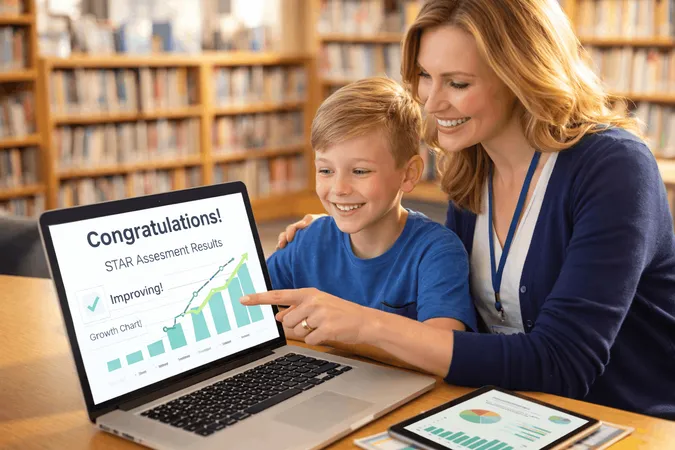

STAR Test Day Checklist
- ✓Get a good night's sleep
- ✓Eat a healthy breakfast
- ✓Bring headphones (if required)
- ✓Have a positive attitude
- ✓Read instructions carefully
- ✓Don't rush (it's untimed)
- ✓Bring reading glasses if needed
- ✓Review practice questions
Ready to Ace the STAR Assessment?
Start practicing today with our free Renaissance STAR assessment questions, including a free STAR math practice test and a full STAR reading test set. Because schools assess using Star tests three times a year, a short session of online practice — Star Reading, Star Math or Star Early Literacy questions — before each screening window keeps the adaptive format familiar and boosts confidence. Also explore the Questar practice test for additional state assessment prep.
STAR: Pros and Cons
- +STAR exam preparation strengthens your knowledge across all domains
- +Passing the exam proves competency to employers and clients
- +Study materials and practice tests are widely available
- +Exam-based credentials are portable across states and employers
- +Clear exam objectives help focus your study plan effectively
- −Exam anxiety can affect performance — practice tests help reduce it
- −Registration fees are non-refundable if you miss your test date
- −Limited retake opportunities may apply with waiting periods
- −Exam content updates periodically — use current study materials
- −Testing center availability may require advance scheduling
StarReading or Star Reading? Finding the Right Student Test
Many families search for "starreading" as one word, but the test is the same one Renaissance calls Star Reading: a short computer-adaptive reading assessment that schools give to students from kindergarten through high school. It is part of the wider Star Assessments family, which also includes Star Math and Star Early Literacy, so a school may say "Star testing" when it means any of them.
Star Reading is not a pass/fail exam. Each answer changes the difficulty of the next question, and the result is a set of scores, such as a scaled score, a percentile rank and a grade equivalent, that teachers use to place students and track growth across the school year. Because the test is adaptive, no two students see exactly the same questions, so memorizing answers does not help.
The most useful preparation is steady reading and a calm first attempt: sign in with the login your school provides, read each question carefully and do not rush. If your child is unsure which Star test they will take, ask the teacher, then try our free Star Reading practice questions to get comfortable with the on-screen format.
Star Reader Test: Is There a Passing Score?
No. The Star reader test, meaning the Renaissance Star Reading assessment, is not a pass/fail exam, so there is no universal passing score to reach. Schools use the result to see where a student is now and how much they grow over the year, not to award a grade.
Because Star assessments are computer-adaptive, each answer changes the difficulty of the next question. A student who misses several items is not failing; the test is simply finding the level where questions become challenging. Renaissance computer-adaptive Star assessments typically take about 20 minutes each, and schools receive results instantly after testing.
The score that matters most is the comparison between testing windows. Renaissance's default district screening windows are Fall 8/15–9/30, Winter 12/1–1/15 and Spring 4/15–5/31, and many districts follow their own dates. If you searched for a Star reading assessment to see whether your child "passed," ask the teacher how your school defines its benchmark and which growth goal it sets for each student.
Can a Student Retake a Star Reading Test? Retests and Interrupted Sessions
Yes, a teacher can have a student retake a Star Reading test, but only for a good reason. Renaissance's own guidance says a retest makes sense when a student rushed through the test or clearly did not take it seriously, because a careless score does not show what the child can really do. If the student retakes the test on the same day as the test the teacher doesn't want to count, only the retest appears on the reports that show the student's most recent test.
A test that gets cut short, for example by a fire drill, a dead battery or the end of a class period, does not have to start over. Star assessments can be paused and resumed, and when the test is resumed the student returns to the same question number where they left off. There is a time limit on resuming an unfinished test, so schools usually finish it within a few days.
For families, the takeaway is simple: one rough session is not permanent. If you think a Star assessment result does not match your child's everyday reading, ask the teacher whether a retest is appropriate. A calm, about 20-minute session after some practice with the question style is the best way to get a score that reflects real reading skill.
What to Do After a Star Assessment: A Parent and Student Checklist
A Star assessment ends quickly, and Renaissance says schools receive results instantly after testing. Because a Star test is not pass/fail, the useful question is not "did my child pass?" but "what does this score tell us about next steps?" Here is a simple way to use the results from a Star test or a Star Reading assessment.
- Compare over time, not to one number. Look at the Scaled Score across the fall, winter and spring screening windows to see growth, rather than judging a single result.
- Check the benchmark category. It shows how the score relates to your school or district's target, which varies from place to place.
- Use the reading level to choose books. For Star Reading, ask the teacher for the student's ZPD range and pick books within it.
- Ask about unusual scores. If a result looks far off, ask whether the student was rushed, distracted or interrupted, and whether a retest is appropriate.
- Keep practice low-pressure. Daily reading and math habits help more than cramming, since the test adapts to each student's level.
Teachers are the best source for how your school uses Star results, so bring the Family Report to your next conference.
Sample STAR Assessment Test Practice Questions
Try these questions from our free STAR Assessment Test practice tests. The correct answer and an explanation follow each question.
A pre-kindergarten student is administered the STAR Early Literacy assessment. The test presents an item where four letters are shown, and the audio asks the student to click on the letter that is different from the others. This task is most directly measuring a skill within which domain?
- A. Phonemic Awareness
- B. Alphabetic Principle
- C. Visual Discrimination
- D. Vocabulary
Answer: C. Visual Discrimination
Visual Discrimination assesses the ability to differentiate between letters and words based on their appearance. The task of identifying the letter that looks different from a group of similar letters is a classic measure of this specific skill.
A student's screen freezes mid-test during a STAR assessment. What is the correct first action for the teacher?
- A. End the session and start a new test
- B. Refresh the browser to restart the item
- C. Resume the test using the student's login credentials
- D. Contact technical support before taking any action
Answer: C. Resume the test using the student's login credentials
STAR assessments save student progress automatically, so the teacher should resume the session using the student's credentials without losing data.
Which type of STAR test provided information about a student's performance relative to other test-takers nationwide?
- A. California Standards Test (CST)
- B. California Modified Assessment (CMA)
- C. Stanford Achievement Test Series
- D. California Alternate Performance Assessment (CAPA)
Answer: C. Stanford Achievement Test Series
The Stanford Achievement Test Series is a norm-referenced instrument that compares individual scores to a national norming sample.
What is the primary measurement advantage of using a computer-adaptive assessment like STAR for progress monitoring over a traditional static (fixed-form) test?
- A. It can be printed and administered on paper without a computer
- B. It provides a more precise score across a wide range of ability levels by adapting to each student
- C. It eliminates the need for any teacher involvement in assessment
- D. It always produces higher scores, motivating students more effectively
Answer: B. It provides a more precise score across a wide range of ability levels by adapting to each student
Because STAR adapts item difficulty to each student's responses, it produces precise scores for both low- and high-achieving students, reducing measurement error and making growth scores more reliable.
Take the full STAR Assessment Test practice test
For a fuller set of questions on this topic, see our practice star resource.
STAR Assessment Questions and Answers
Official Resources
- Renaissance Star Assessments — the publisher's overview of Star Reading, Star Math, Star Early Literacy, and Star CBM, including current test lengths and grade ranges.
- Renaissance Star Scores Explained — the official guide to Scaled Scores, Percentile Rank, Grade Equivalent, and Student Growth Percentile.
- Renaissance Support: Star Unified Scale — the technical article defining the 0–1400 unified scale used across all Star computer-adaptive tests.
Written and edited by Nathan Beja, founder of Practice Test Geeks, with AI assistance. Exam facts are checked against the official sources linked below. Editorial policy
Sources & references
Exam facts on this page (fees, format, dates, passing scores) are checked against these official sources; the date is our last check. Editorial policy
- renaissance.com — Time limit, test delivery, eligibility, passing score, retake policy, score release · verified Nov 2026
- uk.renaissance.com — Exam format · verified Nov 2026
- support.renaissance.com — Test dates · verified Nov 2026