
SIFT Simple Drawings Practice: Complete Training Guide for Army Aviation Candidates
Master SIFT simple drawings with proven practice strategies. Learn what the subtest measures, scoring tips, and how to boost your Army aviation score. 🎯

Understanding the sift simple drawings subtest is one of the most overlooked yet critically important steps in preparing for Army aviation selection. If you have been researching the sift meaning in the context of military aviation careers, you already know that the Selection Instrument for Flight Training covers a wide range of cognitive abilities. The Simple Drawings subtest specifically measures processing speed and perceptual accuracy — two qualities that directly mirror what a pilot must demonstrate in a real cockpit under pressure.
The Simple Drawings portion asks candidates to quickly identify a simple shape or figure that does not match the others in a series. At first glance, the task sounds trivially easy. But the real challenge is maintaining speed and accuracy simultaneously over dozens of consecutive items. Your brain must process visual information, compare it against a mental template, detect subtle differences, and register a correct answer — all within a fraction of a second. This kind of rapid visual discrimination is exactly what instrument scanning demands of a helicopter pilot during flight.
Many candidates preparing for the SIFT underestimate this subtest because the drawings themselves look simple. Unlike the complex math sections or the spatial orientation tasks, Simple Drawings feels almost like a children's puzzle. That perception is exactly the trap. The scoring on this subtest rewards candidates who have trained their visual cortex to work efficiently under time pressure, not just those who happen to be naturally quick. Structured practice is the proven path to improvement.
The define sift framework helps clarify what Army aviation selection is really testing: your potential to become a safe, effective aviator. Simple Drawings is a proxy measure for the kind of divided attention and rapid scan-pattern recognition that military rotary-wing pilots use dozens of times per minute. When you are flying nap-of-the-earth at 100 knots, your ability to detect visual anomalies quickly is a life-or-death competency. The SIFT measures your baseline aptitude for developing that skill.
Preparation for the Simple Drawings subtest should include daily timed drills using pattern-matching exercises, cognitive speed apps, and official-style practice materials. Research consistently shows that processing speed is trainable. Studies on perceptual learning indicate that just two to four weeks of focused daily practice — as few as 15 to 20 minutes per session — can produce meaningful improvements in visual discrimination speed. This guide walks you through everything you need to maximize your performance on this critical subtest.
Throughout this article you will find detailed explanations of what the subtest measures, how it is scored, and which practice strategies produce the fastest gains. You will also find study schedules, checklists, and expert tips drawn from the experiences of candidates who have successfully earned aviation contracts. Whether you are starting your SIFT prep from scratch or fine-tuning a preparation plan already in progress, this guide gives you a concrete, actionable roadmap to mastering SIFT simple drawings.
The sift definition in Army regulations describes the instrument as a standardized aptitude battery designed to predict training success in Army aviation. Simple Drawings is a key component of that battery precisely because it cannot be easily faked or inflated through memorization alone. Your performance reflects genuine cognitive speed developed through consistent, deliberate practice — which means every hour you invest in preparation has a real return on your test-day score.
SIFT Simple Drawings by the Numbers

4-Week SIFT Simple Drawings Study Schedule
- ▸Take a timed baseline drill to establish your starting accuracy rate
- ▸Practice basic shape-matching exercises for 15 minutes daily
- ▸Review the official SIFT test format and understand scoring method
- ▸Introduce pattern-differentiation apps at the easiest difficulty level
- ▸Increase daily drill sessions to 20 minutes with timed intervals
- ▸Add letter and symbol differentiation exercises to your routine
- ▸Practice scanning sets of 4–5 images to find the odd one out
- ▸Track your items-per-minute rate and chart weekly improvement
- ▸Complete full-length timed Simple Drawings simulations twice weekly
- ▸Practice under mild distraction to build mental focus and resilience
- ▸Review missed items to identify recurring perceptual error patterns
- ▸Integrate with other SIFT subtest practice to build exam endurance
- ▸Run two to three full simulation sessions under exact test conditions
- ▸Rest cognitive drills the day before your scheduled exam
- ▸Review your error log one final time to lock in pattern recognition
- ▸Confirm test-day logistics including location, ID, and arrival time
The Simple Drawings subtest sits within a broader family of cognitive speed assessments that psychologists call perceptual speed and accuracy tests. These instruments have been used in military aviation selection since World War II, when researchers discovered that candidates who scored well on rapid visual discrimination tasks tended to perform significantly better during flight training. The Army's decision to include a similar component in the SIFT is grounded in decades of validated predictive research linking perceptual speed to aviator performance.
When you sit down to complete the Simple Drawings subtest, you will be shown a target figure followed by a row of similar figures. Your task is to identify as quickly as possible which figure in the row differs from the target. The differences can be subtle — a line slightly angled differently, a shape rotated by a small degree, or a minor variation in proportion. The items increase in perceptual challenge as the subtest progresses, rewarding candidates who have sharpened their discrimination sensitivity through practice.
Understanding what sift bake shop level of difficulty actually means in context helps set appropriate expectations. The Simple Drawings subtest is not scored in isolation — it contributes to your overall SIFT composite score alongside six other subtests. A strong performance on Simple Drawings can compensate for a weaker performance elsewhere, and vice versa. This means every point you gain through focused preparation has real composite score value that could determine whether you earn an aviation contract.
The cognitive processes underlying Simple Drawings performance include perceptual encoding speed, visual working memory, and attentional control. Perceptual encoding speed is how quickly your visual system can form an accurate mental representation of a shape. Visual working memory is your ability to hold that mental representation in mind while scanning the comparison figures. Attentional control is your capacity to stay focused on the task without your attention drifting to irrelevant details or becoming overwhelmed by the volume of items.
Research published in military psychology journals confirms that all three of these cognitive processes respond positively to deliberate practice. Unlike fluid intelligence, which is relatively fixed in adulthood, processing speed shows meaningful plasticity through targeted training. Brain training studies using paradigms similar to Simple Drawings — specifically tasks requiring rapid same-different judgments on visual stimuli — have documented improvements ranging from 15 to 30 percent in reaction time after four weeks of consistent daily practice. These are not trivial gains; at the margins of competitive SIFT scoring, they can make a decisive difference.
Aviation candidates who have earned high SIFT scores consistently report that their Simple Drawings preparation involved three key elements: daily timed practice, progressive difficulty increases, and deliberate error analysis. Simply doing drills is not enough — you need to track which types of figures trip you up, understand why your eye misses those differences, and then deliberately practice the specific visual patterns that gave you trouble. This targeted approach compresses the learning curve considerably compared to random, un-analyzed practice.
The sift definition in Army Regulation 611-110 frames the instrument as a predictor of initial entry flight training success. Interestingly, field data from Army selection officers suggests that Simple Drawings scores tend to correlate with candidate performance in the instrument flight training phase — specifically the ability to scan cockpit instruments accurately and quickly during initial instrument hood time. This real-world connection makes investing in Simple Drawings preparation not just a test strategy but a foundational aviation skill-building exercise.
SIFT Simple Drawings Practice Strategies by Skill Level
If you are just starting your SIFT preparation, begin with foundational shape discrimination exercises that do not have a time pressure component. Use paper-based or app-based matching puzzles where you practice identifying which figure differs from a set of four or five similar images. Focus on accuracy first — getting every item correct before worrying about speed. Download free cognitive speed apps such as visual discrimination trainers and set them to the easiest difficulty. Spend 15 minutes daily on these exercises for the first week before introducing any time limits into your sessions.
During week two, introduce mild time pressure by setting a soft timer for each set of items. Aim to complete each group of five figures in under eight seconds. This pacing is slower than test conditions, but it begins training your brain to associate speed with accuracy rather than treating them as opposing goals. Keep a simple error log — write down every item type you missed and identify whether the error was a misperception (you thought two figures looked the same but they did not) or a processing gap (you ran out of time before examining all options). These two error categories require different corrective strategies.

SIFT Simple Drawings: Advantages and Challenges of This Subtest
- +Processing speed is trainable — dedicated practice produces measurable score gains
- +The subtest format is consistent and predictable, so preparation transfers directly
- +Strong Simple Drawings performance can offset weaker scores in other SIFT areas
- +Practice tools are widely available as free apps and cognitive training platforms
- +Short daily sessions (15–20 min) are sufficient to drive meaningful improvement
- +Skills developed translate directly into real cockpit instrument-scanning habits
- −Time pressure is extreme — candidates who freeze under speed stress score poorly
- −Subtle differences between figures can be genuinely difficult to detect quickly
- −Overconfidence is common because the drawings look deceptively simple at first
- −Fatigue effects are significant — performance drops sharply without adequate sleep
- −No official Army practice materials are publicly released for this specific subtest
- −Anxiety spikes during the subtest can override trained speed and reduce accuracy
SIFT Simple Drawings Preparation Checklist
- ✓Establish a baseline score using a timed practice drill before starting your study plan
- ✓Schedule 15–20 minute daily practice sessions consistently for at least three weeks
- ✓Use progressive difficulty — start slow and accurate, then add speed incrementally
- ✓Practice specifically with rotation, mirror-image, and proportion-based differences
- ✓Keep a written error log identifying which figure types cause the most misses
- ✓Run at least two full-length timed simulation sessions under realistic test conditions
- ✓Introduce mild-distraction practice to build attentional resilience
- ✓Track your items-per-minute rate weekly to confirm measurable improvement
- ✓Review your error log one final time 48 hours before your scheduled exam
- ✓Get at least eight hours of sleep the night before your SIFT appointment
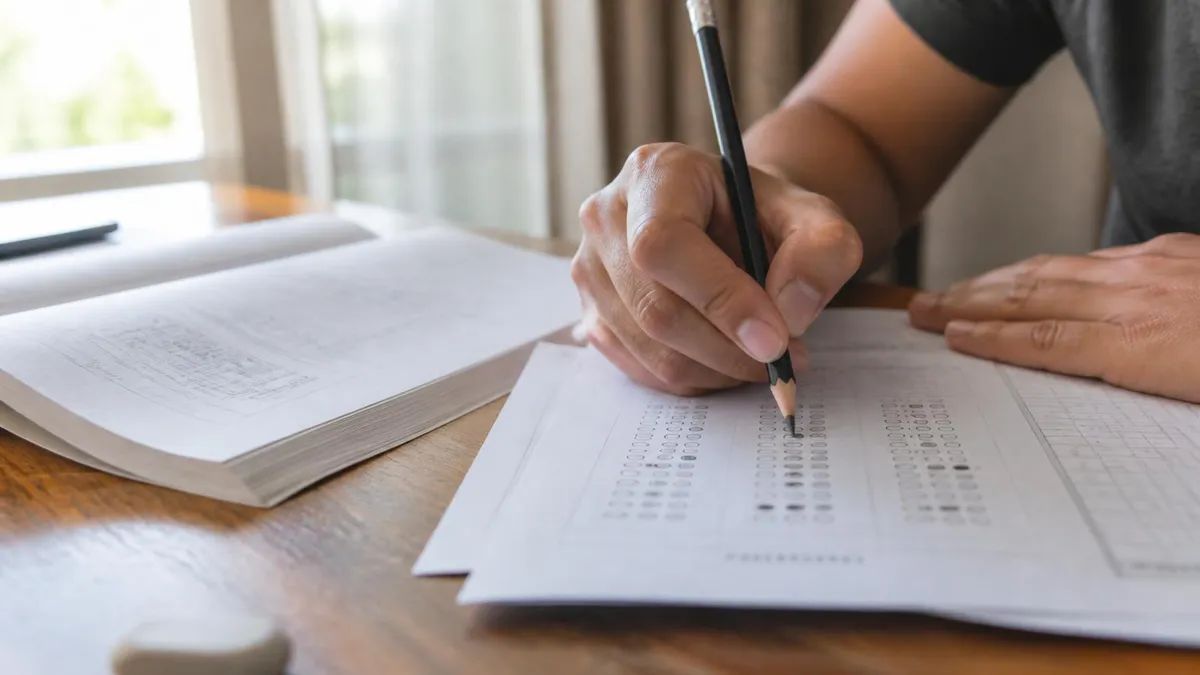
Speed Without Accuracy Is Worthless — Train Both Together
The most common preparation mistake candidates make is training speed and accuracy separately. Drilling fast without caring about accuracy trains impulsive guessing. Drilling slow without time pressure trains a pace you cannot sustain on test day. From day one, always track both your speed (items per minute) and your accuracy rate together — only scores that improve both metrics simultaneously reflect real, transferable gains that will show up on your official SIFT composite.
One of the most persistent myths surrounding SIFT preparation is that the Simple Drawings subtest cannot be improved through practice because it measures innate perceptual ability. This misunderstanding leads many otherwise motivated candidates to deprioritize this subtest in favor of areas like math or mechanical comprehension where they feel their preparation effort will have a more visible effect. The cognitive science research tells a very different story, and understanding that story should motivate you to treat Simple Drawings as a high-priority preparation target.
Perceptual learning — the improvement of sensory discrimination ability through practice — is one of the most extensively documented phenomena in experimental psychology. Studies dating back to the 1960s have shown that human observers can learn to detect smaller and smaller differences between visual stimuli with repeated exposure and feedback. More recent neuroscience research using brain imaging has shown that perceptual learning actually changes the tuning of neurons in visual cortex areas, making trained visual discriminations faster and more automatic. This is not willpower or strategy — it is genuine neuroplasticity working in your favor.
The practical implication for SIFT candidates is straightforward: if you practice with appropriate materials at progressive difficulty levels, your visual cortex will literally become better at the task. The key word is appropriate. Random visual game playing without a connection to the specific demands of the Simple Drawings format produces diffuse improvement at best. Targeted practice using materials that closely mimic the actual subtest format — line drawings, simple geometric figures, same-different judgment tasks — produces specific improvement that transfers directly to test performance.
Error analysis is the practice tool that most candidates skip but that produces the largest individual gains. After every practice session, resist the urge to immediately start another drill. Instead, spend five minutes reviewing every item you missed. For each missed item, ask yourself two questions: Did I not see the difference, or did I see it but run out of time?
If you did not see the difference, you have a perceptual sensitivity gap in that figure type — address it with focused practice on similar items. If you ran out of time, you have a processing speed bottleneck for that item complexity level — address it by training faster pacing on moderately difficult items before tackling the hardest ones.
Another critical preparation insight is the role of working memory in Simple Drawings performance. When you look at the target figure and then shift your gaze to the comparison row, you are relying on visual working memory to hold the target representation intact while you scan. Candidates with stronger visual working memory can hold more detail in that mental representation, making it easier to detect subtle differences in the comparison figures.
Visual working memory capacity can be improved through specific dual n-back training exercises, which are available in free apps like Cogmed and BrainWorkshop. Adding just ten minutes of n-back training to your daily routine can meaningfully support your Simple Drawings performance.
The sift heads of Army aviation programs have consistently emphasized that composite SIFT scores — not individual subtest scores — determine candidate eligibility. This means your Simple Drawings performance interacts with all your other subtest results in a weighted formula.
While the exact weighting formula is not publicly disclosed, aviation selection officers have noted that large gaps between subtest scores — for example, a very high math score combined with a very low processing speed score — can raise questions about a candidate's overall aptitude profile even if the composite score is technically qualifying. Balanced preparation that brings all subtests to a competitive level is always the stronger strategy.
Candidates preparing for Army aviation should also understand that the SIFT is administered by appointment at Military Entrance Processing Stations and Army aviation battalions. You are permitted to retake the SIFT, but Army policy limits retakes to a specified number and requires a waiting period between attempts. This makes your first attempt a valuable opportunity that deserves full preparation — not a throwaway trial run. A comprehensive preparation plan that includes serious Simple Drawings practice ensures you walk into your first SIFT appointment performing at your genuine ceiling rather than leaving points on the table through inadequate preparation.
Army candidates are permitted a limited number of SIFT retakes with mandatory waiting periods between attempts. Taking your first SIFT without adequate preparation and relying on a retake is a risky strategy — your initial score is recorded and visible to selection boards throughout your application. Invest in thorough preparation, including targeted SIFT simple drawings practice, before scheduling your first appointment to protect your composite score history.
For candidates who are simultaneously preparing for multiple SIFT subtests, integrating Simple Drawings practice into a broader study plan requires thoughtful scheduling. The cognitive demands of processing speed training are different from those of math review or mechanical comprehension study. Processing speed drills are short, high-intensity sessions that tire your visual system quickly but recover rapidly. Math and reading comprehension study sessions, by contrast, benefit from longer sustained focus. The ideal integrated study schedule interleaves these modalities rather than stacking them sequentially.
A practical daily schedule for the peak preparation phase — typically weeks two and three of a four-week plan — might look like this: begin each study session with 15 to 20 minutes of timed Simple Drawings drills while your attention is fresh, then transition to 30 to 40 minutes of math or verbal review, and close with 10 minutes of error log review across all subtest areas. This sequencing takes advantage of the fresh-attention window for speed tasks while reserving the longer sustained-focus period for content knowledge work that requires deeper cognitive engagement.
Candidates who are curious about broader sift bakery career pathways should know that your SIFT composite score is just the beginning of Army aviation selection. A competitive score opens the door to the flight physical, the SERE screening, the board interview, and the long pipeline of flight school itself. Candidates who develop strong processing speed and attention management through SIFT preparation often find that these same cognitive skills serve them well throughout flight training — particularly during the fast-paced instrument and night vision goggle phases where visual processing demands are highest.
The definition for sift in the context of Army career planning encompasses more than a single test. It represents your first documented demonstration of aptitude for a highly technical and safety-critical profession.
Aviation selection boards know that the SIFT predicts training success, and they also know that candidates who score well on processing speed subtests like Simple Drawings have demonstrated the kind of cognitive discipline and preparation commitment that predicts success throughout the full aviation career pipeline. Your SIFT score tells the Army not just what you can do today but what kind of candidate you are likely to be in the future.
Understanding the sift bakery mystic of high-performing candidates — that is, the seemingly mysterious edge that some test-takers seem to have — almost always comes down to preparation quality rather than raw natural talent. When you speak with Army warrant officer pilots who aced their SIFT, they rarely describe themselves as naturally gifted at perceptual speed tasks. What they describe, consistently, is a preparation routine characterized by daily consistency, progressive difficulty, and honest error analysis. That is a method anyone can replicate, regardless of starting ability level.
Test anxiety is a real performance modifier that deserves explicit acknowledgment and preparation. Many candidates who perform well in practice sessions experience a sharp drop in processing speed on actual test day due to situational anxiety. The autonomic nervous system response to high-stakes evaluation — elevated heart rate, shallow breathing, muscle tension — directly impairs the fine-motor and perceptual speed processes that the Simple Drawings subtest measures. Preparation that includes deliberate simulation under mildly stressful conditions helps desensitize this anxiety response so that your test-day performance more closely matches your practice ceiling.
Breathing technique is a surprisingly effective tool for managing test anxiety during the Simple Drawings subtest. Research on performance anxiety in high-stakes testing has shown that a brief pre-task breathing routine — four counts in, hold two counts, six counts out — activates the parasympathetic nervous system and reduces the cortisol-driven performance impairment associated with test stress.
Practice this breathing pattern before each timed simulation session so that it becomes an automatic pre-task ritual. On test day, this behavioral anchor will help shift your nervous system from fight-or-flight reactivity into the calm, focused state where your trained processing speed can operate at its peak.
The final preparation phase — the 72 hours before your SIFT appointment — is when the most important decisions are not about what to study but about how to manage your cognitive and physical state. At this point, your skill level is essentially set. Additional drilling provides only marginal returns and carries the real risk of producing mental fatigue that degrades your test-day performance.
The research on pre-exam preparation is unambiguous: candidates who reduce their practice intensity and prioritize sleep and low-stress activity in the 48 to 72 hours before a cognitive assessment score significantly higher than those who cram right up to the last moment.
Hydration is another evidence-based performance factor that most candidates completely ignore. Even mild dehydration — as little as one to two percent of body weight lost in fluid — measurably impairs cognitive processing speed and working memory capacity.
On a subtest like Simple Drawings where milliseconds of processing time translate directly into more items answered correctly, entering the test in a fully hydrated state is a genuine performance advantage. Drink enough water in the 24 hours before your exam that your urine is consistently light yellow, and continue hydrating on the morning of the test before arriving at the testing site.
Physical exercise in the days before your SIFT has well-documented cognitive benefits. Moderate aerobic exercise — a 30-minute run or a brisk 45-minute walk — triggers the release of brain-derived neurotrophic factor (BDNF), a protein that enhances synaptic plasticity and cognitive processing speed. Regular exercisers consistently outperform sedentary individuals on processing speed tests, and a single moderate exercise session the day before a cognitive assessment has been shown to improve next-day performance. If you have not been exercising regularly during your SIFT preparation, adding even light daily walks for the final week of prep will provide a measurable cognitive benefit.
Nutrition in the 24 hours before your exam should emphasize steady blood glucose rather than simple carbohydrate spikes. High-sugar foods or excessive caffeine cause blood glucose oscillations that impair sustained cognitive performance.
A meal high in complex carbohydrates, lean protein, and healthy fats — eaten one to two hours before your exam — provides the stable metabolic substrate that your brain needs to sustain rapid processing across the full SIFT battery. If you typically use caffeine, consume your normal amount rather than more — caffeine above your habitual dose tends to increase anxiety without improving performance in individuals who already use it regularly.
On test day itself, arrive at the testing site early enough that you can spend five minutes sitting quietly before the exam begins. Use this time for your pre-task breathing routine, review your error log mentally for the last time, and remind yourself of the specific scan strategy you have practiced: look at the target, encode its key features, scan the comparison figures left to right, identify the anomaly, respond immediately without second-guessing.
This brief mental rehearsal activates the neural pathways you have built through practice and primes your visual system to operate in the efficient, trained mode rather than the slow, deliberate mode that produces missed items under time pressure.
After the SIFT is complete, regardless of how you feel your performance went, give yourself 24 to 48 hours before requesting any unofficial score information. The subjective experience of taking a fast-paced subtest like Simple Drawings is a poor predictor of actual performance — candidates who feel they rushed too much frequently score better than expected because their fast pace allowed them to complete more items, while candidates who feel confident about their accuracy sometimes find that their slower pace resulted in fewer items attempted.
Trust the preparation you have done, and use any remaining time before official results to continue exploring the broader aspects of Army aviation selection that will matter next.
The journey from SIFT candidate to Army aviator is long, demanding, and deeply rewarding. Every step of that journey — starting with the preparation discipline you bring to the Simple Drawings subtest — is a signal to yourself and to Army aviation selection boards that you have the cognitive tools, the work ethic, and the commitment to succeed in one of the most technically demanding and personally fulfilling careers the military offers.
Invest fully in your preparation, use the resources in this guide, and walk into your SIFT appointment knowing that you have done everything within your control to perform at your absolute best.
SIFT Questions and Answers

SIFT Test Locations: Complete Guide to Finding Your Testing Site

SIFT Careers: Complete Guide to Army Aviation

How Hard Is the Army SIFT Test? Complete Difficulty Guide & Study Plan

SIFT Test Guide: Complete 2026 Army Aviation Selection Prep
SIFT Practice Test 2026: Free Army Aviation Questions & Study Guide
About the Author

Educational Psychologist & Academic Test Preparation Expert
Columbia University Teachers CollegeDr. Lisa Patel holds a Doctorate in Education from Columbia University Teachers College and has spent 17 years researching standardized test design and academic assessment. She has developed preparation programs for SAT, ACT, GRE, LSAT, UCAT, and numerous professional licensing exams, helping students of all backgrounds achieve their target scores.
Join the Discussion
Connect with other students preparing for this exam. Share tips, ask questions, and get advice from people who have been there.
View discussion (9 replies)