

SIFT Practice Test
Updated November 2026Facts verified Oct 20, 2026 against U.S. Army
Taking a comprehensive SIFT practice test is the most effective way to prepare for the Army SIFT test. Candidates who score above 50 drastically improve their chances of selection for flight school. Practice with the free SIFT practice test on PracticeTestGeeks (7 questions with answer explanations).
- The SIFT Army Aviation Information Test has 40 questions.[1]
- The SIFT Army Aviation Information Test is timed at 30 minutes.[1]
- The minimum passing score on the Army's SIFT (Selection Instrument for Flight Training) is 40.[2]
- Once a candidate passes the Army SIFT, that score stays their score for life.[3]
- The SIFT is administered only in a web-based format, with no paper version.[1]
- Applicants to the Army Warrant Officer program need a GT score of 110 or higher, with no waivers, in addition to passing the SIFT.[3]
- SIFT results (pass or fail) are generated immediately after the test is completed, and the signed score letter comes from the Test Control Officer.[1]
Numbers in brackets link to the official sources listed under Sources & last verified. Dates that have passed are removed automatically.
SIFT Exam at a Glance
| Item | Detail | Source · Verified |
|---|---|---|
| Number of questions (Army Aviation Information Test (AAIT)) | 40 questions[1] | home.army.mil · Oct 19, 2026 |
| Number of questions (Math Skills Test (MST)) | Variable (adaptive)[1] | home.army.mil · Oct 19, 2026 |
| Number of questions (Mechanical Comprehension Test (MCT)) | Variable (adaptive)[1] | home.army.mil · Oct 19, 2026 |
| Number of questions (Reading Comprehension Test (RCT)) | 20 questions[1] | home.army.mil · Oct 19, 2026 |
| Number of questions (Simple Drawings (SD)) | 100 questions[1] | home.army.mil · Oct 19, 2026 |
| Number of questions (Spatial Apperception Test (SAT)) | 25 questions[1] | home.army.mil · Oct 19, 2026 |
| Time limit (Army Aviation Information Test (AAIT)) | 30 minutes[1] | home.army.mil · Oct 19, 2026 |
| Time limit (Math Skills Test (MST)) | 40 minutes[1] | home.army.mil · Oct 19, 2026 |
| Time limit (Mechanical Comprehension Test (MCT)) | 15 minutes[1] | home.army.mil · Oct 19, 2026 |
| Time limit (Reading Comprehension Test (RCT)) | 30 minutes[1] | home.army.mil · Oct 19, 2026 |
| Time limit (Simple Drawings (SD)) | 2 minutes[1] | home.army.mil · Oct 19, 2026 |
| Time limit (Spatial Apperception Test (SAT)) | 10 minutes[1] | home.army.mil · Oct 19, 2026 |
| Passing score | 40 minimum[2] | home.army.mil · Oct 20, 2026 |
| Validity | Passing score valid for life[3] | recruiting.army.mil · Oct 19, 2026 |
| Delivery | Web-based, at an authorized test site[1] | home.army.mil · Oct 19, 2026 |
| Eligibility (Warrant officer applicants) | GT score of 110 or higher (no waivers)[3] | recruiting.army.mil · Oct 19, 2026 |
| Score release | Immediately after completion[1] | home.army.mil · Oct 19, 2026 |
What changed for SIFT in 2026
- Oct 19, 2026: Number of questions (Simple Drawings (SD)) changed to 100 questions (previously 100 questions; 2 minutes).[1]
- Oct 19, 2026: Number of questions (Hidden Figures (HF)) changed to 50 questions (previously 50 questions; 5 minutes).[1]
- Oct 19, 2026: Number of questions (Army Aviation Information Test (AAIT)) changed to 40 questions (previously 40 questions; 30 minutes).[1]
- Oct 19, 2026: Number of questions (Spatial Apperception Test (SAT)) changed to 25 questions (previously 25 questions; 10 minutes).[1]
- Oct 19, 2026: Number of questions (Reading Comprehension Test (RCT)) changed to 20 questions (previously 20 questions; 30 minutes).[1]
- Oct 19, 2026: Number of questions (Math Skills Test (MST)) changed to Variable (adaptive) (previously Variable question count; 40 minutes).[1]
- Oct 19, 2026: Number of questions (Mechanical Comprehension Test (MCT)) changed to Variable (adaptive) (previously Variable question count; 15 minutes).[1]
- Oct 19, 2026: Delivery changed to Web-based, at an authorized test site (previously Computer-based testing at MEPS).[1]
Free SIFT Exam Study Tools
Interactive SIFT Exam resources on PracticeTestGeeks, free to start:
- SIFT Exam flashcards — review key terms and concepts card by card
- SIFT Exam study guide — topic-by-topic overview of what the exam covers
- SIFT Exam cheat sheet — one-page printable summary for last-minute review
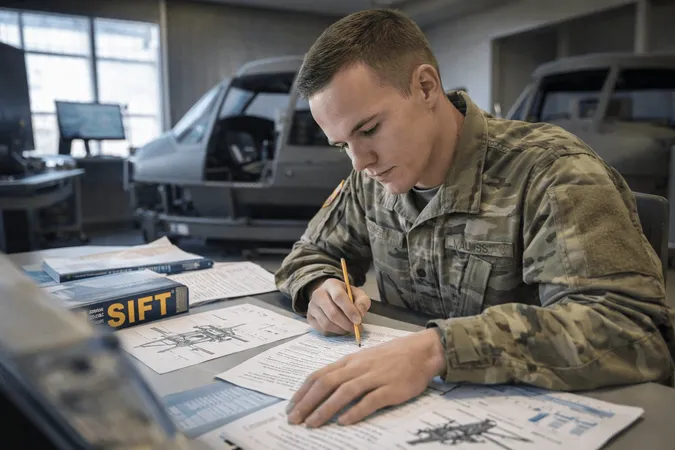
According to U.S. Army, “Army Aviation Information Test (AAIT) — 30 minutes, 40 questions”[1]
SIFT Practice Test Questions
Prepare for the SIFT Exam exam with our free practice test modules. Each quiz covers key topics to help you pass on your first try.
SIFT Army Aviation Information Questions a...
SIFT Exam Questions covering Army Aviation Information Questions and Answers. Master SIFT Test concepts for certification prep.
SIFT Math Questions and Answers
Free SIFT Practice Test featuring Math Questions and Answers. Improve your SIFT Exam score with mock test prep.
SIFT Mechanical Comprehension Questions an...
SIFT Mock Exam on Mechanical Comprehension Questions and Answers. SIFT Study Guide questions to pass on your first try.
SIFT Aviation Instruments and Cockpit Fami...
Free SIFT Quiz on Aviation Instruments and Cockpit Familiarization. SIFT Exam prep questions with detailed explanations.
SIFT Aviation Knowledge
SIFT Practice Questions for Aviation Knowledge. Build confidence for your SIFT certification exam.
SIFT Aviation Regulations and Airspace Que...
SIFT Mock Test covering SIFT Aviation Regulations and Airspace Questions and Answers. Online SIFT Test practice with instant feedback.
SIFT Aviation Weather and Navigation Quest...
Free SIFT Quiz on SIFT Aviation Weather and Navigation Questions and Answers. SIFT Exam prep questions with detailed explanations.
Worked examples: how to reason through SIFT questions
These are practice questions written for this site, not questions from the real exam. Each explanation shows why the right answer is right and why the others are wrong.
Example 1
Question: A helicopter pilot needs to fly forward from a stable hover. Which primary flight control will be the main input to achieve this movement?
- Anti-torque pedals
- Collective lever
- Cyclic stick
- Throttle
Answer: C. Cyclic stick
Explanation:
The cyclic stick is correct. It tilts the main rotor disc, and tilting the disc forward turns part of the lift into forward thrust, so the helicopter moves forward from a hover.
The anti-torque pedals are wrong because they change the pitch of the tail rotor to control yaw, which points the nose left or right but does not move the aircraft ahead. The collective lever is wrong because it changes the pitch of all main rotor blades together, which raises or lowers the helicopter. The throttle is wrong because it manages engine power and rotor speed, not the direction of travel.
Rule to remember: cyclic sets direction and attitude, collective sets climb and descent, pedals set heading, and the throttle supports power.
Example 2
Question: What is the purpose of the collective control in a helicopter?
- Controls direction of flight
- Controls the overall pitch of all main rotor blades simultaneously to change altitude
- Controls the tail rotor
- Controls communication systems
Answer: B. Controls the overall pitch of all main rotor blades simultaneously to change altitude
Explanation:
The correct answer is that the collective changes the pitch of all main rotor blades at the same time, which changes total lift and therefore altitude. Raise the lever and the helicopter climbs; lower it and the helicopter descends.
Controlling the direction of flight is wrong because that is the job of the cyclic, which tilts the rotor disc. Controlling the tail rotor is wrong because the anti-torque pedals do that. Controlling communication systems is wrong because the collective is a flight control and has nothing to do with radios or avionics.
Rule to remember: when a question asks about changing all blades equally, or about going up and down, the answer is the collective. When it asks about tilting the disc and moving sideways, forward or back, the answer is the cyclic.
Example 3
Question: From outside, an aircraft is seen flying level over the ocean heading toward shore, with the shoreline running left to right in the distance. From the cockpit, the shoreline appears:
- Running left to right across the view near the horizon
- Running away from the pilot straight ahead
- Angled from lower-left to upper-right
- Behind the aircraft
Answer: A. Running left to right across the view near the horizon
Explanation:
The correct answer is that the shoreline runs across the view from left to right near the horizon. The aircraft is heading toward shore, and the shoreline runs perpendicular to that heading, so from the cockpit it stretches sideways in front of you.
Running away from the pilot straight ahead is wrong because a line pointing along your heading would only appear that way if you were flying parallel to the shore. Angled from lower-left to upper-right is wrong because a diagonal line would mean you were approaching the coast at a slant, which the question does not describe. Behind the aircraft is wrong because the shore is ahead of you, so it cannot be behind.
Rule to remember: picture the line against your heading. Perpendicular lines appear across the view, and parallel lines appear to run into the distance.
How to use these practice tests
Start with the official material. Read the Army SIFT FAQ so you know how each subtest is timed, then keep that list beside you while you practise. Note which subtests are fixed in length and which adapt, because adaptive tests give you less sense of how far through you are.
Next, take one practice set from each area to find your weak spots. Use Army Aviation Information, Math, Mechanical Comprehension, Reading Comprehension, Spatial Apperception, Hidden Figures and Simple Drawings.
Spend most of your study time on the areas where you missed the most questions. For aviation topics, work through Principles of Helicopter Flight and Aviation Knowledge, and read every explanation, including those for questions you got right.
For the speeded subtests, such as Hidden Figures and Simple Drawings, practise under a timer, because the limits are short. Before test day, repeat a set you took earlier and check whether your misses have changed. Remember that the Army sets the passing score at 40, and your result appears right after you finish.
SIFT Exam Flashcards
Quick review for key SIFT topics
🚁What is the primary function of the cyclic control in a helicopter?
The cyclic control changes the pitch of the rotor blades individually, allowing the helicopter to tilt and move forward, backward, or sideways.
START SIFT PRACTICE TEST🔧What is Bernoulli's Principle?
Bernoulli's Principle states that as the speed of a fluid (or air) increases, its pressure decreases. This principle explains how lift is generated on an airfoil.
GET SIFT EXAM PREPSIFT Exam Study Guide
Our complete SIFT study guide breaks down everything you need to know about the Selection Instrument for Flight Training (SIFT). From the seven test sections to scoring requirements, this guide prepares you for success.
SIFT Score Interpretation
Understanding your SIFT score is crucial for selection. The Army uses a standard score scale ranging from 20 to 80.
| Score Range | Interpretation | Competitiveness | Recommendation |
|---|---|---|---|
| 🟢 60-80 | Excellent | Top Tier | Highly Competitive |
| 🔵 50-59 | Above Average | Strong | Competitive |
| 🟡 40-49 | Passing | Minimum Standard | Qualifies |
| 🔴 20-39 | Failing | Not Selected | Retake Required |
The SIFT test cost is fully covered by the US Army for eligible applicants. Your only investment is time spent studying to ensure you pass on your first or second attempt.
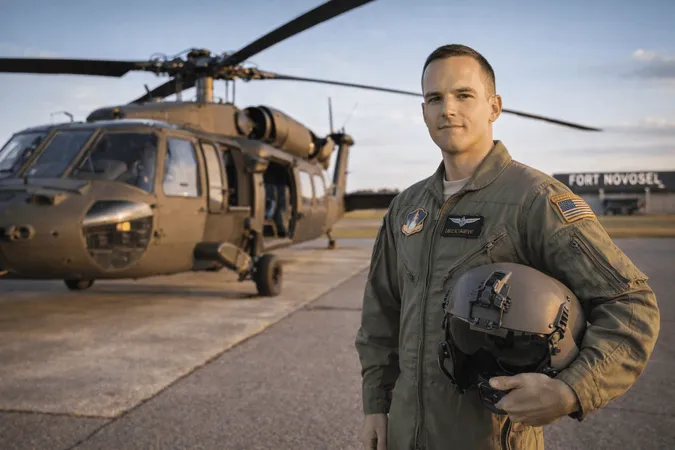

Army Aviation Career Paths
Passing the SIFT exam opens doors to various aviation roles.
Rotary
Wing PilotFly helicopters like the AH-64 Apache, UH-60 Black Hawk, or CH-47 Chinook in various combat and support missions.
Fixed
Wing PilotOperate Army fixed-wing aircraft for intelligence, surveillance, and transport missions.
Warrant Officer
Become a technical expert and specialized pilot through the Warrant Officer Flight Training (WOFT) program.
Commissioned Officer
Lead aviation platoons and companies while serving as a pilot in the Aviation Branch.
Med
Evac PilotFly critical medical evacuation missions to transport wounded soldiers to safety and care.
SIFT Test Day Checklist
- ✓Valid Military/Gov ID
- ✓Signed DA Form 4187
- ✓Commander's Memo
- ✓Arrive 30 Mins Early
- ✓Log-in Credentials
- ✓Well Rested
- ✓No Electronics
- ✓Confidence!
Ready to Pass the SIFT?
Don't leave your aviation career to chance. Start practicing with our free SIFT test practice questions today.
SIFT: Pros and Cons
- +SIFT exam preparation strengthens your knowledge across all domains
- +Passing the exam proves competency to employers and clients
- +Study materials and practice tests are widely available
- +Exam-based credentials are portable across states and employers
- +Clear exam objectives help focus your study plan effectively
- −Exam anxiety can affect performance — practice tests help reduce it
- −Registration fees are non-refundable if you miss your test date
- −Limited retake opportunities may apply with waiting periods
- −Exam content updates periodically — use current study materials
- −Testing center availability may require advance scheduling
Sample SIFT Exam Practice Questions
Try these questions from our free SIFT Exam practice tests. The correct answer and an explanation follow each question.
Passage: 'The SIFT test measures aptitude for flight training, not current flying ability. Candidates with no prior flight experience can excel on the SIFT if they demonstrate strong spatial reasoning, mechanical comprehension, and learning capacity.' What does the passage indicate about prior flight experience?
- A. It is required to pass the SIFT test
- B. It guarantees a high score on spatial reasoning sections
- C. It is not necessary to excel on the SIFT
- D. It replaces the need for mechanical comprehension skills
Answer: C. It is not necessary to excel on the SIFT
The passage states that candidates with no prior flight experience can excel on the SIFT, indicating prior experience is not necessary.
The Spatial Apperception Test on the SIFT exam primarily assesses a candidate's ability to do what?
- A. Calculate fuel consumption during complex maneuvers.
- B. Memorize aircraft instrument layouts.
- C. Interpret a 2D cockpit view to determine an aircraft's 3D orientation and motion.
- D. Identify different types of cloud formations from the cockpit.
Answer: C. Interpret a 2D cockpit view to determine an aircraft's 3D orientation and motion.
The Spatial Apperception Test is designed to measure the ability to perceive an aircraft's position and movement in three-dimensional space by interpreting the view from the cockpit. This involves determining the aircraft's pitch (climb/descent), bank (left/right turn), and heading relative to ground features.
In the SIFT Hidden Figures subtest, what is the primary task a candidate must perform?
- A. Recall a sequence of symbols shown earlier
- B. Identify a simple geometric shape embedded within a complex pattern
- C. Match two mirror-image drawings
- D. Count the number of shapes in a figure
Answer: B. Identify a simple geometric shape embedded within a complex pattern
The Hidden Figures subtest requires candidates to locate a simple geometric shape that is concealed within a larger, more complex drawing.
Strong performance on the SIFT Hidden Figures subtest is most predictive of which aviator skill?
- A. Ability to perform rapid mental arithmetic under stress
- B. Extracting meaningful visual cues from a complex aerial or instrument environment
- C. Understanding engine torque and rotor mechanics
- D. Reading and interpreting weather charts
Answer: B. Extracting meaningful visual cues from a complex aerial or instrument environment
Field independence — the core skill in Hidden Figures — correlates with a pilot's ability to pick out critical information (terrain features, instruments, threats) from a visually cluttered environment.
Take the full SIFT Exam practice test
Many readers pair this guide with the sift practice test to check their readiness before exam day.
SIFT Exam Questions and Answers
Official Resources
- U.S. Army – Army Aviation Careers (goarmy.com) — the Army's official overview of aviation roles, including the pilot paths that require a qualifying SIFT score.
- U.S. Army – Warrant Officers (goarmy.com) — official information on becoming an Army warrant officer, the route most SIFT takers use to enter flight training.
- U.S. Army Aviation Center of Excellence, Fort Rucker — the official home of Army flight school, where selected candidates complete initial rotary-wing training.
Sources & last verified
- home.army.mil — number of questions, time limit, delivery, score release (official source). “Army Aviation Information Test (AAIT) — 30 minutes, 40 questions” Verified Oct 19, 2026.
- home.army.mil — passing score (official source). “A passing score is 40.” Verified Oct 20, 2026 · source checked Oct 20, 2026.
- recruiting.army.mil — validity, eligibility (official source). “Once you take and pass the SIFT that score will become your score for life.” Verified Oct 19, 2026 · source checked Oct 17, 2026.
How we verify: editorial & fact-checking policy. Report an error: contact us.
How this page was made: written with AI tools and published by Nathan Beja, founder of Practice Test Geeks, who is responsible for its content. Exam facts are checked against the official sources listed below. Not reviewed by a subject-matter expert. Editorial policy
Sources & references
Exam facts on this page (fees, format, dates, passing scores) are checked against these official sources; the date is our last check. Editorial policy
- home.army.mil — Passing score, test delivery, exam format, score release, time limit · verified Oct 2026
- recruiting.army.mil — Eligibility, score validity · verified Oct 2026