
Security Training UK: SIA Door Supervisor and Guard Courses Explained
Security training UK: ✅ SIA licence courses for door supervisors, guards, CCTV operators. Costs, awarding bodies (Highfield, Pearson, BIIAB), top-up rules.
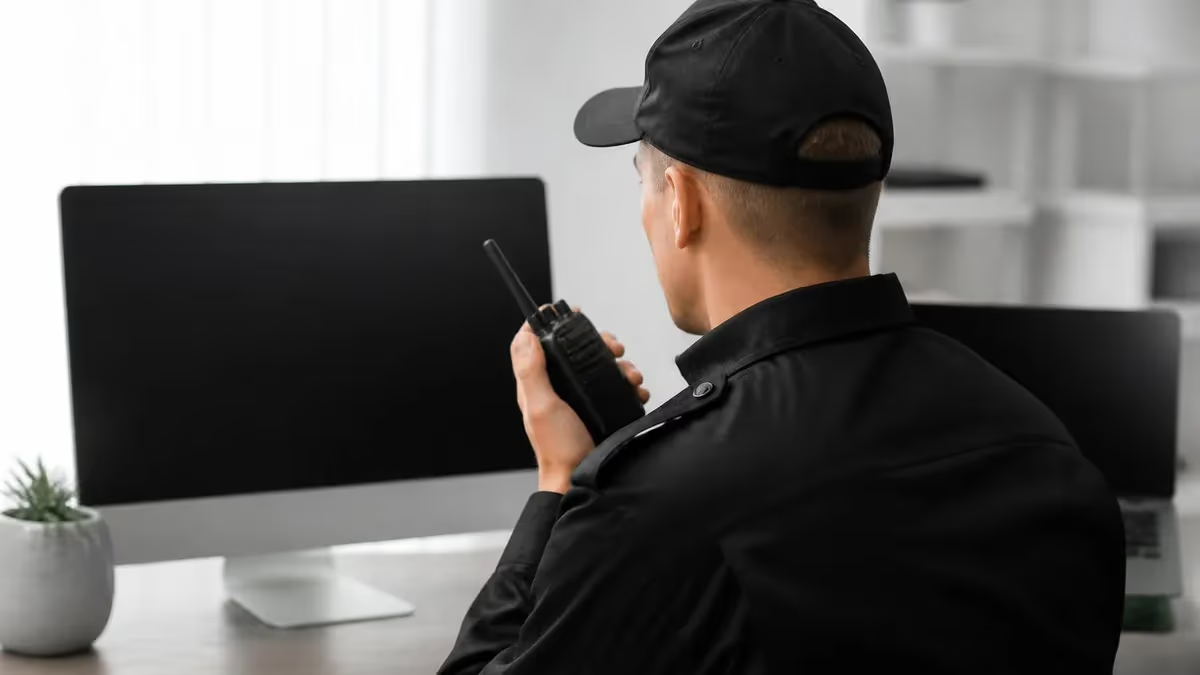
Walk into any nightclub in Manchester, any retail park in Birmingham, or any building site in central London after 6 PM and you'll see the same badge clipped to a hi-vis vest or a black bomber jacket. That little plastic card — licence renewal license, three years valid, photo, hologram, name printed in clear block letters — is the legal entry ticket to the entire UK security industry.
No badge, no shift. And before the badge, there's the training course. Roughly forty hours classroom time, two written exams, and a fee that sits somewhere between £250 and £500 depending on which awarding body's logo is printed on your certificate.
Security training in the UK is regulated to a degree that surprises most newcomers. The Security Industry Authority — SIA for short — doesn't deliver training itself. It sets the qualification standards and licenses the workers. Training delivery is handled by hundreds of approved providers across England, Wales, Scotland, and Northern Ireland, all of whom must register with a recognised awarding body. The five names you'll see again and again on certificates: Highfield, Pearson, BIIAB, ABC Awards (now NCFE-owned), and Industry Qualifications. Pick the wrong provider and your certificate won't unlock the SIA license you actually need.
This guide walks through what UK security training really involves in 2026: which SIA license types exist, the training hours required for each, what changed after the 2021 First Aid uplift and the door supervisor top-up reform, who the approved awarding bodies are and how they differ, realistic course costs across the UK, and where the catches are — like the Emergency First Aid at Work requirement nobody mentions until you're at the registration desk.
You'll see why a Door Supervisor sia licence cost cctvs more to train for than a license renewal, what the Vehicle Immobiliser, Close Protection, and Cash and Valuables in Transit licences actually permit, and how the three-year renewal cycle reshapes your training calendar.
If you're considering a security career, this is the operational map. If you already hold a licence and need to renew, the top-up sections will save you from over-paying for content you've already passed. And if you're an employer trying to figure out which licence your new starter needs before the SIA audit lands, the structure cards below sort that out in two minutes flat.
UK Security Training at a Glance
The Security Industry Authority was set up under the Private Security Industry Act 2001 and started licensing in 2003. Its remit is narrower than most people assume — it licenses the workers in specific roles, not the security co themselves (the company side runs through the voluntary Approved Contractor Scheme). The licence categories haven't expanded much since the original Act. Door Supervisor, Security Guard, CCTV Operator (Public Space Surveillance), Close Protection Operative, Vehicle Immobiliser (in Northern Ireland only since 2012), and Cash and Valuables in Transit. Six routes, six training tracks, and a single licensing authority that processes the applications.
Each licence type maps to a different training qualification with its own minimum guided learning hours. Door Supervisor sits at the top of the difficulty curve — 40 hours classroom plus mandatory Emergency First Aid at Work since the 2021 review. Security Guard requires fewer hours but still includes Working at Height awareness and a conflict management module.
CCTV Operator focuses on data protection, ethical observation, and incident logging. Close Protection runs to 138 guided learning hours and costs upwards of £1,800 — at the far end of the spectrum and a different career market entirely. The structure cards below break down the four most common licence training paths for new entrants.
One detail that catches almost every first-time applicant: the SIA licence application itself is separate from the training. You can finish your Highfield Level 2 Door Supervisor qualification on a Friday and still not be able to work as a doorman the following Monday. The SIA application takes 5 to 10 working days, costs £190 as of 2026, and requires a clean enhanced DBS check on top of your training certificate. Build that two-week gap into your job-start timeline.

The 2021 First Aid Uplift Reshaped Door Supervisor Training
Since October 2021, every new Door Supervisor licence applicant must hold a separate Emergency First Aid at Work qualification before starting the main licence-linked course. That's an extra one-day course costing £60 to £90 on top of your Door Supervisor training. The SIA also rolled out a Top-Up qualification — six hours of additional content covering terror threat awareness and physical intervention updates — that all existing licence-holders had to complete at first renewal. If you held a Door Supervisor licence from before 2021 and have already renewed once, you're current. If you haven't renewed yet, factor the Top-Up into your renewal training budget.
Course pricing across the UK varies more than newcomers expect. A Security Guard qualification through a budget Highfield-approved provider in Bradford or Leicester can come in at £150 in 2026 — sometimes less during quieter winter weeks. The same qualification in central London routinely tops £350. Door Supervisor courses sit higher: £270 to £420 typical range, with London providers stretching to £500 once Emergency First Aid is bundled in. CCTV Operator training is the cheapest of the three frontline licences at £180 to £260 because the practical content is lighter and the course runs in fewer guided hours.
Why the price spread? Three reasons. First, classroom rental costs in central London are easily three times those in regional towns, and providers pass that through. Second, the awarding body fee — what the trainer pays per learner to Highfield, Pearson, BIIAB, ABC, or IQ for the certification — varies subtly but adds up across large cohorts. Third, providers bundle different extras. Some include the Emergency First Aid course in the headline price, some charge it separately. Some include the SIA application fee, most don't. Read the booking confirmation line-by-line before you pay the deposit.
The other variable nobody mentions in marketing copy: course duration intensity. A 'fast-track Door Supervisor course' delivered across four consecutive weekdays (Monday to Thursday, 9 AM to 6 PM) is exhausting and forces the EFAW component to sit at the start or end of the block. A weekend-spread course over three weekends is gentler but stretches the calendar to nearly a month. Pick the format that matches how you actually learn — the certificate is identical either way.
SIA Licence Training Paths
The most common SIA licence in the UK and the most expensive to train for. Permits work in licensed premises (pubs, clubs, festivals, large events) plus all roles a Security Guard licence covers. Includes physical intervention training, conflict management, and the mandatory Emergency First Aid at Work qualification since 2021. Most courses run 4-5 days plus the separate one-day EFAW.
- ▸Typical cost: £270-£500 with EFAW bundled
- ▸Two written multiple-choice exams
- ▸Physical intervention practical assessment
- ▸Licence valid 3 years before renewal
Entry-level frontline licence covering static guarding, retail security, construction site security, and mobile patrol roles. Cannot work licensed premises door positions. Covers patrol procedure, emergency response, conflict management awareness, and physical intervention awareness (without practical assessment). Working at Height and PPE module included.
- ▸Typical cost: £150-£350
- ▸Single multiple-choice written exam
- ▸Working at Height + PPE awareness
- ▸No mandatory First Aid requirement
Required for paid work monitoring public space CCTV systems — town centres, transport hubs, large retail estates. Heavily focused on data protection, GDPR compliance, ethical observation, and incident reporting standards. Practical session covers control room operation, evidence preservation, and the Surveillance Camera Code of Practice.
- ▸Typical cost: £180-£260
- ▸GDPR + Data Protection Act content
- ▸Surveillance Camera Code of Practice
- ▸Strong career path into control room supervisor
The advanced licence track. Permits work as a private bodyguard or personal protection officer for individuals or VIP convoys. Long syllabus covering threat assessment, route planning, surveillance detection, defensive tactics, venue reconnaissance, and operational planning. Substantially higher training investment and a more competitive job market than frontline licences.
- ▸Typical cost: £1,800-£3,000
- ▸Course runs 12-15 consecutive days
- ▸Mandatory Emergency First Aid at Work
- ▸Industry experience usually required for first role
Awarding body choice matters more than many candidates realise. The certificate logo on your training pass card sits in the same database the SIA checks during your licence application. All five recognised bodies — Highfield, Pearson Edexcel, BIIAB, ABC Awards (now NCFE), and Industry Qualifications — are accepted equally by the SIA, but they differ in the quality of training network, the digital certificate system, the renewal pricing, and the secondary qualifications they offer.
Highfield dominates the door supervisor and security guard market by sheer volume. Pearson Edexcel is strong in colleges and adult education. BIIAB has historic roots in licensed-trade qualifications. ABC and IQ cover the smaller niches.
For most candidates the practical question is which awarding body their local approved training provider works with — providers usually contract with one or two bodies, not all five. The tabs below explain the role each body plays so you can recognise their certificates and understand the renewal options each opens up. You can also see the SIA's own list of recognised awarding bodies on the official Home Office site for the current 2026 register.

Approved Awarding Bodies for SIA Training
Highfield is the largest single awarding body in the UK security training market and the one new candidates encounter most often. Strong in door supervisor, security guard, CCTV operator, and Level 2 First Aid qualifications. Digital e-certificate system delivers proof of qualification within 48 hours of passing, which speeds up the SIA application turnaround. Highfield-approved centres are dense across the Midlands, North West, Yorkshire, and London — slightly thinner in Wales and the Scottish Highlands. Renewal courses through Highfield typically run £100-£140 for the door supervisor Top-Up alone.
The licence-renewal cycle is where many security workers first lose money to a course they didn't actually need. SIA licences run for three years from the issue date — not from the training-pass date — and lapse fully if you miss the renewal window. Once a licence lapses, the SIA usually requires you to re-sit the full original qualification, not the cheaper Top-Up. That's the difference between a £100 refresher and a £400 full course, multiplied across thousands of workers every year who let renewals slide because the deadline reminder went to an old email address.
If you renew before your licence expires you can typically take the Top-Up qualification — six hours of focused content covering the latest legislative changes, terror threat awareness updates, and any new compliance requirements. The Top-Up is delivered in a single day or evening and the certificate sits in the same awarding body database. Once you have the Top-Up certificate and your renewal-fee payment processed (£190 as of 2026), the SIA reissues your licence for another three years. The alert below covers the single biggest mistake people make with renewals.
Miss your licence renewal window and you pay for the full original qualification, not the £100 Top-Up. SIA licences expire exactly three years from the issue date printed on the card. You can renew up to four months before expiry without losing time on the renewed term. Wait until after expiry and you're treated as a brand-new applicant — full course, full DBS check, full SIA application from scratch. Set a calendar reminder two months before your licence expiry date the day you receive your new licence. The single biggest preventable training cost in this industry is exactly this.
Before you book a course, run through the practical checklist below. Skipping any one of these items causes the most common training-week problems candidates report — turning up to a session without the right ID, finding out the Emergency First Aid course wasn't bundled in the price, or having a DBS gap that pushes your SIA application back by weeks. The checklist also covers what to do across the three-year licence cycle so you don't fall into the lapsed-licence trap covered above.
One quietly important step on the checklist: keeping certified copies of every certificate for at least six years. Employer audits, agency onboarding, and the SIA's own compliance checks can request proof of training years after the original course. Lose the original certificate and you're often paying the awarding body £40 to £60 for a duplicate, sometimes with a 4-6 week wait.
Scan everything to cloud storage the day you receive it. Keep the originals in a labelled folder with your passport and DBS paperwork — that single folder gets you through every future audit without scrambling for documents at the last minute.

SIA Training and Licence Checklist
- ✓Confirm the licence type you actually need — Door Supervisor covers Guard work but not vice versa
- ✓Check the training provider is approved by a recognised awarding body (Highfield, Pearson, BIIAB, ABC/NCFE, IQ)
- ✓Ask whether Emergency First Aid at Work is bundled in the Door Supervisor course price or separate
- ✓Apply for your enhanced DBS check before the training week starts — clears the timeline gap
- ✓Bring two forms of photographic ID to every course day (passport plus photo driving licence works)
- ✓Save your digital pass certificate to email and cloud storage immediately on issue
- ✓Submit your SIA licence application within four weeks of passing your training exams
- ✓Diarise your licence renewal four months before the expiry date printed on your card
- ✓Book the Top-Up qualification 6-8 weeks before renewal to avoid last-minute price surges
- ✓Keep certified copies of all your training certificates for at least six years after renewal
Not every candidate is going to find UK security training a good fit, and the recruitment material rarely admits the downsides. The pros are real — entry-level access to a sector with constant demand, the licence is a portable credential across the whole country, retraining costs are modest compared to most regulated industries, and the hourly rates in London have crept above £14 for door supervisor roles in 2026.
The cons are real too. Night shifts dominate the door supervisor market, the DBS check screens out anyone with recent criminal convictions, and the Top-Up requirement every three years means ongoing training spend across a career. The pros_cons table below lays out the realistic trade-offs so you can decide before you spend £400 on a course.
UK Security Training Trade-offs
- +Entry-level licence in 4-5 days of training plus 1-2 weeks SIA processing
- +Portable nationwide — same SIA licence works in Liverpool, Cardiff, Glasgow, and Belfast
- +Lower training cost than most regulated UK professions (~£300 average)
- +Door Supervisor licence covers Security Guard work too — single licence, two job markets
- +Strong demand for licensed staff across pubs, retail, events, construction
- +Career ladder into Close Protection, control room supervision, security management
- −Top-Up training every three years adds recurring £100-£140 training cost
- −Enhanced DBS check screens out applicants with recent criminal convictions
- −Night and weekend shift dominance in licensed-premises work
- −Hourly rates outside London remain modest (£11-£12 typical Security Guard in 2026)
- −Licence application fee (£190) and EFAW requirement push true cost above headline course price
- −Lapsed licences require full re-training — no refresher route once expiry passes
Pros and Cons at a Glance
| Pros | Cons |
|---|---|
| Portable nationwide — same SIA licence works in Liverpool, Cardiff, Glasgow, and Belfast | Enhanced DBS check screens out applicants with recent criminal convictions |
| Door Supervisor licence covers Security Guard work too — single licence, two job markets | Night and weekend shift dominance in licensed-premises work |
| Strong demand for licensed staff across pubs, retail, events, construction | Lapsed licences require full re-training — no refresher route once expiry passes |
The candidates who get the most out of UK security training treat the whole package as a three-step project, not a single course booking. Step one is the qualification — pick the right licence type, the right awarding body, and the right provider near you.
Step two is the SIA licence application — DBS in advance, application submitted within four weeks of training pass, photo card in hand before you accept a job offer. Step three is the long-game career view — diarise the renewal, budget the Top-Up, and think about whether the next licence in three years should be the same one or an upgrade into Close Protection or CCTV.
Within that three-step frame, the awarding body matters less than the local provider's reputation, and the headline course price matters less than what's actually bundled. The course that lists £199 in big numbers but charges £85 for the EFAW component, £30 for the digital certificate, and £25 for the practical materials kit ends up costing £339. The course that lists £349 with everything bundled — including the SIA application support session — often comes out cheaper and saves you two weeks of administrative chasing. Read the small print and ask exactly what's included before paying any deposit.
Provider reputation shows up in the small things. The trainer who turns up ten minutes late on the first morning sets the tone for the rest of the week. The classroom that's too cold, the projector that fails, the practice exam booklet that's two amendments out of date — these aren't dealbreakers individually, but they cluster around providers who are operating on margin and skipping reinvestment.
Read recent Google reviews specifically for the centre you're booking, not just the parent company. A national chain with strong overall ratings can still have one regional centre that everyone privately warns about. Ten minutes of review-reading saves a week of frustration.
One final reality check before you sign up for a course. The UK security industry is one of the few regulated sectors where you can go from no experience to your first paid shift in under a month — training week, exam, SIA application, and licence card in hand inside 28 days for an organised candidate. That speed is the headline benefit and the reason new entrants flood the entry-level Door Supervisor and Security Guard markets every year.
It's also the reason competition for the best shifts (Friday and Saturday nights in central city venues, festival-circuit summer contracts) is fiercer than the licence numbers suggest. Holding the licence is the entry condition. Standing out comes from reliability, communication skills, and the secondary qualifications you pick up after the licence — physical intervention, conflict management, first responder, body-worn camera operation, and venue-specific training the employers themselves often deliver in-house.
If you're approaching this as a stepping-stone into a longer security guard career, the licence is the foundation and the secondary qualifications are the build-out. If you're picking it up as a side income alongside another job — common with students and people who already work daytime shifts elsewhere — the training cost pays back inside ten to fifteen worked shifts in most regions of the UK.
Either way, plan past the training course itself. The certificate is one of the cheapest professional credentials in the country. The career you build on top of it is what determines whether the £300 you spent in week one returns £30,000 over three years or sits unused on a shelf. The FAQs below cover the questions new candidates ask most often in their first month of planning.
Sample SIA Security Guard Practice Questions
Try these questions from our free SIA Security Guard practice tests. The correct answer and an explanation follow each question.
How should a security guard describe actions in a report — past tense or present tense?
- A. Present tense always
- B. Past tense, as the report describes events that have already occurred
- C. Future tense
- D. Any tense is acceptable
Answer: B. Past tense, as the report describes events that have already occurred
Reports should be written in the past tense because they describe events that have already happened. For example: 'I observed a male individual enter the car park at 2230 hrs' — not 'I observe'.
What is the correct procedure when a security guard discovers an unattended bag that may be suspicious in a public area?
- A. Open the bag to check what is inside
- B. Do not touch or move the bag. Clear the immediate area, implement relevant emergency procedures, contact police, and if in a major public venue follow the organisation's 'HOT' assessment procedure
- C. Move the bag to a secure room until police arrive
- D. Ask surrounding members of the public if the bag belongs to them, then leave it if no one claims it
Answer: B. Do not touch or move the bag. Clear the immediate area, implement relevant emergency procedures, contact police, and if in a major public venue follow the organisation's 'HOT' assessment procedure
An unattended suspicious bag should never be touched or moved. The area should be cleared, police called (999), and the organisation's counter-terrorism procedures followed. The 'HOT' assessment (Hidden, Obviously suspicious, Typical of the location?) helps assess whether to treat it as a threat, but the default is to treat unattended items as suspicious until confirmed otherwise.
Why should a security guard vary their patrol times and routes?
- A. To avoid boredom
- B. To prevent potential offenders from predicting their movements and exploiting gaps in coverage
- C. To find shorter routes
- D. To explore different parts of the building
Answer: B. To prevent potential offenders from predicting their movements and exploiting gaps in coverage
Varying patrol times and routes makes the guard's movements unpredictable, preventing potential offenders from timing their activities to avoid detection.
What should a security guard do if they encounter an intruder on site?
- A. Chase and physically restrain them
- B. Observe from a safe distance, note their description, do not confront, call the police, and report to the control room
- C. Ignore them if they are not causing damage
- D. Ask them politely to leave and then forget about it
Answer: B. Observe from a safe distance, note their description, do not confront, call the police, and report to the control room
Personal safety is paramount. Observe the intruder from a safe distance, note their description, direction of travel, and any vehicle details. Do not confront them — call the police and report to the control room.
SIA Questions and Answers
About the Author

Certified Protection Professional & Security Licensing Expert
John Jay College of Criminal JusticeMarcus Rivera is a Certified Protection Professional (CPP) and Physical Security Professional (PSP) with a Master of Science in Security Management from John Jay College of Criminal Justice. With 16 years of corporate security, loss prevention, and executive protection experience, he coaches security professionals through ASIS CPP, PSP, PCI, and state security guard licensing examinations.