

SSO Practice Test
Updated October 2026Facts verified Oct 21, 2026 against United States Coast Guard National Maritime Center
This page is for mariners getting ready to serve as a Ship Security Officer. US Coast Guard rules call this role the Vessel Security Officer (VSO). The page has free practice sets grouped by the official content areas, worked explanations for sample questions and a study plan. It also answers common questions about how the credential is earned and kept. We write our questions with AI tools. They are not real exam questions. Practice with the free Ship Security Officer practice test on PracticeTestGeeks (7 questions with answer explanations).
Free Ship Security Officer Study Tools
Interactive Ship Security Officer resources on PracticeTestGeeks, free to start:
- SSO Threat Assessment & Risk Management 1 — 7 questions with answer explanations
- Ship Security Officer flashcards — review key terms and concepts card by card
- Ship Security Officer study guide — topic-by-topic overview of what the exam covers
- Ship Security Officer cheat sheet — one-page printable summary for last-minute review
SSO: upcoming dates and official changes
- Jul 8, 2026: The National Maritime Center revised its STCW Vessel Security Officer evaluation checklist (MCP-FM-NMC5-218, revision 04) on July 8, 2026. The checklist now requires a national endorsement as OS, Wiper, SD (FH) or higher, and lists four sea-service options. (dco.uscg.mil)
Facts verified Oct 21, 2026 against United States Coast Guard National Maritime Center. Dates that have passed are removed automatically.
- The Vessel Security Officer endorsement is printed on the US Merchant Mariner Credential, which is valid for 5 years from the date of issuance. (United States Coast Guard National Maritime Center)
- To renew a US Vessel Security Officer endorsement, every applicant must be issued at least an entry-level Merchant Mariner Credential and pay all applicable fees, including those originally endorsed without a national endorsement. (dco.uscg.mil)
- The Ship Security Officer (Vessel Security Officer) endorsement is earned by completing a Coast Guard-accepted VSO course that assesses the STCW A-VI/5 competencies, then applying to the US Coast Guard National Maritime Center; there is no separate Coast Guard exam. (United States Coast Guard National Maritime Center)
Facts verified Oct 21, 2026 against United States Coast Guard National Maritime Center. Dates that have passed are removed automatically.
SSO Exam at a Glance
| Item | Detail | Official source |
|---|---|---|
| Validity | Carried on the Merchant Mariner Credential, which is valid for 5 years | United States Coast Guard National Maritime Center |
| Renewal | Renewal requires at least an entry-level MMC plus all applicable fees | dco.uscg.mil |
| Delivery | Earned by completing a Coast Guard-accepted VSO course, then applying to the NMC | United States Coast Guard National Maritime Center |
Facts verified Oct 21, 2026 against United States Coast Guard National Maritime Center. Dates that have passed are removed automatically.
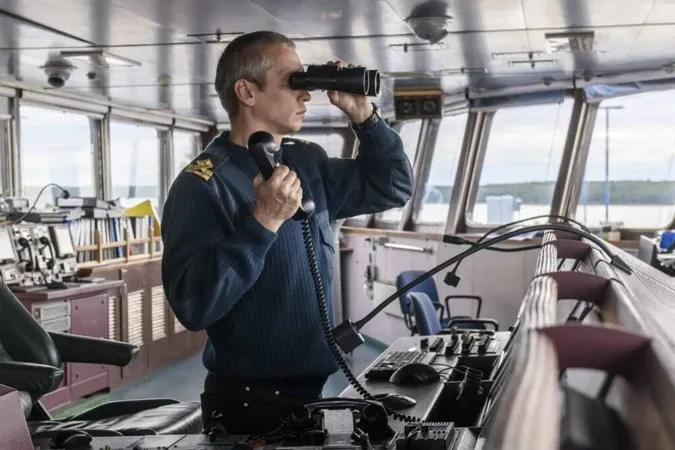
What the SSO is and how it works
According to United States Coast Guard National Maritime Center, “(iv) Successfully complete a Coast Guard-accepted VSO course;”[3]
In the United States, the Ship Security Officer role is regulated as the Vessel Security Officer (VSO). The person in this role maintains and supervises the vessel security plan, assesses risk and keeps security equipment working. They also support TWIC program compliance and keep the crew alert to threats.
How it is earned. Coast Guard rules for vessel security officers require you to successfully complete a Coast Guard-accepted VSO course. After the course, you apply to the National Maritime Center (NMC) for the endorsement. The rules cited here set out the course requirement but do not describe a separate Coast Guard exam. Any test you take is part of the accepted course, so the course provider sets its format, length, passing standard and retake policy. Ask your provider for these details before you enrol.
How long it lasts. The endorsement goes on your Merchant Mariner Credential (MMC). An MMC is valid for 5 years from the date of issuance. To renew, you must be issued at least an entry-level MMC and pay all applicable fees. This applies even if your earlier endorsement was issued without any other national endorsement.
Fees, forms and processing times change. Before you apply, check the NMC website and the Coast Guard regulations on eCFR for current requirements.
SSO content outline and where to practise each area
The content areas below are copied from the official SSO content outline published by United States Coast Guard National Maritime Center. The right-hand column shows which of our practice sets covers it.
| Official content area | Practice on this site |
|---|---|
| Assessing security risk, threat and vulnerability[3] | SSO Threat Assessment & Risk Management Practise telling threats apart from vulnerabilities and deciding which risks on board need action first. |
| Encouraging security awareness and vigilance[3] | SSO Security Duties and Responsibilities Practise the security officer's duties for briefing crew, running drills and making sure suspicious activity gets reported. |
| Ensuring compliance with the TWIC program requirements[3] | SSO Maritime Security Regulations Practise the regulatory questions on who needs credentialed access, how access is controlled and how escorting works on a regulated vessel. |
| Ensuring that security equipment and systems, if any, are properly operated, tested and calibrated[3] | SSO Security Equipment & Training Practise questions on operating, testing and maintaining security equipment and on recording that the work was done. |
| Maintaining and supervising the implementation of a vessel security plan[3] | SSO Ship Security & Planning Practise how the security plan is put into effect, reviewed and changed when the security level changes. |
SSO Practice Test Questions
Prepare for the SSO - Ship Security Officer exam with our free practice test modules. Each quiz covers key topics to help you pass on your first try.
SSO Contract Types & Administration
SSO Exam Questions covering Contract Types & Administration. Master SSO Test concepts for certification prep.
SSO Cost & Pricing Analysis
Free SSO Practice Test featuring Cost & Pricing Analysis. Improve your SSO Exam score with mock test prep.
SSO Emergency Preparedness and Incident Re...
SSO Mock Exam on Emergency Preparedness and Incident Response. SSO Study Guide questions to pass on your first try.
SSO Federal Acquisition Regulations
SSO Test Prep for Federal Acquisition Regulations. Practice SSO Quiz questions and boost your score.
SSO Maritime Security Regulations
SSO Questions and Answers on Maritime Security Regulations. Free SSO practice for exam readiness.
SSO Maritime Security Regulations & ISPS Code
SSO Mock Test covering Maritime Security Regulations & ISPS Code. Online SSO Test practice with instant feedback.
SSO Performance Monitoring & QA
Free SSO Quiz on Performance Monitoring & QA. SSO Exam prep questions with detailed explanations.
SSO Security Duties and Responsibilities
SSO Practice Questions for Security Duties and Responsibilities. Build confidence for your SSO certification exam.
SSO Security Duties & Emergency Preparedness
SSO Test Online for Security Duties & Emergency Preparedness. Free practice with instant results and feedback.
SSO Security Equipment & Training
SSO Study Material on Security Equipment & Training. Prepare effectively with real exam-style questions.
SSO Ship Security & Planning
Free SSO Test covering Ship Security & Planning. Practice and track your SSO exam readiness.
Worked examples: how to reason through SSO questions
These are practice questions written for this site, not questions from the real exam. Each explanation shows why the right answer is right and why the others are wrong.
Example 1
Question: Which IMO instrument provides the overarching legal framework within which the ISPS Code operates?
- MARPOL 73/78
- SOLAS 1974 as amended
- STCW Convention
- MLC 2006
Answer: B. SOLAS 1974 as amended
Explanation:
B is correct. The ISPS Code came into force through amendments to SOLAS 1974, in Chapter XI-2, so SOLAS is the legal framework the Code sits within. MARPOL 73/78 deals with pollution from ships, not security. The STCW Convention sets standards for training, certification and watchkeeping. It shapes how security officers are trained, but it does not give the ISPS Code its legal force. MLC 2006 covers seafarers' working and living conditions. Rule to remember: security measures for ships and port facilities trace back to SOLAS Chapter XI-2. When a question asks where the ISPS Code gets its authority, look for SOLAS.
Example 2
Question: Under SOLAS Chapter XI-2, what is the minimum security level assigned by contracting governments?
- Security Level 0
- Security Level 1
- Security Level 2
- Security Level 3
Answer: B. Security Level 1
Explanation:
B is correct. Security Level 1 is the normal level at which ships and port facilities operate, with baseline protective measures always in place. There is no Security Level 0 in the SOLAS Chapter XI-2 scheme, so A is a distractor. Security Level 2 is a raised level, set when the risk of a security incident is higher. Security Level 3 is used in exceptional cases, when an incident is probable or imminent. Neither is the minimum. Rule to remember: the contracting government sets the level, and it is never below Level 1. The ship's security plan must state the extra measures that apply at each higher level.
Example 3
Question: When a conflict arises between standard procedures and a unique situation in Cost & Pricing Analysis, what should a SSO professional prioritize?
- Safety and ethical obligations while seeking expert consultation
- Strict adherence to written procedures without exception
- The most cost-effective solution available
- The preference of the client or stakeholder
Answer: A. Safety and ethical obligations while seeking expert consultation
Explanation:
A is correct. When written procedures do not fit an unusual situation, protect people and act ethically first. Then get advice from someone with more experience or authority before you decide. B is wrong because procedures cannot foresee every case, and following one blindly can cause harm. C is wrong because cost matters but never outranks safety or integrity. D is wrong because a client's or stakeholder's wishes do not override professional duties. Rule to remember: safety and ethics come first, and asking for advice is a strength, not a weakness. This question comes from our Cost & Pricing set, which covers an acquisition topic rather than vessel security, but the same rule applies on board.
How to use these practice tests
Start with the official outline. Read the content areas in the table above. Get the vessel security plan you will work under and the materials from your Coast Guard-accepted VSO course.
- Take a baseline. Run the main practice test once without notes and write down which areas you miss.
- Work area by area. Use the matching sets: Threat Assessment & Risk Management, Ship Security & Planning, Security Equipment & Training and Maritime Security Regulations & ISPS Code. Read every explanation, including those for questions you got right.
- Check against the source. When an answer surprises you, find the matching rule in the regulations or your course notes. Do not rely on our explanation alone.
- Retest. Take the main practice test again and compare the result with your baseline. Spend your remaining time on the areas that are still weak.
You can skip the Contract Types, Cost & Pricing, Federal Acquisition Regulations, Source Selection and Performance Monitoring sets unless you need them for another reason. They cover government acquisition topics that share the SSO abbreviation, not vessel security.

SSO FAQ
How this page was made: written with AI tools and published by Nathan Beja, founder of Practice Test Geeks, who is responsible for its content. Exam facts are checked against the official sources listed below. Not reviewed by a subject-matter expert. Editorial policy
Sources & references
Exam facts on this page (fees, format, dates, passing scores) are checked against these official sources; the date is our last check. Editorial policy
- ecfr.gov — Score validity, test delivery, exam information · verified Oct 2026
- dco.uscg.mil — Renewal, exam information · verified Oct 2026