
Is Sheriff and Police the Same? Understanding Deputy Sheriff vs. Police Officer Roles
Is sheriff and police the same? 🎯 Learn the key differences between deputy sheriffs and police officers — jurisdiction, salary, duties, and how to prepare.

Many people ask, is sheriff and police the same — and the short answer is no, though both roles share important law enforcement responsibilities. A sheriff is typically an elected county official whose authority spans an entire county, including unincorporated areas not served by a municipal police department. A deputy sheriff works directly under the sheriff and carries out those county-wide duties on a daily basis. Understanding the distinction matters whether you are a citizen navigating the justice system or a candidate preparing for a law enforcement career.
The confusion between the two roles is understandable because both officers wear uniforms, carry firearms, make arrests, and respond to emergencies. However, the legal foundations of each position differ significantly. Police officers are appointed employees of a city or town government, operating under a municipal police chief who is also appointed. Sheriffs, by contrast, are independently elected in nearly every U.S. state, which means they answer directly to the voters rather than to any city council or mayor.
A deputy sheriff is the rank-and-file officer employed by the county sheriff's office. Deputies patrol county roads, serve civil process documents, manage county jail operations, and provide law enforcement services in areas where no city police department exists. In rural counties, the sheriff's office may be the only law enforcement agency available to residents, making deputies essential first responders for everything from traffic accidents to violent crimes.
Jurisdictional boundaries are one of the most practical differences between a sheriff's deputy and a municipal police officer. A city police officer's authority is generally limited to the city limits. Once that officer crosses into an unincorporated area or an adjacent municipality, their powers may be restricted. A deputy sheriff, on the other hand, has county-wide jurisdiction and can operate in both incorporated cities and unincorporated county land, and in many states a sheriff can exercise authority statewide in emergency situations.
Career paths also differ between the two roles. Aspiring police officers typically apply to a specific city department, complete a police academy, and move through ranks within that department. Aspiring deputies apply to the county sheriff's office, complete a state-certified academy, and may rotate through assignments including patrol, civil process, and jail operations.
Both tracks require written exams, physical fitness tests, background investigations, and psychological evaluations, but the structure of advancement and the breadth of responsibilities can be quite different. For a deeper look at the deputy vs sheriff exam process, our comprehensive guide covers every stage of the hiring process.
Salary and benefits packages also vary. Deputy sheriff salary figures depend heavily on county size, state cost of living, and collective bargaining agreements through a deputy sheriff association. Larger urban counties often pay competitively with or even above municipal departments, while rural sheriffs' offices may offer lower base pay offset by lower living costs. Understanding these financial realities helps candidates make informed career decisions before committing to a specific agency or track.
Whether you are a curious citizen or a job seeker mapping out your future, knowing the structural, jurisdictional, and operational differences between sheriffs, deputies, and police officers gives you a clearer picture of how American law enforcement is organized. The sections below break down each dimension in detail, backed by real salary data, jurisdictional rules, and practical preparation tips for anyone targeting the deputy sheriff exam.
Deputy Sheriff by the Numbers

How Sheriff's Offices and Police Departments Are Organized
In 48 of 50 U.S. states, the sheriff is directly elected by county voters, not appointed by a city council. This means the sheriff is accountable to the public, not to a mayor or city manager, and holds independent constitutional authority rooted in centuries of common law tradition.
Deputy sheriffs are hired employees of the county who swear an oath and receive their policing powers through the sheriff. They carry the same arrest authority as the sheriff within the county and are the operational backbone of the sheriff's office, handling patrol, jail, and civil process.
Municipal police chiefs are appointed by city governments and serve at the pleasure of the city council or mayor. Unlike sheriffs, they do not face voters directly, which creates a different chain of accountability and can make their tenure subject to shifts in city politics.
Police officers are municipal employees whose authority is derived from state statute and local ordinance. Their jurisdiction is limited to the city or town that employs them, though mutual aid agreements and hot-pursuit doctrines allow cross-jurisdictional action in specific circumstances.
Jurisdiction is the single most important legal distinction between a sheriff's deputy and a municipal police officer. A deputy sheriff's authority covers the entire county — every road, farm, subdivision, and unincorporated community within those borders. A city police officer's authority ends precisely at the city limit line, which in densely populated metro areas may be only a few miles wide. This geographic reality shapes daily operations, resource deployment, and interagency cooperation in profound ways.
In rural counties, the sheriff's office is often the only law enforcement presence available. There are no city police departments in unincorporated townships, so deputies handle every call for service from domestic disturbances to major felonies. The sheer size of some rural counties — some western counties span thousands of square miles — means a single deputy may patrol an area larger than some states. Response times of 30 minutes or more are not uncommon in remote regions, which shapes how deputies prioritize calls and manage resources.
Urban and suburban counties present a different dynamic. In a county like Los Angeles, the sheriff's department operates alongside dozens of independent city police agencies. The sheriff may contract with smaller cities that have decided not to maintain their own departments, providing municipal-level policing services under a contract arrangement. This contract model saves smaller cities the expense of building a full department while still giving residents responsive local policing backed by a large, resource-rich county agency.
Sheriffs also retain unique constitutional responsibilities that municipal police do not share. Operating and managing the county jail is one of the most significant. Most sheriffs' offices run at least one detention facility, housing pre-trial detainees, sentenced misdemeanants, and sometimes state-sentenced felons awaiting transfer. This jail function requires deputies to rotate through corrections assignments, giving them experience in a custody environment that municipal officers typically do not have unless they work for a department with its own holding facility.
Civil process service is another area where sheriffs stand apart. Courts rely on sheriffs and their deputies to deliver legal documents — summonses, subpoenas, restraining orders, eviction notices, and wage garnishments. This civil function has no equivalent in municipal policing. Understanding sheriff vs deputy responsibilities in the eviction context specifically illustrates how county law enforcement intersects with civil court proceedings in ways city police departments rarely do.
Mutual aid and interagency cooperation blur jurisdictional lines in emergencies. When a major disaster strikes, when a fugitive flees across city lines, or when a city department is overwhelmed, deputies and police officers frequently work side by side. Most states have statutes enabling cross-jurisdictional law enforcement action, but the underlying authority of each officer remains tethered to their employing agency. A deputy working a mutual aid assignment in a city does so under the sheriff's authority, not the city's, which has implications for liability, command structure, and reporting.
State police and highway patrol agencies add another layer to this jurisdictional picture. State troopers have statewide authority and typically focus on highway enforcement and major criminal investigations. They are neither sheriffs nor municipal police, but they interact with both. Understanding where each agency's authority begins and ends — and how they cooperate — is essential knowledge for anyone entering law enforcement or studying for a sheriff deputy exam, where questions about legal authority and jurisdiction appear frequently.
What Is a Deputy Sheriff? Roles, Duties, and Daily Life
Deputy sheriffs on patrol are responsible for responding to 911 calls, conducting traffic stops, investigating accidents, and performing proactive crime prevention across county roads and unincorporated communities. In many counties, patrol deputies are the primary first responders for fire medical support, domestic violence calls, and welfare checks in areas where no other agency operates. They write incident reports, collect evidence, interview witnesses, and testify in court as part of their routine duties.
Unlike city officers who may hand off cases to a detective unit quickly, rural deputies often follow an investigation from initial call through prosecution, giving them broad experience across multiple policing functions. A patrol deputy in a large county might respond to a burglary at dawn, serve a civil subpoena midmorning, transport a prisoner to court by noon, and assist at a vehicle accident by evening — all within the same shift and the same jurisdiction.

Pros and Cons of Choosing a Deputy Sheriff Career Over Municipal Police
- +Broader jurisdiction — deputies patrol entire counties, not just city limits, offering more varied daily experiences
- +Multiple assignment tracks available — patrol, jail, civil process, courts, investigations, and specialized units
- +Direct connection to an elected official who answers to voters, potentially giving deputies more community-focused leadership
- +Civil process and jail experience builds a uniquely versatile law enforcement skill set not found in most city departments
- +Many large county agencies offer competitive salaries, strong benefits, and strong retirement systems through a deputy sheriff association
- +Contract policing in smaller cities can provide urban-style work with county-level resources and backing
- −Rural assignment areas can mean very long response times and geographic isolation during shifts
- −Mandatory jail rotations early in a career may not appeal to candidates who primarily want patrol or investigative work
- −Sheriffs are elected, meaning leadership priorities can shift significantly every election cycle
- −Deputy sheriff salary in small or rural counties can be significantly lower than comparable urban police departments
- −Civil process duties — serving papers, managing evictions — are time-consuming administrative tasks some officers find less engaging
- −Larger county territories mean more driving and higher vehicle wear, which can affect response capacity in remote areas
Deputy Sheriff Hiring Process: Step-by-Step Checklist
- ✓Confirm minimum eligibility requirements — typically age 21, U.S. citizenship, valid driver's license, and no felony convictions
- ✓Submit a complete written application to the county sheriff's office before the posted deadline
- ✓Study for and pass the written civil service or sheriff-specific entrance exam covering reading, math, reasoning, and law
- ✓Complete the physical agility or fitness test meeting the agency's minimum standards for running, push-ups, and sit-ups
- ✓Pass an oral board interview panel evaluating communication skills, situational judgment, and motivation for the role
- ✓Successfully complete a comprehensive background investigation including criminal history, credit, employment, and reference checks
- ✓Undergo polygraph examination and psychological evaluation, both of which are standard in most sheriff hiring pipelines
- ✓Clear a pre-employment medical exam and drug screening administered by agency-approved providers
- ✓Receive a conditional offer and enroll in a state-certified law enforcement academy lasting 16 to 24 weeks
- ✓Complete a field training program with a certified field training officer before being cleared to patrol solo
Jurisdiction Questions Appear on Nearly Every Sheriff Exam
Questions about the legal boundaries of sheriff versus police authority are among the most frequently tested topics on deputy sheriff written exams. Know that a sheriff's jurisdiction is county-wide, that sheriffs are elected in 48 states, and that deputies carry the sheriff's authority. Understanding these structural facts cold will earn you fast, confident points on exam day.
Deputy sheriff salary is one of the most researched topics among law enforcement candidates, and for good reason — compensation varies dramatically depending on geography, county size, experience level, and union representation. According to the U.S. Bureau of Labor Statistics, the median annual wage for sheriff's patrol officers and deputy sheriffs was approximately $64,000 as of 2024. However, that national median masks significant regional variation. Deputies in high cost-of-living counties in California, New York, or New Jersey can earn well over $100,000 annually, while those in rural Midwestern or Southern counties may start closer to $35,000 to $45,000.
Entry-level pay typically ranges from $40,000 to $60,000 per year in medium-sized counties. Most agencies apply step increases — automatic pay raises tied to years of service rather than merit alone — that move a deputy from entry-level to journey-level pay within five to seven years. Some large agencies compress their ranges so that a deputy with ten years of service earns 30 to 40 percent more than a recruit, creating a meaningful financial incentive for retention and career longevity.
Benefits packages often represent as much as 30 to 40 percent of total compensation for deputy sheriffs. Health insurance for the employee and family members, dental and vision coverage, life insurance, and employer-funded pension contributions are standard at most sheriff's offices. Public employee pension systems in particular can be extremely valuable — many allow deputies to retire after 20 to 25 years of service with a defined benefit pension equal to 50 to 90 percent of their final salary, depending on the state and plan tier.
Overtime, specialty pay differentials, and educational incentives add meaningfully to base compensation. Deputies assigned to specialized units like SWAT, K-9, detective bureaus, or training divisions typically earn assignment pay of 5 to 15 percent above base salary. Agencies in many states offer education incentive pay for associates, bachelor's, or advanced degrees, rewarding officers who invest in their professional development. Bilingual pay is increasingly common as agencies seek deputies who can communicate with non-English-speaking community members.
A deputy sheriff association — the union or professional organization representing deputies — plays a crucial role in negotiating these compensation packages. Collective bargaining agreements set minimum wage floors, overtime rules, health insurance contributions, and working condition standards. In states with strong public employee labor laws, deputies may enjoy strong contractual protections and competitive compensation. In states with weaker collective bargaining rights, pay and conditions are more variable and subject to budget cycles. Knowing whether a target agency has an association and understanding its contract terms is important research for any serious candidate.
The fiscal health of the county itself is another factor candidates should research. County budgets depend heavily on property tax revenues, state funding formulas, and local economic conditions. A county experiencing population growth and rising property values may be actively hiring and expanding compensation. A county facing budget deficits may have hiring freezes, delayed step increases, or reduced academy class sizes. Looking at a county's recent budget history and sheriff's office staffing levels gives candidates realistic expectations about career stability and advancement opportunities.
Retirement security is a major draw for many people who choose county law enforcement over the private sector. The combination of a defined-benefit pension, retiree health coverage in some jurisdictions, and Social Security (where deputies participate) creates a retirement package that is increasingly rare in the broader labor market. For candidates weighing long-term financial security, the total compensation picture — not just starting salary — often makes deputy sheriff roles highly competitive with private sector alternatives requiring similar education and skill levels.
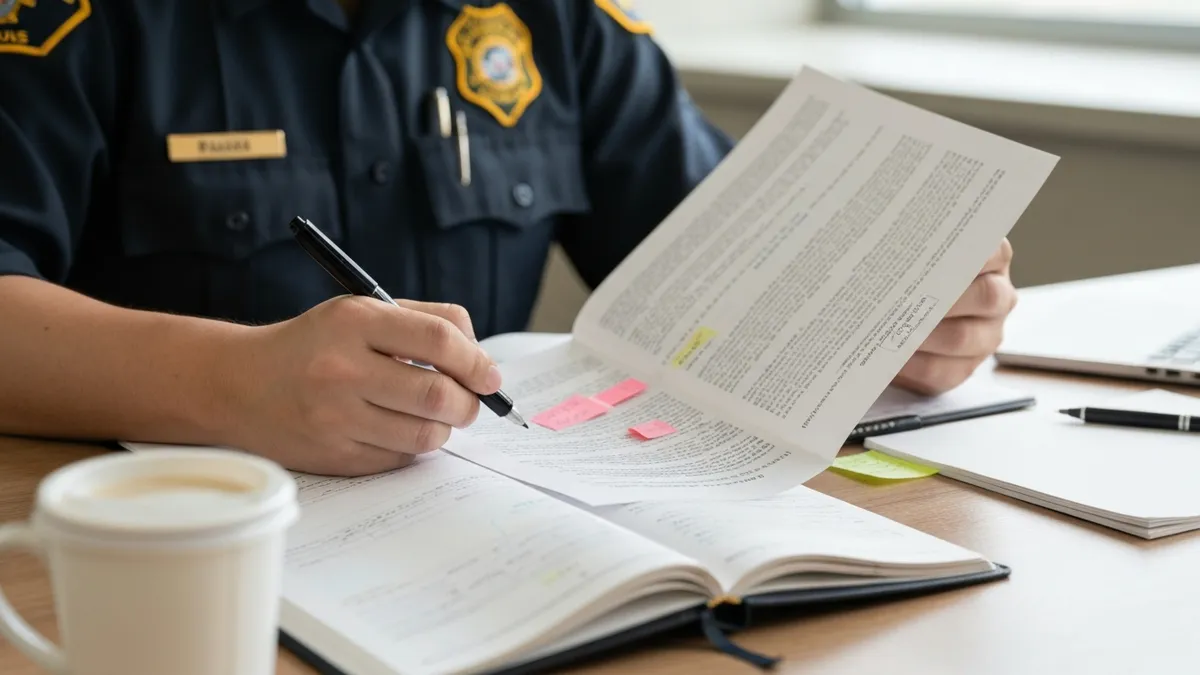
Sheriff's offices operate independently, and their policies on federal immigration cooperation can differ significantly from county to county. In some jurisdictions, riverside county sheriff says no immigration enforcement by deputies — reflecting a policy choice made by the elected sheriff. Candidates and citizens should research the specific policies of their county's sheriff's office, as these decisions affect daily operations and community relationships in ways that municipal police departments may handle differently under city council direction.
Preparing for the deputy sheriff exam requires a systematic approach because the test covers a broad range of subjects — reading comprehension, written communication, mathematics, logical reasoning, situational judgment, and often law-specific content tailored to the sheriff role. Most county agencies use a standardized civil service examination administered by the county's human resources department or a third-party testing firm. Understanding the specific format and content areas of your target agency's exam is the essential first step in building an effective study plan.
Reading comprehension questions typically involve passages drawn from law enforcement procedures, report writing scenarios, or community bulletins. You will be asked to identify main ideas, infer meaning, recognize details, and evaluate the logical flow of arguments. Strong readers who practice active reading strategies — summarizing each paragraph, identifying the author's purpose, and anticipating follow-up questions — perform significantly better on this section than those who read passively. Timed practice with authentic law enforcement reading passages is the most effective preparation method.
Mathematics on the deputy sheriff exam usually covers arithmetic, percentages, fractions, ratios, basic algebra, and data interpretation from tables and charts. These are not advanced topics, but they must be executed accurately and quickly under timed conditions. Many candidates who are confident in everyday math underestimate the speed required and run out of time. Practicing 20 to 30 math problems under a strict time limit — typically two minutes per question — builds the automaticity needed to perform well. Flashcards for formulas and daily mental math exercises are simple, high-yield study habits.
Situational judgment tests present realistic law enforcement scenarios and ask which response a professional deputy should take. These questions do not test specific legal knowledge but rather core values — integrity, fairness, de-escalation, community service, and adherence to policy. Candidates who research their target agency's core values and mission statement, and who read published law enforcement ethics guidelines, can align their answers with the professional framework examiners expect. There are no tricks here — honest, principled, policy-aligned answers consistently score higher than aggressive or shortcut-seeking responses.
Written communication sections may ask candidates to organize facts from a scenario into a coherent incident report or to identify grammatical errors in a draft report. Law enforcement reports must be accurate, objective, chronological, and complete. Practicing report-writing with sample scenarios — describing an incident you observed in plain, organized language — builds the skill set directly. Reading official department reports or arrest affidavits, which are often public record, shows you the expected style and level of detail.
Many candidates overlook the physical fitness component until it is too late. Physical agility tests at most sheriff's offices include a timed 1.5-mile run, a set number of push-ups and sit-ups within a time window, and sometimes an obstacle course or dummy drag simulating real rescue scenarios. Failure to meet these standards disqualifies otherwise strong candidates. Beginning a structured fitness program at least 12 weeks before the test date — with progressive distance running, bodyweight strength training, and core conditioning — gives candidates the preparation buffer needed to handle an off day and still pass comfortably.
Oral board interviews are the final major hurdle before a conditional offer. A panel of two to four evaluators — typically a command officer, a human resources representative, and sometimes a civilian — asks structured behavioral questions: describe a time you resolved a conflict, explain how you would handle a specific scenario, tell us about your background and motivation.
Preparing written responses to 15 to 20 common behavioral questions and practicing them aloud — ideally with a partner — dramatically improves confidence and structure. Clear, specific, story-based answers that follow the STAR format (Situation, Task, Action, Result) consistently earn higher marks than vague or generic responses.
Once candidates clear the written exam, background investigation, and oral board, many are surprised by the depth and duration of the background check process. Background investigators contact every employer listed on a candidate's application, verify education credentials directly with institutions, speak with personal and professional references, review driving records and financial history, and in some agencies conduct neighborhood canvasses. The process can take 60 to 120 days, and thoroughness matters — incomplete applications, inconsistencies between the application and interview statements, or discovered omissions are frequent reasons for disqualification even at this late stage.
The psychological evaluation is a standardized assessment administered by a licensed psychologist who has been trained to evaluate law enforcement candidates specifically. Common instruments include the Minnesota Multiphasic Personality Inventory-2-Restructured Form (MMPI-2-RF) and the California Psychological Inventory (CPI). These are not pass-fail IQ tests — they measure personality traits, emotional stability, interpersonal style, and potential problem behaviors. Candidates should answer honestly; the tests include validity scales designed to detect inconsistent or socially desirable response patterns. Trying to game the psychological evaluation almost always backfires and results in an unfavorable recommendation.
The polygraph examination, used by many sheriff's offices, is intended to verify information already provided in the application and background investigation. Candidates are typically asked about drug use history, prior criminal behavior, financial fraud, and honesty on the application. Being forthright and consistent is the safest approach. Many agencies are willing to accept candidates who disclosed past marijuana use or minor infractions honestly; the disqualifying factor is usually concealment or deception, not the infraction itself. Preparing mentally for the polygraph by reviewing your application thoroughly and resolving any ambiguities in your own recollection reduces stress and improves performance.
Field training after academy graduation is where book knowledge meets operational reality. Every new deputy is assigned to a Field Training Officer (FTO) who evaluates performance across dozens of categories — driving, radio communications, report writing, use of force decision-making, and community interaction. Training phases typically last 12 to 16 weeks, progressing from observation to solo patrol with the FTO still present to full-solo patrol.
Candidates who approach FTO with a learning mindset — asking questions, accepting critique without defensiveness, and demonstrating steady improvement — advance successfully. Those who resist feedback or show inconsistent decision-making under supervision frequently repeat training phases or are separated from the agency.
Continuing education and professional development distinguish deputies who advance in rank from those who plateau. Most states require annual in-service training hours for sworn officers to maintain their law enforcement certification. Topics range from use-of-force legal updates to mental health crisis intervention to evidence handling. Deputies who voluntarily pursue additional training — specialized investigation courses, leadership academies, or college coursework — position themselves competitively for promotion to corporal, sergeant, lieutenant, and beyond. Promotion processes in most sheriff's offices involve a written exam, performance review, and oral board similar in structure to the initial hiring process.
Community relations are increasingly emphasized at forward-thinking sheriff's offices. Deputies who build genuine trust with the communities they serve — attending neighborhood meetings, engaging positively with youth, responding transparently to community concerns — contribute to safer environments and more effective policing. Agencies that practice community policing principles report higher clearance rates for crimes and greater willingness from residents to share information. For candidates, demonstrating a genuine commitment to community service — not just law enforcement authority — in oral boards and application essays significantly strengthens their candidacy at agencies that prioritize this value.
Finally, candidates should take their exam preparation as seriously as any professional certification. The deputy sheriff written exam is competitive — passing scores often fall above the 70th percentile just to reach the eligibility list, and ranking higher on that list improves your chances of reaching the oral board.
Using high-quality practice materials, studying consistently over weeks rather than cramming, and identifying weak areas early gives you the best shot at a top score. Free practice resources, including timed quizzes on laws, math, reasoning, and community policing, are available on PracticeTestGeeks.com and cover exactly the content areas sheriff's offices test most frequently.
Sheriff Questions and Answers
Ace the Sheriff (Deputy Sheriff Exam): Your Guide

What Happens When a Sheriff Comes to Evict You: A Complete Guide to the Eviction Process

Deputy Sheriff: Roles, Elections, Salary, and Career Guide

How Does a Sheriff Serve Papers? Civil Process, Cost, and What to Expect
Sheriff Practice Test Video Answers
About the Author
Law Enforcement Trainer & Civil Service Exam Specialist
John Jay College of Criminal JusticeMarcus B. Thompson earned his Master of Arts in Criminal Justice from John Jay College of Criminal Justice and served 12 years as a law enforcement officer before transitioning to full-time academy instruction. He is a POST-certified instructor who has prepared candidates for police entrance exams, firefighter assessments, and civil service examinations across dozens of agencies.
Join the Discussion
Connect with other students preparing for this exam. Share tips, ask questions, and get advice from people who have been there.
View discussion (7 replies)