
ServSafe Study Book: Complete Guide to Certification Prep & Study Materials
Master the ServSafe study book with our complete certification prep guide. Topics, schedules, tips & free practice tests. 📚 Pass on your first attempt.
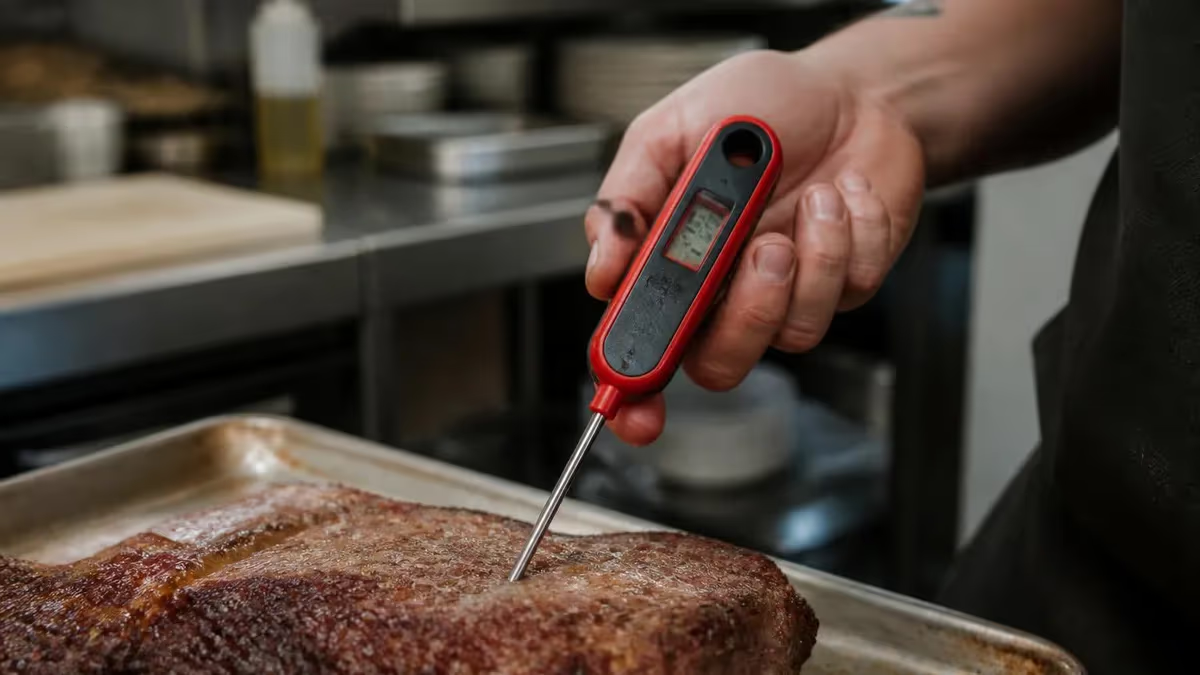
The ServSafe study book is the single most important resource you can use when preparing for your ServSafe Manager Certification exam. Developed and published by the National Restaurant Association Educational Foundation (NRAEF), this comprehensive textbook covers everything food service professionals need to know about food safety — from controlling pathogens and preventing cross-contamination to proper cooking temperatures, employee hygiene, and HACCP principles. Whether you are a first-time test-taker or a veteran manager renewing your five-year credential, starting your prep with the right study materials makes the difference between a confident pass and a costly retake.
Many candidates underestimate just how much material the ServSafe Manager exam covers. The current edition spans more than 400 pages and is organized into chapters aligned directly with the exam's content domains: providing safe food, forms of contamination, the safe food handler, the flow of food, food safety management systems, safe facilities, and food safety regulations.
Each chapter includes learning objectives, case studies, chapter summaries, and multiple-choice review questions — making the official book far more than just a reference manual. It is a structured learning program designed to walk you systematically through everything the National Restaurant Association expects you to know on exam day.
Choosing between the 7th and 8th editions is a common question among candidates. The 8th edition, released in 2017, introduced updated content on the FDA Food Safety Modernization Act (FSMA), revised temperature guidelines, expanded allergen information, and a redesigned layout that makes key concepts easier to scan and retain. If your employer or culinary school provides course materials, verify which edition is in use before purchasing supplemental resources. Exam questions are written to align with the edition used in your specific course, and studying outdated material can introduce confusion about regulatory thresholds and procedural details.
For many food service workers, the ServSafe Manager exam represents their first major professional certification. The stakes are real: in most US states, at least one certified food protection manager must be present or on call at every licensed food establishment. Earning your credential not only keeps your operation in compliance — it also opens doors to supervisory roles, higher pay, and greater job security. Employers increasingly list ServSafe Manager certification as a preferred or required qualification in job postings for kitchen managers, executive chefs, food and beverage directors, and catering supervisors across the country.
One of the most effective study strategies is to pair your servsafe study guide book with structured digital practice. The official text gives you foundational knowledge; practice tests reveal which chapters need additional review. Research consistently shows that active recall — testing yourself on material rather than simply rereading it — produces far stronger long-term retention than passive study alone. Spacing your practice sessions across several weeks, rather than cramming the night before, leads to measurably better performance on multiple-choice exams like the ServSafe Manager certification test.
This article serves as a complete hub for ServSafe certification preparation. You will find a detailed breakdown of what the study book covers, how to build an effective study schedule, the pros and cons of different study formats, a day-by-day prep checklist, and answers to the most common questions candidates ask before exam day. Whether you purchased the official ServSafe coursebook, are supplementing with a third-party study guide, or are relying on free online resources, the strategies outlined here apply across all study formats and will help you walk into your exam with confidence and a clear plan for success.
Understanding the structure of your preparation is just as important as understanding the content itself. The ServSafe Manager exam consists of 90 questions, of which only 80 are scored — 10 are unscored pilot questions that do not affect your result. You need to answer at least 70% of scored questions correctly (a score of 56 of the 80 scored) to pass.
That means missing more than 20 scored questions will result in a failing grade. Knowing this threshold allows you to approach your study plan strategically: rather than trying to memorize every detail of every chapter, focus your energy on the highest-weight content domains and any topics where your chapter review scores consistently fall below 80%.
ServSafe Certification by the Numbers

ServSafe Study Schedule: 4-Week Exam Prep Plan
- ▸Read Chapters 1–2: Providing Safe Food and Forms of Contamination
- ▸Complete end-of-chapter review questions for both chapters
- ▸Take a baseline practice test to identify weak areas
- ▸Create a vocabulary list for key pathogens: Salmonella, Listeria, E. coli, Norovirus
- ▸Read Chapters 3–5: Safe Food Handler, Purchasing/Receiving, Storage
- ▸Memorize critical temperature thresholds: 41°F, 135°F, 165°F, 145°F
- ▸Practice FIFO (First In, First Out) labeling scenarios
- ▸Complete 40-question practice test focused on Chapters 3–5
- ▸Read Chapters 6–8: Preparation, Cooking, Cooling, and HACCP
- ▸Map the seven HACCP principles from memory without notes
- ▸Practice time-temperature abuse scenarios and calculate safe holding windows
- ▸Complete 40-question practice test focused on food safety management systems
- ▸Read Chapters 9–10: Facilities, Cleaning, Sanitizing, and Regulations
- ▸Review all chapter summaries and re-attempt any practice tests scored below 80%
- ▸Take two full-length 90-question timed mock exams
- ▸Focus final two days on weakest content domains identified from mock exam results
The official ServSafe coursebook is organized into ten chapters, and understanding how these chapters map to the exam's content domains helps you allocate study time efficiently. The first two chapters introduce the regulatory environment of food safety in the United States, explain how foodborne illness outbreaks occur, and identify the six major categories of food safety hazards: biological, chemical, physical, allergenic, radiological, and psychological. These early chapters establish the conceptual framework that underpins everything else in the program, so even experienced food service workers should resist the urge to skip them.
Chapters three through five focus on the people and processes most directly responsible for keeping food safe. Chapter three covers personal hygiene, handwashing protocols, illness reporting policies, and the importance of exclusion and restriction policies for sick employees. Chapter four addresses purchasing and receiving — how to evaluate vendors, inspect deliveries, reject non-conforming shipments, and document receiving records. Chapter five covers all storage environments: dry storage, refrigerated storage, and frozen storage — including correct stacking order in reach-in and walk-in units to prevent cross-contamination between ready-to-eat and raw foods.
The middle section of the book, chapters six through eight, covers the most temperature-critical phases of food handling. Chapter six details safe thawing methods, preparation practices that minimize cross-contamination risk, and the specific internal cooking temperatures required for different protein categories — whole muscle beef at 145°F for 15 seconds, ground beef at 155°F, poultry at 165°F, and stuffed foods at 165°F regardless of the protein involved.
Chapter seven covers hot and cold holding, the two-hour rule for time-temperature abuse, and the time-as-a-public-health-control policy that allows operators to hold food without temperature control for up to four hours under specific documented conditions.
Chapter eight introduces HACCP — Hazard Analysis and Critical Control Points — which is the science-based preventive framework endorsed by the FDA and USDA for managing food safety risks systematically. The seven HACCP principles (conduct a hazard analysis, identify critical control points, establish critical limits, establish monitoring procedures, establish corrective actions, establish verification procedures, and establish record-keeping systems) are heavily tested on the ServSafe Manager exam, and candidates should be able to apply each principle to realistic food service scenarios rather than simply defining them in isolation.
Chapters nine and ten shift focus to the physical environment and regulatory landscape. Chapter nine covers facility design, equipment standards, pest control, and — most importantly for exam purposes — the distinction between cleaning and sanitizing. Cleaning removes visible soil; sanitizing reduces microbial populations to safe levels. The chapter specifies the three approved chemical sanitizers used in food service (chlorine, iodine, and quaternary ammonium compounds), their correct concentration ranges, water temperature requirements, and contact time minimums. These numbers are frequently tested in numerical form on the exam, so memorizing them precisely is essential.
Chapter ten wraps up the book with an overview of the regulatory inspection process, the role of the regulatory authority, how to respond to an inspection, and what happens when a facility receives a notice of violation or a closure order. This chapter also covers crisis management scenarios, including how to handle a suspected foodborne illness complaint, when to contact the regulatory authority proactively, and how to conduct an internal investigation. Understanding these procedures from the perspective of the manager-in-charge is a key competency tested in the scenario-based questions that appear throughout the exam.
Beyond the ten chapters, the official ServSafe coursebook also includes a comprehensive glossary, an index, and — in newer editions — access codes for online study tools including digital flashcards and online practice exams hosted on the ServSafe website.
These digital supplements are valuable because they present questions in the same multiple-choice format used on the actual exam, allowing you to practice not just content recall but also the skill of eliminating wrong answers under timed conditions. Candidates who use both the printed text and the official online resources consistently report higher confidence levels going into the exam than those who rely on the book alone.
ServSafe Study Strategies by Learning Style
Visual learners retain information best through diagrams, color-coded notes, and spatial organization. When studying the ServSafe coursebook, create temperature range charts that color-code the danger zone (41°F–135°F) in red, safe cold holding in blue, and safe hot holding in orange. Draw flowcharts for the seven HACCP principles and the flow of food from receiving through service. Use sticky notes or highlighters to mark critical numbers: sanitizer concentrations, minimum internal cooking temperatures, and cooling time windows. Converting text-heavy chapters into one-page visual summaries dramatically improves retention for visual learners.
Mind maps are another powerful tool for visual study. Start with a central concept — say, "Biological Hazards" — and branch outward to bacteria, viruses, parasites, and fungi, adding sub-branches for specific pathogens, their associated foods, symptoms, and prevention methods. This technique forces active engagement with the material and creates a memorable spatial structure in memory. After completing a mind map for each chapter, compare it against the chapter summary in the ServSafe book to identify any gaps, then add missing details to your map before moving on to the next chapter.

Official ServSafe Book vs. Third-Party Study Guides: Which Is Better?
- +Official book content is written directly by the exam developers, ensuring perfect alignment with test questions
- +Includes access codes for official online practice exams and digital flashcards on the ServSafe website
- +Updated regularly to reflect current FDA Food Code, FSMA rules, and temperature regulation changes
- +Recognized by state health departments and licensing boards as the authoritative reference material
- +End-of-chapter review questions mirror the format and difficulty level of actual exam questions
- +Available in Spanish and Chinese editions for non-native English speakers in food service roles
- −Official coursebook can cost $75–$110 per copy, making it one of the pricier study resources available
- −Dense regulatory language in some chapters can be difficult for readers without a food science background
- −No answer explanations for end-of-chapter questions — just an answer key, limiting learning from mistakes
- −Physical book requires carrying a heavy volume; no official standalone e-book version is sold separately
- −Third-party guides often include more practice questions, memory tricks, and simplified explanations
- −Online access code for digital practice tools expires, so used or resold books may lack functional digital access
ServSafe Exam Prep Checklist: 10 Steps to Certification Success
- ✓Purchase the current edition (8th) of the official ServSafe Manager Coursebook with a valid online access code
- ✓Verify your state's certification requirements — some states mandate proctored exams at approved testing sites
- ✓Complete a full read-through of all ten chapters before attempting any full-length practice exams
- ✓Memorize all critical temperature thresholds: 41°F, 70°F, 135°F, 145°F, 155°F, and 165°F
- ✓Learn all seven HACCP principles and practice applying each one to a realistic restaurant scenario
- ✓Take at least two full 90-question timed mock exams under conditions that simulate the real test
- ✓Review every wrong answer on practice tests to understand the reasoning, not just the correct response
- ✓Focus the final 48 hours on your weakest content domains, not on re-reading chapters you already mastered
- ✓Confirm your exam registration, testing location, and required ID documents at least one week before test day
- ✓Arrive 15 minutes early on exam day, well-rested and fed, with valid government-issued photo identification
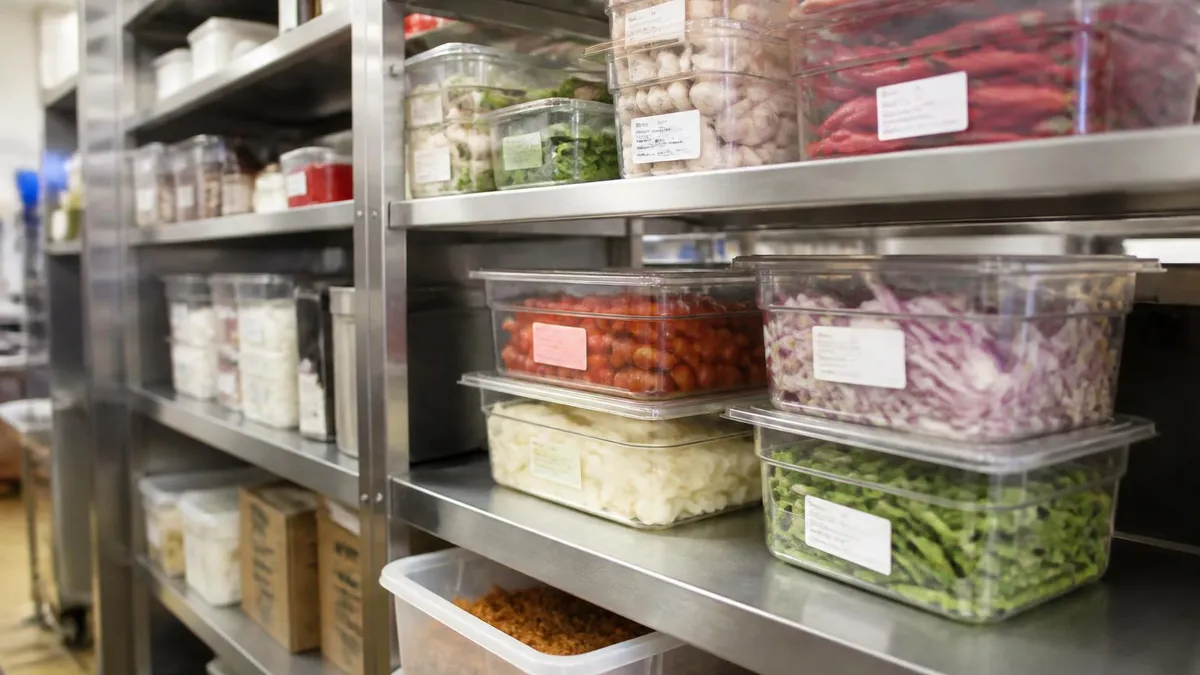
The 75% Rule: Where Most Candidates Go Wrong
Many candidates approach ServSafe prep with a goal of getting every question right — but the real target is 70% on scored questions (56 of the 80 scored). That means you can miss up to 20 questions and still pass. Focus your final review energy on high-frequency content domains like temperature control, HACCP, and contamination prevention rather than obscure regulatory details that appear in only one or two questions on the entire exam.
Passing the ServSafe Manager exam on your first attempt is a realistic goal for any candidate who prepares systematically and gives themselves adequate study time. Industry data and candidate surveys consistently indicate that four to six weeks of structured preparation — averaging eight to twelve hours per week — is sufficient for most food service professionals to reach the 75% passing threshold. Candidates who attempt the exam after fewer than two weeks of preparation fail at significantly higher rates, particularly in the HACCP and temperature control domains where scenario-based questions require applied reasoning, not just factual recall.
One of the most important predictors of first-attempt success is the practice test score you achieve in the week before your exam. If you are consistently scoring 80% or higher on full-length 90-question mock exams, you are well-positioned to pass the actual test. If your practice scores are hovering between 70% and 78%, you have identified a real risk and should delay your exam registration by one or two weeks to shore up weak areas.
Sitting for the exam when you are borderline is expensive — retake fees typically range from $35 to $50 per attempt in addition to any proctor fees, and failing creates significant psychological pressure that can compound performance anxiety on subsequent attempts.
The most commonly missed questions on the ServSafe Manager exam fall into three categories. First, cooling procedures — specifically the two-stage cooling requirement that mandates food be cooled from 135°F to 70°F within two hours, then from 70°F to 41°F within an additional four hours (six hours total). Candidates frequently reverse these windows or confuse them with the cooling requirement for specific high-risk foods.
Second, minimum internal cooking temperatures for specific proteins — particularly shell eggs cooked to order (145°F), stuffed fish (165°F), and the elevated threshold for ground meat (155°F for 17 seconds) versus whole muscle beef (145°F for 15 seconds).
Third, chemical sanitizer specifications are a consistent source of errors. The exam tests not just which chemicals are acceptable, but the correct concentration ranges: chlorine at 50–99 ppm for immersion sanitizing, 100 ppm for spray sanitizing; iodine at 12.5–25 ppm; quaternary ammonium compounds at the manufacturer's specification (typically 200–400 ppm). Water temperature minimums for each sanitizer type are also tested. Creating a one-page reference chart for these numbers and reviewing it daily during your final week of prep is one of the most direct ways to pick up two to four additional correct answers on exam day.
Time management during the exam itself is another factor that separates passing and failing candidates. With 90 questions to answer in two hours (or in some cases, a longer allotted period depending on your testing arrangement), you have roughly 80 seconds per question.
Most candidates find that straightforward factual recall questions take 20–30 seconds, while scenario-based questions — where a manager must identify the correct response to a described situation — can take 60–90 seconds or more. Budget your time accordingly: move through the easier questions quickly to build a time buffer, then return to the challenging scenario questions with the remaining time.
Test anxiety is a real and underappreciated obstacle for many ServSafe candidates, particularly those who have been out of a formal testing environment for several years. The most effective antidote is simulated exam experience: take your practice tests in a quiet room with no phone access, use a timer, and resist the urge to look up answers mid-test.
After several sessions under these conditions, the testing environment itself becomes familiar and far less stressful. On the actual exam day, trust your preparation. The candidate who has completed four weeks of structured study has almost certainly seen every concept the exam will test — the challenge at that point is accessing that knowledge calmly rather than second-guessing answers out of nerves.
One often-overlooked aspect of passing on the first attempt is the importance of reading every question completely before selecting an answer. ServSafe exam questions frequently include qualifier words — "most likely," "first," "immediately," "always" — that change the correct answer significantly.
A question asking what a manager should do "first" when a food handler reports symptoms of norovirus has a very specific answer (restrict the employee from food handling and contact the regulatory authority if required by your jurisdiction) that differs from what the manager should do "eventually" or "as part of a broader response." Developing the habit of underlining or mentally flagging qualifier words during practice tests will pay dividends on exam day.
ServSafe Manager exam availability varies by state and testing site. Some jurisdictions require exams to be taken at an approved proctored location rather than online. Online proctored exams through the ServSafe website require a stable internet connection, webcam, and a private, interruption-free environment — failure to meet these conditions can result in exam invalidation. Register at least 2–3 weeks in advance to secure your preferred date, and confirm whether your state accepts online proctoring or mandates in-person testing before completing your registration.
After you pass your ServSafe Manager exam, your certification is valid for five years from the date of your exam — not from the date your certificate arrives in the mail. The National Restaurant Association will mail a physical certificate to the address on file with your account, typically within four to six weeks of your passing score being recorded.
In the meantime, your online ServSafe account will reflect your passing status, and many state health departments accept a printed score report as proof of certification during this interim period. Keep a copy of your score report in a secure location as a backup.
Renewing your ServSafe Manager certification before it expires is important because lapses in certification can create compliance issues for your employer. Many state and local health codes require that a certified manager be designated for each licensed food establishment, and an expired certification does not satisfy that requirement. The renewal process involves retaking the full exam — there is no abbreviated renewal exam for experienced managers — so most practitioners recommend beginning your renewal study process at least eight weeks before your certification expiration date to allow ample preparation time.
If you fail the ServSafe Manager exam, the National Restaurant Association allows you to retake it. There is no mandatory waiting period between attempts, though most food safety educators recommend taking at least two to three additional weeks to address the specific content areas where your score indicates weakness before rescheduling.
Your score report will show performance by content domain, which makes it straightforward to identify exactly which chapters of the ServSafe coursebook to revisit. Candidates who use their failure score report as a targeted study guide — rather than simply rereading the entire book from cover to cover — tend to improve their scores most dramatically on subsequent attempts.
Beyond the Manager certification, the National Restaurant Association offers several related credentials that may be relevant depending on your role. The ServSafe Food Handler certificate is a shorter, less rigorous credential that covers basic food safety knowledge for frontline workers who do not hold supervisory positions. The ServSafe Alcohol certification is a separate program focused on responsible alcohol service, required by many state liquor control authorities for servers and bartenders. The ServSafe Allergens online course covers food allergen management in detail and can be completed as a standalone course or as supplemental training alongside your Manager certification prep.
For managers preparing to supervise others through the certification process, ServSafe also offers an instructor and proctor program. A ServSafe Instructor is certified to teach the 8-hour or 16-hour ServSafe Manager course and administer the exam as a proctor. This pathway is particularly valuable for multi-unit restaurant operators, hotel food and beverage departments, hospital foodservice operations, and school nutrition programs that have enough employees cycling through certification that on-site testing is more cost-effective than sending each employee to an external testing site. Instructor certification requires additional training and approval from the National Restaurant Association.
The value of ServSafe certification extends well beyond regulatory compliance. In a competitive job market, a valid ServSafe Manager credential signals to employers that you take food safety seriously, that you understand the regulatory environment your operation works within, and that you are committed to professional development.
Many culinary school programs include ServSafe certification as a graduation requirement precisely because industry employers view it as a baseline professional credential rather than an optional add-on. For food service professionals at any level of their career, the investment of time and money required to earn and maintain ServSafe certification consistently returns more value than it costs.
If you are preparing for certification and looking for additional state-specific information, practical study tips, and free practice questions, this comprehensive preparation hub covers everything you need. The resources here are designed to complement your official ServSafe coursebook — not to replace it — and are continually updated to reflect the current edition's content and the latest exam format specifications.
Use the practice tests, study schedule, and checklist above to build a preparation plan that works with your schedule, and take the time to understand concepts rather than memorize answers. Conceptual understanding is what carries candidates through the scenario-based questions that determine whether a ServSafe preparation plan ultimately succeeds on exam day.
On the practical side of exam preparation, a few specific techniques consistently help candidates improve their scores in the final week before the exam. The first is to revisit the end-of-chapter review questions in the official ServSafe coursebook — not to find the right answer, but to understand why each wrong answer is wrong.
The exam is designed to include plausible distractors: answer choices that are partially correct or that would be correct in a slightly different scenario. Practicing the skill of systematic elimination — ruling out three wrong answers rather than just identifying one right answer — is a metacognitive skill that improves performance on any multiple-choice exam.
The second practical technique is to create a personal "error log" during your practice test sessions. Every time you miss a question, record the question topic, the answer you chose, the correct answer, and a one-sentence explanation of why you were wrong. Reviewing this log in the 48 hours before your exam gives you a personalized summary of your most common errors — far more useful than a generic chapter review.
Many candidates are surprised to discover that their errors cluster around just two or three recurring conceptual misunderstandings rather than being spread evenly across all chapters, which makes targeted remediation both faster and more effective.
Temperature memorization is one of the areas where a structured mnemonic approach pays the biggest dividends. One effective method is to group temperatures by protein category: poultry and stuffed foods always cook to 165°F for at least 15 seconds; ground meats, injected meats, and mechanically tenderized steaks cook to 155°F for at least 17 seconds; whole muscle beef, pork, veal, lamb, and seafood cook to 145°F for at least 15 seconds.
Shell eggs for immediate service also cook to 145°F. These groupings cover the temperature questions that appear on virtually every version of the ServSafe Manager exam, and knowing them cold — without having to calculate or reason through them — saves valuable time during the test.
For candidates who work in food service and have access to a commercial kitchen during their study period, hands-on application of ServSafe concepts is an invaluable supplement to book study. Practice taking and logging temperatures at every point in the food flow: receiving, storage, before and after cooking, during hot holding, and after cooling.
Label and date leftovers using the FIFO system described in Chapter 5. Conduct a self-audit of your handwashing stations, sanitizer concentrations, and refrigerator organization using the standards in the ServSafe book as your benchmark. This real-world practice creates durable, experiential memories that stick far better under exam stress than facts memorized from text alone.
Many candidates also benefit from using the ServSafe online study tools included with a new coursebook purchase. The online platform includes interactive games, digital flashcards organized by chapter, and full-length online practice exams that score immediately and show your performance by content domain. The domain-level breakdown is particularly useful for identifying where to focus your final review.
If your online practice exam shows 95% accuracy in personal hygiene but 62% accuracy in HACCP and food safety management systems, that data tells you exactly where to spend your remaining study hours. Using objective performance data to guide your prep is consistently more efficient than intuition-based study.
The night before your exam, resist the temptation to cram. Research on memory consolidation is unambiguous: sleep is when the brain transfers information from short-term to long-term memory, and studying late into the night at the expense of sleep demonstrably impairs performance on cognitive tests the following day.
Instead, spend an hour reviewing your error log and temperature chart, then stop. Eat a full dinner, get seven to eight hours of sleep, and eat a protein-rich breakfast on exam day. These physiological basics have a measurable impact on cognitive performance and are completely within your control in a way that additional cramming is not.
Finally, approach the exam with the mindset that you are demonstrating knowledge you already possess rather than trying to retrieve information under duress. By the time you sit down in the testing room, your preparation is complete. The exam is simply the measurement instrument — not a surprise obstacle.
Read each question carefully, apply the systematic elimination strategy you practiced on your mock exams, flag any questions you are uncertain about and return to them after completing the rest of the test, and trust that four weeks of structured study with the official ServSafe coursebook has given you everything you need to earn your certification with confidence.
ServSafe Questions and Answers

ServSafe Montana: Complete Food Handler Training & Certification Guide

ServSafe Coursebook 8th Edition Answer Key: Complete Study Guide & Certification Prep

ServSafe Food Protection Manager: Complete Training Guide & Certification Requirements

How Much Do ServSafe Proctors Charge? Complete Guide to ServSafe Proctor Fees

Which Is an Example of Possible Chemical Contamination ServSafe: Complete Guide
About the Author

Registered Sanitarian & Food Safety Certification Expert
Cornell University College of Agriculture and Life SciencesThomas Wright is a Registered Sanitarian and HACCP-certified food safety professional with a Bachelor of Science in Food Science from Cornell University. He has 17 years of experience in food safety auditing, regulatory compliance, and foodservice management training. Thomas prepares food industry professionals for ServSafe Manager, HACCP certification, and state food handler examinations.
Join the Discussion
Connect with other students preparing for this exam. Share tips, ask questions, and get advice from people who have been there.
View discussion (8 replies)