
RPN Courses Online Ontario: Complete Study Guide & Certification Prep 2026 September
RPN course online Ontario guide: program types, NCLEX-PN prep, costs, and free practice tests. 🎯 Everything you need to pass and get licensed in 2026 September.

If you are exploring an rpn course online ontario pathway, you are entering one of the most in-demand healthcare careers in Canada. Registered Practical Nurses — known as RPNs in Ontario and as LPNs in most other provinces — provide direct, hands-on patient care across hospitals, long-term care facilities, community health centers, and home care settings.
Understanding how to research, choose, and prepare for an accredited program is the first step toward a rewarding career that combines science, compassion, and clinical skill. Before you enroll, it helps to understand how rpn courses online ontario compare to in-person options so you can make the best decision for your schedule and learning style.
Ontario's RPN programs are regulated by the College of Nurses of Ontario (CNO), which sets the educational standards that every approved program must meet. Whether you choose a hybrid program, a fully online theory component, or a traditional college-based curriculum, every graduate must ultimately pass the NCLEX-PN licensing examination before practicing independently. The NCLEX-PN replaced the old CPNRE examination in 2023, and its adoption has changed how programs structure their exam preparation components, placing greater emphasis on clinical judgment and next-generation question formats that test reasoning rather than pure recall.
Ontario colleges such as George Brown, Centennial, Humber, St. Clair, and Mohawk all offer recognized RPN diploma programs. While most require some in-person clinical placement hours, many now deliver a significant portion of their theoretical coursework through online learning management systems. This hybrid model gives students the flexibility to balance work or family obligations while still satisfying the hands-on competency requirements that the CNO mandates for entry-to-practice registration. Program lengths typically range from two to three years for full-time students, though part-time options can extend that timeline.
The cost of an RPN program in Ontario varies considerably depending on whether you are a domestic or international student. Domestic students generally pay between $3,000 and $6,000 per year in tuition, while international students may pay $14,000 to $20,000 annually. Financial aid through OSAP, bursaries, and employer sponsorship programs can offset these costs substantially. Many hospitals and long-term care operators in Ontario actively sponsor students in exchange for post-graduation work commitments, making the financial burden far more manageable than the sticker price suggests.
Once you complete your program, you must apply to the CNO for registration, submit proof of your educational credentials, and pass the NCLEX-PN. The exam is administered by Pearson VUE at authorized testing centers throughout Ontario and across North America. Preparation for this exam is critical — the NCLEX-PN uses computerized adaptive testing (CAT), which means the difficulty of each question adjusts in real time based on your previous answers. Knowing the exam format, practicing with realistic questions, and building strong clinical reasoning skills are the three pillars of successful exam preparation.
This guide covers everything you need to know about online RPN courses in Ontario: program structures, admission requirements, costs, accreditation, exam prep strategies, and the study habits that separate high scorers from those who need to retest. Whether you are a high school graduate just starting your healthcare journey or a personal support worker (PSW) looking to advance your credentials, this resource will give you a clear, actionable roadmap toward RPN registration in Ontario.
Throughout this article you will find free practice quizzes, structured study schedules, and expert tips drawn from CNO competency frameworks and NCLEX-PN test blueprints. Bookmark this page and return to it throughout your preparation — the resources here are updated regularly to reflect the most current exam standards and provincial registration requirements.
Ontario RPN Programs by the Numbers
RPN Exam Prep Study Schedule
- ▸Review body systems: cardiovascular, respiratory, renal
- ▸Memorize top 50 high-yield medications and their nursing implications
- ▸Complete 40 NCLEX-PN style foundation questions
- ▸Create a pharmacology reference sheet for daily review
- ▸Study common acute conditions: MI, stroke, diabetes, COPD
- ▸Practice Next Generation NCLEX (NGN) case study questions
- ▸Review wound care, IV therapy, and post-op nursing priorities
- ▸Complete 60 med-surg practice questions and analyze rationales
- ▸Cover therapeutic communication and mental health disorders
- ▸Review growth and development milestones for pediatric cases
- ▸Study antepartum, intrapartum, and postpartum nursing care
- ▸Complete 2 full-length practice quizzes and review weak areas
- ▸Take 2 timed, full-length NCLEX-PN simulation exams
- ▸Target all question categories scoring below 65% for focused review
- ▸Practice SATA, ordered response, and hot-spot question types
- ▸Confirm Pearson VUE test center booking and review day-of logistics
Admission requirements for RPN programs in Ontario vary by college but follow a consistent framework established by CNO accreditation standards. Most programs require an Ontario Secondary School Diploma (OSSD) or equivalent, with a minimum average in the 65–70% range. Essential prerequisite courses almost universally include Grade 11 or 12 Biology, Grade 11 or 12 English, and in many cases a senior-level Chemistry or Physics course. Some colleges also require completion of the Health Science Technology or similar co-op stream in secondary school, although this is not universal across all institutions.
Applicants without a traditional high school diploma can often qualify through mature student pathways. Ontario colleges generally define a mature student as someone who is 19 years of age or older, has been out of secondary school for at least one year, and can demonstrate academic readiness through prior learning assessment or a college entrance test. Personal Support Workers (PSWs) and healthcare aides who have worked in clinical settings frequently benefit from this pathway, as their hands-on experience demonstrates the foundational competencies that RPN programs build upon.
Beyond academic requirements, most Ontario RPN programs conduct a secondary screening process that may include a personal statement, reference letters, and in some cases an interview. Colleges want to identify candidates who demonstrate empathy, resilience, communication skills, and a genuine commitment to patient-centered care. Some programs also require proof of current CPR certification at the Healthcare Provider level before the program begins, as students enter clinical placement environments in the first year.
Health and immunization requirements are another critical admission component. Students accepted into RPN programs in Ontario must typically provide documented proof of immunity to tuberculosis (through a two-step TB skin test or IGRA blood test), hepatitis B, measles, mumps, rubella, varicella, and influenza. A clear criminal record check (Vulnerable Sector Screening) is also mandatory before any clinical placement. These requirements exist to protect patients, many of whom are immunocompromised, elderly, or otherwise vulnerable.
International applicants face additional steps including English language proficiency testing. Programs typically require a minimum IELTS Academic score of 6.5 overall with no band below 6.0, or equivalent scores on TOEFL or CELPIP. International credential evaluation through World Education Services (WES) or a similar body is also required to verify that foreign secondary or post-secondary credentials are equivalent to Ontario standards. The application process for international students can take three to six months longer than for domestic applicants, so early planning is essential.
Ontario college applications are submitted through the Ontario Colleges Application Service (OCAS) at ontariocolleges.ca. The main application cycle opens in October for programs beginning the following September, with a February 1 equal consideration deadline. However, many programs accept applications on a rolling basis after that deadline if seats remain available. Students interested in January intake — offered by several Ontario colleges — typically face a separate September 1 application deadline for those seats.
Waitlists are common at popular programs like those at George Brown College and Humber College in Toronto. Applicants are ranked by their academic average, supplementary application score, and the order in which their completed applications are received. Submitting a complete, polished application package as early as possible significantly improves your chances of securing a spot in your preferred program and intake year.
Core RPN Curriculum: What You Will Study Online
The first year of an Ontario RPN program lays the scientific and clinical foundation you will draw on throughout your career. Core subjects include anatomy and physiology, microbiology, pharmacology, and the fundamentals of nursing practice. You will learn how to perform head-to-toe assessments, administer medications safely using the five rights framework, document patient care in both paper and electronic health records, and apply infection prevention and control protocols that meet Public Health Ontario standards.
Clinical placements typically begin in semester two, placing students in supervised settings such as long-term care facilities, retirement homes, or community health clinics. These early placements focus on developing foundational competency in personal care, vital signs monitoring, and therapeutic communication. For online hybrid learners, theory modules are delivered asynchronously via platforms like Brightspace or Blackboard, allowing students to progress through readings and recorded lectures at flexible times while attending mandatory synchronous labs and clinical days on scheduled dates throughout each semester.

Online vs. In-Person RPN Programs: Pros and Cons
- +Flexible scheduling allows students to work part-time or manage family responsibilities while studying
- +Asynchronous theory modules can be revisited and rewatched as many times as needed for mastery
- +Reduced commuting time and costs, particularly beneficial for students in rural or remote Ontario communities
- +Self-paced learning accommodates different learning speeds without the pressure of a fixed classroom pace
- +Digital resources including virtual labs and interactive simulations enhance clinical reasoning development
- +Many employers view hybrid-trained graduates as technologically adaptable and ready for electronic health record systems
- −Mandatory in-person clinical placements cannot be completed online, requiring travel to approved sites
- −Self-discipline is essential — students without strong time management skills often fall behind in online formats
- −Limited spontaneous peer interaction can reduce the collaborative learning that in-person cohorts naturally develop
- −Technical issues such as internet connectivity problems or platform outages can disrupt scheduled learning
- −Some online students report feeling less prepared for the physical dexterity components of clinical skills assessments
- −Not all employers or CNO reviewers are equally familiar with all hybrid program providers, requiring extra credential verification steps
RPN Exam Prep Checklist: 10 Steps to Licensing Success
- ✓Confirm your RPN program is CNO-accredited before enrolling to ensure your diploma qualifies for registration
- ✓Complete the CNO registration application online and submit all required supporting documents at least 8 weeks before your target exam date
- ✓Register with Pearson VUE to schedule your NCLEX-PN appointment at an authorized Ontario testing center
- ✓Obtain a current edition of the CNO's Entry-to-Practice Competencies document and use it as your primary study framework
- ✓Complete a minimum of 1,500 NCLEX-PN practice questions across all content domains using a reputable question bank
- ✓Target the four highest-weight NCLEX-PN domains: physiological adaptation, pharmacological therapies, infection control, and reduction of risk potential
- ✓Practice all Next Generation NCLEX (NGN) question formats: extended drag-and-drop, matrix grids, bow-tie case studies, and trend items
- ✓Take at least two full-length timed practice exams under simulated test conditions in the two weeks before your exam date
- ✓Review medication classifications daily using flashcards — focus on mechanism, nursing considerations, adverse effects, and antidotes
- ✓Arrange your Vulnerable Sector Screening, immunization records, and CPR certification well in advance of clinical placement deadlines

Clinical Judgment Is the #1 Skill the NCLEX-PN Tests
The Next Generation NCLEX-PN does not reward memorization — it rewards the ability to recognize cues, prioritize hypotheses, and select interventions in realistic patient scenarios. Candidates who practice clinical judgment frameworks (Recognize Cues → Analyze Cues → Prioritize Hypotheses → Generate Solutions → Take Action → Evaluate Outcomes) consistently outperform those who study by topic alone. Build this habit from day one of exam prep, not just in the final week before your test.
The financial investment in an Ontario RPN program is significant but predictable, and a clear-eyed understanding of all cost components helps you plan effectively from the start. Domestic tuition at most Ontario colleges ranges from approximately $3,000 to $6,500 per academic year. Over a two-year full-time program, total tuition costs typically fall between $6,000 and $13,000.
However, ancillary fees — which cover student union dues, athletic facility access, health and dental insurance, and technology levies — add another $800 to $1,500 per year on top of base tuition. Budget for these fees from the start so they do not come as a surprise at registration time.
Beyond tuition, RPN students face substantial additional expenses. Required textbooks and digital resource packages can cost $1,200 to $2,000 over the full program. Nursing uniforms, stethoscopes, blood pressure cuffs, penlight kits, and other clinical equipment typically run $400 to $700 in the first semester alone. Immunization testing and the Vulnerable Sector criminal record check add another $150 to $300 depending on your local public health unit's pricing and municipal police service fees. These costs are incurred before you attend your first clinical day and are non-negotiable for program participation.
NCLEX-PN examination fees add $360 USD to your final-year budget. The Pearson VUE registration fee is set in US dollars, meaning the actual cost in Canadian currency fluctuates with the exchange rate. If you need to retest, you pay the full fee again, which underscores why thorough preparation is not just an academic priority but a financial one. CNO registration fees for new graduates are approximately $570 to $720 CAD, covering your initial certificate of registration and first-year practice permit.
Ontario Student Assistance Program (OSAP) is the primary government financial aid vehicle for domestic Ontario students. RPN programs at CNO-approved colleges are OSAP-eligible, and many students receive a combination of grants and loans that covers a substantial portion of their annual costs. First-generation post-secondary students, students with dependents, and students from low-income households typically receive the most favorable OSAP funding packages. Applying as early as possible — ideally in April or May for a September start — maximizes your grant eligibility within the available provincial funding envelopes.
Many Ontario hospitals, long-term care homes, and home health agencies offer bursaries and tuition reimbursement programs specifically designed to attract RPN students. Programs like the Ministry of Long-Term Care's Nursing Graduate Guarantee (NGG) and employer-sponsored sponsorship agreements can offset tuition, provide paid clinical placement stipends, and guarantee employment upon graduation. In exchange, students typically commit to working at the sponsoring employer for one to two years post-graduation. For students who already know which sector they want to work in, these arrangements offer outstanding value and significantly reduce the net cost of their education.
Part-time work during your RPN program is financially helpful but requires careful time management. Most full-time RPN students find that working more than 20 hours per week in paid employment has a measurable negative impact on their academic performance and clinical readiness. Many choose to work as PSWs or healthcare aides in clinical settings that align with their placement environments, gaining income and practical experience simultaneously. If you take this route, be transparent with your employer about your academic schedule so that scheduling conflicts with clinical days and exam periods can be avoided proactively.
Long-term, the financial return on an RPN education in Ontario is strong. Entry-level RPNs in Ontario earn approximately $28 to $34 per hour, rising to $38 to $46 per hour with five or more years of experience in specialized areas such as critical care, operating room nursing, or mental health. With full-time employment and overtime opportunities, annual earnings between $60,000 and $80,000 are realistic within three to five years of graduation. The Ontario government's ongoing investments in healthcare capacity, particularly in long-term care expansion, continue to drive robust demand for registered practical nurses across every region of the province.
Your CNO registration application must be submitted and approved before you can write the NCLEX-PN. The CNO verification process takes four to eight weeks and requires your official college transcripts, completed health declaration, and criminal record check. Apply immediately after receiving your official program completion letter — delays in CNO registration directly delay your exam date and your first day of paid employment as an RPN in Ontario.
After completing your RPN program and receiving CNO registration, the career landscape in Ontario is one of the strongest in Canada for practical nurses. Ontario's healthcare system employs more than 45,000 RPNs across hospitals, long-term care facilities, community health centers, mental health programs, and home care agencies.
The provincial government has committed to adding thousands of new long-term care beds over the next decade, and each new facility requires a full complement of RPNs to meet staffing ratios mandated under the Fixing Long-Term Care Act, 2021. This legislative context creates structural, long-term demand that is unlikely to diminish regardless of economic fluctuations.
Hospital-based RPN practice in Ontario is concentrated in specific care units where the RPN scope of practice aligns well with patient acuity levels. Medical units, surgical units, rehabilitation wards, complex continuing care, and some emergency department triage roles are common settings for Ontario RPNs working in acute care. In these environments, RPNs work collaboratively with Registered Nurses (RNs), physicians, physiotherapists, and social workers as part of interprofessional care teams. Understanding the distinction between RPN and RN scopes of practice is important — for a detailed breakdown, the comparison of RPN versus RN roles covers this topic thoroughly.
Long-term care represents the largest single employment sector for Ontario RPNs. Under current provincial staffing standards, long-term care homes must provide a minimum number of regulated nursing hours per resident per day, with RPNs counting toward that regulated nursing complement. As Ontario's aging population continues to grow — Statistics Canada projects that one in four Canadians will be 65 or older by 2041 — the demand for skilled RPNs in long-term care will expand proportionally. Many experienced RPNs in this sector advance into charge nurse, clinical educator, or director of care roles within five to ten years of graduation.
Community health and home care represent growing practice environments for Ontario RPNs. Organizations like VHA Home HealthCare, SE Health, and various Community Health Centers (CHCs) employ RPNs in roles that require strong autonomous judgment, excellent patient communication skills, and the ability to manage complex care plans without the immediate backup of a hospital team. These roles often offer excellent work-life balance, daytime scheduling, and the deep satisfaction of building ongoing therapeutic relationships with patients and their families over extended periods of time.
Mental health and addictions nursing is another area of significant growth opportunity for Ontario RPNs. The provincial government's investment in mental health through the Roadmap to Wellness strategy has funded new community mental health positions, crisis response teams, and assertive community treatment (ACT) programs across the province. RPNs working in mental health settings apply therapeutic communication skills, administer psychotropic medications, and support patients through recovery-oriented care plans. Specialized mental health training, available through post-diploma certificates at several Ontario colleges, can significantly enhance your competitiveness and earning potential in this field.
Internationally educated nurses (IENs) who completed RPN-equivalent training outside Canada face a separate CNO registration pathway that includes a credential assessment, a prior learning assessment or bridging program, and in some cases language proficiency testing. Ontario colleges offer several bridging programs specifically designed for IENs, including pathways at Centennial College and George Brown College that help internationally trained nurses adapt their knowledge to the Canadian healthcare context and prepare for the NCLEX-PN. These programs typically run six to twelve months and can be partially completed online.
Continuing education is a lifelong commitment for Ontario RPNs. The CNO requires all practicing RPNs to complete Quality Assurance activities annually, including a self-assessment against the Entry-to-Practice Competencies, a learning plan, and documentation of continuing education activities. Post-diploma certificates in areas such as gerontology, wound care, infusion therapy, or operating room nursing are offered at multiple Ontario colleges and can be completed largely online, making them accessible to working nurses who cannot take extended leave. Investing in these credentials early in your career accelerates advancement and often translates directly into higher hourly rates under collective agreements.
Building effective study habits for the NCLEX-PN is as important as the content you study. Research consistently shows that spaced repetition — reviewing material at increasing intervals over time — produces far stronger long-term retention than marathon cramming sessions the night before an exam. Use a spaced repetition system (SRS) like Anki to create digital flashcards for pharmacology, disease pathophysiology, and nursing interventions. Review your deck for 20 to 30 minutes every day throughout your program rather than building massive review sessions only at exam time.
Active recall is the companion strategy to spaced repetition. Rather than re-reading your notes or re-watching recorded lectures, test yourself constantly. After completing a reading chapter, close the book and write down everything you remember about the topic. This retrieval practice strengthens memory consolidation far more effectively than passive review. Pair active recall with your practice question sessions by always reading the full rationale for every answer choice — both correct and incorrect — so you understand not just the right answer but why the distractors are wrong.
Time management during the actual NCLEX-PN examination is a skill you need to practice explicitly. The exam allows up to five hours total (including breaks), with the adaptive algorithm determining when you have demonstrated sufficient competency. Most candidates complete between 85 and 150 questions, though the exam can extend to 165 items if your performance is borderline. There is no penalty for guessing, so you should never leave an item blank. Practice pacing yourself at approximately one to two minutes per question during your simulation exams so that time pressure does not become an additional stressor on test day.
Sleep and stress management are underrated components of NCLEX-PN preparation. Research in cognitive neuroscience demonstrates that memory consolidation occurs primarily during deep sleep stages, meaning that a well-rested brain retains and applies information far more effectively than an exhausted one. In the week before your exam, prioritize seven to nine hours of sleep per night, reduce caffeine consumption in the evenings, and avoid scheduling stressful activities on the day before your test. A brief, light review session the morning of the exam is fine — a panic-driven all-nighter the night before is not.
Test-taking strategies matter significantly on the NCLEX-PN. When you encounter a question where two answers seem equally correct, apply the ABC prioritization framework (Airway, Breathing, Circulation first), Maslow's Hierarchy of Needs, and the nursing process (Assessment before Intervention) to select the most defensible answer. For pharmacology questions, apply the nursing process specifically: assess for contraindications before administering, monitor for expected adverse effects afterward, and educate the patient about what to expect. These structured decision frameworks help you navigate ambiguous questions systematically rather than relying on guesswork.
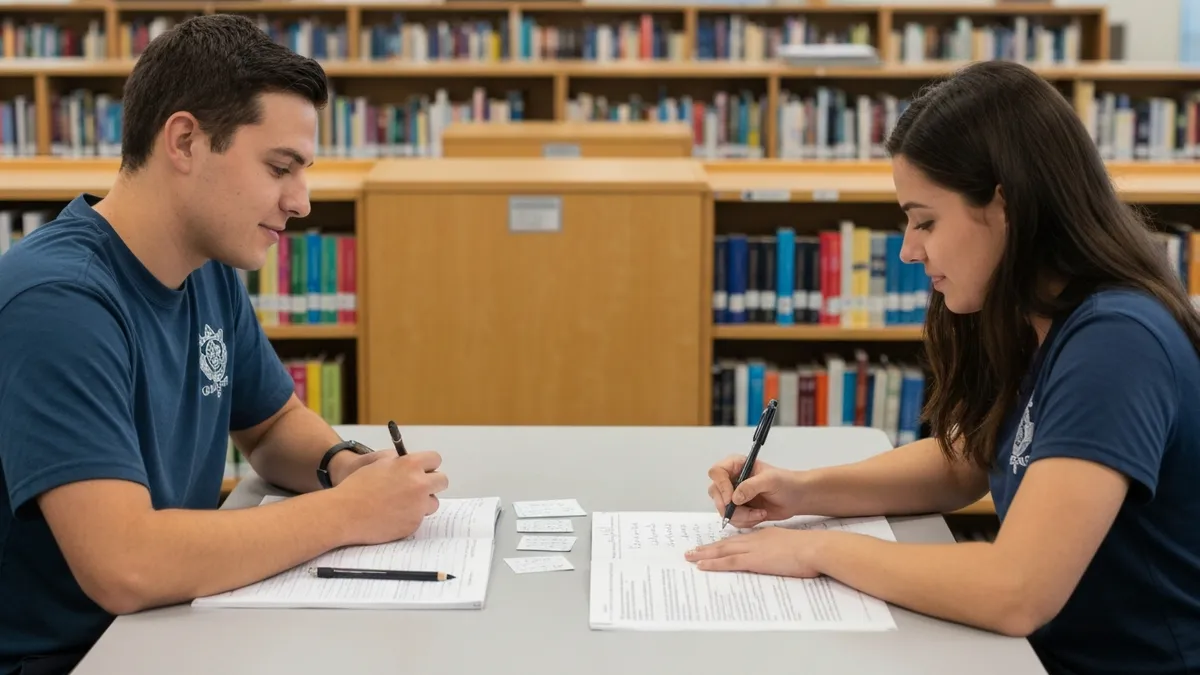
Peer study groups, when organized effectively, can accelerate your preparation by exposing you to different reasoning approaches and helping you identify knowledge gaps you did not know you had. Organize groups of three to five students, assign each person a content domain to teach to the others, and rotate presentation responsibilities weekly. Teaching a topic is the most powerful way to identify exactly where your understanding is incomplete. Many Ontario RPN programs facilitate study groups through their online learning management systems, and student success centers at most colleges offer tutoring and group study support at no additional cost.
Finally, take care of your mental health during the RPN preparation process. Nursing students report some of the highest rates of academic stress and burnout among all health profession students, and the combination of demanding coursework, clinical placements, and exam pressure can feel overwhelming at times.
Ontario colleges provide free counseling services, peer support programs, and wellness resources specifically for health sciences students. Reaching out early when you feel overwhelmed — rather than waiting until you are in crisis — is one of the most evidence-based things you can do for both your academic performance and your long-term wellbeing as a nursing professional.
RPN Questions and Answers




About the Author

Educational Psychologist & Academic Test Preparation Expert
Columbia University Teachers CollegeDr. Lisa Patel holds a Doctorate in Education from Columbia University Teachers College and has spent 17 years researching standardized test design and academic assessment. She has developed preparation programs for SAT, ACT, GRE, LSAT, UCAT, and numerous professional licensing exams, helping students of all backgrounds achieve their target scores.
Join the Discussion
Connect with other students preparing for this exam. Share tips, ask questions, and get advice from people who have been there.
View discussion (8 replies)