
Real Estate Developer Marketing Package Checklist: Complete Guide for License Exam Success
Master real estate law and the developer marketing package checklist. 🎯 Covers licensing, attorney tips, agent salaries, and exam prep for 2026 October.

Understanding real estate law is the foundation of every successful real estate career, and nowhere is that knowledge more critical than when preparing a real estate developer marketing package checklist. Whether you are pursuing your first license or working toward a broker designation, knowing how federal and state statutes govern property transactions, disclosure obligations, and agency relationships will directly affect your exam score and your professional effectiveness. The marketing package a developer assembles — from offering memorandums to environmental disclosures — must comply with layers of real estate law that the licensing exam tests heavily.
The real estate industry in the United States generates more than $3.8 trillion in annual economic activity, and licensed professionals sit at the center of nearly every transaction. Before you can represent buyers, sellers, or developers, you must pass a state licensing exam that covers contracts, property law, finance, and agency. Many candidates underestimate how deeply the exam probes real estate law concepts such as easements, encumbrances, title defects, and fiduciary duties — precisely the same legal framework developers rely on when packaging a project for investors or buyers.
A developer marketing package is not simply a brochure. It is a legally vetted collection of documents that must satisfy disclosure statutes, securities regulations, and local zoning requirements. As a licensed agent or broker, you may be asked to review, present, or even help assemble such packages. Knowing the components — site plans, proformas, title commitments, environmental phase reports, and HOA documents — gives you a competitive edge both on the exam and in the field. Topics like these appear regularly in the commercial real estate news cycle and on state licensing exams nationwide.
If you are wondering how much do real estate agents make after they specialize in development-side transactions, the answer is significantly more than residential agents on a per-deal basis. Developers routinely pay co-op commissions of 2–4 percent on projects worth tens of millions of dollars, meaning a single closed deal can exceed a residential agent's annual income. That financial upside makes understanding the developer marketing process — and the real estate law that governs it — an especially valuable investment of your study time.
Compass Real Estate, one of the largest brokerage platforms in the country, has invested heavily in developer services divisions precisely because the margin on new-construction and development sales outpaces traditional resale business. Markets like Wake County real estate and Allegheny County real estate have seen explosive developer activity in recent years, creating demand for agents who understand how to evaluate and present a developer marketing package. Your licensing exam will test whether you understand the legal backbone of these transactions even if it does not use the phrase "marketing package" explicitly.
Commercial real estate news frequently highlights how developers who fail to include required disclosures or who misrepresent proforma income figures face civil liability and license revocation. As a future licensee, you are not just a salesperson — you are a legally accountable professional.
The state licensing boards that administer exams in markets ranging from California to Florida to Texas require you to demonstrate competency in the real estate law principles that protect consumers and investors alike. Treating your exam prep as a professional responsibility rather than a test-taking exercise will make you both a better candidate and a more effective practitioner.
This guide walks you through the real estate developer marketing package checklist from a licensing perspective, explaining which legal concepts the exam tests, how those concepts show up in real developer transactions, and what study strategies will help you master both dimensions. You will also find salary benchmarks, cost breakdowns, tab-organized study content, a full checklist of marketing package components, and frequently asked questions drawn from real exam candidates. Let's start by looking at the key numbers that define this career path.
Real Estate Licensing & Developer Market by the Numbers

Core Components of a Real Estate Developer Marketing Package
The OM is the primary investor document, summarizing the property, development plan, projected returns, and risk factors. Real estate law requires that all material facts disclosed in an OM be accurate; misrepresentation can trigger fraud liability and license sanctions.
A preliminary title commitment from a licensed title company confirms ownership chain and flags encumbrances. A current ALTA survey establishes exact boundaries, easements, and encroachments — all topics tested directly on the state licensing exam.
The proforma projects income, expenses, NOI, cap rate, and IRR over a hold period. Agents presenting proformas must ensure figures are not misleading, as real estate law treats inflated income projections as a form of misrepresentation to prospective investors.
A Phase I Environmental Site Assessment (and Phase II if contamination is suspected) protects buyers and lenders. Failure to disclose known environmental conditions violates disclosure statutes in every US state and is a frequent exam topic.
Copies of the current zoning classification, any variance approvals, conditional use permits, and subdivision plat maps are essential. Developers must demonstrate that the planned use is legally permitted, tying directly to real estate law concepts around land use and government controls.
Real estate law encompasses the statutes, regulations, and common-law principles that govern how property is owned, transferred, financed, and used in the United States. For licensing candidates, the subject is divided into two broad buckets: national content tested on every state exam and state-specific law that varies by jurisdiction. The national portion covers property rights, contracts, agency, finance, and federal regulations such as RESPA, ECOA, and the Fair Housing Act. State content adds local disclosure requirements, license law, and transaction procedures unique to each state.
Property rights are the philosophical and legal bedrock of real estate law. The bundle of rights — the right to possess, use, enjoy, exclude others, and dispose of property — appears on virtually every licensing exam. Developers rely on these rights when they acquire land for redevelopment, negotiate easements with neighbors, or dedicate public infrastructure to a municipality. Understanding how fee simple absolute ownership differs from a life estate, leasehold, or tenancy in common is not merely academic; these distinctions appear in developer marketing packages whenever a project involves complex ownership structures such as condominiums, co-ops, or tenancy-in-common (TIC) offerings.
Contract law is the second pillar of real estate law for licensing purposes. A valid real estate contract requires offer, acceptance, consideration, legal capacity, and a lawful purpose. Developers routinely use purchase and sale agreements, option contracts, and letters of intent when assembling land for a project. Candidates must understand the difference between bilateral and unilateral contracts, when earnest money is refundable versus forfeited, and what constitutes a material breach. These concepts show up in both the national and state portions of licensing exams and in the fine print of every developer marketing package.
Agency law governs the relationship between a licensee and the party they represent. A real estate attorney near me — or in any market — would confirm that agency duties of loyalty, confidentiality, disclosure, obedience, reasonable care, and accounting (OLDCAR) are non-negotiable. When an agent works with a developer client, they owe the same fiduciary duties they would owe any seller or buyer, plus additional duties that arise from the size and complexity of the transaction.
Candidates who understand agency law deeply are better equipped to navigate dual agency disclosures, buyer representation agreements, and the ethical boundaries that protect all parties. Look for information about real estate attorney near me resources when you need legal support during transactions.
Finance and mortgage law constitute the third major pillar. Real estate developers finance projects through construction loans, mezzanine debt, preferred equity, and senior permanent financing — a capital stack that your licensing exam may reference in simplified form. The exam tests your knowledge of loan-to-value ratios, debt service coverage ratios, points, APR calculations, and the difference between conventional and government-backed loans. Understanding how a developer's financing structure affects the marketing package — specifically the capital stack slide in the OM — ties abstract finance concepts to real-world application.
Federal fair housing law is tested on every state licensing exam without exception. The Fair Housing Act of 1968 (as amended in 1988) prohibits discrimination based on race, color, national origin, religion, sex, familial status, and disability in the sale, rental, and financing of housing.
Developers who market new residential projects must comply with these protections in their advertising, tenant selection, and design (accessibility requirements under the Fair Housing Act apply to multifamily buildings built after 1991). Candidates who understand these requirements will answer fair housing questions correctly on the exam and will be better equipped to counsel developer clients on compliant marketing materials.
Disclosure obligations bridge real estate law and the practical world of developer marketing packages. Material fact disclosure — the duty to reveal anything that would affect a reasonable buyer's decision — applies to agents, brokers, and sellers alike. In a developer context, material facts can include known soil contamination, flood zone designations, pending assessments, unresolved title clouds, and construction defect claims. Every item on the developer marketing package checklist exists partly because disclosure law requires it. Mastering disclosure rules during your exam prep will pay dividends in your professional practice for the rest of your career.
How to Become a Real Estate Agent: Exam Topics by Developer Focus
The property law section of every state licensing exam covers ownership types, encumbrances, easements, liens, and title transfer methods. For developer-focused candidates, understanding how a developer assembles parcels through lot line adjustments, dedications, and eminent domain proceedings adds depth to these concepts. Questions about adverse possession, prescriptive easements, and riparian rights appear regularly and require you to apply legal definitions to realistic scenarios involving land development.
Encumbrances are especially important in the developer context. Deed restrictions, CC&Rs, and restrictive covenants placed by a developer on a subdivision bind future buyers and run with the land. Your exam will test whether you can identify which encumbrances affect title, which affect use, and which can be removed. Understanding these distinctions will help you evaluate developer marketing packages in practice — and answer scenario-based exam questions with confidence. Aim to review at least 50 property law practice questions before exam day.

Is Specializing in Developer Transactions Right for Your Real Estate Career?
- +Higher per-transaction commissions compared to residential resale
- +Long-term client relationships with repeat developer clients across multiple projects
- +Exposure to commercial real estate news and market trends that build expertise quickly
- +Ability to use real estate law knowledge for complex, high-stakes deals
- +Access to off-market opportunities through developer pipelines before public listing
- +Strong differentiation in competitive markets like Compass Real Estate territories
- −Longer sales cycles — developer projects can take 12–36 months from contract to closing
- −Requires deeper knowledge of real estate law, zoning, and entitlement processes
- −Income is less predictable due to deal size and extended timelines
- −Developer clients are sophisticated negotiators who expect highly competent representation
- −Market downturns disproportionately impact new construction and development activity
- −Marketing package preparation requires time, resources, and often third-party vendor coordination
Pros and Cons at a Glance
| Pros | Cons |
|---|---|
| Higher per-transaction commissions compared to residential resale | Requires deeper knowledge of real estate law, zoning, and entitlement processes |
| Long-term client relationships with repeat developer clients across multiple projects | Income is less predictable due to deal size and extended timelines |
| Exposure to commercial real estate news and market trends that build expertise quickly | Developer clients are sophisticated negotiators who expect highly competent representation |
| Ability to use real estate law knowledge for complex, high-stakes deals | Market downturns disproportionately impact new construction and development activity |
| Access to off-market opportunities through developer pipelines before public listing | Marketing package preparation requires time, resources, and often third-party vendor coordination |
Real Estate Developer Marketing Package Checklist: 10 Must-Have Items
- ✓Compile the Offering Memorandum with accurate property description, development plan, and risk disclosures.
- ✓Attach a current ALTA/NSPS land title survey showing boundaries, easements, and encroachments.
- ✓Include the preliminary title commitment from a licensed title company with all Schedule B exceptions listed.
- ✓Provide a Phase I Environmental Site Assessment and Phase II if any recognized environmental conditions exist.
- ✓Insert the current zoning classification letter plus copies of all variance, CUP, or entitlement approvals.
- ✓Attach a detailed financial proforma with NOI, cap rate, IRR, and cash-on-cash return projections.
- ✓Include the construction or renovation budget prepared by a licensed general contractor or cost estimator.
- ✓Add a market study or comparable sales analysis supporting the proforma revenue assumptions.
- ✓Attach copies of any existing leases, LOIs, or pre-sales agreements that affect projected income.
- ✓Provide HOA or CC&R documents, condominium declarations, or any deed restrictions that run with the land.
Marketing Package Knowledge Boosts Exam Scores
Candidates who study the real estate developer marketing package checklist as a learning framework — not just memorizing definitions in isolation — report stronger performance on scenario-based exam questions. Each checklist item maps to a testable legal concept: the title commitment tests encumbrance knowledge, the environmental report tests disclosure law, and the proforma tests finance math. Approaching exam prep through real transactions makes abstract rules concrete and memorable.
Understanding how much do real estate agents make in developer-focused niches requires separating base commission income from the bonus structures, referral fees, and equity participation arrangements that sophisticated developer clients sometimes offer top-performing agents. According to the Bureau of Labor Statistics, the median annual wage for real estate brokers and sales agents was approximately $62,000 in 2024, but that figure masks enormous variance. Agents who specialize in new construction and developer representation routinely earn $150,000–$400,000 or more annually in active development markets.
The geography of developer activity matters enormously for income potential. Wake County real estate, which encompasses the Raleigh-Durham-Chapel Hill triangle in North Carolina, has been one of the fastest-growing markets in the country, attracting billions in residential and mixed-use development investment. Allegheny County real estate, centered on Pittsburgh, Pennsylvania, has experienced a renaissance driven by technology sector growth and urban infill development. Agents in these markets who understand how to assemble and present a developer marketing package are compensated at levels that reflect the complexity and value of their work.
Compass Real Estate has built a significant developer services practice by training agents to serve both the developer side and the buyer side of new construction transactions. Their model illustrates how technology and marketing sophistication can be combined with deep real estate law knowledge to capture a disproportionate share of development-side revenue. Candidates who earn their license with this career path in mind should seek out brokerages with dedicated new construction or developer services divisions, where mentorship and deal flow will accelerate their professional development faster than a generalist residential environment.
The path from license to specialization typically takes two to four years. In your first year, focus on building transactional experience and expanding your knowledge of real estate law through continuing education. In years two and three, begin cultivating relationships with local developers, architects, civil engineers, and commercial real estate attorneys. By year four, you should have enough transaction history and professional relationships to pitch developer clients confidently and to compete for listing agreements on significant projects. The developer marketing package checklist you master during exam prep becomes a practical tool you deploy in real client conversations.
Income benchmarks vary by market and specialization. In high-cost coastal markets — New York, San Francisco, Los Angeles, Miami — developer-side agents on large luxury or commercial projects can earn seven-figure annual incomes. In secondary and tertiary markets, the range is more modest but still substantially above residential averages.
The key driver is deal size: a 2.5 percent commission on a $20 million multifamily development generates $500,000 in gross commission income on a single transaction. That is why understanding the real estate law and marketing package mechanics that make such deals possible is worth far more than the cost of your pre-license education and exam fees.
Licensing costs themselves are a fraction of the income potential. Pre-license education typically costs $300–$900 depending on the state and delivery format. Exam fees average $60–$200. License application fees range from $50–$400. Background check and fingerprinting add another $50–$100. Total first-year costs including membership dues, MLS access, and errors-and-omissions insurance typically run $3,000–$7,000. Against the income potential of a developer-focused career, these are negligible startup costs — and understanding the full cost picture is itself a topic that appears on licensing exams in the context of business planning and agency law.
The colibri real estate platform and other leading online pre-license providers have recognized the demand for developer-adjacent content by expanding their curriculum to include commercial real estate fundamentals and investment analysis. Candidates who supplement standard pre-license content with developer-focused study materials will enter the workforce with a differentiating knowledge base that most newly licensed agents lack. That differentiation pays dividends not only in career earnings but in the depth and quality of service you can offer clients from your very first year in the industry.
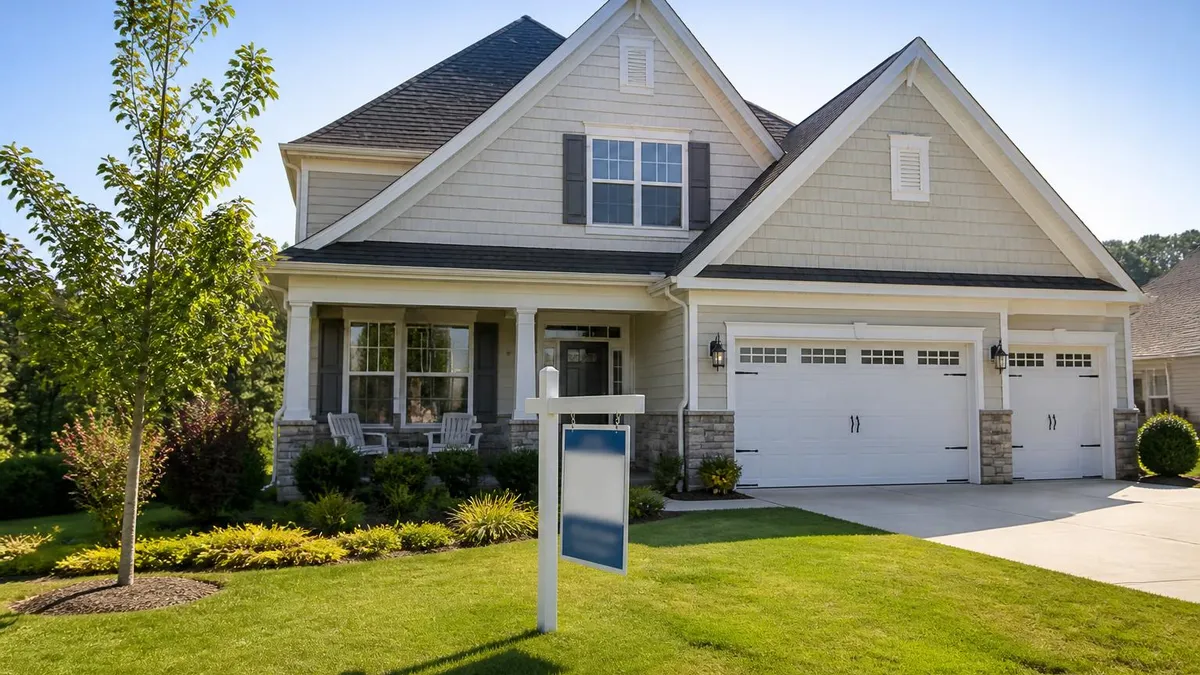
Real estate law in every US state treats material misrepresentation in developer marketing packages as grounds for license suspension or revocation — and potentially criminal fraud charges. If you assist in preparing or presenting an OM that contains inflated income projections, omits known environmental conditions, or misrepresents zoning approvals, you face personal liability regardless of whether the developer directed the omission. Always verify independently any figures or representations you put your name behind.
Preparing for the real estate licensing exam requires a structured study approach that mirrors the organization of a developer marketing package checklist — systematic, thorough, and legally grounded. Most state licensing exams consist of 100–150 questions divided between a national portion and a state-specific portion. The national portion tests property ownership, land use controls, valuation, finance, agency, contracts, and federal regulations. The state portion tests your jurisdiction's specific license law, disclosure requirements, and transaction procedures. Passing both sections in a single sitting is the goal, and most candidates who study 60–100 hours over six to twelve weeks achieve it.
Practice exams are the single most effective study tool available. Research consistently shows that retrieval practice — actively recalling information by answering questions — produces better long-term retention than passive re-reading. The licensing exam format is multiple-choice with four answer choices, and many questions are scenario-based rather than pure definition recall. Practicing with timed, full-length exams under realistic conditions trains your brain to retrieve the right legal rule when a fact pattern triggers it, which is exactly how the exam works on test day.
Real estate law topics that consistently generate the most missed questions include agency disclosure timing, fair housing violation identification, contract enforceability edge cases, and property rights in co-ownership scenarios. Developers encounter all of these issues in their marketing packages — for example, a condominium offering is a form of co-ownership that requires specific disclosure documents governed by state condo acts. Linking exam topics to developer marketing scenarios makes abstract rules feel concrete and dramatically improves retention.
Study schedules should be built around your weakest knowledge areas rather than following a linear textbook progression. After taking a diagnostic practice exam, rank your performance by topic category and allocate the bulk of your remaining study time to the categories where you scored below 70 percent.
For most candidates, real estate law sub-topics like easements, deed types, and title insurance generate the most incorrect answers, followed by finance math. The developer marketing package checklist is a useful organizing framework because it naturally groups related legal concepts — title and survey, environmental law, zoning and land use, contract law — in the same way your exam will test them.
Finding real estate agents near me who specialize in development can supplement your exam prep with real-world perspective. Many experienced development-side agents are willing to speak with licensing candidates about the practical application of real estate law in their daily work. Informational interviews, open house shadowing, and new construction tour appointments give you concrete examples that make abstract exam topics memorable. Some states allow pre-license candidates to attend real estate commission hearings or disciplinary proceedings as observers — an eye-opening experience that reinforces why real estate law compliance matters.
The champions school of real estate and other accredited pre-license providers structure their curricula to cover both the national content outline published by ARELLO (the Association of Real Estate License Law Officials) and the state-specific addendum published by each licensing board. If your pre-license provider does not explicitly address both components, supplement with official state study materials. Most state real estate commissions publish a candidate handbook that lists the specific topics and sub-topics covered on the exam — this document is the single most authoritative guide to what you need to know.
Commercial real estate news publications such as CoStar, The Real Deal, Bisnow, and GlobeSt provide a stream of real-world examples that reinforce exam concepts in memorable, current-event contexts. Reading one or two development-related news stories each week during your exam prep period helps you build an intuitive sense of how real estate law operates in practice.
When you read about a developer who faced disclosure litigation because their marketing package understated infrastructure costs, you are reinforcing your understanding of material fact disclosure in a way that no textbook definition can match. That contextual understanding is what separates high-scoring candidates from those who merely memorize terms.
Final exam preparation in the two weeks before your test date should shift from learning new material to consolidating and reinforcing what you already know. Take at least two full-length timed practice exams under realistic conditions — no notes, no phone, timed to match your state's actual exam duration. Review every incorrect answer immediately after the exam, identifying not just the correct answer but the legal rule or concept that makes it correct. This active error analysis is far more valuable than simply re-reading the explanations passively.
Sleep and physical readiness matter more than most candidates acknowledge. Research on test performance consistently shows that a full night of sleep before the exam produces better scores than late-night cramming. The night before your exam, review your notes briefly, prepare your identification documents and any permitted materials, confirm the test center address and parking, and get to bed at a reasonable hour.
Arrive at the testing center 30 minutes early to allow time for check-in procedures without stress. Most PSI and Pearson VUE testing centers have strict protocols — phones must be stored, no notes are permitted, and scratch paper is provided by the proctor.
Time management during the exam is critical. With 150 questions and three hours, you have approximately 72 seconds per question. Move through questions at a steady pace, flagging any that require extended thought for a second pass. Do not spend five minutes on a single question early in the exam — it costs you time on easier questions later.
Most licensing exam software allows you to flag and return to questions, and you should use this feature strategically. Complete all questions before the time limit, even if you must guess on a few; unanswered questions are always wrong, but guesses have a 25 percent chance of being correct.
After passing your exam, the real estate developer marketing package checklist transitions from an exam study tool to a professional practice framework. Your first developer client engagement will likely involve reviewing or presenting materials that map directly to the checklist items you studied: title commitments, environmental reports, zoning letters, and financial proformas. The legal knowledge you built during exam prep gives you the credibility to ask intelligent questions, identify red flags, and add genuine value to the developer's process — not just serve as a transaction coordinator.
Continuing education requirements ensure that licensees stay current with evolving real estate law, and many states now offer CE courses specifically focused on commercial real estate and developer transactions. Completing these courses in your early career years builds expertise methodically and demonstrates professional commitment to developer clients who evaluate agents based on their depth of knowledge. Some states require as few as 14 hours of CE per renewal cycle; others require 45 hours or more. Use CE as an opportunity to deepen your understanding of commercial real estate topics rather than simply completing the minimum required hours.
Networking within the developer community accelerates your career in ways that traditional brokerage activities cannot. Developer relationships are built on trust, technical competence, and discretion — qualities that take time to demonstrate but, once established, generate referrals and repeat business for years. Joining your local Urban Land Institute chapter, attending commercial real estate news conferences, and participating in your state's commercial real estate association gives you access to developer relationships before you have a substantial transaction history to point to. Your licensing exam knowledge and professional demeanor are your initial credentials; your track record builds from there.
The intersection of real estate law, developer marketing knowledge, and licensing exam preparation is not merely academic — it is a professional foundation that compounds in value throughout your career. Every concept you master during exam prep, from easements to agency to finance math, will appear again and again in your professional life in contexts that matter.
The developers, investors, and buyers you serve will be better protected, better informed, and better served because you took the time to understand not just the rules but the reasons behind them. That depth of understanding is what distinguishes great real estate professionals from average ones, and it begins with the study habits you build right now.
Sample Real Estate License Practice Questions
Try these questions from our free Real Estate License practice tests. The correct answer and an explanation follow each question.
Robert, a developer who is unlicensed, hires Yvonne, a broker, to sell his properties. While Yvonne is out of town, Robert shows property, quotes prices and makes sales. Have Robert or Yvonne violated the Real Estate Law?
- A. Yvonne has violated the Real Estate Law and can be fined $500.
- B. Robert has violated the Real Estate Law and can be fined $500.
- C. Both Robert and Yvonne have violated the Real Estate Law
- D. Neither Robert nor Yvonne has done anything wrong.
Answer: D. Neither Robert nor Yvonne has done anything wrong.
An unlicensed owner of real property is legally permitted to sell their own property without needing a real estate license. Since Robert is the developer and owner, he is selling his own properties, which does not require a license. Yvonne, the broker, is not involved in Robert's direct sales activities, so neither party has violated the Real Estate Law in this scenario.
When is it not necessary for a broker to propose an offer to acquire real estate to their principal?
- A. When the offer is clearly frivolous or the broker is acting on the principal's written instructions.
- B. When the broker has written to the seller to explain why the offer was not presented.
- C. When none of the contingencies have been removed.
- D. If it's a commercial property that's being offered.
Answer: A. When the offer is clearly frivolous or the broker is acting on the principal's written instructions.
A real estate broker has a fiduciary duty to their principal (the seller) to present all offers received. However, this duty can be modified if the principal provides clear, written instructions to the broker specifying which types of offers should not be presented (e.g., offers below a certain price). Additionally, offers that are clearly frivolous or made in bad faith may not require presentation, as they do not constitute a bona fide offer.
Which element is NOT required for a real estate contract to be legally valid?
- A. Offer and acceptance
- B. Notarization by a public notary
- C. Legal capacity of the parties
- D. Consideration
Answer: B. Notarization by a public notary
Notarization is not a required element for a valid contract; offer, acceptance, capacity, consideration, and legal purpose are.
A listing agreement between a seller and a real estate broker creates which type of agency?
- A. Buyer's agency
- B. Dual agency
- C. Seller's agency
- D. Transaction brokerage
Answer: C. Seller's agency
A listing agreement establishes a seller's agency, meaning the broker is engaged to represent the seller's interests throughout the transaction.
Real Estate License Questions and Answers

Real Estate License vs NMLS MLO: Which One Should You Choose?

PSI Real Estate Exam: Complete Guide to Passing in 2026

How to Pass the Real Estate License Exam in 2026 — Complete Study Guide

Real Estate Complete Guide: Licensing, Careers, Law, and How to Succeed

Real Estate Math Questions: Complete Guide to Passing the License Exam
About the Author

Licensed Real Estate Broker & Licensing Exam Specialist
University of Wisconsin School of BusinessSandra Taylor is a Graduate Realtor Institute (GRI) and Accredited Buyer's Representative (ABR) designee with an MBA in Real Estate from the University of Wisconsin School of Business. She has 18 years of residential and commercial real estate brokerage experience and coaches real estate license candidates through state salesperson and broker pre-license examinations across multiple states.
Join the Discussion
Connect with other students preparing for this exam. Share tips, ask questions, and get advice from people who have been there.
View discussion (7 replies)