
Royal Canadian Mounted Police Heritage Centre: A Complete Guide for American Visitors and RCMP Enthusiasts
Explore the Royal Canadian Mounted Police Heritage Centre — history, exhibits, visitor tips & how it connects to RCMP careers. 🎯

The Royal Canadian Mounted Police Heritage Centre, located in Regina, Saskatchewan, stands as one of North America's most compelling law enforcement museums — a place where more than 150 years of Canadian policing history comes alive through immersive exhibits, authentic artifacts, and the living tradition of the RCMP Musical Ride.
Whether you're an American visitor planning a cross-border trip, a history enthusiast, or someone curious about the iconic force behind Canada's national identity, this centre offers an experience unlike anything you'll find south of the border. Visitors who want to deepen their knowledge before or after their trip can explore the rcmp heritage centre resource hub for context on how the RCMP's storied past shapes its modern recruitment standards.
Founded on the legacy of the North-West Mounted Police established in 1873, the RCMP has evolved from a frontier peacekeeping force into a sophisticated national police agency operating across all Canadian provinces and territories. The Heritage Centre reflects this sweeping evolution, presenting not only the dramatic early years of prairie policing but also the RCMP's pivotal roles in World Wars I and II, the Cold War era, and modern counterterrorism efforts.
For Americans accustomed to visiting institutions like the FBI Experience in Washington D.C. or state police museums, the Heritage Centre offers a comparable depth of engagement with a distinctly Canadian perspective.
The physical building itself is worth noting. The centre occupies a purpose-built facility adjacent to the RCMP Depot Division — the national training academy where every regular member of the RCMP has trained since 1885. This proximity means visitors aren't just looking at historical relics behind glass; they're standing next to an active institution that continues to shape officers today. Guided tours sometimes include views of cadets in training, giving Americans an extraordinary window into how Canada prepares its national police force for the challenges of contemporary law enforcement.
For families traveling with children, the Heritage Centre deserves a prominent spot on any Canadian itinerary. Interactive exhibits allow younger visitors to engage with RCMP history through hands-on activities, replica equipment, and multimedia presentations. The facility typically runs special programming during Canadian national holidays and RCMP anniversary events, making certain times of year particularly rich for immersive experiences. American families who have visited institutions like the Smithsonian's National Museum of American History will find the Heritage Centre operates at a comparable level of educational sophistication and visitor engagement.
History buffs will particularly appreciate the depth of the artefact collections. The Heritage Centre houses thousands of items spanning uniforms, weapons, photographs, documents, and personal effects of legendary RCMP figures. Items from the Yukon Gold Rush era, when the RCMP played a critical role in maintaining order among tens of thousands of prospectors flooding into Canada's northwest, are especially compelling. This period alone produced some of the most dramatic stories of frontier law enforcement ever documented in North American history, and the centre brings them to life with remarkable authenticity.
From a career preparation standpoint, the Heritage Centre also serves a practical purpose for anyone considering joining the RCMP or studying Canadian law enforcement for academic purposes. Understanding the organization's history, core values, and institutional culture provides meaningful context for the recruitment process. The RCMP's emphasis on integrity, community service, and respect for Indigenous peoples — all themes explored throughout the centre's exhibits — directly informs the behavioral competencies assessed during the application and testing process.
In the sections below, this guide covers everything American visitors and RCMP enthusiasts need to know: key exhibits, visitor logistics, the Heritage Centre's connection to Depot Division, the Musical Ride legacy, and how a visit can meaningfully inform your understanding of Canada's most iconic law enforcement institution. Whether your interest is historical, professional, or simply curious, the Royal Canadian Mounted Police Heritage Centre rewards every type of visitor with substance, authenticity, and stories that transcend the border.
RCMP Heritage Centre by the Numbers

Heritage Centre Highlights and Key Exhibits
Explore artifacts and documents from the founding of the North-West Mounted Police in 1873, including the legendary March West of 1874, when 300 officers trekked 1,000 miles across prairie wilderness to establish Canadian order.
Discover the RCMP's overlooked role in both World Wars, including overseas deployments, counterintelligence operations, and the extraordinary stories of officers who served on multiple fronts while keeping Canada's home front secure.
The Musical Ride gallery traces the evolution of Canada's most iconic ceremonial tradition from its 1876 origins to modern international performances, featuring original uniforms, lances, and behind-the-scenes documentation of the grueling training process.
A thoughtful and unflinching look at the complex history between the RCMP and Indigenous peoples, covering treaty enforcement, residential school involvement, and current reconciliation efforts shaping modern RCMP policy and community engagement.
See how the RCMP has evolved from horses and telegraphs to DNA forensics, cybercrime units, and national security operations. Interactive displays let visitors explore the science and technology behind contemporary Canadian law enforcement.
Understanding the Royal Canadian Mounted Police Heritage Centre requires understanding the sweeping arc of Canadian history it documents. The RCMP traces its origins to 1873, when Prime Minister John A. Macdonald created the North-West Mounted Police to assert Canadian sovereignty over the vast territories acquired from the Hudson's Bay Company.
At the time, American whisky traders operating out of Fort Whoop-Up in present-day Alberta were destabilizing Indigenous communities and undermining any pretense of Canadian governance west of Ontario. The NWMP's mandate was clear: establish law and order before the American model of violent frontier conflict took hold north of the 49th parallel.
The legendary March West of 1874 remains one of the most extraordinary logistical feats in North American law enforcement history. Nearly 300 officers, most of them young men with minimal wilderness experience, departed Fort Dufferin in Manitoba and marched approximately 1,000 miles across treeless prairie in brutal late-summer heat.
Horses died, food supplies ran critically low, and navigation proved far more difficult than anticipated. Yet the force reached its destination, established Fort Macleod, and within months had negotiated the closure of the whisky trade and built relationships with Blackfoot Confederacy leadership that would prove foundational to the RCMP's distinct approach to community policing.
The Heritage Centre devotes significant space to the Yukon Gold Rush era of the 1890s, a period that cemented the NWMP's reputation internationally. When an estimated 100,000 prospectors poured into Canada's Yukon Territory following the 1896 Klondike gold discovery, the small NWMP force in the region faced an almost impossible challenge: maintaining order, collecting customs duties, preventing firearms from proliferating in a chaotic gold-rush environment, and doing so with minimal violence. The contrast with the American experience in similar frontier situations was stark and internationally noted, building Canada's reputation for a different kind of law enforcement philosophy.
Confederation-era politics also shaped the force significantly. In 1920, the NWMP merged with the Dominion Police to form the Royal Canadian Mounted Police, acquiring federal law enforcement jurisdiction across Canada. This transformation — from a frontier force to a national police agency — is documented in detail at the Heritage Centre through period photographs, government documents, and personal accounts from officers who navigated the transition. For American visitors, this institutional evolution offers fascinating parallels and contrasts with the development of the FBI during roughly the same era under J. Edgar Hoover.
The Second World War chapter of RCMP history is among the most complex and morally challenging sections of the Heritage Centre's permanent collection. The force was responsible for the internment of Japanese-Canadians, German-Canadians, and Italian-Canadians under the War Measures Act — a history the centre addresses with commendable directness.
At the same time, RCMP officers served in overseas intelligence roles and helped crack several significant espionage cases, including early Cold War spy rings that foreshadowed the Gouzenko Affair of 1945, when a Soviet cipher clerk defected in Ottawa and handed Western intelligence agencies their first concrete proof of widespread Soviet espionage in North America.
Post-war RCMP history covers the Cold War security apparatus, the October Crisis of 1970 — when Prime Minister Trudeau invoked the War Measures Act in response to Quebec separatist terrorism — and the controversial RCMP Security Service operations of the 1970s that led to the McDonald Commission and eventually the creation of CSIS as a separate civilian intelligence agency.
This institutional self-examination is presented at the Heritage Centre not as an embarrassment but as evidence of a democratic society's capacity for accountability and reform, a framing that American visitors often find both refreshing and thought-provoking in comparison to discussions of similar controversies in U.S. law enforcement history.
Today's RCMP operates in a fundamentally different environment than the force depicted in its earliest exhibits, yet the Heritage Centre draws compelling through-lines connecting the values of 1873 to the challenges of 2026. The emphasis on community engagement, the preference for de-escalation when possible, the unique dual role as both federal and provincial police in most Canadian provinces — all of these characteristics have roots traceable to the original mandate of the North-West Mounted Police.
Visitors who spend thoughtful time with the full arc of the Heritage Centre's exhibits leave with a nuanced appreciation of how institutional culture, once established, can both persist and adapt across 150 years of dramatic social change.
Visiting the RCMP Heritage Centre: What Americans Need to Know
Regina, Saskatchewan is accessible by air through Regina International Airport (YQR), with direct flights from major U.S. hubs including Chicago, Minneapolis, and Seattle via connecting Canadian carriers. By road, Americans can enter Canada through the North Portal, Regway, or Oungre border crossings in Saskatchewan, with Regina approximately 70 miles north of the U.S. border. A valid passport is required for all Americans crossing into Canada, and NEXUS card holders can use expedited lanes at designated border crossings.
The Heritage Centre is located at 5907 Dewdney Avenue in Regina, adjacent to the RCMP Depot Division training academy. Most visitors drive or take a taxi from downtown Regina, as public transit options are limited. Free parking is available on-site. Plan your visit to allow at least three to four hours — many visitors find the exhibits so engaging that they spend a full day, particularly if they time their arrival to catch one of the scheduled Sergeant-Major's Parade viewings that are sometimes open to the public during weekday mornings.

Is the RCMP Heritage Centre Worth the Trip from the United States?
- +World-class permanent collection covering 150+ years of North American law enforcement history
- +Adjacent to the active RCMP Depot Division, offering rare views of Canada's national police training in progress
- +Exceptional value compared to comparable U.S. museum experiences, especially with favorable CAD/USD exchange rates
- +Family-friendly interactive exhibits engaging for children ages 6 and up
- +Annual events like the Musical Ride and Sunset Ceremony create once-in-a-lifetime experiences
- +Thoughtful coverage of complex historical topics including Indigenous relations and wartime civil liberties
- −Regina is not a primary tourist destination for most Americans, requiring a dedicated trip rather than a stopover
- −Limited public transportation from downtown Regina means most visitors need a rental car or taxi
- −Seasonal hours mean reduced access during winter months, which can be bitterly cold in Saskatchewan
- −Some exhibits are text-heavy, which may challenge younger visitors or those with limited Canadian historical context
- −The Musical Ride only performs at the Depot for limited public viewings; full performances are often elsewhere
- −The gift shop, while excellent, does not ship internationally, limiting purchases to what you can carry home
Pre-Visit Checklist for American Visitors to the RCMP Heritage Centre
- ✓Confirm your valid U.S. passport is not expiring within six months of your travel date.
- ✓Check current Canadian entry requirements at the official Canada Border Services Agency website before departure.
- ✓Book accommodations in Regina at least four weeks in advance during summer months due to peak demand.
- ✓Review the Heritage Centre's current exhibit schedule and any temporary closures on their official site.
- ✓Download a basic overview of Canadian history from 1867 onward to provide context for the exhibits.
- ✓Convert at least CAD $100 in cash for admission, parking, and the gift shop at your U.S. bank before crossing.
- ✓Check if the Sergeant-Major's Parade or public viewings are scheduled during your intended visit dates.
- ✓Notify your bank and credit card company of your Canadian travel dates to avoid fraud holds.
- ✓Pack layers — Regina weather is unpredictable, and the Heritage Centre maintains cool interior temperatures year-round.
- ✓Plan to spend at least half a day at the centre, ideally arriving when it opens to avoid afternoon crowds.
The RCMP Trains Every Officer in Regina — Right Next Door
Every single regular member of the RCMP — from the newest recruit to future commissioners — has completed their basic training at Depot Division in Regina, right next to the Heritage Centre. This 26-week training program has operated continuously since 1885, making Depot Division one of the oldest continuously operating police training academies in North America. Visiting the Heritage Centre gives you a genuine connection to this living institution, not just its past.
The Musical Ride is arguably the RCMP's most globally recognized tradition, and the Heritage Centre dedicates a substantial portion of its exhibit space to documenting its remarkable 150-year history. The Musical Ride began informally in 1876 when bored officers at various NWMP posts developed cavalry drill routines set to music as a form of both entertainment and training.
By the 1880s, these informal performances had evolved into structured public demonstrations that quickly became a source of national pride. Today, the Musical Ride consists of 32 riders and horses performing precisely choreographed figures set to music, touring Canada and occasionally performing internationally for audiences that regularly number in the thousands.
The Heritage Centre's Musical Ride gallery contains some of the most visually striking artifacts in its entire collection. Original lances from the 19th century, complete dress uniforms spanning multiple eras, and photographs documenting performances from Victoria-era prairie towns to modern Olympic venues give visitors a tangible sense of continuity across generations. The horses themselves — all black RCMP horses bred specifically for the Musical Ride — are represented through stunning photography and detailed explanations of the rigorous selection and training process that determines which animals are chosen for the program.
What many American visitors find most surprising about the Musical Ride is the extraordinary level of athletic and artistic preparation required from both horses and riders. Each horse selected for the Musical Ride undergoes approximately two years of specialized training before its first public performance, and riders must be experienced equestrians before even applying for Musical Ride duty.
The combination of precise timing, spatial awareness, and animal partnership required to execute complex figures like the Dome, the Wagon Wheel, and the famous Musical Ride finale creates a performance art form that is genuinely difficult to categorize — part military ceremony, part artistic performance, part athletic competition.
International performances by the Musical Ride have taken Canadian culture to audiences around the world, including multiple appearances in the United States. American cities from Washington D.C. to Los Angeles have hosted the Musical Ride, and these performances consistently sell out, reflecting the iconic status of the red-serge-uniformed riders in global popular culture. The Heritage Centre documents these international tours in detail, including photographs and programs from U.S. performances that some American visitors immediately recognize from their own childhood memories.
Beyond the Musical Ride, the Heritage Centre preserves and celebrates several other living RCMP traditions that connect the modern force to its 19th-century roots. The Sergeant-Major's Parade, a daily tradition at Depot Division dating to the founding of the force, remains one of the most moving ceremonies associated with the RCMP.
New recruits experience the parade as a regular ritual that reinforces discipline, unit cohesion, and institutional pride throughout their 26-week training program. When this ceremony is open for public viewing — which occurs periodically throughout the year — Heritage Centre visitors have the opportunity to witness something genuinely rare: a law enforcement tradition unchanged in its essential character for over 140 years.
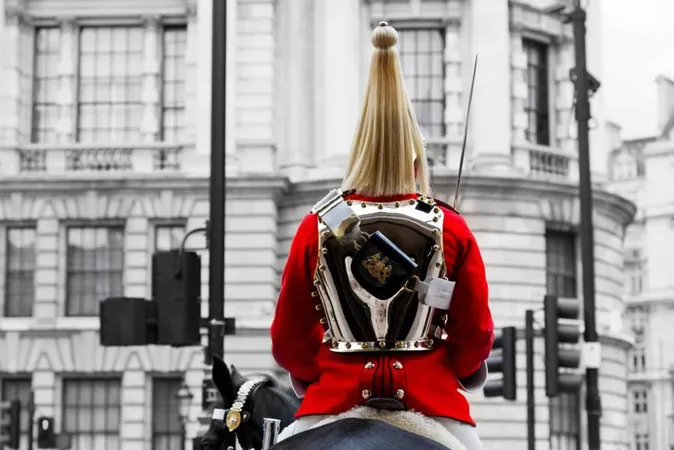
The Heritage Centre's commitment to honoring living traditions extends to its treatment of the RCMP's ceremonial dress. The iconic red serge uniform — formally known as the Review Order — is documented in extraordinary detail throughout the museum, from its earliest iterations in the 1870s to its current form.
Americans accustomed to seeing the red serge in popular culture, from Canadian stamps and currency to Hollywood films like the 1994 comedy Canadian Bacon, often express astonishment at how accurately popular culture has captured the uniform's essential elements while missing many of its most meaningful details. The centre's uniform exhibits address these nuances with care, explaining the significance of each element from the pillbox hat to the brown leather Sam Browne belt and the iconic white lanyard.
For visitors interested in the intersection of tradition and modernity, the Heritage Centre also documents how the RCMP's ceremonial practices have evolved to reflect Canada's growing diversity.
The integration of Indigenous elements into certain ceremonial contexts, the increasing representation of women in all roles including the Musical Ride, and the adaptation of uniform standards to accommodate religious observances like turbans and hijabs for Sikh and Muslim members are all presented as evidence of an institution actively navigating the tension between honoring its past and reflecting contemporary Canadian values. These are stories with obvious resonance for American visitors thinking about similar debates in U.S. law enforcement contexts.

Public viewings of the Musical Ride at RCMP Depot Division in Regina are limited and occur on a scheduled basis, typically during summer months. These viewings fill up weeks in advance and are not guaranteed to be available during any given visit. Check the RCMP's official website for the current public viewing schedule and book your Regina travel dates around confirmed viewing dates rather than assuming availability upon arrival. This is especially important for American visitors making a dedicated cross-border trip.
For Americans considering a career with Canadian law enforcement — or simply seeking to understand the RCMP's selection process for academic or comparative purposes — the Heritage Centre provides invaluable context that goes beyond what any website or brochure can convey.
Standing in the exhibits dedicated to RCMP core values, behavioral competencies, and officer character standards, visitors gain an intuitive sense of what the organization is actually looking for in its members. The RCMP doesn't simply want qualified law enforcement professionals; it wants individuals who embody a specific institutional culture shaped by 150 years of experience and hard-won wisdom about what effective, trusted policing actually requires.
The recruitment process for the RCMP is rigorous and multifaceted, involving written assessments, physical fitness testing, psychological evaluation, background investigations, and formal interviews assessing behavioral competencies aligned with the RCMP's core values. The Heritage Centre's exhibits on officer character and institutional values effectively function as a preview of these competency areas, giving thoughtful visitors a head start in understanding what qualities the RCMP is specifically looking for. Integrity, professionalism, compassion, accountability, and respect — these values appear throughout the Heritage Centre's exhibits as consistent threads connecting officers across every era of the force's history.
Physical fitness standards represent one of the most discussed aspects of RCMP recruitment, and the Heritage Centre documents the evolution of physical training at Depot Division from the rough-and-ready frontier fitness of the 1870s to the sophisticated modern Physical Abilities Requirement Evaluation (PARE) test used today. The PARE test requires candidates to complete a simulated pursuit-and-control course in under 4 minutes and 45 seconds — a standard that requires genuine athletic preparation beginning months before any application is submitted. Exhibits documenting Depot Division's training facilities help visitors visualize the environment in which this preparation ultimately gets tested.
The Heritage Centre also addresses the RCMP's bilingualism requirements — all regular members must demonstrate functional capacity in both English and French — a standard that surprises many American visitors unaccustomed to thinking about language as a core law enforcement competency.
The historical roots of this requirement trace directly to Canada's founding compromise between English and French Canada, and exhibits documenting the RCMP's operations in Quebec and other francophone communities illustrate why bilingual capacity is considered operationally essential rather than merely a bureaucratic checkbox. For American candidates with French language skills, this requirement can actually be a significant competitive advantage in the recruitment process.
The Heritage Centre's treatment of the RCMP's role in Indigenous communities is particularly relevant for anyone seeking to understand how the force's recruitment and training processes have evolved in response to the Truth and Reconciliation Commission's calls to action.
The commission's 2015 report identified specific areas where the RCMP needed to improve its relationships with Indigenous peoples, and the Heritage Centre documents both the historical failures that made these calls necessary and the institutional reforms the RCMP has undertaken in response. This historical literacy about difficult institutional history is itself a competency that the RCMP increasingly values in candidates, particularly those interested in serving in communities with significant Indigenous populations.
Graduate students, researchers, and policy professionals visiting the Heritage Centre will find its archival resources particularly valuable. The centre maintains research access to portions of its documentary collection, and staff historians can facilitate access to primary sources unavailable anywhere else. For Americans working on comparative law enforcement studies, Canadian policing policy, or North American security history, this access can be genuinely transformative for research projects. Several significant academic works on Canadian and North American policing history have been informed by research conducted at the Heritage Centre's archival facilities.
Whether your interest in the Heritage Centre is tourist, career-oriented, academic, or simply the product of lifelong admiration for the iconic Mounties of popular culture, the experience of visiting deepens every subsequent engagement with RCMP-related content.
Officers, historians, filmmakers, and writers who have visited consistently report that the physical encounter with authentic artifacts, the spatial experience of standing where history happened, and the conversations with knowledgeable Heritage Centre staff transform abstract knowledge into genuine understanding. For Americans who have grown up with RCMP imagery woven into popular culture without the historical context to fully appreciate it, a visit to Regina represents a rare opportunity to close that gap once and for all.
Making the most of your visit to the Royal Canadian Mounted Police Heritage Centre requires a modest amount of advance preparation, but the return on that investment is substantial. Before you arrive, spend an hour reading a brief overview of Canadian Confederation history and the establishment of the North-West Mounted Police in 1873.
Even a basic familiarity with the political context — the desire to assert Canadian sovereignty against American expansion, the whisky trade crisis threatening Indigenous communities in present-day Alberta — will dramatically enrich your experience of the Heritage Centre's founding exhibits. Context transforms artifacts from interesting objects into meaningful evidence of human decisions under pressure.
Timing your visit strategically pays significant dividends. The Heritage Centre is typically least crowded during weekday mornings, particularly Tuesday through Thursday. Weekend afternoons during summer months can be quite busy, especially when tour groups from the United States are in Regina.
Arriving at opening time allows you to experience the early exhibits at a contemplative pace before the crowds arrive, and it positions you to catch any morning programming events like the Sergeant-Major's Parade viewing when scheduled. The gift shop is best browsed at the end of your visit once you know which specific historical topics most interested you — staff there are knowledgeable and can recommend books and materials aligned with your specific interests.
Engaging with Heritage Centre staff and docents is among the most underutilized opportunities available to visitors. These individuals — many of whom are retired RCMP officers or trained historians — possess knowledge that extends far beyond what appears on exhibit panels. Asking specific questions about topics that genuinely interest you almost invariably produces personal stories, behind-the-scenes details, and contextual information that significantly enriches your understanding. Don't hesitate to ask follow-up questions or request recommendations for further reading; these professionals are there precisely because they love sharing the depth of knowledge they've accumulated.
Photography at the Heritage Centre deserves thoughtful attention. While most areas permit photography for personal use, the quality of documentation you create will be significantly improved by a few simple practices. Use natural light near windows whenever possible rather than flash photography near sensitive artifacts. Take wide establishing shots that capture exhibit context before moving in for detail photographs. Most importantly, photograph the interpretive text panels alongside the artifacts themselves — you'll be far more grateful for this habit six months after your visit when you're trying to recall what a specific item actually was and why it mattered historically.
American visitors with children benefit from downloading the Heritage Centre's family activity guide if one is available, or preparing a simple self-guided activity sheet based on information from the centre's website. Children who arrive with a specific mission — find three different types of RCMP uniforms, identify the oldest artifact in the collection, locate something related to horses — engage far more actively with the exhibits than those without a framework. The centre's interactive zones are genuinely excellent for young visitors, but having a structured scavenger-hunt element keeps children engaged through the more text-heavy historical exhibits as well.
If your budget and schedule permit, consider pairing your Heritage Centre visit with a stay in Regina of at least two nights. The city itself has more to offer than many Americans realize, including the Saskatchewan Legislative Building, Wascana Centre (one of the largest urban parks in North America), and a genuinely impressive restaurant scene that reflects Saskatchewan's agricultural heritage in creative and delicious ways.
The combination of a full Heritage Centre experience with broader Regina exploration creates a much richer impression of Canadian prairie culture than a single-day rush visit allows. Several excellent downtown hotels are within a short taxi ride of the Heritage Centre.
Finally, consider documenting your visit in a way that extends its value beyond the experience itself. Whether through detailed journal notes, a curated photo album, or a short video diary of your impressions, creating a record while memories are fresh transforms a single visit into a lasting educational resource.
Several Americans who have visited the Heritage Centre report sharing their documentation with family members, colleagues, and students in ways that sparked genuine interest in Canadian history and RCMP culture among people who might never have engaged with these topics independently. In this way, a single thoughtfully documented visit can ripple outward to create unexpected educational value for your entire network.
RCMP Questions and Answers


About the Author

Educational Psychologist & Academic Test Preparation Expert
Columbia University Teachers CollegeDr. Lisa Patel holds a Doctorate in Education from Columbia University Teachers College and has spent 17 years researching standardized test design and academic assessment. She has developed preparation programs for SAT, ACT, GRE, LSAT, UCAT, and numerous professional licensing exams, helping students of all backgrounds achieve their target scores.
Join the Discussion
Connect with other students preparing for this exam. Share tips, ask questions, and get advice from people who have been there.
View discussion (7 replies)