
QEI Study Guide: Exam Outline, Study Plan and Practice Questions 2026
🎯 QEI study guide: 160 open-book questions, 8 hours, 555 to pass. Get the exam outline, a 6-week study plan, key concepts and free practice quizzes.

A QEI study guide covers the NAESA QEI exam: 160 open-book multiple-choice questions in eight hours, with a passing score of 555. Study the ASME QEI-1 requirements, elevator safety regulations, industry standards, accessibility, LULA and special installations, and doors, gates and entrances, then drill timed practice questions before test day.
Qei Study Guide: Key Facts (Updated November 2026)
| Fact | Details | Source |
|---|---|---|
| Format and time | 160 multiple-choice questions plus 6 demographic questions, open-book; eight hours of total testing time with one scheduled 30-minute break | NAESA |
| Passing score | 555 or above; results are reported only as pass or fail | NAESA |
| Exam fee | $500 exam only, or $1,295 for the training course plus exam; both include membership upon a passing grade | NAESA |
| Eligibility | Experience requirements in the ASME QEI-1 Standard, with supporting documentation submitted with the application | NAESA Inspector Applicant Handbook |
| Registration deadline | Application, documentation and fees due at least 3 weeks before the desired testing date | NAESA |
| Retakes | Wait at least two months to retest; after the third attempt, wait for the next exam edition; exam-only retake fee is $400 and does not include membership | NAESA |
| Score release | Results emailed within 5 business days of test administration | NAESA |
| Annual renewal | 1.0 CEU (10 hours), the MOQ survey, and a $200 fee for members or $250 for non-members | NAESA Recertification |
Before the details, one clarification. QEI here means Qualified Elevator Inspector, the credential NAESA awards under the ASME QEI-1 standard. Searches such as qei security, qei paris, qei lotion, greenheck qei, or the CDFI Fund NMTC QEI issuance report August 2024 PDF point to unrelated products, companies and tax-credit paperwork. For the inspector exam, start with the numbers above, then use our qei practice test hub to see every free quiz organized by topic.
The phrase qei certification can sound intimidating, but a structured plan makes the exam manageable. NAESA offers it at scheduled calendar sessions or at an approved location with two designated proctors, so you have more than one way to schedule it. Because it is open-book, success depends less on memorizing code text and more on knowing where answers live, how the standards connect, and how quickly you can find them under time pressure.
This QEI study guide is organized the way a busy inspector actually prepares. You will find an exam outline built from the main topic areas, a week-by-week schedule, key concepts to master, and practice questions to test your recall. Every number comes from the NAESA program and its applicant handbook, so you will not find invented pass rates or question counts here. Where the official sources are silent, we say so plainly.
Open-book does not mean easy. With 160 multiple-choice questions and eight hours of total testing time, you have roughly 2.8 minutes per question if the 30-minute break comes out of that total. That is generous, but only if you can navigate your references quickly. Candidates who open a reference for every item run out of margin; those who know the structure of ASME A17.1 and the inspection guides use the books to confirm, not to discover.
Eligibility comes before studying. Candidates must meet the experience requirements specified in the ASME QEI-1 Standard and provide supporting documentation with their application. Gather employer letters, project records and training certificates early, because incomplete paperwork is the easiest way to lose time. The application, required documentation and fees must reach NAESA at least three weeks before your desired testing date, so build that buffer into your study calendar from day one.
Use the sections below in order. First comes a six-week study schedule, then a breakdown of the topic areas, followed by tabbed notes on how to study, a pros and cons view of the open-book format, a checklist for the final week, and test-day strategy. Along the way you will find free quizzes on safety regulations, industry standards, accessibility, LULA and special installations, and doors, gates and entrances, so you can check what actually stuck.
How Big Is the QEI Exam? The Numbers

What Is a Good QEI Study Plan?
- ▸Read ASME QEI-1 and confirm you meet the experience requirements
- ▸Take one free quiz in each topic area as a diagnostic
- ▸Rate each area green, yellow or red and list the code sections you missed
- ▸Study ASME A17.1 by section with a pen in hand
- ▸Write one-sentence rules beside each heading
- ▸Take the safety regulations quiz and log every miss
- ▸Build a one-page map of which document answers which question type
- ▸Review ASME A17.2 inspection procedures and referenced standards
- ▸Take the industry standards quiz and tab your reference books
- ▸Compare LULA rules with standard passenger elevator rules
- ▸Review accessibility requirements for cars, controls and signals
- ▸Complete all three accessibility, LULA and special installations quizzes
- ▸Learn door, gate, interlock and contact terminology
- ▸Run a timed 40-question mixed set at 2.5 minutes per question
- ▸Sort misses into did not know, could not find, or misread
- ▸Complete one full rehearsal of your exam routine with references
- ▸Review only red and yellow notes and your most-missed sections
- ▸Confirm session details with NAESA and rest the day before
What Is in a Study Guide for the QEI Exam?
A QEI study guide for the exam should cover five areas: the ASME QEI-1 requirements that govern inspectors, elevator safety regulations, industry standards, accessibility with LULA and special installations, and doors, gates and entrances. These match the free quiz categories on this site. We do not assign percentage weights to them because no verified weighting is published in the sources we rely on. Treat them as study buckets, not scoring categories, and give extra time to your weakest one.
Start with ASME QEI-1, the standard for the qualification of elevator inspectors. Read it first because the eligibility review is based on that document and your supporting records. Highlight the definitions, the experience categories and the documentation you must supply, then check your own background against it before paying any fee. Knowing exactly what you must prove prevents the frustrating delay of a rejected or incomplete application.
Elevator safety regulations are the heart of daily inspection work. Prepare for questions about what the code requires, who is responsible, and what condition makes a unit unsafe. Study the ASME A17.1 safety code for elevators and escalators by section, noting how requirements for hoistways, machine rooms, car enclosures and emergency operation relate to one another. Because jurisdictions adopt codes differently, practice identifying which edition and which requirement applies to the scenario in front of you.
Industry standards extend beyond a single book. The inspection procedures in ASME A17.2, testing requirements, and referenced electrical and fire alarm standards all intersect with A17.1. Build a one-page map showing which document answers which kind of question, such as inspection method versus design requirement. In an open-book exam that map saves minutes, and our free industry standards quiz helps you check whether you reach for the right reference first instead of searching blindly.
Accessibility, LULA and special installations deserve their own block. LULA stands for limited use/limited application elevators, which follow different size, speed and rise limits than standard passenger units. Review how accessibility requirements affect car size, controls, signals and door timing, and note that special installations such as platform lifts and residence elevators carry their own rules. Three practice quizzes on this site focus on this area because the exceptions are easy to confuse under pressure.
Doors, gates and entrances reward careful reading because small dimensions and clearances matter. Learn the vocabulary first: hoistway doors, car doors, gates, interlocks and door or gate electric contacts. Then study the requirements for clearances, closing force and lock operation, and practice reading a short scenario to decide whether it complies. Do not memorize what you can look up quickly, but do memorize terminology so that you can search the book accurately and quickly.
Across all five areas, build a compact key-concepts sheet. Capture definitions, numerical limits and code section references in your own words, grouped by topic. Add tabs or flags to your reference books at the same time so your notes and your books agree. Check the applicant handbook before test day for which materials are permitted, rather than assuming, because those rules are set by NAESA and not by this guide or any practice site.
How Do You Use a QEI Study Guide for QEI Certification?
Begin with a single pass through the exam outline above, spending about one hour per topic area to see what you already know. Mark each area green, yellow or red. This diagnostic costs little and prevents the most common mistake: spending three weeks on favorite topics while avoiding weak ones. Take one free quiz per area now, record your score, and write down the code sections behind every question you missed or guessed.
Next, read actively. For each yellow or red area, read the relevant code sections with a pen, and write a one-sentence rule beside each heading. If you cannot summarize a paragraph, you do not yet understand it. Aim for twenty to thirty minutes of focused reading per sitting, then close the book and recall three facts from memory. Short, repeated sessions beat marathon weekends, particularly for dense material such as clearances and door requirements.
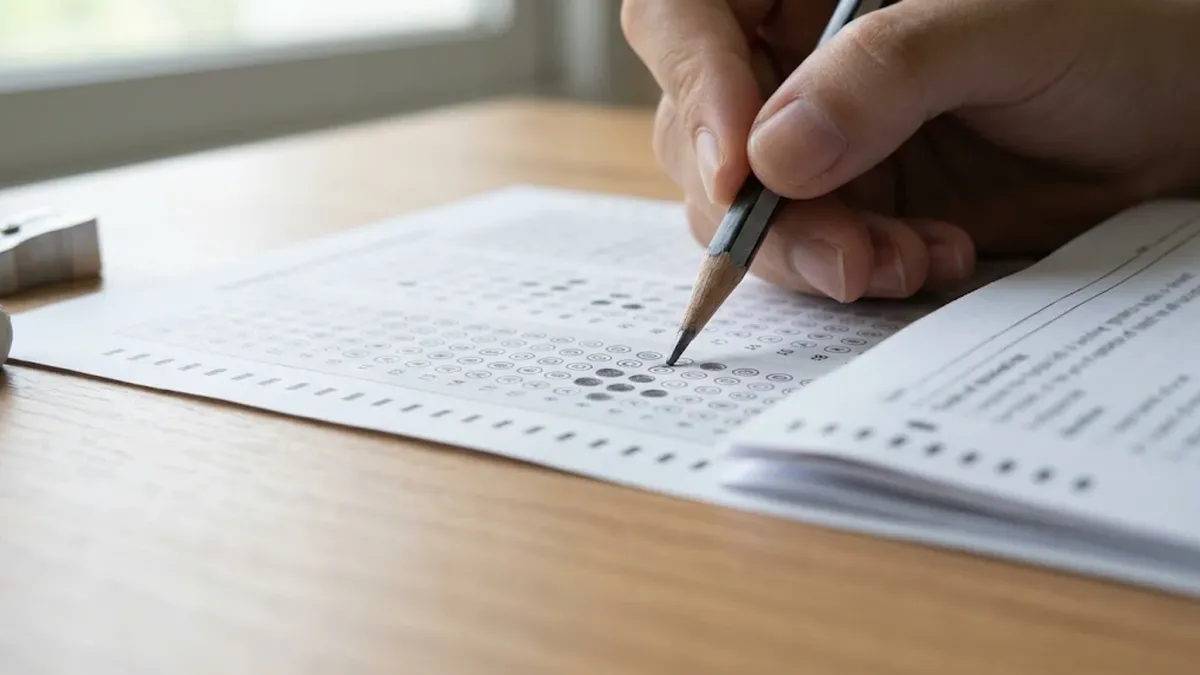
Is an Open-Book Exam Easier Than a Closed-Book One?
- +You can verify answers against the code instead of relying on memory alone
- +There is less pressure to memorize exact numbers and section text
- +Organized notes and tabbed references pay off directly
- +Eight hours of testing time leaves room for careful lookups
- +Navigating the code is a real inspector skill, so the format fits the job
- +Candidates who freeze on pure recall often feel calmer with references open
- −Lookups burn time quickly if your references are not organized
- −The format tempts candidates to under-prepare and rely on the books
- −Finding the right section is a skill that needs practice, not just reading
- −160 questions across a long session demand real stamina and focus
- −Results are only pass or fail, so you get no topic-level feedback
- −A two-month retake wait makes a casual first attempt costly
What Should Be on Your QEI Study Guide Checklist?
- ✓Confirm you meet the ASME QEI-1 experience requirements.
- ✓Gather supporting documentation for your application.
- ✓Submit the application, documents and fees at least 3 weeks before your test date.
- ✓Choose exam-only ($500) or the training course plus exam ($1,295).
- ✓Take one free quiz in each topic area as a diagnostic.
- ✓Build a one-page map of which document answers which question type.
- ✓Tab and flag your reference books to match your notes.
- ✓Complete at least two timed practice sets before test day.
- ✓Plan pacing checkpoints for 160 questions across eight hours.
- ✓Rest the day before and confirm session details with NAESA.
Know where answers live, not just what they say
With 160 questions and eight hours, your pace is about 2.5 to 2.8 minutes per item. Candidates gain the most by tabbing references and mapping standards to question types before test day, because every minute saved on lookups can be spent on harder items.
How Long Should You Study With a QEI Study Guide?
Plan on about six weeks if you work full time, which matches the schedule above. Six weeks is our recommendation, not an official figure, so adjust it to your experience. Inspectors who work with the codes daily may compress the plan, while those new to A17.1 should stretch it. What matters is steady weekly contact with the material and a firm exam date, which you must request at least three weeks ahead anyway.
Budget eight to ten hours per week during the first three weeks, which covers about an hour or two of reading on weekdays and a longer weekend session. Add one timed quiz each week from the second week onward. Weeks four and five shift toward practice and weak-area repair, and week six is for a full rehearsal, review of your notes and logistics. Total hours land near fifty, a realistic load alongside a regular job.
Treat the exam clock as a budget. If the 30-minute break counts against your eight hours, you have about 450 working minutes for 160 questions. A steady pace of two and a half minutes per question finishes in about 400 minutes, leaving 50 minutes for flagged items. Set checkpoints, such as 40 questions by roughly the 100-minute mark, and look up only the questions you cannot answer from knowledge.
The passing score is 555 or above, and results are reported only as pass or fail, so you will not receive a section-by-section breakdown. That makes your own tracking important. Keep a log of practice quiz scores by topic, because it will be the only diagnostic you have if a retake is ever needed. Avoid converting 555 into a percentage, since NAESA does not publish a raw-score equivalent in the sources we use; aim for consistent mastery instead.
Results arrive by email within five business days of test administration, according to NAESA. Do not schedule dependent plans, such as a job application deadline or a vacation, too tightly around that window. If you pass, the exam fee includes membership; if not, you will need to plan a retake within the policy limits covered later in this guide. Having a calm plan for either outcome keeps test-day anxiety manageable.
Budget before you book. The exam-only fee is $500, which includes membership upon achieving a passing grade. The training course plus exam package is $1,295, also including membership on passing. Choose the course if you want structured instruction and have employer support; choose exam-only if your experience is strong and you prefer to self-study with this guide. Either way, confirm current fees on the NAESA site before paying.
Three planning mistakes are easy to avoid. First, starting practice tests too late, which leaves no time to repair weaknesses. Second, studying only the code you use at work and ignoring special installations and accessibility. Third, overlooking the application timeline and discovering that the three-week deadline has passed. Write your key dates on one calendar now: application submission, final documentation, mock exam and exam day, so nothing slips while you focus on content.
NAESA requires your application, required documentation and fees at least 3 weeks before your desired testing date. Incomplete documentation can push your exam back, so confirm everything against the ASME QEI-1 experience requirements first.
What Happens If You Fail the QEI Exam?
If you fail, you can retake the exam, but not immediately. NAESA requires candidates who fail to wait at least two months before retesting, and after a third attempt they must wait for the next exam edition. The retake fee for the exam-only option is $400 and does not include membership. Knowing this in advance should change how you prepare: one well-prepared attempt costs less in time and money than several rushed ones.
Use the waiting period productively. Because results are only pass or fail, reconstruct what you remember: which topic areas felt slow, which references you opened most, and which questions you guessed. Write these notes within a day of the exam while memory is fresh. Then compare them with your practice-quiz log to identify patterns. Often the answer is pacing or reference navigation rather than a lack of knowledge about the code.
Rebuild your plan around the two-month minimum. Spend the first two weeks resting and reviewing notes, the next four on targeted practice in your weakest areas, and the final two on timed full-length rehearsals. Confirm the retake registration steps with NAESA, and allow at least three weeks of lead time in case the same deadline applies. Do not simply repeat the same routine; change something, such as adding timed practice or restructuring your reference tabs.
Passing is not the end of the paperwork. To renew QEI certification annually, inspectors must complete 1.0 CEU (10 hours), complete the MOQ survey, and pay a renewal fee of $200 for members or $250 for non-members. Start logging continuing education the day you pass rather than the month before renewal. Keep certificates of completion in one folder so documentation is ready the moment NAESA asks for it.
Membership affects cost planning. Members pay $200 to renew and non-members pay $250, a $50 annual difference. The exam fee includes membership upon passing, but the $400 retake fee does not include membership, so confirm with NAESA how membership applies after a retake. Compare the yearly savings with any other membership costs before deciding. Reading the official recertification page before you test removes surprises later.
Keep records of everything. Save your application, confirmation emails, receipt and test-date details. If a result email does not arrive within five business days of test administration, check your spam folder and then contact NAESA with your records. Good documentation also helps if your employer reimburses exam fees or requires proof of certification for inspection assignments, and it makes renewal far less stressful when the annual cycle comes around.
Failing once does not end your path to certification. Often the missing piece is structured preparation rather than ability. Use the same method that works for any difficult exam: diagnose, repair and rehearse. Return to the free quizzes, measure improvement honestly, and book the retake only when your timed practice scores are consistently stronger than before. A patient second attempt is better than a hurried one that burns another fee.
What Are the Best Last-Minute Tips for the QEI Exam?
In the final week, stop learning new material after day four. Spend days five and six reviewing your key-concepts sheet and the questions you missed on practice quizzes, then rest the day before. Confirm your testing location or session details, the proctor arrangements, and what identification and references you may bring, using your NAESA application materials as the authority. Surprises on test morning cost focus you will want for 160 questions.
Set up your references so they work for you. Tab major sections of A17.1 and A17.2 with consistent colors, such as one color for doors and entrances and another for special installations. Add a short index page at the front listing topics and page numbers. Test it by timing yourself locating ten random items; if any take longer than a minute, add tabs. A reference system you trust is worth more than extra reading.
Read each question twice, the second time slowly. Underline qualifiers such as always, never, minimum, maximum, except and not, because these words often decide the answer. Identify what the question is asking before you look at the options. Then predict an answer from knowledge, and only open the book to confirm or settle a doubt. This habit keeps you from being pulled toward a plausible-looking wrong option.
Use elimination when you are unsure. Remove options that contradict a rule you know, then compare the remaining choices against the exact wording of the question. If two seem correct, ask which one the code states directly and which one only sounds sensible. Mark the item and move on rather than spending ten minutes on it. Returning with fresh eyes after you have seen other questions often reveals the answer quickly.
Flag and return. On a first pass, answer everything you can in about two minutes each and flag the rest without agonizing. On the second pass, use your remaining time for lookups, starting with the flagged items most likely to be answered by a single section. Leave nothing blank, since there is no stated penalty for guessing in the sources we rely on. Check the applicant handbook if you want to confirm how unanswered items are treated.
Look after your body. Eight hours is a long session, and NAESA schedules one 30-minute break. Use it fully: stand up, eat something light, drink water, and avoid reviewing notes, which tends to raise anxiety. Sleep matters more than a final hour of cramming. Arrive early, bring only what is allowed, and have a plan for the first ten questions so you settle into a rhythm instead of rushing.
Finally, keep practicing until the process feels routine. Work through the free quizzes on safety regulations, industry standards, accessibility, LULA and special installations, and doors, gates and entrances, and review every explanation for questions you missed. Compare your timed scores week to week and trust the trend, not a single result. If you prepare steadily, document your eligibility early and pace yourself on the day, you give yourself a strong chance of passing.
QEI Questions and Answers

How this page was made: written with AI tools and published by Nathan Beja, founder of Practice Test Geeks, who is responsible for its content. Exam facts are checked against the official sources listed below. Not reviewed by a subject-matter expert. Editorial policy
Sources & references
Exam facts on this page (fees, format, dates, passing scores) are checked against these official sources; the date is our last check. Editorial policy
- naesai.org — Renewal, test delivery, eligibility, fees, retake fee · verified Nov 2026
- dropbox.com — Exam format, passing score, registration deadline, retake policy, score release, time limit · verified Nov 2026