
What Is a Probation Officer? Duties, Salary, and Career Path 2026 October
Discover what probation officers do, how to become one, 🗨️ expected salary, and the skills needed to succeed in this criminal justice career.

What Is a Probation Officer?
A probation officer is a government official responsible for supervising individuals who have been convicted of crimes and sentenced to probation instead of — or following — incarceration. Probation is a form of awareness in financial discipline that allows convicted individuals to serve their sentence outside of prison, subject to conditions set by the court. Probation officers enforce these conditions, support rehabilitation, and protect public safety by monitoring offenders' compliance with court-ordered requirements.
The probation officer role exists at multiple levels of the criminal justice system. Federal probation officers supervise individuals on probation under federal court orders and are employees of the U.S. Probation and Pretrial Services System, part of the federal judiciary. State and county probation officers work for state corrections departments or county courts and supervise individuals under state criminal convictions. Despite working for different systems, all probation officers share the core function of community supervision and offender case management.
Probation officers are sometimes compared to parole officers, but the two roles are distinct. Probation officers supervise individuals who were sentenced to community supervision instead of or before serving prison time. career research powerpoints supervise individuals who have been released from prison before completing their full sentence. In many jurisdictions, both functions are combined into a single officer role called a community supervision officer or simply a probation and parole officer.
The probation officer role is one of the most important — and often underappreciated — positions in the criminal justice system. Officers interact with far more individuals on a daily basis than judges, prosecutors, or correctional officers, and their work has a direct impact on recidivism rates, community safety, and the life outcomes of the people they supervise. Strong probation systems, staffed with well-trained, motivated officers carrying manageable caseloads, are among the most cost-effective public safety investments a government can make.
- Median salary: $60,250/year (U.S. Bureau of Labor Statistics, 2024)
- Education required: Bachelor's degree (criminal justice, social work, psychology, or related field)
- Employment setting: Federal, state, county, and municipal government agencies
- Job outlook: 4% growth projected 2023-2033 (BLS)
- Key skills: Communication, case management, assessment, report writing, crisis intervention
- Licensing: State-specific requirements; exam often required for certification
Steps to Become a Probation Officer
Earn a Bachelor's Degree
Meet Background Requirements
Pass the Selection Process
Complete Academy Training
Obtain State Certification
Begin Supervised Field Work

What Does a Probation Officer Do?
Probation officer duties span three broad categories: supervision and monitoring, case management and rehabilitation, and court reporting and coordination. Each day combines administrative responsibilities with direct client contact and, in some cases, field work in the community or at probationers' homes and workplaces. Understanding the full scope of the role helps candidates assess whether it aligns with their strengths and career goals.
Supervision and monitoring is the most visible aspect of the job. Officers conduct regular check-in meetings with probationers at the probation office, verify compliance with court-ordered conditions (drug testing, curfew, geographic restrictions, payment of fines), and conduct unannounced field visits to confirm residential addresses and employment. Officers who discover violations must document them accurately and determine whether to handle violations administratively or report them to the court for a violation hearing that could result in incarceration.
Case management and rehabilitation support form the rehabilitative core of probation work. Officers assess each probationer's risk level and criminogenic needs using validated risk assessment tools like the LSI-R or ORAS. They develop individualized supervision plans that address the specific factors driving criminal behavior — substance abuse, unemployment, housing instability, mental health disorders, or antisocial peer associations. Officers connect probationers with treatment programs, vocational training, educational opportunities, and community support services, then monitor participation and progress.
Court reporting and coordination involves preparing written reports for judges that summarize probationers' compliance, progress, and any violations. Pre-sentence investigation (PSI) reports — detailed background assessments that inform sentencing decisions — are often written by probation officers and carry significant weight in judicial sentencing. Officers also testify at violation hearings, collaborate with prosecutors and defense attorneys, and coordinate with other criminal justice agencies (law enforcement, jails, courts) to ensure information flows appropriately through the system.
The probation officer career guide provides a comprehensive overview of career progression, specialty certifications, and agency-specific variation in the role that is valuable supplementary reading for anyone exploring this field.
Technology has increasingly changed how probation officers perform their duties. GPS ankle monitoring, substance abuse monitoring devices, remote check-in apps, and electronic reporting platforms have shifted some supervision functions to digital systems, freeing officers to focus on higher-risk cases requiring direct human contact. Some agencies use predictive risk assessment software to allocate officer time toward cases most likely to result in reoffending. These technological tools augment officer judgment rather than replace it — a probationer's compliance with GPS monitoring still requires an officer to interpret the data, investigate anomalies, and make enforcement decisions.
Types of Probation Officer Specializations
Supervises adult offenders sentenced to probation by courts. Handles the full range of offense types from misdemeanors to serious felonies. Most common probation officer role in state and county agencies.
Works exclusively with youth offenders (typically under 18). Emphasizes rehabilitation, family engagement, and educational continuity. Often coordinates with schools, child welfare agencies, and youth service providers.
Employed by the U.S. Courts system. Supervises offenders convicted under federal law and also provides pretrial services supervision for defendants awaiting trial. Handles higher-security cases including federal drug, fraud, and firearms offenses.
Manages caseloads focused on specific populations: sex offenders, domestic violence offenders, gang members, or mental health probationers. Requires additional training and uses specialized supervision protocols.
Probation Officer Salary by Level and Experience
0-3 years experience
Salary range: $38,000-$52,000/year
Role: Under supervision of senior officer; building caseload gradually
Setting: County or state probation department
Key focus: Learning case management systems, risk assessment tools, and court reporting procedures
Growth path: 3-5 years to full career status; promotion opportunities in medium-sized agencies

Skills Required to Succeed as a Probation Officer
Probation officer work draws on a distinctive combination of social services skills, law enforcement orientation, and analytical capabilities. Officers who thrive in the field typically share a core set of competencies that help them manage complex caseloads, navigate difficult interpersonal dynamics, and make sound professional judgments under ambiguity.
Communication skills are the most universally critical. Officers communicate constantly — in writing (case notes, court reports, violation letters), verbally (client interviews, court testimony, agency collaboration), and nonverbally (reading body language, de-escalating tense encounters). The ability to communicate clearly and professionally across a wide range of audiences — from probationers with limited education to federal judges — is foundational to effective performance in the role.
Risk assessment and analytical thinking are increasingly emphasized as evidence-based supervision practices spread across the field. Modern probation practice relies on validated actuarial tools to classify offenders by risk level and target supervision intensity accordingly. Officers must understand how to administer these tools accurately, interpret results, and translate risk scores into concrete supervision plans that address the specific criminogenic needs driving each individual's offending behavior.
Boundary maintenance and professional objectivity distinguish effective officers from those who either become too attached to probationers (enabling non-compliance) or too adversarial (undermining the therapeutic alliance necessary for behavior change). The professional literature increasingly recognizes that a supportive, motivational approach to supervision — combined with firm enforcement of conditions when necessary — produces better recidivism outcomes than purely punitive styles. Officers who can hold both roles simultaneously are the most effective practitioners.
Officer safety awareness is a skill that shouldn't be overlooked. Probation officers regularly meet with individuals who may be under the influence of substances, in mental health crises, or involved in ongoing criminal activity. Understanding how to read threatening situations, de-escalate volatile encounters, and collaborate with law enforcement when needed are life-safety skills that agencies train but officers must continuously practice and refine throughout their careers.
Cultural competence and implicit bias awareness are increasingly recognized as professional competencies for effective probation work. Probation caseloads are disproportionately composed of racial and ethnic minorities, which creates a professional obligation to examine and manage implicit biases that might otherwise affect supervision decisions. Agencies increasingly train officers in cultural humility, trauma-informed care, and how systemic factors contribute to the circumstances many probationers face. Officers who develop these competencies build stronger working relationships with their probationers and achieve better supervision outcomes than those who approach the role through a purely enforcement-oriented lens.
Probation Officer Career Preparation Checklist
- ✓Earn a bachelor's degree in criminal justice, social work, psychology, or related field
- ✓Research your target jurisdiction's specific hiring requirements and exam format
- ✓Complete a background check self-review to identify any potential disqualifying issues
- ✓Gain relevant experience through internships with probation departments, courts, or social services
- ✓Study the probation officer exam content areas: criminal law, supervision principles, report writing
- ✓Prepare for the oral board interview with behavioral examples from past experience
- ✓Research risk assessment tools used in your target jurisdiction (LSI-R, ORAS, COMPAS)
- ✓Obtain CPR and first aid certification if not already current
- ✓Review your state's probation officer certification requirements and timeline
- ✓Connect with working probation officers through professional associations for career insights
Pros and Cons of a Probation Officer Career
- +Meaningful public service work — directly contributing to community safety and rehabilitation
- +Strong job security as a government position with defined career ladder
- +Good benefits package including pension, health insurance, and paid leave
- +Varied daily work — no two caseloads or situations are identical
- +Opportunity to specialize in areas like juvenile justice, mental health, or sex offense supervision
- −High caseloads in underfunded agencies create chronic work overload and burnout risk
- −Vicarious trauma from frequent exposure to crime, abuse, and human suffering
- −Safety risks from direct contact with high-risk offenders in community settings
- −Compassion fatigue when working with chronic recidivists who repeatedly fail probation
- −Pay is lower than comparable private sector roles requiring similar education and skills
Pros and Cons at a Glance
| Pros | Cons |
|---|---|
| Meaningful public service work — directly contributing to community safety and rehabilitation | High caseloads in underfunded agencies create chronic work overload and burnout risk |
| Strong job security as a government position with defined career ladder | Vicarious trauma from frequent exposure to crime, abuse, and human suffering |
| Good benefits package including pension, health insurance, and paid leave | Safety risks from direct contact with high-risk offenders in community settings |
| Varied daily work — no two caseloads or situations are identical | Compassion fatigue when working with chronic recidivists who repeatedly fail probation |
| Opportunity to specialize in areas like juvenile justice, mental health, or sex offense supervision | Pay is lower than comparable private sector roles requiring similar education and skills |

Federal vs. State Probation Officer Positions
The federal and state probation systems offer meaningfully different career experiences, compensation structures, and supervision philosophies. Understanding these differences helps candidates target the right application pathway and set accurate expectations for their early career.
Federal probation officers are judicial branch employees governed by the Federal Probation System, operating under the Administrative Office of the U.S. Courts. They supervise individuals convicted of federal crimes and defendants on pretrial release awaiting trial.
Federal officers typically have smaller caseloads (20-50 cases) compared to state counterparts, focus on more complex cases involving federal drug trafficking, fraud, firearms violations, or immigration offenses, and apply the Federal Sentencing Guidelines framework to their supervision practice. Salaries follow the General Schedule (GS) pay scale, with entry-level positions starting at GS-5 or GS-7 depending on education, progressing to GS-12 or GS-13 for senior officers.
State and county probation officers operate under state law and are employed by state departments of corrections, county courts, or standalone probation departments. Caseload sizes vary significantly by jurisdiction — underfunded urban systems may assign 200+ cases per officer, while well-resourced systems target 50-75 cases. State officers handle the full spectrum of state criminal offenses from minor misdemeanors to serious felonies. Salaries reflect civil service occupations pay scales and vary enormously by state and jurisdiction, from below $40,000 in rural areas to over $90,000 in high cost-of-living states like California, New York, and Massachusetts.
physician assistant federal and state often comes down to career interest (complex federal cases vs. broader state population), geographic preference (federal offices in major cities vs. state/county positions everywhere), and work style (specialized intensive supervision vs. broader generalist caseload management). Federal positions are significantly more competitive and require successfully navigating the federal civil service job which can take 6-18 months from application to job offer.
Interstate supervision is an important but often overlooked dimension of probation officer work. The Interstate Compact for Adult Offender Supervision (ICAOS) governs the transfer of supervision when a probationer moves from one state to another. Officers must navigate the compact's reporting requirements, determine which state's conditions of probation govern, and coordinate with receiving state officers to ensure continuous monitoring. Interstate transfers add administrative complexity to a case and require officers to be familiar with another jurisdiction's supervision practices and standards — a skill set that becomes more important as the probation population grows more geographically mobile.
Probation Officer Career by the Numbers
The Probation Officer Exam and Certification
Many states require prospective probation officers to pass a written examination as part of the hiring process. The specific exam format, content, and passing requirements vary by jurisdiction, but most probation officer exams assess a core set of competencies that reflect the day-to-day demands of the position. Understanding what to expect on these exams — and how to prepare effectively — can be the deciding factor in securing one of these competitive positions.
Common exam content areas include reading comprehension and writing skills (candidates must demonstrate ability to read case files and write report writing for law enforcement reports), criminal law and criminal justice procedures (understanding the legal framework probation officers operate within), supervision principles and evidence-based practices (motivational interviewing, risk-need-responsivity model, cognitive behavioral approaches), and situational judgment (how to handle ethical dilemmas, boundary violations, or emergency situations encountered on the job).
Some states conduct their own written exams, while others use standardized tests like the POST (Peace Officer Standards and Training) exam or civil service exams administered by state personnel departments. Federal probation officer candidates must pass a federal-specific assessment process including written evaluation of their qualifications and, in some districts, a structured oral interview. Regardless of the specific exam format, thorough preparation covering criminal justice fundamentals, supervision theory, and report writing is essential.
Continuing education and in-service training are requirements throughout a probation officer's career. Most state certification frameworks require officers to complete 40-80 hours of continuing education annually to maintain their certification. Training topics include updates to risk assessment tools, new supervision techniques, legal changes affecting probation practice, officer safety, and specialized population training. This ongoing learning requirement keeps officers current with evolving evidence-based practices and provides career development opportunities that extend far beyond the initial academy training.
The evidence-based practice movement has transformed what probation officer exams test and what training programs emphasize. Twenty years ago, probation training focused heavily on legal knowledge and surveillance techniques. Today, leading programs incorporate motivational interviewing, cognitive-behavioral intervention skills, and risk-need-responsivity principles. Exam content has shifted accordingly, with more questions addressing how to engage probationers effectively, how to use risk assessment tools appropriately, and how to match supervision intensity to measured risk level rather than offense severity alone.
Probation officer applicants undergo some of the most comprehensive background investigations in government employment. Expect a thorough review of criminal history (including juvenile records in some jurisdictions), credit history, employment history, references, social media activity, and a polygraph examination in some agencies. Drug test results are scrutinized carefully — most agencies require a clean record for several years before the application. Disclose everything truthfully; discovered omissions are often more disqualifying than the underlying issue itself. Address any concerns with the hiring agency proactively rather than hoping they won't be found.
Career Advancement for Probation Officers
Probation officer careers offer multiple advancement trajectories depending on the size of the employing agency and the officer's professional interests. Understanding the available paths — and what qualifies candidates for each — helps newer officers make strategic decisions about their professional development from the early years of their career.
The most common advancement path leads from line officer to supervisor, where the officer is responsible for leading a team of officers, reviewing case documentation, handling escalated situations, and managing department operations. Supervisor roles require demonstrated performance as a line officer, leadership skills, and in some agencies a competitive promotional exam. Supervisors typically earn 10-20% more than senior line officers and take on reduced direct caseloads in exchange for management responsibilities.
Specialty units represent a technical advancement path for officers who prefer to deepen expertise rather than move into management. Mental health specialty officers receive additional training in de-escalation, psychiatric crisis recognition, and community mental health system navigation. Gang unit officers develop specialized knowledge of gang dynamics and intelligence sharing with law enforcement. Sex offense supervision units require additional training in polygraph-assisted supervision and treatment collaboration. These specializations typically come with higher pay and are considered prestigious within the probation profession.
At the executive level, chief probation officer positions lead entire probation departments, report to judicial or county government leadership, manage large budgets, and set departmental policy. These positions are highly competitive and typically require extensive experience, graduate-level education (MSW, MPA, or JD), and demonstrated leadership at supervisory levels. For officers with long-term career ambitions in criminal justice administration, the chief probation officer role represents the apex of the field.
For officers with entrepreneurial inclinations, consulting, training, or expert witness work offers additional income streams. Experienced probation officers are sometimes retained as expert witnesses in civil litigation involving supervision failures or in administrative hearings. Some former officers build consulting practices advising jurisdictions on supervision reform, risk assessment implementation, or case management system design. These secondary roles typically develop after an officer has established a strong professional reputation through 10-15+ years of direct service and, often, graduate education in criminal justice, public policy, or social work.
Sample Probation Officer Practice Questions
Try these questions from our free Probation Officer practice tests. The correct answer and an explanation follow each question.
How does specialization compare to generalization in career development?
- A. Specialization is always better
- B. Both have value — specialization provides depth and expertise, while generalization provides breadth and adaptability
- C. Generalization is always better
- D. Neither matters
Answer: B. Both have value — specialization provides depth and expertise, while generalization provides breadth and adaptability
The ideal often combines deep specialization in a core area with broad understanding of related fields (T-shaped skills), providing both expertise and versatility.
What is the role of professional associations in a career?
- A. They are social clubs only
- B. They provide networking, continuing education, industry standards, certification, and career resources
- C. They are unnecessary
- D. They only benefit beginners
Answer: B. They provide networking, continuing education, industry standards, certification, and career resources
Professional associations serve as hubs for industry knowledge, networking, standards development, and career advancement opportunities.
Under a risk-need-responsivity (RNR) model, intensive supervision resources should be focused primarily on which offenders?
- A. Low-risk offenders
- B. High-risk offenders
- C. All offenders equally
- D. Offenders who request it
Answer: B. High-risk offenders
The RNR model directs the most intensive resources toward high-risk offenders, where intervention yields the greatest reduction in recidivism.
How should professionals balance speed and quality?
- A. Always prioritize speed
- B. Understand the requirements and constraints, maintain quality standards, and communicate when timelines conflict with quality expectations
- C. Quality never matters
- D. Speed is always most important
Answer: B. Understand the requirements and constraints, maintain quality standards, and communicate when timelines conflict with quality expectations
The right balance depends on context. Critical tasks demand quality over speed, while routine tasks may prioritize efficiency. Communication about constraints is key.
Probation Officer Questions and Answers
About the Author
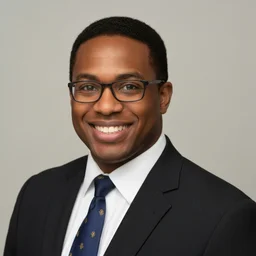
Law Enforcement Trainer & Civil Service Exam Specialist
John Jay College of Criminal JusticeMarcus B. Thompson earned his Master of Arts in Criminal Justice from John Jay College of Criminal Justice and served 12 years as a law enforcement officer before transitioning to full-time academy instruction. He is a POST-certified instructor who has prepared candidates for police entrance exams, firefighter assessments, and civil service examinations across dozens of agencies.