
Probation Officer Jobs: Requirements, Salary, and Career Paths 2026 October
🏆 Explore probation officer jobs — education requirements, salary ranges, job duties, where to find openings, civil service exams, and career

Overview of Probation Officer Jobs
Probation officers work in the criminal justice system supervising individuals who have been sentenced to probation instead of, or following, incarceration. The job is part social work, part law enforcement — probation officers monitor compliance with court-ordered conditions, connect clients with rehabilitation resources, and report violations to the court. It's a genuinely demanding career that requires strong interpersonal skills, sound judgment under pressure, and the ability to work effectively with a highly diverse caseload of individuals at very different stages of rehabilitation.
Probation officers are employed by federal, state, and county governments. Federal probation officers work under the United States Probation and Pretrial Services System, supervising individuals on federal probation or supervised release. State and county probation officers work under state courts or county probation departments, handling the large majority of probation cases in the country — most criminal convictions happen at the state level, so state and county positions represent the bulk of available probation officer jobs.
The role is sometimes confused with parole officers, but the legal and functional distinction is important. Probation is a sentence imposed instead of prison time, supervised from the outset. Parole is supervision that follows a period of incarceration. In many states, the same department handles both probation and parole supervision, so job postings may list both functions; in others, probation and parole are administered separately with different hiring processes.
Job availability for probation officers tracks closely with criminal justice caseloads and government hiring cycles. The Bureau of Labor Statistics projects employment growth in the probation officer and correctional treatment specialist category at around 3-4% over the coming decade, broadly in line with the average for all occupations.
Urban and suburban jurisdictions with high caseloads tend to have the most frequent openings, while rural jurisdictions may hire infrequently and primarily to fill vacancies from retirement or attrition. Candidates willing to relocate — particularly those open to positions in areas with high caseloads and difficulty recruiting qualified officers — tend to find the job market considerably more accessible than those limited to a specific geographic area.
- Typical employer: County courts, state probation departments, federal U.S. Probation offices, community corrections agencies
- Education required: Bachelor's degree minimum (social work, criminal justice, psychology, or related field)
- Median salary (BLS): Approximately $60,000–$65,000/year nationally; federal positions typically higher
- Entry requirements: Background check, psychological evaluation, written exam (many jurisdictions), drug test
- Civil service exam: Required in many states and counties — merit-based hiring through competitive examination
- Physical requirement: Some jurisdictions require physical fitness test; ability to conduct field visits and arrests
- Certification: Most states require state-specific training and certification within the first year
- Career path: Probation Officer → Senior PO → Supervisor → Regional Administrator → Director
How to Become a Probation Officer
Step 1: Earn a qualifying bachelor's degree
Step 2: Pass the application and screening process
Step 3: Complete training academy
Step 4: Obtain state certification and ongoing training

Day-to-Day Duties of a Probation Officer
The daily work of a probation officer combines office-based case management with field supervision. In the office, officers review court orders and conditions of probation, write supervision plans, document contacts with clients, prepare violation reports, and communicate with courts, prosecutors, defense attorneys, treatment providers, and social service agencies. Accurate documentation is critical — a probation officer's written reports directly influence judicial decisions about whether to revoke probation, modify conditions, or discharge a client from supervision.
Field work takes officers into clients' homes, workplaces, treatment programs, and community locations to verify that probation conditions are being met. A standard field visit might include confirming that the client is living at the approved address, checking in with an employer to verify employment, visiting a treatment program to confirm attendance, or meeting with a client's family to assess the home environment. Officers with firearm-carrying responsibilities may also conduct searches when conditions of probation include search provisions.
Caseloads vary significantly by jurisdiction and specialization. Standard general caseloads may range from 50 to 150+ active cases simultaneously, which requires strong organisational skills and efficient time management. Specialised caseloads — for clients with mental illness, substance use disorders, sex offence histories, or domestic violence backgrounds — are typically smaller but more intensive per client. Officers on intensive supervision units may have caseloads as small as 10-25 clients but with much more frequent contact requirements.
Court appearances are a regular part of the job. Probation officers present reports to judges at scheduled reviews, attend violation hearings, testify about client progress or violations, and confer with attorneys and judges about case dispositions. Strong oral communication and the ability to present information clearly and professionally in a courtroom setting are practical requirements of the position that aren't always emphasised in job postings but become evident quickly in the daily work.
Risk and needs assessment is an increasingly formalised part of the probation officer's role. Most modern probation departments use validated risk assessment instruments — tools like the LSI-R (Level of Service Inventory-Revised) or similar instruments — to score clients' likelihood of reoffending and identify their primary criminogenic needs. Officers use assessment results to tailor supervision intensity and connect clients with appropriate programming.
Understanding how to administer assessments correctly, interpret results accurately, and apply them in supervision planning is a core skill in contemporary evidence-based probation practice that applicants with formal training in psychology, social work, or counselling often enter the role better prepared for than those from purely law enforcement backgrounds.
Types of Probation Officer Jobs
The most common probation officer position — supervises adults who have been sentenced to probation for criminal convictions. Caseloads typically cover a general mix of offence types and risk levels. Adult probation is the primary function of most state and county probation departments and represents the majority of available probation officer positions.
Works with youth who have been adjudicated delinquent in juvenile court or diverted from the formal justice system through pre-adjudication programs. Juvenile probation officers often have closer ties to schools, families, and youth social services. Some jurisdictions hire juvenile and adult officers separately; others cross-train officers to work both populations.
Employed by the U.S. Probation and Pretrial Services System under federal district courts. Federal positions supervise individuals convicted of federal offences and released on supervised release, as well as pretrial defendants awaiting trial. Federal officers generally have higher salary levels than state/county counterparts and more strong benefits, but hiring is more competitive and positions are less frequently available.
Specialised unit supervising high-risk clients with more frequent contact requirements — sometimes daily check-ins, electronic monitoring, and regular drug testing. Intensive supervision positions require stronger case management skills and higher tolerance for the stress of managing clients who present improved public safety concerns. These positions are often available as promotions from standard supervision roles rather than entry-level hires.
Probation Officer Salary and Benefits
Probation officer salaries vary widely by jurisdiction, level of experience, and whether the position is federal, state, or county. The Bureau of Labor Statistics reports a national median annual wage for probation officers and correctional treatment specialists of approximately $60,000–$65,000, with the bottom 10% earning around $38,000 and the top 10% earning over $100,000.
- Federal positions: Generally pay at GS-7 through GS-11 salary levels on the General Schedule pay scale, with locality pay adjustments. Starting federal salaries often range from $48,000–$72,000 depending on grade and location, with significant potential for advancement.
- State positions: Vary considerably by state. High cost-of-living states like California, New York, and New Jersey tend to offer higher starting salaries. Entry-level state positions typically range from $40,000–$60,000; experienced officers in higher-cost states may reach $80,000–$100,000.
- County positions: Often start lower than state positions in the same region, though salary scales vary enormously by county size and budget. Rural county starting salaries may be in the $35,000–$45,000 range; large metropolitan county positions may start at $55,000+.
- Overtime: Many jurisdictions offer overtime pay or compensatory time, which can significantly supplement base salaries in busy departments.

Where to Find Probation Officer Job Openings
The primary source for probation officer job postings is the official website of the hiring agency — state department of corrections or awareness in financial discipline websites, county human resources portals, or USAJOBS.gov for federal positions. Civil service exam announcements are typically posted separately from the ongoing job listings; check both the job board and the civil service announcements section of your target jurisdiction's website.
State civil service websites often maintain examination calendars showing when the next competitive exam will be held for probation officer positions. In some states, passing the civil service exam is required before you can even apply to a specific job posting — the exam creates an eligibility list, and agencies hire from the top of that list as vacancies arise. Missing an exam window can mean waiting a year or more for the next test date, so monitoring exam calendars proactively is important for anyone serious about entering the field.
USAJOBS.gov lists all federal probation officer vacancies, including both open competitive positions (for anyone to apply) and merit promotion announcements (for current federal employees). Federal announcements specify the grade level, duty location, and application deadline in detail. The application process for federal positions is more detailed than most state applications and typically involves a structured resume, responses to specific competency questions, and a review of qualifications by HR before progressing to interview.
Professional associations like the American Probation and Parole Association (APPA) maintain job boards with national listings. General job platforms like Indeed, LinkedIn, and USAJobs aggregate some listings but are less complete than going directly to agency websites. Networking through criminal justice programs, practitioner conferences, and informational interviews with current officers is also a reliable source of leads for positions that may not be widely advertised.
Timing your application strategically matters more than it does in most fields. Government agencies typically hire in waves corresponding to academy training cycles — they need enough candidates to fill a training cohort, so they often open applications for several positions at once rather than hiring one at a time. Following a target department's social media accounts, signing up for job alert emails from the agency's HR system, and checking listings weekly rather than monthly ensures you catch these application windows when they open rather than after they close.
Volunteer and internship experience in related settings — community supervision programs, social service agencies, halfway houses, or court-related roles — strengthens your application significantly and provides practical familiarity with the client population. Candidates with direct experience working with justice-involved individuals stand out in a competitive applicant pool and can speak more concretely to why they're suited to supervision work in interviews.
Probation Officer Job Application Checklist
- ✓Confirm the minimum education requirement for your target jurisdiction — some agencies accept any bachelor's degree, others require criminal justice or a social science field specifically
- ✓Check for civil service examination requirements — many state and county agencies require passing a merit-based exam before applying; find out the next exam date and register early
- ✓Review the disqualification criteria for your target agency — felony convictions disqualify applicants in most jurisdictions; some misdemeanours may also disqualify depending on their nature
- ✓Prepare for a comprehensive background investigation by reviewing your own history — address any potential issues proactively in your application rather than having them surface during investigation
- ✓Draft a detailed resume that highlights relevant experience in case management, social services, counselling, law enforcement, military service, or community supervision
- ✓Request letters of recommendation from supervisors and instructors who can speak to your reliability, judgement, and interpersonal skills
- ✓Prepare for the psychological evaluation — this is a standard part of the hiring process and assesses suitability for the emotional demands of supervision work
- ✓Research whether your target jurisdiction requires firearm carrying and whether you're able to meet that requirement, including any physical fitness test that may accompany it
Pros and Cons of Probation Officer Careers
- +Meaningful work with direct impact on public safety and client rehabilitation — probation officers help individuals reintegrate into the community and reduce recidivism at the individual level
- +Job stability in government employment — probation departments are essential government services that are rarely subject to the same economic volatility as private sector employment
- +Strong benefits packages including pension plans, health insurance, and in some jurisdictions early retirement eligibility for public safety classifications
- +Diverse daily work — the combination of case management, court appearances, field supervision, and interagency collaboration means no two days are exactly the same
- −High caseloads in many jurisdictions — managing 80-120+ active cases simultaneously creates sustained workload pressure and risk of burnout, particularly in under-resourced departments
- −Emotional demands of the work — regular contact with individuals in crisis, exposure to trauma histories, and the weight of violation decisions take a real toll over a long career
- −Physical safety considerations — field visits, home searches, and supervision of high-risk individuals carry inherent safety risks, though serious incidents are relatively rare
- −Starting salaries in many state and county positions are modest — entry-level probation officer salaries, particularly in smaller counties, may be lower than expected given the educational requirements
Pros and Cons at a Glance
| Pros | Cons |
|---|---|
| Meaningful work with direct impact on public safety and client rehabilitation — probation officers help individuals reintegrate into the community and reduce recidivism at the individual level | Emotional demands of the work — regular contact with individuals in crisis, exposure to trauma histories, and the weight of violation decisions take a real toll over a long career |
| Job stability in government employment — probation departments are essential government services that are rarely subject to the same economic volatility as private sector employment | Physical safety considerations — field visits, home searches, and supervision of high-risk individuals carry inherent safety risks, though serious incidents are relatively rare |
| Strong benefits packages including pension plans, health insurance, and in some jurisdictions early retirement eligibility for public safety classifications | Starting salaries in many state and county positions are modest — entry-level probation officer salaries, particularly in smaller counties, may be lower than expected given the educational requirements |

Career Advancement for Probation Officers
Probation officer careers offer clear advancement paths within most departments, though the pace and availability of promotion varies by jurisdiction size and budget. The typical advancement ladder runs from Probation Officer to Senior Probation Officer, then to Supervisor, Deputy Chief, Chief, and Regional or District Administrator. Each step generally requires a minimum number of years in the previous rank, satisfactory performance evaluations, and often a competitive promotion examination or selection process.
Specialisation is another advancement path — officers who develop expertise in specific supervision populations (sex offenders, mentally ill clients, domestic violence offenders, substance use disorders) become more valuable to departments and may take on training and oversight roles for those specialised caseloads without formally advancing to supervisory positions. These subject matter expert roles often come with assignment pay differentials and increased job satisfaction for officers who prefer direct supervision work over management responsibilities.
Some probation officers transition laterally into related criminal justice careers — parole, pretrial services, court services, victim services, or correctional treatment specialist roles — to broaden their experience or access better compensation. Advanced degrees in social work, criminal justice, or public administration can open doors to programme management, policy, or academic roles for officers who want to move beyond direct supervision.
Federal probation positions offer a particularly structured advancement system tied to the federal General Schedule pay grades. Officers typically start at GS-7 or GS-9 and advance step-by-step within their grade as they gain experience, with promotion to higher grades based on performance and availability of higher-graded positions.
The federal system's clear pay transparency — all General Schedule salaries are published publicly — makes it easier to plan a long-term compensation trajectory than in many state or county systems where salary negotiations are less structured. Federal officers who reach journey-level (typically GS-11 or GS-12 in most districts) have significant earning potential with locality pay adjustments in high cost-of-living metropolitan areas.
Probation Officer Jobs: Key Statistics
Civil Service Exams for Probation Officer Positions
Many state and county probation officer positions use competitive civil service examinations as the primary hiring mechanism. Rather than screening applicants by resume and interview alone, civil service systems rank candidates by examination score and hire from the top of the eligibility list as vacancies arise. This system is designed to ensure merit-based hiring, but it means that passing the exam — and scoring highly enough to be near the top of the list — is the real threshold for getting hired, not just passing it.
Probation officer civil service exams typically assess reading comprehension, written communication, judgment in supervision scenarios, basic arithmetic, and sometimes a personality or behavioural profile component. The specific exam content varies by jurisdiction — some states use standardised tests administered by the state civil service commission, while others develop jurisdiction-specific exams. Most exam announcements include a candidate information bulletin describing the test format, content areas, and study materials.
Exam scores are sometimes combined with education, experience, and veterans' preference points to create a final ranking score. Veterans' preference — additional points added to exam scores for qualifying veterans — can significantly affect eligibility list rankings in many jurisdictions, so veteran applicants should research their entitlement carefully.
Eligibility lists are typically valid for one to three years after the exam, during which agencies hire from the list as positions become available. If you're not contacted for a position during the list's validity period, you may need to retake the exam the next time it's offered. Staying current on exam cycles in your target jurisdiction — following the civil service commission's announcements — is an important long-term strategy for those committed to entering this career.
The background investigation for a probation officer position is comprehensive and includes employer verification, criminal history, financial records, and personal references. Applicants who omit or misrepresent information in their application — even for minor matters — risk automatic disqualification if the discrepancy is discovered. A parking ticket, a dismissed charge, or a brief period of financial difficulty is far less likely to disqualify you than the appearance of dishonesty in how you reported it. Background investigators expect to find imperfections; what they're evaluating is your honesty and judgment in disclosing them. When in doubt, disclose and explain — letting the investigator discover something you didn't mention is the scenario that disqualifies candidates who would otherwise be hirable.
Skills That Help Probation Officers Succeed
Beyond the formal qualifications, several practical skills consistently distinguish effective probation officers. Written communication is fundamental — officers write court reports, violation petitions, supervision plans, and case notes that must be accurate, clear, and professionally presented. Judges and attorneys read these documents closely; poor writing reflects poorly on the department and undermines the officer's credibility in court proceedings.
Motivational interviewing is a widely used counselling technique that probation officers increasingly receive formal training in. The technique involves asking open-ended questions, expressing empathy, and collaboratively exploring clients' own motivations for change rather than directing them toward compliance through authority alone. Research consistently shows that motivational interviewing approaches produce measurably better compliance and recidivism outcomes than purely punitive supervision styles, which is why departments actively seek officers who can apply these skills with diverse caseloads.
Cultural competence — the ability to work respectfully and effectively with people from different racial, ethnic, linguistic, and socioeconomic backgrounds — is a practical requirement of the job. Probation caseloads typically reflect the demographics of the criminal justice system broadly, which means most officers supervise clients from backgrounds different from their own. Officers who understand how culture, language, and systemic factors affect their clients' situations and compliance are more effective supervisors and less likely to contribute to disparate outcomes in their caseloads.
Time management and organisational discipline are less glamorous but equally essential. Managing 80-100 active cases while meeting documentation deadlines, court dates, and field supervision requirements demands a structured approach to daily work. Officers who don't develop effective systems for prioritising tasks, tracking deadlines, and maintaining accurate records quickly find themselves overwhelmed by the volume — which affects both their performance and their clients' outcomes.
Boundary maintenance is a specific interpersonal skill that probation officers need to develop early in their careers. Clients may attempt to build overly familiar relationships, share personal information, or create social situations that blur the professional line between officer and supervised individual. Officers who maintain clear professional boundaries — being respectful and empathetic without becoming personally enmeshed — are more effective supervisors and avoid the ethical violations that result from dual relationships. This balance between genuine human engagement and professional objectivity is one of the harder practical skills to develop and one of the most important for long-term effectiveness.
Sample Probation Officer Practice Questions
Try these questions from our free Probation Officer practice tests. The correct answer and an explanation follow each question.
What is the significance of pre-market and after-hours trading?
- A. It does not exist
- B. Trading that occurs outside regular market hours, often with lower volume, wider spreads, and higher volatility
- C. It is only for institutions
- D. It follows different rules entirely
Answer: B. Trading that occurs outside regular market hours, often with lower volume, wider spreads, and higher volatility
Extended hours trading allows reactions to news and earnings before and after the regular session, but typically with less liquidity and wider bid-ask spreads.
How many subscale domains does the LSI-R assess?
- A. 5
- B. 8
- C. 10
- D. 14
Answer: C. 10
The LSI-R assesses 10 domains: criminal history, education/employment, financial situation, family/marital, accommodation, leisure/recreation, companions, alcohol/drug problems, emotional/personal, and attitudes/orientation.
How should professionals handle ethical dilemmas?
- A. Ignore them
- B. Apply professional ethical standards, consult with colleagues or ethics boards, and prioritize doing the right thing
- C. Do whatever is most profitable
- D. Follow personal feelings only
Answer: B. Apply professional ethical standards, consult with colleagues or ethics boards, and prioritize doing the right thing
Ethical dilemmas require reference to professional codes of ethics, consultation with trusted colleagues, and a commitment to doing what is right, even when difficult.
What information is typically gathered during an initial intake interview with a new probationer?
- A. Only employment history
- B. Background, current living situation, criminal history, needs, and risk factors
- C. The victim's current contact details
- D. The arresting officer's impressions only
Answer: B. Background, current living situation, criminal history, needs, and risk factors
The intake interview establishes a comprehensive baseline profile used to develop the supervision case plan.
Probation Officer Jobs Questions and Answers
About the Author
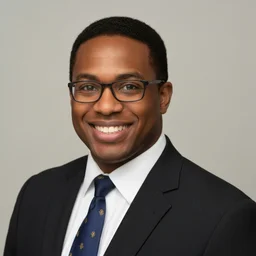
Law Enforcement Trainer & Civil Service Exam Specialist
John Jay College of Criminal JusticeMarcus B. Thompson earned his Master of Arts in Criminal Justice from John Jay College of Criminal Justice and served 12 years as a law enforcement officer before transitioning to full-time academy instruction. He is a POST-certified instructor who has prepared candidates for police entrance exams, firefighter assessments, and civil service examinations across dozens of agencies.