
What Can a Probation Officer Not Do? Legal Limits and Professional Boundaries Explained
Learn what can a probation officer not do legally. Understand search rights, privacy limits, and professional boundaries in 2026 September. ✏️

Understanding what can a probation officer not do is essential for anyone on community supervision, their families, and aspiring criminal justice professionals. Probation officers carry significant authority over the lives of individuals under their supervision — they can require drug tests, mandate treatment programs, and even request revocation of probation for violations. However, this authority is not unlimited. The law draws clear boundaries around what officers may and may not do, and those boundaries exist specifically to protect constitutional rights and ensure the integrity of the supervision process.
Probation officers operate under a complex legal framework that balances public safety with individual rights. Every action an officer takes must fall within the scope of their statutory authority, agency policies, and the specific conditions ordered by the supervising court. When officers exceed these boundaries — intentionally or through ignorance — they expose themselves and their agencies to civil liability, create suppression issues in criminal proceedings, and undermine public trust in the correctional system. Knowing the boundaries is as important as knowing the authority itself.
The legal limits on probation officer conduct stem from multiple sources: the Fourth Amendment protections against unreasonable search and seizure, the Fourteenth Amendment's due process guarantees, case law from the U.S. Supreme Court and federal circuits, and individual state statutes. While probationers have reduced constitutional protections compared to free citizens, they retain meaningful rights that officers must respect at all times. Courts have consistently held that supervision conditions must be reasonable, related to the offense, and narrowly tailored to rehabilitation goals.
There is also a meaningful distinction between what courts and what officers can impose. Many limitations people assume probation officers can enforce — such as setting new conditions of probation — actually require a formal court order. Officers are agents of the court, not independent decision-makers. They report violations and make recommendations, but the authority to modify, extend, or revoke probation belongs exclusively to judges. Understanding this separation of powers is fundamental to understanding probation officer limitations.
For individuals currently on probation, knowing these restrictions helps you recognize when your rights may be violated and what recourse you have. For students studying for criminal justice exams, these distinctions frequently appear on certification tests and background knowledge assessments. A thorough understanding of probation officer limitations is foundational to professional competency in the field, whether you are supervising clients, managing cases, or preparing for a career in community corrections.
This article provides a comprehensive breakdown of the legal, procedural, and ethical limits on probation officer authority. We cover search and seizure rules, privacy protections, contact restrictions, prohibited conduct, and what happens when an officer oversteps. By the end, you will have a clear picture of where officer authority ends and where individual rights begin — an understanding that is valuable for supervisees, families, legal professionals, and corrections candidates alike.
Probation Officer Authority: By the Numbers

Core Legal Boundaries on Probation Officer Authority
Even with a probation search clause, officers generally must have reasonable suspicion before entering a probationer's home. Random, harassing searches without any articulable basis can be challenged in court under the Fourth Amendment.
Only the sentencing judge can establish, modify, or revoke conditions of probation. Officers may recommend changes, but they have zero authority to unilaterally add travel restrictions, curfews, or new requirements outside the court's original order.
Officers can make administrative holds and arrests for violations, but probationers must receive timely hearings. Extended detention without a revocation hearing violates due process rights protected by the Fourteenth Amendment.
Ethical codes strictly forbid officers from accepting anything of value from supervisees or their families. Any financial transaction, gift, or personal relationship creates a conflict of interest and constitutes a serious disciplinary or criminal violation.
Officers must apply supervision conditions consistently and cannot target individuals based on race, religion, gender, national origin, disability, or other protected classes. Discriminatory supervision practices violate civil rights laws and agency equal treatment policies.
One of the most frequently misunderstood aspects of probation supervision involves search authority. While the Supreme Court ruled in Samson v. California (2006) that parolees have minimal Fourth Amendment protection and can be searched without suspicion, probationers occupy a different legal position. The landmark Griffin v. Wisconsin (1987) decision established that probation officers can search a probationer's home without a warrant if they have reasonable grounds — but reasonable grounds is a meaningful legal standard, not a blank check. Officers cannot conduct searches that are purely arbitrary, harassing, or motivated by personal animosity.
The specific scope of lawful search authority depends heavily on the conditions of supervision written into the court order. Some probationers agree, as a condition of probation, to warrantless searches at any time. Even in these cases, courts have held that searches must not be conducted in an abusive manner, must have some connection to the supervisory relationship, and cannot be used primarily to harass the individual.
The search must be genuinely related to monitoring compliance, not to advance a personal agenda or assist another agency without proper authorization. Officers who exceed these parameters risk having evidence suppressed and facing personal liability.
Another critical limitation involves the probation officer's role in criminal investigations. Officers are supervision professionals, not law enforcement investigators in the traditional sense. While they may cooperate with police and share information about their clients, they cannot act as investigative surrogates for law enforcement to circumvent warrant requirements. For example, an officer cannot conduct a search at the request of a detective specifically to gather criminal evidence that police could not lawfully obtain on their own. This practice, sometimes called a "pretext search," is unconstitutional and frequently litigated.
Officers are also prohibited from making promises about legal outcomes. A probation officer cannot tell a client that if they cooperate, confess, or provide information, the officer will guarantee no violation will be filed, charges will be dropped, or a sentence will be reduced. Only prosecutors and judges have authority over charging and sentencing decisions. Officers who make such representations mislead supervisees and create false expectations that can harm clients and expose the agency to legal challenge. Honesty about the limits of officer authority is itself an ethical obligation.
The prohibition on personal relationships deserves particular emphasis. Officers are strictly forbidden from engaging in romantic or sexual relationships with anyone under their supervision or with immediate family members of supervisees. These restrictions exist because the power differential inherent in supervision makes meaningful consent impossible. Many states have enacted specific statutes making sexual contact between correctional personnel and those under supervision a criminal offense, regardless of whether the contact appeared consensual. Officers also cannot socialize with former supervisees until a reasonable period — typically one to three years — has elapsed after supervision ends.
Financial exploitation is another prohibited category. Beyond the obvious prohibition on accepting bribes, officers cannot borrow money from supervisees, recommend specific service providers in exchange for referral fees, or use their position to gain personal financial advantage in any form. Even well-intentioned financial arrangements — like an officer lending a struggling client bus fare — can violate agency ethics policies if not conducted through proper channels such as formal assistance programs. The bright line on financial relationships protects both the supervisee and the officer from compromising situations.
Officers must also respect workplace and housing rights to the extent those rights coexist with supervision conditions. They cannot contact an employer to demand access to work areas beyond what is necessary for supervision, cannot disclose a client's probation status in ways designed to cause job loss rather than facilitate supervision, and cannot instruct landlords to evict supervisees as an informal sanction. Supervision authority is targeted and purposeful — it does not extend to orchestrating collateral consequences beyond those ordered by the court as formal conditions of probation.
Privacy, Contact, and Conduct Rules for Probation Officers
Even while under supervision, probationers retain meaningful privacy rights that officers must respect. Officers cannot read private mail without authorization, intercept phone calls without proper legal process, or access bank records, medical information, or social media accounts unless specifically permitted by the court order. The monitoring of communications must be disclosed in supervision conditions — covert surveillance beyond the authorized scope is a serious legal violation that can lead to suppression of evidence and civil liability against the officer and their agency.
Electronic monitoring programs present a particularly nuanced area. GPS devices and ankle monitors are authorized supervision tools, but the data collected must be used specifically for supervision purposes and handled according to agency data retention policies. Officers cannot share location data with third parties outside legitimate law enforcement or supervision purposes, and they cannot use that data to track family members or associates who are not themselves under supervision. Privacy violations in this area are increasingly subject to litigation as electronic monitoring becomes more common in community corrections.

Probation Officer Authority: Broad Powers vs. Meaningful Limits
- +Can conduct warrantless searches when probation conditions authorize them and reasonable suspicion exists
- +May arrest or detain probationers who violate supervision conditions without a warrant in many states
- +Can require drug and alcohol testing at any time if ordered as a condition of probation
- +May access certain records — employment, treatment, financial — that are relevant to supervision compliance
- +Can recommend revocation to the court when supervisees repeatedly or seriously violate conditions
- +May coordinate with law enforcement to share information relevant to public safety within legal boundaries
- −Cannot modify, add, or remove probation conditions without a court order — that authority belongs to judges alone
- −Cannot conduct searches that are purely harassing, arbitrary, or unrelated to supervision compliance
- −Cannot make promises about criminal charges, court outcomes, or prosecutorial decisions
- −Cannot engage in romantic, sexual, or exploitative financial relationships with supervisees or their families
- −Cannot discriminate in supervision practices based on race, religion, gender, or other protected characteristics
- −Cannot use their position to orchestrate collateral consequences — job loss, eviction — outside formally ordered conditions
Know Your Rights: What Probation Officers Cannot Do to You
- ✓An officer cannot add new probation conditions without a judge signing a modified court order.
- ✓An officer cannot search your home without reasonable suspicion, even if you have a search condition.
- ✓An officer cannot promise you that cooperating will result in no charges or reduced sentences.
- ✓An officer cannot engage in any romantic or sexual relationship with you while you are under supervision.
- ✓An officer cannot disclose your probation status to your employer without a legitimate supervision reason.
- ✓An officer cannot contact your children in a way that constitutes interrogation without proper authority.
- ✓An officer cannot read your private mail or intercept calls without specific legal authorization.
- ✓An officer cannot conduct searches solely at the request of police to bypass warrant requirements.
- ✓An officer cannot use excessive force — any force used must be proportional, documented, and reported.
- ✓An officer cannot accept money, gifts, or personal favors from you or your family members.
The Court Orders the Conditions — The Officer Enforces Them
A probation officer's authority is entirely derivative of the court's order. Officers are enforcement agents, not independent policymakers. Every condition of probation — curfews, travel restrictions, treatment requirements, reporting schedules — must be established by a judge. If an officer tells you to follow a rule that does not appear in your court order and is not covered by a state statute, you may have grounds to challenge it. Always obtain a written copy of your conditions of probation and review them carefully with your attorney.
When a probation officer oversteps their legal authority, there are several avenues for recourse. The most immediate is raising the issue through an attorney, who can file a motion to suppress evidence gathered through an unlawful search, challenge a revocation hearing based on improperly obtained information, or file a complaint with the supervising court.
Courts take violations of supervisee rights seriously, particularly when they infect the integrity of revocation proceedings. Evidence obtained in violation of the Fourth Amendment — even in the probation context — may be excluded, though courts apply this rule more narrowly in revocation hearings than in criminal trials.
A second avenue is filing a formal complaint with the officer's agency. Every probation department must maintain an internal affairs or professional standards process for handling complaints against officers. While the outcomes of internal investigations vary, documented complaints create a record that can support later legal action and sometimes trigger supervisory intervention that stops ongoing misconduct. Individuals filing complaints have the right not to be retaliated against, though retaliation can be subtle and difficult to prove without careful documentation of every contact with the officer before and after the complaint.
Civil litigation under 42 U.S.C. § 1983 provides a federal remedy for constitutional violations by state officers acting under color of law. Probation officers who violate clearly established constitutional rights may be personally liable for damages, and their agencies may be liable if the violation resulted from a pattern, policy, or deliberate indifference to known misconduct. Section 1983 claims require proving that a constitutional right was violated and that the officer acted under governmental authority. Courts have recognized successful claims against probation officers for unlawful searches, coerced confessions, and deliberate falsification of violation reports.
State tort claims provide an additional layer of protection. Officers who intentionally inflict emotional distress, make defamatory statements, or engage in malicious prosecution may be sued under state tort law independently of any federal constitutional claim. The availability of state remedies varies significantly by jurisdiction, and many states have sovereign immunity provisions that limit suits against governmental employees. An attorney familiar with civil rights and corrections law in your state can advise which legal theories are available and most likely to succeed given the specific facts of your situation.
The criminal justice system itself provides some protection against officer misconduct. Probation officers who falsify reports, plant evidence, commit perjury in revocation hearings, or engage in sexual misconduct with supervisees can face criminal charges. Several states have enacted specific statutes criminalizing sexual contact between correctional employees and those in their custody or supervision. When officer misconduct is severe enough to constitute a crime, state attorneys general and federal prosecutors may investigate, particularly when a pattern of misconduct affects multiple supervisees or involves corruption of the justice process.
Documentation is the most powerful tool available to anyone dealing with potential officer misconduct. Keep a written log of every contact with your probation officer: date, time, location, what was said, what was requested, whether any search was conducted, and the names of any witnesses. Photograph any damage that occurs during home searches.
Request copies of all reports your officer submits. If an officer makes an unusual demand or promise, send a follow-up email to your attorney and ask them to document it. This contemporaneous record is invaluable if you later need to challenge the officer's conduct in court or before an oversight body.
Oversight bodies also play a role in accountability. Many jurisdictions have ombudsman offices, civilian review structures, or corrections oversight boards that accept complaints about community supervision officers. State legislatures and courts periodically review probation practices, and documented patterns of officer misconduct sometimes prompt policy reforms. Advocacy organizations focused on criminal justice reform also provide resources and support for individuals navigating supervision challenges, including help understanding what conduct is prohibited and how to report violations effectively and safely.

Even if you believe an officer is exceeding their authority, physically resisting or refusing to comply in the moment can result in additional charges, violation filings, or escalation. The safer strategy is to comply, document everything immediately afterward, and challenge the conduct through your attorney or the courts. Saying "I do not consent to this search" is legally meaningful and should be stated calmly — but do not physically prevent the search or confrontation.
For individuals preparing for a career in probation and community supervision, understanding the legal limits of officer authority is not just professionally important — it is directly tested on certification exams and structured interviews used in the hiring process. Agencies screen candidates specifically to ensure they understand where their authority ends. Demonstrating this knowledge signals maturity, legal awareness, and the ethical grounding necessary to perform a demanding public safety role responsibly. Candidates who cannot articulate these limits are often eliminated from consideration, because an officer who does not understand boundaries is a liability in court and in the field.
Ethics examinations in criminal justice frequently present scenario-based questions that require candidates to identify prohibited conduct. Common scenarios include an officer who receives a gift from a supervisee's grateful parent, an officer asked by a colleague to conduct a search on behalf of police, and an officer who tells a supervisee that confessing to a new crime will result in no violation filing.
In each case, the correct answer requires recognizing that the conduct is outside the officer's authority or violates ethics rules. These questions test not just rule memorization but judgment — the ability to apply principles to ambiguous situations.
Legal knowledge questions on probation officer exams often draw on landmark Supreme Court cases. Griffin v. Wisconsin (1987) established the reduced Fourth Amendment standard for probationer searches. United States v. Knights (2001) held that warrantless searches of probationers with search conditions are lawful if supported by reasonable suspicion. Samson v. California (2006) extended even broader search authority to parolees — a useful contrast because it illustrates how parole and probation receive different constitutional treatment. Knowing these cases, their holdings, and their practical implications is essential for exam success and for field practice.
Preparing for the ethics and legal sections of probation officer exams requires more than memorizing case names. Candidates should practice applying the reasonable-suspicion standard to hypothetical scenarios, distinguish between officer-initiated actions and court-ordered conditions, and understand the difference between a supervisory relationship and a criminal investigation. Mock scenarios where a candidate must decide whether a proposed action is lawful, ethical, or prohibited are particularly effective study tools because they simulate the kind of judgment calls officers make daily.
Agency-specific training after hiring will reinforce and expand on these concepts, but the foundation must be established before you walk through the door. Officers who arrive with a clear understanding of legal limits require less corrective supervision, are less likely to generate complaints or liability, and tend to build more productive working relationships with their supervisees — because clients who trust that an officer operates within the law are more likely to engage honestly with supervision requirements. Ethical officers produce better outcomes for everyone involved in the supervision process.
Professional development resources for working officers include continuing education programs, ethics refresher courses, and legal updates provided by state associations and national organizations such as the American Probation and Parole Association (APPA). These resources keep officers current as case law evolves and agency policies are updated. Staying informed about legal developments — particularly in areas like electronic monitoring, data privacy, and use of force — is an ongoing professional obligation, not a one-time training exercise completed at hire. The law governing probation officer authority continues to develop, and officers must develop with it.
For exam candidates, the best preparation combines conceptual understanding with structured practice. Reviewing court decisions, studying agency ethics codes, and working through practice scenarios builds the analytical framework necessary to answer both straightforward knowledge questions and nuanced judgment scenarios. The breadth of material covered on probation officer certification exams rewards candidates who study systematically across all content areas rather than focusing narrowly on any single topic. Legal and ethical limits on officer authority are high-yield content areas that appear consistently across exam formats and jurisdictions nationwide.
Practical preparation for the probation officer exam requires a strategic, multi-week approach that addresses both content knowledge and test-taking skills. Begin by obtaining the official exam content outline from the certifying body in your state, because exam blueprints vary significantly across jurisdictions — what is heavily weighted in one state may be a minor topic in another. Once you have the blueprint, map your study time proportionally across content areas, allocating more time to high-weight domains such as case management, legal standards, and ethics, which typically account for a combined 40 to 60 percent of exam questions.
Active recall techniques are substantially more effective than passive reading for exam preparation. Rather than re-reading textbook chapters, convert key concepts into flashcards or self-quiz questions that force you to retrieve information from memory. For legal content, create case cards that list the case name, the legal issue, the ruling, and the practical implication for probation supervision. Testing yourself on these cards in randomized order builds the retrieval pathways necessary for performing well under timed exam conditions when you cannot choose the order of questions.
Practice exams serve a dual purpose: they reinforce content and they acclimate you to the pacing demands of the actual test. Most probation officer certification exams are timed, with candidates required to answer 100 to 200 questions within a fixed window. Without experience managing exam time, well-prepared candidates sometimes run short and leave items unanswered. Take full-length, timed practice exams at least two to three weeks before your test date to identify both content gaps and time management issues while you still have time to address them through additional focused study.
Performance analysis after each practice exam is as important as taking the exam itself. Do not simply note your score and move on. Review every question you answered incorrectly — and every question you answered correctly by guessing. For each missed item, identify whether the error resulted from a content gap, a misread question stem, or a process-of-elimination failure. Content gaps require targeted review of source material. Misread questions signal a need to slow down and annotate question stems. Elimination failures suggest you should practice identifying and removing clearly wrong answer choices before evaluating the remaining options.
Study groups can accelerate preparation if managed effectively. The most productive study groups assign each member responsibility for teaching a specific content domain to the others, because teaching forces deeper processing than passive listening. Group members can also create scenario-based discussion questions — presenting a hypothetical supervisor situation and debating the correct response — which develops the applied reasoning skills that ethics and judgment sections of the exam specifically test. Groups that simply re-read material together provide little advantage over solo study and should be restructured around active learning activities.
The weeks immediately before the exam should shift focus from acquisition to consolidation. Reduce the time spent on new material and increase the proportion of time spent on review and practice. Ensure adequate sleep in the days leading up to the exam — sleep plays a critical role in memory consolidation, and sleep deprivation meaningfully impairs performance on cognitively demanding assessments. On exam day, read each question stem carefully before looking at the answer choices, eliminate obviously wrong options first, and trust your preparation rather than second-guessing answers that felt correct during your initial read.
After the exam, whether you pass or need to retake, document what worked in your preparation and what you would do differently. Successful candidates who document their study strategies create a resource they can share with colleagues and refer to if they pursue additional certifications later in their careers.
The probation field increasingly requires ongoing certification and professional development, so building effective study habits now pays dividends throughout a long career in community corrections. The knowledge you build preparing for this exam — including the legal and ethical limits on officer authority — will shape how you practice the profession every day.
Probation Officer Questions and Answers




About the Author
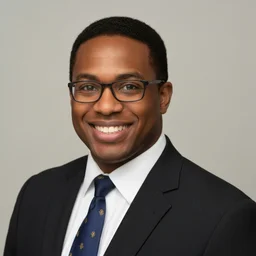
Law Enforcement Trainer & Civil Service Exam Specialist
John Jay College of Criminal JusticeMarcus B. Thompson earned his Master of Arts in Criminal Justice from John Jay College of Criminal Justice and served 12 years as a law enforcement officer before transitioning to full-time academy instruction. He is a POST-certified instructor who has prepared candidates for police entrance exams, firefighter assessments, and civil service examinations across dozens of agencies.