
Probation Officer Job: Complete Career Overview, Duties, and How to Get Hired
Explore the probation officer job: 💡 daily duties, salary, hiring requirements, career path, and how to pass the written exam in 2026 September.

A probation officer job sits at one of the most consequential intersections in criminal justice: helping people rebuild their lives while simultaneously protecting public safety. Officers are appointed by courts and corrections agencies to supervise individuals who have been sentenced to community supervision rather than — or following — incarceration.
Unlike detention-based roles, this career demands strong communication skills, sharp analytical judgment, and genuine commitment to rehabilitation. If you are considering this career path, understanding what the role actually entails on a day-to-day basis is the essential first step before you invest time preparing for the probation officer job screening process.
The scope of supervision varies significantly depending on the agency and jurisdiction. Federal probation officers work under the U.S. Courts system and typically manage smaller, higher-risk caseloads involving white-collar criminals, drug offenders, and released federal inmates. State and county officers handle the far larger volume of offenders convicted under state statutes, from first-time misdemeanor violators to high-risk felony parolees. In urban counties, caseloads can reach 80 to 120 individuals per officer, making workload management and accurate risk assessment absolutely critical to success in the role.
Daily responsibilities span a wide continuum. In a single shift, an officer might conduct a field visit to verify a client's home address, appear in court to deliver a violation report, meet with a treatment counselor to discuss a client's progress in substance abuse programming, and update case notes in a statewide database. No two days are exactly alike, which is one reason many practitioners cite job variety as a primary reason they stay in the field for full careers spanning 20 or more years.
Candidates entering the field today need to understand that the profession has evolved considerably over the past two decades. Modern probation practice is increasingly driven by evidence-based supervision models — approaches grounded in criminological research that emphasize risk-needs-responsivity principles. Officers are now expected to administer validated risk assessment instruments, such as the Level of Service Inventory-Revised (LSI-R) or the ORAS, and use the results to guide supervision intensity and case planning decisions. This analytical dimension of the job makes academic preparation in criminal justice, psychology, or social work particularly valuable.
Competition for open positions is consistently strong across most jurisdictions. Entry-level probation officer vacancies in major metropolitan counties routinely attract hundreds of applicants, and hiring processes typically include a written knowledge examination, an oral panel interview, a background investigation, a psychological evaluation, and a polygraph. Some agencies also require a physical fitness test. The written exam is often the first filter, eliminating a significant portion of applicants before the process advances — making thorough preparation essential for candidates who want to advance to the next stage.
Salary and benefits are among the role's most compelling features. The median annual wage for probation officers and correctional treatment specialists in the United States was approximately $64,000 as of recent Bureau of Labor Statistics data, with experienced federal officers regularly earning over $90,000. Most positions include defined-benefit pension plans, comprehensive health insurance, and paid leave packages that are increasingly rare in the private sector. Officers who advance into supervisory or specialty unit roles — such as electronic monitoring, gang task forces, or sex offender compliance teams — often see compensation climb significantly above the median.
For individuals who value public service, community impact, and career stability, few roles in criminal justice offer the same combination of direct rehabilitative work and genuine public safety responsibility. The sections that follow break down every major dimension of the probation officer job — from core daily duties and education requirements to the hiring process, salary bands, and the specific exam content you need to master before your written test date.
Probation Officer Job by the Numbers

Core Duties of a Probation Officer
Officers meet regularly with probationers to verify compliance with court-ordered conditions including curfews, employment, drug abstinence, and treatment participation. Supervision frequency is calibrated to each individual's validated risk score and current compliance status.
Using validated instruments such as the LSI-R or ORAS, officers assess each client's likelihood of reoffending and identify criminogenic needs — factors like antisocial attitudes or substance dependence — that case plans must directly target to reduce recidivism.
When a probationer violates conditions, officers prepare detailed violation reports for judges, recommend appropriate sanctions, and testify in revocation hearings. Accurate, well-documented reports are critical to fair and legally defensible court outcomes.
Officers coordinate with substance abuse counselors, mental health therapists, domestic violence programs, and employment specialists to ensure probationers are connected to services that address their underlying risk factors and promote long-term stability.
Unannounced home visits allow officers to verify residence, assess living conditions, check for prohibited items, and observe the social environment influencing a probationer's behavior. Field contacts provide ground-truth data that office visits alone cannot reveal.
Most agencies require a bachelor's degree in criminal justice, social work, psychology, or a closely related behavioral science field as the minimum academic credential for entry-level probation officers. Some larger urban jurisdictions, including several California counties and most federal districts, strongly prefer candidates with a master's degree or documented professional experience in case management, counseling, or social services. A handful of rural or understaffed agencies have historically accepted an associate's degree combined with qualifying work experience, but this pathway is becoming rarer as candidate pools grow more competitive every hiring cycle.
Beyond academics, the hiring process for a probation officer job is one of the most rigorous in public safety. After passing the initial written examination — which typically covers legal principles, report writing, case management theory, supervision best practices, and situational judgment — applicants face an oral board interview composed of three to five panelists, including supervisors, senior officers, and sometimes community representatives. The oral board probes candidates on ethical dilemmas, crisis response, workload prioritization, and knowledge of evidence-based practices. Poor performance at this stage eliminates many academically strong candidates who underestimated the interpersonal demands of the position.
The background investigation is extensive by any standard. Investigators review criminal history (felony convictions are typically automatic disqualifiers; misdemeanor convictions are reviewed case by case), employment history, financial records, driving record, and social media activity. Candidates with documented histories of domestic violence, repeated DUI convictions, or dishonorable military discharges are generally ineligible. The standard applied is not whether you have ever made mistakes, but whether your history as a whole reflects the character and judgment the role demands. Candidates who are transparent and consistent in all documentation fare significantly better than those who attempt to minimize or omit unflattering history.
Drug testing is universal across agencies, and the standards are strict. Most jurisdictions disqualify candidates who have used marijuana within the past year (some agencies extend this to three years) regardless of state-level legalization, and hard drug use within five to seven years is typically an automatic bar. Candidates who have worked in law enforcement, corrections, or community supervision previously are often held to even stricter standards because agencies view prior service as evidence of knowledge of the rules. Prescription drug use that could impair judgment or safety is also reviewed during the medical and psychological evaluation phase.
After conditional job offers, candidates complete a pre-employment psychological evaluation administered by a licensed psychologist contracted by the agency. The evaluation typically includes objective personality inventories such as the MMPI-2 and PAI, and a structured clinical interview. Evaluators assess emotional stability, integrity, interpersonal effectiveness, stress tolerance, and capacity for sound judgment under pressure. Unlike the written exam, there is no way to cram for this evaluation — consistency between your written responses and interview answers, and between your background investigation record and what you report verbally, is what matters most.
Physical fitness requirements vary considerably by jurisdiction. Some agencies mandate that all candidates pass a job task analysis-based fitness test measuring cardiovascular endurance, upper body strength, and agility. Others require only a medical examination clearing the candidate for the physical demands of field work. Candidates who expect to work in high-crime urban areas or in roles with significant field supervision responsibilities should assume some level of physical fitness standard will apply and prepare accordingly in the months before testing.
Once hired, new probation officers typically complete a structured field training program lasting six months to one year, during which they work alongside experienced officers before assuming their own caseloads. Academy training — either residential or day-report format — covers legal authority, use of force, firearms (where authorized), defensive tactics, crisis intervention, and agency-specific policies. In most states, officers must complete Peace Officer Standards and Training (POST) certification or its equivalent within a specified probationary employment period, adding another examination milestone early in the career.
Types of Probation Officer Roles and Specializations
Adult probation officers supervise individuals convicted of misdemeanor or felony offenses who are serving sentences in the community. Caseloads are typically segmented by risk level — high-risk clients receive intensive supervision with frequent contacts, drug testing, and electronic monitoring, while low-risk clients may report monthly or be transferred to administrative supervision. Officers working adult caseloads must be comfortable navigating complex legal frameworks, interacting with chronic substance abusers, and maintaining professional boundaries under high-stress client interactions.
Many adult probation departments operate specialty units focused on specific populations: domestic violence offenders, DUI repeat offenders, sex offenders, gang members, or individuals with severe mental illness. Officers in these units receive advanced training and typically carry smaller caseloads to enable more intensive supervision. Specialty unit assignments are generally available after two to three years of general caseload experience and are among the most sought-after positions within adult probation agencies due to the focused mission and stronger peer support structures they offer.

Probation Officer Job: Pros and Cons
- +Strong job security with stable government employment and low layoff risk
- +Defined-benefit pension plans provide retirement security increasingly rare in private sector jobs
- +Meaningful daily work directly reduces recidivism and improves community safety outcomes
- +Diverse daily responsibilities prevent routine monotony common in desk-bound government roles
- +Clear promotional pathways to supervisor, manager, and director-level positions within agencies
- +Comprehensive health, dental, and vision insurance typically included in benefits packages
- −High caseloads in many jurisdictions create significant stress and documentation burden
- −Exposure to vicarious trauma from working with clients experiencing poverty, addiction, and abuse
- −Risk of physical harm during field contacts and home visits in high-crime neighborhoods
- −Extended hiring timelines of 12 to 18 months from application to start date are common
- −Mandatory court appearances and on-call requirements can disrupt work-life balance
- −Emotional difficulty of initiating revocation proceedings against clients making genuine progress
Probation Officer Exam Preparation Checklist
- ✓Review your target agency's specific exam blueprint and content outline before purchasing study materials.
- ✓Study the core principles of the risk-needs-responsivity (RNR) model and how they guide supervision decisions.
- ✓Learn the key provisions of the Interstate Compact for Adult Offender Supervision (ICAOS).
- ✓Practice writing professional violation reports using clear, factual, behavior-specific language.
- ✓Memorize the stages of motivational interviewing (MI) and how they apply to client engagement.
- ✓Study Fourth Amendment search and seizure law as it specifically applies to probation supervision conditions.
- ✓Complete at least three full-length timed practice exams under realistic testing conditions.
- ✓Review case management planning terminology including goals, objectives, action steps, and timelines.
- ✓Study the major validated risk assessment instruments (LSI-R, ORAS, Static-99R for sex offenders).
- ✓Prepare two to three structured oral board answers using the STAR format for common situational questions.
Written Exam Pass Rates Are Often Below 50%
Many jurisdictions report that fewer than half of all applicants who sit for the probation officer written examination pass on their first attempt. The most commonly failed sections are legal authority and Fourth Amendment application, report writing mechanics, and situational judgment scenarios. Structured practice using content-specific practice tests — not just general civil service study guides — is consistently associated with first-attempt pass rates in candidates who prepare for six or more weeks before their test date.
Salary for a probation officer job varies considerably by jurisdiction, level of government, years of experience, and specialty assignment. Entry-level state and county officers in lower cost-of-living states typically start between $38,000 and $48,000 annually, while entry-level officers in California, New York, Massachusetts, and other high-cost states frequently start at $55,000 to $68,000.
Federal probation officers hired at the GS-9 level start at approximately $64,000 to $70,000 depending on locality pay adjustments, with those qualifying for GS-11 entry earning $77,000 or more from day one. These figures represent base pay only and do not include overtime, shift differentials, or the economic value of government benefits packages.
Mid-career compensation accelerates meaningfully for officers who pursue promotional opportunities. Senior officers or specialists with five to ten years of experience and advanced training commonly earn between $75,000 and $95,000 in mid-sized states, and well over $100,000 in California's county probation systems, which are among the highest-compensating in the nation. Supervisory positions — managing teams of four to twelve line officers — typically pay 15 to 25 percent above the journeyman officer rate. Deputy directors and department heads in large urban agencies can exceed $130,000 in total compensation in major metropolitan areas.
Beyond base pay, the total compensation picture for probation officers is substantially stronger than headline salary figures suggest. Defined-benefit pension plans — in which officers are guaranteed a specified monthly retirement income based on years of service and final salary rather than investment performance — have enormous long-term value.
Officers who complete 25 to 30 years of service often retire at 70 to 80 percent of their final working salary, a benefit that is essentially unavailable in the private sector without substantial personal wealth. Combined with retiree health insurance provided by many state and county systems, retirement packages represent easily $1 million or more in lifetime value above what a comparable private-sector position would offer.
Career advancement pathways extend beyond the supervisory track. Many experienced probation officers transition into training roles, developing curriculum and instructing new officers at regional academies or POST-certified training programs. Others move laterally into related fields — parole, pretrial services, diversion program management, or court liaison positions.
Federal probation officers with strong records are occasionally recruited into positions with the U.S. Marshals Service, DEA, or other federal agencies where their supervision and investigative experience transfers directly. The skills developed in probation — risk assessment, motivational interviewing, report writing, crisis management — are broadly valued across the criminal justice and social services ecosystem.
Geographic location is the single largest driver of salary variation, and candidates who are willing to relocate have access to a substantially wider range of opportunities. States with the highest median wages for probation and correctional treatment specialists include California, New Jersey, Rhode Island, Connecticut, and Washington.
States with the most open positions relative to population — offering the fastest path to employment — tend to be in the South and Midwest, where competition is less intense but starting salaries are lower. Many career probation officers spend their early years in a higher-hiring, lower-pay jurisdiction to gain experience, then transfer to better-compensating agencies once they have documented accomplishments to present.
Overtime and supplemental pay opportunities exist in most agencies, particularly for officers assigned to electronic monitoring units, warrant enforcement teams, or after-hours emergency response rotations. In agencies that allow it, overtime pay can add $8,000 to $15,000 annually to an officer's compensation in busy years. Some counties also offer bilingual pay supplements of $150 to $400 per month for officers certified as proficient in a second language — a benefit particularly valuable in jurisdictions with large Spanish-speaking, Vietnamese, or Somali client populations where language barriers otherwise impede effective supervision.
The job outlook for probation officers through 2032 projects roughly average growth compared to all occupations. However, regional variation is significant: jurisdictions investing in alternatives-to-incarceration programs and diversion courts are actively expanding their probation workforces, while jurisdictions facing fiscal constraints or shifting toward automated low-risk supervision models may see slower growth or hiring freezes. Candidates who follow developments in criminal justice policy and target agencies aligned with expanding programming — drug courts, mental health courts, veterans courts — are best positioned to find strong entry opportunities in the coming years.

Felony convictions are automatic disqualifiers for probation officer positions in virtually every U.S. jurisdiction — there are no exceptions for expunged records in most states. Misdemeanor domestic violence convictions (under the Lautenberg Amendment) also permanently bar candidates from positions that involve firearm carry authority. Candidates with any criminal history should consult the specific agency's disqualifier list before investing months of preparation time and application fees, as requirements vary meaningfully between county, state, and federal employers.
Standing out as a probation officer candidate in a competitive applicant pool requires deliberate preparation well before the application window opens. Agencies reviewing hundreds of applications look for specific signals: relevant education, documented direct service experience with justice-involved or at-risk populations, professional references who can speak to judgment and character, and written application materials that demonstrate both literacy and self-awareness. Candidates who invest six to twelve months in strategic preparation — rather than applying impulsively when an announcement appears — consistently outperform their competition in every stage of the hiring process.
Volunteer or internship experience with probation departments, public defenders' offices, reentry programs, or community mental health agencies is among the most valued qualifications on a probation officer application. Direct client contact in these settings demonstrates comfort working with difficult populations, familiarity with the criminal justice ecosystem, and commitment to the public service mission that goes beyond academic interest. Many agencies formally partner with local universities to offer supervised internship placements for criminal justice and social work students — these are among the highest-ROI opportunities available to candidates still completing undergraduate or graduate programs.
The personal history statement or background questionnaire, which candidates complete early in the hiring process, deserves as much preparation as the written exam. This document asks detailed questions about employment history, financial history, personal relationships, prior drug use, past legal contacts, and moral character. Inconsistencies between the personal history statement and what investigators discover through interviews and records checks are the single most common reason conditionally selected candidates are disqualified. Write the document carefully, have a trusted person proofread it, and be scrupulously accurate — disclosure of past issues handled responsibly reads as integrity, while omission reads as deception.
Interview preparation should begin no later than four weeks before an expected oral board date. The most effective approach combines structured self-assessment — cataloging specific professional experiences that demonstrate key competencies — with repeated practice answering questions aloud, not just mentally rehearsing answers. Common oral board topics include ethical dilemmas (a supervisor directs you to falsify a report), de-escalation scenarios (a client becomes threatening during an office visit), workload management (how you prioritize when multiple clients need immediate attention), and knowledge of evidence-based supervision practices. Concrete, specific answers anchored in real experience consistently outperform vague generalities.
Physical and psychological preparation matter beyond their role as hiring requirements. The work of probation is cognitively and emotionally demanding, and candidates who enter already practicing stress management, exercise, and self-care habits are better positioned for long-term career success. Some agencies informally assess psychological resilience during the oral board by asking candidates to describe the most difficult professional situation they have faced and how they managed it. Answers that demonstrate self-awareness, emotional regulation, and growth-oriented reflection — rather than blame-focused or denial-oriented narratives — resonate strongly with evaluators who understand the occupational stress that comes with the role.
Networking within the probation and criminal justice community accelerates hiring in ways that preparation alone cannot achieve. Officers who have worked with a candidate firsthand — through ride-alongs, internships, or community program collaborations — provide qualitatively stronger references than supervisors from unrelated fields. If your target agency offers citizen academies, informational interviews, or open hiring forums, attend them. Decision-makers remember faces and conversations, and the intelligence you gather about an agency's culture, caseload structure, and supervision philosophy allows you to tailor your application materials and interview answers in ways that resonate with the specific organization rather than probation generically.
Finally, commit to thorough written exam preparation. Many agencies test knowledge areas that even candidates with criminal justice degrees underestimate: the specific legal standards governing probationer search and seizure, the procedural requirements for violation hearings under Morrissey v. Brewer, the content domains of validated risk instruments, and the mechanics of evidence-based supervision planning. Structured practice with exam-aligned content — including timed question sets that simulate real testing conditions — is the most efficient way to identify and close knowledge gaps before your test date arrives.
Exam day success depends as much on test-taking strategy as on content knowledge. Probation officer written examinations are almost universally multiple-choice, typically containing 100 to 150 questions administered in two to three hours. Most agencies use a standardized passing score of 70 or 75 percent, and raw scores are often converted to rank-ordered lists that determine interview eligibility — meaning the difference between a 78 and a 90 can determine whether you land in the top 20 percent of qualifiers who receive interview invitations or in a lower band that waits months for a follow-up contact.
Time management during the exam is a critical and underappreciated skill. With 100 questions in 120 minutes, you have an average of 72 seconds per question — adequate for most items but insufficient if you linger on difficult ones. Experienced test-takers recommend a two-pass approach: move through all questions answering those you know confidently, flagging uncertain ones, and then returning to flagged items with remaining time.
This ensures you never leave easy points unclaimed while spending excessive time on a single difficult scenario question. On situation-based questions, eliminate choices that involve violating legal standards, ignoring agency policy, or acting unilaterally without supervisor consultation — these are almost always wrong.
Reading comprehension and report writing sections, present in many agency exams, reward candidates who have practiced writing precise, factual, behavior-specific professional language. Avoid common errors: passive voice constructions that obscure who did what, vague descriptors like "aggressive" or "uncooperative" without behavioral examples, and editorial opinions that belong in analysis sections rather than factual summaries. Examiners reward concise chronological narratives that would hold up under cross-examination — the same standard applied to actual probation reports that appear before judges in violation hearings.
Legal authority questions on probation officer exams most commonly address Fourth Amendment search and seizure standards as modified by probation conditions, the procedural protections required under Morrissey v. Brewer before a probation revocation can occur, and the legal basis for warrantless arrests of probationers.
The landmark Samson v. California (2006) decision, in which the Supreme Court held that suspicionless searches of parolees do not violate the Fourth Amendment, appears with some frequency in exam scenarios. Understanding the doctrinal framework — that probationers retain some constitutional rights but accept diminished privacy expectations as a condition of supervision — allows you to reason through unfamiliar fact patterns rather than relying purely on memorized rules.
Ethics questions are present in virtually every probation officer examination and are designed to assess integrity under pressure. Scenarios commonly involve a supervisor directing improper action, a client offering gifts or money, a colleague cutting documentation corners, or a personal relationship with a client's family member.
The correct answer in ethics scenarios almost always follows the same logic: follow agency policy, consult your supervisor when uncertain, document everything, and never allow personal relationships or pressure from authority to compromise your legal or ethical obligations. Candidates who understand this framework can apply it confidently to scenarios they have never seen before rather than guessing.
Post-exam strategy matters as well. After results are released, successful candidates are typically placed on an eligibility list that agencies draw from sequentially. List duration varies from six months to three years depending on jurisdiction. Staying engaged during this period — maintaining contact with the recruiting office, completing background paperwork promptly, and continuing to develop professionally — keeps you visible and ready when your name approaches the top of the list. Candidates who allow extended gaps in communication or let professional development stagnate during a long wait period sometimes find themselves less competitive when the agency finally reaches them.
If you do not pass on your first attempt, most agencies allow re-testing after a waiting period of three to twelve months. Use the interval strategically: request any available feedback on your exam performance, identify the specific content domains where you underperformed, and rebuild your study plan around those gaps rather than repeating the same preparation approach that produced insufficient results the first time.
Many officers who entered the profession after initially struggling in the hiring process report that the experience of a rigorous, competitive selection process made them better officers — more empathetic toward clients navigating difficult processes, more attentive to detail, and more committed to continuous professional development throughout their careers.
Probation Officer Questions and Answers

Probation Officer Practice Test PDF (Free Printable 2026)

Probation Officer Salary 2026: Federal, State, County Pay Guide

How to Find Your Probation Officer in 2026

Probation Officer Qualifications: Complete 2026 Requirements Guide

Adult Probation Officers: Complete Career Overview, Duties, and Requirements
About the Author
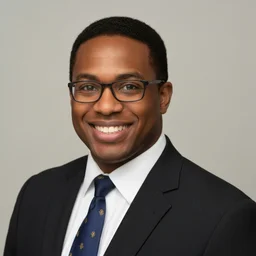
Law Enforcement Trainer & Civil Service Exam Specialist
John Jay College of Criminal JusticeMarcus B. Thompson earned his Master of Arts in Criminal Justice from John Jay College of Criminal Justice and served 12 years as a law enforcement officer before transitioning to full-time academy instruction. He is a POST-certified instructor who has prepared candidates for police entrance exams, firefighter assessments, and civil service examinations across dozens of agencies.