
How to Pass a Probation Officer Interview: Complete Preparation Guide
Master your probation officer interview with proven strategies, sample answers, and expert tips. 🎯 Learn what interviewers really want to hear.

Learning how to pass a probation officer interview is the single most important step you can take after clearing the written exam and background check. The interview panel — typically composed of senior officers, a human resources representative, and sometimes a supervising judge — is evaluating far more than your resume. They want to see whether you possess the emotional intelligence, ethical grounding, and communication skills required to manage caseloads of individuals who are at serious crossroads in their lives. Preparation is not optional; it is what separates candidates who receive offers from those who are politely turned away.
The probation officer interview differs from a standard job interview in meaningful ways. Because the role carries legal authority and significant responsibility over vulnerable populations, interviewers use structured behavioral and situational questioning methods. These formats require you to describe past experiences or respond to hypothetical scenarios in a specific, evidence-based way. The STAR method — Situation, Task, Action, Result — is the gold standard for answering these questions, and candidates who understand and practice it consistently outperform those who rely on improvisation alone.
Before you walk into the room, research the specific agency thoroughly. County probation departments, state departments of correction, and federal courts all have different missions, populations served, and organizational cultures. Knowing the difference between adult and juvenile probation, understanding your jurisdiction's recidivism statistics, and familiarizing yourself with the agency's strategic plan signals genuine interest and professional seriousness. Panels remember candidates who came in knowing specifics about the agency's current challenges and programs.
One of the most overlooked preparation strategies is practicing your answers out loud — not just reviewing notes in your head. Studies on interview performance consistently show that verbal rehearsal dramatically improves fluency, reduces anxiety, and helps candidates avoid the rambling, unfocused answers that cost them points. Record yourself if possible, then watch the playback critically. Pay attention to filler words, nervous habits, eye contact (even in a mirror), and the overall clarity of your narrative structure.
Physical presentation also matters more than many candidates expect. Probation officers represent the court system and the justice department. Arriving in professional business attire — a suit or equivalent — communicates that you understand the gravity of the position. Arrive at least 15 minutes early, bring multiple printed copies of your resume, and greet everyone you encounter professionally, from the receptionist to the panel members. Panels often solicit informal impressions from support staff you may interact with before and after the formal interview.
It is also worth reviewing the probation officer interview landscape more broadly, since understanding how federal agencies differ from county departments can sharpen your answers about career goals and professional development. Whether you are applying at the local, state, or federal level, the core competencies assessed — communication, case management, ethical decision-making, and public safety awareness — remain consistent across jurisdictions.
Finally, prepare meaningful questions to ask the panel at the end of the interview. Thoughtful questions about training programs, caseload expectations, supervision style, and opportunities for advancement demonstrate that you are evaluating the role as seriously as they are evaluating you. Candidates who ask zero questions frequently leave a weaker impression, even if their earlier answers were strong. The interview is a two-way conversation, and treating it as such elevates your overall performance.
Probation Officer Interview: Key Numbers

Probation Officer Interview Process: Step by Step
Application Screening
Written Exam or Assessment
Background Investigation
Panel Interview
Conditional Offer & Medical/Psychological Evaluation
Behavioral interview questions are the backbone of the modern probation officer interview, and mastering the STAR method is non-negotiable for strong performance. STAR stands for Situation, Task, Action, and Result. When a panel asks you to describe a time you handled a difficult client or resolved an ethical conflict, they are not looking for abstract opinions — they want a concrete narrative that demonstrates how you actually behaved under real pressure. Vague, general answers score poorly on standardized rubrics and signal that you lack relevant experience or self-awareness.
The Situation component sets the scene. You want to be specific enough to be credible — name the type of environment, approximate timeline, and the people involved — without getting lost in unnecessary detail. A well-framed situation takes about two sentences. The Task component explains your personal responsibility in that situation. The word "we" is a yellow flag to interviewers; they need to understand what you specifically were accountable for, not what your team collectively did.
The Action component is the heart of your answer and should receive the most time. Walk the panel through the specific steps you took, the reasoning behind your choices, and how you adapted when things did not go as planned. Panelists are trained to listen for indicators of sound judgment, professional boundaries, cultural competence, and knowledge of legal requirements. A candidate who can articulate why they made each decision — not just what they did — scores significantly higher than one who simply narrates a sequence of events.
The Result component closes the loop. Strong results include measurable outcomes when possible: the client completed probation successfully, the conflict de-escalated without incident, the report was filed within the required 24-hour window. If the outcome was imperfect or the situation did not resolve cleanly, honesty paired with reflection on what you learned is generally respected. Panels value self-awareness. Pretending every situation ended perfectly tends to sound rehearsed and untrustworthy.
Common behavioral question themes in probation officer interviews include: handling a client who violates their conditions, managing competing priorities during a high-caseload period, collaborating with law enforcement or mental health providers, navigating a situation where a colleague acted unethically, and building a productive relationship with a resistant or hostile supervisee. Preparing two to three strong STAR stories for each of these categories puts you well ahead of most candidates.
Situational questions differ from behavioral questions in that they present hypothetical scenarios rather than asking about past experiences. A typical example might be: "If a supervisee tells you they have been using drugs but asks you not to violate them because they just got a job, what would you do?" The correct answer demonstrates knowledge of your legal obligations, genuine concern for the supervisee's rehabilitation, and the ability to communicate difficult decisions with empathy and clarity.
It is worth familiarizing yourself with the broader landscape of opportunities in this field before your interview — understanding how your target agency fits within state and federal structures shows strategic awareness. Many candidates who have explored resources about the probation officer interview preparation process report feeling significantly more confident when articulating their long-term career goals to the panel, particularly when asked about advancement ambitions and professional development plans.
Common Probation Officer Interview Question Categories
Ethics questions are among the most heavily weighted in any probation officer panel interview because the role grants significant legal authority over individuals' freedom. Interviewers frequently ask about scenarios involving conflicts of interest, boundary violations, gifts from supervisees, or witnessing colleague misconduct. Your answers must reflect a clear understanding of departmental codes of conduct and demonstrate that you would prioritize institutional integrity over personal loyalty or convenience, even in situations where doing the right thing carries professional or social costs.
Strong candidates prepare concrete examples of past ethical dilemmas they have navigated — in professional, academic, or volunteer settings — and practice articulating the reasoning process they used to reach their decision. Avoid answers that suggest you would handle everything informally or avoid official reporting channels. Panels specifically look for candidates who understand when an issue must be escalated and can communicate that decision with confidence rather than apologetically.

Advantages and Challenges of the Probation Officer Interview Process
- +Structured panel format means scoring is standardized and less subject to individual bias
- +Behavioral questions reward candidates who have genuinely relevant experience and can articulate it clearly
- +Interview preparation directly improves your on-the-job performance skills like communication and case reasoning
- +Agencies often provide candidates with question topics or competency areas in advance
- +Strong interview performance can overcome a borderline written exam score in many jurisdictions
- +The panel format gives you multiple interviewers to connect with, increasing your overall chances of leaving a positive impression
- −Structured panels can feel rigid and impersonal, making it harder to build natural conversational rapport
- −Candidates without direct criminal justice experience must work harder to make non-traditional backgrounds relevant
- −Panel interviews are intimidating for candidates who struggle with high-pressure formal settings
- −Some agencies conduct multiple interview rounds, extending the process to several months
- −Background investigation results can disqualify you even after a strong interview performance
- −Limited feedback is typically provided to unsuccessful candidates, making it difficult to improve for future attempts
Probation Officer Interview Preparation Checklist
- ✓Research the specific agency's mission, current programs, and recent news coverage before your interview date.
- ✓Prepare at least five distinct STAR stories covering ethics, communication, case management, conflict, and teamwork.
- ✓Practice answering questions out loud and record yourself to identify filler words and unclear narratives.
- ✓Review the specific supervision conditions and violation procedures used in your target jurisdiction.
- ✓Prepare three to five thoughtful questions to ask the panel at the close of the interview.
- ✓Confirm the interview location, parking, and check-in process at least 24 hours in advance.
- ✓Bring five printed copies of your resume, a portfolio of relevant certifications, and a reference list.
- ✓Select and prepare professional business attire that is clean, pressed, and appropriate for a court-adjacent setting.
- ✓Review the Americans with Disabilities Act, HIPAA basics, and any relevant state privacy statutes for your jurisdiction.
- ✓Sleep at least seven hours the night before and avoid alcohol for 48 hours prior to the interview.
Panels Score Your Reasoning, Not Just Your Answer
Most probation officer interview panels use a numbered rubric where each answer receives a score from 1 to 5. The difference between a 3 and a 5 almost always comes down to whether you explained your reasoning clearly. It is not enough to say what you did — explain why you chose that action, what alternatives you considered, and what you would do differently next time. Candidates who articulate their thought process score significantly higher than those who simply describe an outcome.
Understanding what probation officer interview panels are genuinely looking for — beyond a list of correct answers — gives you a significant competitive advantage. Panel members are trained evaluators who have reviewed hundreds of candidates. They are not easily impressed by polished language or confident delivery alone. What earns high scores is the alignment between what you say, how you say it, and whether your narrative reflects the actual values and competencies required to do the job safely and effectively every day.
The first competency evaluated in nearly every structured probation officer interview is professional integrity and ethical judgment. This is not simply about knowing the rules — it is about demonstrating that you have internalized the ethical framework of the role so deeply that your instincts align with best practices even in ambiguous or high-pressure situations. Panels often present scenarios specifically designed to create an apparent tension between loyalty, compassion, and legal obligation to see whether candidates can navigate that tension with clarity and professional maturity.
Communication competence is assessed across multiple dimensions simultaneously. Interviewers observe not just the content of your answers but your sentence structure, vocabulary, composure under uncertainty, and your ability to listen and respond precisely to the question asked. Many candidates lose points not because their answers are wrong but because they answer a slightly different question than the one posed, suggesting either poor listening skills or an attempt to redirect to a more comfortable topic — both of which are red flags in a supervision role.
Cultural competence and equity awareness have become increasingly prominent evaluation criteria in recent years. Probation agencies serve diverse communities, and panels look for evidence that candidates can work effectively across racial, cultural, economic, and gender lines without bias or assumption. This does not require extensive formal training — but it does require thoughtful self-reflection and specific examples of working respectfully and effectively with individuals whose backgrounds differ significantly from your own.
Knowledge of community resources is another competency that distinguishes strong candidates. Probation officers do not operate in isolation — they routinely coordinate with treatment providers, housing agencies, employment programs, mental health services, and law enforcement. Candidates who can name specific types of community resources and articulate how they would connect a supervisee with appropriate support demonstrate practical readiness that interviewers value highly, particularly for entry-level positions where formal experience is limited.
Resilience and stress management are evaluated both through direct questions and through indirect observation of your composure during the interview itself. Panel members notice when a candidate becomes flustered by a difficult follow-up question, speaks too quickly under pressure, or shows visible anxiety that undermines the credibility of their answers. Practicing interview scenarios under simulated pressure — with a friend asking tough follow-ups or introducing unexpected challenges — builds the calm, measured presence that panels associate with effective officers.
Finally, motivation and long-term commitment are assessed through questions about your reasons for pursuing the role and your vision for career development. High turnover is a significant concern for probation departments, and panels invest considerable effort in identifying candidates who have realistic expectations of the work, genuine commitment to public safety and rehabilitation, and the professional ambition to grow within the organization rather than treat the position as a temporary step toward something else entirely.

Many candidates who perform well in the probation officer interview are later disqualified during the background investigation. Common disqualifiers include undisclosed prior employment terminations, financial issues such as significant unpaid debt or bankruptcy, past drug use beyond what was disclosed on the application, and social media content that contradicts stated values. Be fully transparent on your application, address potential issues proactively, and review your public social media presence before submitting your application.
The day-of experience for a probation officer interview can be both exhilarating and nerve-wracking, and having a clear game plan for managing that day significantly improves your performance. Begin the morning with a consistent routine — a solid breakfast, physical movement if that helps regulate your nervous system, and a final review of your key STAR stories without trying to memorize new material. Mental freshness matters more on interview day than cramming additional information into an already prepared mind.
Arrival timing is one of the easiest variables to control and one of the most consequential. Aim to arrive at the building 15 to 20 minutes before your scheduled time — early enough to compose yourself, use the restroom, and review your notes briefly, but not so early that you create awkwardness for the administrative staff.
Arriving more than 30 minutes early can actually signal poor professional judgment. Once you check in, treat every interaction as part of the interview: greet the receptionist warmly, sit quietly and composed in the waiting area, and avoid using your phone for anything other than reviewing prepared notes.
When you enter the interview room, make direct eye contact with each panel member as you are introduced, shake hands if offered, and wait to be directed to your seat. Place your materials — resume copies, notepad, pen — on the table in front of you without making a production of organizing them.
Begin each answer with a direct acknowledgment of the question before launching into your STAR narrative. Phrases like "That is a great example of a situation I encountered..." or "I can speak to that directly from my experience at..." signal confidence and help you organize your thoughts briefly before diving in.
When you do not know the answer to a question — particularly a knowledge-based question about specific statutes or procedures — say so directly and pivot to adjacent knowledge or demonstrated learning ability. Panelists respect intellectual honesty far more than a candidate who attempts to bluff through a gap in knowledge. A response such as "I do not have direct experience with that specific protocol, but in similar situations I would approach it by..." scores significantly better than a vague, rambling non-answer that circles the question without landing.
Body language is a continuous communication signal throughout the interview. Sit upright with both feet on the floor and hands resting comfortably on the table — not in your lap, not crossed over your chest. Maintain appropriate eye contact, distributing your attention across all panel members rather than fixating on the one who asked the question. Nod occasionally to signal active listening. Avoid fidgeting with your pen, touching your face repeatedly, or leaning back in a way that reads as casual or disengaged.
At the close of the interview, ask your prepared questions in a calm and professional manner. Prioritize questions that demonstrate you have already thought seriously about the role's challenges and growth opportunities. Avoid questions about salary, benefits, or time off during the first interview — those topics are appropriate during the offer negotiation stage, not during an evaluative panel. Thank each panel member by name if you can recall their introductions, or address the group collectively with genuine warmth and professionalism before leaving the room.
Send a brief, professional thank-you email to the hiring coordinator or HR contact within 24 hours of your interview. Keep it short — three to four sentences expressing appreciation for the opportunity, reiterating your genuine interest in the role, and noting one specific topic from the interview that reinforced your enthusiasm. This small step is completed by fewer than 30% of candidates in most hiring processes and consistently leaves a positive, memorable impression on the hiring committee during final deliberations.
Beyond the interview itself, sustained preparation over two to four weeks creates a fundamentally different level of readiness than cramming in the final 48 hours. Candidates who begin preparation early have time to research the agency thoroughly, identify gaps in their knowledge, practice their STAR stories until they flow naturally, and build the confident mental state that is visible to panel members the moment you walk through the door. Rushed preparation is usually detectable in the quality and specificity of interview answers.
One of the most effective long-term preparation strategies is informational interviewing — reaching out to working probation officers and asking for a 20-minute conversation about their day-to-day experience. Many officers are happy to share insights, and the specific details you gather — about caseload realities, agency culture, common supervision challenges, and the aspects of the job that are most rewarding and most difficult — directly improve your answers to motivation and fit questions during the formal interview.
Reading widely about criminal justice reform, evidence-based supervision practices, and the particular challenges facing the probation system in your jurisdiction also pays dividends. Panels are consistently impressed by candidates who can speak intelligently about issues like the risk-needs-responsivity model, the effectiveness of cognitive behavioral therapy programs, or the debate around graduated sanctions versus automatic violation hearings. Demonstrating this level of informed engagement signals genuine professional commitment rather than opportunistic job-seeking.
Physical and mental conditioning during the preparation period matters more than most candidates acknowledge. Probation work is emotionally demanding, and the interview itself is a high-stakes performance that draws on cognitive and emotional resources simultaneously. Candidates who are sleeping well, exercising regularly, and managing stress effectively during the weeks before their interview routinely report feeling sharper, more composed, and more articulate in the room than those who sacrificed self-care in favor of additional study hours.
Mock interviews with someone who can give you honest, structured feedback are worth their weight in gold. Ideal mock interviewers include supervisors or professors who know your professional capacity, career counselors familiar with government hiring processes, or colleagues who have successfully gone through a similar interview process. Ask them to use actual structured interview questions, score your answers using a 1-to-5 rubric, and provide specific feedback on both content and delivery. Generic encouragement is less useful than pointed critique.
Vocabulary and professional language also signal readiness. Probation officers speak in the language of supervision — terms like conditions of release, pre-sentence investigation report, risk-needs-responsivity, graduated sanctions, criminogenic needs, and prosocial modeling. Candidates who use this language naturally and accurately — without overusing it to the point of sounding performative — signal that they have done the work to understand the professional context they are entering. Study the language of the role as deliberately as you study the competencies.
Ultimately, the most important thing to carry into your probation officer interview is genuine belief in the value of the work. Supervision of individuals on probation is one of the most direct interventions available in the criminal justice system — the ability to meaningfully redirect someone's life trajectory is both the great challenge and the great reward of the role. Panels who hear that authentic commitment in a candidate's voice, backed by solid preparation and relevant skills, consistently rank those candidates at the top of their eligible lists.
Probation Officer Questions and Answers

Federal Probation Officer Jobs: Complete Career Guide, Salary, Requirements, and How to Get Hired in 2026

NYC Probation Officer Exam: Complete Study Guide & Prep Hub 2026

Probation Officer Practice Test PDF (Free Printable 2026)

Dallas County Probation Officer: Complete Career Overview, Duties, and How to Get Hired

Probation Officer Qualifications: Complete 2026 Requirements Guide
About the Author
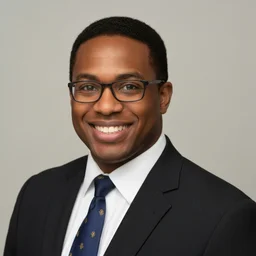
Law Enforcement Trainer & Civil Service Exam Specialist
John Jay College of Criminal JusticeMarcus B. Thompson earned his Master of Arts in Criminal Justice from John Jay College of Criminal Justice and served 12 years as a law enforcement officer before transitioning to full-time academy instruction. He is a POST-certified instructor who has prepared candidates for police entrance exams, firefighter assessments, and civil service examinations across dozens of agencies.