
How to Become a Probation Officer in Texas: Complete Step-by-Step Guide
Learn how to become a probation officer in Texas — education, training, salary & exam tips. ✅ Step-by-step career guide for 2026 September.

If you have ever wondered how to become a probation officer in Texas, you are stepping into a career that blends law enforcement, social work, and counseling into a single demanding but deeply rewarding role. Texas employs thousands of community supervision officers across 121 Community Supervision and Corrections Departments (CSCDs), making it one of the largest probation systems in the entire United States. The path requires specific education, state certification, and the ability to manage complex caseloads — but for motivated candidates, the career offers strong job security, competitive pay, and genuine opportunities for advancement over time.
Texas probation officers, formally known as Community Supervision Officers (CSOs), supervise individuals placed on probation by state district courts. Unlike many states that use a single statewide agency, Texas operates through local CSCDs that answer to boards of judges in each judicial district. That decentralized structure means hiring practices, caseload sizes, and salary ranges can vary significantly depending on whether you are applying in Harris County, Travis County, or a smaller rural district in West Texas. Understanding these regional differences is essential as you research where to apply and what to expect during the selection process.
The minimum educational requirement to become a probation officer in Texas is a bachelor's degree from an accredited college or university. Most successful applicants hold degrees in criminal justice, sociology, psychology, or social work, though Texas law does not restrict applicants to a single field of study as long as the degree is from an accredited institution. Some larger CSCDs, particularly those in the Dallas-Fort Worth metroplex, prefer candidates who have completed coursework in behavioral sciences, substance abuse counseling, or criminology, so tailoring your degree electives toward those subjects can give you a meaningful competitive edge when applications open.
Beyond the degree requirement, you must also pass a criminal background check, meet minimum age requirements (typically 21 years old), hold a valid Texas driver's license, and complete a drug screening. Texas law specifically prohibits individuals convicted of certain felonies or offenses involving moral turpitude from working in community supervision. The background investigation is thorough — it covers credit history, prior employment, references, and in some districts a polygraph examination. Starting this process early and resolving any potential red flags before you apply will save you significant time and prevent disqualification late in the selection pipeline.
Once hired, new Texas probation officers must complete the Texas Community Supervision and Corrections Department Basic Training Academy, an intensive multi-week program covering legal frameworks, case documentation, motivational interviewing, risk-needs assessment tools, and officer safety. The academy is typically held at regional training centers operated through the Correctional Management Institute of Texas (CMIT) at Sam Houston State University.
Attending and passing this training is mandatory for state certification, and officers who do not complete it within their probationary employment window may be terminated. Many candidates find it helpful to review academy content in advance by studying practice materials before their start date.
Salary for Texas community supervision officers ranges from roughly $38,000 per year at entry level in smaller rural districts to over $70,000 for senior officers in metropolitan areas with large caseloads. The Texas Department of Criminal Justice and individual CSCDs regularly publish salary schedules, and many districts offer longevity pay, bilingual stipends, and retirement through the Texas County and District Retirement System (TCDRS). Officers who pursue specialty certifications — such as sex offender supervision, mental health supervision, or substance abuse case management — often qualify for additional compensation tiers, making continuing education a financially smart investment throughout your career.
To maximize your chances of passing the written exam and the structured interview, invest time in deliberate preparation. Reviewing case management principles, Texas Code of Criminal Procedure statutes, and evidence-based supervision practices before your interview can set you apart from other applicants who walk in cold. You can also sharpen your knowledge with our how to become a probation officer in texas study resources, which cover the core competency areas tested during the selection process. Starting early, staying organized, and treating the application process like a professional project gives you the best chance of landing your first offer.
Texas Probation Officer Career by the Numbers

Step-by-Step Path to Becoming a Texas Probation Officer
Earn Your Bachelor's Degree
Meet Basic Eligibility Requirements
Submit Your Application to a CSCD
Complete the Hiring Process
Attend the Basic Training Academy
Receive State Certification & Begin Career
The application process for Texas probation officer positions begins by identifying which CSCD has open positions in your preferred region. Unlike centralized state agencies, each of Texas's 121 departments posts jobs independently through their local websites, county job boards, or platforms like WorkInTexas.com and Indeed.
Larger districts such as Harris County CSCD, Dallas County Community Supervision, and Bexar County CSCD hire more frequently and often maintain applicant pools throughout the year. Smaller rural districts may only hire when a specific vacancy opens, so checking multiple boards weekly and applying broadly maximizes your chances of getting an interview call within a reasonable timeframe.
Once your application clears the initial screening, most CSCDs move candidates into a structured interview format that tests behavioral competencies rather than pure knowledge recall. Expect scenario-based questions like: 'Tell me about a time you had to deliver difficult news to someone who was resistant to change,' or 'Describe how you would handle a probationer who stopped reporting and cannot be reached.' The STAR method — Situation, Task, Action, Result — is the gold standard for answering these prompts.
Preparing six to eight strong behavioral examples from previous work, volunteer, or academic settings will cover the vast majority of questions interviewers ask during this phase.
Background investigations in Texas are unusually thorough compared to many public sector positions. Investigators typically contact five to ten personal and professional references, verify all educational credentials directly with institutions, check driving records going back seven years, review civil court filings, and inspect financial history for patterns indicating judgment, garnishment, or significant delinquency.
A history of minor traffic violations is generally not disqualifying, but patterns suggesting dishonesty, substance abuse, or financial irresponsibility can eliminate a candidate at this stage. Candidates who proactively disclose minor issues during the written background questionnaire typically fare far better than those whose omissions are discovered during the investigation itself.
Physical fitness assessments vary by district but generally do not rise to the intensity of law enforcement officer physical standards. Texas probation officers are not sworn peace officers in the same sense as police or sheriffs, though some CSCDs do commission their officers with limited peace officer authority.
Most fitness screenings focus on basic functional fitness — the ability to walk extended distances during home visits and field checks, climb stairs, and respond calmly in high-stress situations. Some districts have eliminated formal fitness tests entirely in favor of a written acknowledgment that the candidate can perform essential job functions as described in the position description.
Psychological evaluations are increasingly common at larger CSCDs, particularly those supervising high-risk populations such as sex offenders, gang-involved individuals, or those with serious mental illness. These evaluations are typically administered by a licensed psychologist contracted by the district and take the form of standardized testing batteries combined with a structured clinical interview. Results are used to assess emotional stability, judgment under pressure, and suitability for the stresses of community supervision work. Candidates who have prior experience in counseling, crisis intervention, or behavioral health services often perform well on these assessments because the competencies overlap directly.
If you are applying in a district along the Texas-Mexico border — including Webb, Hidalgo, Cameron, or El Paso counties — fluency in Spanish is often listed as a preferred or required qualification rather than a bonus. Bilingual officers in these districts may receive a monthly stipend that adds $200 to $400 to their base pay, and they are frequently assigned as lead supervisors for large Spanish-speaking caseloads.
If you are already bilingual, emphasize that clearly on your resume and in your cover letter. If you are conversationally fluent but not formally certified, some districts offer internal language proficiency testing that can qualify you for the stipend after you are hired.
Networking with current and former Texas probation officers through LinkedIn, local criminal justice association events, or alumni networks from your university's criminology program can open doors that cold applications cannot. Many CSCD supervisors describe word-of-mouth referrals as one of their most reliable pipelines for strong candidates, because officers who are referred by trusted colleagues arrive pre-vetted in an informal sense.
Attending the Texas Association of Community Supervision and Corrections (TACSC) annual conference — even as a student or prospective applicant — exposes you to district directors, senior officers, and hiring managers who may remember your face when a position opens in their department months later.
Texas Probation Officer Academy Training: What to Expect
The Texas CSCD Basic Training Academy covers legal foundations of community supervision including the Texas Code of Criminal Procedure Chapter 42A, conditions of probation, officer authority, and constitutional limits on searches and home visits. Trainees also receive extensive instruction in evidence-based supervision practices — particularly the Risk-Needs-Responsivity (RNR) model, which forms the backbone of how Texas districts assign supervision levels and prioritize officer contacts with probationers based on actuarial risk scores and dynamic criminogenic need factors.
Additional academy modules address motivational interviewing techniques, trauma-informed supervision, documentation standards using Texas-specific case management software, and crisis de-escalation. Firearms training is included in some districts that commission officers as peace officers under limited jurisdiction, though not all CSCDs require it. Trainees are evaluated through written exams, role-play scenarios, and practical skills demonstrations throughout the academy period. Failure to pass any mandatory evaluation typically results in a remediation period; officers who cannot clear remediation may not complete certification and may face employment separation.

Is a Texas Probation Officer Career Right for You?
- +Strong job security — Texas's large probation system offers consistent demand for qualified officers across 121 departments statewide
- +Meaningful community impact through direct supervision of individuals working to reintegrate successfully into society
- +Competitive benefits including health insurance, pension through TCDRS, and paid leave comparable to other state and county positions
- +Career advancement opportunities into supervisory, administrative, or specialty caseload roles without leaving the department
- +Bilingual stipends and specialty certification bonuses that increase base pay as you build professional expertise over time
- +Diverse daily work environment — no two days are identical when managing complex caseloads across varied populations and court jurisdictions
- −High caseloads in many Texas districts — some officers supervise 100 or more probationers, creating significant documentation and time management pressure
- −Emotional toll of working with individuals who struggle with addiction, mental illness, poverty, and recidivism on a daily basis
- −Potential safety risks during home visits, field checks, and interactions with high-risk or volatile probationers in uncontrolled environments
- −Starting salaries in rural districts can be relatively modest, particularly in the first two to three years before longevity pay increases kick in
- −Mandatory overtime and on-call responsibilities in some districts, particularly during court-heavy weeks or when colleagues are on leave
- −Bureaucratic paperwork demands are extensive — documentation, court reports, violation filings, and case notes consume a large portion of each workday
Texas Probation Officer Application Checklist
- ✓Earn a bachelor's degree from an accredited institution in criminal justice, social work, psychology, or a related field
- ✓Verify you meet the minimum age requirement of 21 years and hold a valid Texas driver's license
- ✓Confirm no disqualifying criminal convictions appear on your background under Texas community supervision statutes
- ✓Identify open positions across Texas CSCDs using WorkInTexas.com, county websites, and professional association job boards
- ✓Submit a tailored resume highlighting case management, communication, and direct service experience with at-risk populations
- ✓Prepare six to eight STAR-format behavioral interview responses covering conflict resolution, ethics, and client management scenarios
- ✓Gather five professional and personal references who can speak to your judgment, reliability, and interpersonal skills
- ✓Complete required drug screening, background investigation, and any district-specific psychological or polygraph evaluation
- ✓Attend the Texas CSCD Basic Training Academy and pass all required written and practical evaluations for certification
- ✓Enroll in CMIT continuing education courses to pursue specialty certifications and advance your career after initial placement
Your Degree Field Matters Less Than You Think
Texas law does not require probation officer applicants to hold a degree specifically in criminal justice. Many successful officers hold degrees in social work, psychology, counseling, nursing, or even education. What hiring panels consistently value is demonstrated ability to communicate under pressure, manage competing priorities, and work empathetically with people in difficult circumstances — competencies found across many bachelor's-level programs.
Salary and benefits for Texas probation officers vary more than many candidates expect, primarily because compensation is set by individual CSCD boards rather than a single statewide pay schedule. Entry-level officers in small rural districts may start as low as $36,000 to $40,000 annually, while entry-level positions at Harris County CSCD, one of the largest in the nation, can start at $52,000 or higher.
Mid-career officers with five to ten years of experience and specialty certifications routinely earn $55,000 to $68,000, and supervisory-level positions in large metro districts regularly exceed $75,000 in total compensation when benefits are factored in alongside base salary.
The Texas County and District Retirement System (TCDRS) covers most CSCD employees and provides a defined benefit pension — a significant advantage that is becoming increasingly rare in the public sector. TCDRS calculates retirement benefits based on years of service, final average salary, and an employee contribution rate that is matched by the employer at a ratio set by each county.
Officers who begin their careers in their mid-twenties and remain for twenty-five to thirty years can retire with a pension representing a substantial percentage of their working salary, providing genuine long-term financial security that should factor into salary comparisons with private sector alternatives.
Health insurance coverage is provided through each county's group plan, with employees typically contributing a portion of monthly premiums. Most Texas counties offer medical, dental, and vision coverage for employees and eligible dependents, and many include an Employee Assistance Program (EAP) that provides free counseling sessions — a valuable benefit given the emotionally demanding nature of community supervision work.
Paid vacation accrual typically begins at ten days per year for new employees and scales upward with years of service, reaching fifteen to twenty days at five-year milestones in many districts. Sick leave, state and federal holidays, and compensatory time for overtime hours round out the standard benefits package.
Career advancement within Texas community supervision follows several distinct tracks. The most common path is vertical promotion from Officer I to Officer II or Senior Officer status, which occurs through a combination of performance evaluations, seniority, and demonstrated expertise on specialty caseloads.
Officers who seek leadership roles can pursue Unit Supervisor positions, which involve overseeing teams of four to eight officers along with administrative responsibilities for case audits, training compliance, and court liaison duties. Above the unit supervisor level, positions such as Assistant Director, Program Manager, and CSCD Director are available in larger departments and typically require a master's degree along with extensive supervisory experience.
Specialty assignments represent a lateral advancement track that many officers find equally rewarding. Texas CSCDs maintain dedicated caseloads for sex offenders under polygraph supervision protocols, mentally ill probationers co-supervised with community mental health partners, gang-involved individuals under enhanced monitoring conditions, and substance-abusing probationers enrolled in intensive outpatient or residential treatment programs. Each specialty requires additional CMIT training and often carries a pay differential. Officers on specialty caseloads also develop niche expertise that makes them more competitive when applying for promotion or transitioning to federal probation, parole, or correctional counseling roles later in their careers.
Federal employment is a natural progression point for experienced Texas state probation officers. The United States Probation and Pretrial Services system operates independently of state CSCDs and hires officers through a competitive federal process.
Federal probation officers typically earn GS-9 to GS-12 pay grades depending on district, location, and experience, which in major Texas cities like Houston or Dallas translates to salaries in the $60,000 to $90,000 range with federal benefits including FERS pension and Thrift Savings Plan matching. Many state officers pursue federal positions after five to ten years of CSCD experience, treating their state career as the foundation for a federal career that offers higher pay and nationally consistent standards.
Professional development grants and tuition assistance programs exist at many Texas CSCDs, particularly for officers pursuing graduate degrees relevant to community supervision practice. Sam Houston State University's College of Criminal Justice offers online master's programs specifically designed for working professionals in the field, and CMIT maintains articulation agreements that allow CMIT training credits to count toward graduate certificate requirements. Officers who invest in graduate education while working typically accelerate their promotion timelines significantly, because supervisory and administrative roles almost universally list a master's degree as a preferred or required qualification in competitive hiring pools across the state.

Texas law prohibits individuals convicted of felonies or crimes involving moral turpitude from working as community supervision officers. Additionally, any conviction related to domestic violence, sexual offenses, or drug trafficking is almost universally disqualifying, regardless of how old the offense is. Review your complete criminal and civil history before investing time in the application process, and consult with a legal professional if you have any record you are uncertain about.
Preparing for the Texas probation officer written examination and oral board interview requires deliberate, structured effort rather than passive review. Most CSCDs use a written screening exam that assesses reading comprehension, written communication, basic mathematics, and situational judgment.
The situational judgment component is particularly important — it presents realistic scenarios such as a probationer threatening self-harm during a reporting session, or discovering that a supervisor is overlooking a probationer's compliance violations, and asks you to rank or choose the most appropriate professional response from a set of options. Understanding the core ethics, legal boundaries, and professional standards of community supervision work is the foundation for answering these questions accurately.
Many candidates find that working through practice questions in the weeks before their exam significantly improves their performance by building familiarity with how questions are framed and which principles are most heavily tested. The written exam typically covers Texas Code of Criminal Procedure Chapter 42A provisions governing community supervision, basic conditions of probation, reporting requirements, and officer authority to conduct home visits or refer probationers to treatment.
Knowing the distinction between direct and indirect supervision contacts, understanding when a violation report must be filed, and recognizing the stages of the motivational interviewing model are all areas that appear frequently on both written exams and structured interview panels across different Texas CSCDs.
Oral board interviews in Texas typically consist of a three-to-five-member panel including a CSCD supervisor, a human resources representative, and sometimes a senior officer or a representative from a partnering agency such as the district attorney's office or a treatment provider. The panel asks a fixed set of behavioral questions scored on a rubric, which means your responses are evaluated against specific competency criteria rather than through subjective impression.
Practicing your answers aloud — not just mentally rehearsing them — dramatically improves fluency and confidence on interview day. Recording yourself on a phone, listening back, and refining your wording is a simple but highly effective preparation technique that most candidates skip entirely.
Reference preparation is an often-overlooked aspect of the hiring process. Do not simply list references and assume they will speak well of you without any guidance. Contact each reference before submitting their name, explain the role you are applying for, and briefly walk them through the competencies the job requires — communication, judgment, reliability, ethical conduct, and empathy. Giving your references that context allows them to emphasize the most relevant aspects of their experience working with you, rather than defaulting to generic praise that investigators have heard hundreds of times and find difficult to weight meaningfully in their assessment reports.
If you are currently in school or have recently graduated, consider pursuing a supervised field placement or internship with a Texas CSCD before applying for a full-time position. Many districts accept criminal justice or social work interns from regional universities and actively recruit from that intern pool when positions open.
An internship provides firsthand exposure to the actual daily work of a community supervision officer — including the documentation volume, the court appearances, the home visits, and the emotionally complex conversations with probationers — which helps you make an informed decision about whether the career is the right fit before committing to the full application process.
Volunteer experience with organizations that serve justice-involved populations is another powerful resume differentiator. Organizations such as the Salvation Army, Goodwill Industries, Volunteers of America, and local re-entry coalitions frequently work with individuals who are currently on probation or recently released from incarceration. Serving as a volunteer case aide, tutoring coordinator, or workforce readiness instructor demonstrates genuine commitment to the populations you will supervise and gives you specific, concrete stories to tell during behavioral interview questions about your motivation for entering the field and your direct experience with challenging interpersonal dynamics.
One of the most effective final preparation steps is to review our curated study materials, which mirror the format and content of the assessment tools Texas CSCDs commonly use. You can access targeted practice through our how to become a probation officer in texas resources, which include case scenario questions, ethics situations, and knowledge-check items covering Texas supervision law and evidence-based practice principles. Combining structured practice with the networking, internship, and reference preparation strategies described throughout this guide positions you to enter the hiring pipeline as a competitive, well-prepared candidate who stands out in every stage of the selection process.
Once you secure your first probation officer position in Texas, the first ninety days are critical for establishing your reputation within your team and with the courts you serve. New officers are evaluated not only on their ability to manage their assigned caseload but also on their professionalism, punctuality, documentation quality, and willingness to seek guidance from experienced colleagues rather than making consequential decisions in isolation.
Most seasoned supervisors explicitly advise new officers to ask questions early and often rather than guess at procedures, because errors in violation reports or court documents can have significant downstream consequences for probationers and for the court's confidence in the CSCD as a professional partner.
Documentation quality is the single most audited dimension of a Texas probation officer's work performance. The Texas Department of Criminal Justice's Community Justice Assistance Division (CJAD) conducts regular compliance audits of CSCDs, reviewing case files to ensure officers are maintaining required contact frequencies, documenting all significant events, completing risk-needs assessments on schedule, and writing court reports that accurately reflect case progress.
Officers whose files routinely pass audit without findings are far more likely to receive positive performance evaluations and promotion recommendations than those whose documentation is consistently flagged for correction. Developing strong file management habits in your first few months prevents the backlog that causes chronic audit problems later.
Building positive working relationships with treatment providers, courthouse staff, defense attorneys, and prosecutors in your jurisdiction makes your daily work significantly more effective. Community supervision in Texas is not a siloed function — officers constantly coordinate with substance abuse treatment programs, mental health agencies, domestic violence services, workforce development organizations, and victim services programs. Officers who are known as reliable, professional partners who follow through on their commitments and communicate promptly get faster responses, better program access for their probationers, and stronger collaborative problem-solving when cases become complicated or high-risk situations emerge that require coordinated responses from multiple agencies.
Managing vicarious trauma is a professional responsibility that Texas probation officers must address proactively rather than reactively. Chronic exposure to clients in crisis, victims of serious crimes, systemic poverty, and recidivism can accumulate into burnout, compassion fatigue, or secondary traumatic stress if not actively managed.
Many Texas CSCDs now include resilience and self-care components in their basic training academies and continuing education offerings because the research on officer wellness is unambiguous — officers who practice deliberate self-care, maintain clear professional boundaries, and access support resources remain effective in their roles longer and report higher job satisfaction across their careers than those who neglect their own wellbeing while focusing exclusively on their clients.
Mentorship from experienced officers accelerates professional development faster than any training course alone. Many Texas CSCDs have formal mentorship programs that pair new officers with veterans who have five or more years on the job, but informal mentorship is equally valuable.
Identifying two or three senior officers whose case management philosophy, documentation quality, and court presence you admire and asking if they would be willing to answer your questions as you get settled creates an informal advisory network that pays dividends throughout your career. The institutional knowledge held by long-tenured Texas probation officers about local courts, common probationer dynamics, and district-specific procedures cannot be learned from any manual or training module.
Technology is playing an increasingly important role in Texas community supervision, and officers who embrace it gain efficiency advantages. Most large Texas CSCDs now use electronic case management systems, GPS monitoring dashboards, automated risk-scoring tools, and virtual reporting kiosks that reduce the need for in-person office visits for lower-risk probationers.
Officers who become proficient with these tools early in their careers are better positioned for supervisory roles that require training and overseeing other officers on system compliance. Several CSCDs are also piloting video reporting options that allow officers to conduct structured check-ins remotely, expanding supervision reach without proportionally increasing officer time requirements in the field.
Finally, staying current on criminal justice reform developments in Texas is both a professional obligation and a strategic career advantage. The Texas Legislature regularly amends Chapter 42A of the Code of Criminal Procedure, modifying conditions of supervision, expanding or restricting early termination eligibility, and updating the legal framework within which officers operate every two years during regular legislative sessions.
Officers who read CJAD policy updates, attend TACSC training events, and follow legislative developments demonstrate professional engagement that supervisors and district directors actively reward with advancement opportunities, specialized assignments, and recognition as subject matter experts when the district needs a representative to speak at community events or provide training to newer colleagues on current legal standards.
Probation Officer Questions and Answers

Probation Officer Practice Test PDF (Free Printable 2026)

Federal Probation Officer Careers: Complete Guide to Duties, Requirements, and Advancement

African Author Probation Officer Years: The History, Voices, and Modern Practice Behind Community Supervision

Federal Probation Officer Jobs: Complete Career Guide, Salary, Requirements, and How to Get Hired in 2026

Federal Probation Officer: Complete Career Guide & Requirements
About the Author
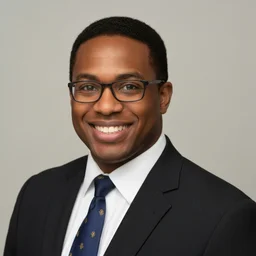
Law Enforcement Trainer & Civil Service Exam Specialist
John Jay College of Criminal JusticeMarcus B. Thompson earned his Master of Arts in Criminal Justice from John Jay College of Criminal Justice and served 12 years as a law enforcement officer before transitioning to full-time academy instruction. He is a POST-certified instructor who has prepared candidates for police entrance exams, firefighter assessments, and civil service examinations across dozens of agencies.