
African Author Probation Officer Years: The History, Voices, and Modern Practice Behind Community Supervision
African author probation officer years explored: discover the writers, history, and modern practice shaping community supervision in 2026 October. 📚

The phrase african author probation officer years gets searched by readers chasing several different ideas at once. Some want to know how African authors have written about probation, parole, and community supervision across the years. Others are studying the careers of African-American probation officers who later wrote memoirs about decades inside the system. A third group is simply curious about how long probation officers serve, and whether literature reflects that reality. This guide pulls all three threads together with research, statistics, and practical context for 2026 readers.
Probation as a sentencing option in the United States dates back to John Augustus in 1841, but African and African-American voices in the field arrived much later and grew louder through the civil rights era. Writers like Chester Himes, who spent years observing the criminal justice system, and modern memoirists who served twenty-plus years as line officers, have all contributed to a body of work that reframes what supervision means. Understanding their stories helps current officers, students, and citizens see the role beyond a job description.
The years that matter most cluster around three turning points. The first runs from 1925 to 1960, when probation systems expanded but excluded Black officers from supervisory roles in most states. The second covers 1965 to 1995, the era of mass incarceration when caseloads exploded and many African-American officers entered the field. The third stretches from 1996 to today, where data-driven supervision, evidence-based programs, and a new wave of memoir writing have transformed how the work gets discussed in print.
Why does this matter for someone studying for a probation officer exam or considering the career? Because policy is downstream of narrative. The reports you write, the conversations you hold with clients, and the discretion you exercise all rest on assumptions about who probationers are and what supervision should accomplish. African authors writing about probation have spent years pushing back on those assumptions, offering field notes that academic textbooks rarely capture. Their work belongs in any serious preparation library.
This article also serves readers who landed here looking for practical career data. We cover average tenure for probation officers in the United States, what twenty years on the job actually looks like, salary trajectories over time, and how literature has documented burnout, success stories, and the slow shift toward risk-needs-responsivity models. If you are preparing for an oral board or a writing sample, you will find passages worth quoting and themes worth weaving into your own answers.
Finally, expect a balanced treatment. Probation work is neither the cruel surveillance some critics describe nor the gentle social work some recruiters promise. It is a hybrid role that has changed dramatically across the years, and African authors have documented that evolution with unusual honesty. Read this guide once for orientation, then return to specific sections as your study or career planning demands. Each component below stands on its own and links to deeper material when you need it.
African Author Probation Officer Years by the Numbers

Key African and African-American Authors and Their Years of Service
Chester Himes Era (1928-1955)
Civil Rights Pioneers (1965-1985)
Memoir Boom (1995-2010)
Academic Voices (2010-2020)
Modern Practitioner-Writers (2020-2026)
To understand the full arc of african author probation officer years, you need to look at how the profession itself changed across more than a century. When probation began in the late 1800s, supervision was largely a volunteer activity carried out by religious workers and reformers. African-Americans were almost entirely excluded from these early networks, both as supervisors and, in many jurisdictions, as candidates for probation rather than prison. Court records from that era show stark sentencing disparities that authors later mined for context.
The 1925 Federal Probation Act formalized the role on the federal level but did little to integrate the workforce. Through the 1930s and 1940s, probation officers in most American cities were white men with backgrounds in social work or law enforcement. African voices documenting the system during these years came almost exclusively from outside the profession. Sociologists like E. Franklin Frazier and writers like Richard Wright described how supervision operated for Black clients without ever holding badges themselves, and their observations remain foundational reading.
The mid-1960s changed everything. The Civil Rights Act, the Voting Rights Act, and the Law Enforcement Assistance Administration created hiring pipelines that brought thousands of Black officers into probation departments. Many of these pioneers served twenty-five or thirty years, retiring in the 1990s with extensive field notes. A handful turned those notes into memoirs, and others contributed chapters to anthologies edited by criminal justice scholars. The literature that emerged is uneven in quality but rich in detail.
By the 1980s, the crack epidemic and the war on drugs had pushed urban caseloads to crushing levels. Officers routinely supervised 150 to 200 clients, and the literature from this period reflects exhaustion alongside hard-won wisdom. African authors writing about these years often combined memoir with policy critique, arguing that the supervision model itself needed reform. Some of their proposals, like graduated sanctions and evidence-based assessment tools, became mainstream practice in the 2000s.
The 1994 Crime Bill and the rise of three-strikes laws shaped a new generation of officers who entered the field expecting heavy caseloads and a punitive orientation. African writers from this cohort describe the cognitive dissonance of trying to help clients succeed while operating inside a system designed to revoke at the first failure. Their books, blog posts, and conference papers track a decade-long argument with their own departments over what supervision should accomplish, and many of those arguments shape current training curricula.
The 2010s brought the risk-needs-responsivity revolution to probation. Departments adopted standardized assessment tools, motivational interviewing techniques, and graduated response matrices. African author probation officer years from this period document both the promise and the pitfalls of evidence-based supervision. Some writers celebrate the reduced reliance on incarceration. Others warn that algorithmic tools can encode the same biases earlier generations fought against. You can explore probation officer jobs to see how today's roles still carry traces of every era described above.
Today, in 2026, a younger generation of African and African-American officers is writing in real time. Podcasts, Substack newsletters, and union publications document daily realities that previous authors could only describe in retrospect. The years they accumulate are different from their predecessors, because turnover has accelerated and the average officer now stays in the role for seven to nine years rather than twenty-five. That shift will shape the next wave of literature in ways no one can fully predict.
Probation Officer Practice Test Questions
Prepare for the Probation Officer exam with our free practice test modules. Each quiz covers key topics to help you pass on your first try.
Probation Officer Advanced Topics
Probation Officer Exam Questions covering Advanced Topics. Master Probation Officer Test concepts for certification prep.
Probation Officer Case Management and Docu...
Free Probation Officer Practice Test featuring Case Management and Documentation. Improve your Probation Officer Exam score with mock test prep.
Probation Officer Community Supervision Te...
Probation Officer Mock Exam on Community Supervision Techniques. Probation Officer Study Guide questions to pass on your first try.
Probation Officer Core Concepts
Probation Officer Test Prep for Core Concepts. Practice Probation Officer Quiz questions and boost your score.
Probation Officer Exam Fundamentals
Probation Officer Questions and Answers on Exam Fundamentals. Free Probation Officer practice for exam readiness.
Probation Officer Industry Knowledge
Probation Officer Mock Test covering Industry Knowledge. Online Probation Officer Test practice with instant feedback.
Probation Officer Legal Framework and Offe...
Free Probation Officer Quiz on Legal Framework and Offender Rights. Probation Officer Exam prep questions with detailed explanations.
Probation Officer Practical Applications
Probation Officer Practice Questions for Practical Applications. Build confidence for your Probation Officer certification exam.
Themes Across African Author Probation Officer Years
One recurring theme across decades of African author probation officer years is the tension between racial identity and institutional authority. Many authors describe arriving on the job believing they could be a bridge between their community and the courts, only to discover that the badge changes how clients see them. Family members, childhood friends, and neighbors sometimes treat them with suspicion, and the authors document how they navigate those relationships.
The flip side is that identity also becomes a tool. Officers who share cultural background with their clients report higher engagement on substance abuse plans, employment goals, and family reunification. The literature contains dozens of case examples where a shared frame of reference helped a client complete supervision successfully. Authors caution, however, that identity alone is not a substitute for training, ethics, or boundaries, and the best memoirs are honest about mistakes made in pursuit of connection.

Reading African Author Probation Memoirs: Strengths and Limits
- +Provides ground-level detail that academic textbooks rarely capture in similar depth
- +Documents how supervision evolved across civil rights, mass incarceration, and reform eras
- +Offers candid discussion of race, identity, and the badge that other sources avoid
- +Includes practical case examples readers can adapt to current caseloads
- +Captures burnout realities and the coping strategies that sustained long careers
- +Bridges policy critique and field practice in ways policymakers find persuasive
- −Quality varies widely because many authors self-published without editorial support
- −Some books focus heavily on one jurisdiction and do not generalize across states
- −Older memoirs predate evidence-based practice and may suggest outdated techniques
- −A handful of authors settle scores with former colleagues, which clouds objectivity
- −Memoir form invites selective memory, so corroborate claims with department data
- −Younger officer-writers sometimes lack the long arc that gives older work its weight
Pros and Cons at a Glance
| Pros | Cons |
|---|---|
| Provides ground-level detail that academic textbooks rarely capture in similar depth | Quality varies widely because many authors self-published without editorial support |
| Documents how supervision evolved across civil rights, mass incarceration, and reform eras | Some books focus heavily on one jurisdiction and do not generalize across states |
| Offers candid discussion of race, identity, and the badge that other sources avoid | Older memoirs predate evidence-based practice and may suggest outdated techniques |
| Includes practical case examples readers can adapt to current caseloads | A handful of authors settle scores with former colleagues, which clouds objectivity |
| Captures burnout realities and the coping strategies that sustained long careers | Memoir form invites selective memory, so corroborate claims with department data |
| Bridges policy critique and field practice in ways policymakers find persuasive | Younger officer-writers sometimes lack the long arc that gives older work its weight |
African Author Probation Officer Years Reading Checklist
- ✓Identify at least three memoirs by African or African-American probation officers from different decades
- ✓Read one academic anthology chapter on race and community supervision before reading any memoir
- ✓Note the years of service of each author and the jurisdictions they describe
- ✓Compare descriptions of caseload sizes across the 1970s, 1990s, and 2020s
- ✓Track how authors define successful supervision and how their definitions change over time
- ✓Highlight three policy proposals that appear in multiple books across different eras
- ✓Read at least one critique of probation written by a formerly supervised person for balance
- ✓Cross-reference statistical claims with current Bureau of Justice Statistics data
- ✓Discuss your reading list with a working officer or recent retiree if possible
- ✓Keep a journal of insights you would apply if you supervised your own caseload tomorrow
Literature is part of professional preparation
Reading African author probation officer years alongside your exam prep gives you context that practice tests cannot provide. Officers who understand the historical and cultural arc of their profession make better discretionary decisions, write more nuanced reports, and connect with clients in ways that reduce revocations and improve outcomes for entire communities.
Literature shapes practice in ways that are easy to overlook until you sit across from a client and feel the weight of a decision. African author probation officer years have built a shared vocabulary that influences training academies, supervisor coaching, and the case law that defines acceptable supervision. When a federal court cites a study on racial disparities in technical violations, that study often rests on field data first surfaced in a memoir or practitioner article written ten or fifteen years earlier. The pipeline from page to policy is slow but real.
Consider how risk assessment tools changed in the early 2010s. The first generation of instruments produced disparate outcomes for Black clients, and African authors writing in academic journals were among the loudest voices documenting the problem. Their critiques pushed vendors to revise scoring weights, add cultural responsivity modules, and publish bias audits. The current generation of assessment tools is imperfect, but it is measurably more equitable than the version released a decade ago, and that improvement traces directly to writing.
Training curricula also reflect the literature. Most state probation academies now include modules on motivational interviewing, trauma-informed supervision, and culturally responsive engagement. The reading lists for those modules feature authors who served their years in the field and then wrote about what they learned. When trainees report that the academy felt grounded in real practice rather than theory, they are often responding to material drawn from memoir and case study writing by experienced officers of color.
Court reports and presentence investigations are another arena where literature shapes practice. Officers who have read widely in the field tend to write reports that contextualize a defendant's history rather than reducing it to a list of prior contacts. Judges notice the difference, and several appellate opinions have praised reports that drew on the kind of holistic framing that African authors have championed for decades. The reverse is also true, and poorly written reports can trigger remands or sentence modifications.
Union advocacy has been transformed by officer-writers as well. Contract negotiations now routinely include caseload caps, wellness benefits, and training reimbursements that were unthinkable in the 1990s. The arguments union leaders make in bargaining sessions often quote directly from memoirs and articles by African authors describing the human cost of unsustainable workloads. Management negotiators have learned to come prepared with the same reading list, and the conversation has improved on both sides.
Public perception of probation has shifted partly because of this literature. Cable news segments, podcast episodes, and feature films increasingly draw on the work of officer-authors when explaining supervision to general audiences. Documentaries that previously relied on academics or activists now interview retired officers whose books gave them credibility. The result is a more nuanced public conversation that acknowledges both the necessity of community supervision and the harms it can cause when misapplied.
Finally, literature shapes the officers themselves. Trainees who read widely before their first caseload tend to bring more humility, more curiosity, and more patience to the work. They make fewer assumptions about clients, they ask better questions during home visits, and they are more likely to seek consultation when a case feels overwhelming. African authors writing about their years on the job have created a body of practical wisdom that any incoming officer can absorb in fifty or sixty hours of reading, and that investment pays dividends for the rest of a career.

If you are preparing for a probation officer civil service exam or oral board, include at least two memoirs from African authors in your study plan. Reviewers consistently note that candidates who reference real practice examples in their responses score higher than those who recite textbook definitions. Aim for one historical memoir and one contemporary practitioner blog.
Applying the lessons of african author probation officer years to your own career starts with self-assessment. Where do you stand on the continuum between rehabilitation and accountability? How much discretion do you believe officers should exercise, and how much should be constrained by policy? The authors you read will challenge your starting positions, and that challenge is the point. Career longevity in this field correlates strongly with the ability to hold complexity, and reading widely is one of the best ways to build that capacity before you face it in practice.
Next, think about the kind of jurisdiction where you want to work. Urban, suburban, rural, federal, and tribal probation departments differ dramatically in caseload composition, supervision style, and union strength. African authors have written from each of these settings, and their accounts can help you decide where your skills and values fit best. A candidate who interviews with a clear sense of fit performs better in hiring panels and accepts offers with fewer surprises down the road. If you want to compare paths, read the probation officer job description alongside any memoir on your list.
Mentorship is the next layer. Almost every author who served twenty or more years credits a specific mentor with helping them survive the first three years on the job. Identify experienced officers in your target department, ask them to coffee, and listen more than you talk. Bring questions drawn from your reading, because mentors respond well to candidates who have done their homework. Many of the writers cited in this article cultivated their mentors through exactly this pattern, and those relationships outlasted the formal career.
Documentation skills deserve dedicated attention. The authors who held their careers together longest were uniformly excellent writers of chronos, court reports, and violation memoranda. Practice writing one full presentence investigation summary from a hypothetical case study every month during your study period. Have a working officer or retired supervisor review it. The feedback you receive will sharpen your prose, your reasoning, and your ability to defend a recommendation under cross-examination from a defense attorney.
Self-care planning is not optional. African authors have been remarkably consistent in identifying the year three to year five window as the most dangerous for burnout and the most common point for officers to leave the profession. Build your wellness infrastructure before you need it. Identify a therapist who understands the field, join a peer support group, schedule regular physical activity, and protect at least one full day each week from work email. Authors who skipped this step regret it in print, and you can learn from their hindsight.
Continued reading throughout your career matters too. The literature continues to evolve, and what was advanced in 2015 may already be dated in 2026. Subscribe to at least two professional journals, follow three or four officer-authors on social media, and attend one conference every two years where the keynote speakers include practitioners of color. The investment is modest, and it keeps you connected to the wider conversation that defines what good supervision looks like.
Finally, consider contributing your own voice once you have years on the job. The next wave of african author probation officer years is being written right now by officers who started during the 2010s reform era and are approaching their first decade of service. Their perspective will shape training, policy, and public understanding for the generation that follows. Whether you write a memoir, a journal article, a union newsletter column, or a blog, your years on the job will hold lessons that nobody else can deliver in quite the same way.
Practical preparation for a career informed by african author probation officer years requires building a study system that integrates reading, practice questions, and field exposure. Start by mapping your available study hours across the next twelve weeks. Allocate roughly forty percent to legal and procedural content, thirty percent to case management and documentation practice, twenty percent to communication and interviewing skills, and ten percent to historical and cultural context. The reading recommended in this article fits squarely into that final ten percent and pays disproportionate returns during oral interviews.
Build a reading rotation that mixes formats. Pair a long-form memoir with a recent journal article and a podcast episode each week. The variety keeps your engagement high and exposes you to multiple writing styles. Take notes in a single notebook organized by theme rather than by source, so you can pull insights together when you write practice essays or prepare for behavioral interview questions. Reviewers consistently report that candidates who synthesize across sources outperform those who cite a single book repeatedly.
Shadow a working officer if at all possible. Many departments allow ride-alongs or office observation days for serious candidates, and those experiences ground everything you have read. Bring a notebook, ask permission before taking notes, and follow up with a thank-you email that references specific moments you found instructive. Officers who agree to host shadows often become informal references when you apply, and the practical exposure makes your interview answers far more credible than abstract knowledge alone. Reading career researcher guides on top of this can sharpen your job search strategy.
Mock interviews are the next essential. Recruit two friends to play the role of an oral board, give them a list of standard questions, and record your answers. Review the recordings honestly, looking for hesitation, jargon, and missed opportunities to cite specific examples from your reading. The first three mocks will feel uncomfortable, but by the fifth or sixth you will notice clear improvement in pacing, structure, and the ability to weave concrete details into otherwise generic answers about teamwork or ethical dilemmas.
Physical and mental preparation matter as well. Probation officer fitness standards vary by jurisdiction, but most expect cardiovascular endurance equivalent to a fifteen-minute mile and the ability to lift and carry equipment during home visits. Build a sustainable exercise routine now rather than cramming the month before testing. Sleep, nutrition, and stress management feed directly into your exam performance, and they also build the resilience that authors describe as essential for surviving the first five years on the job.
Practice questions deserve daily attention. Aim for twenty to thirty questions per day in the final six weeks before your exam, rotating across all major content areas. Use the practice tests linked throughout this article to gauge your progress, and pay particular attention to the explanations attached to each answer. Reading why a wrong answer is wrong builds reasoning skills that transfer to the field, where you will spend years sorting through ambiguous client situations that rarely come with neat multiple-choice options.
Finally, set a date and commit to it. Career changes get stalled by perfectionism more than by lack of preparation. Pick an exam date roughly twelve weeks out, register, and treat the date as fixed. The authors whose work informs this guide all describe the moment they committed publicly to becoming officers as the turning point in their preparation. Years of meaningful work begin with a single deadline you refuse to move, and the literature you study will be there to support you every step of the way.
Sample Probation Officer Practice Questions
Try these questions from our free Probation Officer practice tests. The correct answer and an explanation follow each question.
How often should a probation officer typically update a supervision case plan?
- A. Only at intake
- B. Never, once the plan is set it remains fixed
- C. Periodically, based on the offender's progress and changing needs
- D. Only when the offender requests a change
Answer: C. Periodically, based on the offender's progress and changing needs
Supervision case plans are living documents that should be updated as the offender's circumstances and compliance change.
When conducting a home visit, what is a key safety practice for a probation officer?
- A. Always go alone without notice to anyone
- B. Inform a partner or office of location and consider going with another officer
- C. Leave weapons in the car at all times
- D. Never document the visit
Answer: B. Inform a partner or office of location and consider going with another officer
Communicating your location and using backup are core officer-safety practices during field visits.
What is the core principle behind evidence-based practices (EBP) in community supervision?
- A. Using practices based on officer intuition and experience alone
- B. Applying supervision strategies that research has proven effective at reducing recidivism
- C. Focusing only on punishment to deter future crime
- D. Eliminating all rehabilitative programming from probation
Answer: B. Applying supervision strategies that research has proven effective at reducing recidivism
Evidence-based practices prioritize interventions and supervision strategies that research has demonstrated reduce reoffending.
A probation officer believes a probationer poses an imminent danger to a third party. What is the officer's ethical and often legal obligation?
- A. Maintain confidentiality at all costs
- B. Warn the potential victim and notify supervisors
- C. Wait for the probationer to commit the act first
- D. Resign from the case
Answer: B. Warn the potential victim and notify supervisors
A credible threat of imminent harm overrides confidentiality and creates a duty to warn and report.
Probation Officer Questions and Answers

Probation Officer Jobs: Requirements, Salary, and Career Paths

City Probation Officer: Career Guide, Duties, Salary, and How to Become One in 2026

How to Find Your Probation Officer in 2026

Probation Officer Job Description: Duties and Daily Tasks

Juvenile Probation Officer Jobs: Career Guide, Duties, Salary, and How to Get Hired in 2026
About the Author
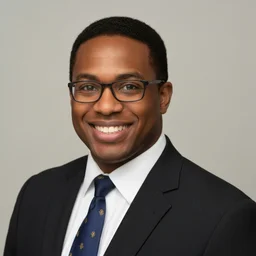
Law Enforcement Trainer & Civil Service Exam Specialist
John Jay College of Criminal JusticeMarcus B. Thompson earned his Master of Arts in Criminal Justice from John Jay College of Criminal Justice and served 12 years as a law enforcement officer before transitioning to full-time academy instruction. He is a POST-certified instructor who has prepared candidates for police entrance exams, firefighter assessments, and civil service examinations across dozens of agencies.