
Federal Probation Officer: Complete Career Guide & Requirements 2026 October
Complete federal probation officer career guide: 🟢 salary, requirements, hiring process, academy training, retirement benefits, and how to qualify.

Becoming a federal probation officer means stepping into one of the most demanding and rewarding careers in the United States justice system. These officers supervise individuals who have been convicted of federal crimes and are serving their sentences in the community, on supervised release after prison, or under pretrial supervision. The role blends law enforcement authority with social work, counseling, and case management. Unlike state probation officers, federal officers work under the U.S. Probation and Pretrial Services System, which is a branch of the federal judiciary administered by the Administrative Office of the U.S. Courts.
Federal probation officers carry tremendous responsibility. They write presentence investigation reports that judges rely on to determine sentences. They monitor compliance with court-ordered conditions, conduct home visits, drug-test offenders, coordinate substance abuse treatment, and prepare violation reports when conditions are broken. The job requires sharp judgment, emotional resilience, strong writing skills, and the ability to build rapport with people whose lives have been shaped by addiction, mental illness, poverty, or violence. Officers also collaborate closely with federal judges, prosecutors, defense attorneys, the U.S. Marshals Service, and the Federal Bureau of Prisons.
If you are exploring whether this career fits your skills and ambitions, this guide walks you through every major aspect of the federal probation officer profession. We cover education and experience requirements, the application and hiring process, training at the Federal Law Enforcement Training Center, salary expectations under the Law Enforcement Officer pay scale, daily duties, retirement benefits, common challenges, and how to prepare for the rigorous selection exam.
Whether you are a recent graduate, a state probation officer thinking of moving up, or a mid-career professional considering federal service, the information below will help you map a realistic path forward.
Federal Probation Officer at a Glance
The federal probation officer career path operates under strict eligibility rules that differ significantly from state-level corrections jobs. Because federal officers carry firearms in many districts and are classified as federal law enforcement officers under 5 U.S.C. 8401(17), the hiring process includes age caps, fitness standards, polygraph examinations, and extensive background investigations. Most candidates underestimate how competitive these positions are. A single district office may receive several hundred applications for a single opening, and only a small fraction advance past the initial screening.
Understanding the structure of the federal court system is essential before applying. The United States is divided into 94 judicial districts, each with its own U.S. District Court and accompanying probation office. Large districts like the Southern District of New York or the Central District of California employ dozens of officers, while smaller districts in rural states may have fewer than ten.
Job postings appear on the official federal courts careers portal at uscourts.gov, and each district handles its own recruitment timeline, interview format, and start dates. There is no centralized exam like the FBI Special Agent process — instead, each district evaluates candidates independently using a common framework.

Federal vs State Probation Officers
Federal probation officers earn substantially more than state officers (often $20,000–$40,000 more annually), receive enhanced retirement benefits as 6(c) federal law enforcement officers, and supervise a smaller but more complex caseload. They report to federal judges rather than state corrections departments, and many districts authorize them to carry firearms after additional training.
Now let's break down the formal qualifications you need to meet before submitting an application. The Administrative Office of the U.S. Courts publishes core hiring standards, but individual districts may add their own preferences on top of these baseline requirements. Read every job posting carefully because language like "preferred" versus "required" can determine whether your application makes it past the initial screening.
You must be a U.S. citizen. You must hold at least a bachelor's degree from an accredited four-year college or university. The degree itself can be in any field, though majors in criminal justice, criminology, psychology, sociology, social work, or public administration are most common among successful applicants. You also need a minimum of one year of specialized experience after earning your bachelor's degree, although a master's degree can substitute for that year.
Specialized experience generally means work in fields such as probation, parole, corrections, social work, counseling, substance abuse treatment, or criminal investigation. Many candidates build this experience through state probation jobs, juvenile justice positions, mental health case management, or military police service.
Federal Probation Officer Requirements
Bachelor's degree minimum from a regionally accredited four-year college or university. Master's degree strongly preferred for advancement, can substitute for one year of specialized experience. Criminal justice, psychology, social work, sociology, and public administration are the most common majors among successful applicants, but the degree itself can be in any field accredited by the Department of Education.
One full year of specialized post-degree experience in probation, parole, corrections, counseling, residential treatment, social work, or related law enforcement work. Military police service and federal corrections experience also count toward this requirement. State probation experience is highly transferable and often gives candidates a significant edge in interviews and assessment exercises.
United States citizenship is required. You must be appointed before your 37th birthday because federal law enforcement officers retire mandatorily at age 57 after 20 years of covered service. Limited waivers exist for military veterans and applicants with prior federal law enforcement service, but most candidates must meet the age cap directly without exception or accommodation.
Comprehensive background investigation including credit check, criminal history check in every county of residence, neighborhood interviews, employment verification, polygraph examination, and reference interviews. Medical exam tests cardiovascular health and vision; psychological evaluation includes MMPI-2 and forensic psychologist interview to confirm emotional resilience for the role.
The age restriction trips up many applicants. Federal probation officers are classified as 6(c) federal law enforcement officers, meaning they fall under mandatory retirement at age 57 and must complete 20 years of covered service.
To make that math work, federal hiring rules cap initial appointment at age 36 (you must be appointed before your 37th birthday). Waivers exist for veterans with certain types of prior federal law enforcement service, but they are uncommon. If you are over 35 and considering this path, get your application in quickly because the timeline from posting to final offer typically runs four to nine months.
Physical and medical fitness matter too. Officers are required to pass a medical examination assessing cardiovascular health, vision, hearing, and overall ability to perform essential functions. A physical fitness test is administered during academy training and must be passed before you can graduate. Although the federal probation system does not impose a pre-employment physical fitness test the way some agencies do, you should be in solid shape going into the academy. Officers who arrive out of condition risk injury and washout.

Federal Probation Officer Hiring Stages
Apply directly through individual district court websites or the uscourts.gov careers portal. Submit a federal resume, college transcripts, and answer the detailed questionnaire. Application packages are screened for minimum qualifications before advancing to interview.
Let's spend time on the hiring process because navigating it well separates successful candidates from those who get filtered out. After you submit your application through the district's portal, a screening committee reviews submissions against the announcement's qualifications. Strong federal resumes follow a specific format: detailed work history with month/year dates, hours per week, supervisor names, and bulleted accomplishments tied to the announcement's evaluation criteria. Generic private-sector resumes routinely get rejected even when the candidate is qualified, simply because reviewers cannot quickly verify whether you meet the minimum requirements.
If your application clears screening, you receive an interview invitation. The first interview is typically a structured panel with the chief U.S. probation officer, a deputy chief, and one or two supervisors. Expect 45 to 90 minutes of behavioral and scenario-based questions.
They want to see how you handle a defendant who tests positive for cocaine, how you de-escalate an aggressive offender during a home visit, how you write a complete and accurate presentence report under deadline pressure, and how you balance enforcement with rehabilitation. Many panels include a writing exercise — you may be given a short case file and asked to draft a violation report or chronological summary in 30 to 45 minutes.
Top-performing candidates are then invited to a second round, often with the chief probation officer alone or with senior judges who want to meet the people they will rely on for presentence reports. Once you receive a tentative offer, the real gauntlet begins. The background investigation can take three to six months. Investigators interview former employers, neighbors, college classmates, and references. They pull your credit report, check tax records, and conduct local criminal history checks in every county where you have lived. Past drug use is not automatically disqualifying, but lying about it during the polygraph absolutely is.
Many qualified candidates have been disqualified not because of past mistakes but because they lied or omitted information during the background investigation. Federal investigators will discover past drug use, financial problems, and minor criminal history through credit reports, court records, and interviews. Disclose everything truthfully on your security forms and during the polygraph — a pattern of honesty matters more than any single past mistake.
After the background investigation clears, you receive a final offer contingent on passing the medical and psychological evaluations. The medical exam reviews cardiovascular health, vision (corrected to 20/20 in at least one eye for most districts), hearing, and orthopedic fitness. The psychological evaluation typically includes the MMPI-2 or similar inventory followed by an interview with a forensic psychologist. The goal is to confirm you can handle the emotional stress of supervising violent offenders, conducting home visits in dangerous neighborhoods, and writing reports that affect sentencing decisions worth decades of someone's life.
Once everything clears, you receive a confirmed start date and report to your district office for orientation. Within your first few months, you attend the residential academy at the Federal Law Enforcement Training Center (FLETC) in Charleston, South Carolina. The probation officer training program runs six weeks and covers federal criminal procedure, sentencing guidelines, search and seizure law, firearms qualification, defensive tactics, vehicle operations, presentence report writing, interviewing techniques, drug recognition, and supervision strategies. You must qualify with a firearm and pass a fitness test to graduate. Officers who fail any major component may be given remedial training or terminated.

Federal Probation Officer Eligibility Checklist
- ✓U.S. citizenship verified through birth certificate, naturalization papers, or passport documentation submitted with your application package
- ✓Bachelor's degree from a regionally accredited institution in any major, though criminal justice, psychology, or social work backgrounds rank as the most common among hired officers
- ✓One year of specialized post-degree experience in probation, parole, corrections, counseling, social work, or related law enforcement field, OR a master's degree substituting for that experience year
- ✓Initial appointment must occur before your 37th birthday so the 20-year federal law enforcement service requirement can be completed by mandatory retirement age 57
- ✓No felony convictions on record; misdemeanor history reviewed case-by-case with focus on offense nature, recency, and candidate's subsequent conduct and rehabilitation
- ✓Strong writing skills demonstrated through college transcripts, prior work samples, and the on-site writing exercise administered during the interview process
- ✓Physical and psychological fitness verified through medical examination, MMPI-2 psychological assessment, and academy fitness standards before graduation
- ✓Willingness to relocate to whatever district makes an offer — federal probation positions are tied to specific judicial districts and you cannot freely transfer for years
- ✓Honest disclosure of past drug use, financial difficulties, arrests, and other minor offenses during security forms completion and polygraph examination
- ✓Federal-style resume tailored to each individual job announcement with month/year dates, hours per week, supervisor names, and bullet-pointed accomplishments tied to evaluation criteria
- ✓Clean valid state driver's license with no recent serious traffic offenses, since field work requires daily driving to home visits and court hearings
- ✓References who can speak directly to your judgment, integrity, work ethic, and ability to handle stress and confidentiality in professional settings
Now that you understand the hiring path, let's talk about what a federal probation officer actually does day to day. The work breaks roughly into three main functions: presentence investigation, post-conviction supervision, and pretrial services. Most districts assign officers to one of these specialty tracks, though smaller offices may rotate staff through all three functions to build versatility.
Presentence investigation officers write the reports that judges use to determine federal sentences. After a defendant is convicted (either by plea or trial), the assigned officer interviews the defendant, reviews offense conduct, examines criminal history under the U.S. Sentencing Guidelines, contacts victims, verifies education and employment claims, and produces a detailed report that may run 30 to 60 pages or more. The report calculates the recommended guideline range, identifies any potential departures or variances, and lays out the defendant's personal history. Judges typically follow the recommendations closely, so the accuracy and thoroughness of the report directly affects sentencing outcomes.
Post-conviction supervision officers manage caseloads of offenders on probation, supervised release, or parole. A typical caseload runs between 50 and 75 cases, though specialized caseloads (mental health, sex offenders, organized crime, drug treatment) may be smaller. Officers conduct office visits, home visits, drug tests, employment verifications, and electronic monitoring when ordered. They coordinate substance abuse treatment, mental health counseling, job training, and educational programs. When offenders violate conditions — through new arrests, positive drug tests, missed appointments, unauthorized travel, or failure to pay restitution — officers prepare violation reports for the court, recommend sanctions, and may participate in revocation hearings.
Pretrial services officers operate before conviction. When a defendant is arrested on federal charges, the pretrial officer interviews them, verifies background information, contacts references, and recommends to the magistrate judge whether the defendant should be released on bond or detained pending trial. If released, the officer supervises compliance with bond conditions throughout the pretrial period, which can stretch from weeks to over a year in complex cases.
Federal Probation Officer Pros and Cons
- +Excellent federal salary on Law Enforcement Officer pay scale ($58K starting, up to $120K+)
- +Enhanced 6(c) federal law enforcement retirement at age 50 with 20 years service
- +Federal health, dental, vision, and life insurance benefits at low cost
- +Significant autonomy and meaningful work helping rehabilitate offenders
- +Career stability — federal probation rarely sees layoffs or budget-driven cuts
- +Variety of work: courtroom, field, office, treatment coordination, report writing
- −Highly competitive hiring with months-long process and rigorous background check
- −Age cap of 37 at appointment limits second-career applicants
- −Emotional toll of supervising violent offenders, sex offenders, and addicts
- −Mandatory firearm carry in many districts and exposure to dangerous home visits
- −Heavy documentation workload with strict deadlines on presentence reports
- −Required relocation — you must take whatever district hires you
Salary deserves a section of its own because federal probation officers are paid better than most state corrections employees realize. Officers are paid on a hybrid scale that combines the General Schedule (GS) with Law Enforcement Officer (LEO) enhancements. Entry-level officers in most districts start around GS-9 or GS-11 on the LEO pay table, which translates to roughly $58,000 to $72,000 in base salary depending on locality.
Within five years, most officers reach GS-12, and supervisory officers earn GS-13 or higher. With locality pay adjustments for high-cost areas like San Francisco, New York, or Washington D.C., experienced officers regularly earn over $120,000 annually. Senior probation officers in expensive markets can exceed $140,000.
Retirement is where the financial picture really shines. Because federal probation officers are classified as 6(c) law enforcement officers, they accrue retirement benefits at an accelerated rate under FERS (Federal Employees Retirement System). After 20 years of covered service, an officer can retire as young as age 50 with an immediate annuity of roughly 34% of high-3 average salary, plus social security supplement until age 62, plus Thrift Savings Plan matching contributions (the federal equivalent of a 401(k) with up to 5% government match). Officers who serve 25 or 30 years see significantly larger annuities.
Combined with continued federal health insurance into retirement, the total compensation picture rivals or exceeds most private-sector careers requiring similar education.
It's worth noting that overtime is generally not authorized for probation officers because they are FLSA-exempt. However, officers receive Law Enforcement Availability Pay (LEAP) in some districts, which adds 25% on top of base salary in exchange for being on call. Districts that authorize LEAP make their positions significantly more attractive financially. Always ask during the interview process whether LEAP is paid in that particular district.
Beyond pay, federal benefits stack up well. The Federal Employees Health Benefits Program offers dozens of plan options, the Federal Employees Dental and Vision Insurance Program is optional but affordable, and federal employees can purchase group term life insurance through FEGLI. Annual leave starts at 13 days per year for new employees and increases to 26 days after 15 years of service, plus 10 paid federal holidays and 13 sick days per year. Combined with the retirement system, federal probation is one of the most secure middle-class careers in the country.
Career advancement opportunities also matter. After three to five years as a line officer, you can compete for senior probation officer positions, then supervisory probation officer, then deputy chief, and finally chief U.S. probation officer for the district. Each step brings substantial pay increases and added responsibility. Officers with specialized skills in areas like sex offender supervision, mental health caseloads, or cybercrime can build careers as subject matter experts who train officers across the federal system. Some officers transfer to the Administrative Office of the U.S. Courts in Washington D.C. to work on national policy, training, or technology projects.
The work also opens doors to other federal law enforcement careers. Officers who later want to apply to the FBI, DEA, Secret Service, ATF, or U.S. Marshals Service bring valuable experience that strengthens those applications. Conversely, current state probation officers, military police, and corrections professionals who join federal probation often see it as a long-term home that combines law enforcement authority with meaningful rehabilitative work.
Federal Probation Officer Questions and Answers
Preparing for the federal probation officer hiring process is a marathon, not a sprint. The candidates who succeed start months — sometimes years — before they ever submit an application. They build experience deliberately by taking entry-level positions in state probation, juvenile justice, mental health case management, residential treatment, or victim services. They earn graduate degrees if their undergraduate transcripts are weak. They get their finances in order, paying down credit card balances and resolving any old collections accounts that could appear on a credit report. They establish a stable work history with measurable accomplishments documented in writing.
Practice tests like the ones available on PracticeTestGeeks help you prepare for the writing exercises and scenario-based questions that appear during interviews. The format mirrors what you will encounter in panel interviews, presentence report exercises, and case management scenarios. Working through realistic questions sharpens your judgment, builds your vocabulary in federal probation terminology, and exposes you to the kinds of ethical dilemmas that interviewers love to throw at candidates.
Pair practice testing with reading the U.S. Sentencing Guidelines manual, the Guide to Judiciary Policy Volume 8 (the bible of federal probation operations), and a few good books on community supervision such as Probation Officer's Handbook or Federal Sentencing in Action.
Networking also pays off. Reach out to current federal probation officers through professional associations like the Federal Probation Officers Association (FPOA) or the American Probation and Parole Association (APPA). Most officers are willing to do informational interviews if you ask politely and respect their time. Ask them what makes their district's hiring process unique, what surprised them about academy training, what the worst part of the job is, and what they wish they had known before starting. This kind of insider perspective is impossible to find in job postings or generic career websites.
The federal probation officer career rewards patience, integrity, and continuous learning. It is not a job for people who want a quick path to prestige or fast money — the hiring process alone weeds those candidates out.
But for people who want meaningful work with real impact, strong compensation, generous benefits, and the chance to spend a career inside one of the most professional and respected law enforcement systems in the world, becoming a federal probation officer is genuinely one of the best career choices available. Take the practice tests, polish your federal resume, and start applying. The next class at FLETC could include you.
About the Author
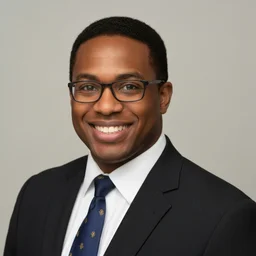
Law Enforcement Trainer & Civil Service Exam Specialist
John Jay College of Criminal JusticeMarcus B. Thompson earned his Master of Arts in Criminal Justice from John Jay College of Criminal Justice and served 12 years as a law enforcement officer before transitioning to full-time academy instruction. He is a POST-certified instructor who has prepared candidates for police entrance exams, firefighter assessments, and civil service examinations across dozens of agencies.