

PHTLS Practice Test
Updated October 2026Facts verified Oct 28, 2026 against National Association of Emergency Medical Technicians
The PHTLS meaning goes beyond a simple acronym; it represents a commitment to excellence in trauma care. The Prehospital Trauma Life Support course integrates the latest evidence-based medical knowledge, including the XABCDE assessment approach, to improve patient outcomes in emergency situations.
- NAEMT establishes an administrative student course fee of $10.00 for the Prehospital Trauma Life Support First Responder (PHTLS-FR) course.[1]
- NAEMT establishes an administrative student course fee of $15.00 for the Prehospital Trauma Life Support (PHTLS) course.[1]
- Students unsuccessful in any one component of PHTLS course evaluation have an opportunity to be re-tested within 30 days using the same written evaluation tool.[2]
- Students who successfully complete the PHTLS Provider Course receive a card recognizing them as a PHTLS provider for 4 years.[3]
- PHTLS certification can be renewed by completing an 8-hour classroom refresher course within 4 years of completing the provider course.[3]
- The PHTLS Provider Course is delivered as a 16-hour course in either a classroom format or a hybrid format of 8 hours online followed by 8 hours in the classroom.[3]
- The mission of PHTLS is to promote excellence in trauma patient management by all providers involved in the delivery of prehospital care through global education.[4]
- The PHTLS Provider Course is appropriate for EMS practitioners, nurses, physician assistants, physicians, and other prehospital practitioners.[3]
- PHTLS course certificates are issued by the course coordinator and provided at the end of a course or within thirty days post-course.[2]
Numbers in brackets link to the official sources listed under Sources & last verified. Dates that have passed are removed automatically.
PHTLS Exam at a Glance
| Item | Detail | Source · Verified |
|---|---|---|
| Exam fee (PHTLS-FR) | $10.00 per student[1] | National Association of Emergency Medical Technicians · Oct 27, 2026 |
| Exam fee (Student Course Fee) | $15.00 per student[1] | National Association of Emergency Medical Technicians · Oct 27, 2026 |
| Retake policy | One re-test within 30 days using the same written evaluation tool[2] | National Association of Emergency Medical Technicians · Oct 27, 2026 |
| Validity (Provider Course) | 4 years[3] | National Association of Emergency Medical Technicians · Oct 27, 2026 |
| Renewal (Refresher Course) | 8-hour classroom refresher within 4 years[3] | National Association of Emergency Medical Technicians · Oct 27, 2026 |
| Delivery (Provider Course) | 16 hours; classroom or hybrid (8 h online + 8 h classroom)[3] | National Association of Emergency Medical Technicians · Oct 27, 2026 |
| Eligibility (All Prehospital Providers) | All providers involved in the delivery of prehospital care[4] | facs.org · Oct 28, 2026 |
| Eligibility (Provider Course) | EMS practitioners, nurses, physician assistants, physicians, and other prehospital practitioners[3] | National Association of Emergency Medical Technicians · Oct 27, 2026 |
| Score release | At the end of a course or within 30 days post-course[2] | National Association of Emergency Medical Technicians · Oct 27, 2026 |
What changed for PHTLS in 2026
- Oct 27, 2026: Retake policy changed to One re-test within 30 days using the same written evaluation tool (previously One re-test within 30 days; same written test).[2]
- Oct 27, 2026: Eligibility (Provider Course) changed to EMS practitioners, nurses, physician assistants, physicians, and other prehospital practitioners (previously EMS practitioners, nurses, PAs, physicians and other prehospital practitioners).[3]
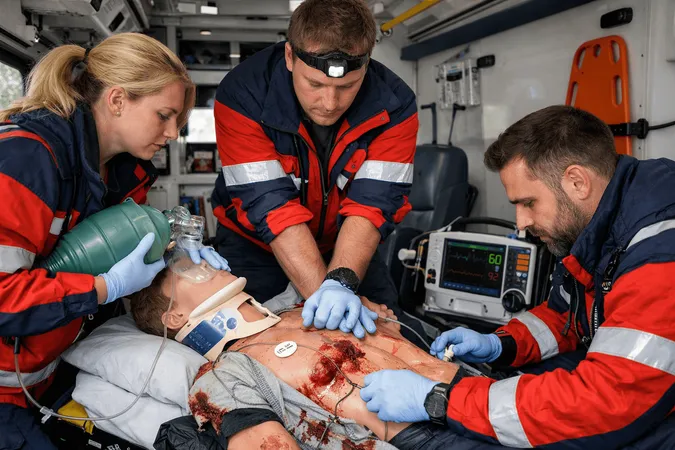
According to National Association of Emergency Medical Technicians, “The mission of PHTLS is to promote excellence in trauma patient management by all providers involved in the delivery of prehospital care through global education.”[4]
PHTLS Practice Test Questions
Prepare for the PHTLS - Prehospital Trauma Life Support exam with our free practice test modules. Each quiz covers key topics to help you pass on your first try.
PHTLS 7th Edition Questions and Answers
PHTLS Exam Questions covering 7th Edition Questions and Answers. Master PHTLS Test concepts for certification prep.
PHTLS Knowledge Questions and Answers
Free PHTLS Practice Test featuring Knowledge Questions and Answers. Improve your PHTLS Exam score with mock test prep.
PHTLS Pre & Post Questions and Answers
PHTLS Mock Exam on Pre & Post Questions and Answers. PHTLS Study Guide questions to pass on your first try.
PHTLS Kinematics of Trauma
PHTLS Test Online for Kinematics of Trauma. Free practice with instant results and feedback.
Worked examples: how to reason through PHTLS questions
These are practice questions written for this site, not questions from the real exam. Each explanation shows why the right answer is right and why the others are wrong.
Example 1
Question: You are treating a patient with extensive full-thickness burns to the face and neck after being pulled from a house fire. The patient has a hoarse voice, carbonaceous sputum, and singed nasal hairs. What is the highest priority intervention?
- Applying cool, moist sterile dressings to the facial burns.
- Calculating the Total Body Surface Area (TBSA) to guide fluid resuscitation.
- Anticipating the need for a definitive airway and preparing for early intubation.
- Obtaining intravenous access for immediate pain management.
Answer: C. Anticipating the need for a definitive airway and preparing for early intubation.
Explanation:
A hoarse voice, carbonaceous sputum and singed nasal hairs after a house fire all point to inhalation injury. The airway can swell quickly, and once it does, intubation becomes much harder or impossible. That is why anticipating a definitive airway and preparing for early intubation (C) is the priority. Cool, moist dressings (A) treat the skin, not the threat to life, and cooling large burns risks hypothermia. Calculating TBSA (B) guides fluid resuscitation later, but it does nothing for an airway that may be closing. IV access for pain control (D) matters, but it comes after the airway is protected.
Rule to remember: in a burn patient, signs of inhalation injury put the airway at the top of the list. Act on the warning signs before swelling makes intubation impossible.
Example 2
Question: What does the 'X' in the PHTLS XABCDE patient assessment mnemonic represent?
- External examination of the body surface
- eXsanguinating hemorrhage requiring immediate control
- Extremity assessment for fractures
- Exposure and environment
Answer: B. eXsanguinating hemorrhage requiring immediate control
Explanation:
The X stands for eXsanguinating hemorrhage (B). PHTLS puts it before the airway because a patient with massive external bleeding can die of blood loss within minutes, faster than most airway problems. In practice, a tourniquet or direct pressure on a life-threatening bleed comes before opening the airway or happens at the same time. External examination of the body surface (A) is not a step in the mnemonic. Assessing extremities for fractures (C) belongs to the secondary survey unless a limb is bleeding heavily. Exposure and environment (D) is the E at the end, where you undress the patient to find injuries and then prevent heat loss.
Rule to remember: stop major bleeding you can see, then move through A, B, C, D and E.
Example 3
Question: You arrive on scene to find an unresponsive trauma patient with gurgling sounds coming from their airway. What is the MOST appropriate initial action?
- Perform immediate suctioning of the oropharynx.
- Insert an oropharyngeal airway (OPA).
- Apply a non-rebreather mask at 15 L/min.
- Log-roll the patient onto their side.
Answer: A. Perform immediate suctioning of the oropharynx.
Explanation:
Gurgling means liquid (blood, vomit or secretions) is sitting in the upper airway, so suctioning the oropharynx (A) comes before anything else. Nothing else works while the airway is full of fluid. An OPA (B) keeps the tongue off the back of the throat, but it does not clear fluid and can push material deeper. A non-rebreather mask (C) sends oxygen into an airway that is still blocked, so little of it reaches the lungs. Log-rolling the patient onto their side (D) can help fluid drain when no suction is available. When suction is at hand, it is the faster and more direct fix.
Rule to remember: listen to the airway. Gurgling means suction. Snoring means repositioning or an airway adjunct.
How to use these practice tests
Start with the official course material. PHTLS is a course with a written evaluation and a scenario evaluation, not a standalone exam. Your instructor's material is the main source, so do any assigned reading or online modules before the classroom days. This matters most for the hybrid format, where 8 hours of instruction are online.
Find your weak topics. Take the PHTLS Pre & Post Questions to see where you stand. Then work on the topics you missed, starting with the assessment sequence: XABCDE primary survey, shock and hemorrhage control and airway and ventilation.
Move on to the systems and special groups. Next, cover thoracic, brain, spinal and abdominal and pelvic trauma. Then do pediatric, geriatric, burns and environmental cases.
Say your reasoning out loud. For every miss, read the explanation and say why each wrong option is wrong. Scenario stations test the same thinking, spoken aloud in order.
Finish with a mixed set. In the final days, take the PHTLS Knowledge Questions as a mixed review. If you don't pass a component, you get a re-test within 30 days, so plan to review that area right away.
PHTLS Flashcards
Key concepts for the Prehospital Trauma Life Support Course
🌬️What is the preferred method for opening the airway in a trauma patient?
The jaw-thrust maneuver is preferred to protect the cervical spine while opening the airway.
START PHTLS PRACTICE TEST🩸What is the first step in controlling life-threatening hemorrhage?
Apply direct pressure or a tourniquet immediately if direct pressure is insufficient or impractical.
REVIEW PHTLS QUESTIONS🧠What GCS score indicates severe traumatic brain injury?
A Glasgow Coma Scale (GCS) score of 8 or less indicates severe traumatic brain injury.
TRY PHTLS MOCK EXAM🦴What is the primary goal of spinal motion restriction?
To prevent further injury to the spinal cord by minimizing movement of the spinal column.
ACCESS PHTLS STUDY GUIDE💓What are the classic signs of tension pneumothorax?
Distended neck veins, tracheal deviation, absent breath sounds, and hypotension (shock).
GET PHTLS EXAM PREP💉What is the target systolic blood pressure for permissive hypotension?
Typically 80-90 mmHg, enough to maintain perfusion without dislodging clots (unless TBI is present).
PRACTICE PHTLS TEST NOWPHTLS Exam Study Guide
Our PHTLS study guide breaks down the NAEMT PHTLS course into manageable sections. Review these common questions to understand the PHTLS certification process and exam expectations.
Expect to invest between $300 and $400 total for your PHTLS certification, including the PHTLS course fee and textbook. Employers often reimburse these costs.
PHTLS Test Day Checklist
- ✓PHTLS Textbook
- ✓Notebook & Pen
- ✓Comfortable Clothes
- ✓Stethoscope
- ✓Photo ID
- ✓Lunch/Snacks
- ✓Pre-Test Score
- ✓Positive Attitude
Ace Your PHTLS Exam
Get ready for your PHTLS course with our free practice tools. Whether you need a refresher or full exam prep, we have you covered.
To renew, you can take a 1-day PHTLS refresher course or the 8-hour PHTLS for First Responders course, depending on your level of licensure.
- +Validates your knowledge and skills objectively
- +Increases job market competitiveness
- +Provides structured learning goals
- +Networking opportunities with other certified professionals
- −Study materials can be expensive
- −Exam anxiety can affect performance
- −Requires dedicated preparation time
- −Retake fees apply if you don't pass
PHTLS Questions and Answers
Sources & last verified
- National Association of Emergency Medical Technicians — exam fee (official source). “Prehospital Trauma Life Support First Responder (PHTLS-FR) - $10.00” Verified Oct 27, 2026.
- National Association of Emergency Medical Technicians — retake policy, score release (official source). “Students unsuccessful in any one component of course evaluation (written or scenario) will have an opportunity to be re-tested within 30 days, at the convenience…” Verified Oct 27, 2026.
- National Association of Emergency Medical Technicians — validity, renewal, delivery, eligibility (official source). “Students who successfully complete the course receive a certificate, a card recognizing them as a PHTLS provider for 4 years, and 16 hours of CAPCE…” Verified Oct 27, 2026.
- facs.org — eligibility (official source). “The mission of PHTLS is to promote excellence in trauma patient management by all providers involved in the delivery of prehospital care through global education.” Verified Oct 28, 2026 · source checked Oct 28, 2026.
How we verify: editorial & fact-checking policy. Report an error: contact us.
How this page was made: written with AI tools and published by Nathan Beja, founder of Practice Test Geeks, who is responsible for its content. Exam facts are checked against the official sources listed below. Not reviewed by a subject-matter expert. Editorial policy
Sources & references
Exam facts on this page (fees, format, dates, passing scores) are checked against these official sources; the date is our last check. Editorial policy