
Personal Care Assistant Jobs: Roles, Pay, Where to Find Work, and How to Get Hired as a PCA
Personal Care Assistant (PCA) jobs guide: typical duties, hourly pay, where to find work, employers hiring, qualifications, and how to land your ✏️
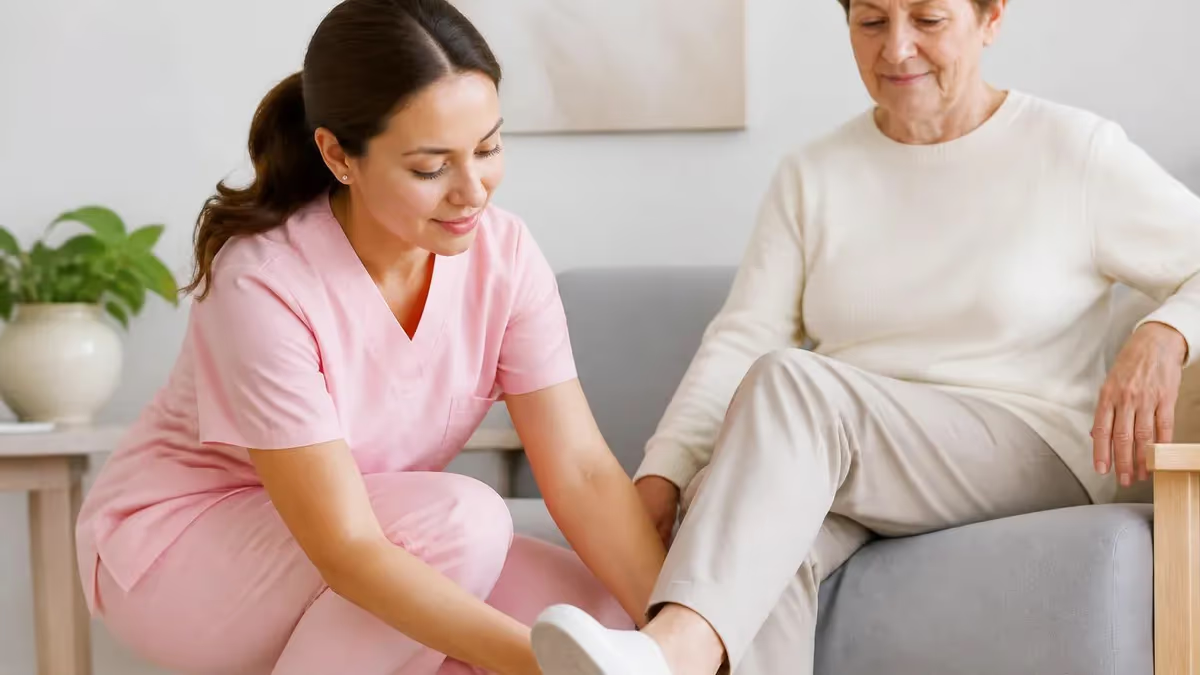
Personal care assistant (PCA) jobs are in high demand across the U.S. as the population ages and home-based care expands. PCAs help elderly, disabled, or recovering clients with daily activities — bathing, dressing, meals, light housekeeping, medication reminders, and companionship. The work is hands-on, emotionally rewarding, and the entry barrier is low compared to nursing roles.
Many PCA roles require minimal formal training. Some states require state-approved PCA certification (40-75 hours of training). Others let agencies train you on the job. Federal HHA (Home Health Aide) certification is required for Medicare-paid in-home care but not always for private-pay PCA work. The flexibility makes PCA work accessible to job-seekers without a healthcare background.
What PCAs do varies. Some work in private homes one-on-one with a single client (most common). Others work in assisted living, group homes, or rehab facilities. Tasks include personal hygiene assistance (bathing, toileting), meal prep, light housekeeping (laundry, dishes), grocery shopping, transportation to appointments, medication reminders (not administration in most states), companionship, and reporting changes in client condition to family or supervisor.
Pay varies by state, agency, and shift. National median is ~$14-16/hr (BLS 2024). Higher in Massachusetts, California, Washington ($18-22/hr). Lower in rural south ($11-13/hr). Live-in roles pay $150-250/day. Private-pay clients sometimes pay $20-30/hr direct. Overtime, weekend, and overnight shifts often add 15-30% premium.
Job market is strong. BLS projects 22% growth for home health and personal care aides 2023-2033 — among the fastest-growing occupations. Many agencies hire continuously due to high turnover and growing demand. This guide covers PCA job types, pay, where to find work, qualifications, application tips, and career progression.

What to Know
- Median pay: $14-16/hr nationally (BLS 2024); $11-22/hr state range
- Live-in pay: $150-250/day typical
- Growth: 22% projected 2023-2033 — among fastest-growing
- Training required: 0-75 hours depending on state and employer
- Settings: Private homes, assisted living, group homes, rehab
- Schedule flexibility: Part-time, full-time, weekends, overnight, live-in
- Top employers: Home care agencies, hospitals, government programs
- Federal certification: HHA required for Medicare/Medicaid funded work
- Entry barrier: Low — no degree needed, training often provided
- Career path: CNA → LPN → RN possible with further schooling
Types of PCA jobs. Different settings, different demands.
Private home care. The most common PCA role. You work in a client's home one-on-one, typically 4-12 hours per shift. Tasks: hygiene, meals, light cleaning, errands, companionship. Schedules vary — some clients need morning help (bathing, breakfast), others need afternoon/evening (dinner, medication reminders, bedtime), some need overnight (safety, toileting). Live-in arrangements exist for clients needing 24-hour care.
Assisted living facility (ALF). PCAs (sometimes called caregivers or resident assistants) work in facilities housing 20-200+ elderly residents. Shifts are typically 8-12 hours, day or night. You assist multiple residents — typically 10-20 per shift. Faster-paced than private home care, more team coordination. Most ALFs require state-approved training.
Group home / residential care for disabled adults. PCAs work with adults with developmental disabilities or chronic illness. Tasks include personal care, meal prep, behavior support, community outings, life skills training. More physically and emotionally demanding for some clients. Often requires specific training (crisis prevention, medication administration in some states).
Hospital and rehab facility roles. PCAs (sometimes called Patient Care Technicians or Nursing Assistants) work in hospitals supporting nursing staff with hygiene, ambulation, vital signs, feeding, repositioning. Typically requires CNA certification (which is more rigorous than PCA training). Shift work, fast-paced, exposure to medical emergencies.
Government program PCAs. Medicaid waiver programs (HCBS) and Veterans Affairs (VA Caregiver Support) hire PCAs to care for eligible individuals at home. Pay is often state-funded (lower than market) but training is provided. Many programs allow family members to be paid PCAs for relatives.
Specialty care. Dementia care, end-of-life/hospice care, post-surgical care, pediatric special needs care. These specialties require additional training but often pay 20-50% above base PCA rate. Demand is strong.
Where PCAs Work
1-on-1 client, slower pace, strong relationship. Most common PCA role.
10-20 clients per shift, faster pace, team environment. Steady schedule.
Disabled adults, behavior support, community engagement. Specialized training.
Acute care, nursing team, faster turnover. Usually requires CNA certification.
State-funded care for eligible clients. Lower pay but stable, training provided.
Higher pay, more training. Emotionally demanding but rewarding.
Pay by state and setting. Big variation depending on geography and employer type.
Highest-paying states (BLS 2024). Washington: $20.50/hr median. Massachusetts: $20/hr. California: $19/hr (region varies — San Francisco Bay Area $22-25/hr). New York: $18.50/hr (NYC higher). North Dakota: $18/hr. Alaska: $19/hr. Hawaii: $18/hr. These states have higher costs of living but also more PCA spending power.
Lowest-paying states. Mississippi: $11/hr. Louisiana: $11.50/hr. Tennessee: $12/hr. Texas: $12.50/hr. West Virginia: $12/hr. Alabama: $12/hr. These often have lower cost of living, but pay can lag significantly behind cost-of-living increases.
Pay by setting. Private home care direct hire: $18-30/hr private pay clients. Agency private home: $12-20/hr (agency keeps 30-50% of billed rate). Assisted living facility: $14-19/hr typical. Hospital PCT/CNA: $16-22/hr (requires CNA). Medicaid waiver program: $11-16/hr typical (state-funded). VA Caregiver Program: $12-18/hr typical.
Premium pay opportunities. Overnight shifts: +$1-3/hr typical. Weekend differential: +$1-2/hr. Holiday pay: 1.5x rate often. Live-in: $150-250/day flat (~$15-25/hr effective when sleeping). Specialty care (dementia, hospice, post-op): +$2-5/hr. Travel agency contracts (13-week assignments): $20-30/hr + housing stipend.
Tax considerations. Agency employees: W-2, agency handles taxes. Direct-hire PCAs: 1099 independent contractor or household employee (depends on situation). Independent PCAs typically need to file quarterly estimated taxes and may have higher net pay but no withholding. Family-paid PCAs through Medicaid waivers: often state employees with full benefits.
Benefits to look for. Health insurance (after 30-90 day waiting period typical). Paid time off (1-2 weeks/year). Retirement (401k with match at larger agencies). Continuing education stipends. Mileage reimbursement (if traveling between clients). Tuition assistance for CNA/LPN/RN bridge programs.
PCA Pay Snapshot
Where to find PCA jobs. Multiple channels, each with tradeoffs.
Home care agencies. The largest employer category. Major national agencies: Visiting Angels, Right at Home, Comfort Keepers, Senior Helpers, BrightStar Care, Home Instead, Touching Hearts at Home. Each has hundreds of franchise locations. They handle client matching, scheduling, payroll, insurance. Easy entry — many will train you. Pay is typically $12-18/hr depending on state.
Assisted living facilities. Direct hire from facility websites or LinkedIn. Large chains: Brookdale Senior Living, Sunrise Senior Living, Atria Senior Living, Holiday Retirement, Five Star Senior Living. Smaller independent facilities also hire regularly. Steady schedule, team environment, advancement to lead caregiver or wellness coordinator possible.
Hospitals and rehab centers. PCT (Patient Care Technician) or CNA roles. Typically requires state CNA certification (which is more involved than basic PCA training). Hospital pay is higher; benefits typically better.
Government programs. State Medicaid waiver programs (HCBS) hire PCAs for eligible clients. VA Caregiver Support Program. Many programs allow family members to be paid PCAs.
Online job boards. Indeed.com (largest), CareerBuilder, ZipRecruiter, Glassdoor for PCA roles. Care.com — household direct-hire marketplace, mostly private-pay clients. Heroic Caregivers, A Place for Mom (matches care needs to providers).
Direct hire by families. Many families hire PCAs directly via Care.com, Sittercity, or word of mouth. Higher pay potential but no agency support. Background check, references, and clear job description matter.
Referrals. Many PCAs find work through word of mouth from current/former clients, families, or other caregivers. Joining local PCA Facebook groups or NextDoor can yield direct opportunities.
Applying. Most agencies have rolling applications. Apply to 5-10 agencies, attend interviews, accept the best fit. Many will train and hire within 1-2 weeks. Hospital and ALF roles may take longer (3-6 weeks).

Top Employers
Visiting Angels, Right at Home, Comfort Keepers, Senior Helpers, BrightStar Care, Home Instead, Touching Hearts at Home, Always Best Care. Apply at corporate website to find local franchise. Typical pay $12-18/hr. Often hire continuously. Training provided. Flexible schedules. Best entry point for new PCAs.
Qualifications for PCA jobs. Often minimal compared to nursing roles.
Education. High school diploma or GED preferred but not always required. Some states require a state-approved PCA training program (40-75 hours of classroom and clinical training). HHA certification required for Medicare-funded in-home care. CNA certification (75-120 hours) opens doors to hospital and higher-paying ALF roles.
Background check. Almost universally required. Criminal background check at federal and state level. Child abuse registry check (for clients with children in home). Driving record check (if transportation is a job duty).
Physical requirements. Lifting (up to 50 lbs typical), bending, standing for long periods, transferring clients (using gait belts, hoyer lifts). Most agencies require a physical exam confirming ability to perform job duties. TB test and vaccinations (flu, COVID) often required.
Skills. Communication (clients with hearing/cognition issues), patience, observation (reporting condition changes), basic personal care techniques, light cooking, light housekeeping, time management (multiple tasks per shift), professionalism in clients' homes.
Soft skills agencies look for. Reliability (showing up on time, every time, is the #1 issue). Compassion and patience. Discretion (clients share personal information). Cultural sensitivity. Ability to work alone with limited supervision. Comfort with bodily fluids and personal hygiene tasks.
Optional credentials that boost employability. CPR/BLS certification (often required). First Aid certification. Dementia care training (Alzheimer's Association offers free online courses). Hospice care training. Medication administration training (state-specific). Driver's license + clean driving record.
Languages. Bilingual PCAs (especially Spanish, Mandarin, Tagalog, Russian, Polish, Korean) are in high demand and often command premium pay ($1-3/hr above base).
Application Strategy
Apply to 5-10 agencies + ALFs simultaneously. Hiring is rolling.
Patience, reliability, compassion matter more than experience for entry.
American Red Cross CPR class ($75-110). Required by most employers.
Resolve any record issues before applying. Many agencies use IdentoGo or similar.
Mention in cover letter: 'I haven't missed a day of work in X years.' Reliability is gold.
Join PCA Facebook groups in your area. Direct family hires pay more.
What a typical PCA day looks like. Schedule and tasks depend on setting and client needs.
Private home morning shift (6 AM-12 PM, 4-6 hours). Arrive at client home, greet client, review notes from previous shift if shared care. Help client out of bed, assist to bathroom. Bath or shower assistance. Help with dressing. Prepare breakfast and assist with eating if needed. Medication reminders (set out, observe, document — not administer in most states). Light housekeeping (make bed, clean bathroom, dishes). Companionship — conversation, reading, looking at photos. Document shift summary in agency app or paper log.
Private home evening shift (4-9 PM, 5 hours). Arrive after client's day. Prepare and serve dinner. Light cleaning. Help with bathing/grooming. Help with toileting. Medication reminders. Help client into pajamas. Companionship until bedtime. Settle into bed. Final check on safety (water at bedside, call button, walker accessible). Document and leave.
Live-in shift (24-72 hours). Includes scheduled sleep period (typically 8 hours). All meals and personal care. May include overnight check-ins if client requires. Often paid as flat daily rate. Best for stable clients who don't need active overnight care.
Assisted living facility 8-hour shift. Round on assigned residents (10-20). Help with morning ADLs (activities of daily living): bath, dress, ambulate to dining. Assist with breakfast. Mid-morning rounds: check on residents, escort to activities, light housekeeping. Lunch service. Afternoon rounds: assistance as needed, observations, documentation. Pre-shift change handoff to next caregiver.
Hospital PCT 12-hour shift. Take vital signs on assigned patients (4-8 typical). Assist with hygiene and toileting. Position patients to prevent pressure ulcers. Help with ambulation. Pass meal trays. Document I&O (intake and output). Stock supplies. Respond to call lights. Report changes to nurse. Fast-paced, multiple priorities, team communication.
1. Listen and observe. First days are for learning the client's routines, preferences, and quirks. Don't try to change things. Earn trust first.
2. Ask questions. 'How does Mrs. Smith like her coffee?' 'When does Mr. Jones usually nap?' Specifics matter more than general care principles.
3. Document everything. Every shift, log what you did, observations about client condition, any concerns. Protects you legally and helps care team.
4. Maintain boundaries. Be friendly but professional. Don't accept gifts, money, or unusual requests without checking with agency. Avoid promising what you can't deliver.
5. Prioritize safety. Fall prevention, medication safety, infection control. When in doubt, call your supervisor. Better to over-report than miss something.
6. Take care of yourself. Wear good shoes (you're on your feet 8-12 hours). Stay hydrated. Use proper lifting technique (always use gait belt for transfers). Don't skip meals.
7. Build relationships. Family members, agency staff, healthcare providers. Strong relationships make harder days easier and lead to better job opportunities long-term.
Career progression from PCA. Many PCAs use the role as a launchpad to nursing careers.
Step 1: PCA (entry level). 0-75 hours training depending on state. $14-16/hr typical.
Step 2: HHA (Home Health Aide). 75-120 hours federally regulated training. Required for Medicare in-home care. $14-17/hr.
Step 3: CNA (Certified Nursing Assistant). 75-180 hours state-regulated training + clinical hours. Required for hospital and most ALF roles. $16-19/hr. Opens hospital, rehab, long-term care employment.
Step 4: LPN/LVN (Licensed Practical/Vocational Nurse). 12-18 months at vocational/community college. Allows medication administration, wound care, more clinical skills. $24-29/hr. Major step up in scope and pay.
Step 5: RN (Registered Nurse). 2-year ADN or 4-year BSN. $35-50/hr+. Highest demand, full clinical autonomy under physician orders.
Step 6+ specialty. BSN-prepared RN can become Nurse Practitioner (NP), Clinical Nurse Specialist (CNS), Nurse Anesthetist (CRNA), Nurse Midwife (CNM) — these require MSN or DNP. $100-200k+ salaries.
Tuition assistance. Many home care agencies and hospitals offer tuition reimbursement ($2,500-15,000/year) for nursing school. Hospital employers often pay for full ADN/BSN if you commit to working at the hospital after graduation.
Working while studying. Many PCAs work nights or weekends while attending nursing school during the day. The flexibility is one of the appeals of starting in PCA work.
Specializations within PCA. Some PCAs build careers without going to nursing school: lead caregiver, training instructor, agency staff coordinator, scheduling coordinator, specialty certified caregivers (dementia, hospice).
Independent PCA business. Experienced PCAs can build private-pay client books and earn $25-35/hr. Requires marketing, scheduling, taxes, insurance — but rewards independence and higher pay.

Career Path Options
Many PCAs build long, rewarding careers without moving to nursing. Become specialized (dementia, hospice), build private clients, become lead caregiver or agency coordinator. Pay tops out around $20-25/hr in specialty/private work but flexibility and meaning compensate.
Challenges and rewards of PCA work. Honest perspective on what to expect.
Challenges. Physical demands — lifting, transferring, hours on feet. Risk of back injury without proper training. Emotional weight — clients you grow attached to may decline or pass away. Wage levels — entry pay is modest, especially in lower-cost states. Schedule variability — agencies may give you 20 hours one week, 40 the next. Client compatibility — some clients are difficult, families demanding. Travel — going between client homes adds unpaid time. Limited career ceiling without further training.
Rewards. Direct impact — you see immediately how you help. Relationships — many PCAs say client/family connections are the most rewarding part. Flexibility — many schedules to choose from. Low barrier to entry — start earning in 1-4 weeks. Growth path — clear progression to higher-paying nursing roles. Steady demand — recession-resistant industry. Variety — different clients, settings, tasks.
Avoiding burnout. Set boundaries (especially with private clients and families). Take breaks during shifts. Use proper body mechanics for transfers. Keep work/personal life separated. Find peer support (other caregivers understand the unique challenges). Pursue ongoing education and growth.
Self-care for PCAs. Many caregivers neglect themselves. Eat regular meals. Stay hydrated. Get adequate sleep. Exercise (your body is your tool — keep it strong). Schedule personal medical/dental care. Take vacation time when offered. Therapy or peer support for emotionally heavy roles (hospice, dementia care).
Recognition for the work. PCA work is often invisible until it's needed. National Family Caregivers Month (November). Direct Care Workers Recognition Day. Many states have caregiver of the year programs. The work matters profoundly to those who receive it — even when external recognition is limited.
Real Talk
12-hour shifts compound. Don't take overtime every week — burnout is real.
Every observation, every concern, every change. Protects you and helps the client.
Use gait belts, hoyer lifts. Never lift alone. Back injuries end PCA careers fast.
Families can be more challenging than clients. Stay professional, document everything.
After 6-12 months solid performance, ask. PCA market is candidate-friendly.
Decide early: career PCA, or stepping stone to nursing? Plan training accordingly.
Starting a PCA career in 30 days. Practical timeline for a fast start.
Days 1-7: Get certified and prepared. Sign up for CPR/BLS class. Get your background check started. Order/take TB test. Complete any state-required PCA training (most are 40-75 hours, available online or local community colleges). Update resume to highlight transferable skills (customer service, caregiving, reliability).
Days 8-14: Apply broadly. Apply to 8-12 home care agencies, 3-5 ALFs in your area. Apply via Indeed, agency websites directly, Care.com, and walk-in to local agencies if possible. Express availability and willingness to be trained. Don't be picky on first applications — focus on getting hired and starting paid work.
Days 15-21: Interview and training. Most agencies conduct phone interviews then short in-person meetings. Be punctual. Dress professionally (clean clothes, neat appearance). Bring CPR card, ID, social security card, any certifications. Complete agency-specific training (some agencies pay during training).
Days 22-30: Start work, build experience. Begin first client assignments. Focus on reliability — show up on time, every shift. Take notes after each shift on what you learned. Communicate clearly with agency about your availability and concerns. Build relationships with families. Document everything.
Month 2-3: Build reputation. Volunteer for difficult or undesirable shifts initially (overnight, weekends, holidays) — establishes reliability and earns premium pay. Specialty training (dementia care, hospice) opens better-paying client assignments. Build private references that lead to better future opportunities.
Month 6-12: Position for advancement. Consider CNA certification if you want hospital/ALF opportunities. Or build private-pay client base for higher rates. Or pursue nursing school. Whatever direction, intentional career-planning beats drifting.
PCA Pros and Cons
- +PCA has a publicly available content blueprint — you know exactly what to prepare for
- +Multiple preparation pathways accommodate different schedules and budgets
- +Clear score reporting shows specific strengths and weaknesses
- +Study communities share current insights from recent test-takers
- +Retake policies allow recovery from a difficult first attempt
- −Tested content scope requires substantial preparation time
- −No single resource covers everything optimally
- −Exam-day performance can differ from practice test performance
- −Registration, prep, and retake costs accumulate significantly
- −Content changes between versions can make older materials less reliable
Pros and Cons at a Glance
| Pros | Cons |
|---|---|
| PCA has a publicly available content blueprint — you know exactly what to prepare for | Tested content scope requires substantial preparation time |
| Multiple preparation pathways accommodate different schedules and budgets | No single resource covers everything optimally |
| Clear score reporting shows specific strengths and weaknesses | Exam-day performance can differ from practice test performance |
| Study communities share current insights from recent test-takers | Registration, prep, and retake costs accumulate significantly |
| Retake policies allow recovery from a difficult first attempt | Content changes between versions can make older materials less reliable |
Sample Personal Care Assistant Practice Questions
Try these questions from our free Personal Care Assistant practice tests. The correct answer and an explanation follow each question.
What is a common setting where PCAs work?
- A. Corporate offices
- B. Private homes
- C. Retail stores
- D. Construction sites
Answer: B. Private homes
Personal Care Assistants most commonly work in private homes, providing personalized, one-on-one care to individuals who wish to remain in their familiar environment. This setting allows clients to maintain their independence and comfort while receiving essential assistance with daily activities. While PCAs can also work in other settings like nursing homes or hospitals, in-home care is a predominant area for this role.
What is the importance of Infection Control in patient care?
- A. It is irrelevant to patient care.
- B. It is essential for maintaining patient health and comfort.
- C. It is only necessary for elderly patients.
- D. It only relates to personal preference.
Answer: B. It is essential for maintaining patient health and comfort.
Infection control is paramount in patient care to prevent the spread of harmful microorganisms, protecting vulnerable patients from acquiring infections. By implementing strict hygiene practices, it safeguards patient health, reduces discomfort from illness, and ensures a safer healing environment.
Why is Nutrition & Hydration crucial for daily care?
- A. It is not relevant for daily care.
- B. It is crucial for providing comprehensive and effective care.
- C. It only applies to patients with physical disabilities.
- D. It is only necessary during emergencies.
Answer: B. It is crucial for providing comprehensive and effective care.
Nutrition and Hydration are crucial for daily care because they are foundational to a patient's physical and mental well-being. Ensuring adequate intake supports energy levels, cognitive function, immune response, and medication effectiveness throughout the day. This consistent attention allows PCAs to provide comprehensive and effective care, preventing common issues like fatigue, weakness, and dehydration that can hinder recovery.
What is the importance of Mental Health & Emotional Support in patient care?
- A. It is irrelevant to patient care.
- B. It is essential for maintaining patient health and comfort.
- C. It is only necessary for elderly patients.
- D. It only relates to personal preference.
Answer: B. It is essential for maintaining patient health and comfort.
Mental Health & Emotional Support is essential for maintaining patient health and comfort because emotional well-being profoundly impacts physical recovery and overall quality of life. Addressing a patient's psychological needs, such as anxiety, depression, or loneliness, can reduce stress, improve coping mechanisms, and foster a more positive outlook. This holistic approach ensures that patients feel understood and supported, contributing significantly to their healing process and comfort.
PCA Questions and Answers
Final thoughts. Personal care assistant jobs offer accessible entry into healthcare, steady demand, and a clear path forward. The work is physically and emotionally demanding but profoundly meaningful — helping people through the most vulnerable moments of their lives.
If you're considering PCA work, the bar to start is low. A few weeks of training, a background check, and a willingness to show up consistently can have you in a paid role within a month. The job offers immediate impact and tangible reward — clients you help feel the difference directly, and families notice good caregivers immediately.
Pay improves with experience, specialization, and certifications. Reliable, compassionate PCAs find themselves in high demand — agencies and families both prize consistency. After 1-2 years, doors open: specialty roles, lead positions, transitions to nursing, or independent private-pay practice.
The PCA field needs millions more workers over the coming decade as the population ages. Pay, training, and career paths are improving. For job-seekers wanting meaningful, steady work without years of expensive schooling, PCA work deserves serious consideration. Start by applying broadly, getting certified, and building reliability — the rest of your healthcare career, if you want one, can grow from there.
About the Author

Registered Nurse & Healthcare Educator
Johns Hopkins University School of NursingDr. Sarah Mitchell is a board-certified registered nurse with over 15 years of clinical and academic experience. She completed her PhD in Nursing Science at Johns Hopkins University and has taught NCLEX preparation and clinical skills courses for nursing students across the United States. Her research focuses on evidence-based exam preparation strategies for healthcare certification candidates.