

PC 832 Practice Test
Updated October 2026Facts verified Oct 31, 2026 against California Commission on Peace Officer Standards and Training
The PC 832 course is key for those wanting to work in law enforcement or public safety. It teaches the skills needed for arrest procedures, handling firearms, and understanding the law. This course is vital for those in law enforcement, security, or anyone wanting to learn more about these areas. Practice with the free PC 832 - PC 832 Arrest and Firearms Course practice test on PracticeTestGeeks (7 questions with answer explanations).
If you are searching for a PC 832 practice quiz, start with the free questions on this page: every answer comes with an explanation, and the study notes below cover the PC 832 exam topics in order.
This article will cover the PC 832 course in detail. We’ll look at the legal aspects, arrest techniques, and firearms training. These are the main parts that make the program important for those in criminal justice and public safety.
- The Arrest component of the California POST PC 832 Arrest and Firearms Course includes a 100-question, multiple-choice written examination.[1]
- The Firearms component of the California POST PC 832 course includes a firearms range qualification examination.[1]
- The California POST PC 832 Arrest and Firearms course consists of two components totaling a minimum of 64 hours: 40 hours of Arrest and 24 hours of Firearms.[1]
- All tests in the California POST PC 832 Arrest and Firearms Course are graded pass/fail; POST publishes no percentage cut score on its course page.[1]
- PC 832 requalification test fees are set by each test center and are not published by POST.[2]
- In the California POST PC 832 course, each examination allows one retest, and a failed retest requires the corresponding component to be repeated in its entirety.[1]
- PC 832 training must be requalified if the individual is not employed as a California peace officer within three years of course completion, or has a break in service of three years or more.[2]
- The PC 832 Arrest and Firearms course is the minimum training standard for California peace officers.[1]
Numbers in brackets link to the official sources listed under Sources & last verified. Dates that have passed are removed automatically.
PC 832 Exam at a Glance
| Item | Detail | Source · Verified |
|---|---|---|
| Number of questions (Arrest component written exam) | 100 multiple-choice questions[1] | California Commission on Peace Officer Standards and Training · Oct 25, 2026 |
| Number of questions (Firearms component exam) | Firearms range qualification exam[1] | California Commission on Peace Officer Standards and Training · Oct 25, 2026 |
| Time limit (Course length) | Minimum 64 course hours (40 Arrest + 24 Firearms)[1] | California Commission on Peace Officer Standards and Training · Oct 25, 2026 |
| Passing score | Pass/fail grading[1] | California Commission on Peace Officer Standards and Training · Oct 25, 2026 |
| Exam fee (Requalification) | Varies by test center[2] | California Commission on Peace Officer Standards and Training · Oct 25, 2026 |
| Retake policy | One retest per exam; failing the retest means repeating the component[1] | California Commission on Peace Officer Standards and Training · Oct 25, 2026 |
| Validity | Requalify if not employed as a peace officer within 3 years[2] | California Commission on Peace Officer Standards and Training · Oct 25, 2026 |
| Eligibility | Minimum training standard for California peace officers[1] | California Commission on Peace Officer Standards and Training · Oct 25, 2026 |
Free PC 832 - PC 832 Arrest and Firearms Course Study Tools
Interactive PC 832 - PC 832 Arrest and Firearms Course resources on PracticeTestGeeks, free to start:
- PC 832 - PC 832 Arrest and Firearms Course flashcards — review key terms and concepts card by card
- PC 832 - PC 832 Arrest and Firearms Course study guide — topic-by-topic overview of what the exam covers
- PC 832 - PC 832 Arrest and Firearms Course cheat sheet — one-page printable summary for last-minute review
According to California Commission on Peace Officer Standards and Training, “The Firearms component includes a firearms range qualification examination.”[1]
PC 832 content outline and where to practise each area
The content areas below are copied from the official PC 832 content outline published by California Commission on Peace Officer Standards and Training. The right-hand column shows which of our practice sets covers it.
| Official content area | Practice on this site |
|---|---|
| LD 01 Leadership, Professionalism and Ethics[3] | PC 832 - PC 832 Arrest and Firearms Course... Practise how ethical duty, integrity and professional conduct apply to everyday decisions on duty. |
| LD 02 Criminal Justice System[3] | PC 832 Legal Authority & Foundations Practise the roles of agencies and courts and where a peace officer's legal authority comes from. |
| LD 03 Principled Policing in the Community[3] | PC 832 Community Relations and De-escalation Practise community trust, communication and approaches that reduce conflict before force is considered. |
| LD 05 Introduction to Criminal Law[3] | PC 832 - PC 832 Arrest and Firearms Course... Practise telling crimes apart by their elements and recognising when liability attaches. |
| LD 15 Laws of Arrest[3] | PC 832 - PC 832 Arrest and Firearms Course... Practise when an arrest is lawful with or without a warrant and what probable cause requires. |
| LD 16 Search and Seizure[3] | PC 832 - PC 832 Arrest and Firearms Course... Practise warrant rules, the exceptions to them, and when a search is reasonable. |
| LD 17 Presentation of Evidence[3] | PC 832 Evidence Collection and Documentation Practise how evidence is handled, documented and kept reliable for court. |
| LD 18 Investigative Report Writing[3] | PC 832 Report Writing and Documentation Practise writing facts clearly and objectively and separating observation from opinion. |
| LD 20 Use of Force/Deescalation[3] | PC 832 - PC 832 Arrest and Firearms Course... Practise the legal limits on force, especially deadly force, and when de-escalation applies. |
| LD 30 Crime Scenes, Evidence, and Forensics[3] | PC 832 - PC 832 Arrest and Firearms Course... Practise securing a scene, preserving evidence and the basic order of an investigation. |
| LD 33 Arrest and Control[3] | PC 832 - PC 832 Arrest and Firearms Course... Practise handcuffing, searching, control holds and the safe handling of a person in custody. |
| LD 35 Firearms/Chemical Agents[3] | PC 832 - PC 832 Arrest and Firearms Course... Practise firearms safety rules and handling habits that support the range qualification. |
PC 832 Practice Test Questions
Prepare for the PC 832 - PC 832 Arrest and Firearms Course exam with our free practice test modules. Each quiz covers key topics to help you pass on your first try.
PC 832 Arrest Course
PC 832 Exam Questions covering Arrest Course. Master PC 832 Test concepts for certification prep.
PC 832 Course Structure
Free PC 832 Practice Test featuring Course Structure. Improve your PC 832 Exam score with mock test prep.
PC 832 Legal Authority & Foundations
PC 832 Test Prep for Legal Authority & Foundations. Practice PC 832 Quiz questions and boost your score.
PC 832 Community Relations and De-escalation
PC 832 Questions and Answers on Community Relations and De-escalation. Free PC 832 practice for exam readiness.
PC 832 Evidence Collection and Documentation
PC 832 Mock Test covering Evidence Collection and Documentation. Online PC 832 Test practice with instant feedback.
PC 832 - PC 832 Arrest and Firearms Course...
Free PC 832 Quiz on - PC 832 Arrest and Firearms Course Arrest and Control Procedures. PC 832 Exam prep questions with detailed explanations.
PC 832 - PC 832 Arrest and Firearms Course...
PC 832 Practice Questions for - PC 832 Arrest and Firearms Course Criminal Investigation Fundamentals. Build confidence for your PC 832 certification exam.
PC 832 - PC 832 Arrest and Firearms Course...
PC 832 Test Online for - PC 832 Arrest and Firearms Course Criminal Law and Liability. Free practice with instant results and feedback.
PC 832 - PC 832 Arrest and Firearms Course...
PC 832 Study Material on - PC 832 Arrest and Firearms Course Firearms Safety and Handling. Prepare effectively with real exam-style questions.
PC 832 - PC 832 Arrest and Firearms Course...
Free PC 832 Test covering - PC 832 Arrest and Firearms Course Laws of Arrest. Practice and track your PC 832 exam readiness.
PC 832 - PC 832 Arrest and Firearms Course...
PC 832 Exam Questions covering - PC 832 Arrest and Firearms Course Professionalism and Ethics. Master PC 832 Test concepts for certification prep.
PC 832 - PC 832 Arrest and Firearms Course...
Free PC 832 Practice Test featuring - PC 832 Arrest and Firearms Course Search and Seizure Principles. Improve your PC 832 Exam score with mock test prep.
Worked examples: how to reason through PC 832 questions
These are practice questions written for this site, not questions from the real exam. Each explanation shows why the right answer is right and why the others are wrong.
Example 1
Question: An officer confronts a person who is threatening to harm themselves with a knife but is not threatening the officer or others. According to recently updated California law (Penal Code § 835a), what is the limitation on using deadly force in this situation?
- Deadly force is authorized if the person refuses to drop the weapon.
- Deadly force is prohibited if the person only poses a danger to themselves and not an imminent threat to the officer or another person.
- Deadly force can be used as a last resort to take the person into protective custody.
- Deadly force is permitted if the officer believes the person may harm themselves.
Answer: B. Deadly force is prohibited if the person only poses a danger to themselves and not an imminent threat to the officer or another person.
Explanation:
The correct answer is B. Under Penal Code § 835a, deadly force may not be used against a person on the basis of the danger that person poses to themselves, if a reasonable officer would believe the person does not pose an imminent threat of death or serious bodily injury to the officer or another person. Option A fails because refusing to drop a weapon is not an imminent threat to anyone else. Option C fails because protective custody is not a justification for deadly force. Option D fails because an officer's belief that someone may harm themselves does not meet the standard. Rule to remember: deadly force is tied to an imminent threat to the officer or others, not to self-harm alone.
Example 2
Question: What is the primary legal requirement for a peace officer to make a lawful arrest without a warrant?
- The suspect must be known personally by the officer
- The officer must have probable cause
- The officer must obtain consent from the suspect
- The arrest must be made in the officer’s home jurisdiction
Answer: B. The officer must have probable cause
Explanation:
The correct answer is B. A warrantless arrest needs probable cause: facts and circumstances that would lead a reasonable person to believe a crime was committed and that the person arrested committed it. Option A is wrong because the officer does not need to know the suspect personally; the standard is about facts, not familiarity. Option C is wrong because an arrest does not depend on the suspect agreeing to it. Option D is wrong because the rule is not about the officer's home jurisdiction; it is about the legal basis for the arrest. Rule to remember: when there is no warrant, probable cause is the requirement that protects people from arbitrary arrest.
Example 3
Question: During PC 832 training, students are required to demonstrate competency in several physical arrest methods. Which of the following is NOT a required skill evaluation for the arrest and control portion?
- Searching techniques
- Handcuffing techniques
- Firearms qualification
- Control holds and takedowns
Answer: C. Firearms qualification
Explanation:
The correct answer is C, because this is a NOT question and firearms qualification is not part of the arrest and control portion. It belongs to the separate Firearms component, which has its own range qualification exam. Searching techniques, handcuffing techniques, and control holds and takedowns are all physical arrest skills, so each of A, B and D is a required skill evaluation and therefore the wrong choice here. The 40-hour Arrest component and the 24-hour Firearms component are assessed separately. Rule to remember: read the stem for the word NOT, then sort each option into its component before choosing.
How to use these practice tests
Start by reading the POST page for the course so you know how the two components are tested: a written exam for Arrest and a range qualification for Firearms. Then take the general Arrest Course set and the Course Structure set to find which topics cost you the most points.
Work through the topic sets in the order your weakest areas appear. For each missed question, write down the rule behind the right answer in your own words, not just the letter. Pay particular attention to Laws of Arrest, Search and Seizure and Use of Force, because they depend on precise legal standards.
Mix in Report Writing and Evidence Collection near the end, since those questions reward careful reading of facts. Retake any set you missed several questions on after a gap of a day or more, so you are recalling the rule instead of the answer.
For the Firearms component, practice sets only cover safety and handling knowledge. Use your course instructors and range sessions for the qualification itself. Because a failed retest means repeating the whole component, treat the first attempt as the one that counts.
Key Takeaways
FREE PC 832 Practice Test Online
- The (PC 832) PC 832 Arrest and Firearms Course is a comprehensive training program for law enforcement officers and security professionals in the United States.
- It covers essential topics such as arrest procedures, defensive tactics, use of force, firearms safety, and the legal framework governing these areas.
- Successful completion of the PC 832 course is often a prerequisite for employment in law enforcement or security roles, as well as for obtaining certain certifications and permits.
- The course is designed to equip participants with the knowledge and skills necessary to perform their duties safely, effectively, and in accordance with relevant laws and regulations.
- Understanding the PC 832 course and its requirements can be a valuable asset for individuals seeking to pursue a career in public safety or enhance their existing professional competencies.
Course Overview and Objectives
Understanding the PC 832 Arrest and Firearms Course
The PC 832 course is a key training for California’s law enforcement and security teams. It teaches the skills needed for making arrests and handling firearms safely. The course aims to make sure officers know the laws, how to arrest safely, and how to use firearms correctly.
This course gives a deep look at laws and rules for using force and making arrests. Trainees learn about the California Penal Code and what peace officers can do. This helps them follow the law and do their jobs well.
- ✓Review the official PC 832 exam content outline
- ✓Take a diagnostic practice test to identify weak areas
- ✓Create a study schedule (4-8 weeks recommended)
- ✓Focus on your weakest domains first
- ✓Complete at least 3 full-length practice exams
- ✓Review all incorrect answers with detailed explanations
- ✓Take a final practice test 1 week before exam day
Legal Framework and Regulations
Students explore the California Penal Code’s details on arrests, force, and firearms. They learn about the legal limits for law enforcement and security. This knowledge helps them make smart choices and act professionally.
| Key Aspects of the PC 832 Course | Description |
|---|---|
| Arrest Procedures | Covers techniques for making lawful arrests, including proper detainment, restraint, and search methods |
| Firearms Training | Focuses on the safe handling, storage, and use of firearms, as well as marksmanship and tactical skills |
| Legal Framework | Examines the relevant laws, regulations, and policies from the California Penal Code and other applicable sources |
| Use of Force | Addresses the appropriate and lawful use of force, including the continuum of force and de-escalation techniques |
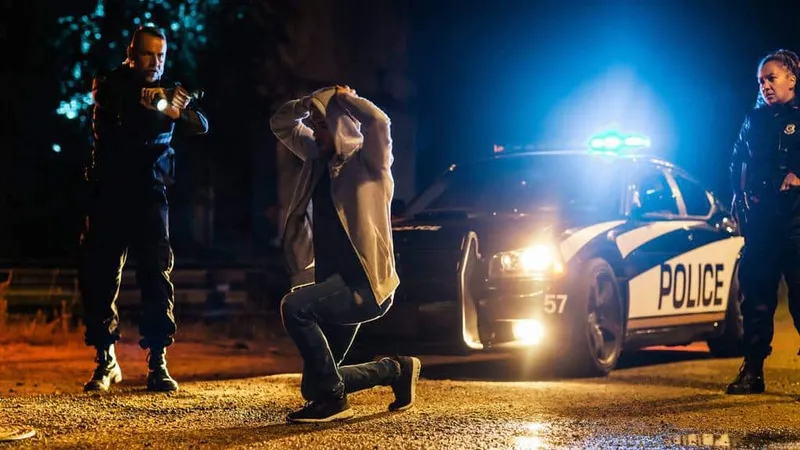
Arrest Procedures and Techniques
PC 832 (PC 832 Arrest and Firearms Course)
The PC 832 course is for law enforcement and security. It teaches arrest procedures and defensive tactics. Trainees learn how to make arrests the right way, including how to cuff people and use force when needed.
This course teaches various arrest procedures and techniques. It focuses on keeping both the officer and the person being arrested safe. Trainees learn how to calm down tense situations and handle crises safely.
They also learn about respecting people’s rights while keeping everyone safe.
- Proper approach and positioning during arrests
- Handcuffing techniques and restraint methods
- Appropriate use of force and defensive tactics
- De-escalation strategies and crisis intervention
These skills are crucial for peace officers and security personnel. They help them deal with the challenges of the criminal justice system. This way, they protect everyone’s rights and safety.
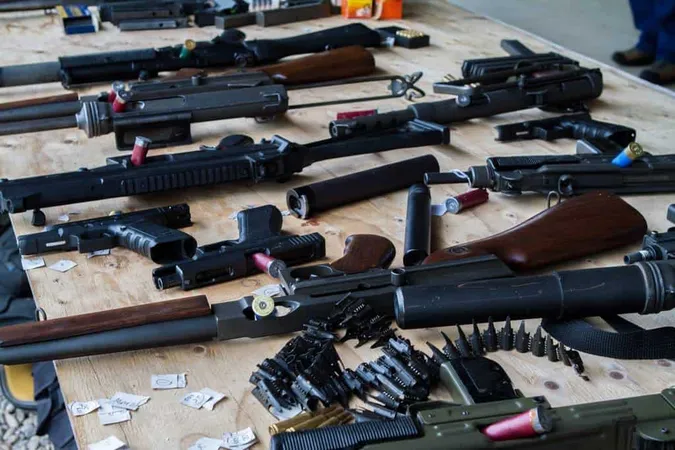
Firearms Training and Safety
The PC 832 course puts a big focus on firearms training and safety. It teaches participants how to handle, maintain, and use firearms safely. They learn the basics of marksmanship to be accurate and precise.
They also get a lot of training on firearm safety protocols. This helps law enforcement and security people know how to use powerful tools safely. They learn about the laws and ethics of using deadly force, so they can make good decisions in tough situations.
This detailed firearms training is key to the PC 832 course. It helps participants use firearms safely and effectively at work. It’s important for law enforcement officers and security guards who need armed guard permits or security guard certifications. This training makes sure they meet high standards of professionalism and safety.
| Key Aspects of Firearms Training and Safety | Description |
|---|---|
| Firearm Handling and Maintenance | Participants learn the proper techniques for handling, loading, unloading, and maintaining various types of firearms used in law enforcement and security operations. |
| Marksmanship Fundamentals | The course covers the principles of accurate shooting, including stance, grip, sight alignment, and trigger control, to ensure participants can effectively and safely use firearms in the field. |
| Legal and Ethical Considerations | Participants explore the legal framework and ethical guidelines surrounding the use of deadly force, as well as the responsibilities and decision-making processes involved in firearm deployment. |
| Practical Exercises and Simulations | The training includes hands-on practice sessions and realistic scenarios to reinforce the skills and decision-making abilities required for firearm use in law enforcement and security settings. |
By finishing the firearms training and safety part of the PC 832 course, participants get the skills and knowledge to use firearms well and responsibly. This is true whether they are law enforcement officers or security guards looking for armed guard permits or security guard certifications. This training is key to making sure those who protect us are safe and ready to do their jobs.

Sources & last verified
- California Commission on Peace Officer Standards and Training — number of questions, time limit, passing score, retake policy (official source). “a 100-question, multiple-choice written examination” Verified Oct 25, 2026 · source checked Oct 25, 2026.
- California Commission on Peace Officer Standards and Training — exam fee, validity (official source). “Contact the PC 832 Requalification test centers for test fee requirements.” Verified Oct 25, 2026 · source checked Oct 25, 2026.
- California Commission on Peace Officer Standards and Training — other (official source). “ld 01 leadership professionalism and ethics” Verified Nov 1, 2026.
How we verify: editorial & fact-checking policy. Report an error: contact us.
PC 832: Pros and Cons
- +Structured PC 832 training builds a solid foundation of skills
- +Multiple training formats available: online, in-person, and hybrid
- +Hands-on practice prepares you for real-world job scenarios
- +Training programs often include job placement assistance
- +Continuing education keeps your skills current with industry changes
- −Training programs can be time-intensive (weeks to months)
- −Quality varies significantly between training providers
- −Costs for comprehensive programs can be substantial
- −Hands-on components may require travel or in-person attendance
- −Self-paced learning requires strong discipline and motivation
🧠 What exactly is the PC 832 Course?
PC 832 Arrest and Firearms is the minimum training standard for California peace officers, set by Commission Regulation 1005. It can be satisfied through a full basic training course (Regular Basic Course, Specialized Investigators' Basic Course, or Module III) or as a separate stand-alone certified course.
START PC 832 COURSE STRUCTURE PRACTICE TEST⏱️ How many total hours does the PC 832 course require?
The course requires a minimum of 64 combined hours: 40 hours for the Arrest component and 24 hours for the Firearms component. These hours are broken into 14 Learning Domains covering the required foundational topics.
START PC 832 COURSE STRUCTURE PRACTICE TEST📝 What does the Arrest component exam look like?
The Arrest component includes a 100-question multiple-choice written examination plus several hands-on skill exams in Arrest and Control Techniques. If you're studying for a PC 832 practice test, this written section is the closest match to what you'll actually see on exam day.
START PC 832 ARREST COURSE PRACTICE TEST🎯 How is the Firearms component tested?
The Firearms component is graded through a firearms range qualification examination rather than a written test. It confirms safe handling, marksmanship fundamentals, and correct application of deadly-force policy on the range.
START PC 832 FIREARMS COURSE PRACTICE TEST🔄 What happens if you fail a PC 832 exam?
Every PC 832 test is graded pass/fail with one retest opportunity. If the retest is also failed, the corresponding component (Arrest or Firearms) must be repeated in its entirety before it can be tested again.
START PC 832 COURSE STRUCTURE PRACTICE TEST📅 What is the PC 832 'Three Year Rule'?
Under Commission Regulation 1080, you must requalify before exercising peace officer powers if you don't become employed as a peace officer within three years of completing PC 832, or if you have a break in service of three years or longer. Requalification is a separate, shorter Arrest and Firearms Requalification course.
START PC 832 LEGAL AUTHORITY PRACTICE TEST⚖️ What legal authority does PC 832 training cover?
This is the core of a good PC 832 lawful and arrest quiz: the training covers the legal basis for detentions and arrests, the limits of a peace officer's authority under the California Penal Code, and the lawful use of force during an arrest.
START PC 832 LEGAL AUTHORITY PRACTICE TEST🚔 What arrest and control procedures should you know for training for the 832 PC exam?
Expect scenario-based questions on proper approach and positioning, handcuffing and restraint methods, and de-escalation during a tense arrest. These procedures are tested in both the written exam and the hands-on skill stations.
START ARREST AND CONTROL PROCEDURES PRACTICE TEST🔫 What firearms safety topics come up most in a PC 832 practice quiz?
Common topics include firearm handling and maintenance, marksmanship fundamentals like stance and trigger control, and the legal and ethical limits on using deadly force. All three map directly to the range qualification exam.
START FIREARMS SAFETY AND HANDLING PRACTICE TEST🔎 Where can I find PC 832 practice test scenarios that match real exam topics?
Use the free quiz modules on this page, organized by Learning Domain (arrest and control, firearms safety, search and seizure, use of force, and more). Each module mirrors the actual PC 832 Course structure so you can target weak areas before test day.
START FULL PC 832 PRACTICE TESTSample PC 832 - PC 832 Arrest and Firearms Course Practice Questions
Try these questions from our free PC 832 - PC 832 Arrest and Firearms Course practice tests. The correct answer and an explanation follow each question.
What is the purpose of the firearms qualification in the PC 832 Firearms Course?
- A. To test an officer's ability to disassemble firearms
- B. To ensure proficiency and accuracy with the firearm
- C. To evaluate an officer’s knowledge of firearm laws
- D. To practice advanced shooting techniques
Answer: B. To ensure proficiency and accuracy with the firearm
The firearms qualification component of the PC 832 Firearms Course is a mandatory practical assessment. Its purpose is to objectively evaluate and confirm that participants can safely and accurately operate a firearm under controlled conditions. This ensures that officers meet a minimum standard of competence, which is essential for public safety and effective law enforcement.
Which of the following is NOT a component of safe firearm handling taught in the PC 832 Firearms Course?
- A. Always treat every firearm as if it is loaded
- B. Point the firearm only at something you intend to shoot
- C. Keep your finger off the trigger until ready to shoot
- D. Store firearms in a public area for easy access
Answer: D. Store firearms in a public area for easy access
Safe firearm handling principles emphasize security and control to prevent accidents and unauthorized use. Storing firearms in a public area for easy access directly contradicts these principles, as it increases the risk of theft, misuse, or accidental discharge. Proper storage involves securing firearms in a locked container, unloaded, and separate from ammunition, to prevent access by unauthorized individuals.
What is the primary focus of firearm safety training in the PC 832 Firearms Course?
- A. How to carry a firearm in public
- B. How to clean and maintain firearms
- C. Safe handling, storage, and use of firearms
- D. How to use firearms in tactical operations
Answer: C. Safe handling, storage, and use of firearms
The PC 832 Firearms Course places paramount importance on firearm safety to prevent accidents and ensure responsible ownership and deployment. This training covers fundamental principles such as always treating firearms as loaded, keeping fingers off the trigger until ready to shoot, and proper storage methods to prevent unauthorized access. The goal is to instill habits that ensure safety for the officer and the public.
What qualification must participants demonstrate during the PC 832 Firearms Course?
- A. Knowledge of firearm laws
- B. Accuracy in marksmanship during a live shooting test
- C. Proficiency in dismantling and cleaning firearms
- D. Tactical reloading under stress
Answer: B. Accuracy in marksmanship during a live shooting test
A key component of the PC 832 Firearms Course is the practical demonstration of proficiency with a firearm. Participants must pass a live shooting qualification test, which assesses their ability to accurately hit targets under various conditions. This ensures that officers possess the necessary skill to safely and effectively use their service weapon if required in the line of duty.
Take the full PC 832 - PC 832 Arrest and Firearms Course practice test
(PC 832) PC 832 Arrest and Firearms Course Questions and Answers
Official Resources
- POST: PC 832 Arrest and Firearms Course — the official course overview, presenter listings, and Commission Regulation 1005 requirement.
- POST: PC 832 Training and Testing Specifications — the full list of Learning Domains and required content for each PC 832 topic.
- POST: PC 832 Arrest and Firearms Requalification — official guidance on Commission Regulation 1080 and the three-year requalification rule.
How this page was made: written with AI tools and published by Nathan Beja, founder of Practice Test Geeks, who is responsible for its content. Exam facts are checked against the official sources listed below. Not reviewed by a subject-matter expert. Editorial policy
Sources & references
Exam facts on this page (fees, format, dates, passing scores) are checked against these official sources; the date is our last check. Editorial policy
- post.ca.gov — Fees, score validity, eligibility, exam format, passing score, retake policy, time limit, exam information · verified Nov 2026